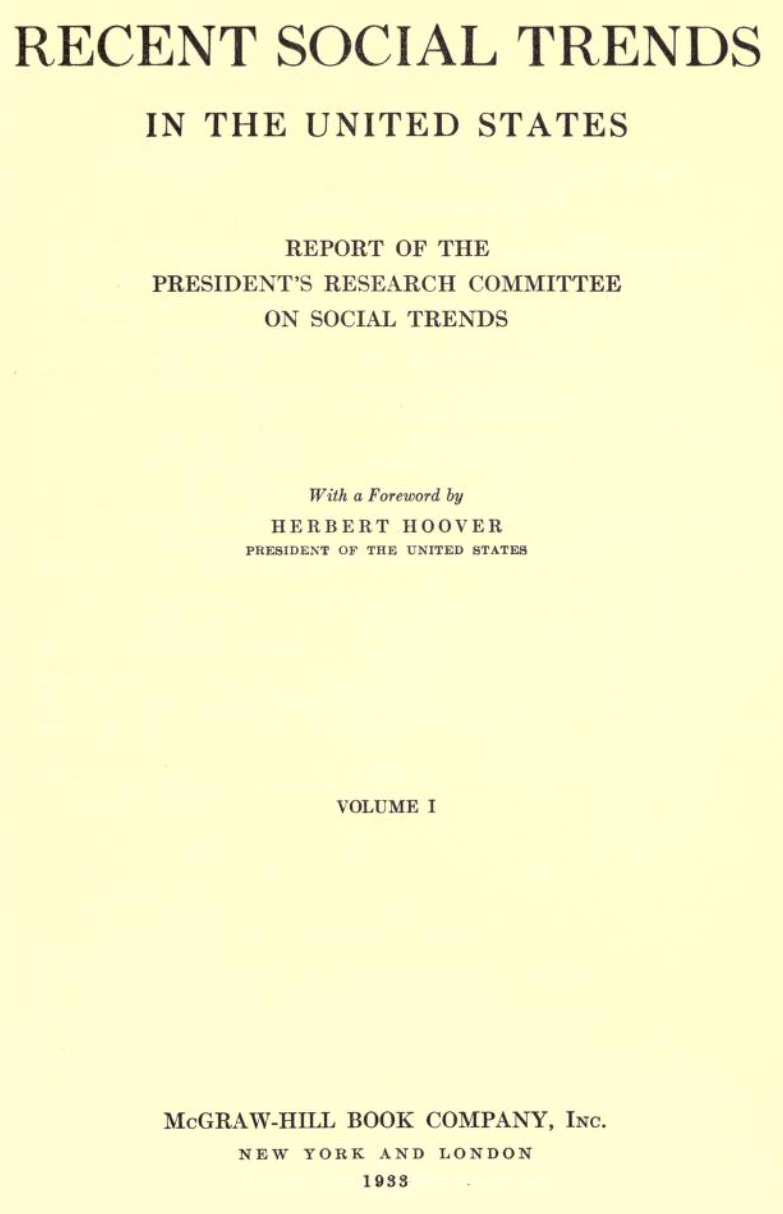
One hundred years ago, on September 26, 1929, President Herbert Hoover gathered a group of social scientists at the White House. He asked them to begin research on the most detailed report ever produced on the state of the nation. Four years later, running more than 1,500 pages long, Recent Social Trends was published, offering an unusually granular look at life in the mid-1920s.
The document is almost entirely forgotten. But today, for America’s 250th birthday, I’m blowing the cobwebs off this sucker and taking readers inside its yellowed pages for a look back at what life was like in the U.S. exactly 100 years ago, when the U.S. was celebrating its sesquicentennial anniversary.
In some ways, the Americas of 2026 and 1926 are eerily similar. In both cases, the country is celebrating a major birthday in the midst of a rising stock market and widespread fears of “technological unemployment” (mechanical power then vs. AI now); giddy wealth is coiled with economic anxiety; technology has transformed the way that people get information, mind-wiring us to a global cacophony of far-flung emotions (radio then vs. social media now); and after years of record-high immigrant entry to the U.S., the government has choked the migrant stream to a trickle.
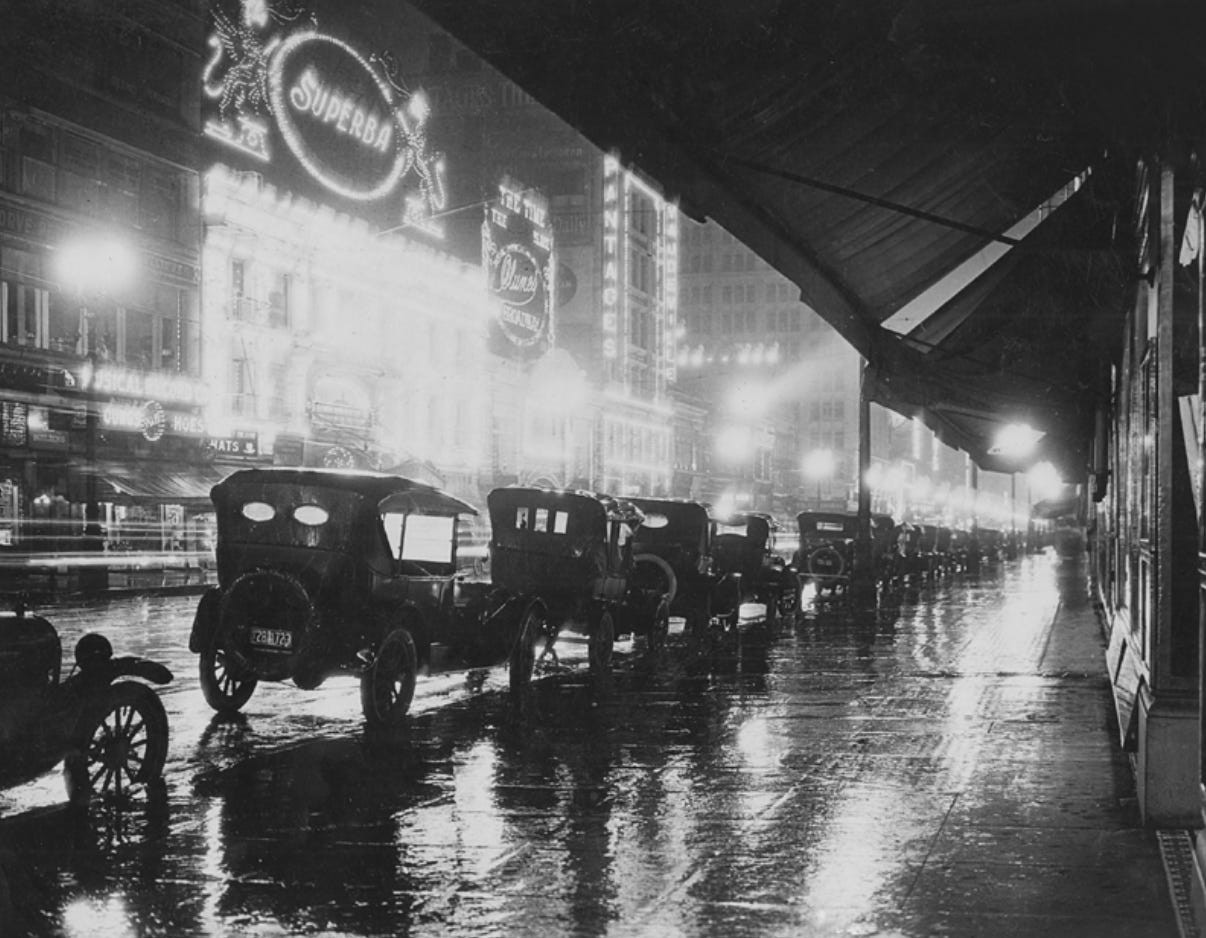
In other ways, the America of 1926 was another world—practically another planet. Roughly half of the U.S. still counted as rural, and tens of millions of Americans had no indoor plumbing or electricity. Thick smoke from oil lamps filled their homes, and they emptied their bladders and bowels in old-fashioned chamber pots. Women had only voted in two presidential elections. Millions of children still worked for pay. Of the nation’s 27 million households, only 11 million had a phonograph, to listen to music, or a car. The first movie with sound would not come out for another year.
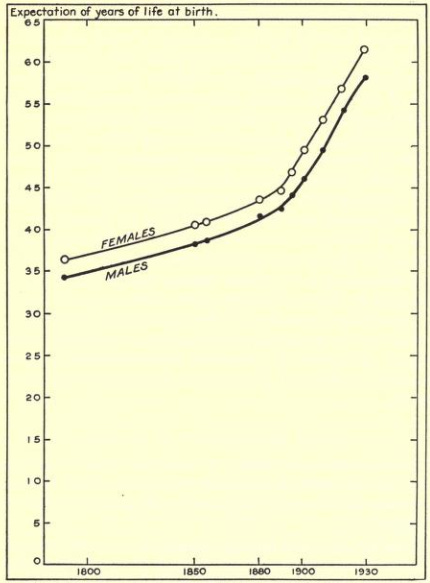
Life is much better in 2026. We live healthier, richer, and longer lives, with better medicine and more self-determination. But if I do my job well in the next few sections, you’ll see both the progress we’ve made in the last 100 years and the progress we haven’t made. Many anxieties that feel electrically charged in the present moment about work, family, and individuality are echoes of our ancestors’ fears. They felt all of our feelings. They just happened to poop in chamber pots.
Before we dive into the world of 1926, let’s get into character.
Imagine that you are the typical American in 1926.1 You are a white 26-year-old. (In 2026, the median age is 40.) Since most immigrants have been male, we’ll say you’re a guy. Your name is John. Born in the first term of William McKinley’s presidency, you are raised on a farm without flush toilets or electric lighting. Too young to fight in World War I, you come of age alongside a generation that sees war in Europe as a “useless colossal blunder,” in the words of historian David M. Kennedy. Your life—indeed, your entire generation—is shaped by several notable developments: education, urbanization, automation, and women’s rights. You are the first person in your family to finish high school.
At 19, you move from the countryside to an urban apartment, as one small drop in the migratory flood from farm to city. Jobs in manufacturing and retail are easy to find. They’re also easy to lose. Temporary unemployment is the norm. You earn $100 a month and put some away for a rainy day, confident that the bustling city will provide another job in a few months. (Unemployment insurance does not exist; neither does Social Security.) In the evenings, you “radio”; yes, it’s a verb, too. Every weekend, you visit a cineplex, where the movies are black-and-white and silent. Sometimes, you down a few prohibited cocktails and go dancing with flappers. Several times a week, you drive around in a black Model T.
The year 1926 has been good to you. City life is a blur of high-velocity machines—cars, assembly lines, and radio broadcasts—and you sometimes miss the ancient rhythms of your farmland home. One year from now, Charles Lindbergh will shock the world by flying across the Atlantic. In two years, at 28, you’ll be married. In three years, you’ll have a baby. And in four years, in 1930, just months after the biggest stock market crash in American history, the world as you know it will be over.
In 1926, the Roaring Twenties were at their full-throated peak. But America was anxious. If today’s commentators can’t stop talking about “maxxing” and “vibes,” the writers and politicians of the Twenties were vexed by the opposite of single-minded optimization. The watchword of the day was balance. Appearing 30 times in the Recent Social Trends report, balance was the cardinal worry of economic commentators: balance between rural and urban America; between manufacturing and farming; and between rapid progress and traditional values.
America in 1926 was smaller, and its values and identity were more twined with the countryside. The US population was about 120 million—about one-third of its current size—and nearly half of Americans lived in rural areas, compared to about 10 percent today. “In many respects, those country ways of life remained untouched by modernity,” the historian Kennedy wrote. From the Potomac River to the Gulf of Mexico, America looked “little different than it had at the end of Reconstruction”—cotton fields unfurled under a hot sun, hardly touched by electricity or modern plumbing.
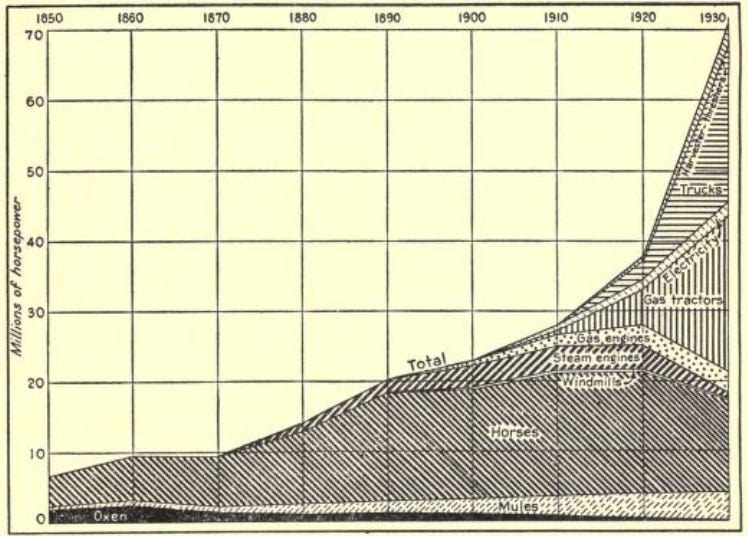
The agrarian world was in a double crisis in 1926. The first problem was economic. In the 1910s, the American farmer fed the world. After World War I, global agricultural production came back online, and farmers were stuck with a ruinous surplus. The price of cotton and corn plummeted more than 50 percent from their wartime high. The second crisis was technological. The tractor and mechanical power transformed the farm, automating jobs for horses, as well as for people.2
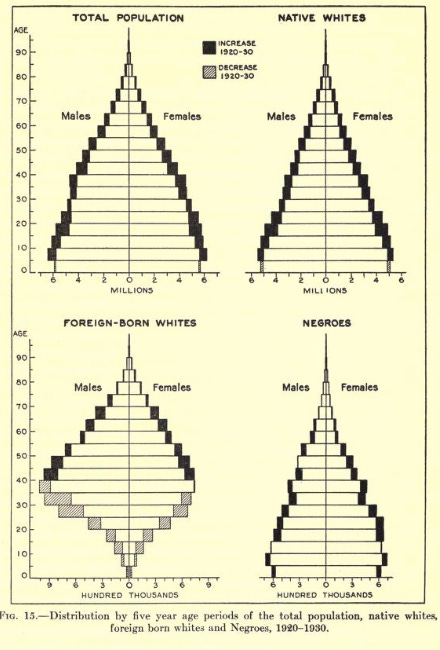
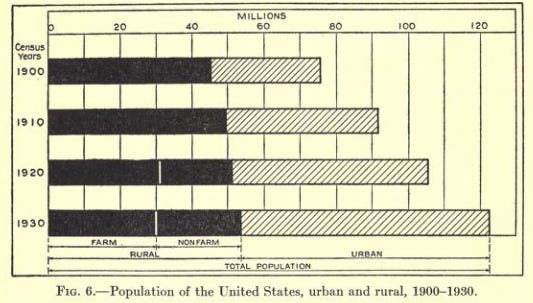
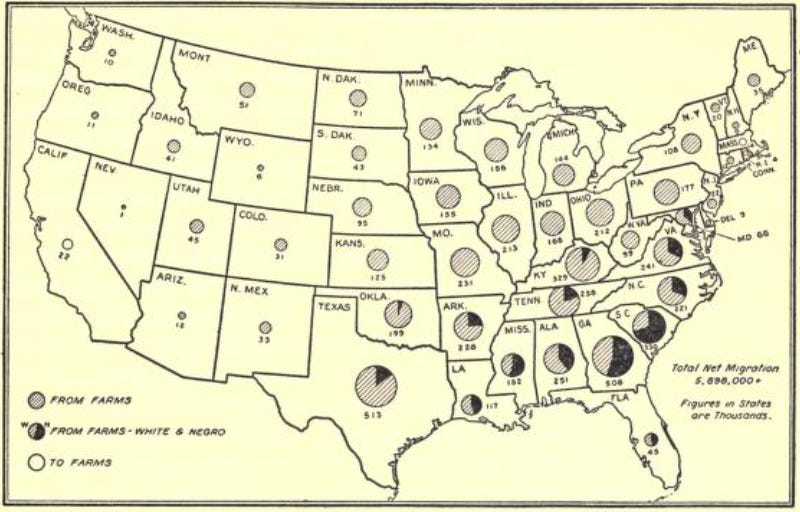
If rural America was frozen in the ice block of history, urban America was a gushing torrent of change. By 1928, per-capita incomes of urban workers reached four times the average income of farmers. Between 1910 and 1930, the farm population declined while the urban population nearly doubled (see first graph below), thanks to both domestic migration and a wave of European immigrants (see second graph below). Much like today, the fear of historic levels of foreign-born people sparked an anti-immigrant movement. The 1920s saw the revival of the Ku Klux Klan, which dominated the politics of several states, including Indiana and Oregon. “The nativist sentiment that the Klan helped to nurture found statutory expression in 1924,” Kennedy writes, “when Congress choked the immigrant stream to a trickle, closing the era of virtually unlimited entry to the United States.”
City dwellers were proud of their superiority; even haughty. In the previous years Scopes trial, the high-school teacher John T. Scopes had been indicted for violating Tennessee law by telling his students about evolution. Here’s Kennedy:
Urban Americans smiled with satisfaction when street-smart Chicago attorney Clarence Darrow humiliated rural America’s historical paladin, William Jennings Bryan, in the course of the trial… Bryan’s mortification symbolized for many the eclipse of rural fundamentalism and the triumphant ascendancy of the metropolis as the fount and arbiter of modern American values.
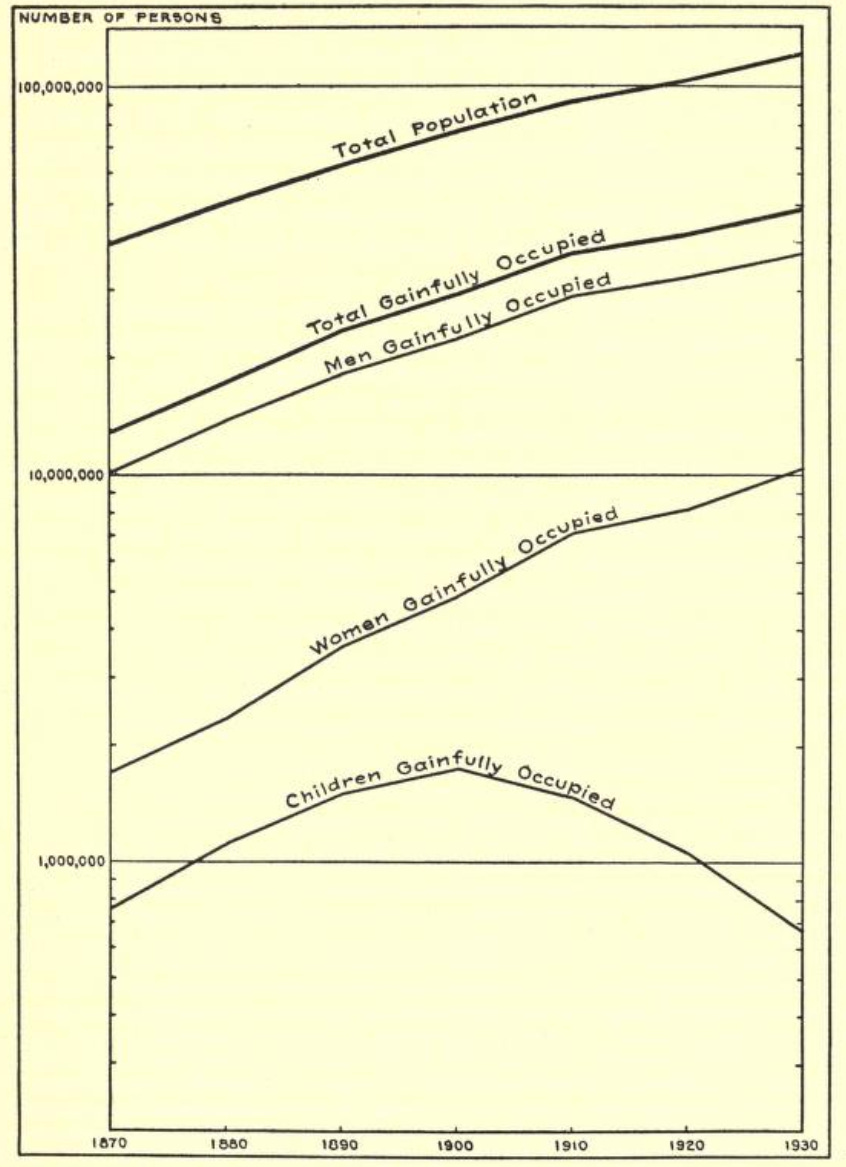
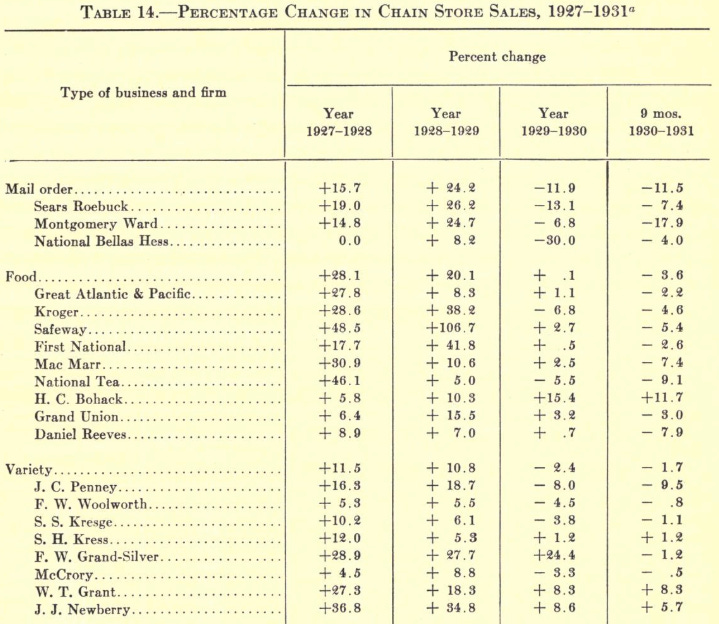
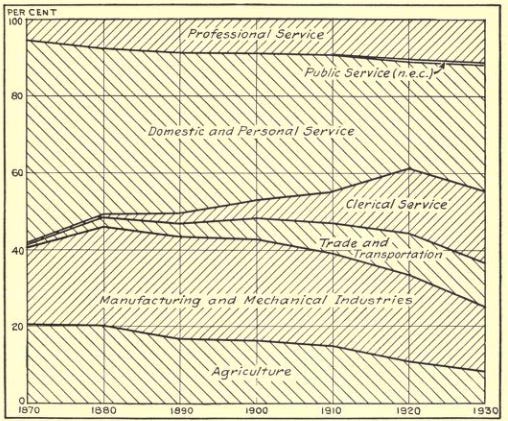
As agriculture’s share of employment plummeted from more than 50 percent in 1870 to less than 25 percent in 1926, it wasn’t just manufacturing that absorbed the expanding workforce. The share of jobs in trade and transportation (e.g., moving, storing, and selling goods in wholesale and retail trade) rose from 9 to 20 percent. Clerical services (e.g., retail salespeople and cashiers) exploded from 1 to 8 percent.
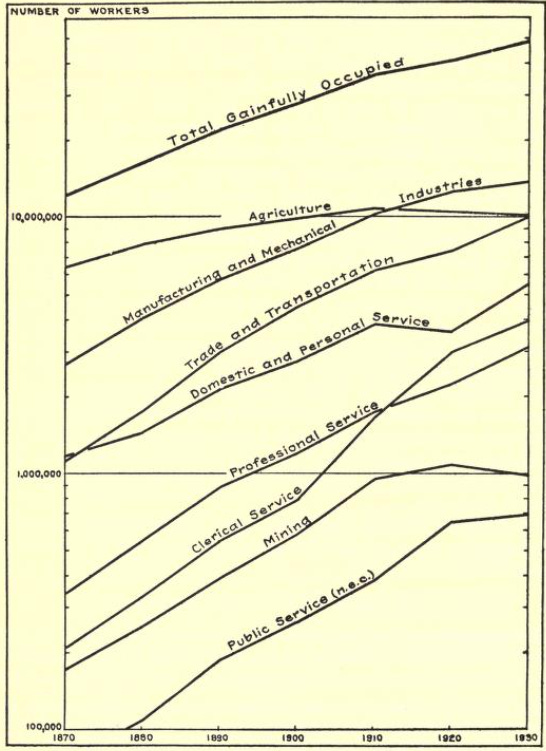
Manufacturing advanced faster than working conditions. While the 12-hour workday disappeared in the 1920s—the US Steel Corporation abandoned it in 1923—neither the two-day weekend, nor paid vacations, nor retirement existed for the average American worker.
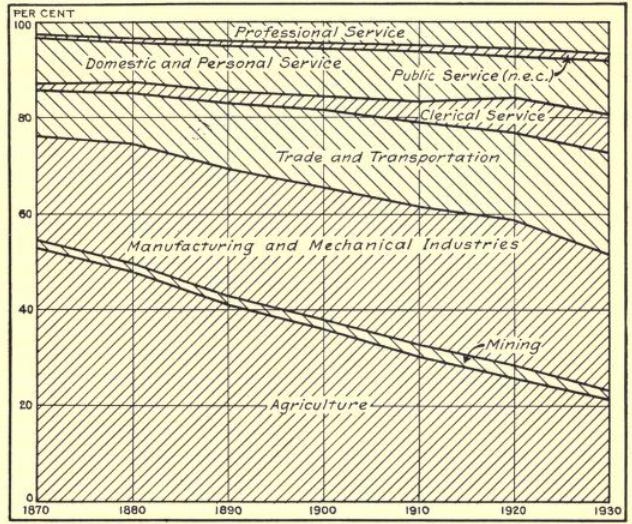
Modern urban consumerism marched forward thanks to an explosion of chain stores. Between 1927 and 1928, Sears Roebuck sales grew by 20 percent and Safeway sales grew by nearly 50 percent.
Even more than 2026, 1926 saw a bonanza of big-company mergers, which means it was similarly an era of monopoly concerns. Between 1919 and 1928, manufacturing and mining were involved in 1,200 mergers, a record for one decade. Bank mergers were even more frequent. And practically no industry was more concentrated than electricity. By the end of the 1920s, ten public utilities controlled 75 percent of the electric light and power business while 16 holding companies controlled about 50 percent of the country’s gas output.
Nothing in 1926 roared like the automotive industry. In 1900 there were 8,000 cars on the road—or “horseless carriages,” as they were then known. By 1926, the number had grown to 19 million. “It is probable that no invention of such far-reaching importance was ever diffused with such rapidity,” the report’s authors wrote.
The automotive revolution was the great achievement of Henry Ford. It was also the apotheosis of Fordism, the theory of business that braided higher productivity, higher wages and higher spending levels. In 1910, it took roughly 15 hours to put together a single Model T Ford. By 1926, a new car rolled off Ford’s assembly line every 10 seconds. Productivity was the handmaiden of affordability: A vehicle that cost the average worker two years’ wages before World War I cost just 3 months’ earnings in the mid-1920s.
No other country rivaled America’s automotive love affair. According to the historian Bill Bryson, 1920s Kansas alone had more vehicles than France. Car ownership created an entirely new way of thinking about the self in relation to the environment—an “automobile psychology.” Social scientists spoke of the modern “gypsy family,” which seemed to spend more time inside the car than outside it. Travel time surged, and the tourist business swelled, with new “camping grounds, cabins, cottage camps, and roadside camps” dotting the landscape to serve a nation that couldn’t get enough of the road. Just as Airbnb and its brethren pushed the hotel business in the 2010s and 2020s, so did these new makeshift tourist attractions force the hotel industry to upgrade in the 1920s. With “the increase in travel by women which has been induced by the automobile,” hotels added more private bath facilities, more varied restaurant menus, and plusher room furnishings. When America made cars, cars remade America.
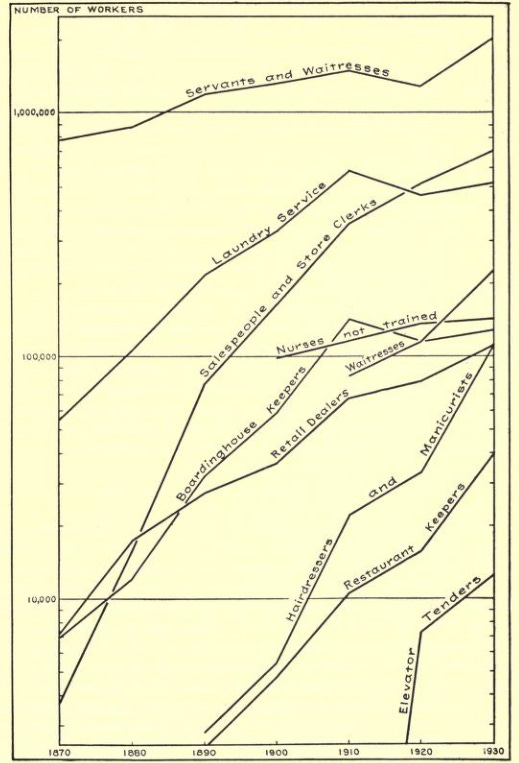
The year 1926 was almost certainly the high-water mark of women’s rights and liberties in American history, to date. The nearly 10 million women who worked for wages represented a doubling of the female workforce since the end of the 19th century. While the share of women working as domestic servants declined, more became teachers and hairdressers. No female occupation grew faster than the salesperson or store clerk.
After the ratification of the 19th Amendment in 1920, women had only voted in two presidential contests by 1926. Still, there was anxiety about their acquisition of political and cultural power, which concentrated on the rise of the legendary “flapper.” These flapper gals “smoked, drank, rouged their shining faces, bobbed their hair (which is to say cut it short and even all the way around), and clad themselves in silken dresses of breathtaking skimpiness,” the historian Bill Bryson writes in One Summer: America, 1927. The shrinkage of chastity was quantifiable: The amount of fabric in the average dress fell from 20 yards in 1910 to 7 yards in the 1920s.
Anxiety about women flaunting their liberties and their thighs was an adjunct to concerns about changes to the family. With the rise of working women coinciding with an increase in divorce, the authors of Recent Social Trends mourned that homes became mere “parking places” for parents and children, whose passions resided in labor and leisure.3
Childhood was transforming just as much as womanhood in the 1920s. For the first time, half of high-school-age students attended school, an eightfold increase since 1900. Declining birthrates along with rising wealth led to fewer children and more resources devoted to each child.
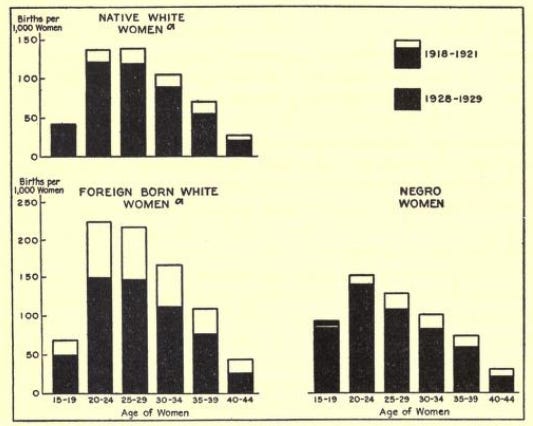
The report’s authors weren’t entirely sure that the new style of parenting—eerily similar to intensive parenting phenomenon of the 2020s—was a good thing. In a passage paragraph that one could imagine reading in the New York Times tomorrow, they worried about the the declining birthrate :
For the first time there were fewer children under five years of age in one census year than in the one preceding.
For the first time also there were fewer children under five years of age than from 5 to 10 years of age. In some cities already there are not enough children to occupy the desks in the earlier grades. This decreasing enrollment has not yet reached the high schools, but it is only a question of time, unless a larger proportion of those out of school are continued in school. Though the supply of children is being restricted, the demand for them continues.
Hovering over the decade’s cultural perturbations was Prohibition, which had been the law of the land since 1920. Prohibition was bad, not only because it shut down a major industry (America’s fifth largest, at the time); not only because it moved billions of dollars from the legitimate economy into the black market, empowering the Mafia and other criminal enterprises; not only because the national murder rate went up by almost a third after Prohibition was introduced; and not only because the federal government lost about half a billion dollars in liquor taxes (10 percent of its national income); but also because it killed people directly. As an ingredient in paint thinner, antifreeze, and other goods, alcohol’s production couldn’t be fully outlawed by the government. To discourage its consumption, the government required that industrial booze be frequently laced with poison. Americans, loving booze, drank that, too.
The results were disastrous. A chemist’s survey in the New York Telegram found that one speakeasy’s spirits contained, among other things, kerosene, formaldehyde, and sulfuric acid. In their book Eating in America, Waverley Root and Richard de Rochemont report that nearly 12,000 people died in 1927 from drinking poisoned alcohol. Given that the US population was roughly 66 percent smaller than it is today, that would be the mortality equivalent of 36,000 people dying in 2026 from drinking beer that had been poisoned on purpose by the feds. (That figure is, by the way, roughly the number of drivers who die annually in automobile accidents today.)
Beyond the speakeasies and jazz clubs, sports were becoming a more central part of American life, although the industry was unrecognizable to modern audiences, in large part because 1920s sports were so unprofessional. For example, while it was considered America’s pastime, baseball was a terrible business. Teams relied on ticket sales for revenue, but Sunday games were prohibited in most cities, and electric lights were a luxury. So most games had to be played during the weekdays, when few working people could attend. Ninety-minute games were common; without a big audience or big paycheck waiting for them, players seemed to be in a rush to get things over with. In one doubleheader against the New York Yankees on September 26, 1926, the St. Louis Browns won 6–1 in 72 minutes and then won 6–2 in 55 minutes. (Yes, those were two nine-inning games.) “Quite how they managed it is a wonder,” the historian Bryson writes. “The two teams banged out 25 hits between them in the first game and 20 in the second, so these were hardly classic pitchers’ duels. There was just a lot less messing around.”4
Unlike 2026, when we are witnessing the decline of reading, 1926 might have been a high-water mark for reading in American life. Never before had so many different print media—books, magazines, and newspapers—swelled at the same time, before sound film and television took over.
Authors were celebrities—people mobbed Sinclair Lewis’s Minnesota home while he was trying to write his novels—and books published annually had doubled since the 1910s. For those overwhelmed by so many titles, the Book-of-the-Month Club was founded in 1926. Magazine advertising revenues grew by 500 percent in the Twenties, thanks to the birth of Reader’s Digest in 1922, Time in 1923, and The New Yorker in 1925. Newspaper sales also rose throughout the decade, and New York City alone had twelve daily papers.
This abundance of literacy was threatened by the arrival of new communications technology. Even more than telephones—which multiplied from less than 2 million units in 1900 to 20 million in 1930—radio defined the decade, evolving “from a mysterious curiosity to a widely diffused and universally accepted instrument of entertainment, business, learning and mass communication, [with] few if any counterparts in social history,” according to the authors of Recent Social Trends.
It is remarkable to read the report’s analysis of radio’s effect on American life, because it reads so alarmingly modern. Above all, the authors were concerned that radio encroached on individuality by mind-wiring each American to a global monolith of news and entertainment. Mass media organizations created “greater possibilities for social manipulation,” they wrote, and radio threatened to turn the individual into what the philosopher Martin Heidegger in this period called a “they-self”—a being who, failing to achieve authenticity, fully adopts the tastes, habits, and beliefs of the universal crowd.5
Today’s commentators sometimes fret about the role that the internet and the smartphone have played in unleashing populism, by elevating the views of the disenfranchised and smashing the authority of the elites. But 100 years ago, the authors of Recent Social Trends also saw the radio as a pure “leveling” technology:
Negroes barred from entering universities can receive instruction from the same institutions by radio; residents outside of the large cities who never have seen the inside of an opera house can become familiar with the works of the masters; communities where no hall exists large enough for a symphony concert can listen to the largest orchestras of the country; and the fortunes of a Negro comedy pair can provide social talk throughout the nation. Isolation of backward regions is lessened by the new agency of communication
Unlike print media, radio works the ear rather than the eye—the ear, which cannot close or even focus with ocular precision, but remains always open to the world. One hundred years ago, we were already making our way in a world where waves of information radiated around us, a proto-internet of sound, waiting for an audience and an antenna to tune in. Wired to the emotional values of far-flung events, Americans breathed air that pulsed with spooky electromagnetism, carrying the stories of people we would never meet. Without knowing what it meant to “log on,” our fellow citizens in 1926 were already learning what it means to never be able to log off.
The authors of Recent Social Trends were astonishingly prescient about the direction of technology. In one paragraph, they somehow anticipated the rise of audiobooks, YouTube, Netflix, smartphone cameras, musical software, ubiquitous air conditioning, and the electric battery revolution:
It may be that the world will find much use for talking books; school and college students may listen to lectures by long-running phonographs or talking pictures; moving pictures may be transmitted by wireless into houses; seeing with that new electric eye, the photo-electric cell, and recording what is seen, appear to have almost unlimited applications; new musical instruments different from any now in use may be given to us by electricity; the production of artificial climate may become widespread; an efficient storage battery of light weight and low cost might produce changes rivaling those of the internal combustion engine. And these are only a few of the myriad possibilities from new inventions in the future!
In an equally oracular section, the authors predicted the emergence of remote work and declining geographic mobility, anticipating that “the transmission of goods, of the voice and possibly of vision may act as a retarding influence on human mobility in the future and may cause a development of more remote and impersonal direction and controls.”
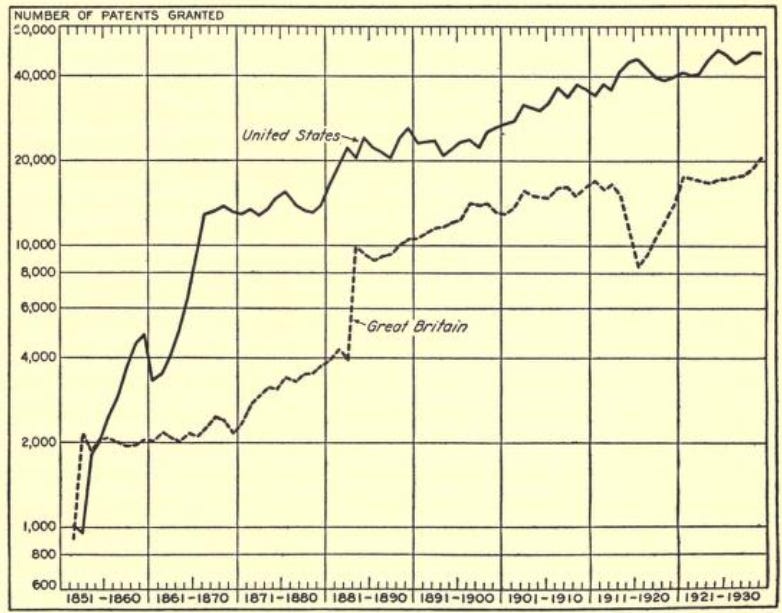
But the social scientists did not see these trends as altogether good. They worried that modern life, defined in equal parts by urbanization and technology, obliterated people’s values and their sense of self. Even as they gawked at the increase in patents—which grew more than 20-fold between the 1850s and the 1920s—they worried that a growing number of discoveries would bring “problems of morals, of education, of law, of leisure time, of unemployment, of speed, of uniformity and of differentiation.”
Social scientists of the 1920s saw machines pushing workers off of farms and competing with workers in manufacturing plants. How long, they wondered, until they would replace human workers in all tasks? “A larger proportion of work by machines, and a smaller proportion of human labor, is to be expected in the future,” they wrote. “There are indeed a few cases of wholly automatic factories and automatic stores and many automatic salesmen.” It is extraordinary to read these fears and not reflect on the AI jobs panic of the present, while also marveling at the thousands of occupations that are possible today precisely because machines made old jobs obsolete.
The dawn of the age of the machine drove us mad. Physicians of the day warned that the frail human mind was no match for the car, predicting at the time that “diseases of the wheel” would afflict the youth who rode bicycles and cars without restraint. It was not entirely obvious that they were wrong. In Germany, the number of patients registered in mental hospitals grew from 40,375 in 1870 to 220,881 in 1910. Over the same period, the share of patients admitted to general hospitals for illnesses of the nervous system rose from 44 to 60 percent.
Most perceptively, social critics of the age recognized that the urban-technological revolution of the early 20th century—what we might even call “modernity”—transformed not only our minds but also our values. Machines and systems that pulled Americans off the farm, away from the family home, and into churning markets of people and products threatened to replace the Judeo-Christian values that had bound the country for centuries with a new system of values dictated by markets. In 1903, the sociologist Georg Simmel anticipated the anxieties of the Twenties—ours and theirs—when he observed that in cities “money takes the place of all the manifoldness of things” and becomes “a common denominator of all values.” Money “hollows out the core of things, their peculiarities, their specific values, and their uniqueness and incomparability in a way which is beyond repair.”
One hundred and twenty years after the publication of that essay, the Wall Street Journal asked thousands of Americans what values were still important to them. While a declining share of Americans endorsed the worthiness of patriotism, religion, community, and children, the share who said “money” was “very important to them” went up. It sometimes seems as if markets and money are the last value standing, the final common denominator beneath all human endeavor.
On its 250th birthday, the U.S. similarly defines itself through markets. Those famous words of Calvin Coolidge, America’s president in 1926, could just as well serve this American president and this American moment: “The chief business of the American people is business.”