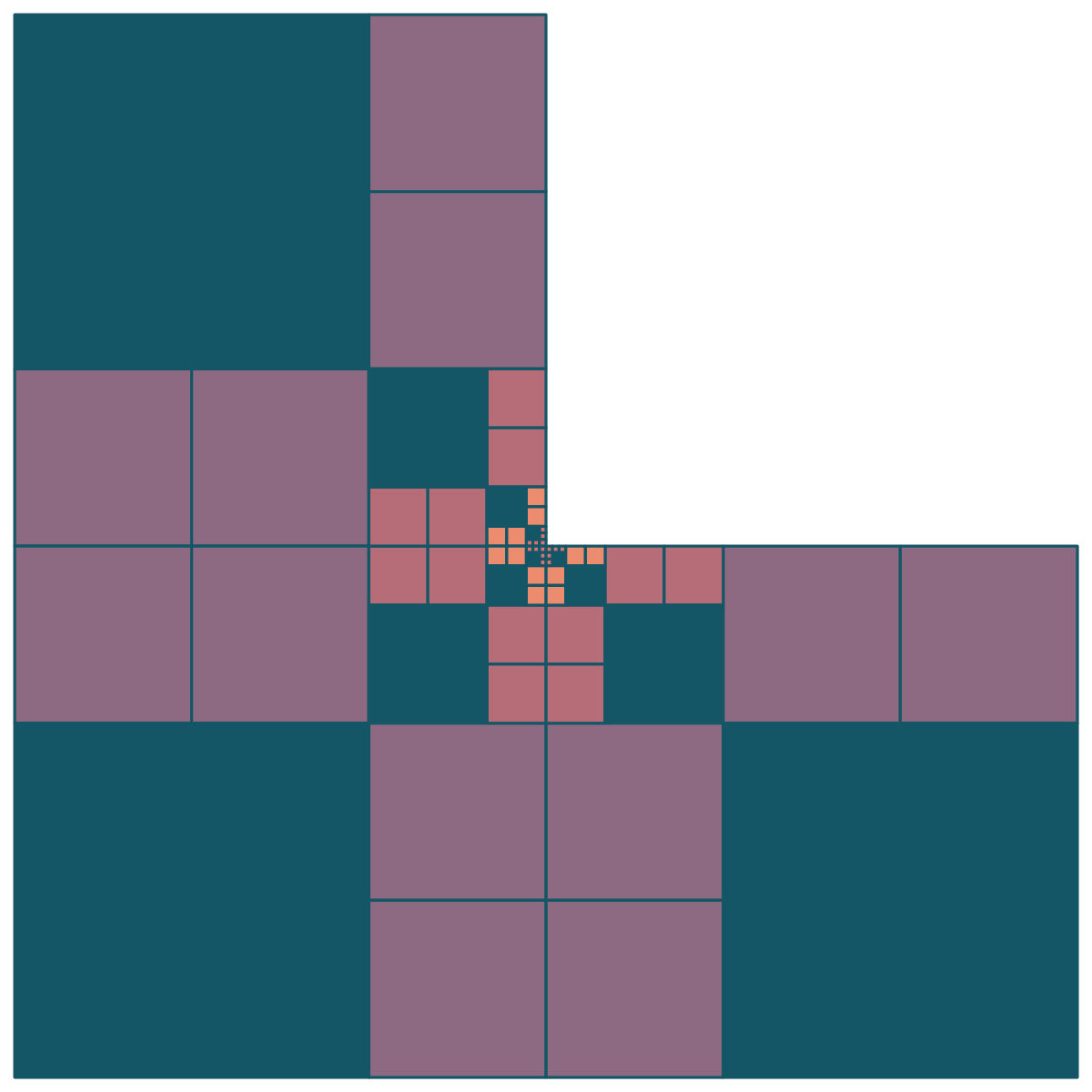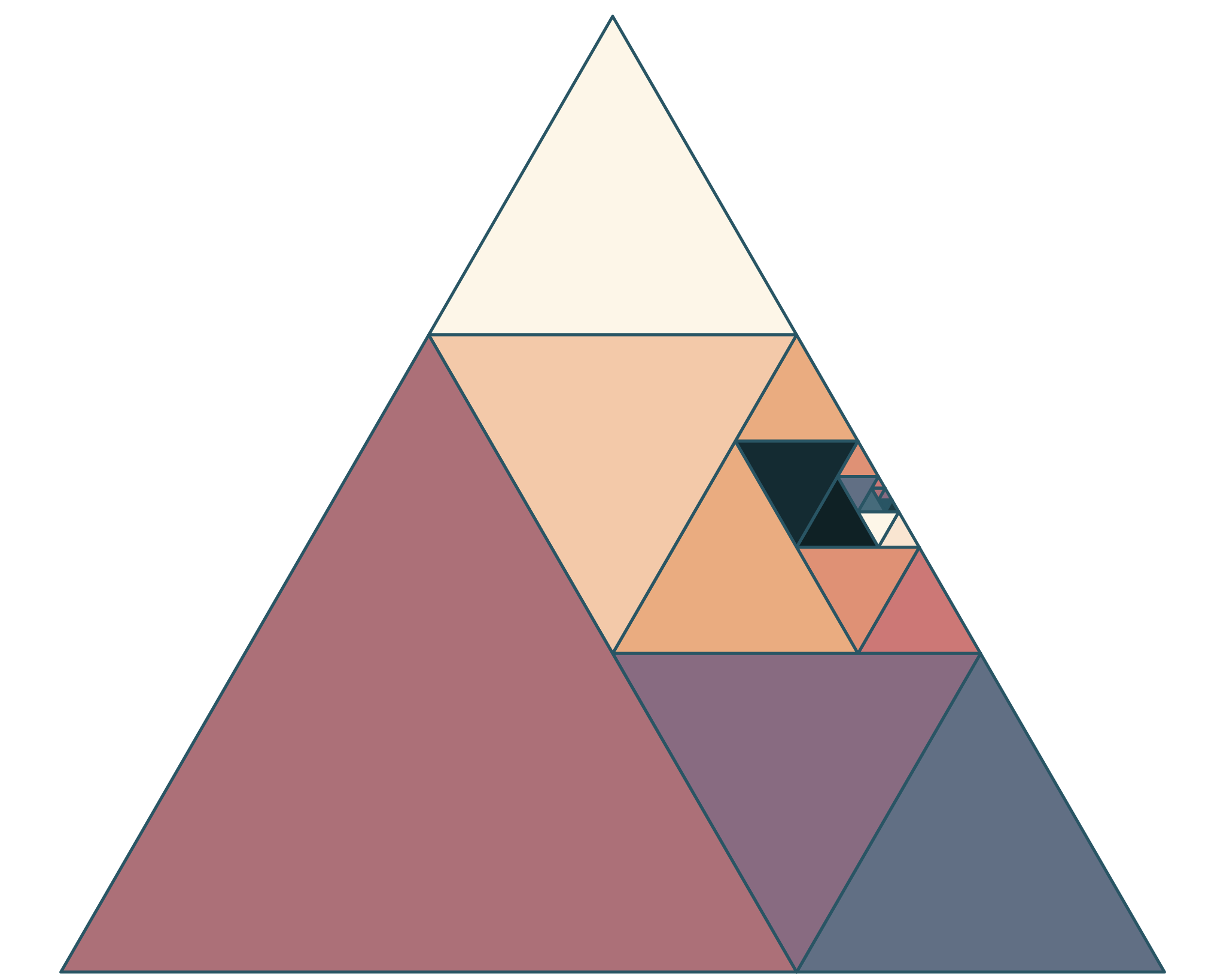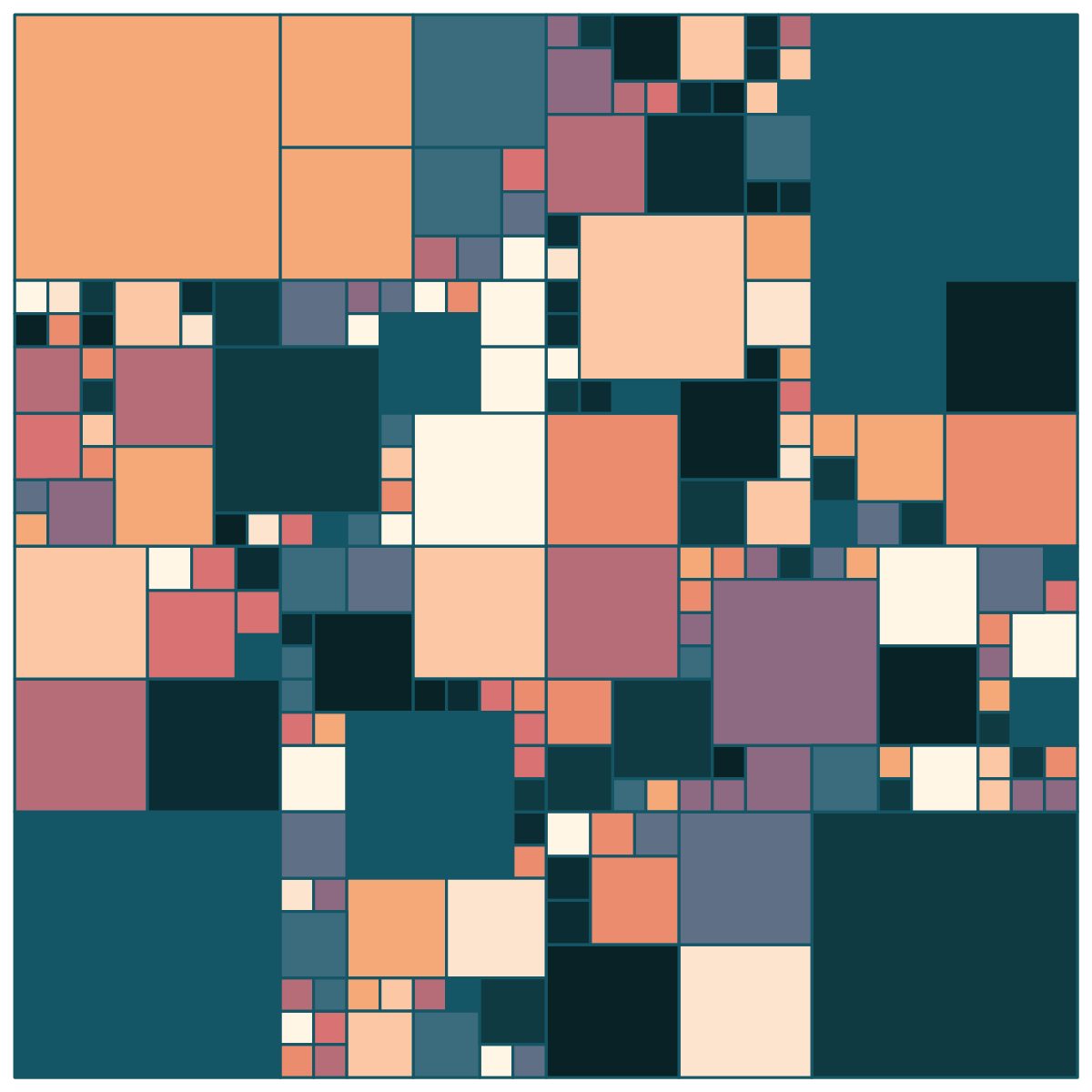
This is the second in a series of posts that blend art and math. Jump in and choose your medium to indulge in creative expression. Many have played with this through the years; a list of references is at the bottom. Thanks to Steve Heller for pinging me to play with squarable numbers and add them to inquiries.link along with some variations.
Warm-up
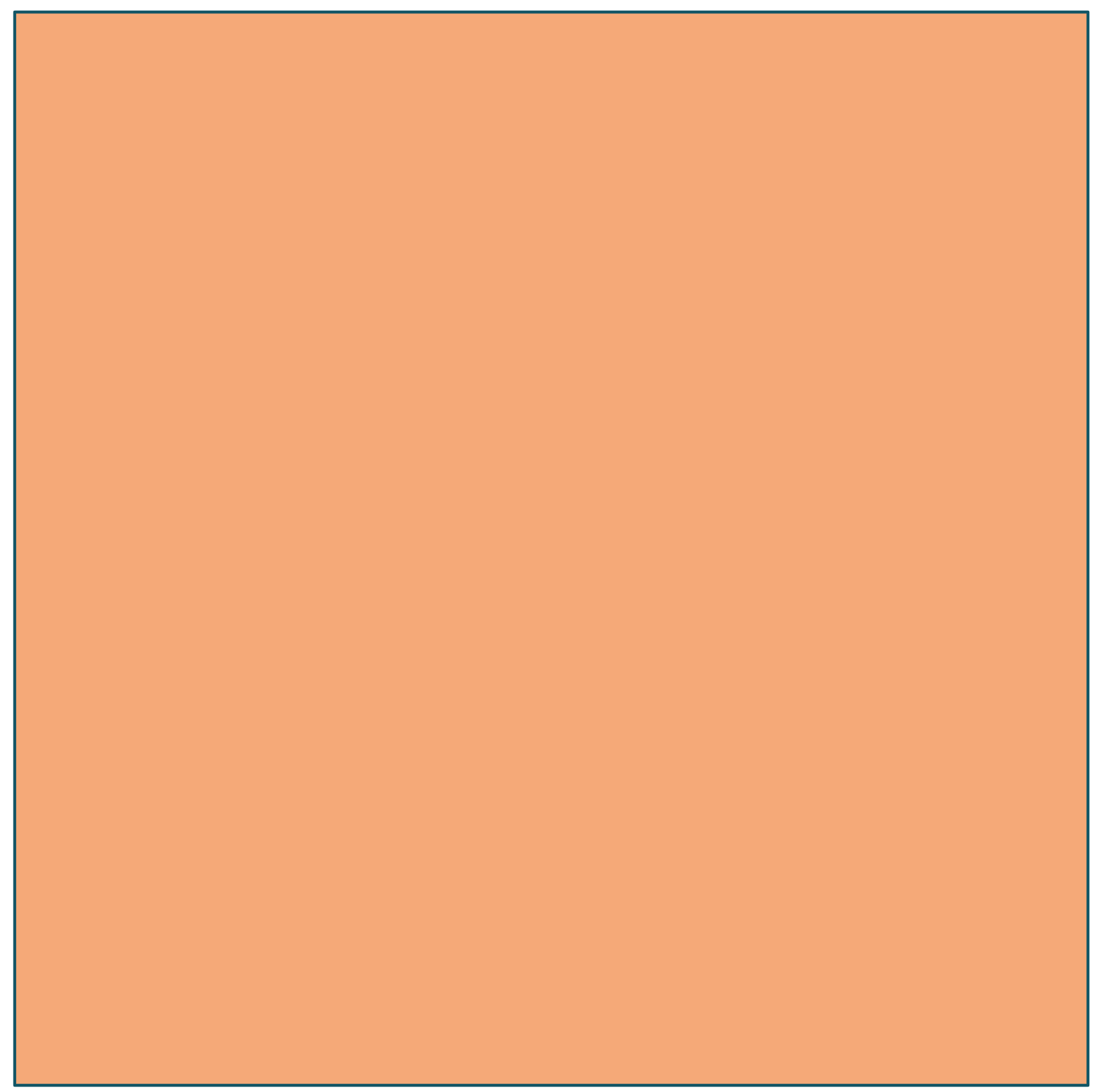
Grab a sheet of paper and a ruler. Make a square.

Now, split this square into squares. You might do something like this with four squares:
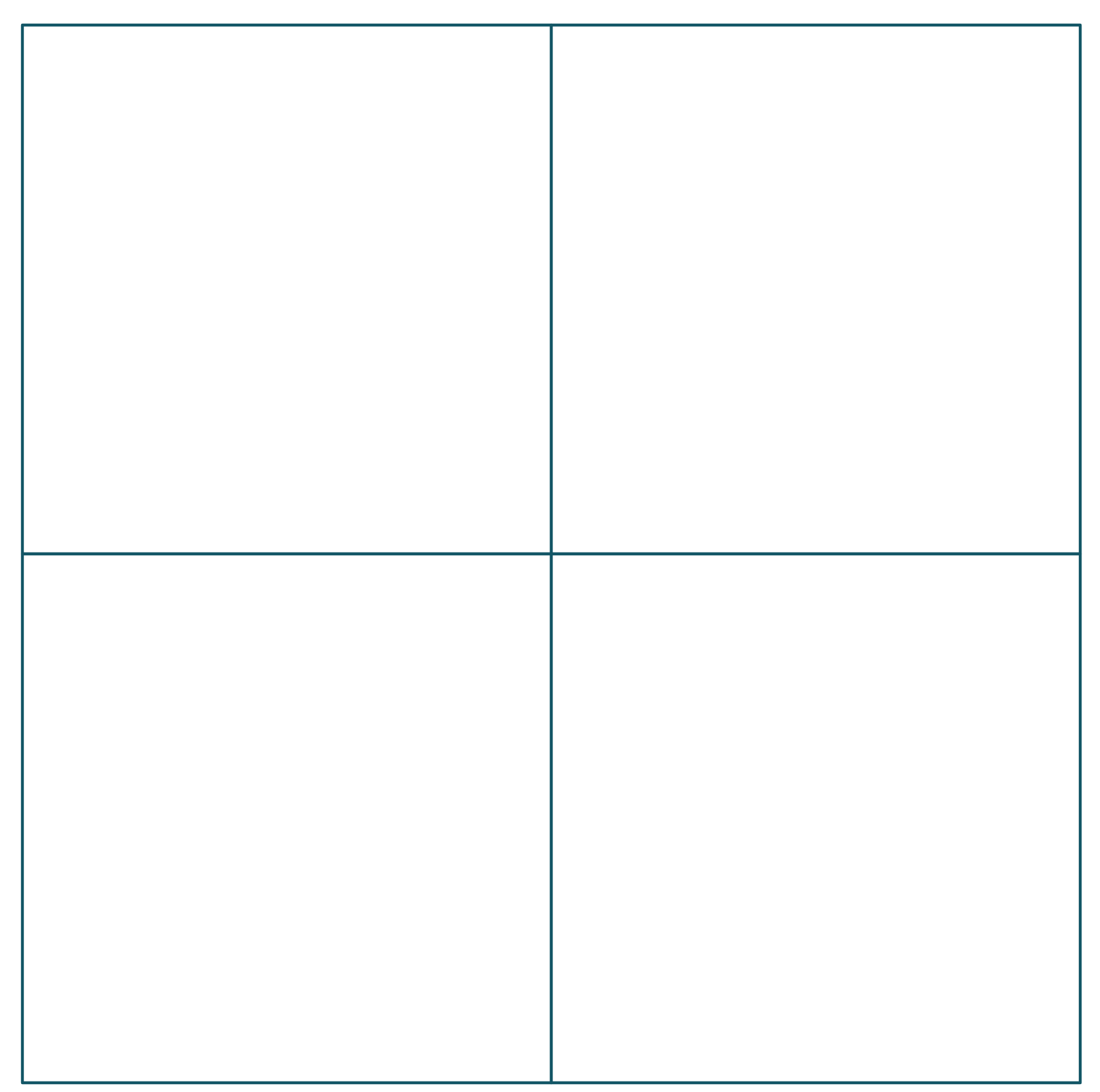
or these with 9 or 16 squares:
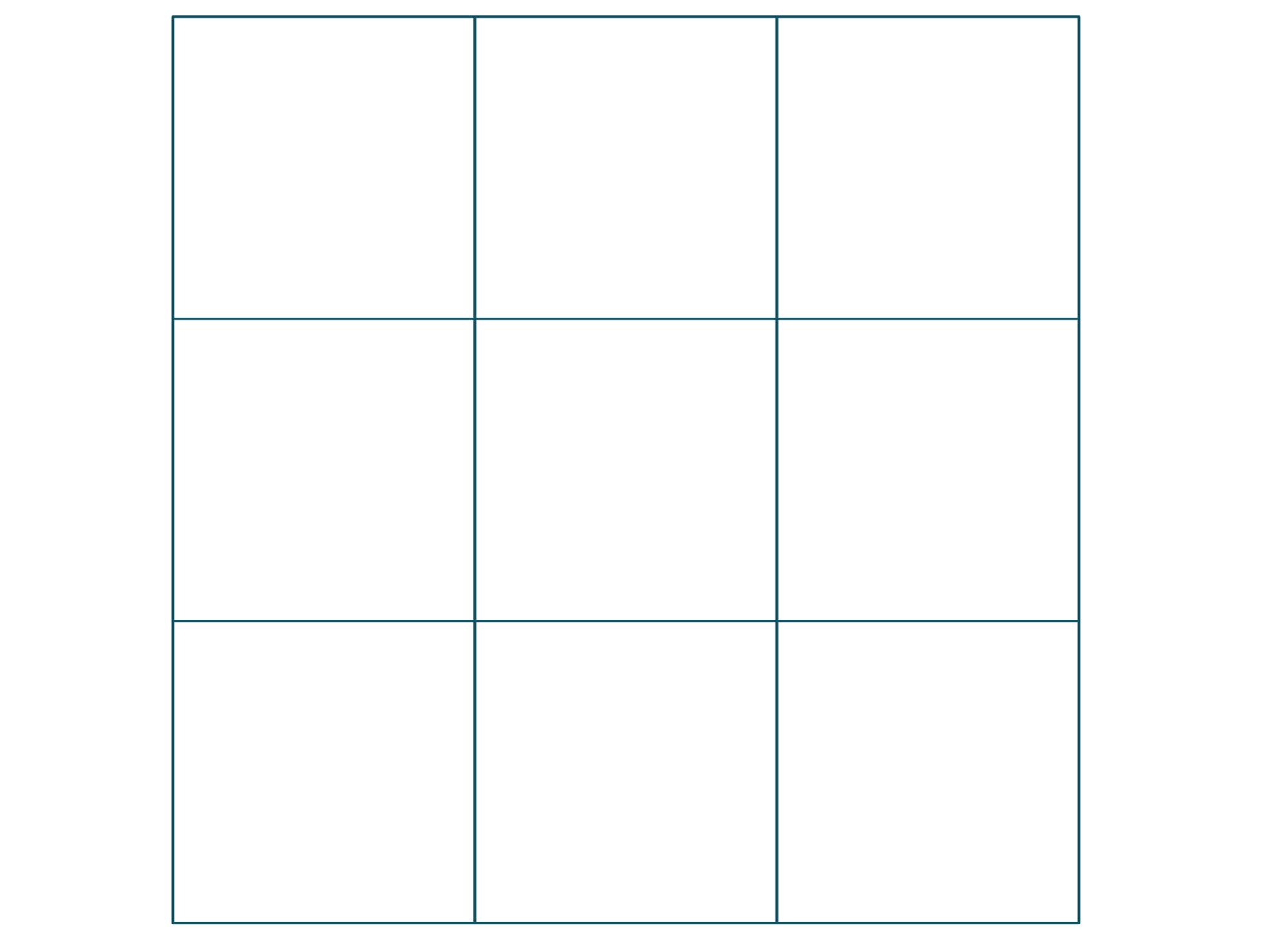
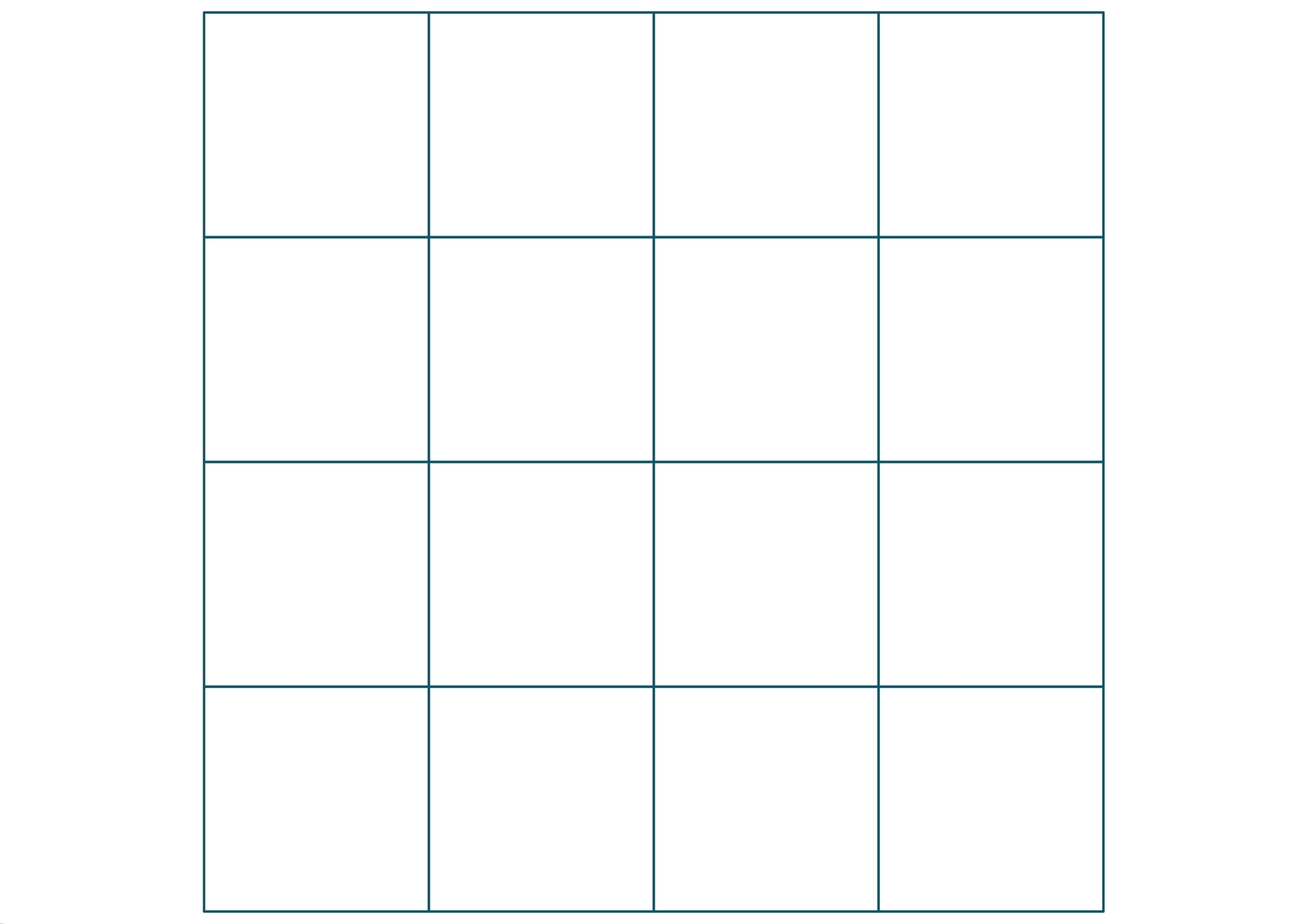
Now try to draw a square split into squares that are not all the same size by changing one of the smaller squares above. This time feel free to add some color to your squares.
To
prevent
spoilers
you'll
need
to
scroll
...
...
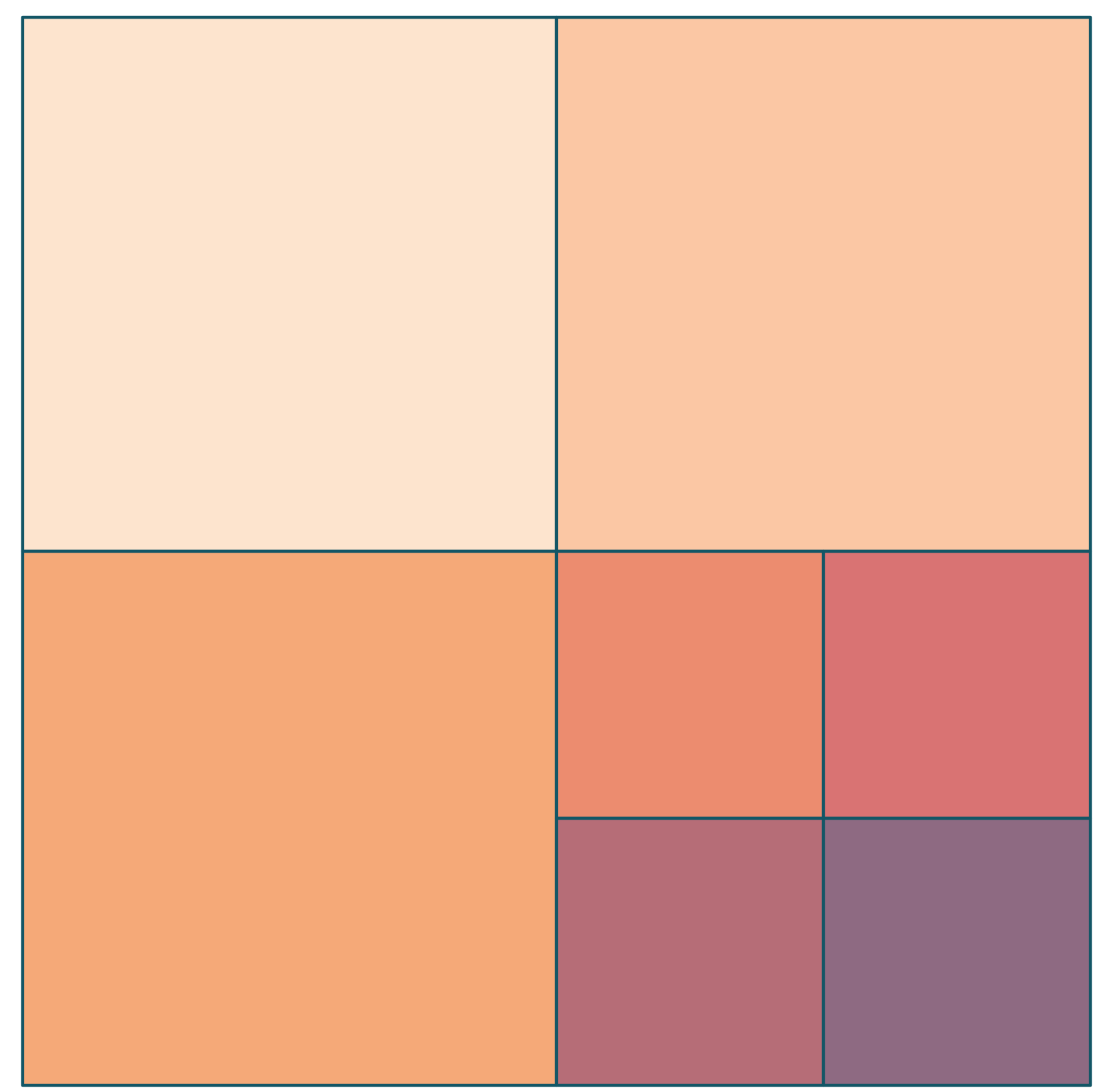
Ok, what did you make? How many squares does it have? Here are a couple of ideas:
One with 7:
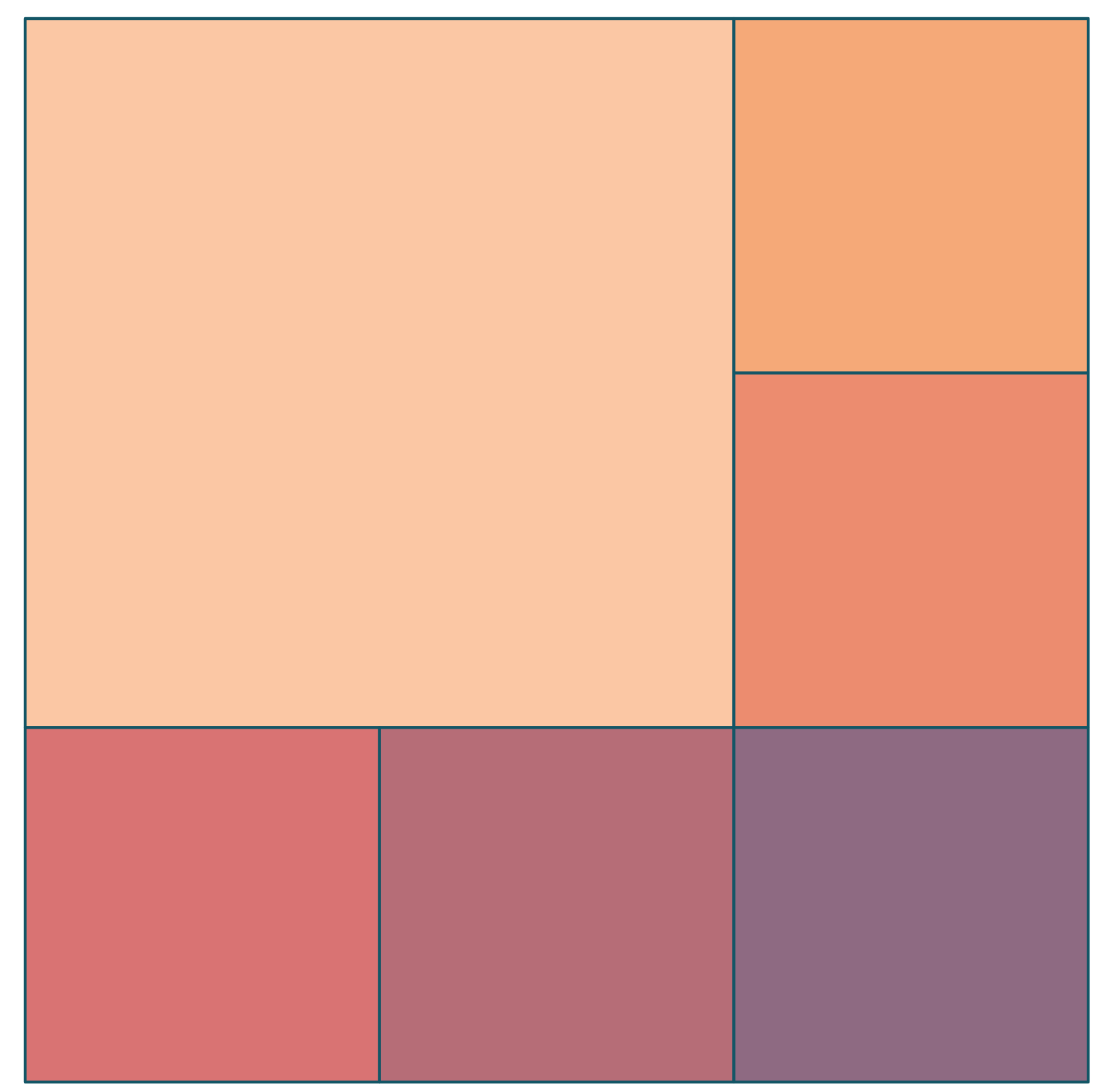
You can also try joining squares together. Take the 3x3 grid; we can join four squares to change 9 into 6.
Making Patterns - a primer
Now, let's think about the sequences we can form and art we can make with the ones constructed.
{1, 4, 9, 16, 25, ...}
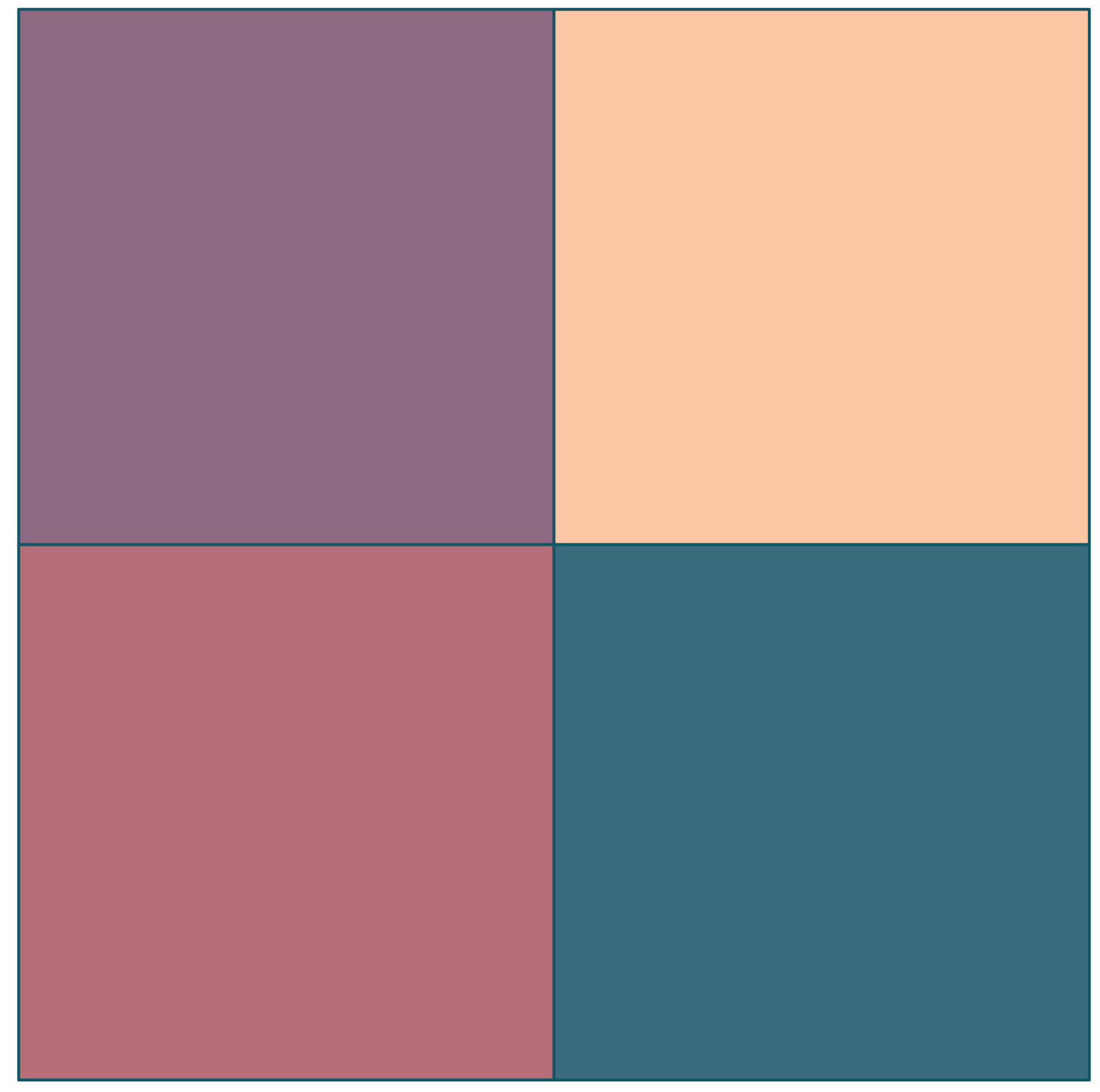
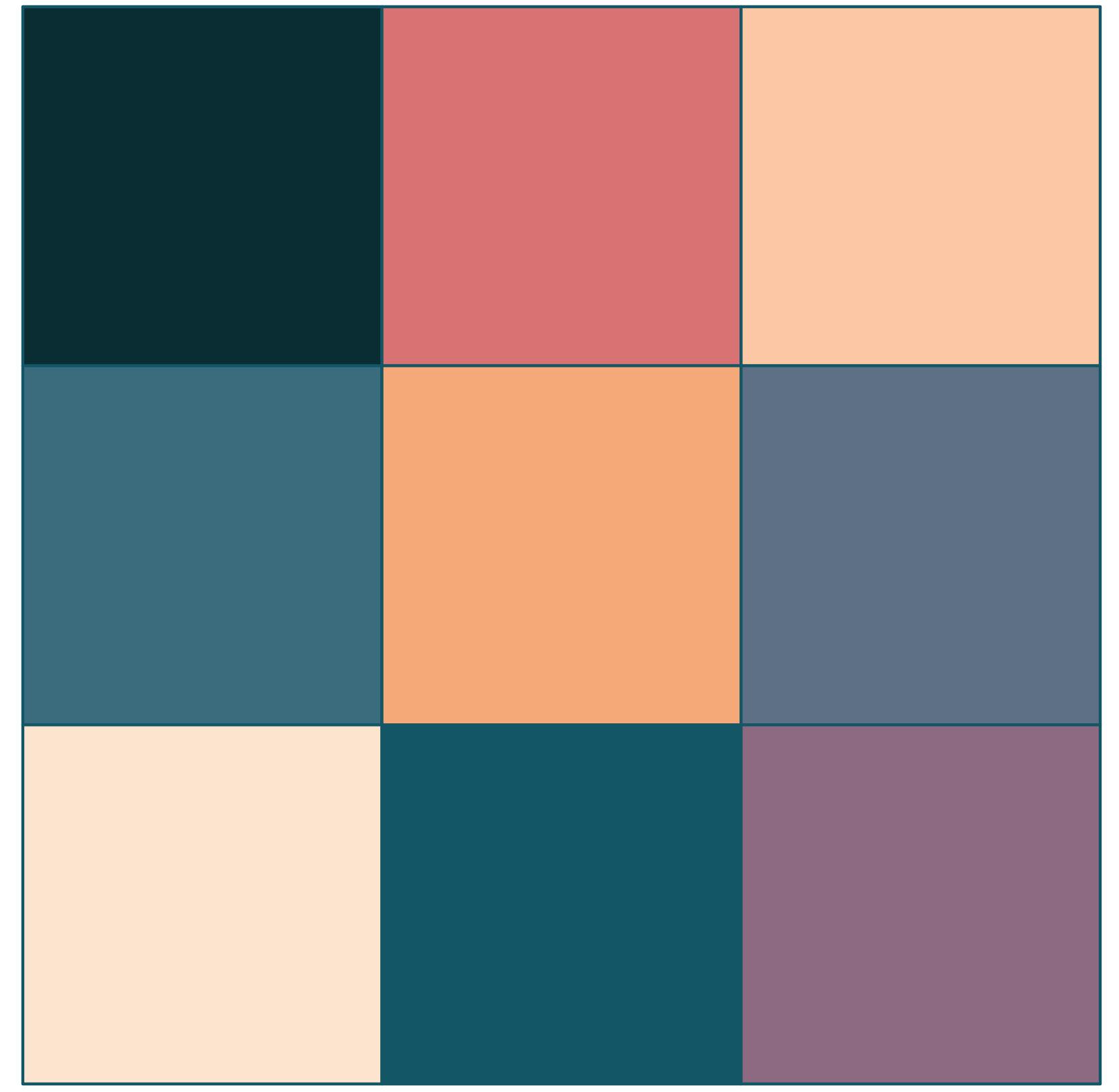
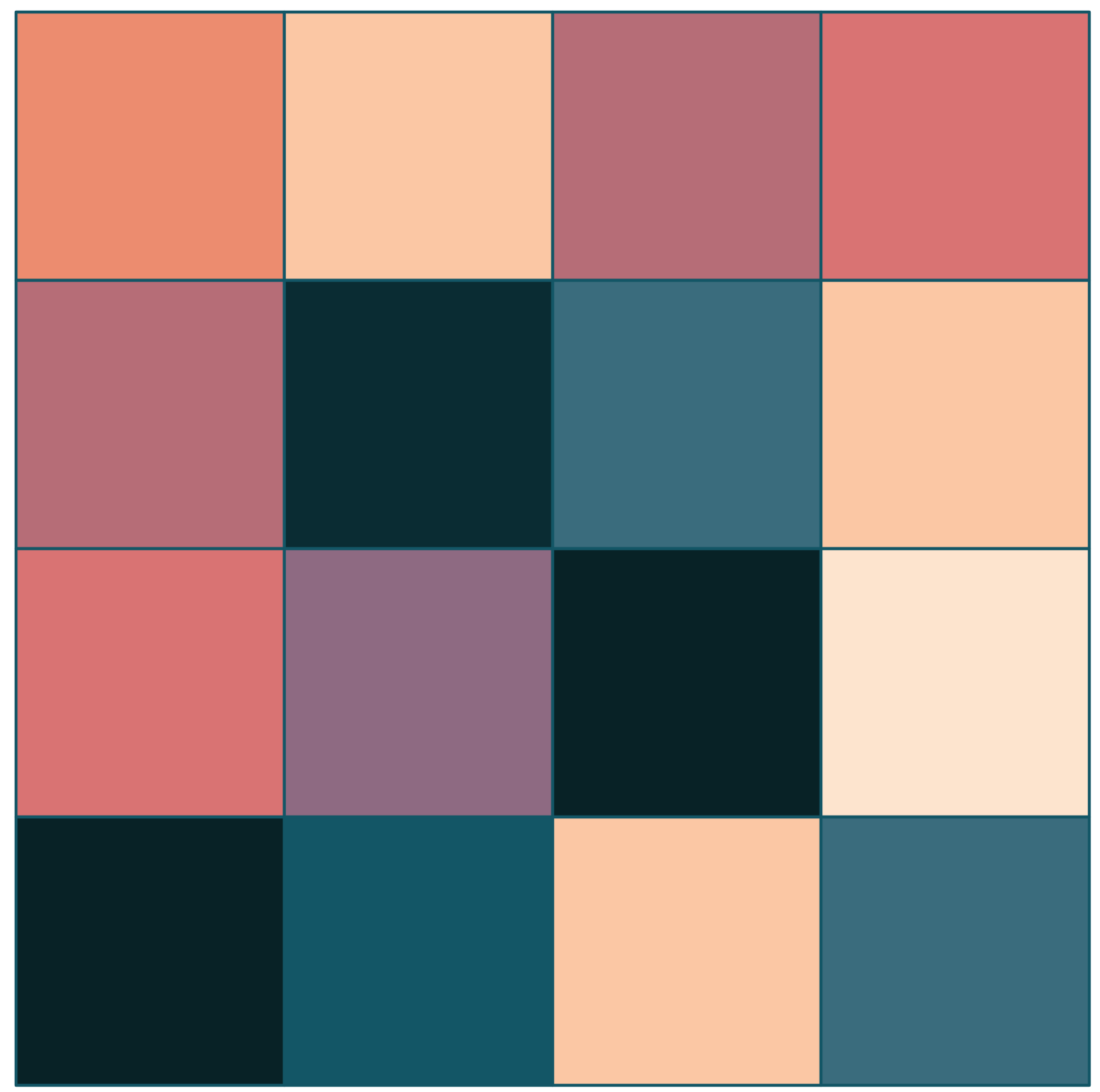
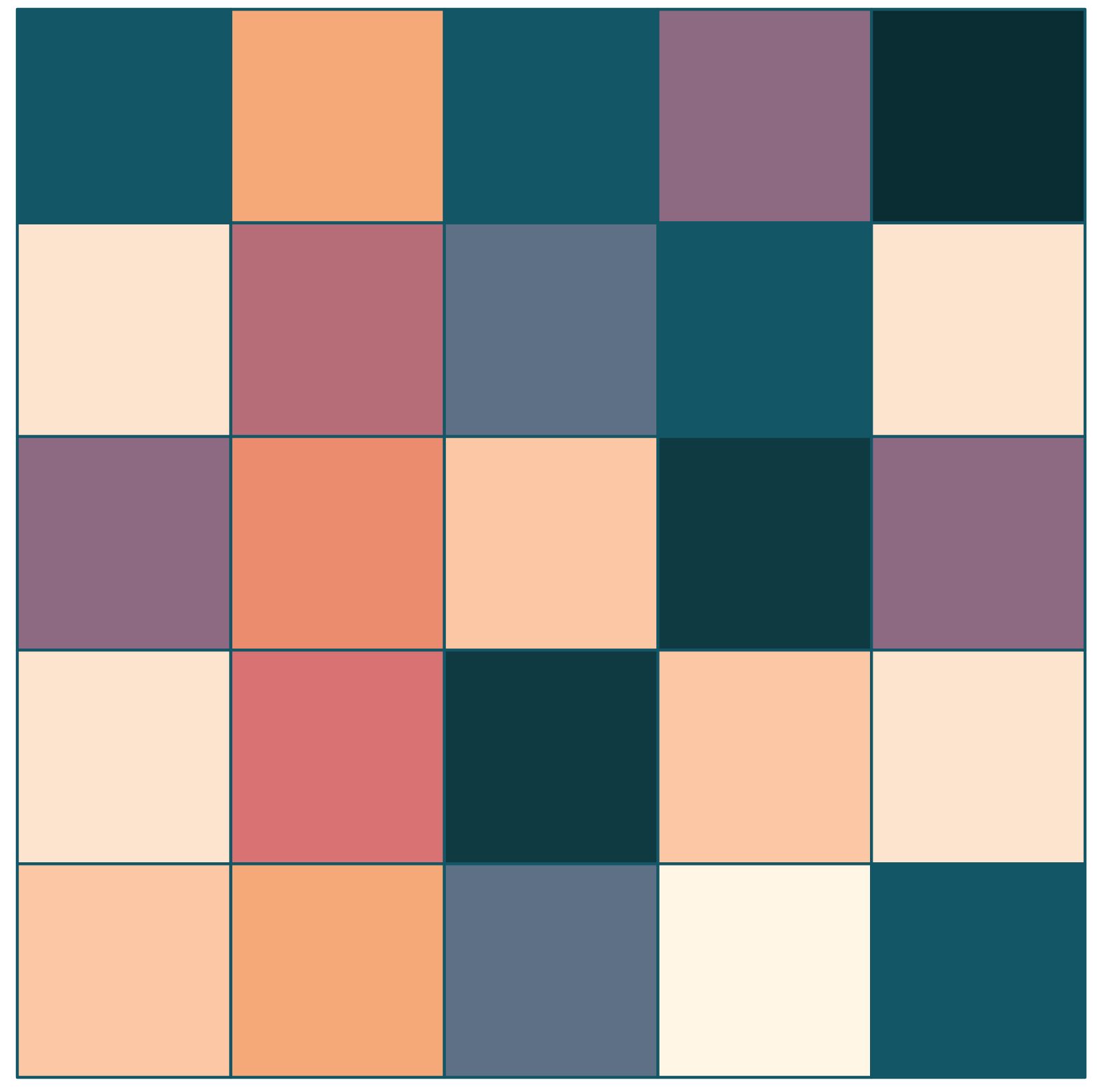
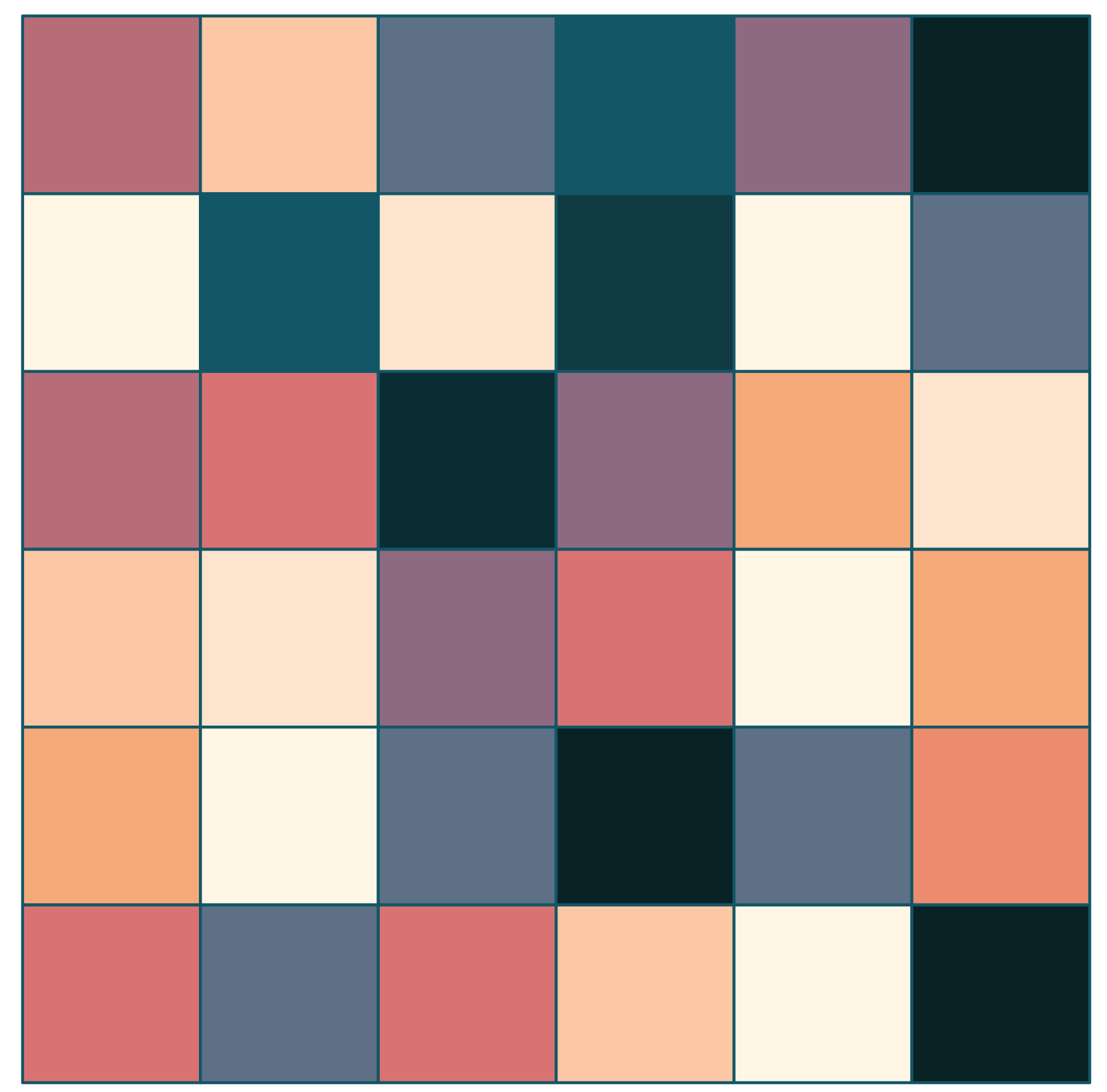
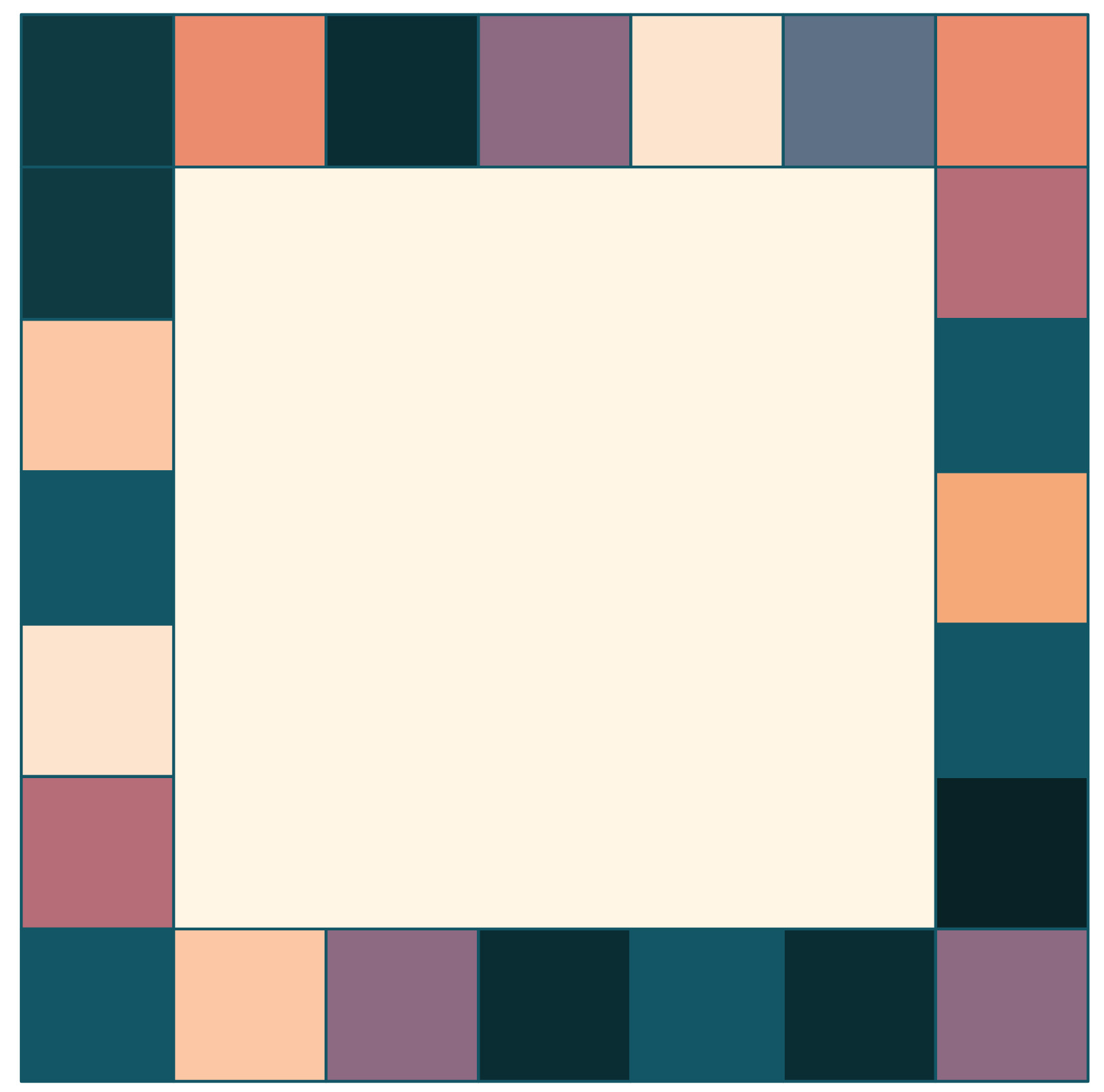
Now, what if you devise your own pattern? Create a rule for what comes next. For example, let's look at a pattern where we take a square that has been split into equal squares (like above), and then we join any middle squares to make a frame:
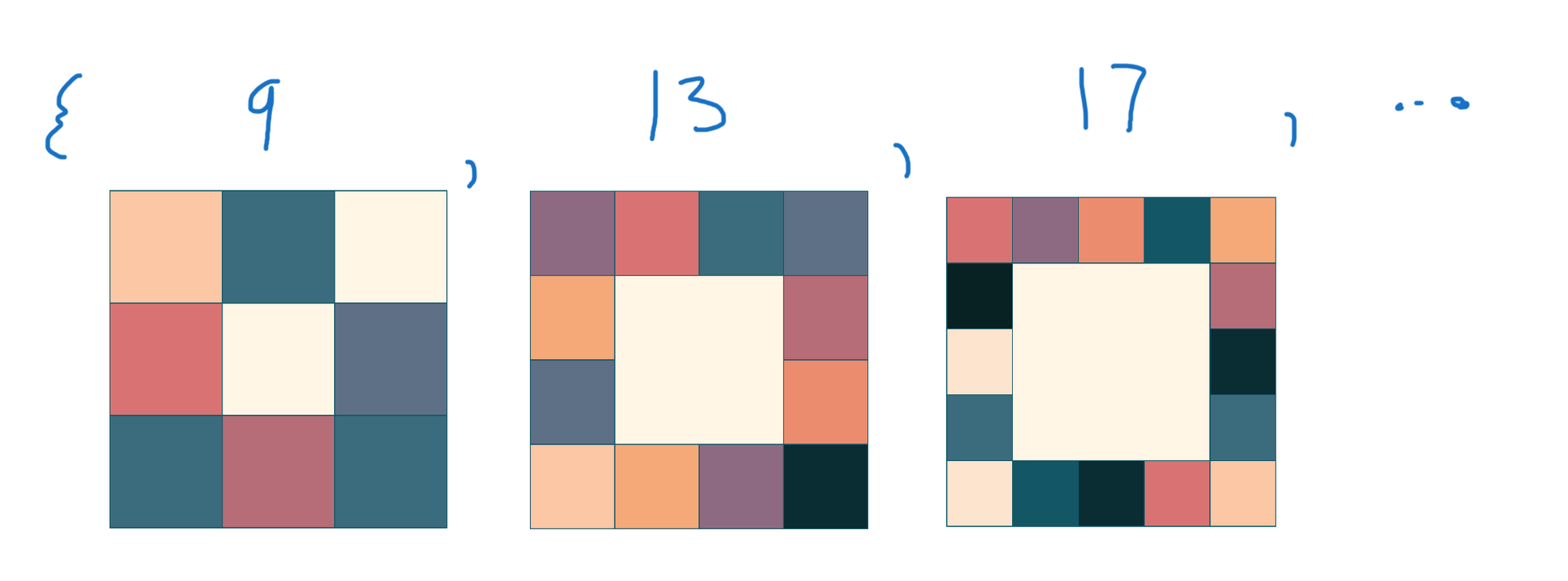
This would give us a sequence:
{9, 13, 17, ...
What comes next?
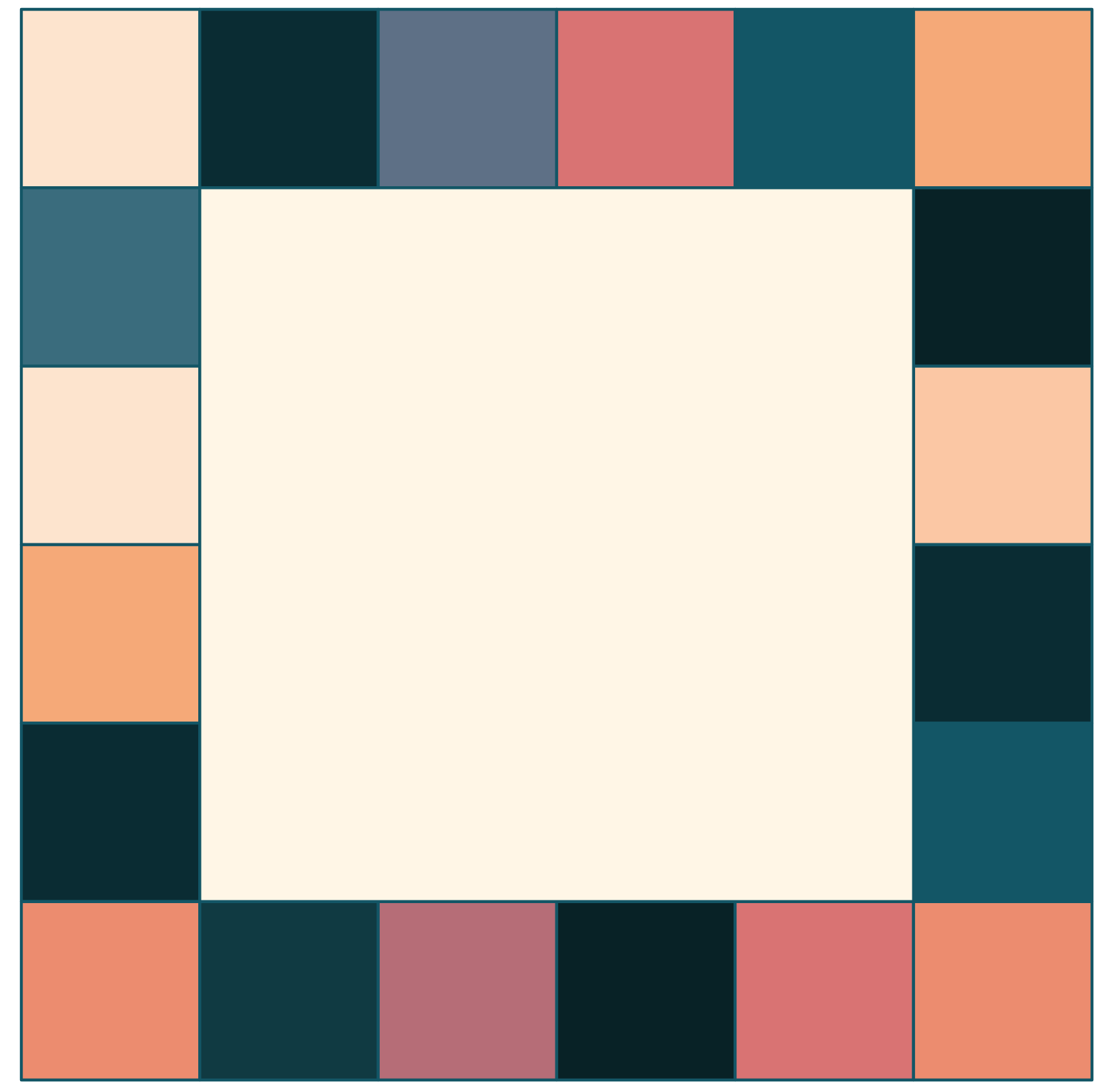
Did you say 21? How can we write this pattern? Here are a couple of ways:
- 5 + 4n
- (n + 2)2 - n2 + 1
Check to see if the next one fits how you wrote it - do you get 25?
Activity: Making Patterns - your turn
Now it's time to make some art. You can do this through folding paper, watercolors, quilting, or whatever medium suits you.
- Come up with your method to construct a pattern by dividing and/or joining squares.
- Decide if you will paint just one or many from the pattern.
- Contemplate what the sequence might look like as it goes on. Does it have an end?
- Are there rules to your pattern for how to color it? How many colors do you need so no two adjacent regions share a color?
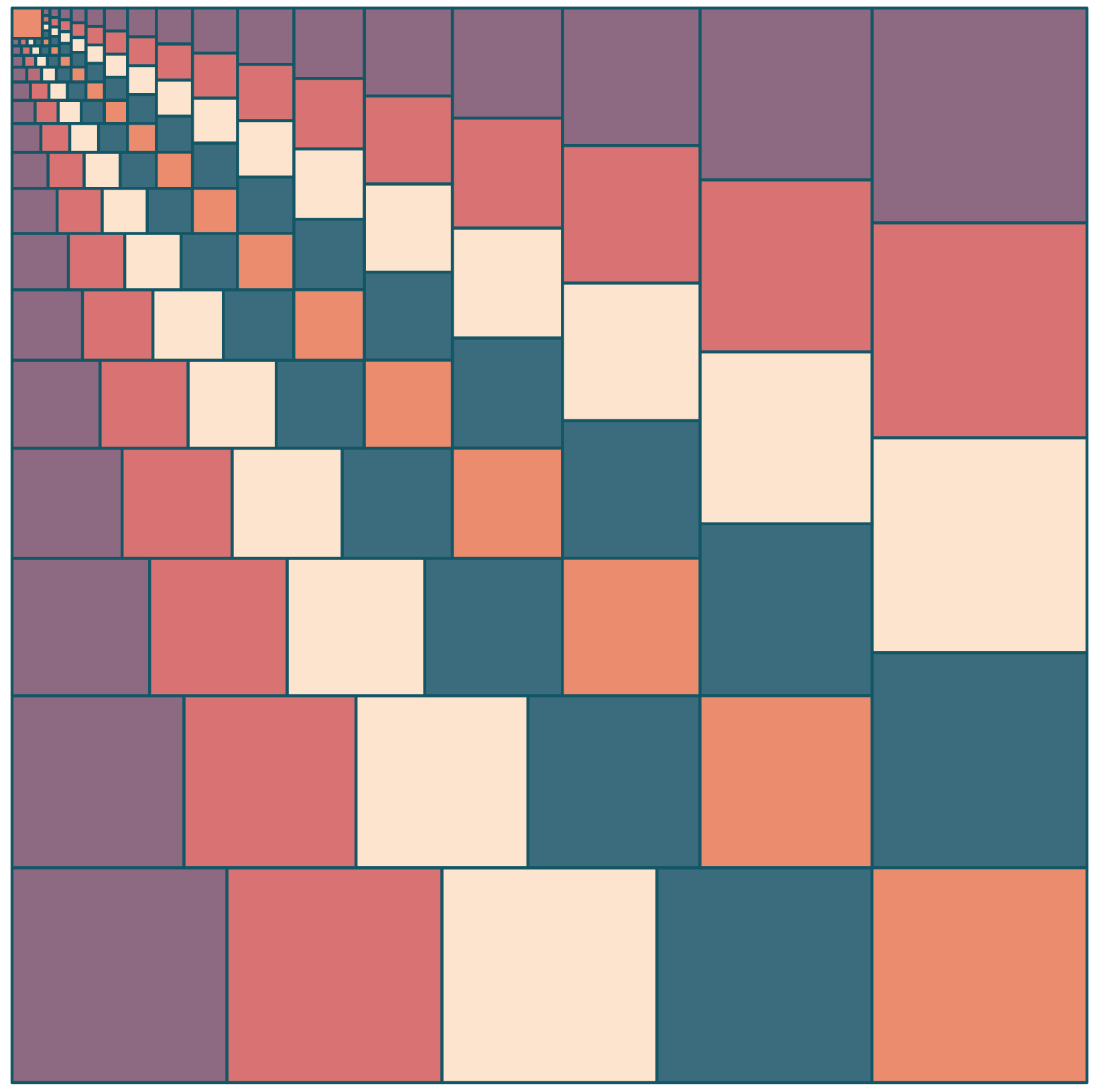
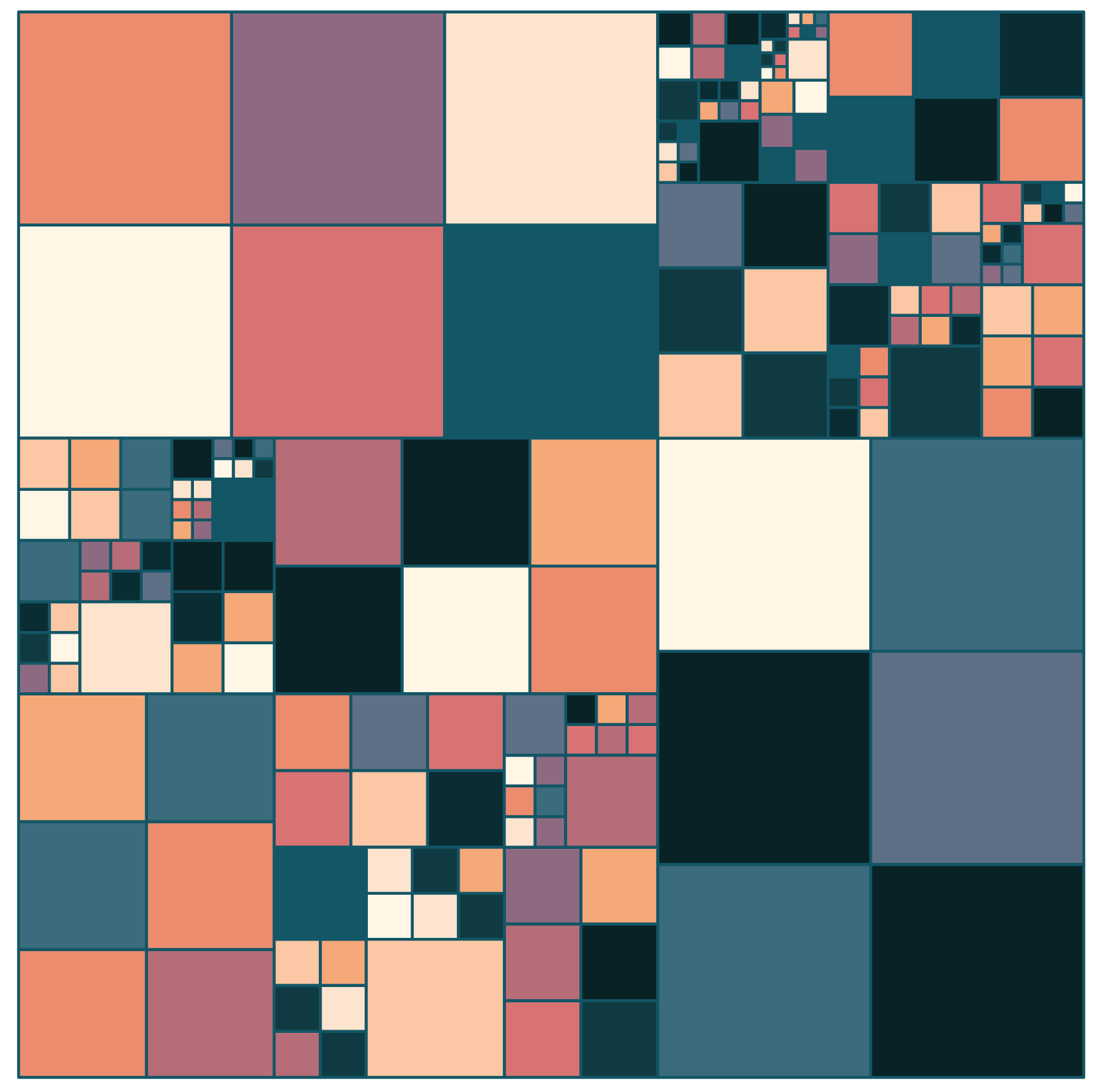
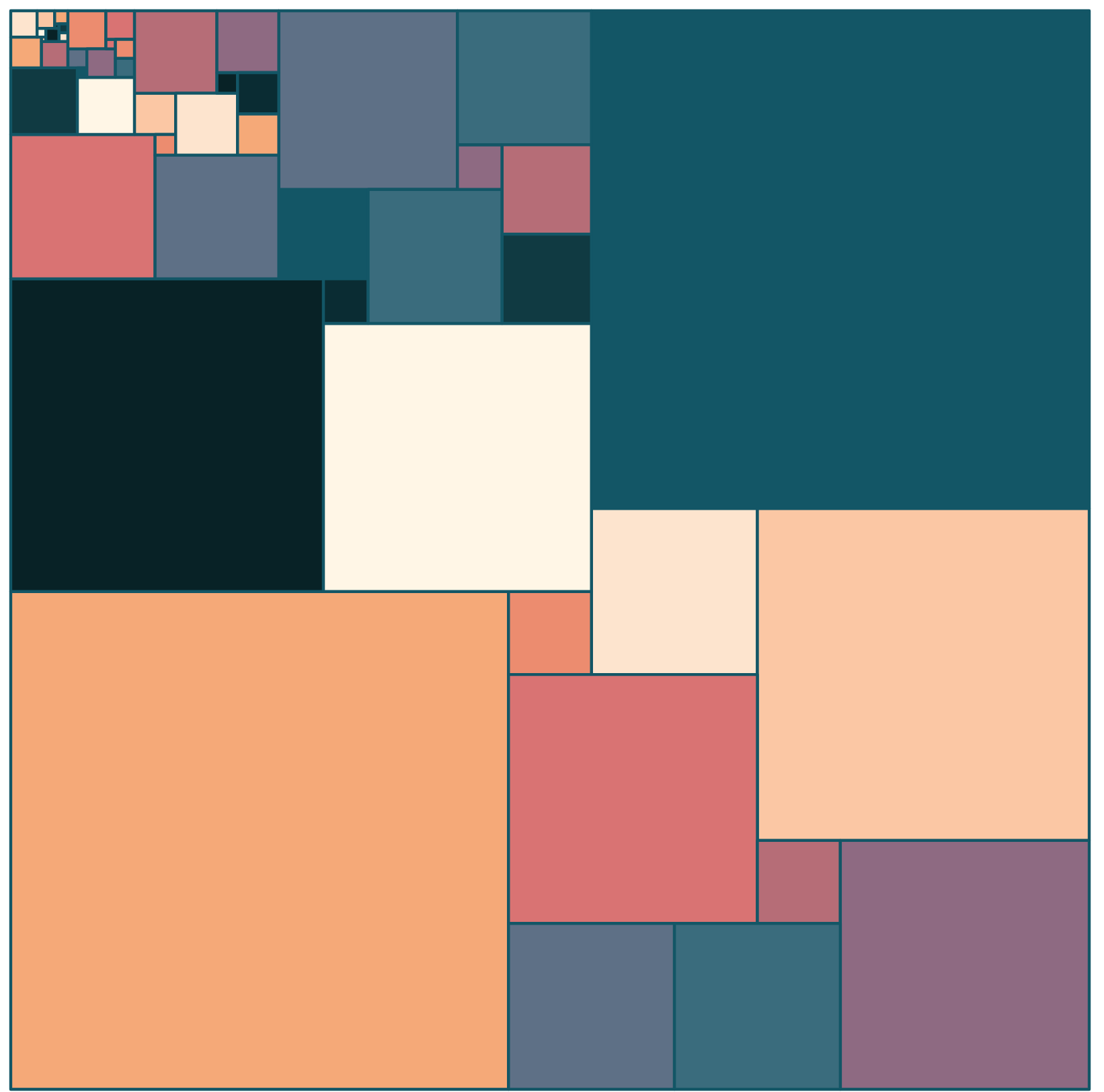
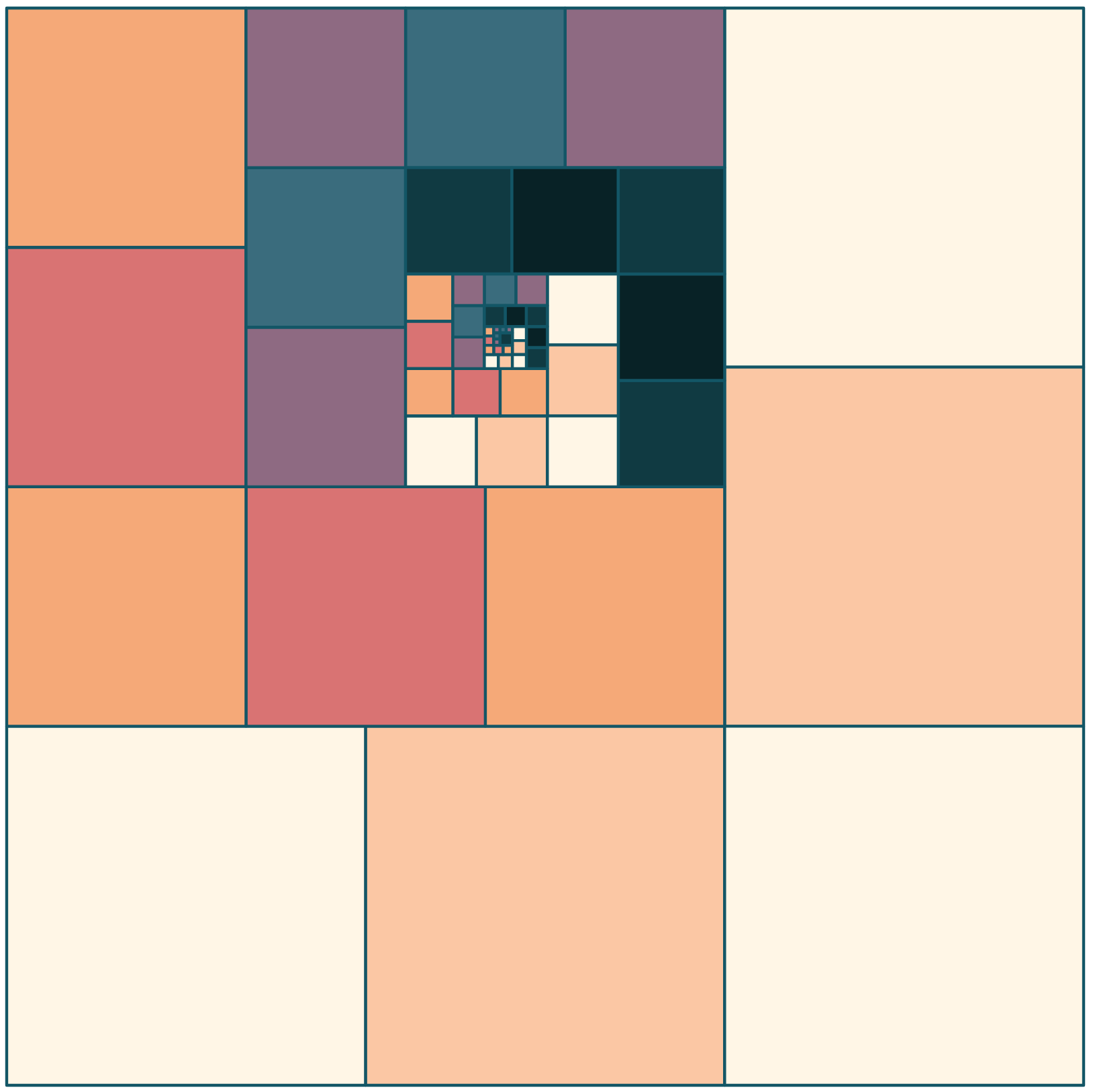
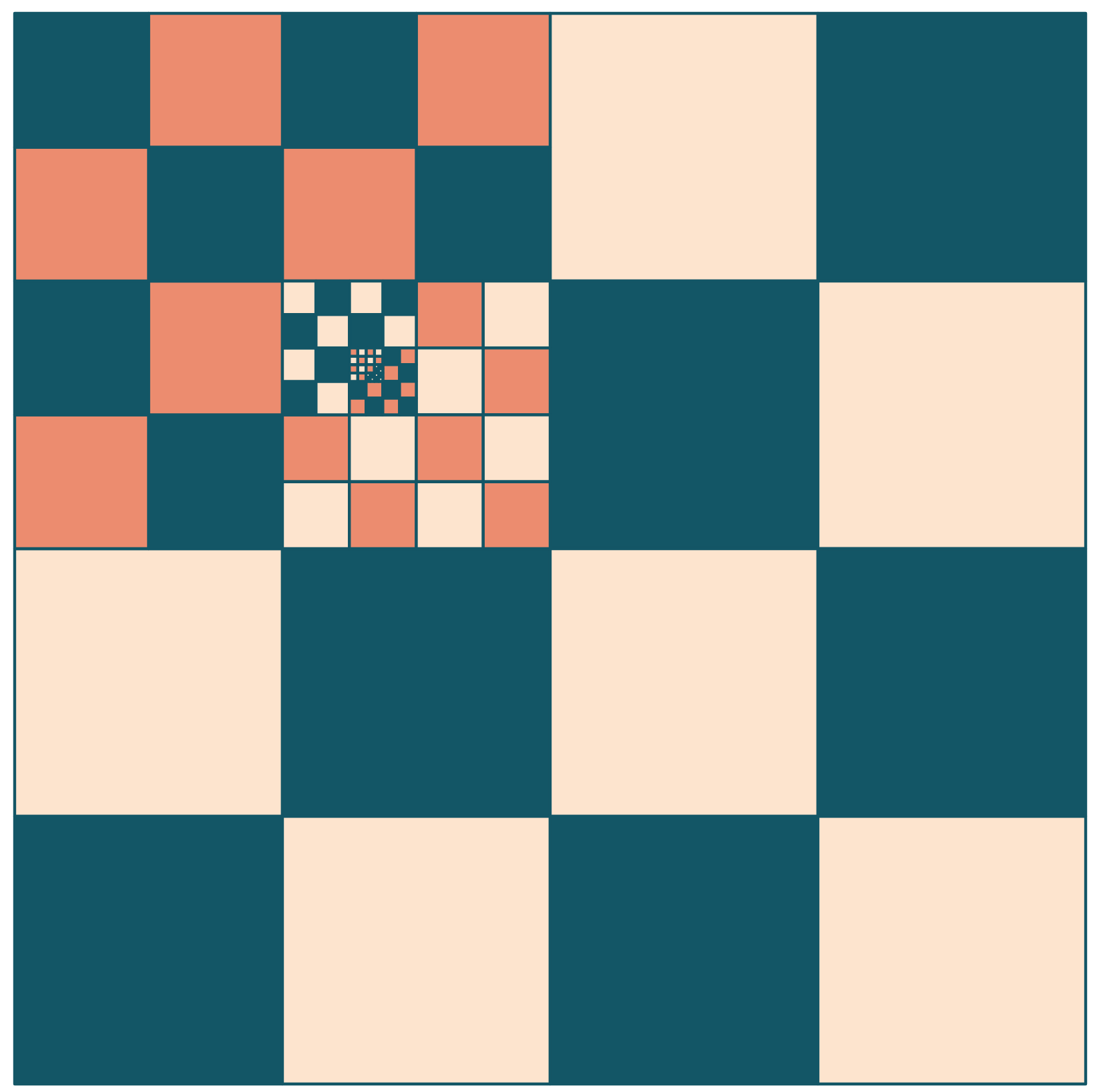
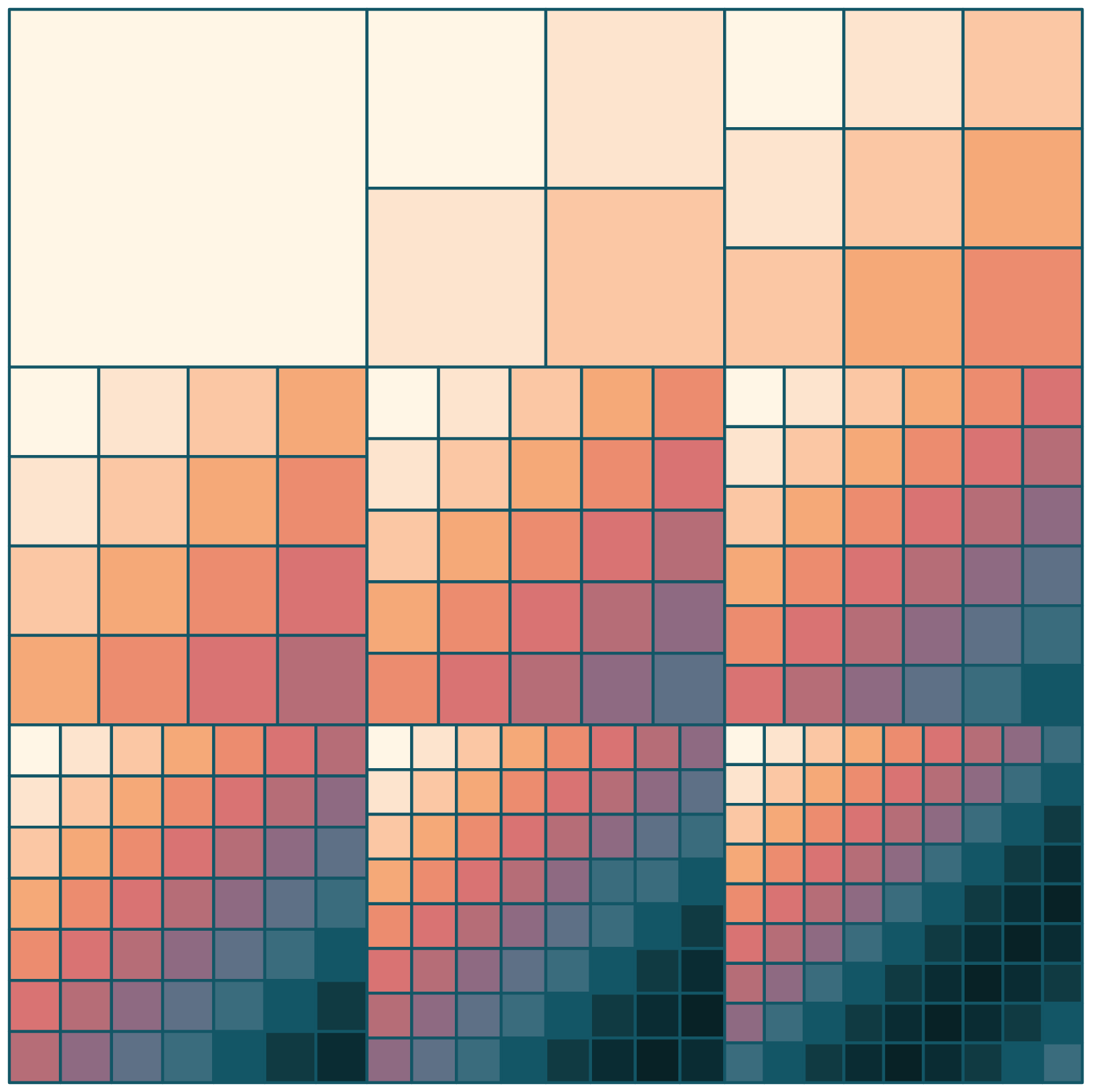
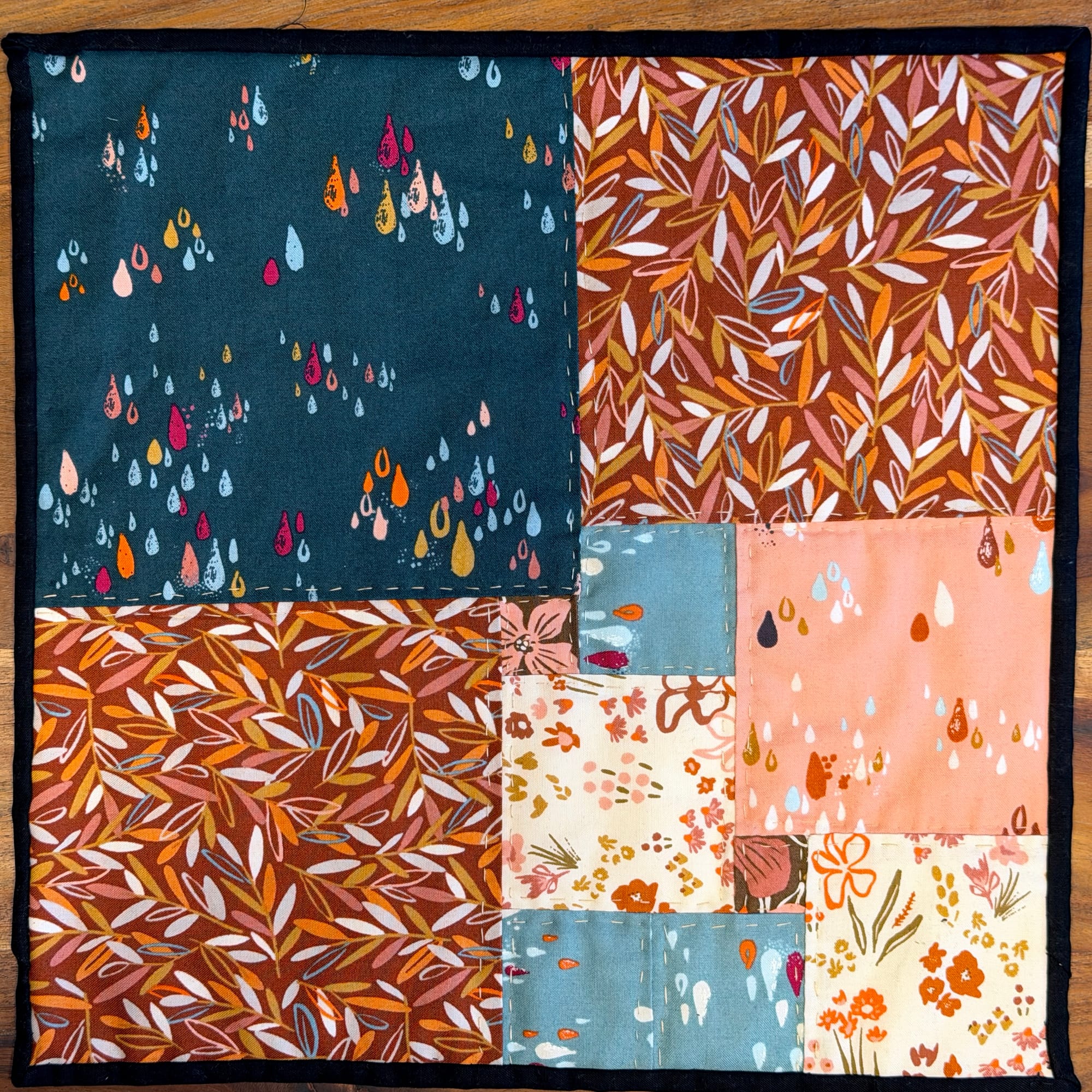
Here is a gallery of example compositions. How were they made? What came before and what comes next?
More to Contemplate
- Are there other sequences that might start the same, but could go a different way?
- What if you start with something other than one square? Like a 4x4?
- Play around with "what ifs"
- What if you change where you divide the squares?
- What if you add a step to your construction method (like split, join, then split again)?
- Look up your sequence by typing the numbers into OEIS to see if it is there.
- Write your sequence as a formula.
- For example: {1,4,7,10,13,...} can be expressed as 3n − 2 where n is the position in the sequence.
- Is there a sequence where a square is divided into squares that all have different sizes?
- Are there numbers that you can't make by dissecting squares into squares?
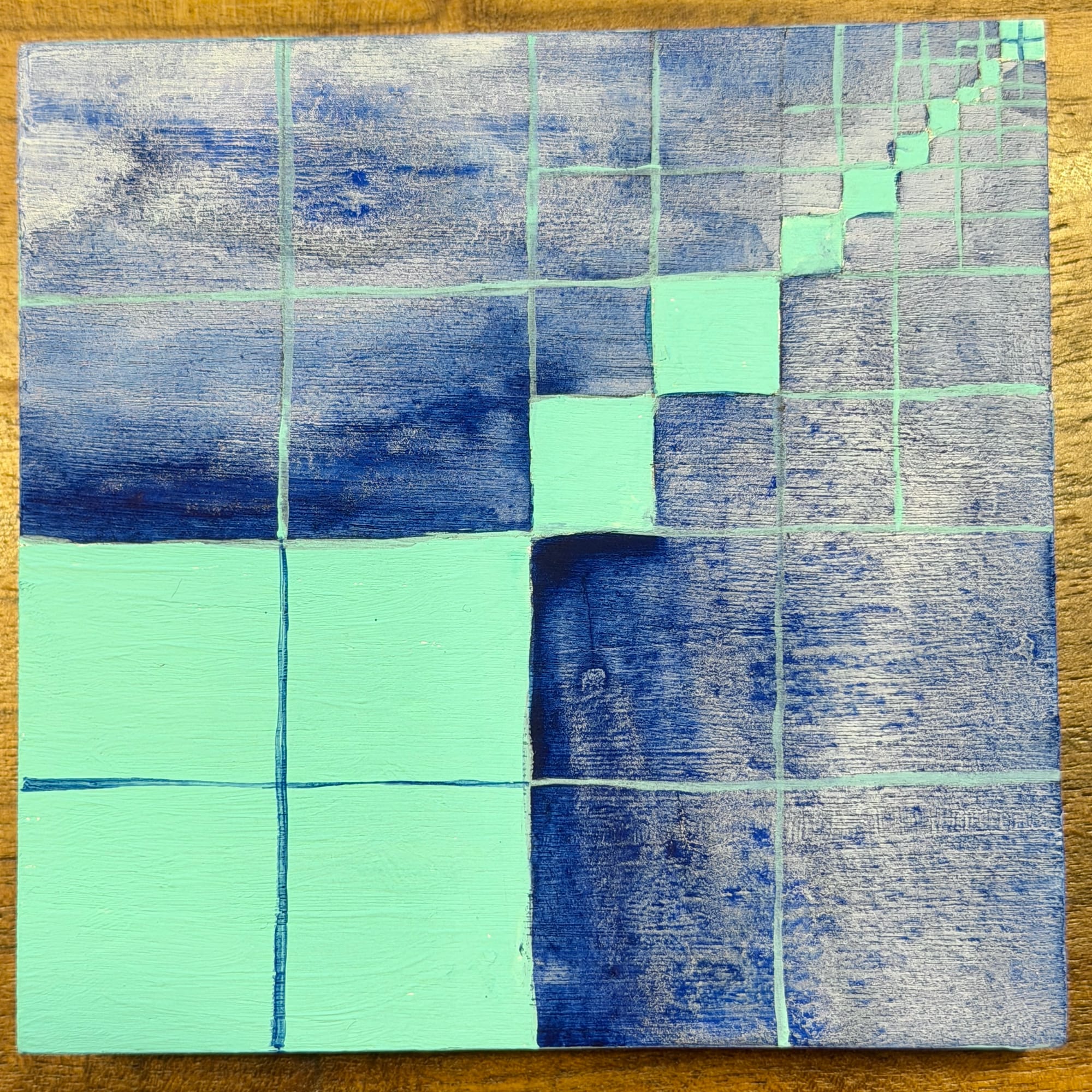
Example Art:
Resources and extensions
- Wikipedia has some variations, including Mrs. Perkins' Quilt
- A few who have played with this: Henry Dudeney (1917), John Conway (1964), Martin Gardner (1966), Antonick & Finkel, NYT Numberplay (2013), Math for Love lesson by Finkel (2017), and many others.
- Fun note: to do this post, I went down quite a rabbit hole for how to piece the quilt together.
- Origami papers are a nice tool to play with for this activity - you can cut, fold, and place papers to think about arrangements and dissections.
- There is a tool called Squarrels on Inquiries to explore this. (Note: squarrel is the name because squirrels are fun, and the words square-able, squareable, and squarable all look funny.) This tool has hidden word surprises - type: "fish", "tree", "oregon", "all", "banana".
- Do the same thing, but with rectangles
- What rectangles can be tiled with squares of all different sizes?
- Are there patterns that you can make when the outer shape is a rectangle that you can't with a square?
- There is a tool here for this.
- Do the same thing, but with triangles - here is a tool.
- Try this with L-shapes as well (L into squares, L's into L's)