Building Narratives Around Challenging Experiences
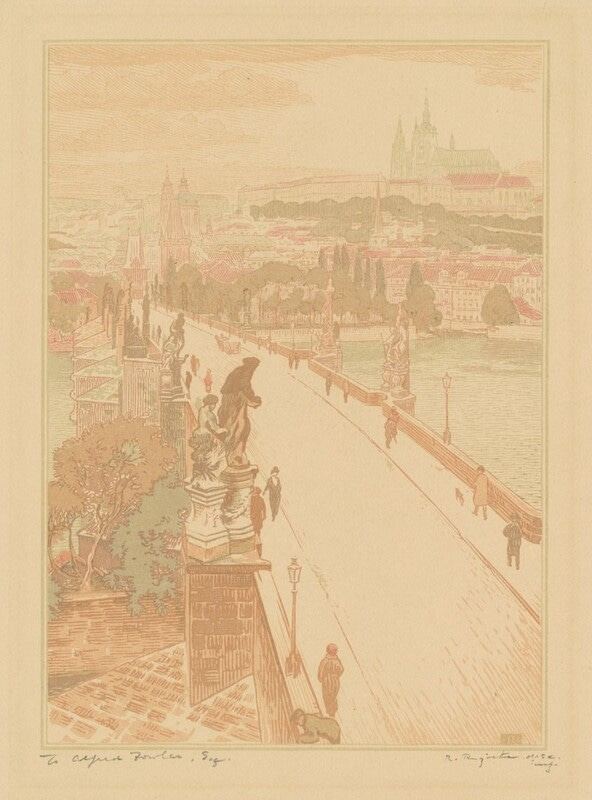
Bridge, Rudolph Ruzicka, c. 1915-1926
Yesterday, I performed an exciting “health experiment.” I’m planning to give you the full report next week.
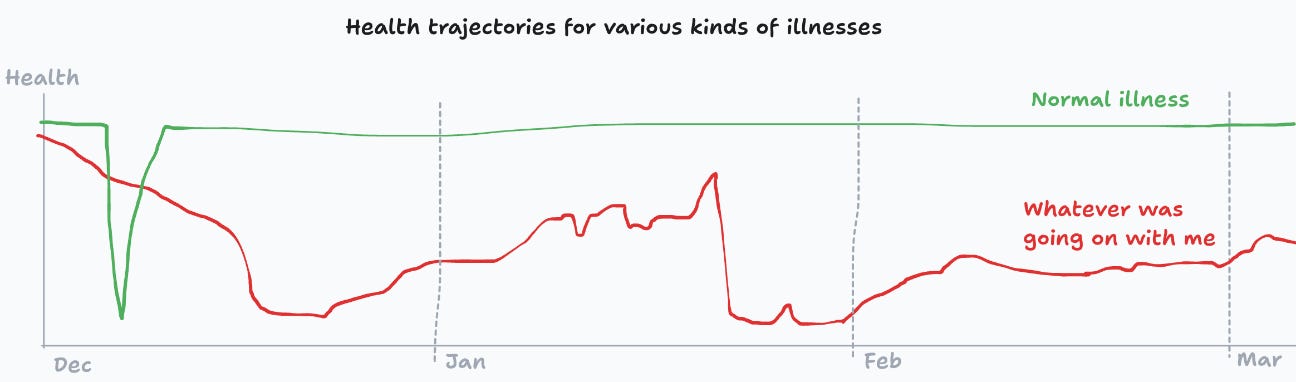
In preparation for that event, I resumed work on the essay about mono which I foretold in my 2025 end-of-year update:
The three-month period depicted above was very challenging, and it’s daunting to try and do it justice in writing. But I have planned a post about this, “The Phenomenology of Mononucleosis” […]
At risk of tantalizing my audience I’ll say that the essay I produced is one of my finest pieces of writing: a deeply vulnerable story, charting a wild and disturbing psychological journey, punctuated with moments of the sublime, interwoven with images and excerpts from my journal…
But as I brought that period of my life into definition, I felt a growing sense of unease. The situation I was depicting, while fascinating, was really not a good one. And I figured that publishing it would give it more life than it deserved.
As I mulled over my decision, I began to play with a phrase, at first in my head and later out loud:
“We can probably move on from that”
Each time I said this, I felt more certain of it’s truth. I felt liberated. I don’t need to publish this, I don’t need to think about it, I can relegate it to the depths of my drafts folder and can do so with no ceremony. So that’s what I did.
I am someone who tends to finish things that I start. This has obvious benefits, but a drawback is that I can lose connection with my original motivations. In this case, I was motivated to write about health. Why? Because I’d like to help others and myself navigate those challenges and move in a positive direction. On reflection, the post I was writing didn’t serve that purpose. Whereas next week’s post almost certainly will.
The words we say are like spells cast into the world. “Where your focus goes, your energy flows,” says my Qi Gong teacher. And this is especially true of the words we put up in public places (like blogs): each becomes a node in a powerful network that conspires to shape our lives. As such, internet-writing experts like visakan veerasamy will remind us that it’s best to “focus on what you want to see more of” and to only “joke about outcomes you want.”
This doesn’t mean I intend to ignore life’s challenges. Instead, I hope to build narratives that transform my challenges into vehicles for optimism and growth.1 So how might I build those narratives for my own health story?
As I see it, setting up beneficial narratives around challenging experiences is a creative exercise. You’re dealing with a messy landscape, and different people have seen you at different parts of it. You need a story that can hold up to a variety of inquiries and redirect them towards positive directions. So if the landscape has bogs and chasms, your goal is to build bridges.
What surprised me yesterday, but is obvious in retrospect, is how small the bridges can be. It doesn’t take much to get to a point where you can say “that’s enough explanation. We can just move on.”
When I consider my health story, it’s clear that my end of year post was a perfectly sufficient bridge. It touched on my challenges, but only in enough detail to clear up any confusion before reorienting towards the present. The particulars of my winter of sickness, in the end, despite being interesting, and complicated… are not relevant. What’s relevant are all the great things I can do with my life right now. And so there I leave it.
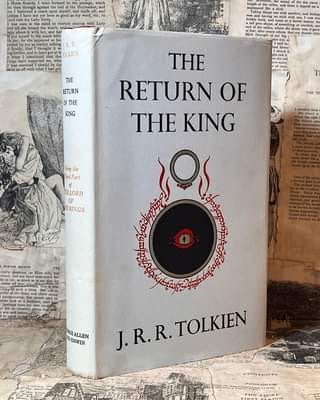
Remarkably, last night after I decided to shelf the essay, I came to the following quote in The Lord of The Rings (The Return of The King), which I’m reading for the first time (mild spoiler alert):
“They stripped me of everything; and then two great brutes came and questioned me, questioned me until I thought I should go mad, standing over me, gloating, fingering their knives. I’ll never forget their claws and eyes.”
“You won’t, if you talk about them, Mr. Frodo,” said Sam. “And if we don’t want to see them again, the sooner we get going the better. Can you walk?”
“Yes, I can walk,” said Frodo, getting up slowly.
In a fraction of the words I’ve written here, Sam Gamgee performs a beautiful redirect of Frodo’s attention. Something bad has happened. It’s over now. “Can you walk?” …And that’s that. The curtness is part of the virtue. Sometimes very little needs to be said in order to let something go.
My intent with the blog and otherwise is to focus on my immediate projects: on the work I can do now and the person I can be now, and to leave the past unexamined but for it’s present value.
As for whether I can walk, that question will be answered next week :)