After scientists accidentally discovered that the common eastern bumblebee can withstand flood conditions, they wanted to investigate what makes that super-ability possible
/https://tf-cmsv2-smithsonianmag-media.s3.amazonaws.com/accounts/headshot/Andrea_Lius_headshot-edit.png)

You may not think of bees as underground animals. But more than 80 percent of bee species, including many bumblebees, actually nest in the ground—and there, they are vulnerable to being submerged in water.
Bumblebees’ life cycles are in tune with seasonal changes. The insects are most active in summer. By late fall, the majority of the colony—the female workers, the male drones and the old queen—has died off. New queens spend the winter in the soil “diapausing,” the insect version of hibernating, during which they conserve energy so they can start new colonies come spring.
But as these bees wait out the winter, they can face serious threats. Snow may melt and rain may fall, saturating the soil with water and putting the queens at risk of drowning. For this reason, “insects that diapause in the soil must be prepared to be covered in water,” says Elizabeth Crone, an ecologist at the University of California, Davis.
A serendipitous 2024 discovery revealed that bumblebee queens can withstand submersion in water for up to a week. But scientists didn’t understand exactly how the insects were able to survive. Now, in a study published yesterday in Proceedings of the Royal Society B, they’ve begun to uncover the answer. It turns out that the diapausing bumblebee queens are actually breathing underwater.
That wouldn’t be a big deal for many aquatic insects, such as diving beetles. “But bumblebees are not considered aquatic insects, so that’s a very cool finding,” says Jon Harrison, an environmental physiologist at Arizona State University who was not involved in the work. “You wouldn’t really have expected that.”
A silver lining in a lab fridge mishap
A few years ago, conservation biologist Sabrina Rondeau, then at Canada’s University of Guelph, was studying how pesticide residues in soil affect common eastern bumblebees (Bombus impatiens) during diapause. To simulate winter conditions, Rondeau was keeping bumblebee queens in soil-filled tubes in a laboratory fridge.
All was well until she opened the fridge one day to find that some tubes had accidentally become filled with water due to condensation, completely submerging the queens. Rondeau was sure that the bees were dead. But to her surprise, they started moving soon after she removed them from the water.
Rondeau wondered if the bumblebee queens’ unexpected aquatic superpower was a fluke. As in her pesticide experiments, Rondeau again put queens in soil-filled tubes in the fridge. She kept 17 of them dry and exposed the other 126 to varying amounts of water—this time on purpose. After spending up to a week submerged, the queens were given a chance to recover in new tubes filled with dry soil. They stayed in the fridge for eight more weeks, and about 90 percent lived.
Thanks to this laboratory disaster-that-wasn’t, Rondeau published her initial discovery in 2024: that diapausing bumblebee queens can survive underwater for a week. She shared her surprising finding with Charles Darveau, an ecological physiologist at the University of Ottawa, who was already looking into the metabolism of diapausing bumblebee queens—and the two decided to collaborate on the new research.
“We needed to test several hypotheses,” says Darveau. “One main hypothesis: that they could breathe underwater.”
How queens survive a flood
When plunged underwater, an insect has a couple of options for survival. Terrestrial insects typically hold their breath and produce energy through anaerobic metabolism, a cell process that can fuel the body without oxygen. Aquatic insects, on the other hand, can often breathe underwater—and somehow extract oxygen without drowning.
/https://tf-cmsv2-smithsonianmag-media.s3.amazonaws.com/filer_public/43/11/43110f5a-1739-42d2-b6e4-1fbe521e3010/queentube.jpg)
Though bumblebees are terrestrial, Darveau suspected that they might also employ the strategy used by their aquatic counterparts. So he devised experiments to look for evidence of both anaerobic metabolism and underwater breathing.
The researchers mimicked diapause by keeping 51 queen bees in cold, dark and somewhat humid conditions. They completely submerged the queens in water for eight days, then moved them to dry tubes and gave them one week to recover.
At the end of the eight days, oxygen concentration in the water was 40 percent lower in tubes that contained diapausing queens than in control tubes, which had water but no bees. The team also measured low, consistent levels of carbon dioxide production in tubes with queens.
This bolstered Darveau’s suspicion: The bumblebee queens were indeed taking in oxygen and releasing carbon dioxide. In other words, they were breathing underwater.
“To my knowledge, this is the first study that shows a terrestrial insect like a bumblebee being able to get their oxygen out of water,” says Harrison.
Darveau found in previous research that the queens’ metabolic rates during diapause are about 5 percent of their normal resting values. The metabolic slowdown likely also means that they need less oxygen, Harrison says, which would make meeting that need easier when submerged.
But breathing wasn’t the bees’ only strategy. The team also found signs of anaerobic metabolism: Soon after their removal from water, the bees’ carbon dioxide production increased dramatically—more than tenfold—then gradually declined as time passed. By day seven back in the air, carbon dioxide production had returned to pre-submersion levels.
This surge likely signifies the recovery period that follows anaerobic metabolism, Darveau says. Many people experience this when working out. When we do burst exercises, “we’re going to breathe harder after to be able to process those waste products [and] re-establish our function,” Darveau explains, and breathing harder releases more carbon dioxide.
Anaerobic metabolism also produces lactate, which fuels cells in the absence of oxygen. So Darveau and his colleagues measured levels of lactate in a group of 20 diapausing queens. They froze five bees at each stage of the experimental process: before submersion, after four days underwater, after eight days underwater and after one week of post-submersion recovery. The researchers then ground up the frozen queens and measured the concentration of lactate in the resulting mush.
Lactate levels were highest in the bees that were underwater—more than double the values measured before submersion and during recovery. Still, they were nowhere near what the researchers would expect to see if the bees had to rely on anaerobic metabolism alone. This further suggests that both underwater breathing and anaerobic metabolism help diapausing bumblebee queens survive drowning.
“To me, the whole combination of strategies is the most fascinating aspect of this study,” says Darveau.
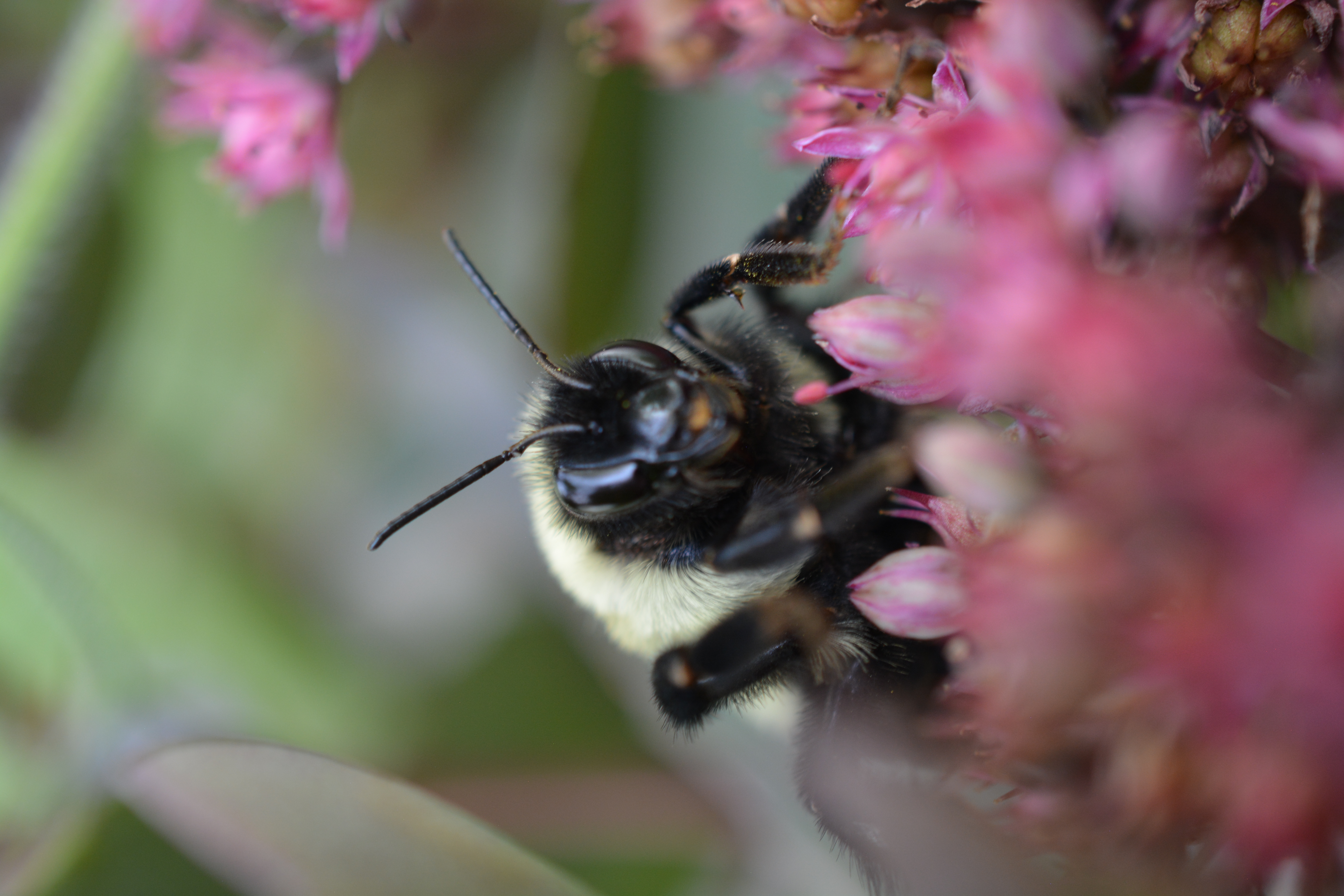
Now that they have evidence of both processes happening, the team wants to delve deeper into how each works. For instance, diving beetles breathe within air bubbles trapped against their bodies like a scuba tank—can the bees do the same?
This air bubble, called a physical gill, is a likely scenario, Darveau says—though it might be harder to see on a bumblebee than a beetle, as the air layer might be trapped under the furry insect’s hair. Future work may try to disrupt these air bubbles—with detergents, for example—then observe how that affects gas exchange.
It remains unclear whether other bee species use similar tricks to not drown. “The question of generality—if other bees can do this—I would personally guess might be true,” says Harrison. “But I don’t know, so that’s a big question.”
Researchers also don’t know what degree of water submersion—how long a flood or how many cycles of flooding—the bumblebee queens can handle, or whether enduring winter flood conditions has any long-term effects on the queens. Crone, who was not involved in the research, says that the findings raise conservation-related questions that have typically been overlooked so far.
“When we think about bumblebee conservation, we mostly focus on having resources for them to forage in the spring and summer, but I’m not sure anyone is thinking about what kinds of conditions they need in the winter,” she says.