I started gt4carp in 2020. It is an IDE for Carp in Glamorous Toolkit, or at least it has been threatening to become one for about six years.
The first version had a parser, syntax highlighting, a custom Lepiter snippet, and the beginnings of a project browser. I gave a talk about it in 2022 and posted the recording the following year. The repository was labelled “heavy WIP” for, I believe, its entire existance, even though there was no progress on the work for a few years. The booklet that explains how I built the custom language integration had some interested readers, though.
This summer I returned to it. Carp now has Metacarp, whose compiler phases are libraries and whose compiler sessions can stay alive between inputs. That was the missing piece to execute on some of my vision for Carp. In many ways, I had already talked about this at CurryOn in 20181. Carp is a language that provides so much, and a good development environment should use all of that information.
And through Metacarp, I got a little closer to that vision. gt4carp can now run a warm compiler per notebook page or project, annotate and complete code, keep values alive for inspection, edit definitions through a project browser, and debug the native program in the Carp source it came from. It also uses a whole lot of information live, from docs to expansion to lifetime boundaries.
It remains heavy WIP, naturally, as everything I work on always is. But it’s a much more entertaining kind of heavy WIP now, because there is actual progress to be had. Let’s have a look!
The browser
The project in this screenshot is Metacarp itself. We’re looking at
its parser, and there’s a small example open called
Surface.a-parsed-module.
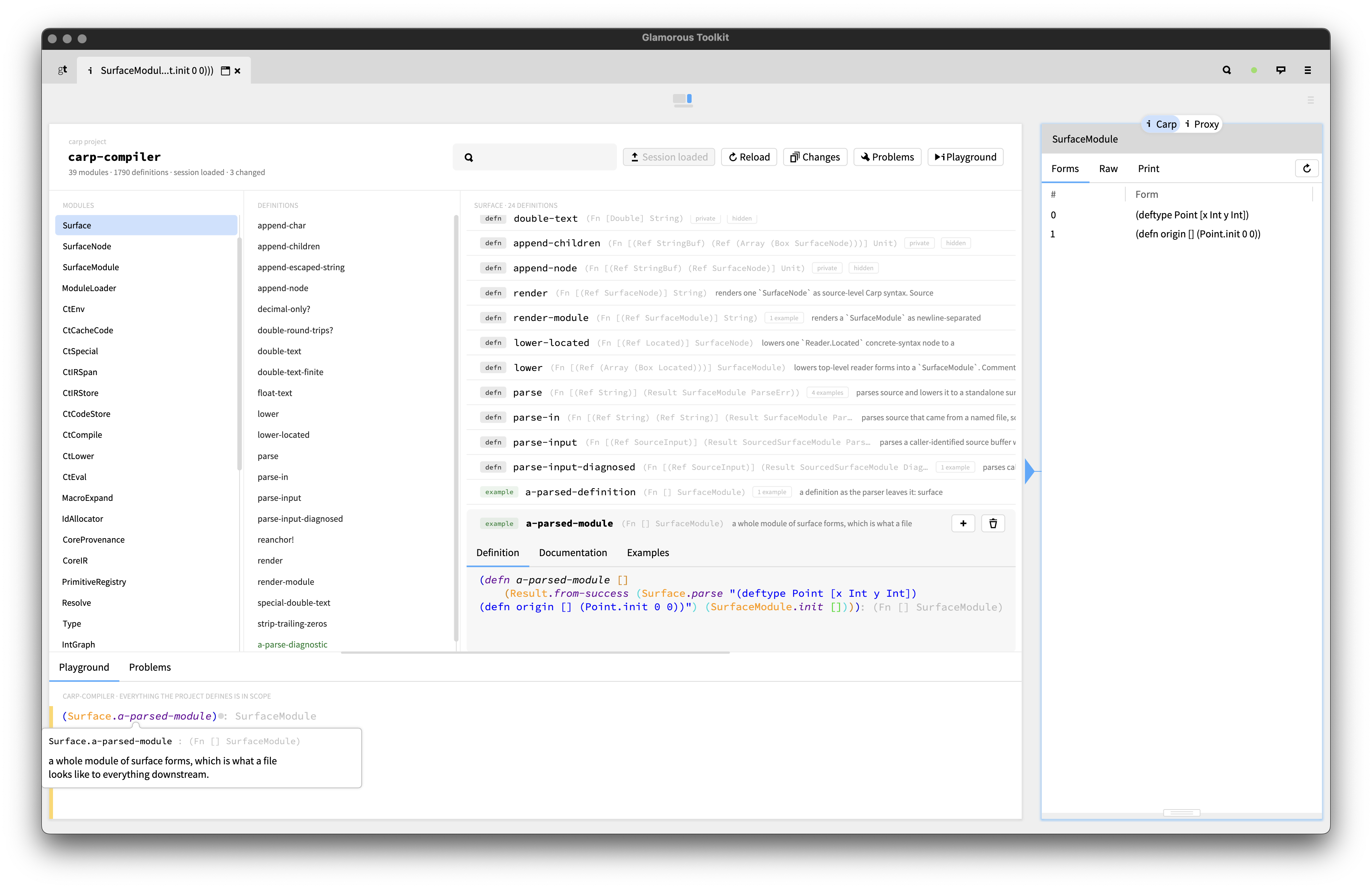
Fig. 1: Browsing a parser example, evaluating it in the project playground, and inspecting the resulting value.
The example parses a little bit of Carp:
(deftype Point [x Int y Int])
(defn origin [] (Point.init 0 0))
and returns a SurfaceModule, which is what the parser
hands to the next compiler phase. In the playground below the
definition, we can call it:
(Surface.a-parsed-module)The playground uses the project’s compiler session, so everything the project defines is in scope. That includes its parser, its types, and the example. The inferred return type appears next to the expression, and hovering over the function shows its documentation.
Evaluating and inspecting it opens the result in the next column. The
SurfaceModule has a Forms view with two rows: the type
definition and the function definition we just parsed. Each row can be
opened as a surface node in another column. We can look at what the
parser produced while its source is still right there, because the
values decide how they want to be presented, GT style.
I think this is quite fun! The compiler phases being libraries means that calling the parser is a regular function call, and the IDE lets us work with live values. The compiler is a particularly entertaining project to browse this way, but the playground works on other, less meta-horrific projects too.
I made the decision that a Carp project is a Git repository. You
point gt4carp at a repo and it asks the compiler to load it
the way that a build would. The browser then shows its modules and
definitions, along with declared signatures, documentation, visibility,
implemented interfaces, examples, all without having to fully compile
it.
Opening a definition shows its source and documentation. Editing it replaces the definition through the byte span the compiler recorded, writes the file, and commits the new definition into the warm project session. So we still have files under the hood, we just never look at them, because who cares? I want to see the functions, their documentation, and their examples, not the ceremony around them.
The green example label in the screenshot comes from a little bit of metadata on an ordinary function:
(meta-set! a-parsed-module "example" true)The browser figures out what an example belongs to from the types
involved both return types and body). The one above is an example of
SurfaceModule because it returns one. It’s also an example
of the functions it calls, including Surface.parse. I don’t
have to maintain another hierarchy, which is good because I would
forget, and I frequently did when working on GT (sorry, Tudor!).
Types become particularly fun to browse. Their view includes the
functions which operate on them, the implementations they participate
in, their derived members, and examples which produce them. The compiler
has already established these relationships. gt4carp makes
the liminal space of “not in my program, but in the compiler’s view of
it” visible and browsable. In that way, it is exactly what I talked
about in 2018.
The values
The SurfaceModule in that right-hand column is still in
a running Carp program. This deserves some explanation, I think.
Metacarp compiles the cell into a native program. That program evaluates the expression, registers the result, and then does something slightly strange for a compiled language. It stays alive.
The result becomes a remote object in GT. It has a type, a printed form, and a set of views. Opening one asks the still-running Carp program for its contents. Selecting an item can return another live Carp value. Expanding a tree asks the program for that value’s children.
In other words, the inspector is looking at an object in another
native process, and that process participates in the inspection. The
Forms view above is supplied by Carp code which knows how to look inside
a SurfaceModule. Very normal stuff. Not terrifying at
all.
Views in Carp are written using defview. A string, for
instance, has a text view:
(defview string-value [s String]
  (=> (NB.text)
      (NB.title @"String")
      (NB.content @s)))
and another view which presents its bytes as a table. Arrays, maps,
sets, bags, boxes, pairs, Maybe, and Result
have structural views. A record gets a raw field view automatically.
Programs can add text, list, tree, columned, or bitmap views for their
own types.
This is probably my favorite part of the whole experience.
gt4carp doesn’t flatten every result into a generic JSON
value and reconstruct an approximate object on the GT side, because that
would be cheating, and cheating is bad. Carp code decides how Carp
values want to be seen. A view is a function which still has access to
the value it describes.
The implementation is appropriately silly. The cell program starts a tiny HTTP server and exposes object and view endpoints. GT holds a remote reference containing the host port and object id. The two processes then politely ask each other questions until the next evaluation kills the value host. If that sounds like madness, you’re welcome.
There are lifetime and security implications here, as you might imagine. The value is native code in a native process, not a lovingly sandboxed data model. An inspector can also outlive its host if another evaluation replaces it. But when it works, a Carp value inspects like a Pharo object, and I think that is somewhat magical.
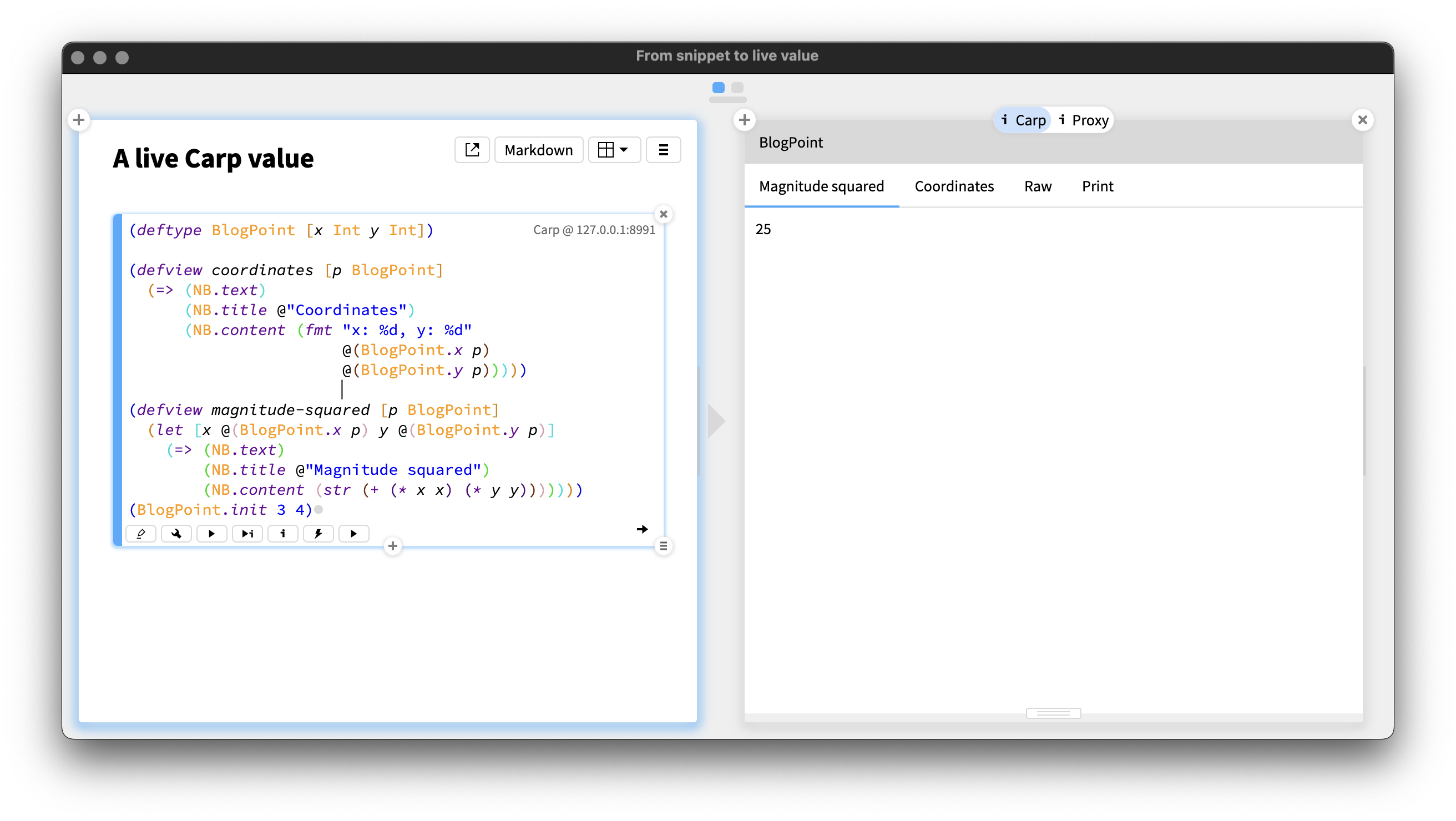
Fig. 2: A live Carp value with program-defined views in the GT inspector.
Of course, there is also a Pharo side to the object, and that one can be verwritten and have its own views, too. I have a whole declarative layer on the Pharo side to decide which class represents which Carp data type. It’s very flexible, but also well-trodden ground. Phlow for Python also offers these capabilities.
Snippets
The same machinery works in a notebook (in fact, a playground is just a single notebook snippet with some context). Carp code gets its own Lepiter snippet, with highlighting, inferred types inline, diagnostics, completion, and documentation on hover. Each page gets its own compiler session, so we can build up a program across snippets.
One snippet can define a function:
(defn twice [x] (* x 2))and a later one can use it:
(twice 21)Definitions accumulate as snippets run. The second snippet sees the first one throughout its lifetime. Core (the standard library) was already loaded and inferred when the session started, so every little expression does not drag the whole standard library through the compiler again. This way we manage millisecond compile times for simple snippets, even in huge contexts.
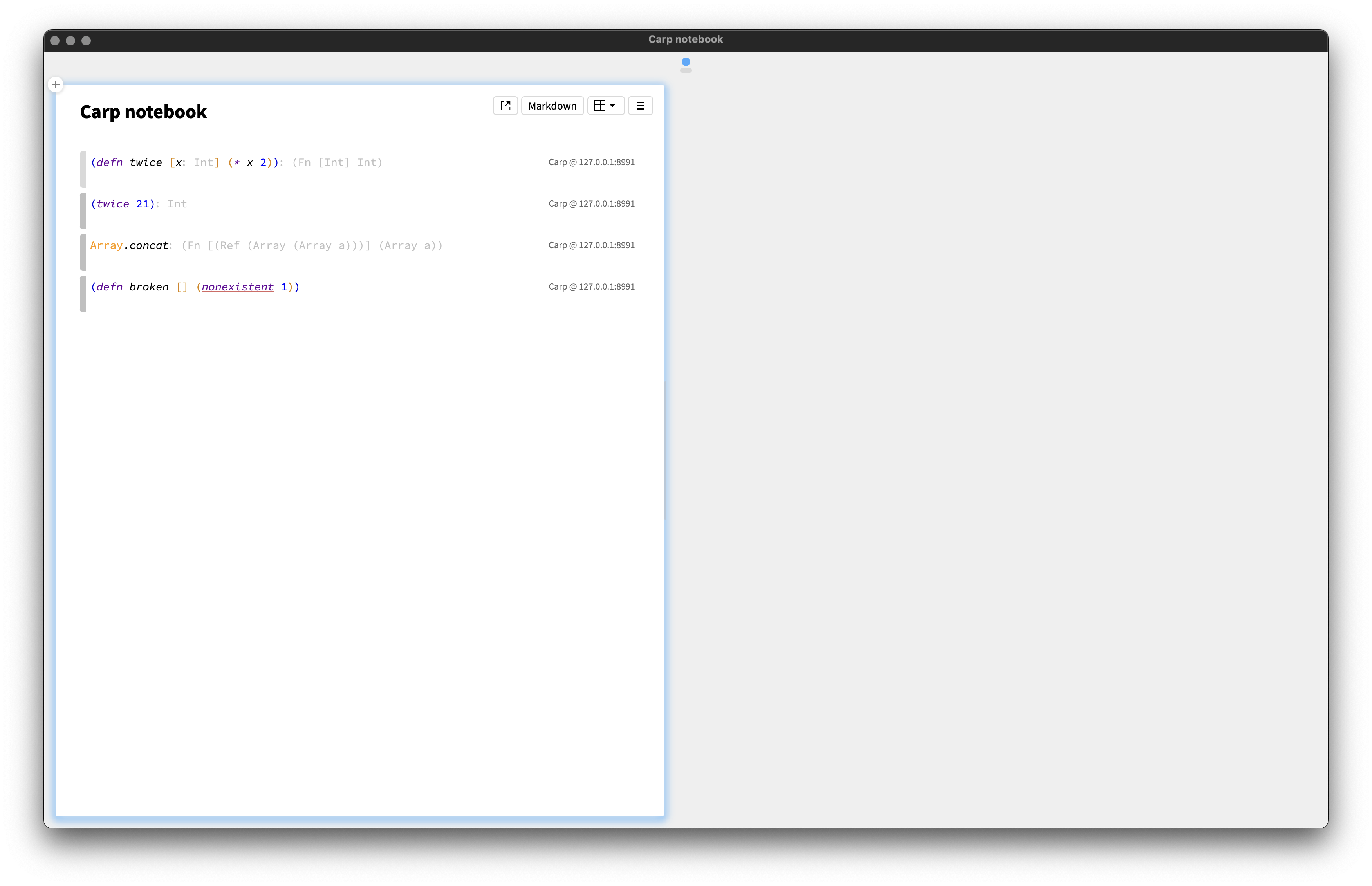
Fig. 3: A gt4carp notebook page with inferred types and
diagnostics.
A small server written in Carp sits between GT and Metacarp. It keeps one warm session per page or project and speaks a simple length-prefixed JSON protocol. GT starts it when needed, sends it source, and gets structured compiler answers back.
It hands us back the original spans for everything, which required some machinery, but it means error messages are delightful. Worthy tradeoff.
The debugger
Carp compiles to native code, so the debugger eventually has to deal with LLDB. This could mean that pressing Debug drops you into a large C translation unit full of generated names, if you’re lucky.
It doesn’t, most of the time! (Sometimes it does, but I’m working on it.)
Metacarp’s backends can attach Carp source locations to the generated
program. gt4carp starts lldb-dap, sets a breakpoint where
the snippet’s program begins, hides compiler-generated frames and
variables, and decodes Carp’s mangled names before showing
them2.
A breakpoint in a snippet therefore stops in the snippet. Stepping
moves through Carp source. The stack contains Carp-ish names rather than
exciting sequences such as C4_main__F0_Z1_U.
This feature rests on an absurd tower of conventions I established
together with the other stakeholders (all me). Metacarp and
gt4carp must agree about symbol mangling. Generated C or
LLVM must carry the right line map. Relative source paths have to
resolve from the debugger’s working directory. GT counts characters
while the compiler reports UTF-8 bytes, so I have to translate. I get
one wrong and the debugger stops in _dyld_start and stares
blankly at me.
Native debugging is hard, y’all.
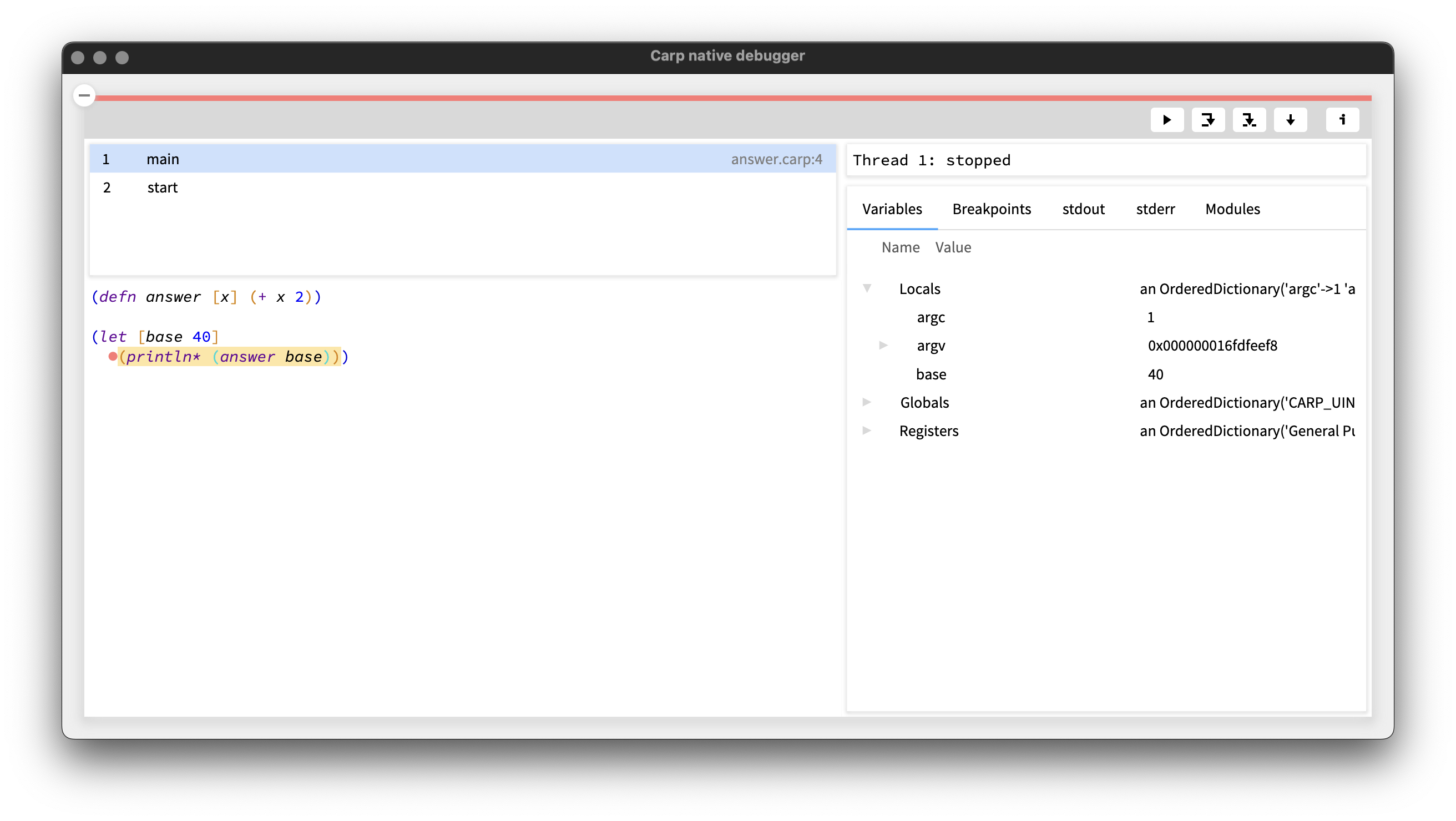
Fig. 4: A Carp program stopped in its source in the native debugger.
Luckily there’s also a macro-level debugger that’s been there since 2022 (I’ve since completely rewritten it), and it’s much more straightforward. Also much more boring, because it just works, and who cares about that.
Here be bugs
gt4carp is usable, but it’s absolutely not finished. Far from it, if it’s to live up to my own goals one day.
The server is a binary compiled with Metacarp and linked against the notebook runtime. I don’t yet have a nice way to distribute it with the GT package, so the setup currently assumes the sort of machine on which I develop Carp. That’s already a fairly specific audience, and I have no reason to believe anyone else has ever gotten it working.
Cells also do not have identities yet. The server sees source which
defines foo, then source which defines bar,
but cannot tell whether the latter is a new snippet or the former
snippet after a rename. Old definitions can remain as ghosts. Reopening
a module across cells runs into the same problem. The semantics are,
quite frankly, a bit undercooked as of yet.
Warm state can degrade when the server cannot mirror a definition or load. It then takes slower compiler paths so that evaluation, annotation, and completion continue to agree. This is correct and occasionally mysterious from the outside, because the slowdown is intrasparent and somewhat jarring. GT currently handles the degradation indicator by not showing it to you and just freezing, which is lovely, but not quite what I envision.
The project browser trusts source spans recorded when a file was loaded. An external edit at exactly the wrong time can make them stale. A remote inspector can keep references after its value host has died. The native debugger knows more about Metacarp’s symbol names than it should have to. It’s all a bit too loose for my comfort.
In short, there are several opportunities for excitement, and I am excited to continue work on what I consider part of my magnum opus thus far (only very slightly too grandiose).
Fin
The parser example is small, but it’s an encapsulation of what I wanted to achieve for a long time. I can open a function, call it with the project context, learn about the compiler’s model of it, and look inside the value it returns. If the value needs a better view, that view can be written in Carp or Pharo and just extend the environment on the fly.
There is plenty left to make less fiddly. But I think being able to move between the source and the objects it produces makes the language much more pleasant to explore. It certainly makes a compiler a more interesting thing to have open on my screen.
I’ve wanted something like this for a long time. The repository is on GitHub, still calls itself heavy WIP, and is finally becoming weird enough to be dear to me.
1. Back then, my friend David Schmudde was in the audience and asked “so, what of what you talk about is there right now?”, to which I had to reply nothing. Well, David, it took me 8 years, but we’ve made it, baby!
2. There’s a weird flicker sometimes where we start in C before switching to Carp that I haven’t quite figure out. I’m sure I’ll get there.