I’ve struggled with social anxiety my whole life. Fortunately, we have several OTC drugs for temporary anxiety relief, such as alcohol. Unfortunately, they all come with their own problems, such as hangovers. By default, I am a pretty inhibited, straight-laced, rule-follower. If you’re in a similar position, here’s what I’ve learned about taking advantage of anxiety relievers while limiting their side effects.
Alcohol: It feels dishonest not to talk about alcohol first. By far the most socially acceptable, to the point that teetotalling is regarded as weird. Alcohol absolutely does the thing people say it does. I have inhibitions that warn me not to do things because they might look stupid or inconvenience people. My experience is that alcohol makes those inhibitions much quieter. At the right dosage, they’re still present: I won’t humiliate myself or hurt people. But it brings their weight down closer to the average person’s. I also experience mild euphoria, a warm pleasant buzzing sensation.
The down sides are many! So many. Alcohol is really expensive. Alcoholic drinks are calorie-dense and not filling. Alcohol disrupts your sleep. I like its characterization as a “reverse nootropic” that takes effect the next day. I personally have the alcohol intolerance common among East Asians. My face doesn’t flush, but if I have more than two drinks, I’ll get a splitting headache within 20 minutes, definitively ending the evening’s merriment. I understand there are treatments that will address this disorder. I also understand that going over the right dosage, while literally painful for me, is debilitating for most people. When I tell people about my disorder, they sometimes express envy or tell me I’m virtuous somehow. So there are also treatments that will induce this disorder, if you want to enforce a screen-time-like limit to your drinking. I am happy with my current equilibrium.
As the omnipresent default option, alcohol is the yardstick against which anxiety relievers should be measured. ★★★☆☆
Marijuana: Recently legalized decriminalized, I haven’t experimented much with weed, on my psychiatrist’s recommendation. I have done the stereotypical thing of clearing my evening plans, taking gummies, and observing no effect. I have also done the stereotypical thing of taking slightly more gummies and having a wild brush with ego death that I’m glad I experienced once and would not care to repeat ever again. The one time I got the dosage right, I had a pleasant giggly dreamlike experience, but it didn’t feel like I was actually present for it. I’d prefer to have enough clarity to enjoy whatever’s happening. ★★☆☆☆
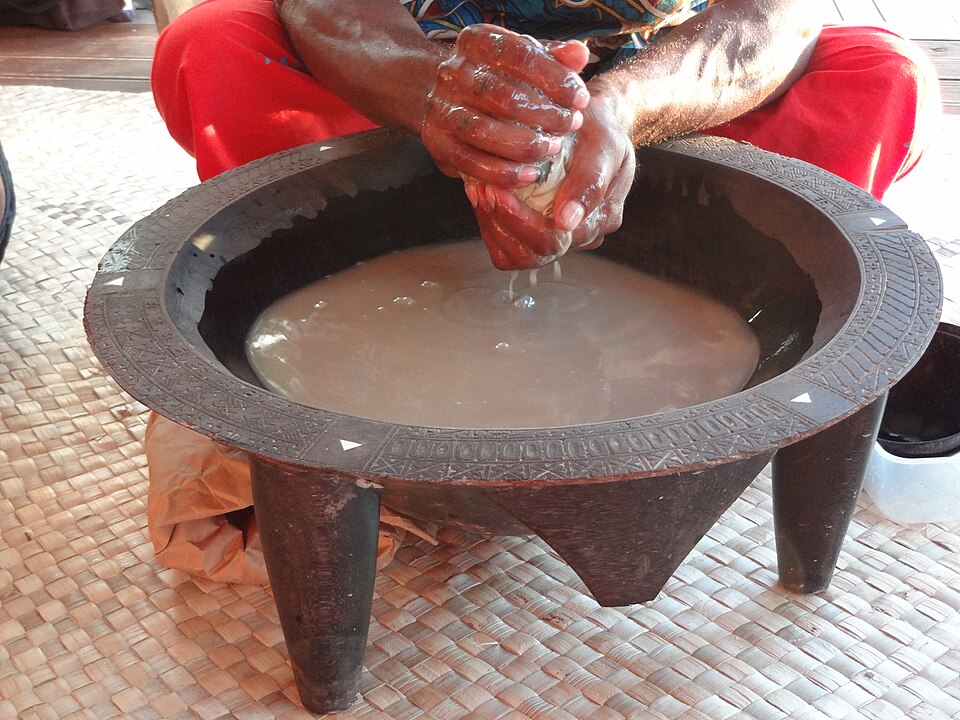 Photo of a traditional Fijian method of kava preparation. The focus is a large metal urn of brown liquid on an outdoor rattan floor. A sitting person with brown skin and red pants, face out of frame, mixes a drink vessel above the urn.
Kava: A traditional Polynesian social lubricant, rated about as addictive and safe as caffeine. I sought some out in Hawai’i, only to later learn there are more kava bars in NYC than there are in Honolulu. Under the influence of kava, I experience the same reduced inhibitions as with alcohol, but with more chill undertones. Like everything’s cool and I don’t need to do anything in particular. This is honestly the perfect effect to aid my quest to be a part of the masses, rather than apart from them. It tastes terrible (a friend reported, “Like something my grandma would make me drink”) and numbs my mouth and throat. Unfortunately, kava is easily confusable with kratom, a Southeast Asian stimulant rated about as addictive and safe as heroin. Kratom is illegal in most developed countries, but the US FDA refuses to regulate herbal supplements. So kratom is often on the menu right next to the kava. Not only is it sketchy to invite my friends to this extremely normal bar to try this totally safe drug I like, I have to strongly warn them against the other similar-sounding legal drug that the same place sells. I can’t give kava a perfect rating, because of how much courage and trust is required to set up a chat over kava in the first place. ★★★★☆
Tranquilizers: Xanax, Valium, et al. I don’t know of any OTC drugs in this family, so my experience is limited to the few times I’ve had them prescribed. Under Xanax, I experience everything as fine and cool, even things that would normally be upsetting. Then I have a deep, restorative sleep. Tranquilizers sound like great options in theory, but are limited by their lack of availability in practice. ★★★★☆
Caffeine: Don’t take caffeine to relieve anxiety. It makes it worse. Woe betide any hypothetical person with ADHD and social anxiety who self-medicates the ADHD with caffeine. Would not recommend. ★☆☆☆☆
Meditation: Not an external drug, but belongs on this list. As strange as it sounds, I had traumatic experiences with meditation as a kid. I wasn’t able to even consider meditating until my 30s. I only discovered my preferred method a few years ago, through personal experimentation and reading blogger trip reports. If you’d told me last year that diving deeper into meditation would permanently reduce my anxiety, I would not have believed you. So I don’t expect you to believe me. Just keep it in mind as something you can explore for yourself later. ★★★★★
Psilocybin: My lawyer has advised me not to comment on this drug while outside the state of Oregon.