Hello,
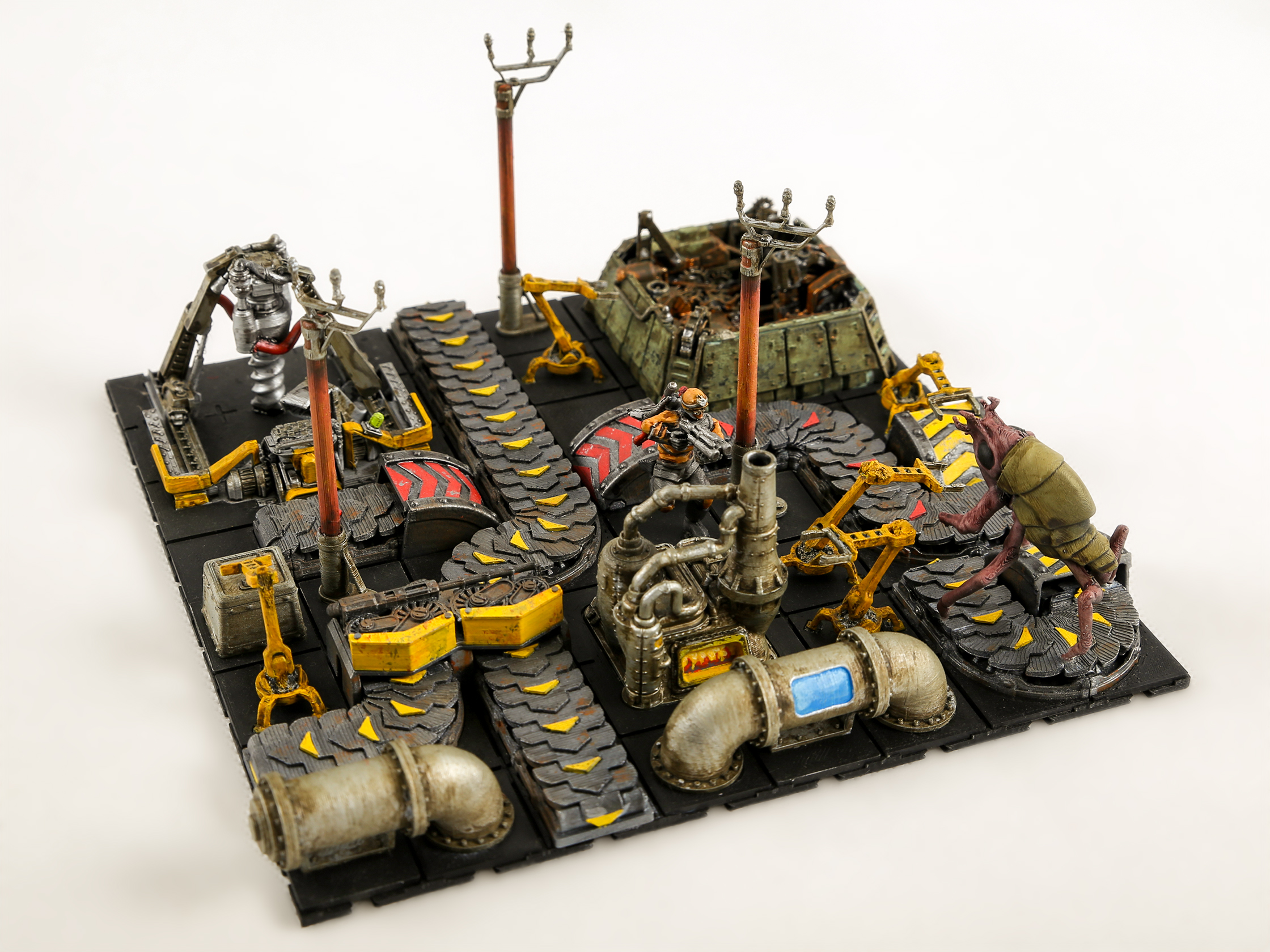
Journey to the physical world Pard
It all started in the hot summer of 2024 when we worked really hard to finish the Space Age DLC. The game was almost ready, but we wanted some feedback from our players. A decision was made to organise a playtesting event (FFF-427), where teams of players could play the game from start to finish and provide us with in-person feedback and criticism to deliver the best product you all deserved.
Since we are all geeks and love to tinker, we asked our friends at Prusa Research to join us and create some accompanying programmes and presentations for all attendees.
Being fans of Factorio themselves, they agreed to join, and the plan was put into motion. When the event started, we realised that it would be cool to print some Factorio models right at the event, so Fearghall quickly created a simple model of the Wriggler from everyone's favourite Gleba.
With the conclusion of our event, everyone returned to work on Factorio, but we all wanted to return to the idea of Factorio models in the real world. In the months following the release and subsequent bug-fixing and polishing period, we started working on some prototypes in our spare time. Several models were made, printed, and painted, but they lacked a concept. We let it sit for a while and brainstormed what would be the best direction. The answer was actually very simple: transport belts.
Belts are the core of every factory from the early hours to the very late game. Jarosław started designing the concept of a grid system where you could place every entity closely following the game. The first version of inserters soon followed. During this phase, we were printing countless prototypes. It soon became clear that we needed two versions of almost every model. One set of models is created with high precision, allowing push-fit assembly, and the other is made with high clearance in mind for people who want to glue everything permanently or have clearance issues with their printers.
While Jarosław was busy creating one player-built entity after the other, Fearghall started working on enemies. The first iteration of the biter spawner soon followed. Then came chests, followed by the player character, then a stone furnace… Our model set grew nicely, but we knew that we had to draw a line somewhere, because trying to release every Factorio entity would take too much time. With that in mind, we focused on the early game. We ended up with 15 model sets containing 65 individual models in 247 STL files.
1/17
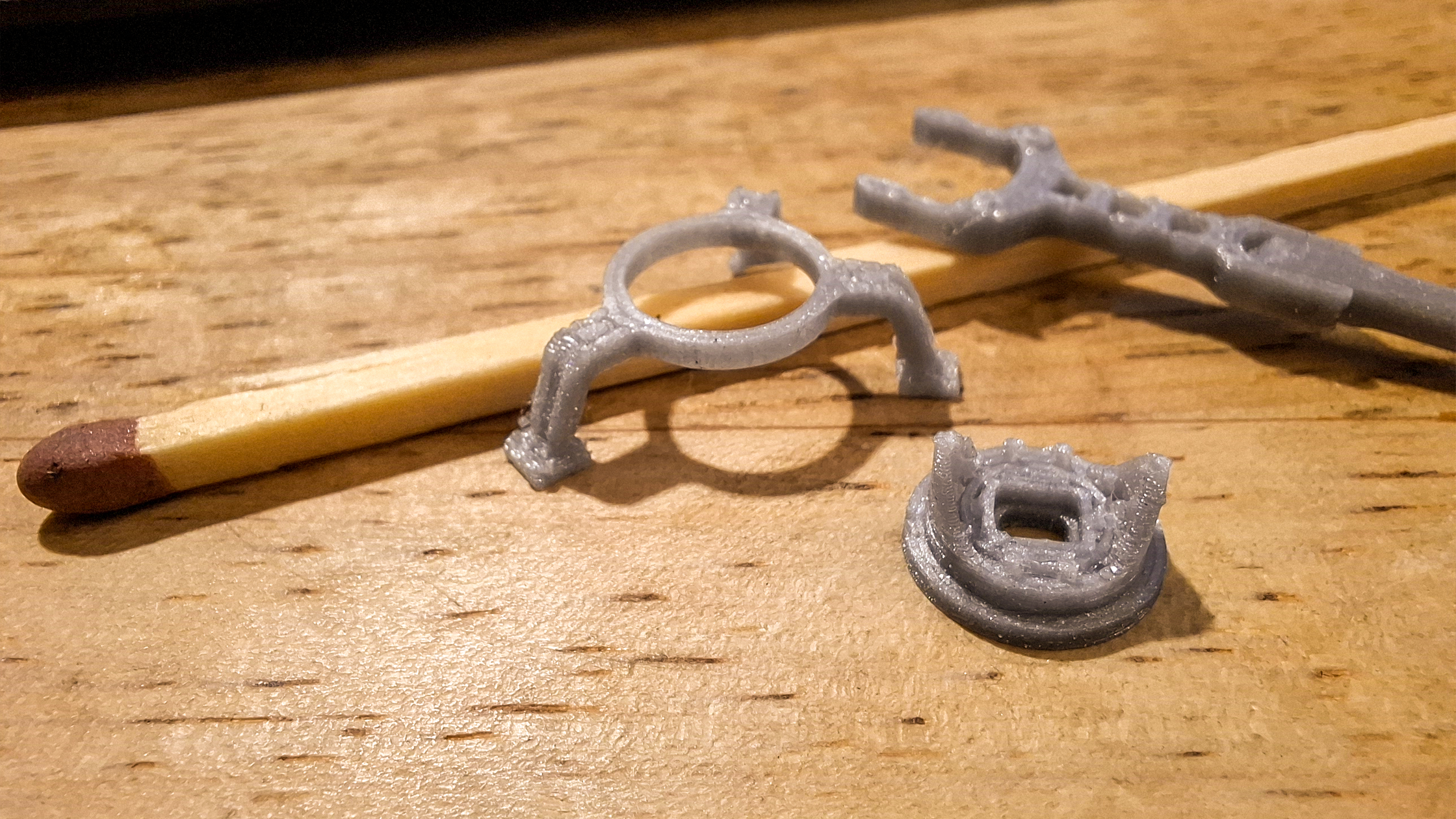
Testing how far we can push the limits of model size.
2/17
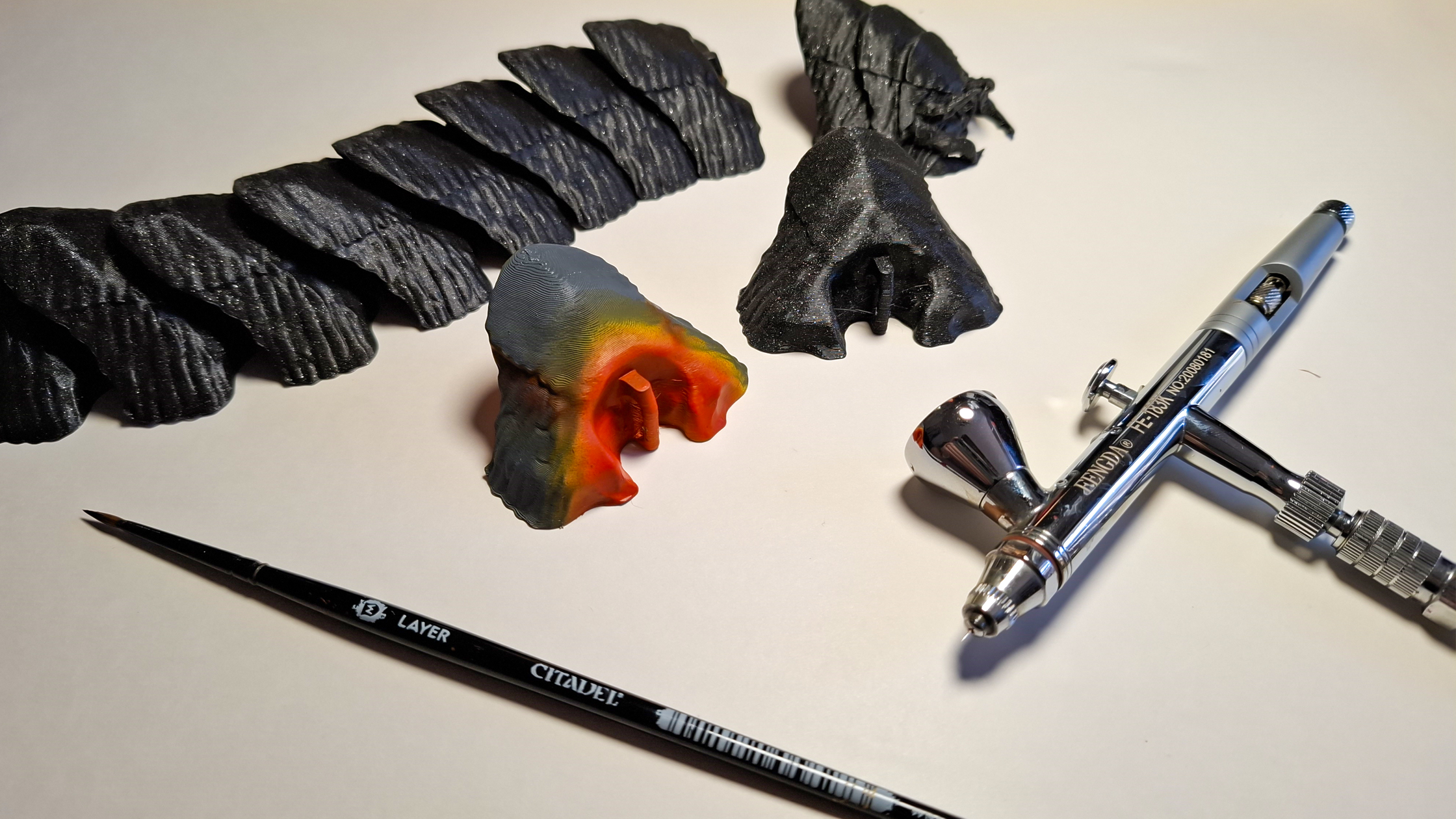
Painting of the first enemy prototype to ensure that models will look good both in plain plastic and fully painted...
3/17
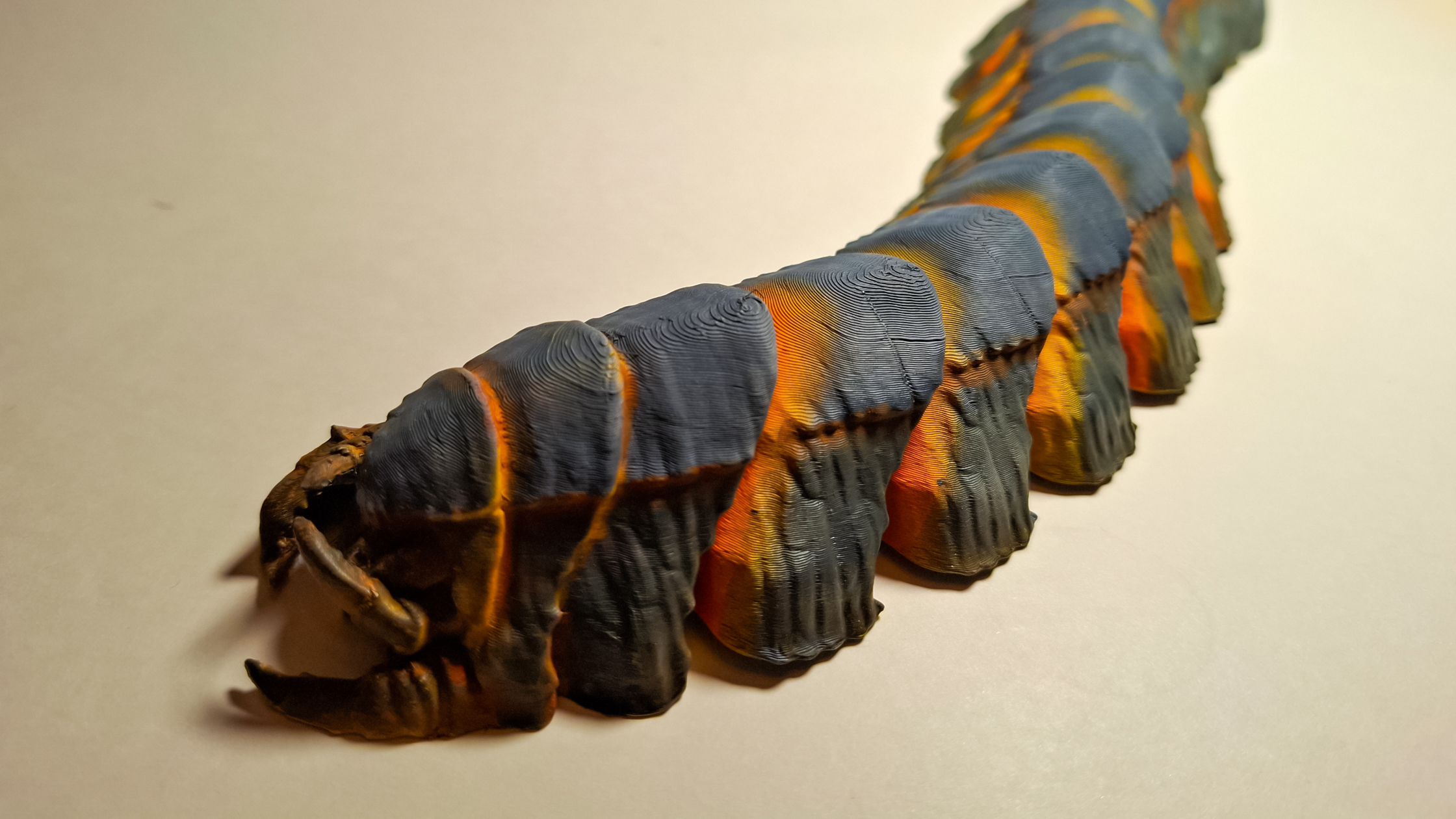
...Finished demolisher. The model was later scrapped because it wasn't really reflecting in-game visuals.
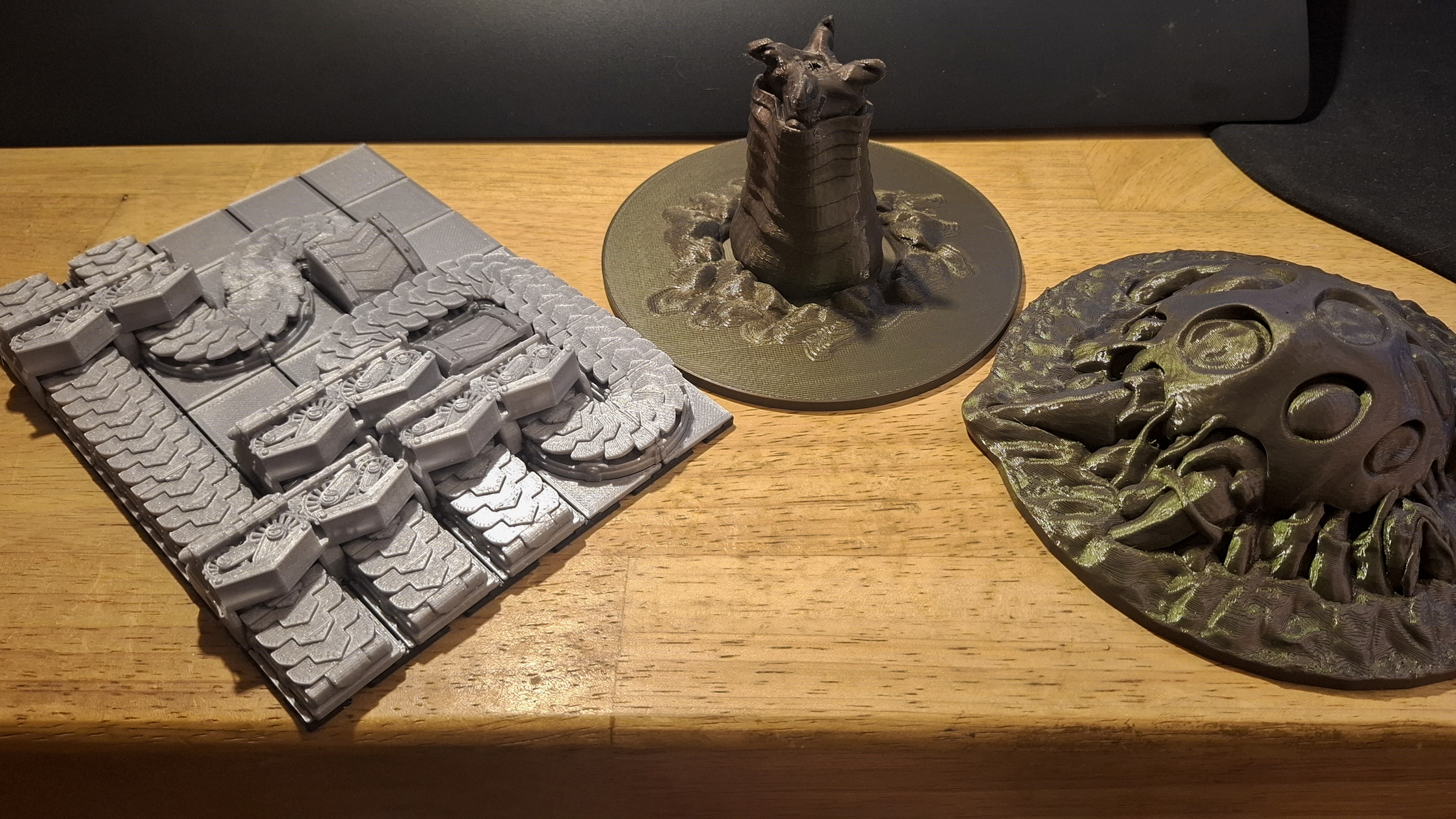
4/17
Several models in early stages of development. Belts were tested and fine-tuned for clearance issues. Enemies needed major updates.
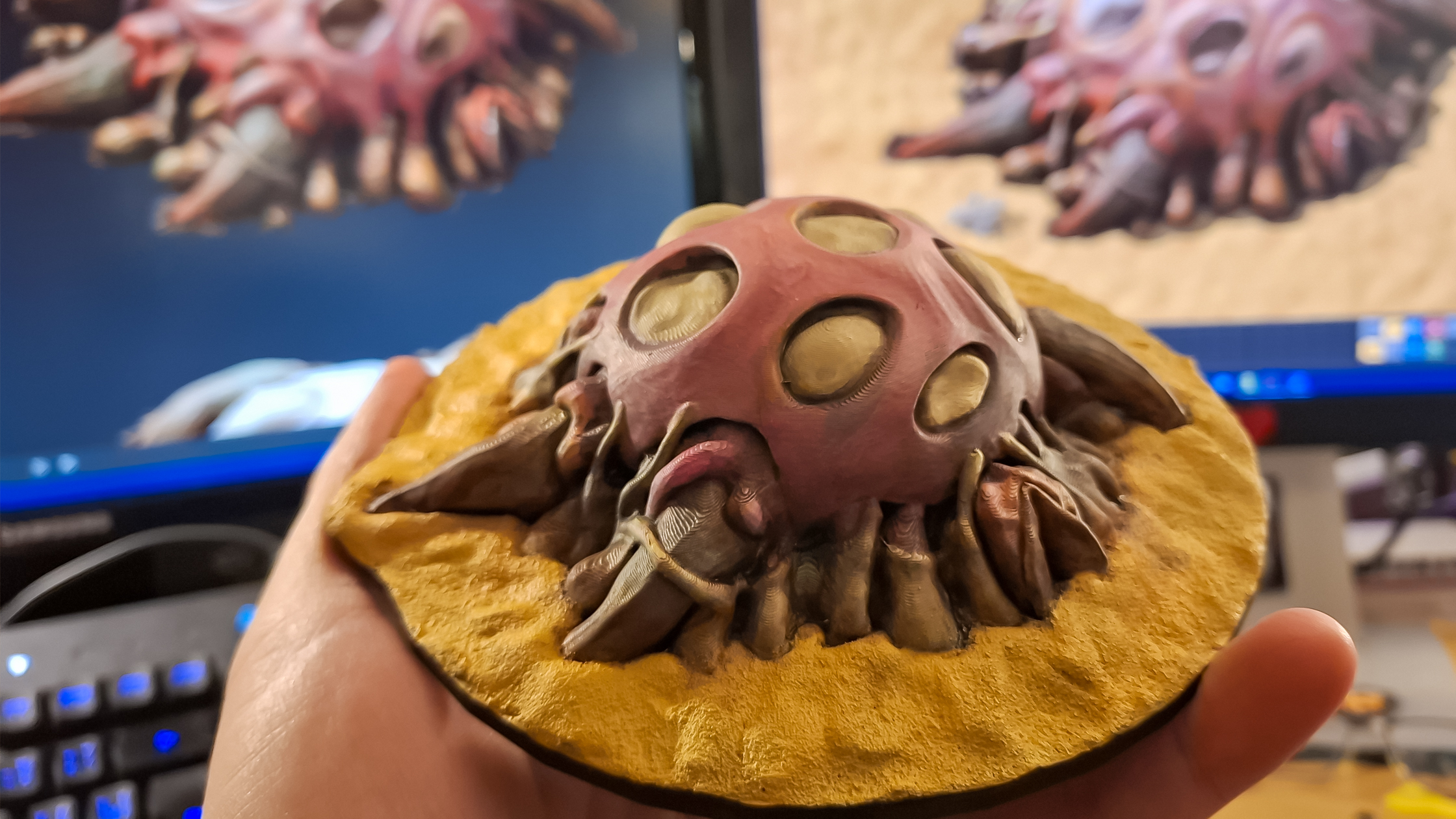
5/17
Painting the biter spawner to determine whether the fully finished model adequately represents the original vision for the game...
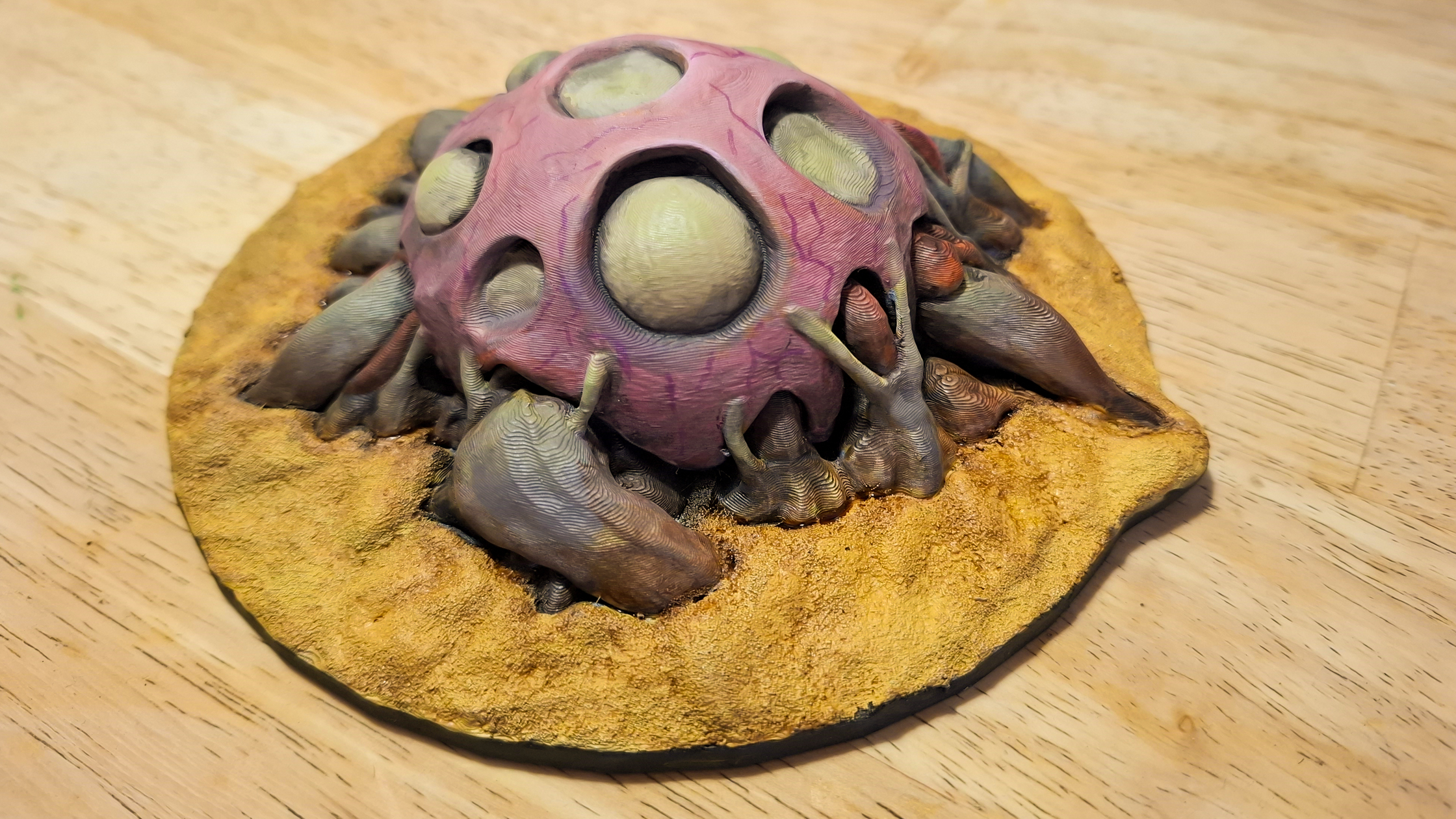
6/17
...The biter spawner is now fully finished. Unfortunately, we realized that substantial changes are still needed.
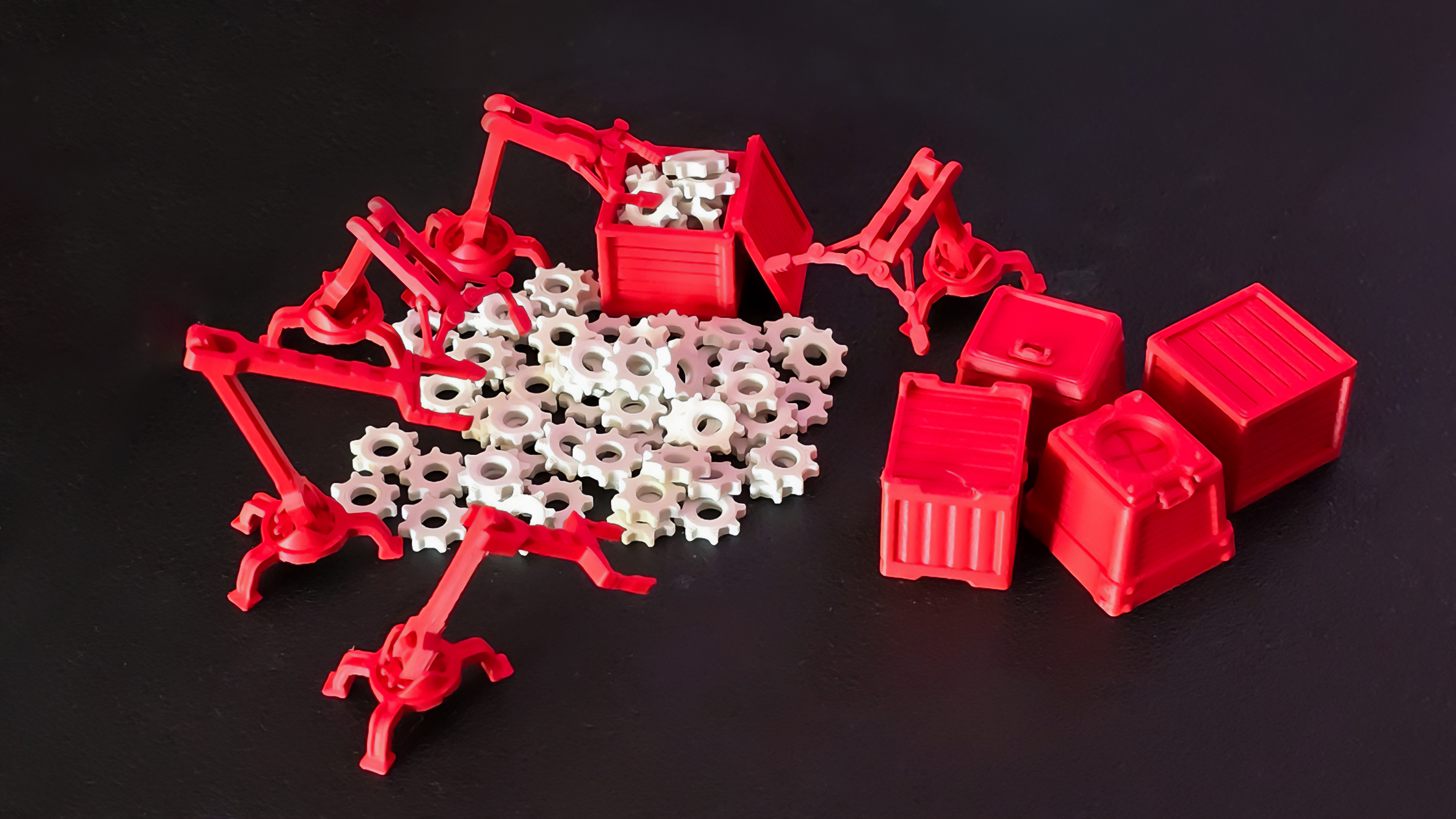
7/17
Most entities went through a series of iterations. Countless print runs were associated with this process.
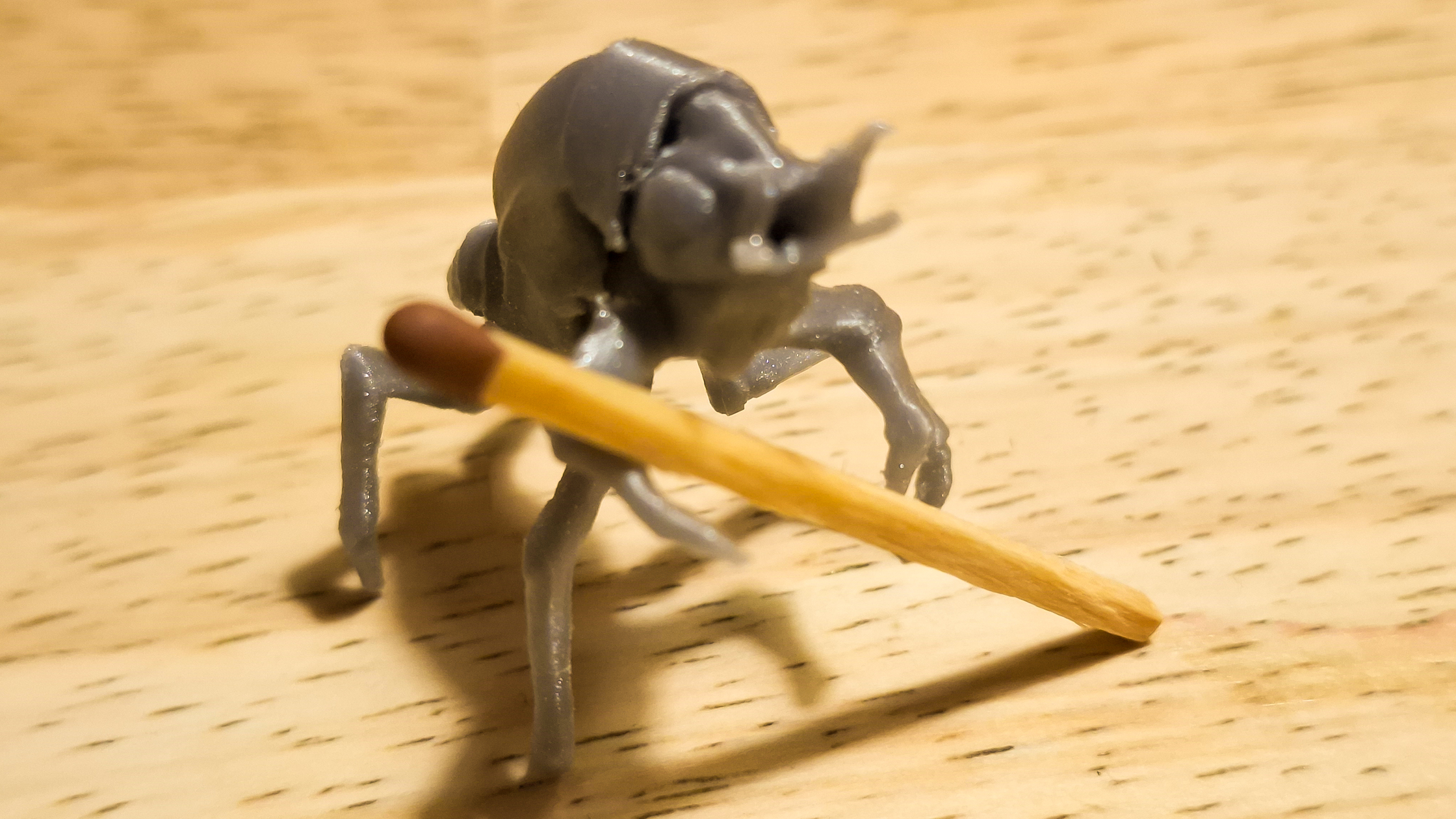
8/16
First test print of the biter. It was later resized, and it received many improvements for a smooth printing experience.
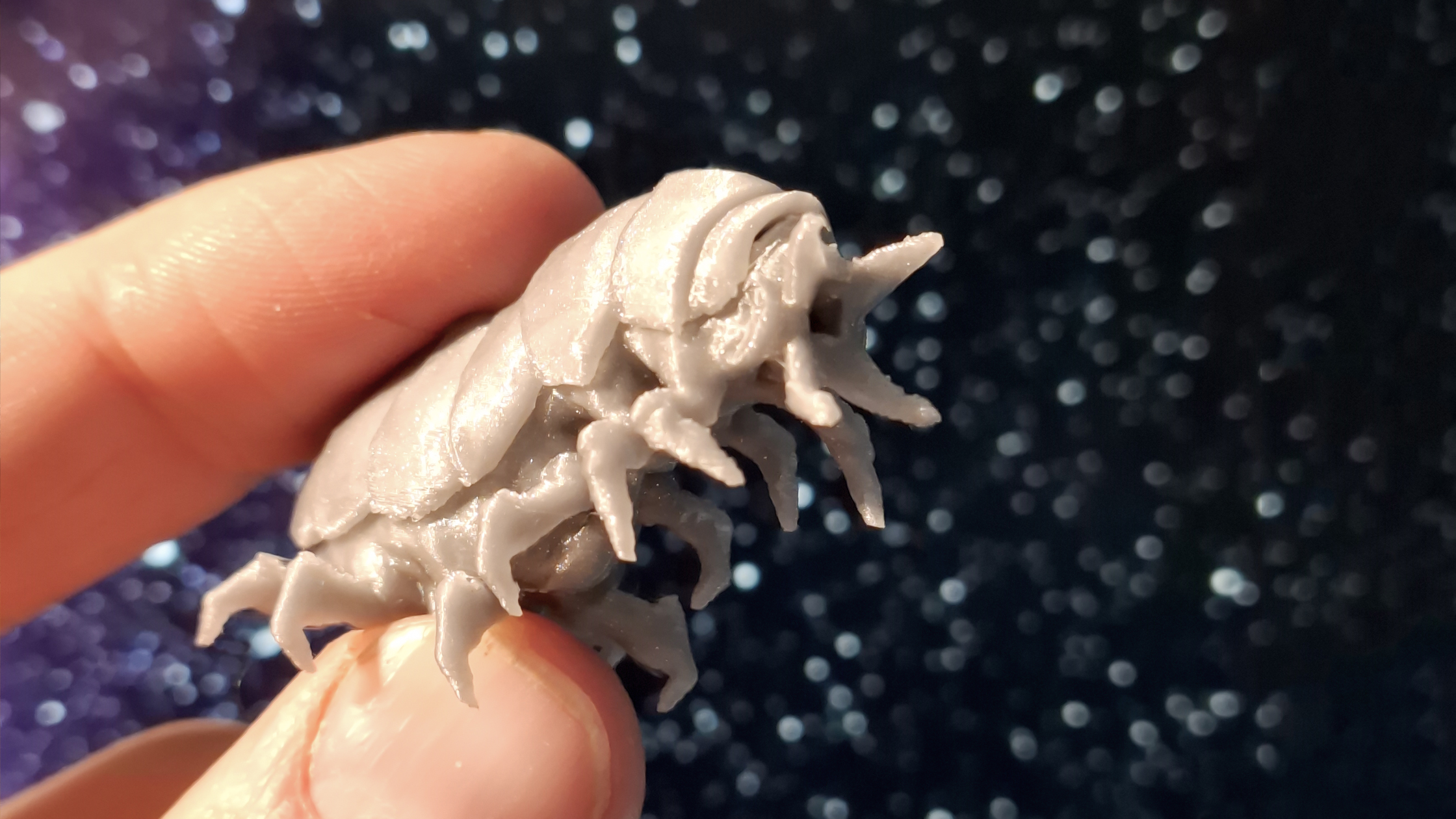
9/17
Fine-tuning of printer limits regarding potential model details on the spitter.
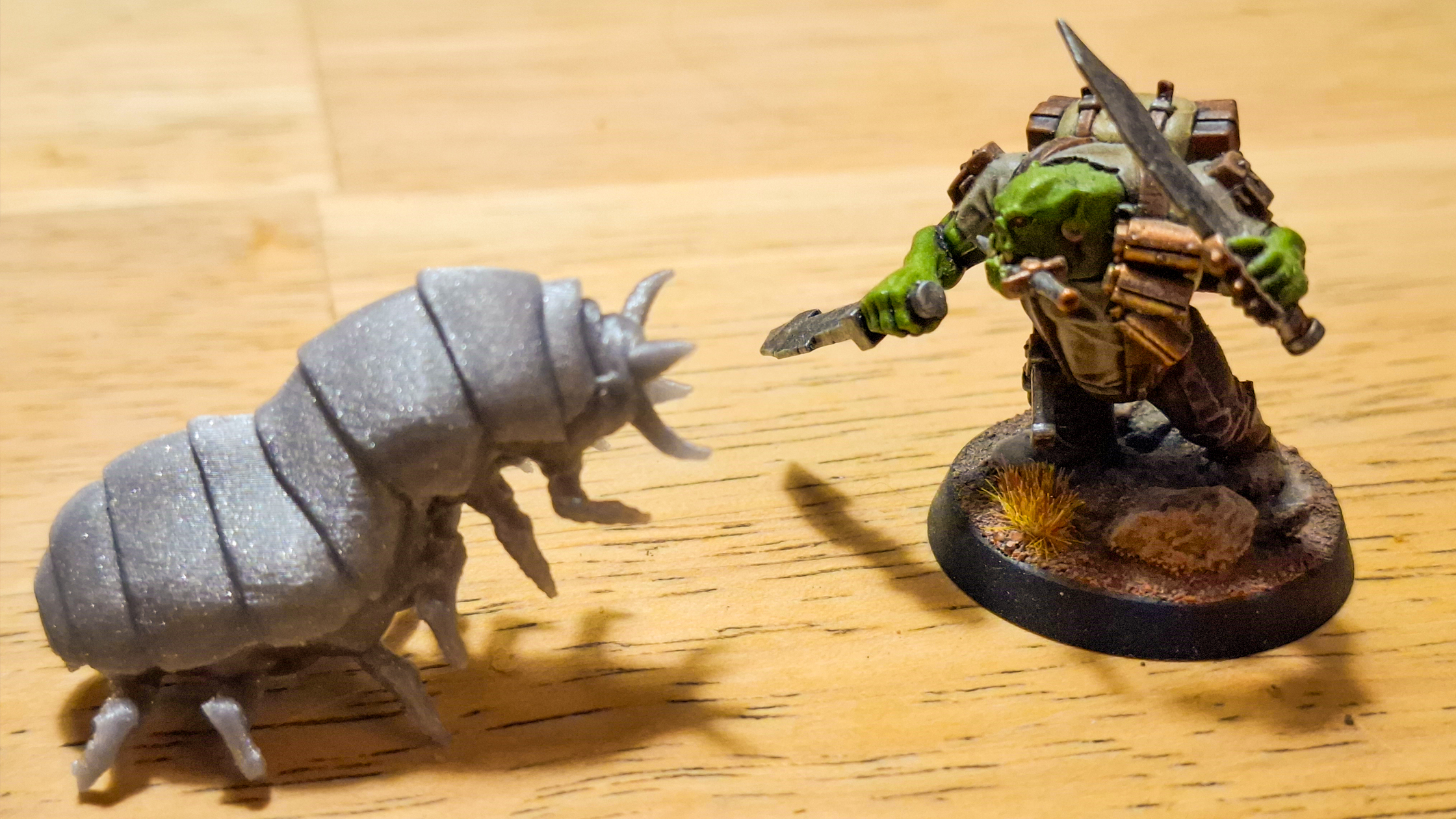
10/17
The final version of the spitter, finding enemies outside the world of Factorio.
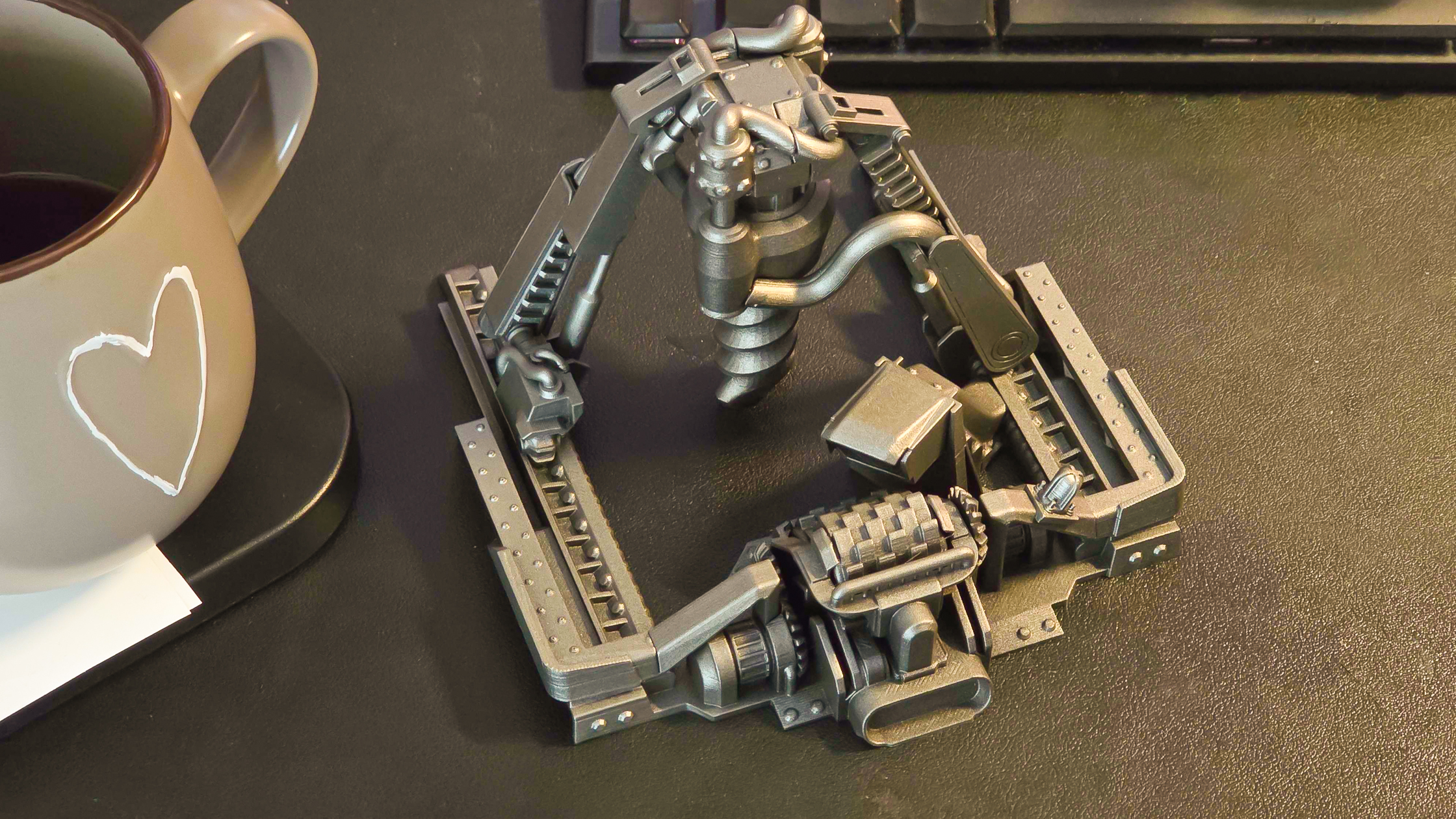
11/17
Test print of the late version of the electric mining drill with a coat of silver primer.
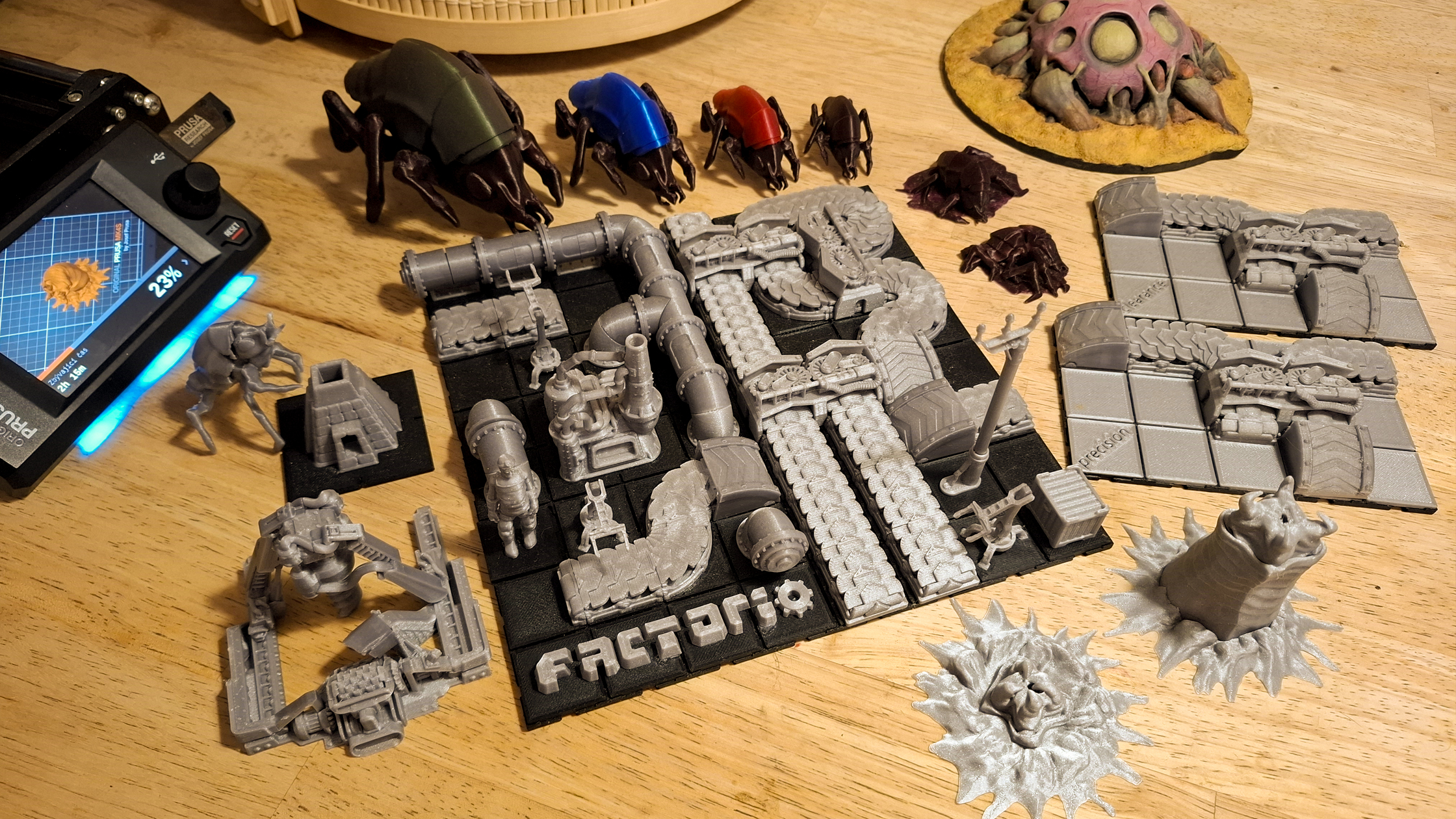
12/17
Our catalogue of models was starting to gain momentum. At this point, we were confident that a public release was possible.
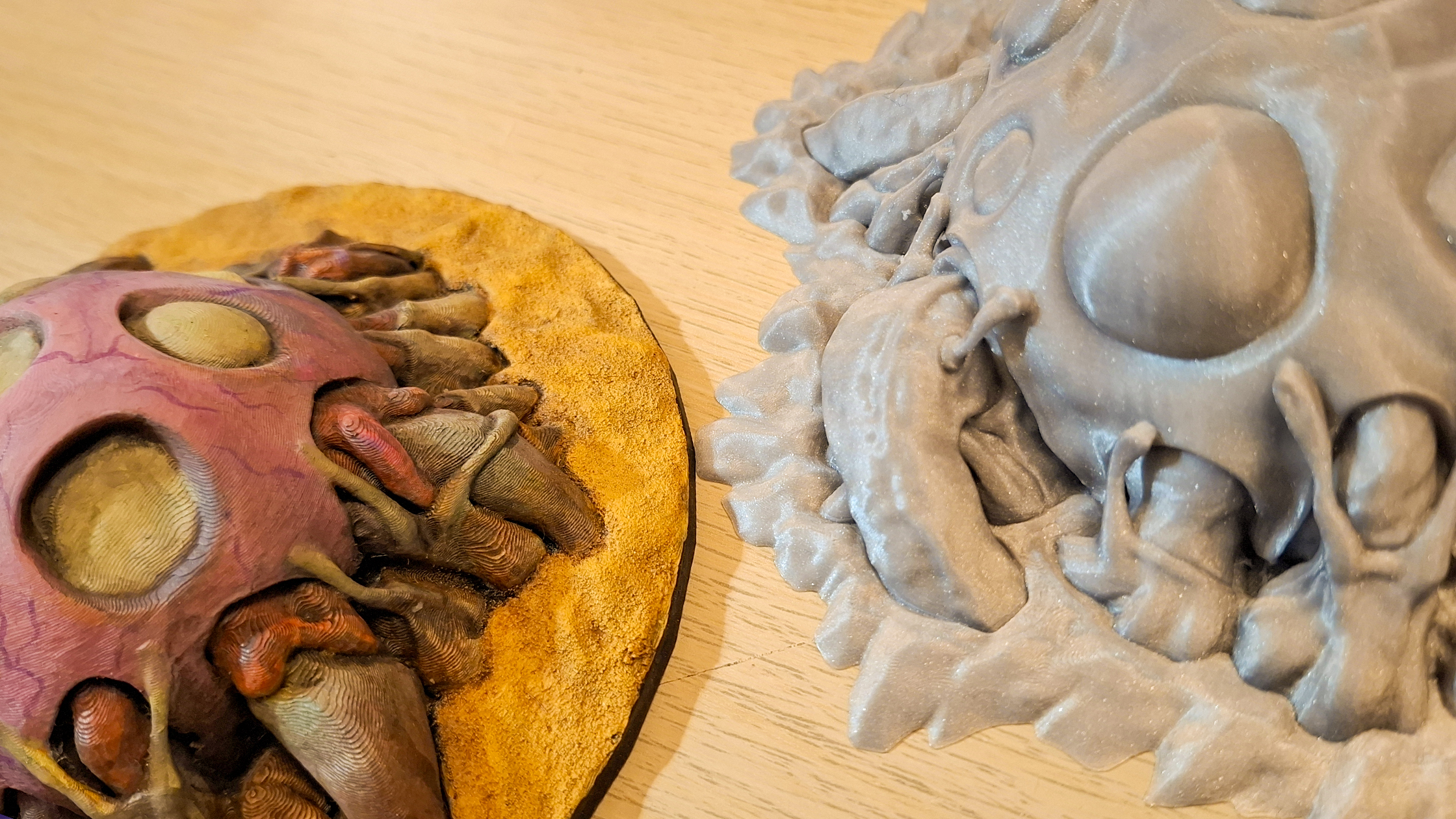
13/17
The biter spawner finally received a model update. It still wasn't finished, but we were getting much closer to the finish line.
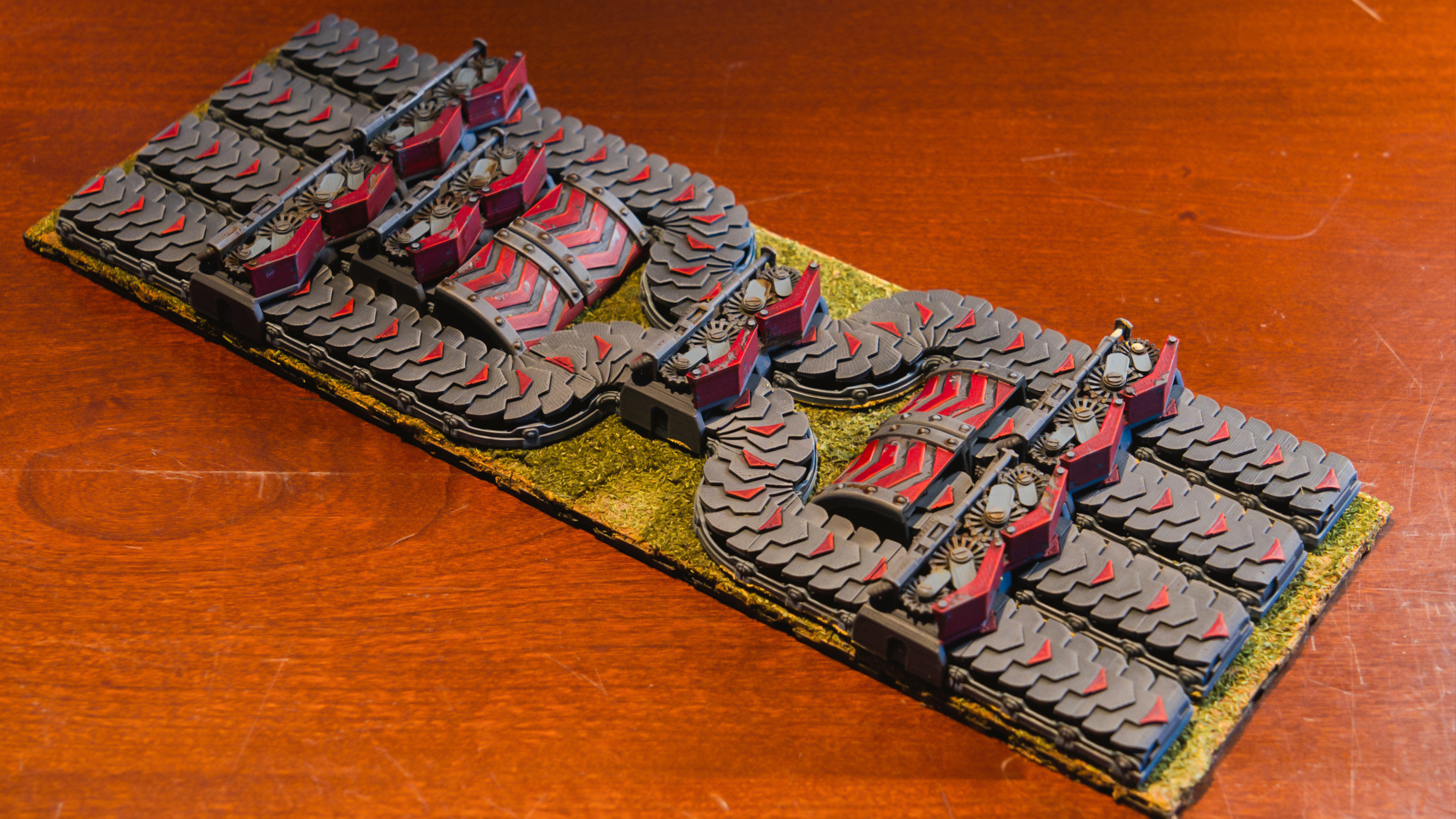
14/17
The belt lane balancer is painted with model grass added. It was clear that complete dioramas are possible.
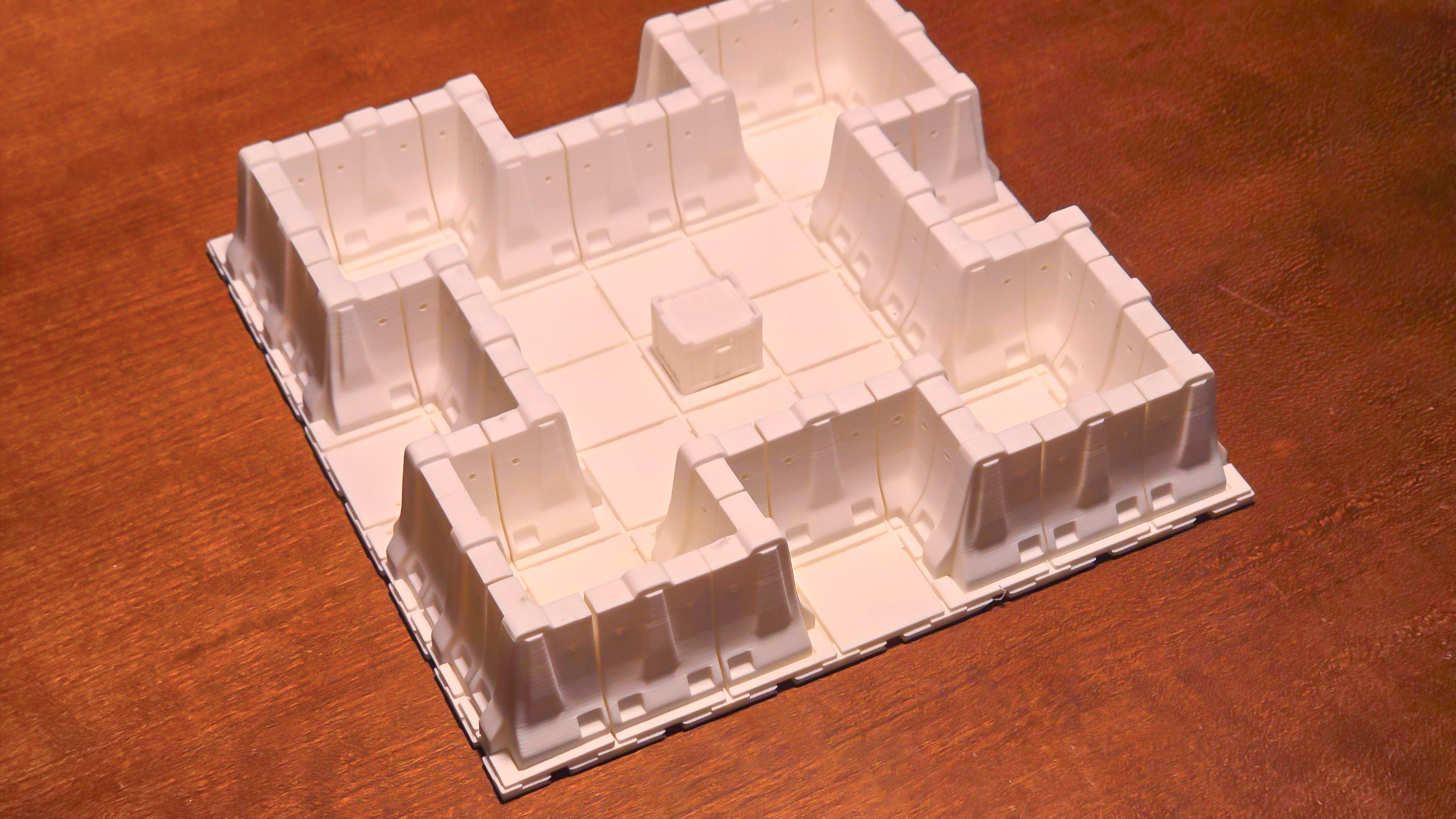
15/17
One of the earlier tests of walls and their integration into the grid system.
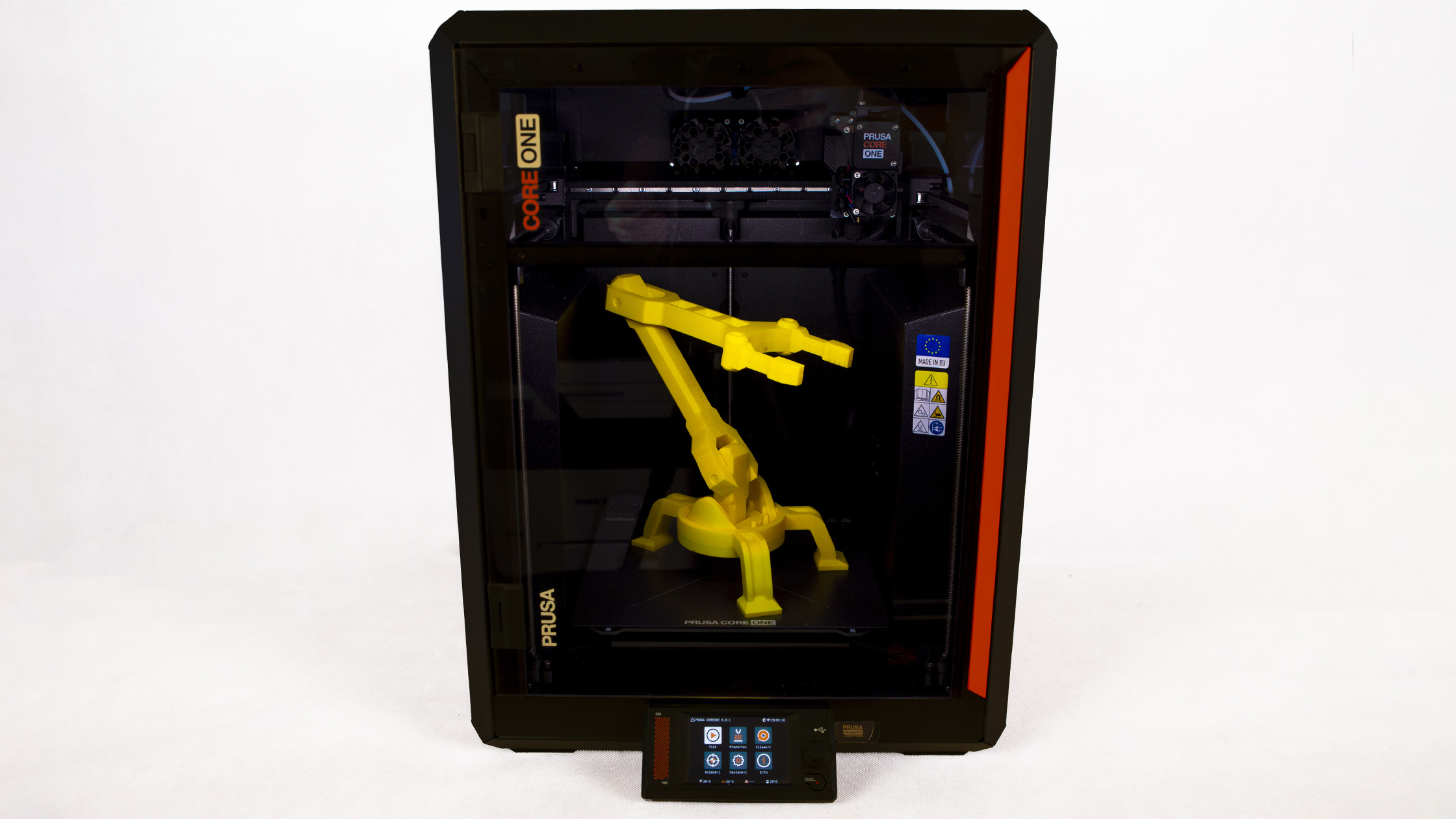
16/17
Testing how far we can push the limits of model sizes in the opposite direction. Joint modification was needed.
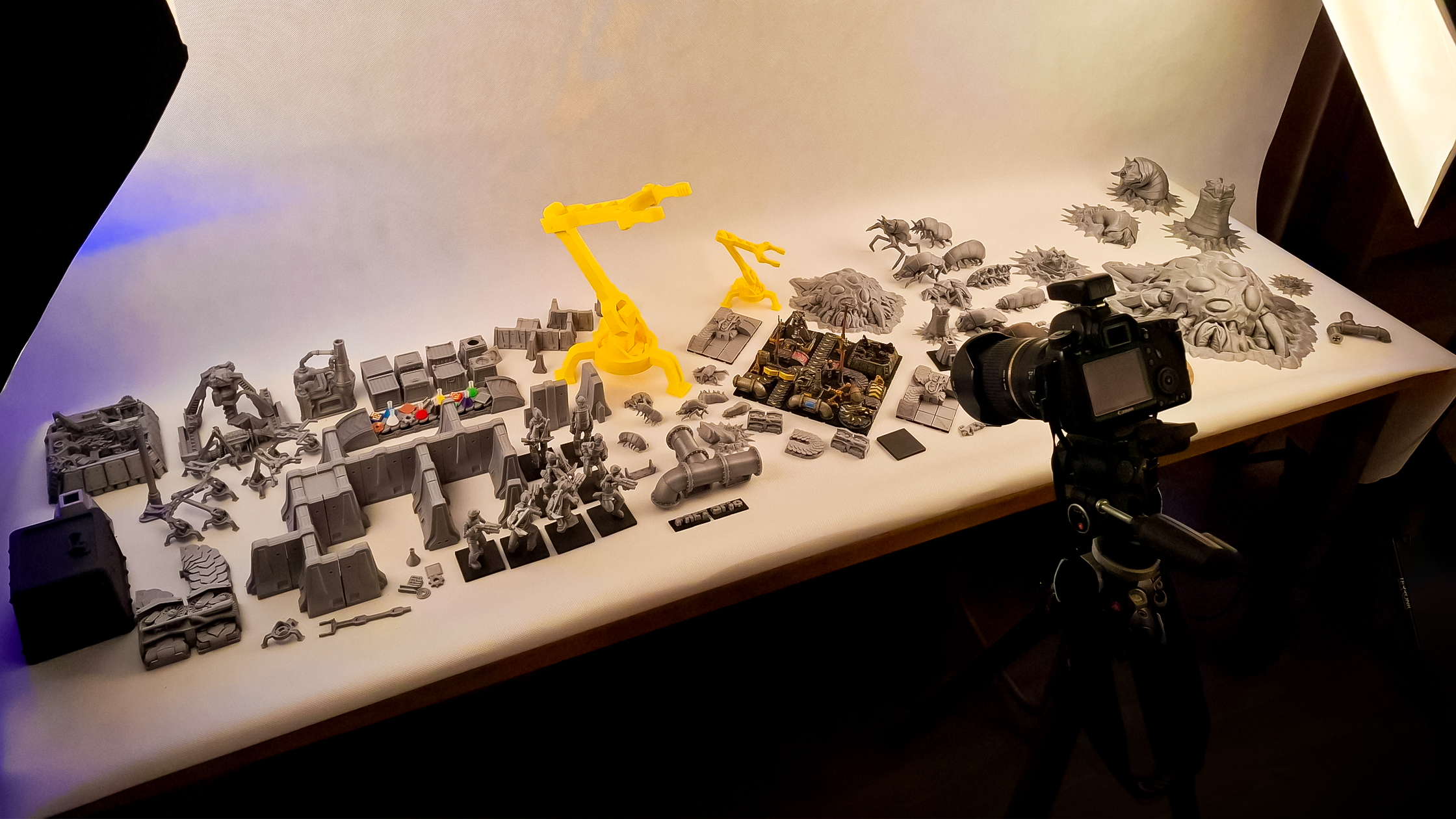
17/17
Finally, all the models are finished. Time to take some glamour shots.
Why 3D Printing? Pard
In the modern digital world, there is a decrease in physical memorabilia. Physical releases of games are now almost a relic of the past. We always thought about having something for fans and ourselves as a reminder of times that we spent with the game. We at Wube are a software company, not a toy manufacturer, and we have the best community in the world. Creating some expensive (limited) collector's items didn't sit right with us. We have decided to go with 3D models as a little "thank you for your support" gift so anyone can download them and print them for themselves.
A second equally important reason is that we love your creativity, and we want to give you a chance to iterate on things we created and give them your own spin. We can't wait to see it.
Reimagining of Factorio Jarosław
I will not lie, I slept on 3D printing for a while. It's probably for the best - I do have a passion for miniature-based board games and background as a 3D artist. So, when I finally took the risk and decided to look into it - well, let's say neither of my 3D printers has seen much downtime since then. Whether it's miniatures, card organizers, inserts or wall-high paint-stands, there is always something new to print. And of course, in case you are wondering, that does not make my "pile of shame" any smaller.
With this premise, I know you can imagine why my ears perked up when the first hints of 3D printed models for Factorio started circulating in the office. Little did I know I was soon to partake in one of the most fascinating endeavours I ever… well, partook in.
If you are a regular in these here parts, you will likely know all our entities start their life as 3D models. That might make it seem like translating them into prints would be an easy job - in all truth, I thought so, and I of all people should know better! The journey turned out to be a bit more complex than I originally imagined!