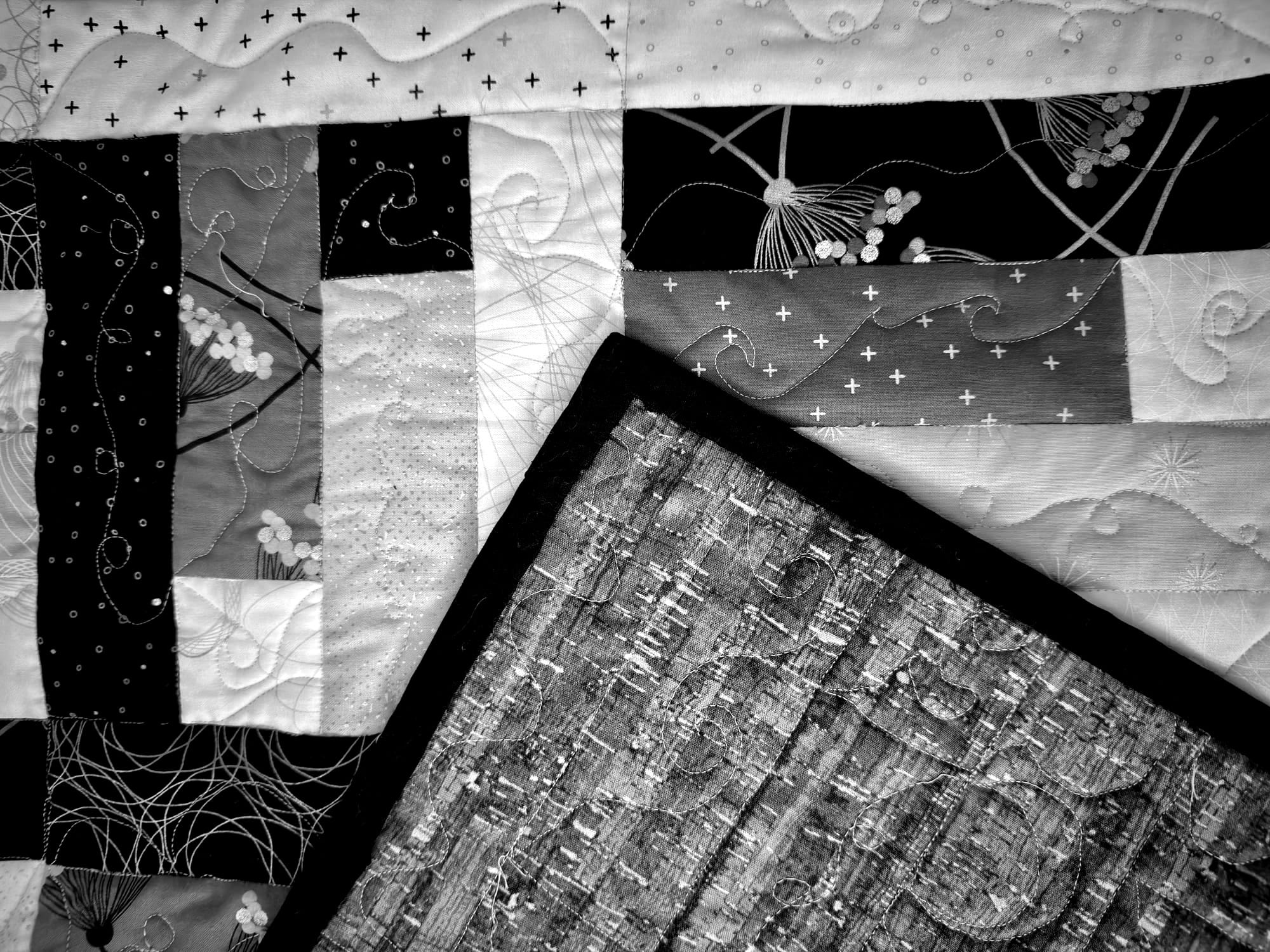
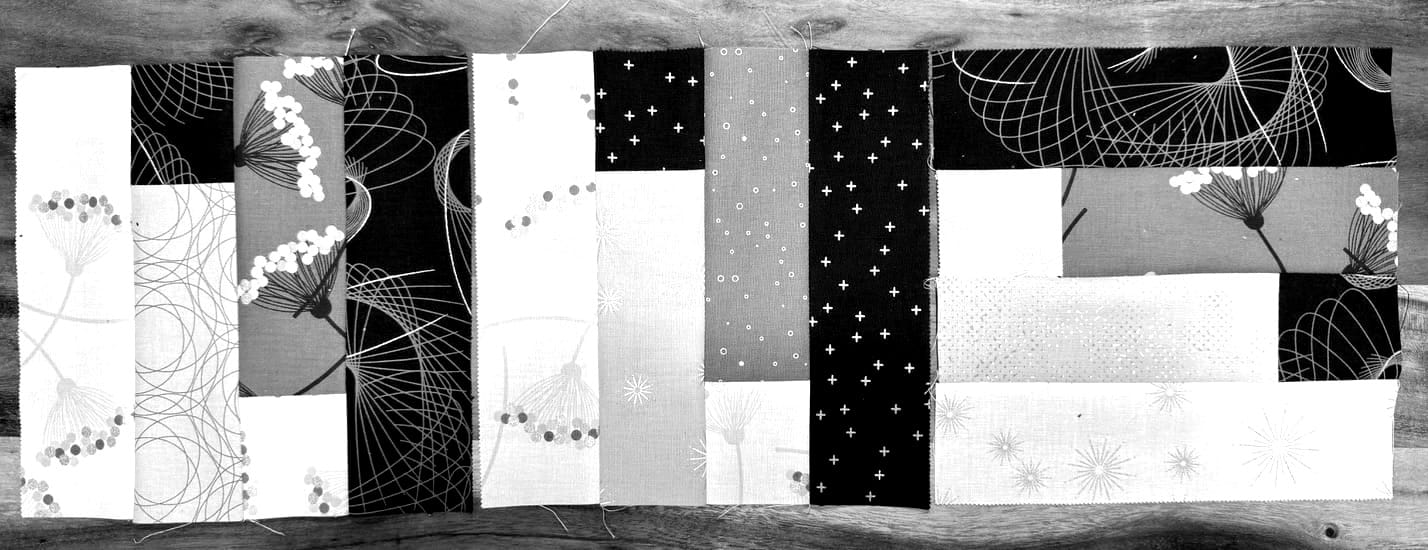
Have you ever been to a quilt store and bought fabric without a plan? You just saw the pretty colors and patterns and went for it? Well, I did - with a jelly roll of white, beige, grays, and black with mathy patterns (Note: A jelly roll is a roll of 2.5in fabric strips in a bundle.)
When I got home, I started thinking about different ways to plan and play with the strips of color. One way is with block patterns - and that's when the code started. I wanted to be able to look at the color space, block design, and what happens when randomness is introduced into the picture.
For a procedural/generative* quilt, I start with some things that are fixed or decided upon, allow other parts to be random, and tune that randomness to achieve desired results. I study outputs, tune, study, tune, then stop when I am happy with what I have.
*generative does not mean AI or LLM here
The toy to make your own quilt is at genquilt.com. Use at your own risk - it's just a planning toy - you still need to do the math on fabric, allowances, etc.
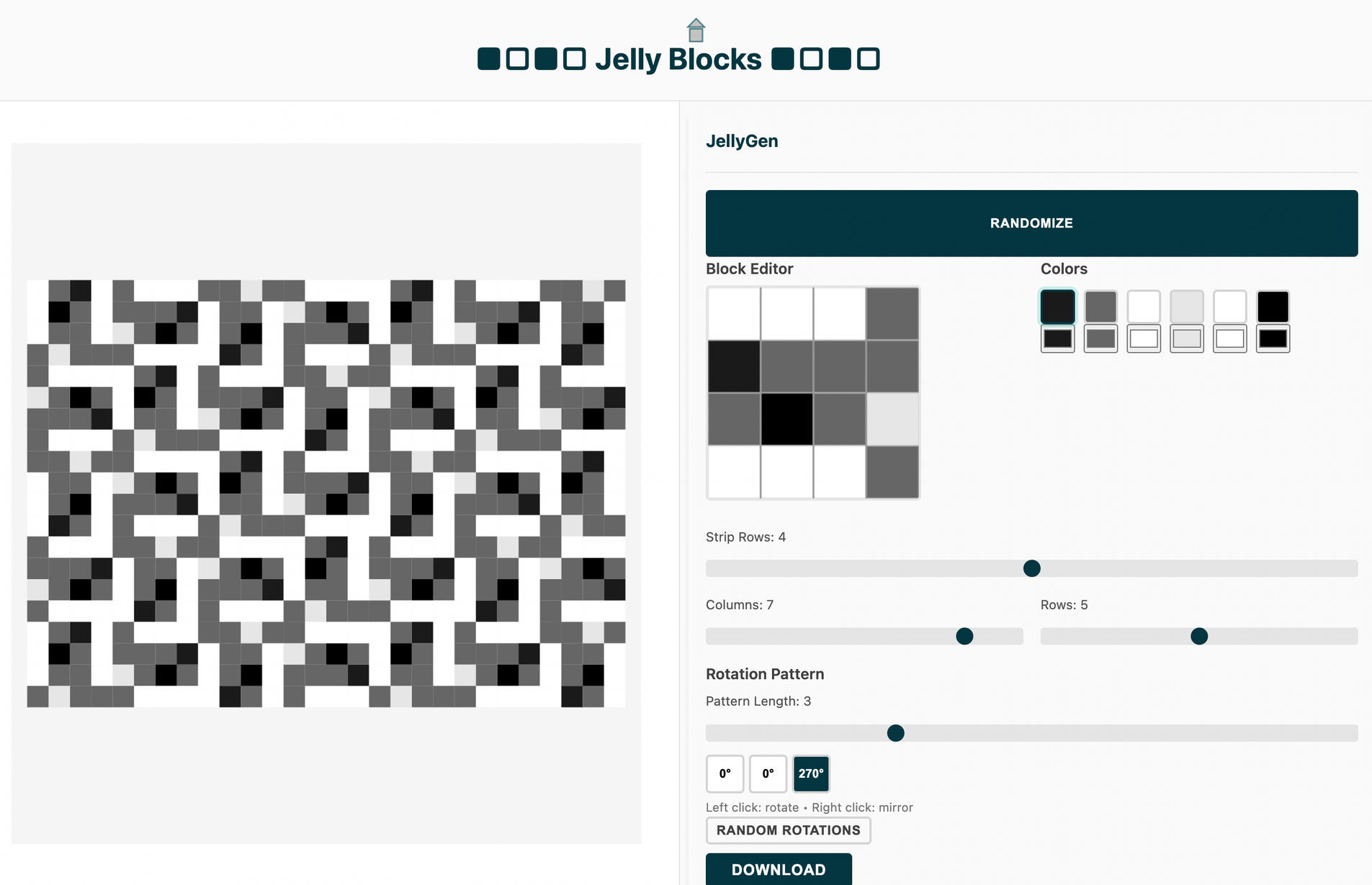
How I made a jelly block genquilt:
For the jelly block quilt, you start by choosing your colors. I chose 4, from white to black, with two grays in between.
Then you choose the number of rows in each block. I chose 4 rows.
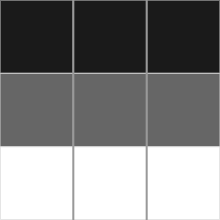
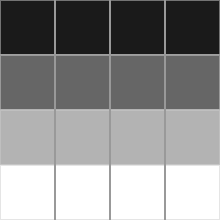
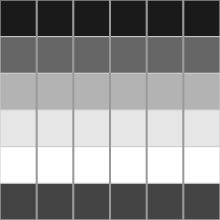
Three, four and six rows of striped fabric with grid lines with grey, black and white colors
Next, you get an idea of how large your quilt will be. You can fix this now and change it again later as you play. I chose 7x5, but was flexible to do 4x4 or any 3n+1 number.
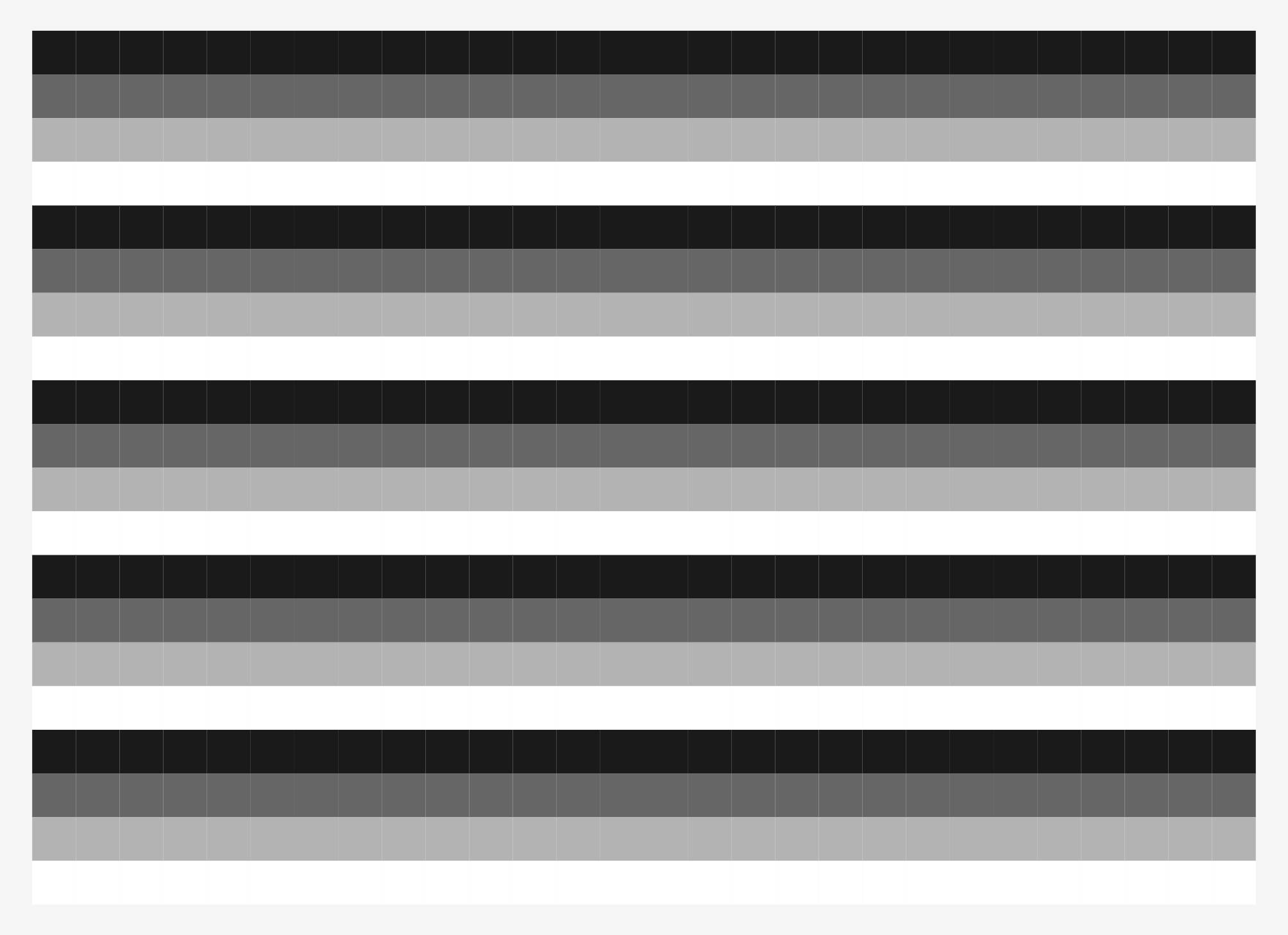
Then decide on the length of a rotation pattern and randomize it. I went with 3.
Here are some example random results with just stripes:
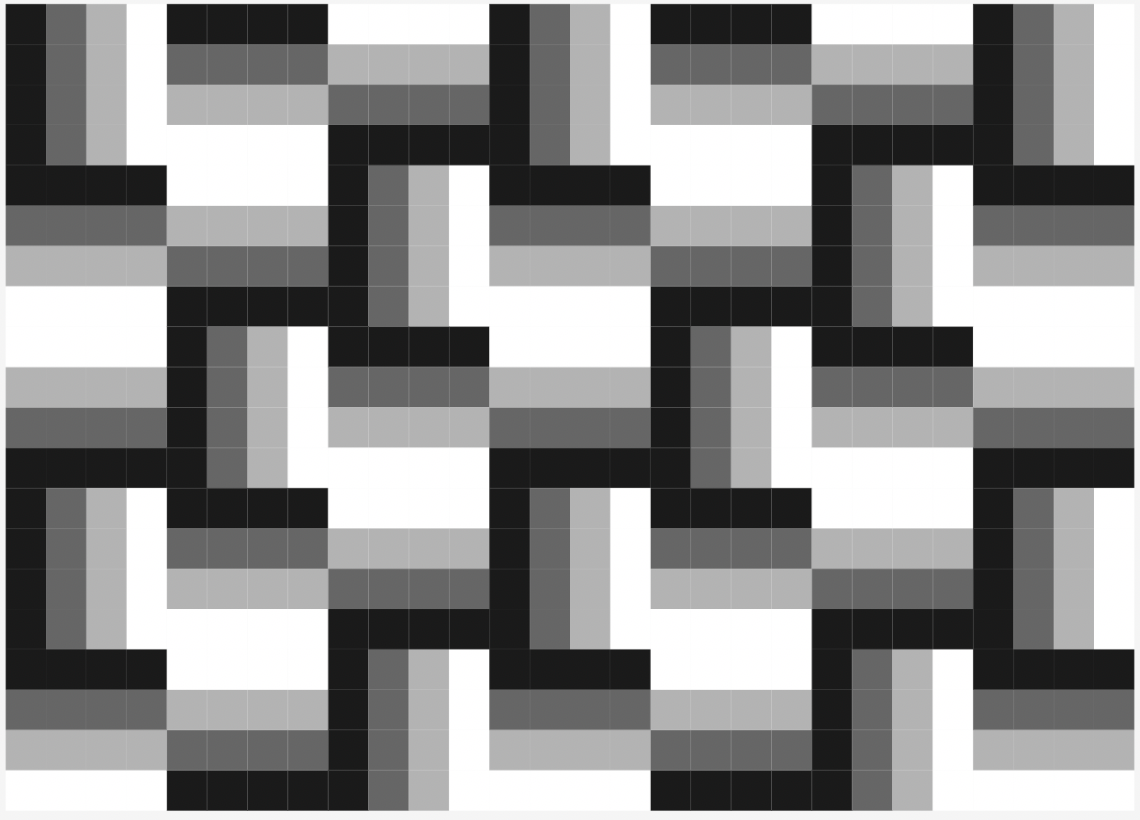
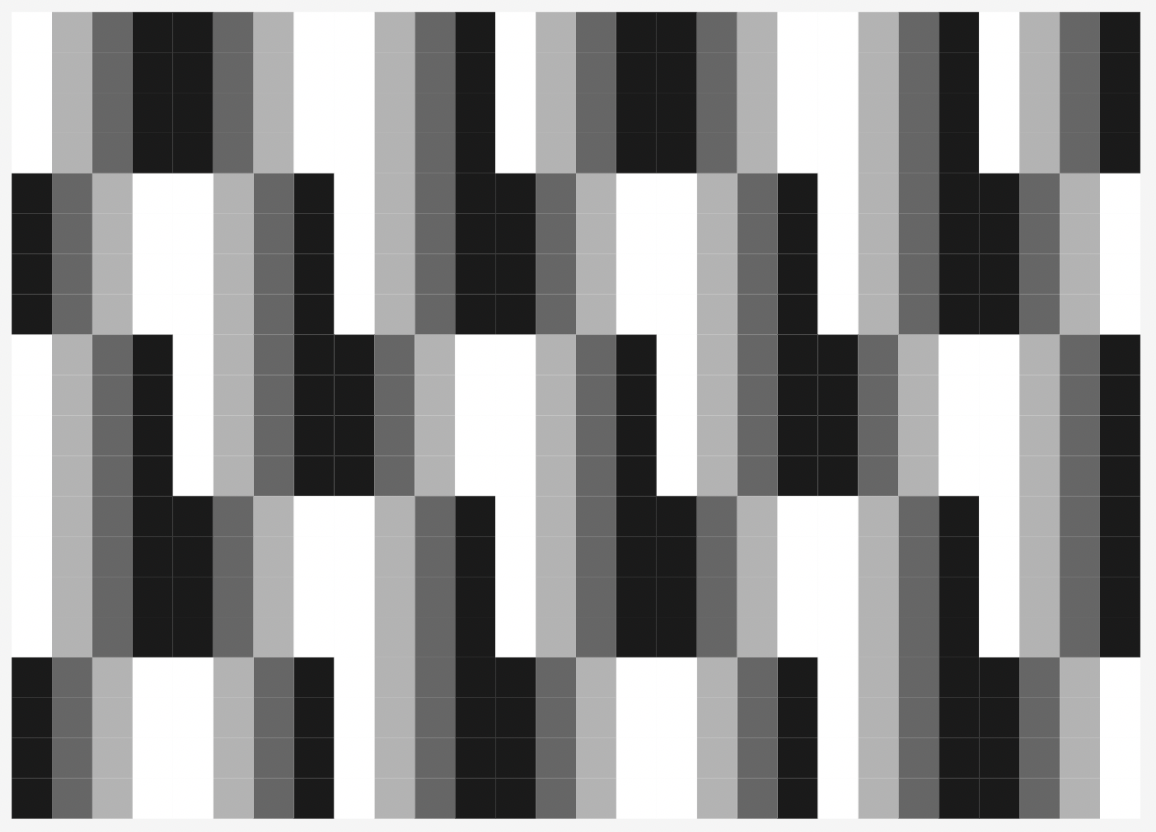
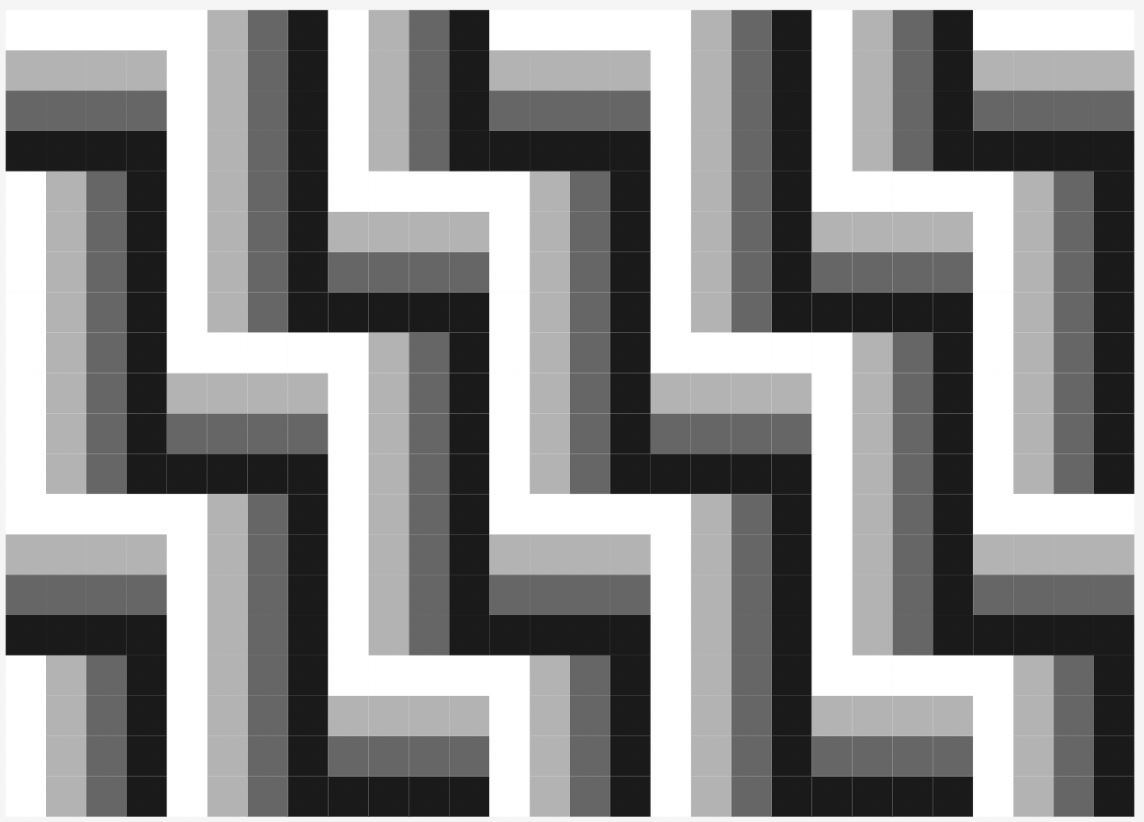
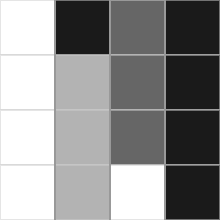
Next, choose a favorite pattern. I chose a rotation pattern of { 0°,0°, reflected 270°} that looks like this:
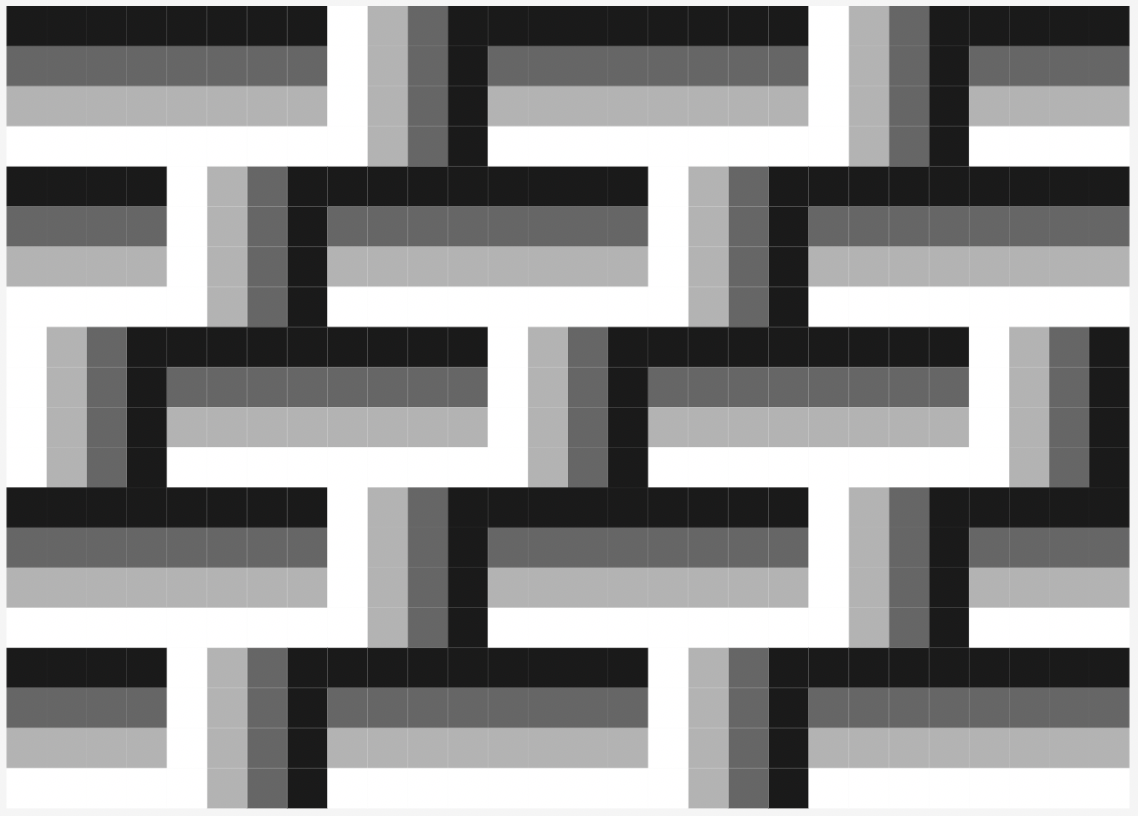
Now, randomize the block layout given the colors. (Note: I built my tool to allow for you to edit the block and not randomize it as an option - you might want only random rotations - it's just another dial to play with.)
Here are just a few of the varieties using the size, stripe count, and rotation pattern from the previous steps:
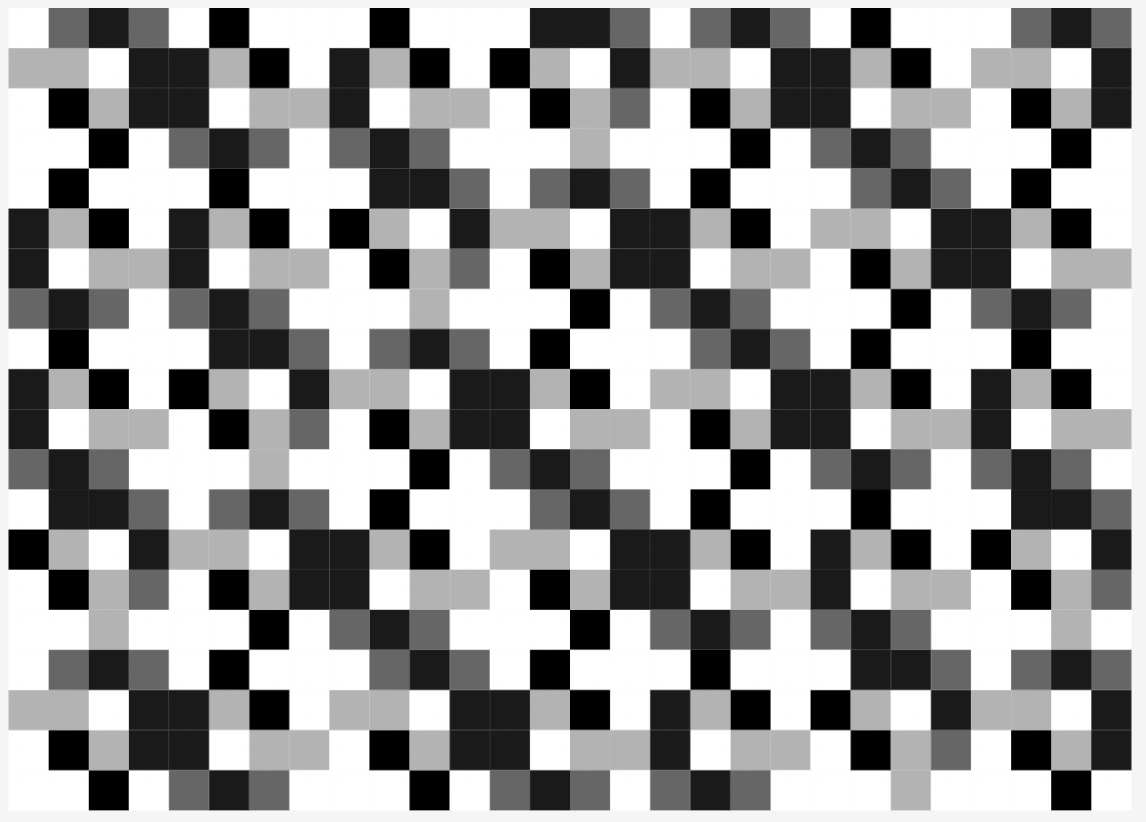
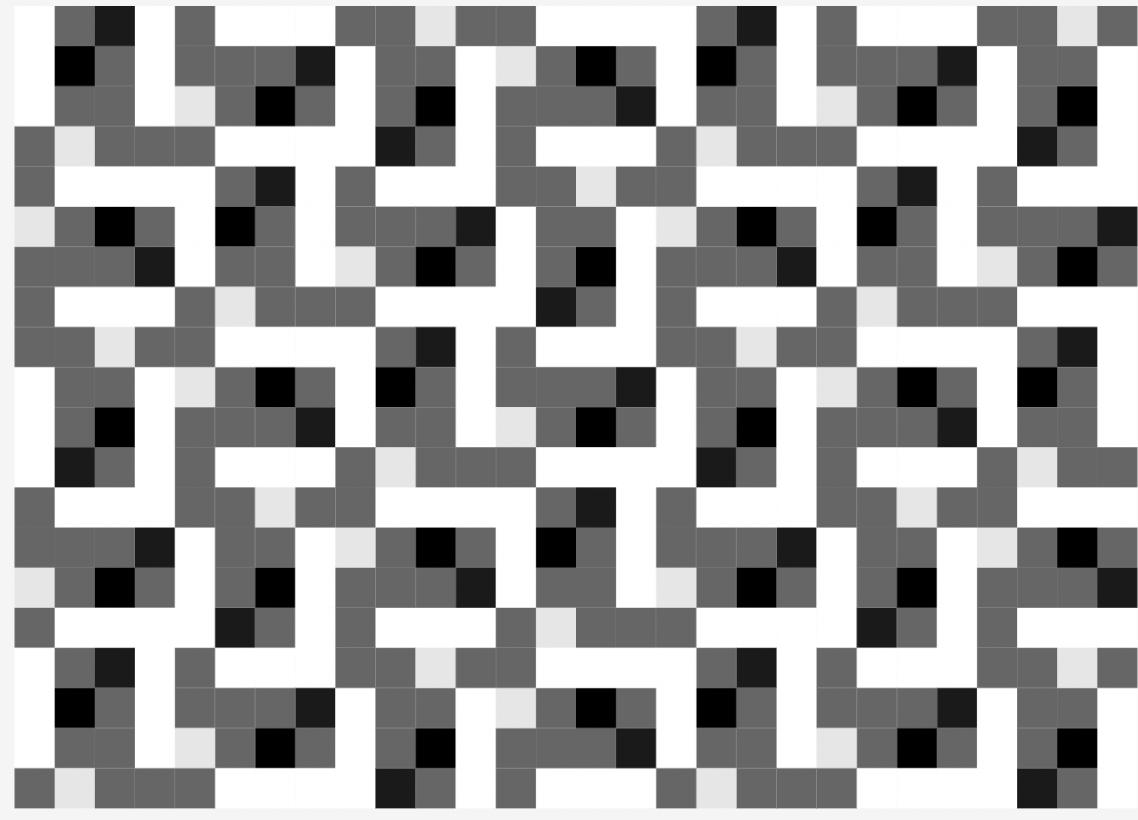
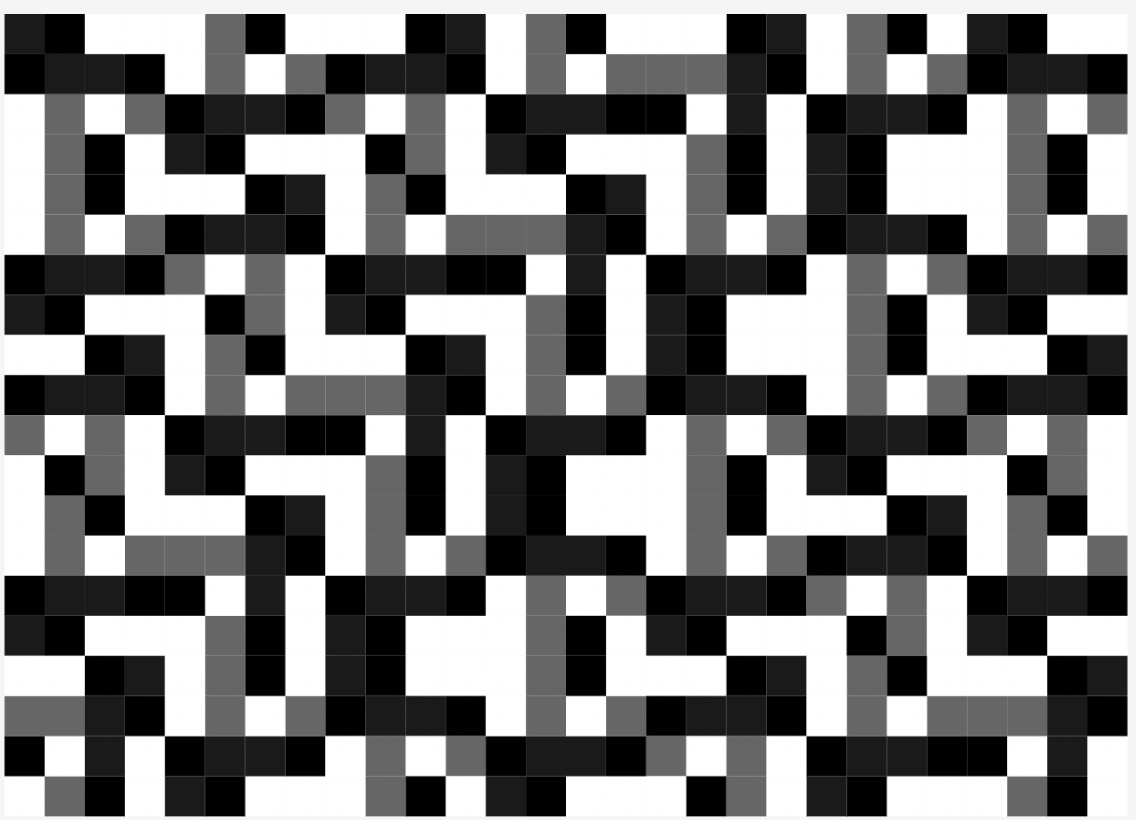
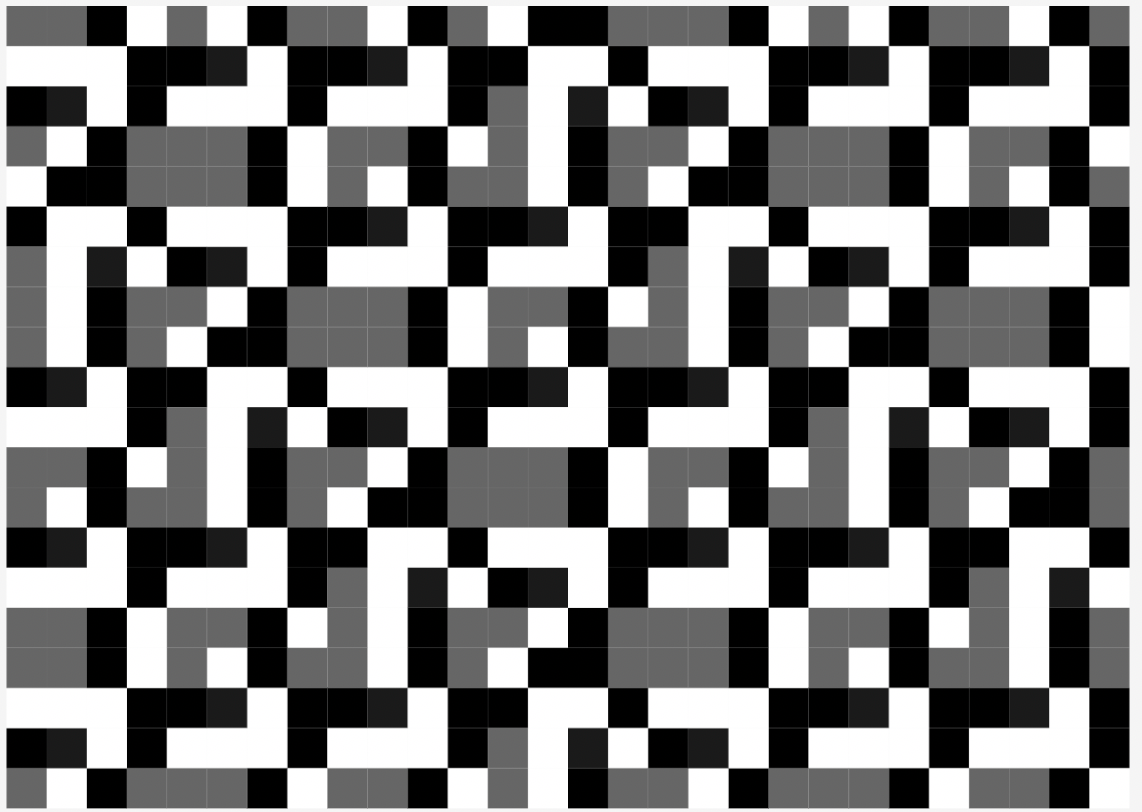
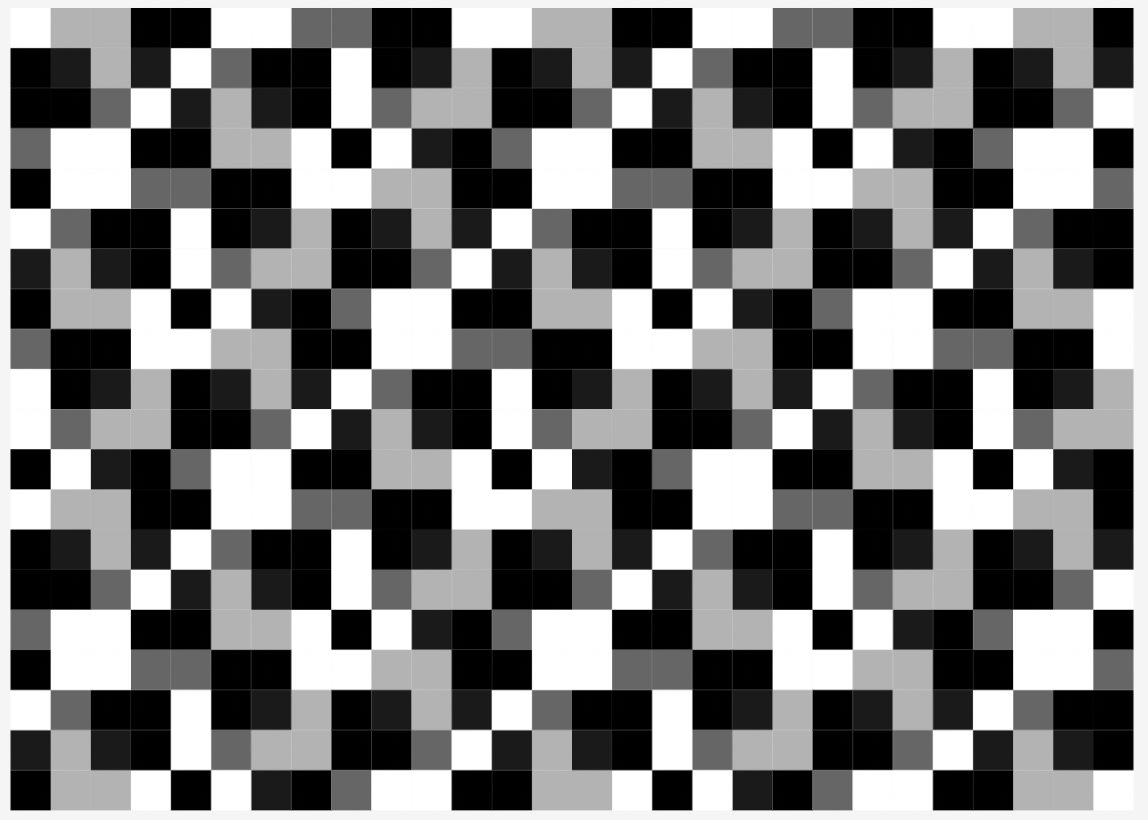
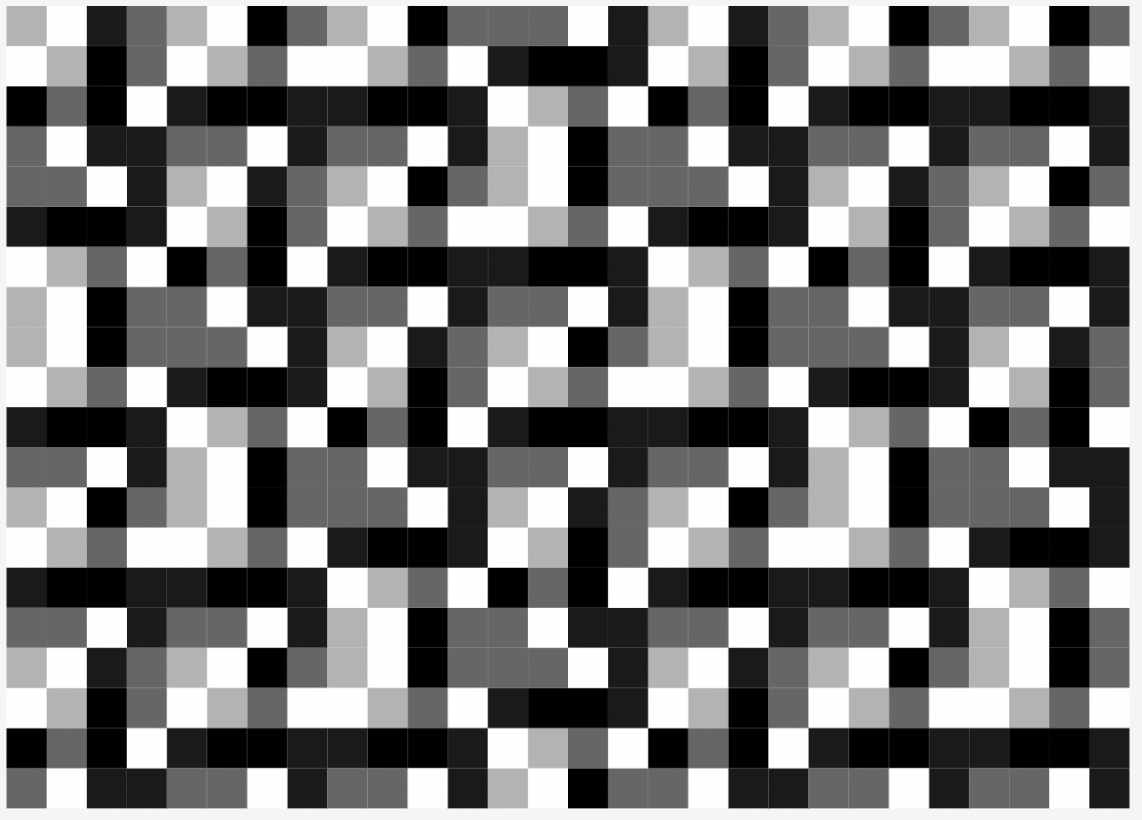
Choose a favorite. Some of these were so tempting, but I went with this one:
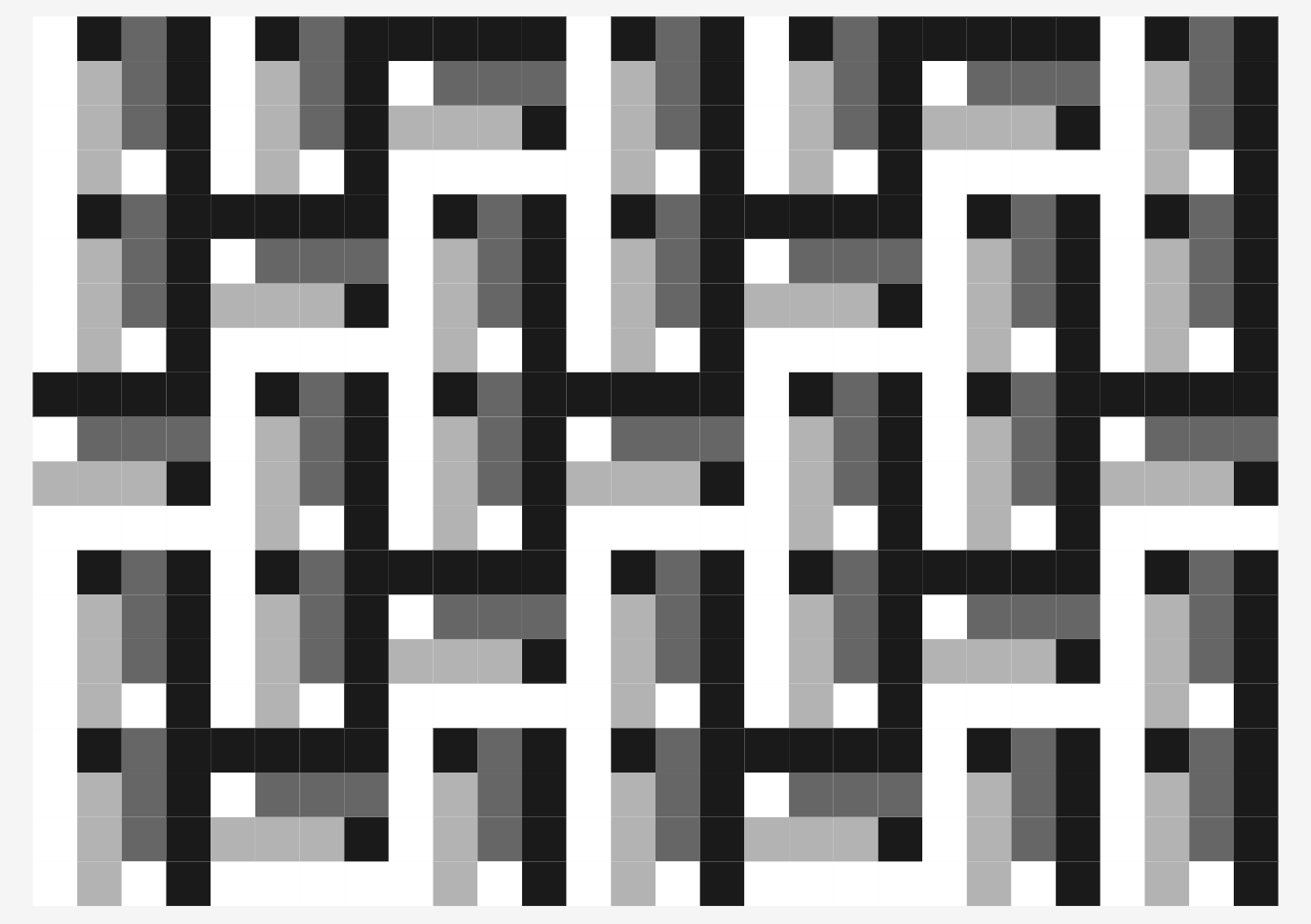
The block that makes it happen has some rotational symmetry that really makes it pop - its reflection is also used so that there are 2/3 this block and 1/3 reflected.
Next quilt:
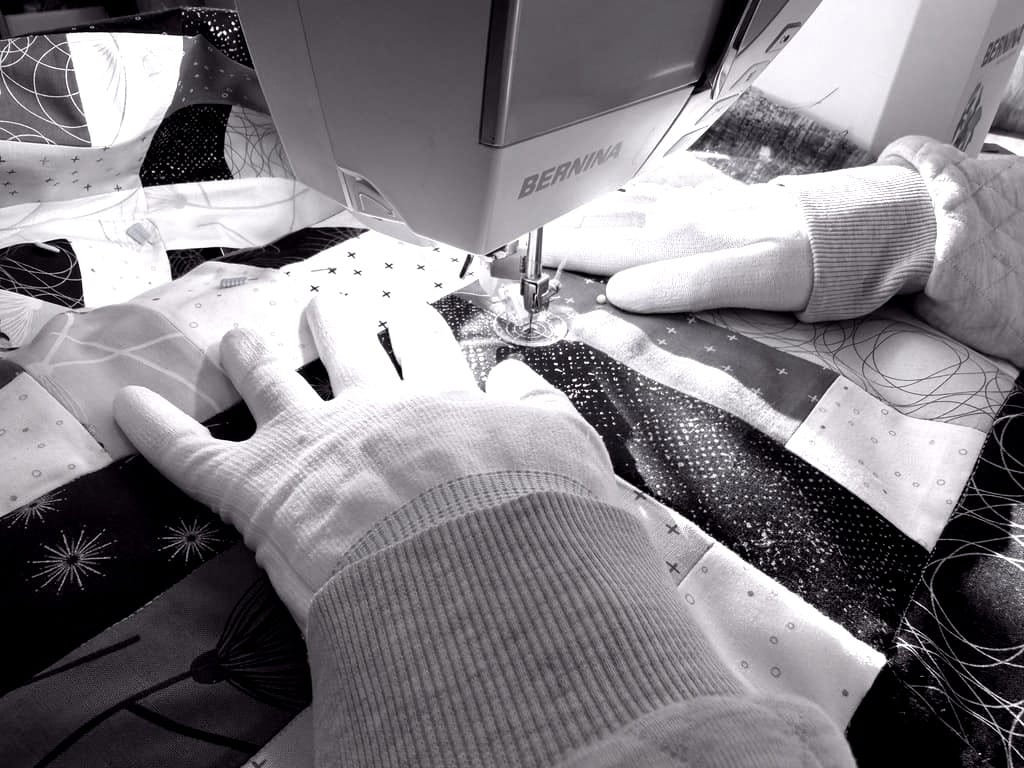
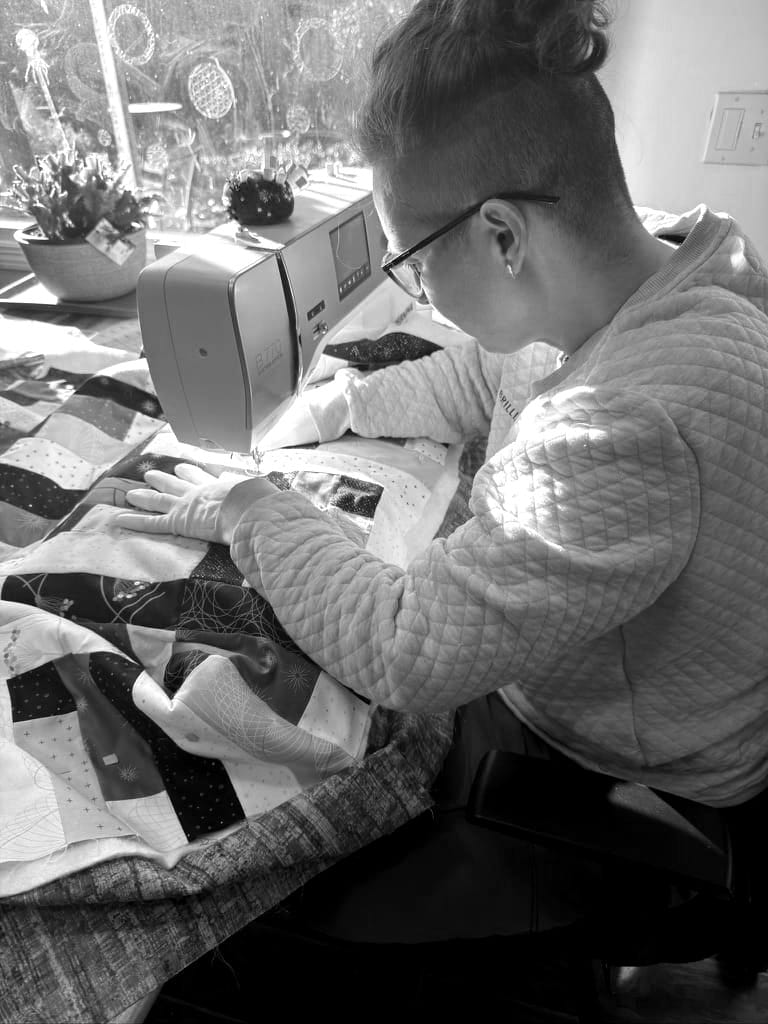
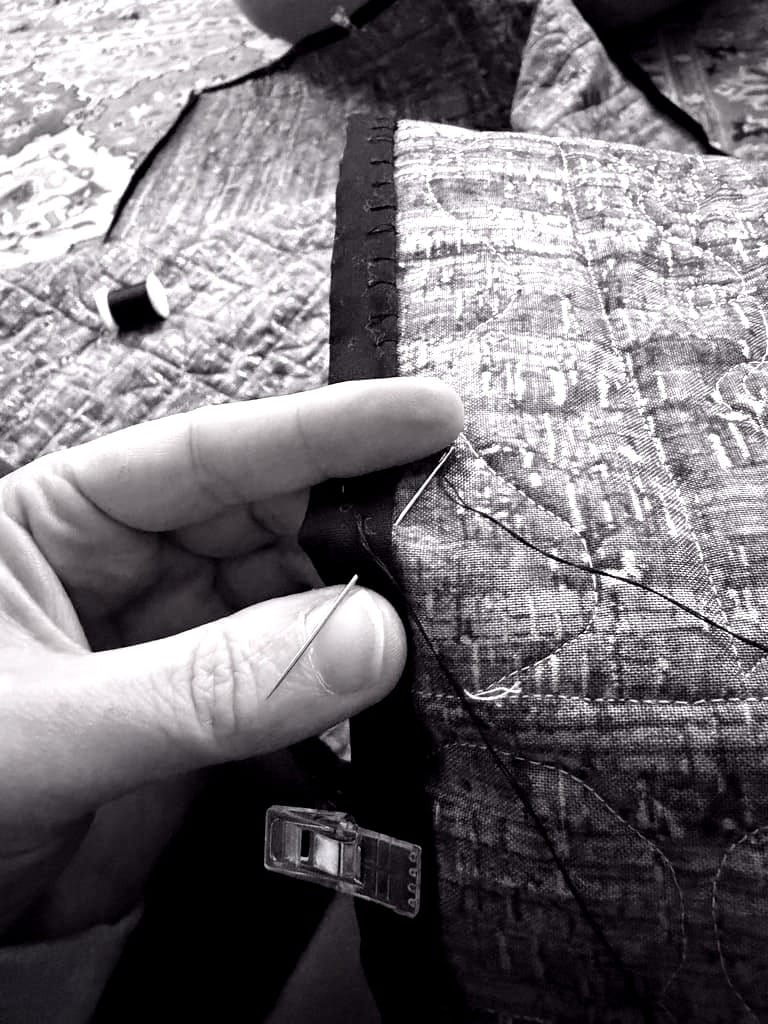
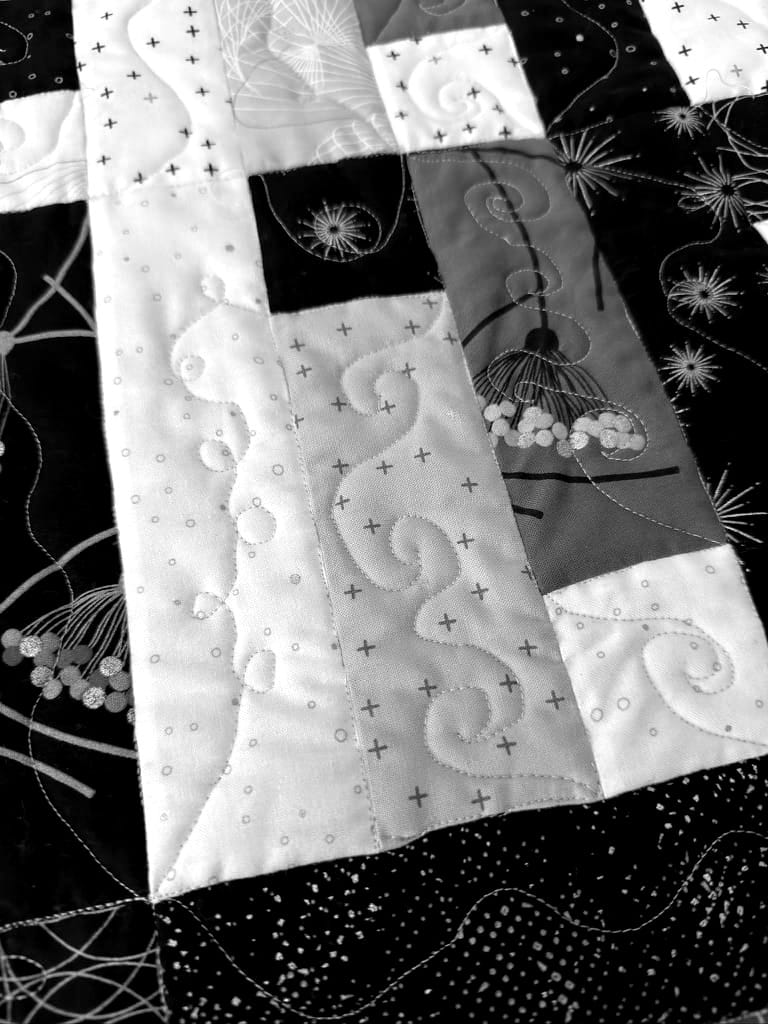
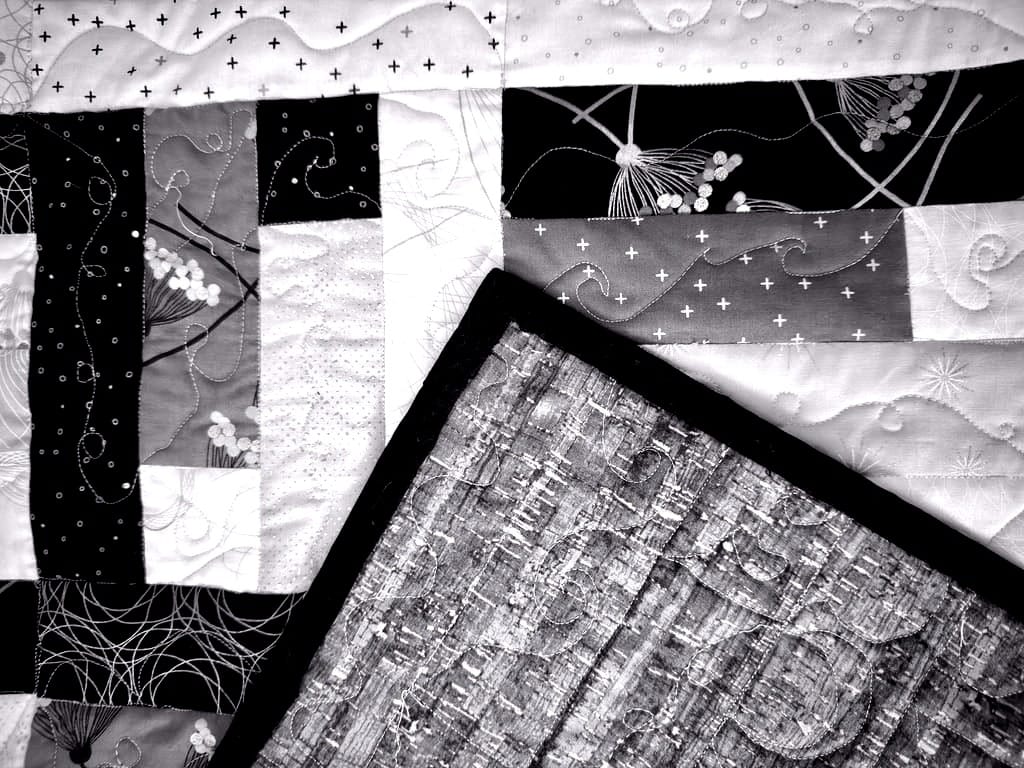
Before the first wash (and in low light):
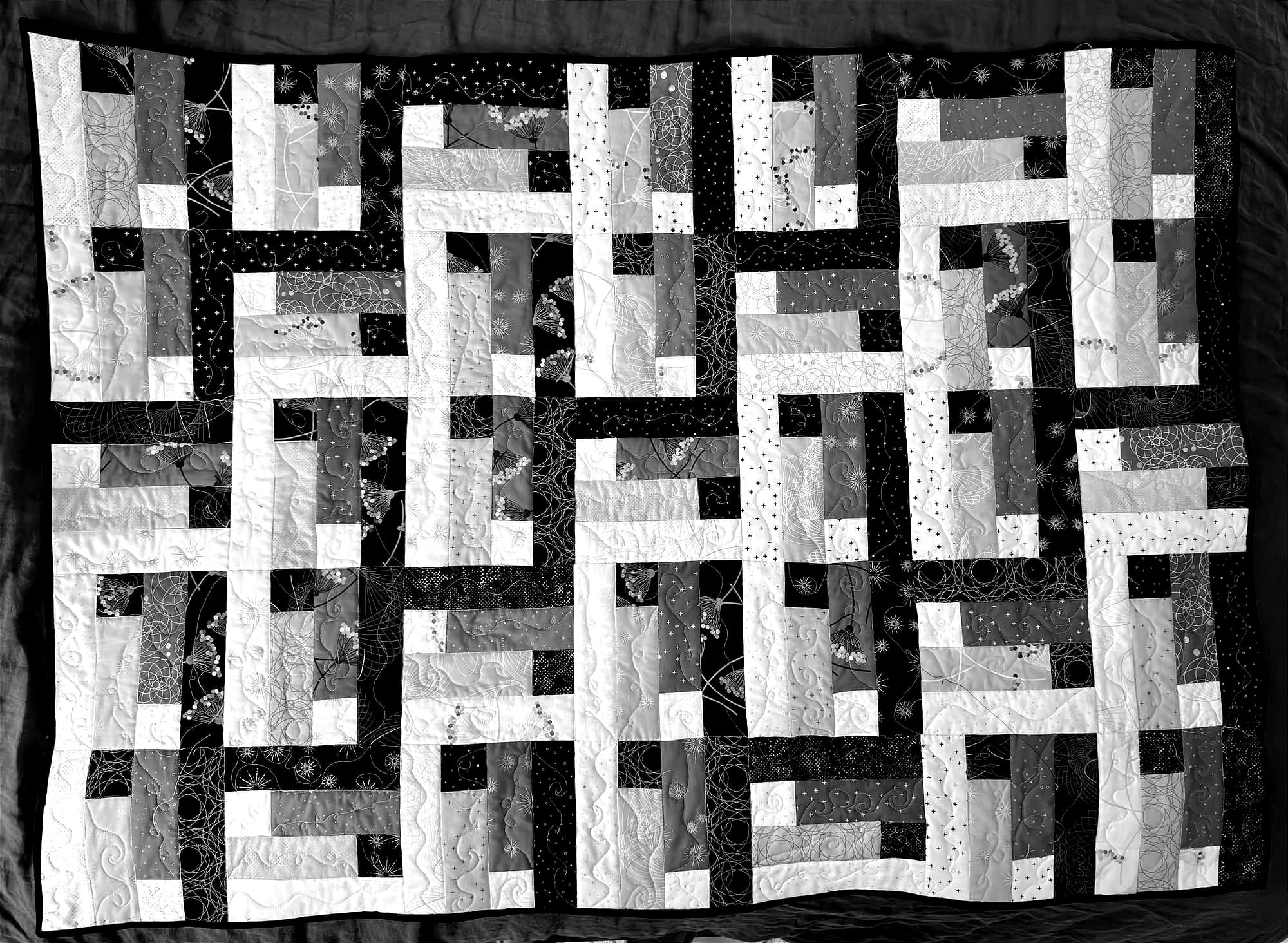
And after the wash (a little more puffy).
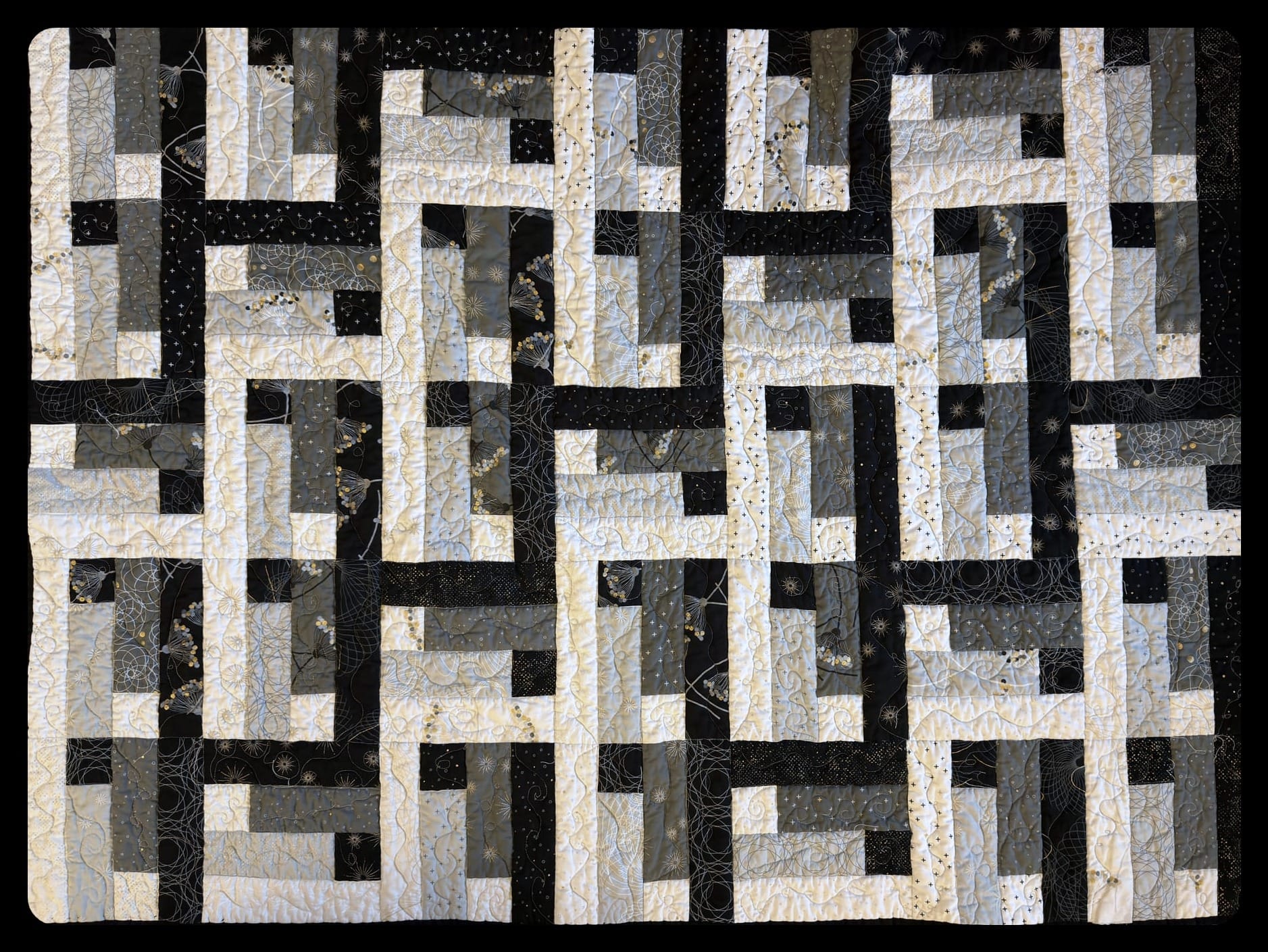
Overall, I enjoyed this as part of my December Adventure and look forward to playing more in this space. I have a Hilbert Quilt block(ready to make into a bag), truchet tiling ideas, and a hexiquilt on my to-do list.