I’ve been making generative art on and off since 2016. It started as a programming exercise and slowly turned into something more personal as I discovered I can actually express myself visually with it and feel as if I’m producing art. I have about 114 sketches in my p5js account at this point, and they document part of a journey that I want to try and put into words.
The short version is: every algorithm I learn becomes a tool I can reach for later, and over time those tools have accumulated into something like a vocabulary. I learned about textures, layering, about colors and positioning through experimentation and creating hundreds of sketches over the years, in P5.js and other media. The longer version is what follows.
The beginning: what does this math look like?
My earliest surviving sketch is a phyllotaxis spiral. If you don’t
know what that is, it’s the pattern you see in sunflower heads and pine
cones: you place points along a spiral using the golden angle, and
something surprisingly natural and organic appears. The code is about 30
lines and mostly consists of cos(), sin(), and
sqrt(), decidedly inorganic.
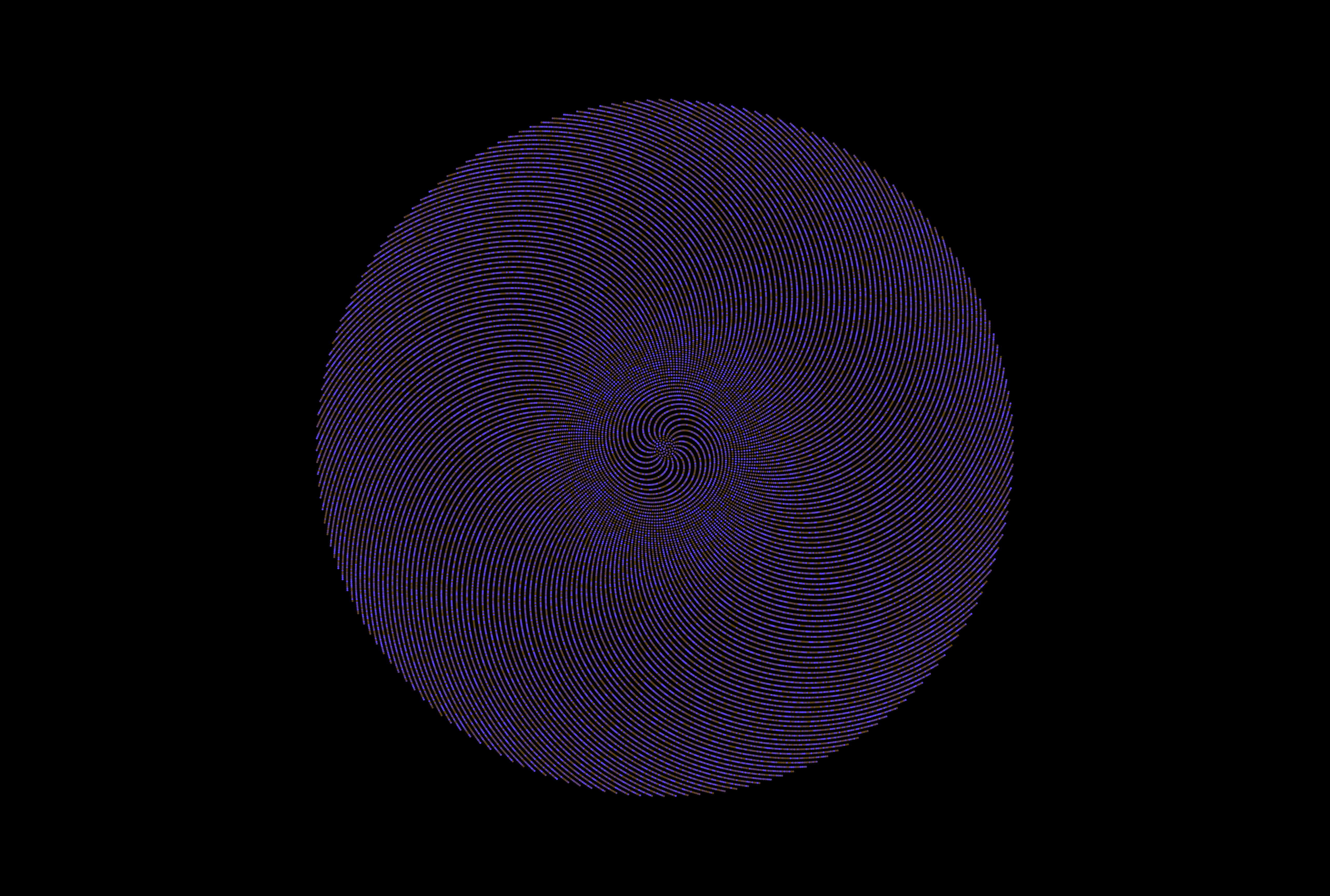
Fig. 1: An early phyllotaxis spiral, circa 2016.
I remember being genuinely amazed that such a simple formula could produce something that felt real. And that was more or less the whole creative process at the time: find an algorithm, tweak parameters until it looks nice, save it, move on. I’d learn about these algorithms from other nerds on the web. The aesthetic decisions were all second to the math. I didn’t choose this shape or that texture, I chose a formula, and whatever came out was what I got. I also didn’t know how to introduce variance.
Most of my early work looks like this. Mathematical structures rendered in bright colors or white on a black background. There’s a certain beauty to them, but they feel more like illustrations of concepts than things I made. I was a programmer first, an artist second if at all.
Learning to see texture
At some point—I couldn’t tell you exactly when—I started getting bored with the clean mathematical look, and I felt guilty for just stealing formulas other people were using with some variation. I wanted things that felt more physical, more like they had been made by a hand rather than a machine.
This is when I started paying attention to texture. I began simulating brush strokes, experimenting with particle systems to create the impression of fur or hair, varying line weight and opacity to mimic the way ink bleeds into paper. Flow fields became a frequent starting point, not because the math was new to me, but because they created versatile, beautiful textures.
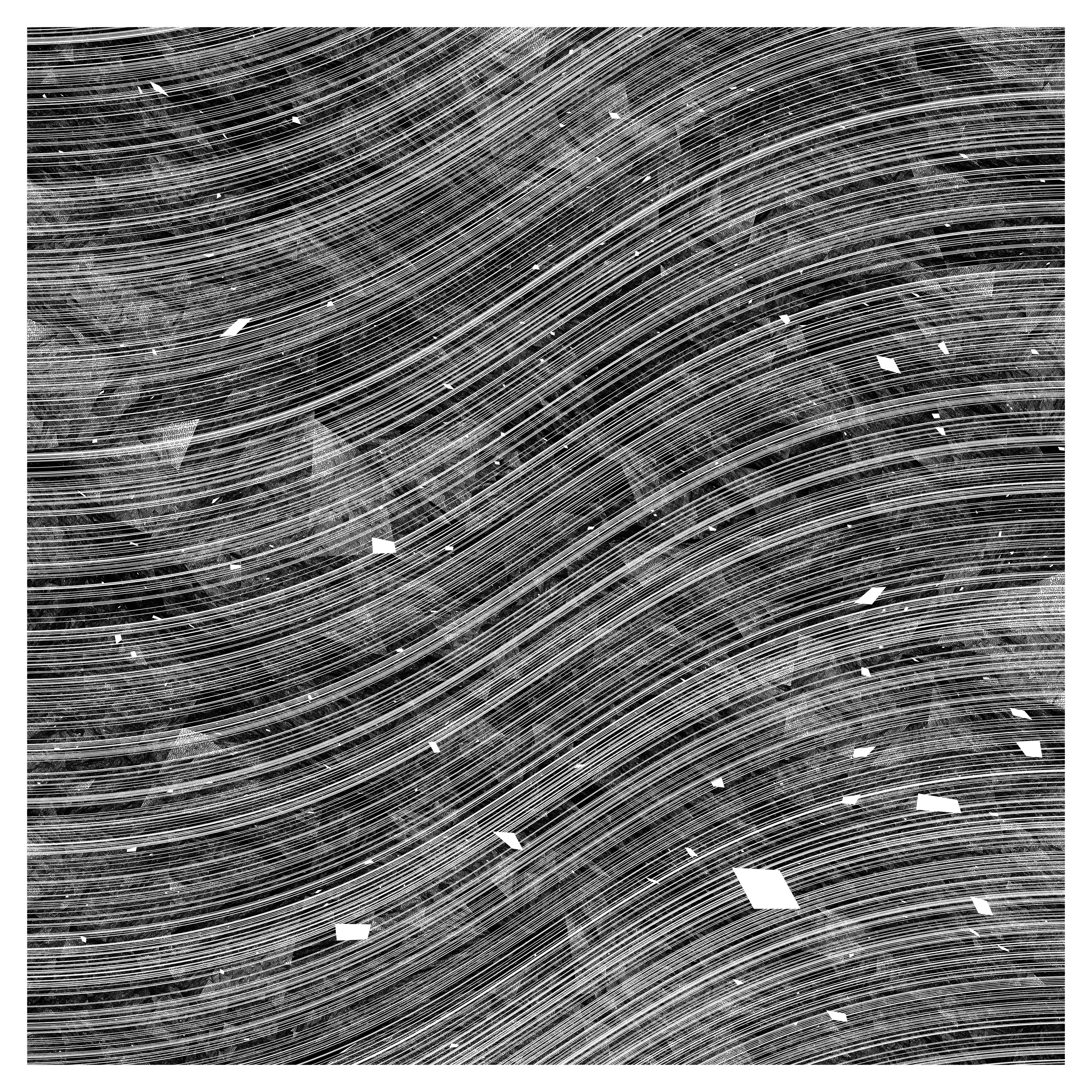
Fig. 2: A flow field with simulated brush strokes. Greyscale, as was my habit.
This was also my greyscale period, if I’m being generous enough to call it that. I avoided color almost entirely, partly as an aesthetic choice and partly because I simply didn’t know how to use it well. Greyscale was safe, it let me focus on form and texture without having to make decisions I wasn’t equipped to make. In hindsight, this was a useful constraint. It forced me to get good at the things I could control, but I also put off learning for way too long.
What lines can do
Before I got to materials proper, there was an intermediate step that I think matters. I started exploring what you could achieve with just lines. I wasn’t simulating anything in particular, just layering and density and direction. And somehow texture just appeared. It was magical, and I still get genuine goosebumps when I think about it.
I tried to understand what other people were doing, and why it was so much more appealing than my work.
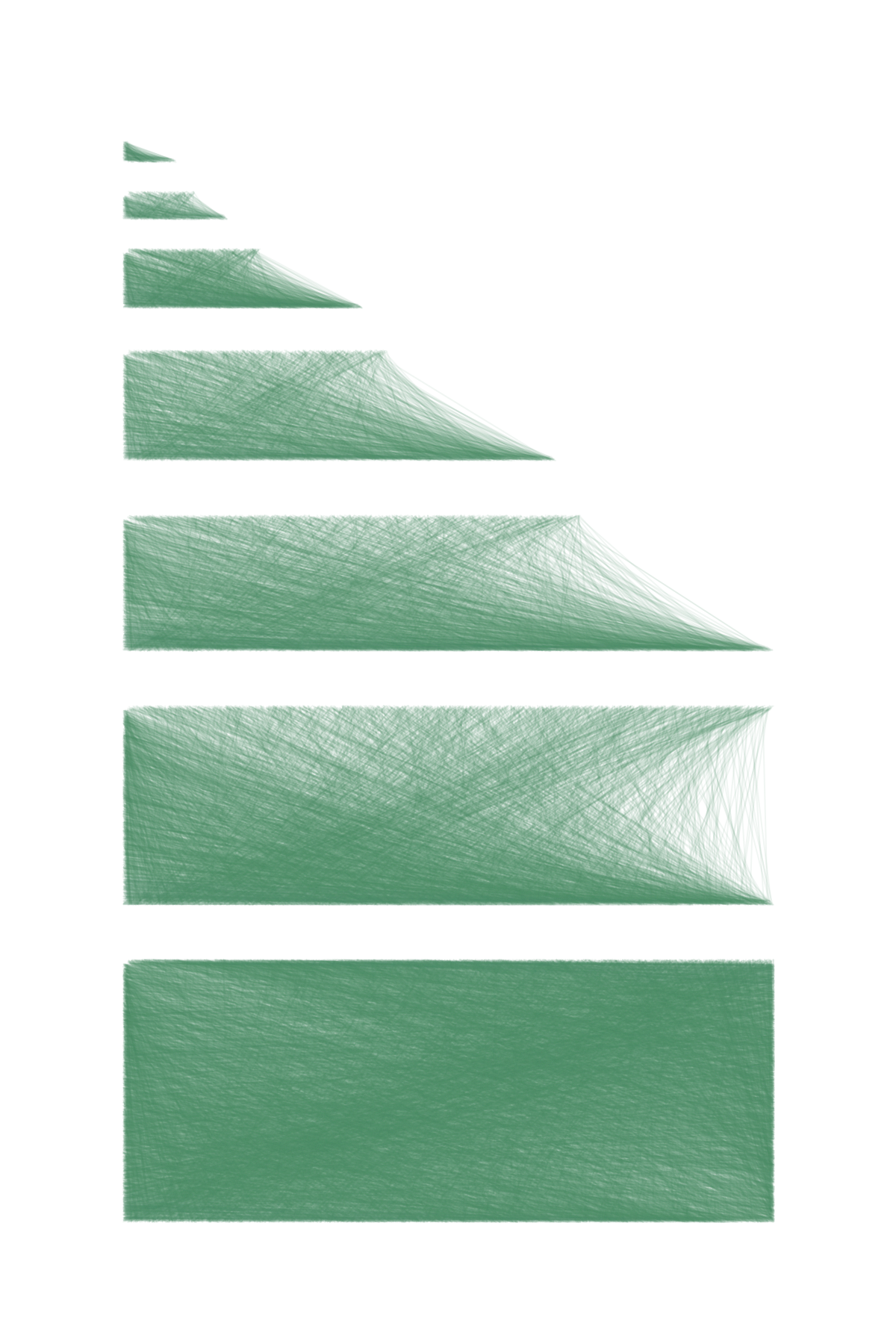
Fig. 3: Just lines, as I tried to understand Tyler Hobbs’ work from just above.
This is where I first noticed that accumulation creates its own effects. Enough lines drawn close together stop looking like lines and start looking like a surface. The composition above isn’t trying to be fabric or paper, but it can look that way. The realization that raw geometric primitives, given enough density and intention, can evoke physical materials is what eventually pushed me toward explicit material simulation. I realized that I could almost make pencil sketches.
Simulating materials
From lines to materials wasn’t a big leap, but it felt like one conceptually. Instead of asking “what does this algorithm look like?”, I started asking “can I make this look like watercolor?” or “what would a felt-tip pen do here”?
These are very different questions. The first one starts with math and arrives at an image. The second starts with an image, a feeling, really, a memory of what watercolor looks like when it pools and dries, and works backward to the math that might produce it. I wasn’t alone in this discovery, as I later learned.
I now have a small library of simulated materials: watercolor washes, dry brush strokes, felt-tip pens, cracked glaze, pencil fills. None of them are physically accurate. I’m not simulating fluid dynamics or anything like that, I don’t need to. They’re impressions, heuristics that capture enough of the character of a material to be convincing and evoke an emotion.
Building them taught me things. The watercolor algorithm taught me about layering and transparency, and how colors blend gracefully. The brush stroke algorithm taught me about pressure, direction, and variance. The cracked glaze taught me that imperfection adds a layer of believability and its own structure.
Starting to see color
Color remains my weakest area. I have no formal knowledge of color theory, and as I admitted above, for a long time I avoided the problem by working almost exclusively in greyscale or with very limited palettes.
I’m getting better, slowly. It’s a matter of developing intuition through exposure and experimentation. Looking at art I admire, trying to understand why certain combinations work, and then testing that understanding in my own sketches over and over. I have no framework for it, just a growing sense of what feels right. I’m in a special state of mind when I create art of any kind, and it’s distinctly different from engineering (even my typing hands feel different!).
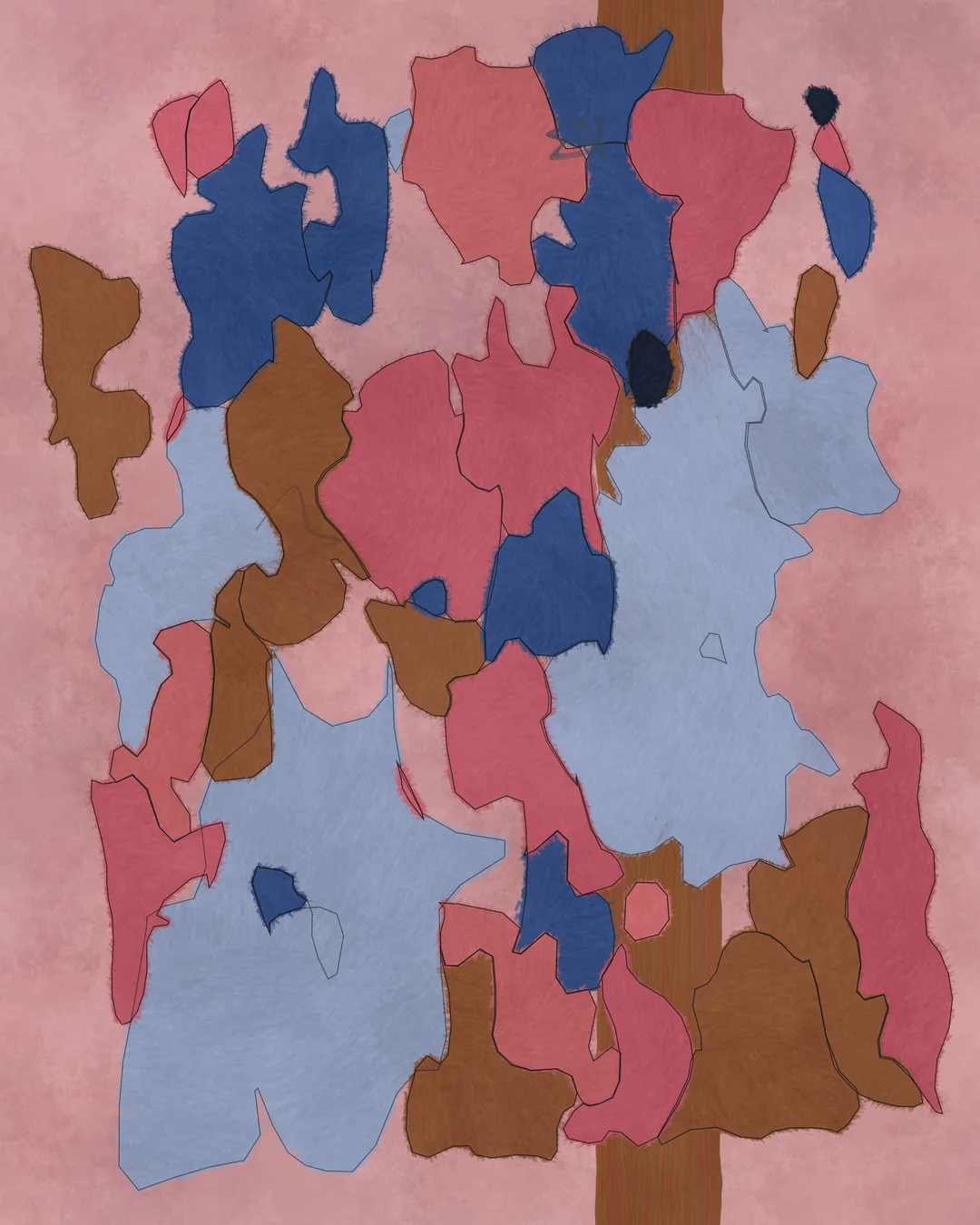
Fig. 4: A more recent piece. Color, simulated material textures, and compositional intent.
Comparing something like this to the phyllotaxis spiral from 2016 makes the journey clear in a way that’s hard to see from the inside. I look at the two pieces and see myself transforming. The early work is playing with an algorithm. The recent piece is about composition of shapes, colors, textures, and materials that work together. The algorithm is still there, but it’s in service of something. Some of the algorithms are cool, some are terrible, but they’re not the primary value.
The vocabulary
What I’ve come to think of as my “vocabulary” is really just the slow accumulation of all these techniques. Each algorithm I learn, each material I simulate, each failed experiment with color becomes something I can draw on later. Not every sketch uses every tool, but knowing they’re available changes how I think about what to make next. And I have noticed myself deliberately choosing between maximalism and minimalism. I still make small pieces with very little going on, but now it’s a choice.
In the beginning, the question was “what can I do” Now it’s closer to “what do I want to say”; not a dramatic transformation, but meaningful. The tools fade away, and something like a personal aesthetic starts to emerge. I couldn’t describe it precisely if you asked me, but I can feel it when a piece is working and when it isn’t, and that feeling is more reliable now than it used to be.
Fin
I don’t make generative art as often as I’d like. Life is busy in the way that life is busy when you have a family and a career and a dozen other things competing for your attention. But the practice persists, even if it’s slow. A sketch here, an experiment there. Every couple of years I make books of poems and artwork for my family (something I want to write about it in the future as well), and that deadline is usually enough to pull me back in.
I think the thing I value most about this practice is how patient it is. There’s no pressure to ship and no deadline. Just me and a virtual canvas and a hunger to explore a kind of personal aesthetic.