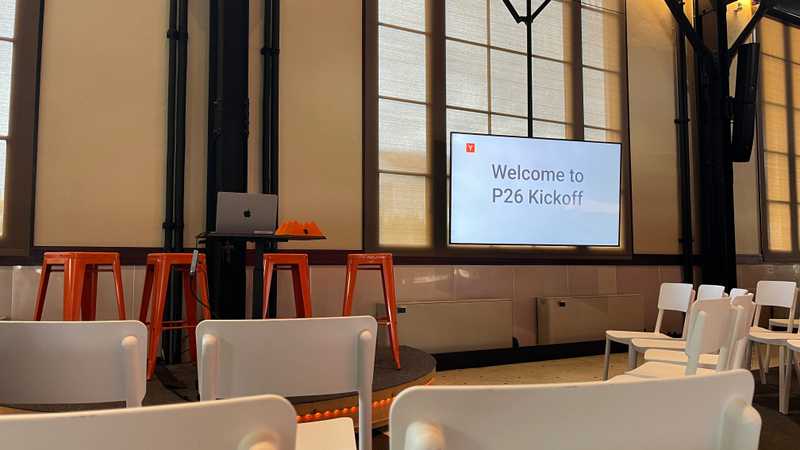
We’re now six weeks into Y Combinator’s Spring 2026 batch with Harbor — a little over halfway through the program — with five weeks to go until Demo Day. Some impressions:
On the batch
Last I checked, there are ~400 founders in our batch, working on ~200 different companies. The previous batch, Winter 2026, had around the same numbers. So there are a lot of companies and a lot of founders! YC hosts weekly batch dinners where we meet some folks, but we’ll likely finish the batch not knowing the majority of the cohort. Previous-batch founders have told us that if we end up doing well, everyone will know us anyway, and I think we’d rather focus on building the company regardless, so we’re not super worried about this.
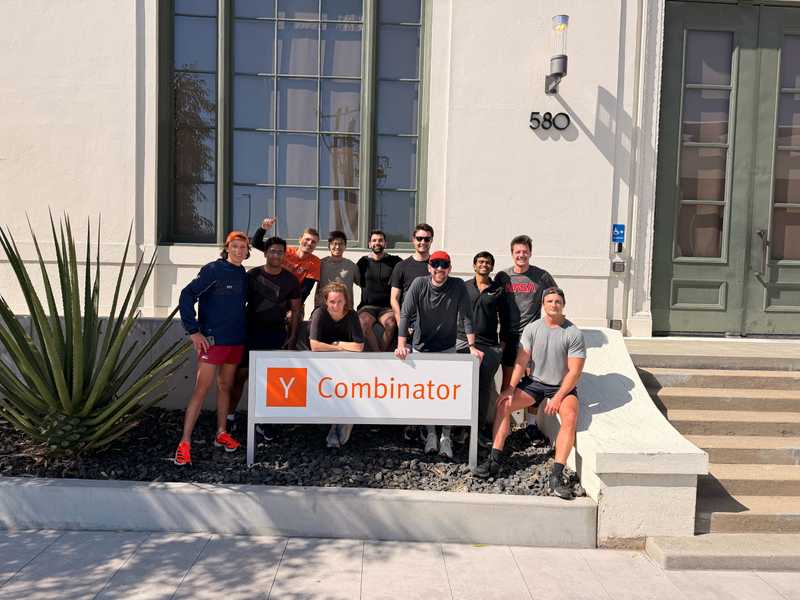
In any case, YC divides the batch into smaller groups, based on the partner that admitted us, and then each partner’s smaller group is divided into even smaller subgroups based on vertical. Our smaller subgroup has 9 companies and 26 founders, all working in healthcare. There are biweekly group office hours where we share what’s been working (and what hasn’t) with our group, and we’ve gotten to know these founders a bit better.
Outside of the weekly events, though, the YC program has largely been hands-off — I think the idea being that we should just sprint on building our company and delivering a strong performance at Demo Day (which is what we’ve been doing for the most part).
On AI coding
In varying degrees (with Garry being one extreme of the spectrum), the YC partners we’re working with have been aggressively pushing us to ship even more and even faster with AI.
In my professional opinion, the models are not quite “there” yet in terms of being able to work as autonomous software engineers. For instance, Albert, my cofounder and CEO, sometimes pushes code, mostly assisted by OpenAI’s Codex; I’ll review it and it’ll feel like it’s anywhere from 60–80% of the way there (sometimes less), and I’ll spend an afternoon “cleaning” it. Then, for fun, I’ll feed it back into the model: “We had two interns implement the same function. Which is cleaner?” In many cases, AI will say that Albert’s original slop is better. In a similar vein, there are some companies that are quite open and notorious about their AI use, and I feel like their products have gotten noticeably slower and less performant over time.
While I am confident in my assessment of the current state of the models, I am less confident in what the forward-looking rate of improvement will look like; I’m not entirely convinced by straight-line charts extrapolated infinitely into the future. Nonetheless, the models are indeed getting better. I’ve started trusting Codex to do more work autonomously, and there are definitely “wow” moments here and there that remind me of the first time I stepped into a self-driving car (and then of course your mind adapts and riding a Waymo feels completely normal again). More generally, after speaking with folks familiar with the type of software we’re building, it feels like what we’ve done with just one full-time engineer in ten months might’ve taken a team of 4–6 engineers multiple years in the pre-AI era. As I think I’ve said before, there is some “there” there.
Overall, AI has definitely been accelerating our progress, and while it can sometimes feel like the partners are just pushing us to ship slop, I think more generally the push we’re getting is “you can do more now than you think you can.” Regardless of how good the AI is, that, I think, is true.
On AI companies
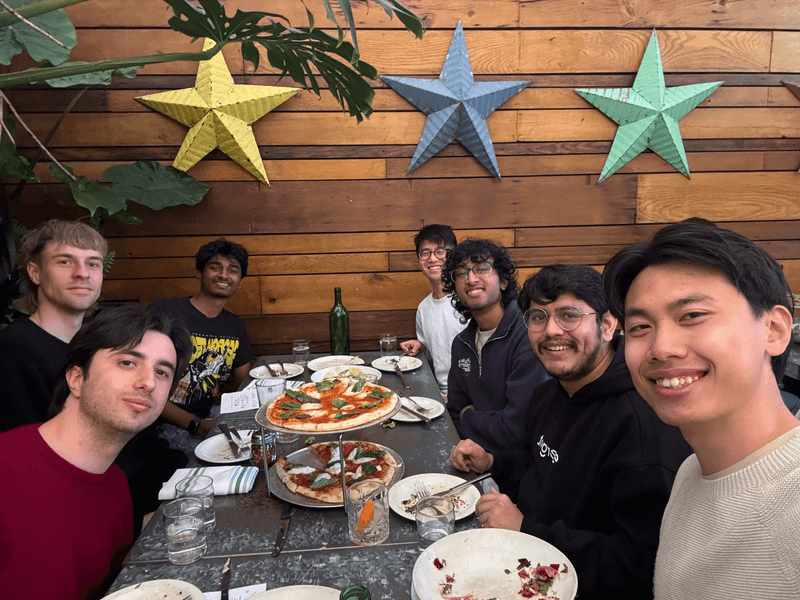
Each week, YC invites founders to sign up for an optional founder dinner, outside of the weekly batch dinner. It’s informal and not an official YC event — simply an opportunity to meet more of the batch. YC will automatically create groups of 5-7 founders and book a reservation at a restaurant somewhere in the city. After the standard “what’s your name?” and “what does your company do?”, the conversation generally turns to what AI tools people are using and whether they are any good.
To the extent YC founders are a leading indicator of sentiment / prospects for various AI labs and products, here’s what I’m hearing:
- Founders are sick of Claude Code usage limits; OpenAI’s Codex is much more generous. For certain tasks, Codex also just seems smarter (personally, my recent usage has been entirely gpt-5.4 xhigh).
- The negative public sentiment against OpenAI may be overblown, and the positive press surrounding Anthropic may be similarly overstated (i.e., mean reversion).
- For what it’s worth, OpenAI feels like it’s doing a lot more to court the batch than Anthropic (in my personal experience, OAI folks are a lot more responsive over email). Perhaps Anthropic is focusing more on enterprise use-cases for now?
- Cursor seems to be a little cooked, at least with respect to their IDE. Batchmates complain about memory leaks and slow TypeScript inference; in fact, I recently switched back to VSCode and it feels much faster. That said, I haven’t tried out their async cloud agents, but I’ve heard good things.
- Conductor seems to be the tool of choice for running multiple concurrent agent sessions locally (I haven’t used it too much personally, though).
Trade accordingly.
Disclosure: long Cursor (via a fund)
On the founders
Everyone I’ve met so far seems reasonably competent. I talk to friends who went to Harvard, Stanford, etc. and they’re like, “yeah, don’t worry, you’ll meet stupid people here too.” But I don’t feel like I’ve met anyone genuinely stupid here yet; granted, I still haven’t met a lot of the batch (and maybe, if you can’t tell who’s the stupid one…).
Overall, the founder community has been helpful. Even though our problems are still the same as before (finding customers, increasing revenue, etc.), it’s less lonely to know that your batchmates are dealing with the same things. I think I’m less close to burning out now than I might’ve been at some of the lower points in San Diego.
Outside of company-building, we’re also vaguely thinking about who we should invest in at the end of the batch… while there are a lot of folks stuck in pivot hell and some companies came in with pretty decent traction — one month into the batch, it still doesn’t feel like anyone has really broken out. I’m sure we’ll end up being surprised, too — the partners have said many times that Demo Day performance is often not indicative of actual long-term success.
Also — I’ve been very impressed by the confidence of some of these 18-year-old Stanford freshmen with no industry experience. Maybe there is something to learn from them…
On dilution
There is this sense that “smart money” in San Francisco is increasingly opting out of YC. When we were applying, friends we talked to variously advised doing and not doing the program. For many reasons (increased batch sizes, lower signal/status, etc.), it does feel like doing YC is less “obvious” for early-stage founders in San Francisco than it was in years past.
My impression is that the hesitation largely comes down to terms: YC takes ~7–14% of your company for $500,000, i.e., invests at an implied $3.5–7M valuation. For a lot of founders (even those who aren’t necessarily consensus or credentialed), more capital is available now at better terms from other VCs. The question becomes: “is diluting at such a low valuation worth it, especially when there are so many other options?”
For now, it has felt “worth it.” The community has been great, and the credibility and attention we’ve gotten as a “YC company” have also helped — we’ve received some really interesting inbound from other folks in the space (even if they won’t ultimately become customers), and I imagine the YC “halo” will accelerate sales (even if the effect is hard to measure). We’re also definitely thinking bigger. It’s quite possible that these things alone will increase our expected exit value by more than 7.5%, which is the breakeven point for taking YC’s money according to Paul Graham’s equity equation. And of course, we expect future fundraising to be a lot easier with YC than without, too.
That said, while the equity equation answers the question of whether taking money from an investor is worth it in isolation, whether to do YC or not fundamentally depends on the next-best alternative. As first-time founders working in a relatively non-consensus space, candidly, I’m not sure what that alternative would have been. We probably could have raised from a “lower-tier” investor at better financial terms, but they’d probably also be less helpful than YC in terms of a multiplier on the expected exit. In which case the equity equation tells us that YC is still a better deal.
If you can raise your seed from Sequoia, though… maybe do that?
On risk
So in many ways, things feel a lot less risky than before. Accordingly, it feels as if some weight has been lifted off of our shoulders — not only because of the selection effect of getting into YC and the reduced financial and career risk, but also in the treatment effect of getting more publicity and having more folks (both investors and operators) reaching out about how excited they are about what we’re working on and wanting to partner with us. In San Diego, especially in the first few months, there was this recurrent feeling — that was hard to shake, at least for me — that we might not be working on anything really useful and nobody would want to use us and maybe we were wasting our time. It was especially pronounced on my side as I’d never worked in the clinical research space before or even really used the software we were building. It now feels like we’ve derisked quite a bit and have more room to focus on longer-term projects and really building a big company than hill-climbing to something marginal that would show immediate metrics or generate immediate revenue. On the other hand, there is of course the “cosmic background radiation” of YC pushing us to learn faster, ship faster, and show traction now.
I wonder if part of the impetus for this conversation about risk was perhaps that the classic YC-driven urgency to go fast and show traction is less pronounced for YC founders now than ever before because of this growing sense of reduced risk (which is bad!), and that maybe “thinking long term” is just cope for not shipping faster. We’re still figuring this out.

Appendix: On the Dogpatch
For a long time, YC was based in bona fide “Silicon Valley”: 40 miles south of the city, somewhere in the long, flat expanse of office parks nestled between the Santa Cruz Mountains and the East Bay hills. It made sense, at least to start; in the mid-2000s, the Valley was where startups, generally, were started. But beginning sometime in the early 2010s — Brian Chesky, who founded Airbnb in San Francisco in 2008, seemed to take some credit for it when he came to speak to us at batch kickoff — the center of gravity for early-stage startups started shifting north towards the city. So in January 2024, YC moved its headquarters to SF as well.
They settled down in the Dogpatch, a formerly industrial neighborhood at the city’s eastern edge. It’s quiet, clean, and generally perceived as “safer” than SoMa and the Financial District, the city’s traditional startup hubs. Rusting warehouses, cranes, and the remains of heavy machinery still line the waterfront.
Many YC founders live in the neighborhood. YC encourages it, in fact: in the batch onboarding guide, they note that “the Dogpatch is not one of the most fun or lively neighborhoods in SF,” so it’s “perfect for YC founders during the batch.” While Albert and I decided to live elsewhere (I, for one, do like fun and liveliness), we do work out of a coworking space in the neighborhood. It’s just a few blocks away from the YC office, so whenever there’s a batch event, it’s easy to walk over.
As I’ve figured out a routine, though, the neighborhood has started to grow on me. I got a membership at the nearby YMCA and started leaving a change of clothes at the office, so now I run to work. I get a gorgeous view of the city from Corona Heights on my way out of Cole Valley, it takes me about 35 minutes to cover the four-and-change miles across town, and then it’s a five-minute walk to the Y where I can shower before starting my day. For lunch, Albert and I have realized that the corner store down the block discounts hot breakfast sandwiches by 50% around noon, so we saunter in shortly afterwards and get a decent meal at a relatively reasonable price. At this point, the cashiers recognize us when we walk in, and we’re not sure whether they’re annoyed or think it’s funny.
I don’t know whether we’ll keep working out of the Dogpatch after we’re done with the batch, but ultimately, it has turned out to be nicer than I initially thought. It just needs a Chipotle!