Lectronz is a marketplace for open-source hardware makers and DIY electronics. Most of our sellers are not factories or well-funded start-ups. They are engineers, independent designers, and hardware enthusiasts working from spare rooms, garages, and tiny workshops.
Some earn a living from their products. Some sell only a handful of boards each year. Others build ten units simply because they created something useful and want to share it with the community. Occasionally, one of those experiments grows into a real business. Every Arduino begins somewhere.
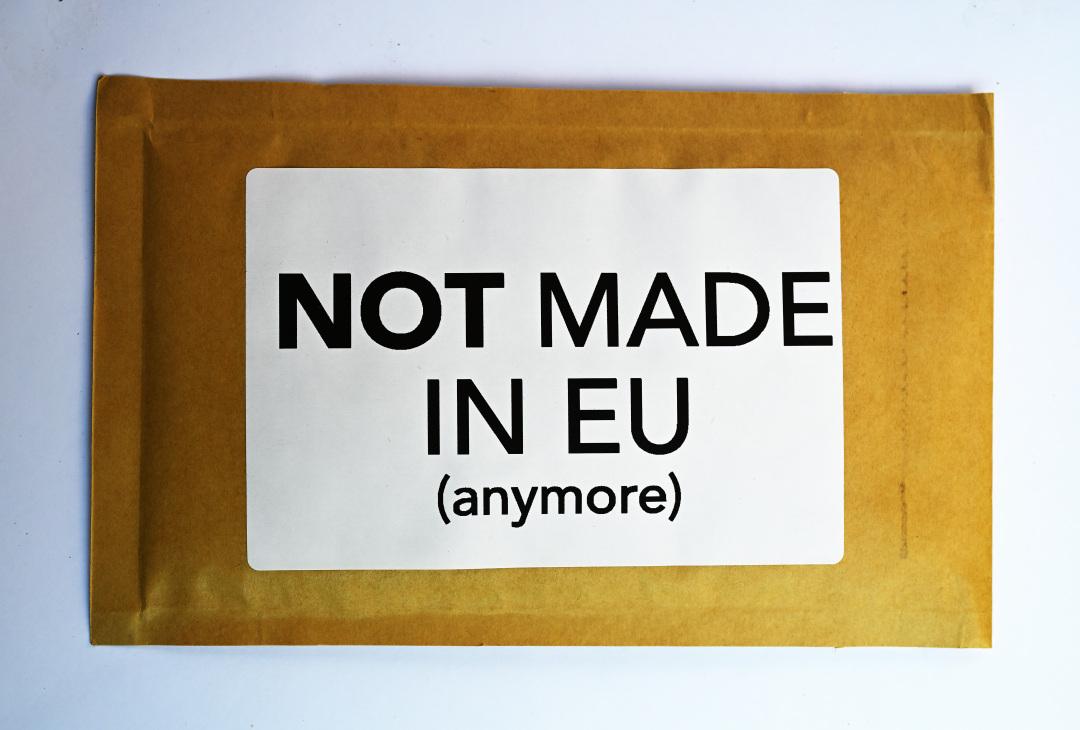
But the European Union's new packaging rules now threaten to kill the world of makers and micro-entrepreneurs, putting jobs, livelihoods and an entire ecosystem of innovation at risk.
And this threat is not just limited to makers and engineers. It affects artists, craftspeople and other micro-entrepreneurs selling their work across the EU.
A good idea, a terrible implementation
The EU has required producers to take responsibility for packaging waste for many years through Extended Producer Responsibility (EPR) schemes. The new Packaging and Packaging Waste Regulation (PPWR), which generally applies from 12 August 2026, aims to harmonise packaging rules across the European Union and reduce waste.
The main idea of EPR is sensible: businesses that place packaging on the market should help finance its collection and recycling.
For makers, this means taking responsibility for the boxes, envelopes, plastic bags and other packaging used to deliver their products. This is an idea we can all get behind.
Unfortunately, instead of creating a single European system, the PPWR preserves a fragmented national model. A business selling directly to customers across the EU must register and fulfil its obligations separately in every Member State where its packaging becomes waste. For large companies, this is part of the cost of doing business; for micro-businesses selling only a handful of products into each country, the cost and administrative burden can be wildly disproportionate to the amount of packaging involved.
Imagine an engineer in Greece who designs a €25 open-source sensor board...
During the first year, he sells five to Germany, two to France, two to Austria and one to Belgium. Each ships in a small antistatic bag and a padded envelope. The amount of packaging generated for each sale is probably around 50 grams.
He has just become a packaging waste producer in four countries.
Based on indicative prices currently quoted by national schemes and compliance providers, the annual cost for France alone can look like this:
- Registering for a packaging scheme, totalling €110 in fees per year.
- Using the services of an Authorised representative, adding €190 to €300 in costs per year.
- Spending time registering, documenting, and reporting waste created.
These indicative costs continue to add up for each country:
- Belgium: €50 to €100 administrative fees per year, plus the services of an authorised representative (approx. €250 to €450).
- Germany: registration is free, but packaging-scheme participation starts at approximately €10 per year, plus an authorised representative costing around €190 per year.
- Austria: €250 administrative fees per year, plus the services of an authorised representative (approx. €100).
In short, the barrier to entry for these four countries totals €1150 per year in an optimistic scenario.
The weight-based environmental contribution associated with half a kilogram of packaging should be measured in cents. The bureaucracy required to account for it is measured in thousands of euros.
Now imagine you want to sell to all 27 Member States! To make it worthwhile, our Greek engineer needs to sell not 10 boards, not 100, but literally thousands of boards every year from the very start.
It simply isn’t worth it anymore.
Killing innovation softly
Often, innovation doesn’t come from large established corporations, but from small businesses that start from scratch with new ideas and little money. Before becoming successful and selling millions of products, many companies started selling 10, then 100, then 1000. Most businesses never make it there. But there has to be space where ideas can be tested. This is one of the reasons Lectronz exists.
In the past year, while some sellers on Lectronz sold hundreds of products, half of our registered sellers got fewer than 10 orders. This is not a bug, but the nature of a marketplace like Lectronz where makers are free to experiment with product ideas. Some ideas don’t work. Some creators on Lectronz only build 10 units and share them with the community without making a profit. But even products that “fail” have a value. When hardware creators share them with the community, they help others grow as well. One piece of hardware may unlock the creation of another, leading to new product ideas and innovation.
The EPR regulations threaten the existence of this innovative space in the EU.
EU policymakers keep sounding the alarm about Europe’s lack of innovation, but seem hell-bent on making it as hard as possible for innovation to emerge at all, with regulations that create a disproportionate barrier to entry for micro-enterprises and SMEs. It’s an environment where only big players like Amazon, Temu, or eBay can exist.
Lectronz is also a micro-enterprise
Lectronz collects a 5% fee on every transaction it processes. We waive this fee on the first five sales to encourage sellers to test our platform. After years of work, and with the recent surge of new sellers joining our platform in 2026, Lectronz now generates roughly the equivalent of one modest salary.
I did not build it to become the next Amazon. I built it because independent hardware creators deserve a marketplace designed for them.
If these rules force many of our sellers to withdraw from the European market, they could also make Lectronz itself unviable. After everything we have built together, that would be personally heartbreaking.
For now, Lectronz sellers should not expect any immediate disruption. It remains unclear how national authorities will enforce these rules against makers and micro-enterprises, and we will continue monitoring the situation closely.
What are the solutions?
If these regulations are applied strictly, the short-term solution for makers is simple: stop selling in the EU and ship exclusively to non-EU markets.
Yes, you read that right. For a French micro-entrepreneur, it makes more sense to ship products to the US than to ship to neighbouring Germany or Belgium, for example. This is true even with any US tariffs in place.
Of course, limiting sales to the US is not a viable solution for some sellers. It's also a loss for the European economy itself. I still hope that we can work out realistic solutions that can help restore the EU single market for micro-enterprises. Here are some ideas.
Solution #1: Introduce an EU-wide de minimis threshold.
Exempt small-volume sellers and micro-enterprises from cross-border packaging obligations. The threshold would apply only to producers that are below a specific volume of waste and/or a specific yearly turnover.
Solution #2: Create an EU EPR One Stop Shop.
Create a centralised EU portal where sellers can register, report waste, and pay truly reasonable fees at once, for all Member States where they ship products. This could mimic the mechanism that already exists for VAT with the One Stop Shop (OSS).
Ideally, since we are in 2026, most of this work should be done through a modern open RESTful API (not web forms) and open-source software, to be as automated as possible.
Solution #3: Allow marketplaces to represent and manage micro-enterprises collectively as if it were a single producer.
A mechanism should allow marketplaces like Lectronz or Tindie to register, report waste, and pay reasonable fees on behalf of all their sellers as if they were collectively one producer of waste.
This means that the marketplace would pay administrative fees and other EPR costs corresponding to a single producer, that would collectively represent all its sellers. For Lectronz, this would have a non-trivial impact in terms of cost and administrative work, but it might be achievable under the right conditions.
As stated above, using a common API standard for all countries would help automate things.
Make your voice heard
Again, to reiterate, we support the idea of reducing waste and promoting sustainability. But there’s got to be a better, simpler, and fairer way to do it.
This regulation is having a massive effect on the entire ecosystem of micro-businesses, not just makers. It affects artists who sell their creations online. Local traditional food producers who export their products across the EU. It also affects craftspeople who sell their work online through their own website or dedicated platforms like Etsy. Beyond the small world of makers and DIY electronics, this will have an impact on the livelihood of potentially hundreds of thousands of people in the EU.
And to be clear: these rules affect not only businesses in the EU, but any business that sells to buyers in the EU.
Jeanette Koňarčíková, an independent artist and micro-entrepreneur from Slovakia, launched an online petition to draw the attention of policymakers to this issue:
The petition is thoughtful and well-written. I encourage you to read and sign it!
The European Commission also has an open public feedback page for this issue here:
Consider leaving feedback there as well.
Recently, the European Commission has begun to recognise part of the problem and has proposed suspending the requirement to appoint an authorised representative in every destination country until 2035. But this proposal has not yet been adopted. Unfortunately, this proposal may take time to be voted on and enter into force. By then, many small businesses may have closed. More importantly, removing the authorised-representative requirement would address only part of the problem. Rules like this risk undermining trust in the European project itself. What’s the point of the EU if the single market no longer exists for micro-enterprises?
Here at Lectronz, we will continue to move forward and hope for the best.
But make your voice heard now to make sure policymakers understand the urgency of this issue!