During my first few months of post-mono fatigue I struggled to fall asleep and stay asleep. It seemed that sleep had just become harder. Regardless of the underlying problem, the solution was straightforward: I just needed to create better sleep routines than my previous ones.
After a particularly un-restful period I decided to apply some effort to the matter and began researching optimal practices, and then began testing them. Eventually my issues resolved and I kept my new sleep habits to this day, though with minor adjustments. I thought I’d share what worked for me:
Every morning my alarm goes off at the same time (call this “t”). Consistent alarms from day to day help my body fall into a natural rhythm, so even if I’m up late I prioritize alarm consistency over sleep duration.
I’ve learned that I sleep best when my lights are off at t - (8h 40min), so I work backwards from there. On an ideal day:
t - (10h) (or earlier): Wind down begins:
Plug in / put away phone (not in bedroom) - the farther and more out-of-sight the phone, the better. Once it’s plugged in, I don’t use it. I also use my phone’s built in sleep controls to suppress notifications.
Turn off lights, unplug bright computer keyboard - darkness helps with circadian rhythm.
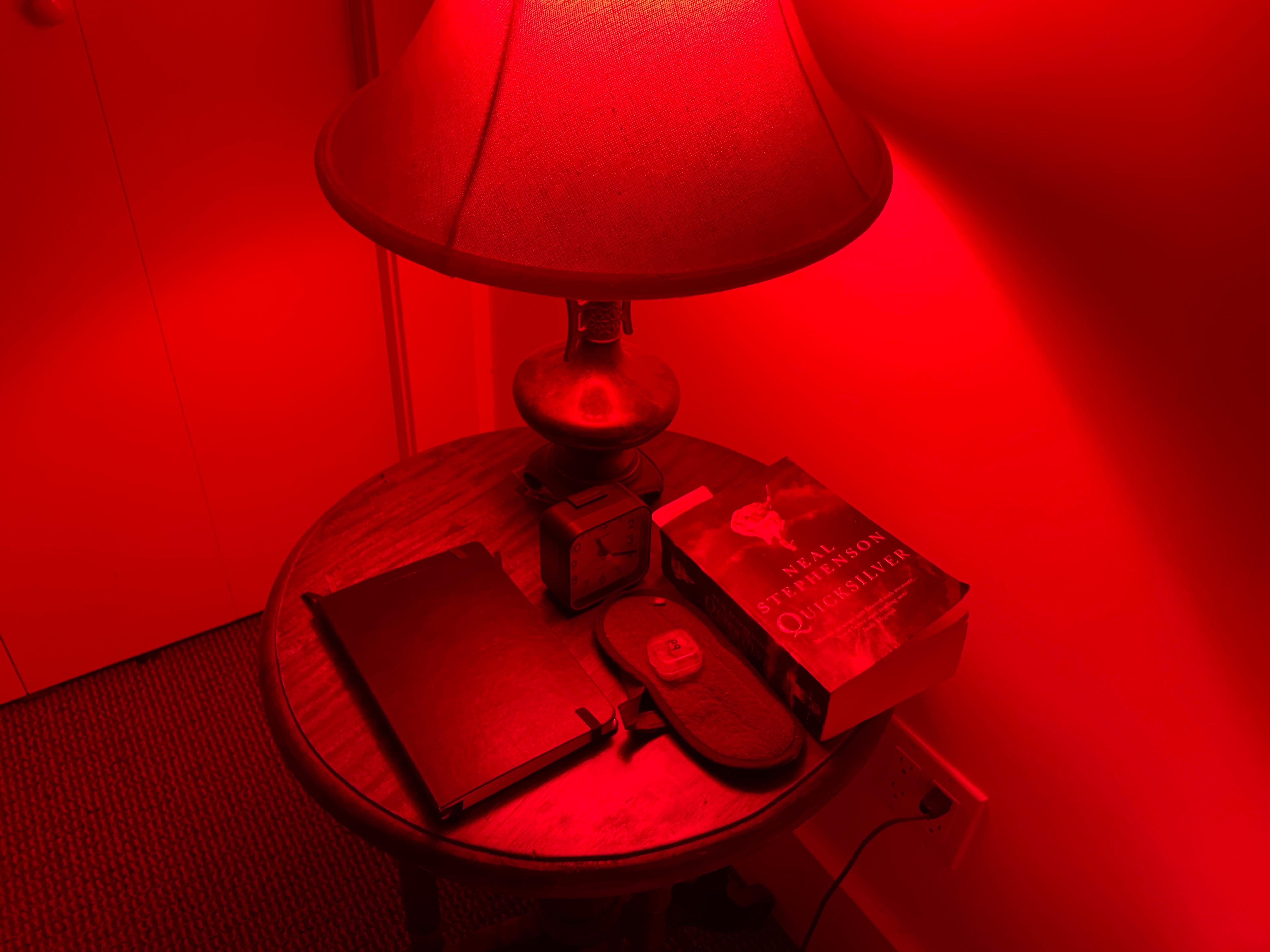
Turn on red bed-side light - red light is circadian-rhythm friendly and routine red light becomes a pleasant backdrop to pre-sleep rituals, plus a consistent signal to the body of impending sleep.
Lightly organize apartment - putting things away helps “put away” the thoughts associated with them. It’s also just a nice wind-down-friendly task.
t - (9h 30min): Get in bed, journal (20 min) - I follow a structured journaling routine. Like cleaning the apartment, journaling also helps me “put away” thoughts from the day. I write about things I’m thankful for, things I accomplished, how I might improve my actions and routines, and what needs to get done the next day. When I’m finished, my thoughts are quieter.
t - (9h 10min): Read a book (fiction preferred) (30 min)
t - (8h 40min): Turn on alarm, put in ear plugs and put on eye mask, turn off red light, and close my eyes.
t: Alarm
Sometime I extend or shrink the wind-down window to accommodate for the natural flows of my schedule, but I try not to shrink it too much.
A lot of my routines above relate to ensuring that my sleeping spaces are used only for sleeping - that’s why my phone stays outside during the night, and my bedside table only has exactly the items needed for wind-down:
lamp with red bulb
journal
book
alarm clock (prevents reliance on phone)
ear plugs and eye mask
My setup isn’t fully ideal because my current bedroom contains my at-home office. But at least my computer and monitor don’t face the bed (they’re sorta around a corner), so there’s some mental separation.
I also try to avoid lying on my bed unless as part of wind-down/sleep. I’ve made exceptions in the past when I was extra tired, but in hindsight it would have been better to use the couch so that my body knows that bed = sleep.
I only use Melatonin on rare occasions when my circadian rhythm seems behind schedule, using the clinically-studied dose of 0.3g (lower than most supplements) and timing it about an hour before I intend to sleep. Once my sleep seems roughly normal (generally after one night) I stop taking it, and otherwise don’t take supplements for sleep.
I tried magnesium glycinate, but didn’t personally notice a difference from taking it.
My routines form a sort of pleasant ceremony. Once my red light is on, it’s a bit like I’m in another world: a world where I only do pleasant, relaxing activities.
Nowadays this is a joyful part of the day that I can look forward to - when I was struggling with poor sleep and my other fatigue issues, this period felt more like a necessary respite. In any case, pleasantness is both good for sleep and good for its own sake.
…just bears repeating - my phone is nowhere near me during the wind-down window. If there are internet things that I wish to get done, I write about them in my journal and save them for the next day.
My particular routines might not work for others, and it takes time to onboard any kind of routine, especially complicated multi-part ones (like the wind-down sequence described above). So, my real recommendation for someone looking to improve their sleep would be to develop a good routine-generating process - something I’ve put a lot of effort into myself.
I’ll write about routine-generation soon in a post titled (tentatively) “Journal as core routine engine.”