
About two weeks ago, a Commoncog member asked if “all successful businesses really so simple/dull that they all cleanly map to the 7 Powers?”
The answer to this is interesting. It is interesting because it might not be obvious, and also because we can anchor our answer with cases from the Commoncog Case Library.
The short answer is this:
Let’s tackle these ideas in order.
As far as I can tell, the 7 Powers is a complete framework. I’ve been looking for a counter-example — hell, even an eight power — for years now, ever since I first summarised the book in 2021. Collectively, the Commoncog community has found one extension, and several critiques, but all of them are minor. I do not believe the core framework needs updating.
It’s also true that Power is much easier to identify than it is to build. My favourite example of this is a story from an old interview with investment manager Chuck Akre (bold emphasis mine):
Patrick O’Shaughnessy: So I came across a really interesting story in preparing for our conversation about a company called Bandag and I’d love to hear that as an example of trying to identify the essence of an underlying business’ value creation, and why its ROE can be above nine or 10 for a long period of time.
Chuck Akre: So this was actually in the days when I was at a firm called Johnston Lemon in Washington, DC. It was a brokerage firm and I was a principal in the firm and we had some interns around and I took an inbox that was full of things I'd tear out of magazines and papers and put in a box and gave them to this intern and said, “Look through there and see if you find anything interesting.”
A week later he came back and he said, “Well, here's a really interesting company called Bandag.”
“Why is it interesting?”
“Well, it had very high returns on capital and had done well for a long period of time.” And I said, “Great, what business is it?” And he said, “It's the tire business.” And I looked at the returns and the capital and said, “Well, it's clearly not in the tire business.”
“What do you mean?”
I said, “Well, take a look at the returns and then take a look at the returns of all the other tire businesses you find and see how they relate to each other.” And Bandag's was three or four times what they were. I said, “Obviously, it's not in the tire business. It's in another business. Our goal is to figure out what business it's in.”
So we went out to see them and a fellow by the name of Marty was running the business. It had been founded by his father, it was in Muskatine, Iowa, and I got to the meeting and Marty had his feet up on the desk and was eating an apple during our interview. So you got a different feel right off the bat, and their business was retreating truck and bus tires. It's something I really knew nothing about before then.
It turned out that Bandag was in the commercial tire retreading business. Unlike car tires, truck and bus tires are designed to be retreaded two to three times, once every few years. Bandag sold the materials, equipment, and process to do that retreading to franchised dealers. In the 70s, during the oil crisis, petroleum costs spiked, which led to tire prices spiking as well. When the oil crisis resolved and prices fell, Bandag found itself with windfall profits. What it did next was what ultimately made a difference to its returns on capital: it decided to distribute those profits to its franchisees, with the condition that they used that cash to reinvest in their own businesses.
Flush with extra cash and finding themselves with some slack for the first time in years, the owner-operators who ran Bandag’s dealerships either expanded their stores, or began experimenting with methods to increase their share of their local retreading markets. They were incentivised to do so, after all: they were all owners of their own businesses. One dealer funded some analysis into the fuel-savings that trucking operators would see if they used a Bandag tread, as opposed to a competitor’s. This analysis was then used in Bandag’s own marketing and distributed to all of its dealers. Needless to say, Bandag’s distribution led to ridiculously high dealer loyalty. It also increased switching costs.
Now compare Bandag with its competition. Bandag was competing with the tire manufacturers, who made the whole tire — a highly capital intensive, low return business. On top of making and selling tires, these tire companies made treads and provided retreading services, but they did so through their own stores, meaning they had to staff them with their own employees. Bandag was a franchise. It didn’t need to pay for the costs of its dealers, nor did it need to hire store employees. It benefited directly from increased sales volume through a (somewhat captive) dealer network. No wonder it had higher returns on capital!
Which of the 7 Powers are present here? I won’t give you the answer — this should be quite an easy exercise for the reader. What I want you to notice is the general pattern: Akre finds high sustained returns on capital, and then works backwards to figure out why the company generates those returns. I want to note that this is a very important thing to do, even if you’re an operator and not an investor.
Quite often, I find myself talking to business operators who find themselves in the following situation: they stumble onto a great business and generate supernormal profits for a number of years. Because they make a lot of money for those years, they think that they are rich because they are good. Then they hit a rough spot. Returns collapse. They cast about for an answer, and eventually they stumble onto a reason (all of which we’ve explored before):
Regardless of which it is, they find themselves scrambling for a response. But it is too late. It is much harder to figure out how to recover when your returns are collapsing. They did not understand the reasons for their success, and so now they pay the price.
(Also let me be clear what ‘paying the price’ feels like. It feels like that the business is not very fun to run. It feels like you are working a little harder every year but the business doesn’t ever seem to do better, and in fact may even decline despite your efforts. After a decade or more of this, you feel tired. And then you give up).
I find this mostly inexcusable. As I’ve written many times in the past — we currently live in the second decade of the 21st century. Back in the 60s, legendary investor and businessperson Charlie Munger had to learn this the hard way, burning 11 years of his life in the process. We do not have to pay the same cost today; knowledge of moats — of Power — exists. And in fact the most notable thing about my personal experience with moats (which I tell here) is that my boss and I noticed that we were making supernormal returns, and we spent 1.5 years trying to figure out why. After we figured that out, we used that insight to crush our competitors.
So identifying Power is the easy part.
Finding and building a moat is the hard part. My boss and I stumbled backwards into our Power and took some time to understand it. I also mentioned earlier that building a moat is ‘going to Mars’ hard. What do I mean by this?
Building a moat is hard because:
Now, Helmer knows all of this, of course. In fact the entire last section of my 7 Powers summary tackles this topic, mirroring the book. Astute readers will remember the following diagram:
Which basically states: depending on the stage of your business, you have access to only two-to-three possible moats.
Unfortunately, details matter! It is one thing to say that “oh, my business is new so therefore either I find a cornered resource, or I counter-position against incumbents.” But how? What cornered resource? Why does it lead to differentiated returns? Is that resource really cornered? (If it is not, then it’s just a temporary competitive advantage — and that is ok! — but you should expect competitors to copy you so you should keep looking).
As for counter-positioning: how? What positioning are you able to do to attract customers to you and take market share away from your competitors? How sure are you that it is defensible?
The short answer to all of these questions is that you often do not know before you try. And in fact you don’t want it to be knowable in advance: if it were knowable, someone might stumble onto it through analysis alone.
To recap, the frame I’m giving you right now is: 1) Powers are easy to identify post-hoc. 2) Building Power, on the other hand, is difficult because it should be unknowable (or illegible) in advance.
We can demonstrate this through concrete examples. At this point, there are enough cases in the Commoncog Case Library for most of the 7 Powers. This means that we can go one step further than just theoretical commentary: we can walk through the cases and ground our understanding against real examples.
I’m going to walk you through four cases, just to give you a taster. Then I’ll talk about what you can do if you’d like to continue down this line of investigation.
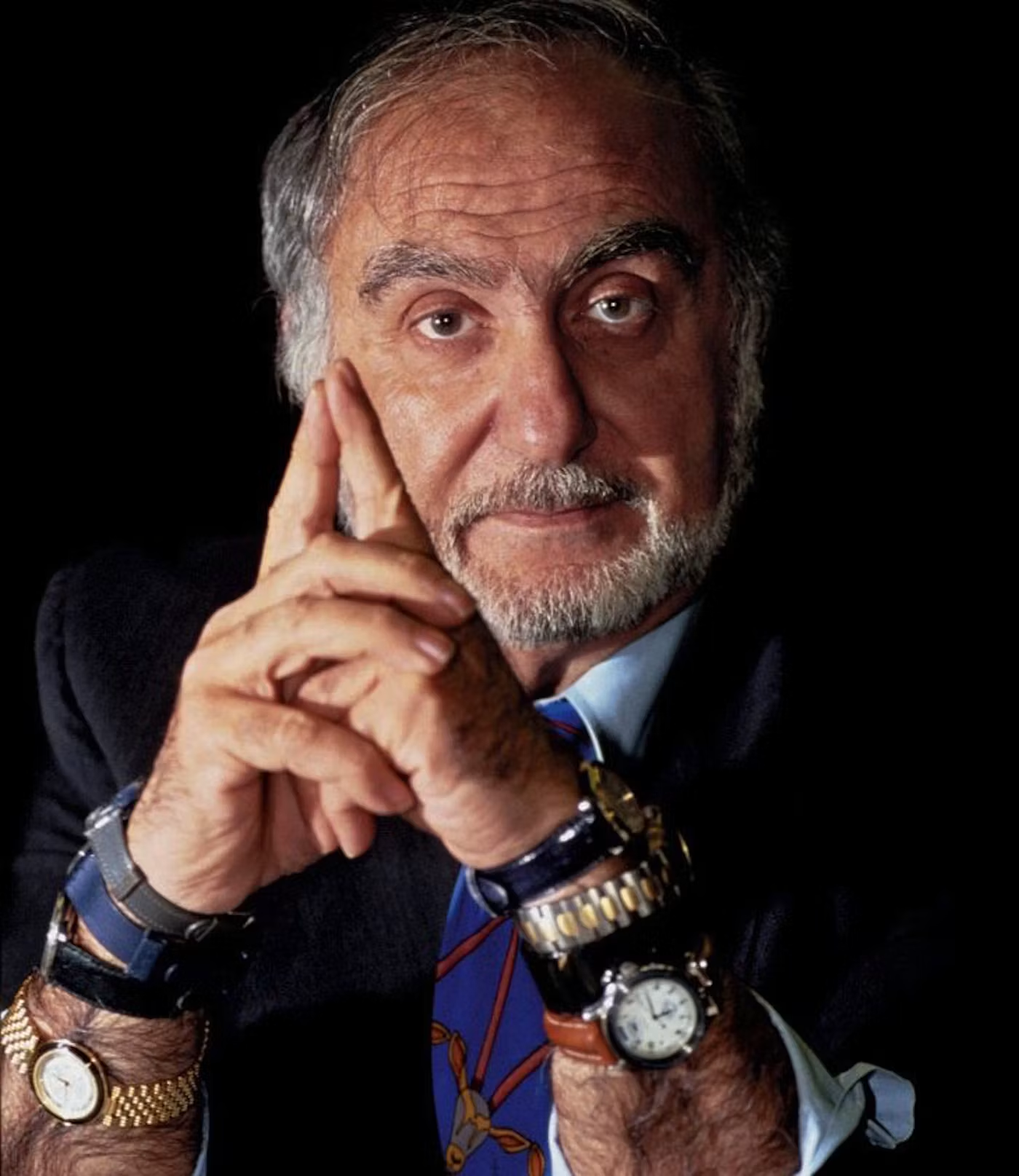
The Swatch Group is a conglomerate that owns watch brands at every tier of the market: Swatch at the low end, Mido, Hamilton, Tissot at the mid end, Omega, Breguet, Blancpain and Glashütte Original at the high end.
In 1982, Swiss creditor banks decided enough was enough. It was time for an exit strategy. So, they brought in Nicolas Hayek, a Lebanese-born businessman who, in 1963, pawned his household furniture to fund his fledgling consultancy business. By the late 1970s, that consultancy business was thriving, advising over 300 corporate clients, including Siemens and Nestle.
What did the bankers want?
According to Hayek’s obituary: “To plan the ordered bankruptcy of the remaining national watch industry.” However, Hayek had other ideas. What happened next was one of the most unlikely industrial comebacks in modern history.
How did Hayek find a moat for the group?
By the end of the case, Swatch Group had:
The Group’s returns obviously tell us that some Power exists. But I want you to pay special attention to the fact that Hayek and company had no idea which Powers were workable before they started. They iterated based on the information they generated, that they found in the course of doing business.