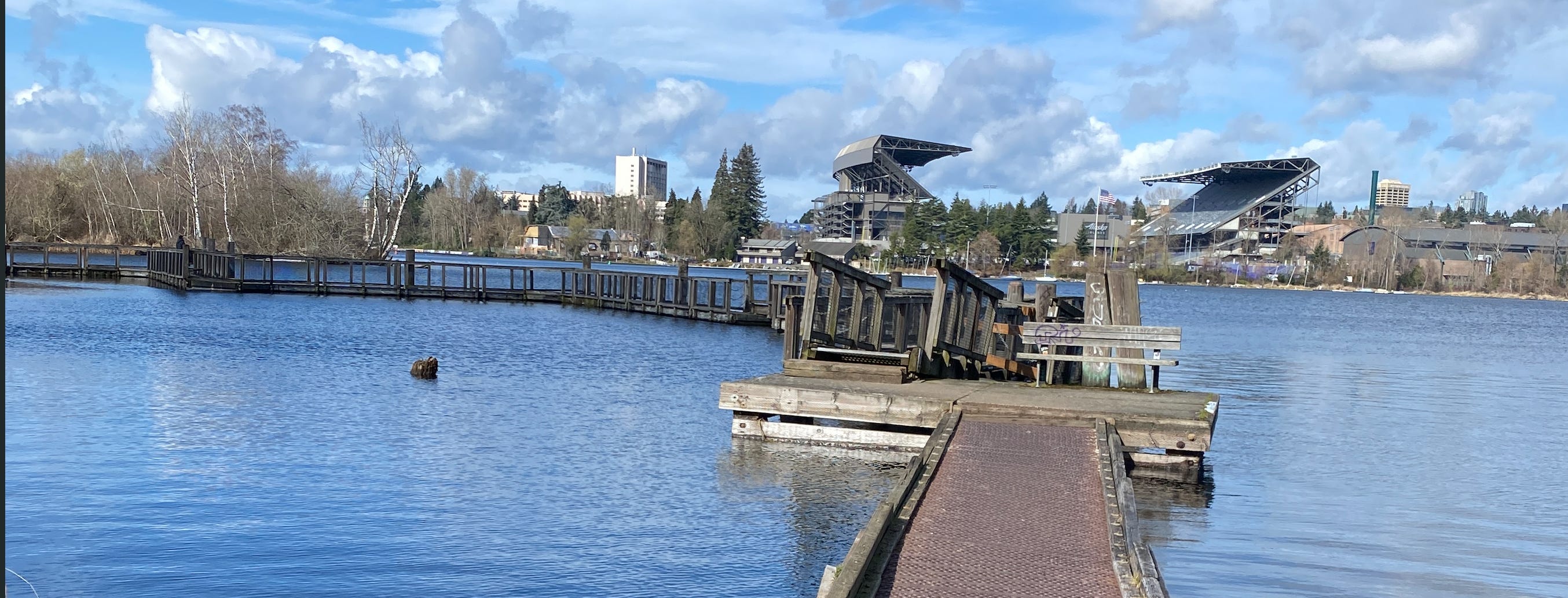
In December of 2024 I had mono, a disease which upended my life and caused me fatigue issues that plague me to this day.
I recently tried a new recovery tactic with astonishing results.
On Sunday last week I woke up too tired to complete my 10 minutes of daily yoga: a sure sign that I was entering a low-energy period. I might have gone on a run that day, but knew I needed to rest.
The next day (Monday) I dressed up in my running clothes and went to a cafe, but as I sat there my energy fell lower and lower. I felt like I wanted to throw up. I did not run. I returned to my car and lay my head against the passenger seat. After returning home, I did the same. It took a lot of effort to get upstairs, and I cancelled my plans to cook myself dinner. As I proceeded through my wind-down routine, I paused to sit or lie down between each task.
On Tuesday I completed my yoga. My body felt slow but my head felt clear. I had one meeting, then started to write. I began to feel more and more tired. I moved to my bed. I switched to a computer game. Then I turned that off and closed my eyes, feeling I could do nothing else, completely spent. I was reminded of times during my original illness 15 months ago, and times since then, when I’ve been similarly debilitated. I prepared for the possibility of an unproductive day, and of multiple days of continued exhaustion.
I got up and went to the bathroom, and while there I recalled a blog post from David Chapman: Fake fatigue in long covid. I reread the post, attending closely to the story of his fatigue-defying act. Chapman’s words:
I pried myself out of the beanbag. I was dizzy and lightheaded, and my wobbly legs could barely hold me up. Slowly and carefully I got to the garage and drove to the park.
I ran six miles. Then I came home and wrote this post.
Fuck you, long covid, you are a fucking liar.
As I sat there reading his story, I began weighing the risks. I thought this might actually work for me. I decided to do it.
…
I pried myself off of the toilet (sorry). I was dizzy and lightheaded, and my wobbly legs could barely hold me up. Slowly and carefully I got dressed and walked outside.
I ran six miles. Then I spent a week being physically active and productive, and am now writing this post. So I too will say (excuse the profanity):
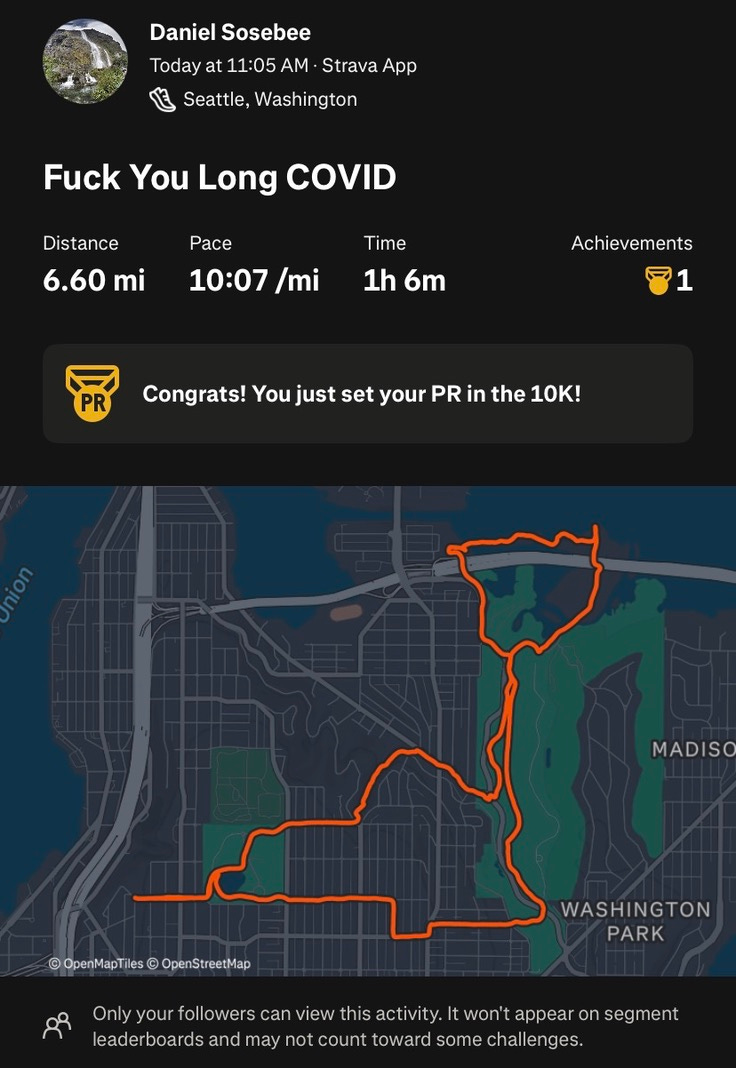
I share this post in case it might help anyone else with similar issues. I include the history of my challenges with physical activity, the run itself, the week that followed, and my updated recovery outlook.
Chapman is a very good writer and he covers the necessary caveats. Most importantly: don’t take medical advice from internet randos. I agree, and will quote him here:
I’ve figured out a way to deal with long covid fatigue that has worked for me. It might work for you, if you have that. I have no idea. It may also cause other trouble, so you’d need to be careful.
Same situation here. This is a story about what worked for me.
I can at least attest that my story is accurate. I kept a detailed journal of my feelings and activities over the past week, updated multiple times a day. I’ve also spent months collecting daily self-reported health logs, and years writing and re-processing daily journal entries. All of those personal writings helped produce today’s story, which really began 15 months ago.
I tested positive for mono and strep in December 2024, and then the flu one month later. I continued experiencing fatigue throughout 2025, and wrote about these experiences in my 2025 year’s end blog post.
In July 2025 I began tracking three self-reported health metrics on scales of 1 to 5:
how mentally sharp I felt
how much energy I seemed to have
how much soreness/inflammation I felt in my neck and body
These three metrics represented the signature symptoms of my condition. Summing them together, a 15/15 represented a normal-feeling day, and anything less represented various levels of ailment. Here’s what 7 months of data looked like:

As you can see, symptom-free days were few and far between. I stopped tracking in February 2026 in part to remove the burden of the task and in part to prevent myself from drawing unneeded attention towards the illnesses.
For many years I’ve enjoyed rock climbing, weightlifting, and running. I’ve told myself that if I could return to my pre-fatigue routine of climbing/lifting three times a week and running three times a week, I would then consider myself fully recovered.
During 2025 I intermittently attempted these activities, but often experienced delayed-onset fatigue, roughly one day after. I interpreted that to be post-exertional malaise (PEM). My read of online forums and publications from advocacy groups told me that PEM could have negative health effects, so I felt discouraged from continuing those activities. I generally opted for yoga and long walks instead.
The negative aftereffects of exertion were strongest for climbing, perhaps because my ongoing symptoms of pain/soreness/inflammation were clustered in the same upper body muscles that climbing engages. So, whereas I sometimes sustained an intermittent running practice, my climbing practice never got off the ground, though I tried a handful of times. Even running was difficult to maintain. My frequent symptoms made it harder to run and made me less certain that running was a good idea.
In October I moved to Seattle. During my first two months (November and December) I was often sick. I felt that my health may have regressed slightly. While I would sometimes go for walks or hikes, I did not feel comfortable making progress towards running, climbing or lifting.
Then things started to get better.
With the encouragement of my friends I returned to the climbing gym in late December. The day after my first climb my muscles felt sore and inflamed, as if I had a viral infection. After about three days those symptoms mostly resolved. Despite the adverse response, I felt that I had ultimately tolerated the exercise, so I continued going to the gym.
For a few weeks I climbed once or twice a week, doing short sessions (~30-40 minutes). Then I started running again. Slowly I ramped up to a point where I was running nearly twice a week and climbing nearly twice a week. The runs were about 2.5 miles with a fair amount of walking interspersed.
Throughout that period I experienced my normal fluctuations of symptoms, and often did not feel good, but crucially believed that I was not hurting myself, so I kept going. That change in belief was a tipping point in my recovery.
But despite my sense of progress, I was not encouraged by any of the feelings I experienced in my body, during or after activity. I was operating with great caution, and my symptoms often compelled me to reduce my activity and take unplanned rest days. Progress felt like a constant struggle, and it’s that tenuous headspace that formed the backdrop for last week’s crash and the six-mile run.
What was going through my head when I decided to go on that run?
It’s hard to describe. My felt experience of making health-related decisions is one of deep, complex uncertainty. As if I am dealing with a tangled ball of thoughts and feelings that spans multiple miles, so large that I cannot bring it into view and cannot think straight about it. The main component of the ball is fear, which suffuses everything.
The fear makes sense. I kept trying to expand my exercise envelope, and despite some success I continued to feel bad and to randomly crash. For each negative experience, I would worry I’d overdone it and would think about the potential causes, exercise-related or otherwise, and the fear would expand into more and more areas.
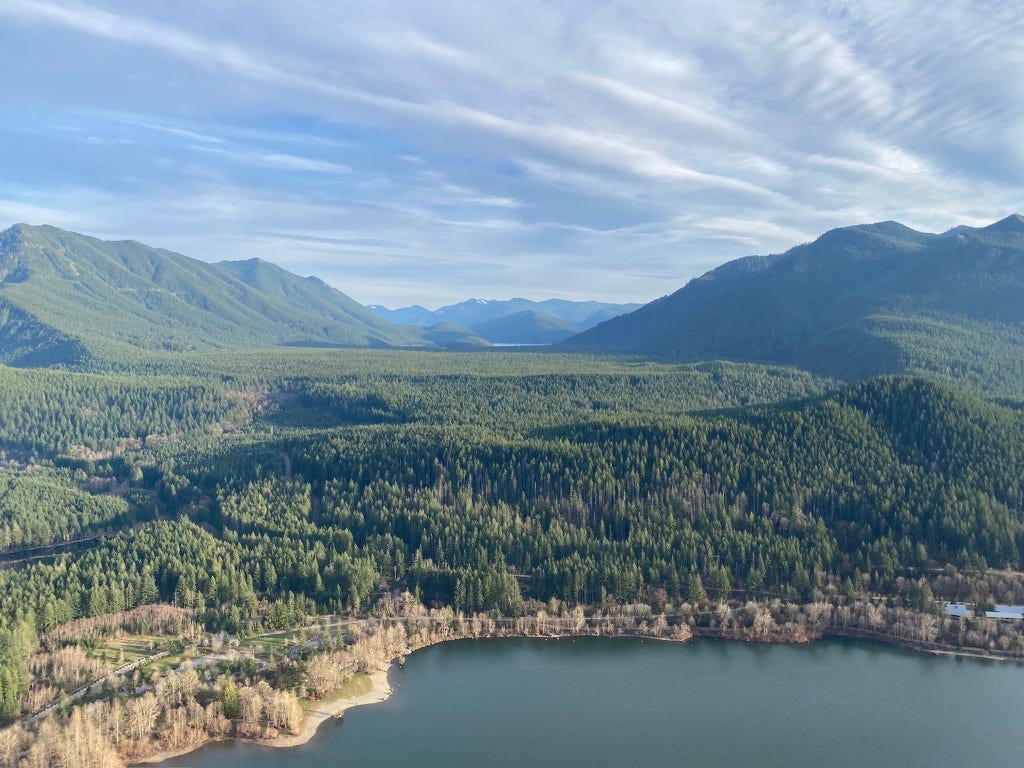
At the same time, a number of positive experiences gave me optimism. From as early as February 2025 I had moments where my energy seemed to suddenly recover: first at a bachelor-party weekend, then on a family vacation, and later during a series of backpacking trips. In hindsight these were all fun, multi-day activities in new environments.
The backpacking trips in particular were confounding. I would work up the courage to go out, set backup plans in case my health failed, and then proceed to feel great the entire time. Part of me still worried: I would feel exhausted after the trips, and backpacking is a pleasant activity for me, so perhaps I was still operating under limitation and offsetting the consequences? But it really didn’t seem that way. The memory of these trips became a beacon of hope for me.
Between the backpacking trips, my recent successes with re-introducing climbing and running, and my exposure to cognitive-retraining success stories1, I figured that I might be able to tolerate more than it seemed, and that I could engage in this experiment without serious risk to my health. The veil of fear would have to yield this time.
Also, I won’t lie: I was thinking it would make for a good blog post.
So I went on the run.
Before we move on I need to clear something up: I generally say that I’ve experienced “post-viral fatigue,” since that most directly describes my situation. If pressed I’ll say it was caused by mono, which is a frequent instigator of such issues. However, I’ve had covid, and probably long covid before (details at footnote2), and there’s evidence that Epstein-Barr virus reactivation (which causes mono) may be a contributor to many long-covid cases (see Dan Elton’s notes on this). Furthermore, these illness categories do not have diagnostic criteria that distinguish them from one another, nor do patients who choose one label or another generally receive distinct recommendations from either traditional or alternative medical sources. As such, I didn’t mind calling it “long covid” during my run - it’s all post-viral fatigue to me.
I copied Chapman, heading out the door while forcefully saying “fuck you long covid,” trying my best to energetically cast off my limitations.
At the beginning running felt… unnatural. My vision was blurry and my thoughts were scattered, and I felt sluggish. But I could run. Over time my vision became normal and I felt normal, and then began to feel good. My congestion cleared up and I sustained a jog for most of the six miles. By the end it felt like running under normal healthy conditions.
That afternoon and evening I was productive and had plenty of energy. My lungs felt tired and I occasionally brought up phlegm, but otherwise my body felt great: I had a pleasant tingly feeling all over. The run had completely turned things around.
I was optimistic, but I wanted to wait before publishing my results. I’m glad I did, because the next week was even better.
In keeping with my best-case exercise routine for the current period (run → climb → rest day → repeat), I proceeded to climb the next day (Wednesday). It was by far my best climbing day since 2024, and I climbed my first “blue” (an arbitrary difficulty grade at the local gym).
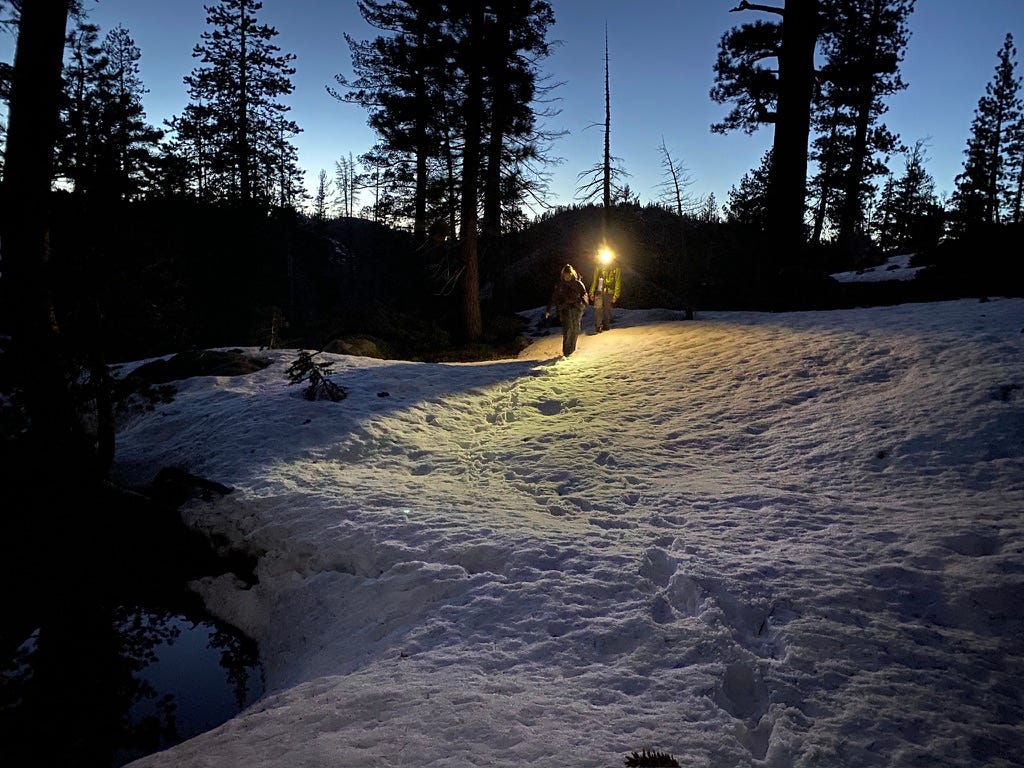
Two days later (Friday), I was out running again, this time in the snow:
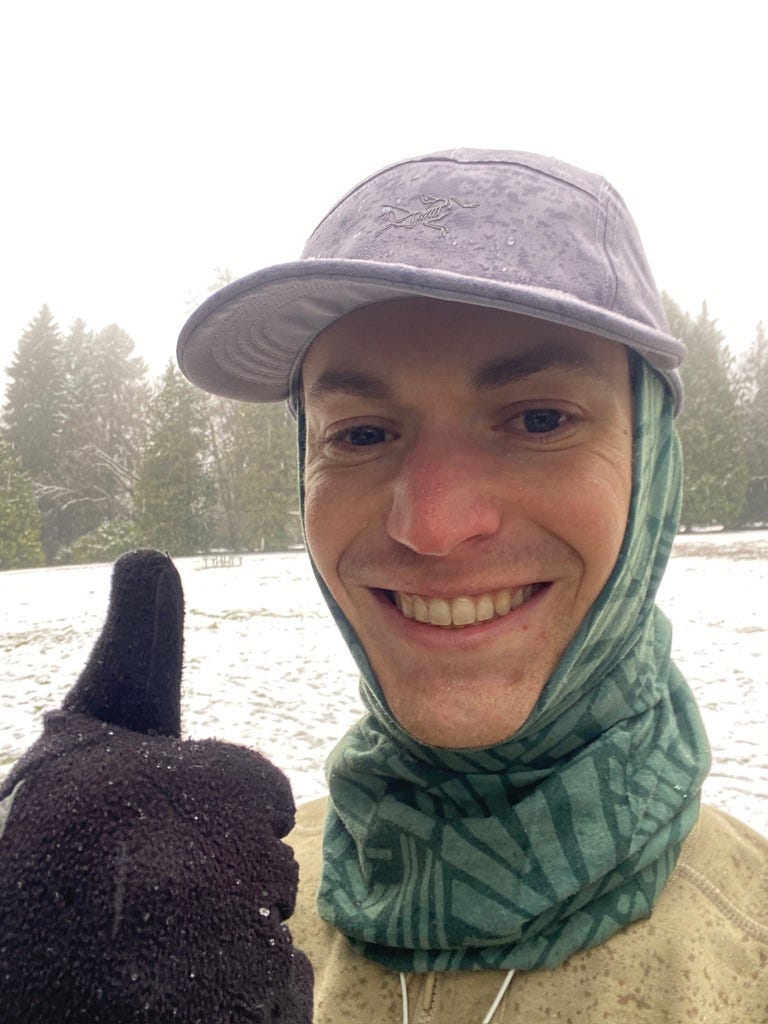
About three miles. It went well. Just like on Monday (the first significant day of my crash) I was two days out from a pair of running/climbing days. Just like Monday, I worked on my blog (the same post on both days - an upcoming one). I did all of that to make Friday a controlled experiment. Happily, writing went well, as did the run.
The next day (Saturday) I was at the climbing gym again. I climbed my first “pink”:
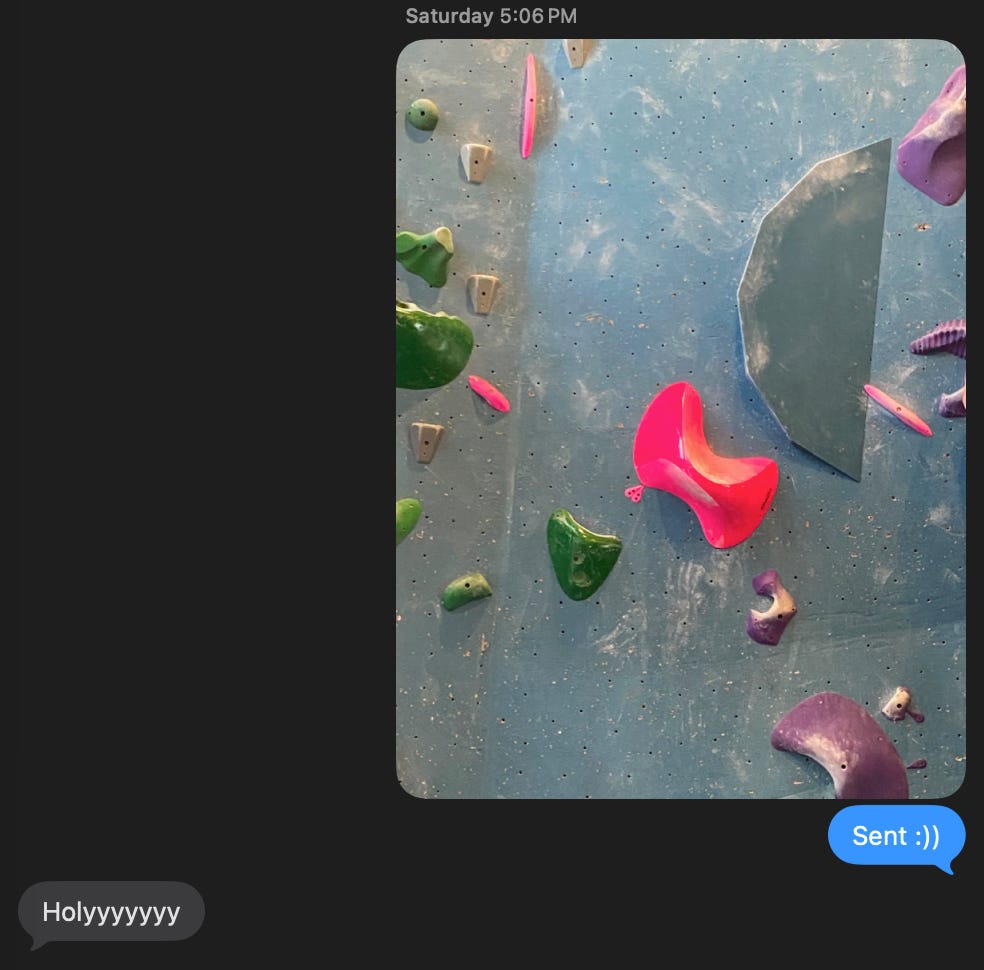
Also, for the first time in months I lifted some weights - just a small amount to get started. Two days later (Monday) I ran far again.
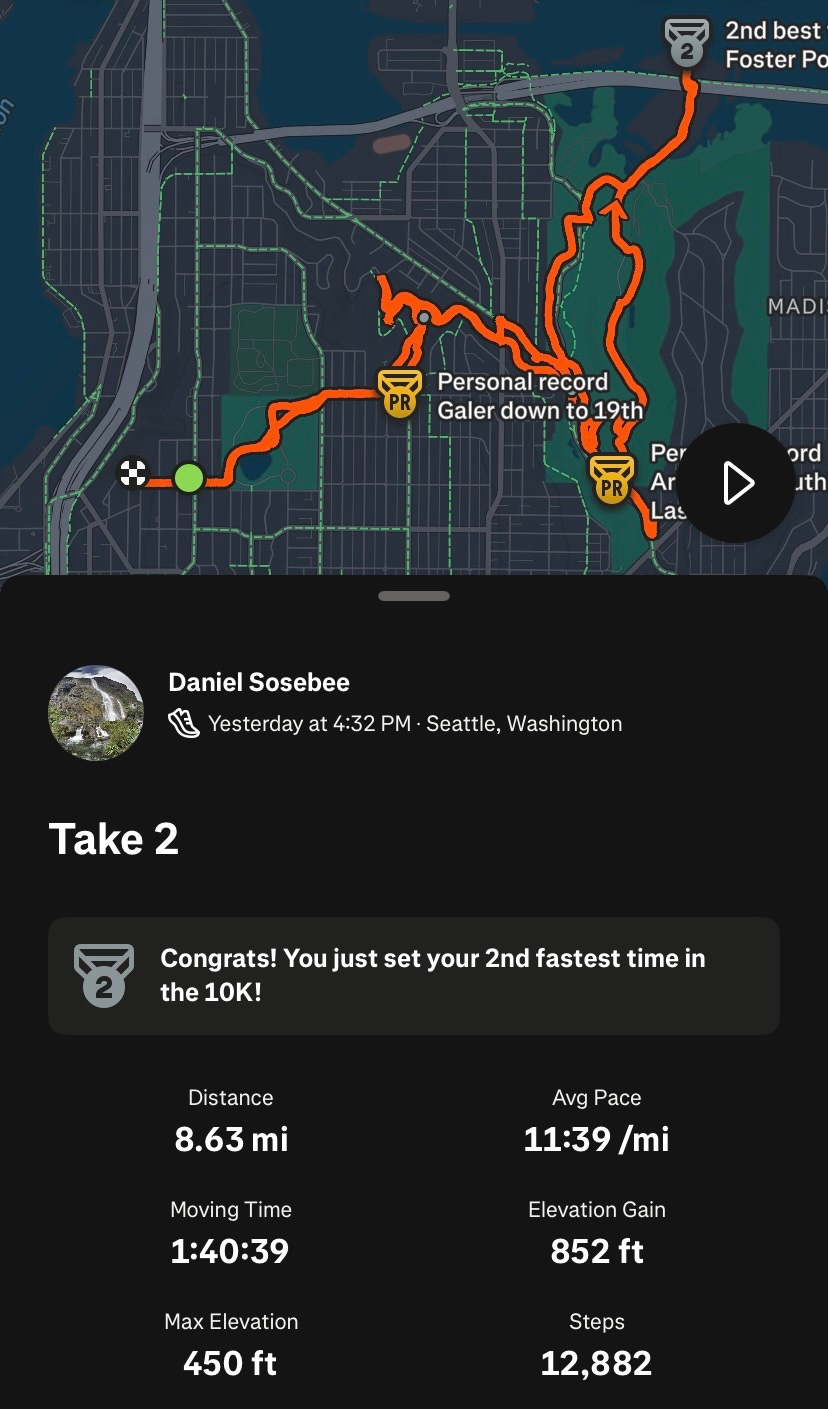
I made poor choices regarding the timing of coffee consumption and ended up walking a fair amount, but I made it home ok and felt fine the next day. That brings us to today (Tuesday), during which I wrote the majority of this post and had another great climbing session.
Feeling motivated? I hope so! Allow me to fill in some gaps…
After my run on Tuesday, I worried about my lungs. I told myself it would be fine, but was still scared. On Wednesday I wrote “My body is sore, a situation which threatens to draw my concern, but I remember that soreness is normal.” On Thursday I woke with a sore throat, but then began feeling better during my yoga.
Friday morning:
feel pretty sore, under the shoulder blades and such. The kind of thing that might normally be a warning signal. “Guess I’m sore after climbing” I think, and move on.
Saturday on the way back from the gym:
my body is throwing warning signs. As if I’m about to be sick. I Ignore them, have dinner, take a nice long bath. Afterwards, things seem fine. I am tired, but not unwell.
Sunday:
I woke up thinking I might be sick. Phlegmy, not feeling great. Still, got up, did my routine, did my yoga. Spent half the day cleaning my apartment, fasted, and eventually felt fine.
[…]
there’s still that feeling of heaviness, but only barely.
Monday:
again, quite zonked upon waking. This time, yoga was a bit harder. Once again, things progressed fine throughout the day.
…
Every single day was hard. And that might be a good thing. If I’d felt great the whole week I would have learned that I can have good weeks. Instead I learned that a lot of my negative feelings don’t cash out to physical reality, and that I can have a good week despite them.
Some closing thoughts:
This seems a bit out of place in a sober analysis of the situation, but, yeah, I am really looking forward to slaying this demon, and this past week was like a big harpoon right in its rear end. It feels very good to go to the gym and pull hard. And it feels very good to experience hunger again (like, literal hunger, from exercising). If I can continue at my current rate of activity I will be over the moon.
My first two backpacking trips of 2025, my snow-camping trip in January, and my recent reintroduction to climbing were all initiated by friends. When I accepted each invitation I felt I was taking a risk, but in each case I was excited to join because of the people involved. Without these invitations, and the resulting disconfirming evidence I received, I would not have had the courage to push through this week. To everyone involved - thank you very, very much.
As long as my symptoms do not exceed what I experienced this week I will proceed to treat them with “aggressive contempt,” as Chapman put it. I will continue the current exercise routine, and if that keeps working I will expand it until I’ve reached my ideal pre-fatigue cadence, with respect to the gradual approach required to recondition muscles (especially in weightlifting).
Of course, I am reporting on recent events and I have no idea how my health will progress. If I look within, I am still gripped by terrors: what if this week was an anomaly? What if I’m just building up for a bigger crash, one that I can’t fake my way out of? What if I have to turn around and say I was wrong?
The fears are to be expected. That’s how these illnesses work. But I do not intend to pay them heed. As long as my fears, pains, and concerns do not exceed what I experienced this week, I will keep pushing through them, choosing to live the life that I most wish were possible. If that succeeds, then eventually my body will catch up with my brain, learning to once more have confidence in itself. And then, finally, there will be no fears and nothing left to push through.
Consider sharing this post with someone who might benefit from it or enjoy the read:
The original “fuck you long covid” run:
Dan Elton’s writings on surmountable causes of fatigue:
Mark Lovett Wells’ extensive long-covid wiki, presenting a path to recovery that does not involve pushing through discomfort: My Long COVID Treatment Strategy.