An exemplar of the precision platformer genre it popularized, Super Meat Boy simultaneously hates you and wants you to suffer, and believes in you and wants you to triumph. This shines through in the replay the game shows you at the end of each tiny level. The replay overlays every single attempt you made at the level. It might start with a hundred overlapping meat boys, then viscerally illustrate their winnowing at each deadly obstacle in turn, until only one remains triumphant at the end. It perfectly captures the rush of “I can’t believe how ridiculous that level was!” and “Holy crap I am so awesome!” at the same time. The game turns the single-minded struggle that you have just experienced into art.
This is the first in a series of posts examining video game history through looking at one game I loved from each year, 1978–2027. I’ll add a navigation box here when there is more than one post in the series.
Super Meat Boy was the first game from two-person indie studio Team Meat, although it was a sequel to designer Edmund McMillen’s free 2008 Flash game Meat Boy. McMillen, then 30, had made dozens of free Flash games since 2001. He would later go on to design The Binding of Isaac (2011) and Mewgenics (2026). The other founder of Team Meat, programmer Tommy Refenes, went on to make other games under the Super Meat Boy IP instead. The game’s soundtrack was composer Danny Baranowsky’s breakout hit. Devil n’ Bass, which plays when you claw your way out of literal Hell only to arrive in even worse double secret hell, is still in my regular playlist rotation.
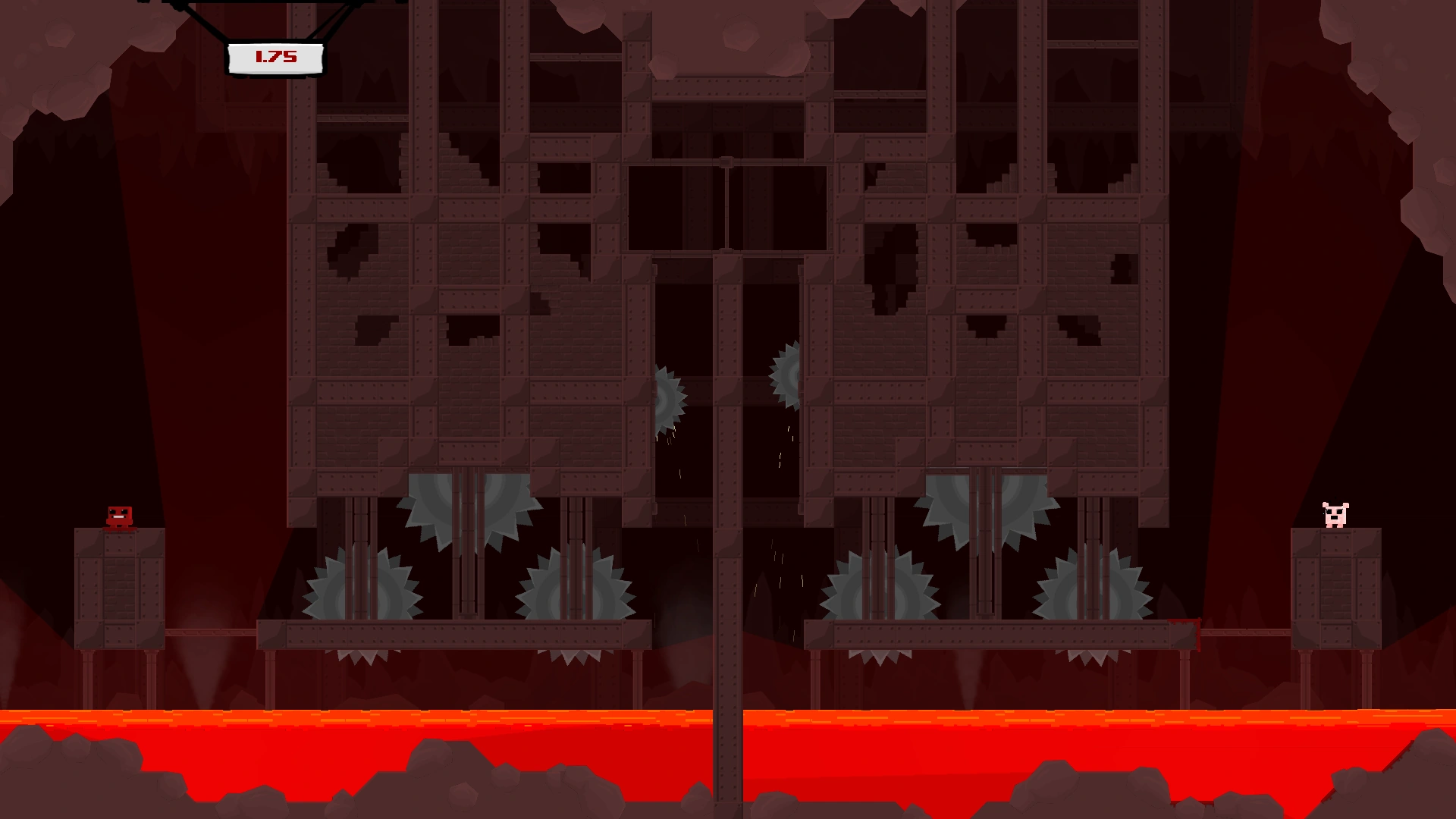 Screenshot of a single-screen level from Super Meat Boy. It is set in Hell and features a river of lava and too many moving sawblades.
Part of what makes Super Meat Boy so compelling is its approach to failure. On death, you immediately reappear at the beginning of the level and can try again right away. McMillen’s signature horrifying nightmare world combines smoothly with the ideal that failure isn’t a big deal. Failure being so common just serves to highlight just how unfair and brutal the world was. It would be another eight years before Celeste took that novel approach to its logical conclusion.
Another part of the appeal is the game’s focus on speed. Most (but crucially not all!) obstacles are timed so that an all-out sprint can barely clear them. You also get a prominent speed ranking at the end of each level. Even harder versions of the levels are gated behind finishing most of them with a certified Grade A. There are always more tantalizing challenges on offer if you want them. After many of my initial hard-won victories, I found myself immediately restarting the level to do it again, but better. Faster. Cleaner.
Super Meat Boy was originally released on XBox Live Arcade, an apt reminder that 2010 was still early in the indie game renaissance. Its acronym, SMB, was selected as a homage to Super Mario Brothers, the game that first defined the platformer. Super Meat Boy wears its classic video game influences on its sleeve, including warp zones that lead to levels demade for fantasy retro consoles and glitch art that evokes NES and Game Boy memory corruption. The game is also in conversation with its fellow indie precision platformers like VVVVVV and I Wanna Be The Guy, even featuring guest characters from them.
2010 also saw the release of early mobile hits Angry Birds, Cut the Rope, and Fruit Ninja. The app store pricing race to the bottom was well underway. All three games were initially sold as standalone products with no in-app purchases for $1, which they did in fact make up for in volume.