Introduction
In this inquiry, we build a sequence from a single 2.
The first rule of this sequence is that it has to describe itself.
Starting with Two
Here is a 2.
2
It says, "There are two here."
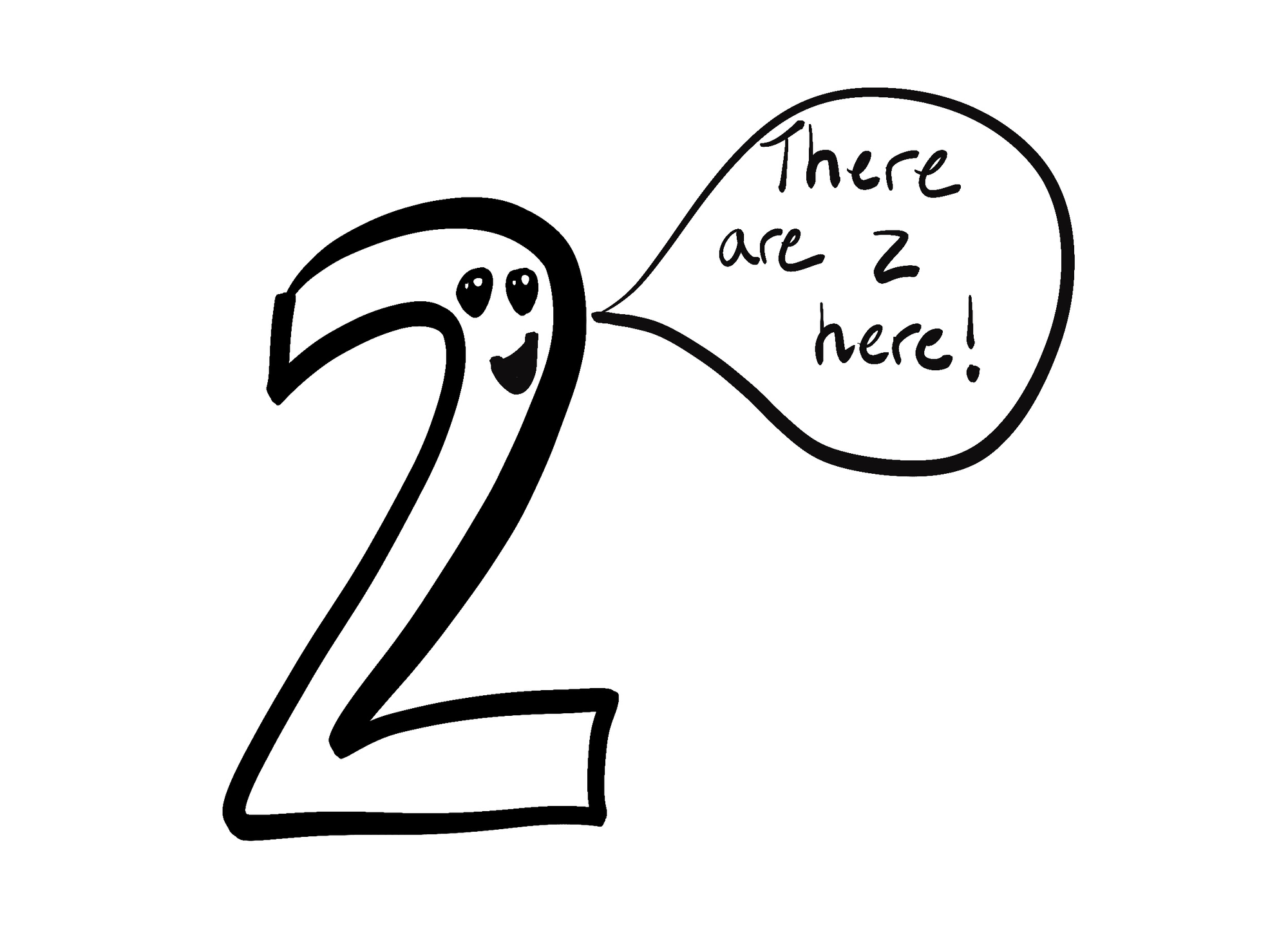
The first number is a 2, so the next number has to be a 2 as well, so that there are "two here." We now have two 2's!
2 2
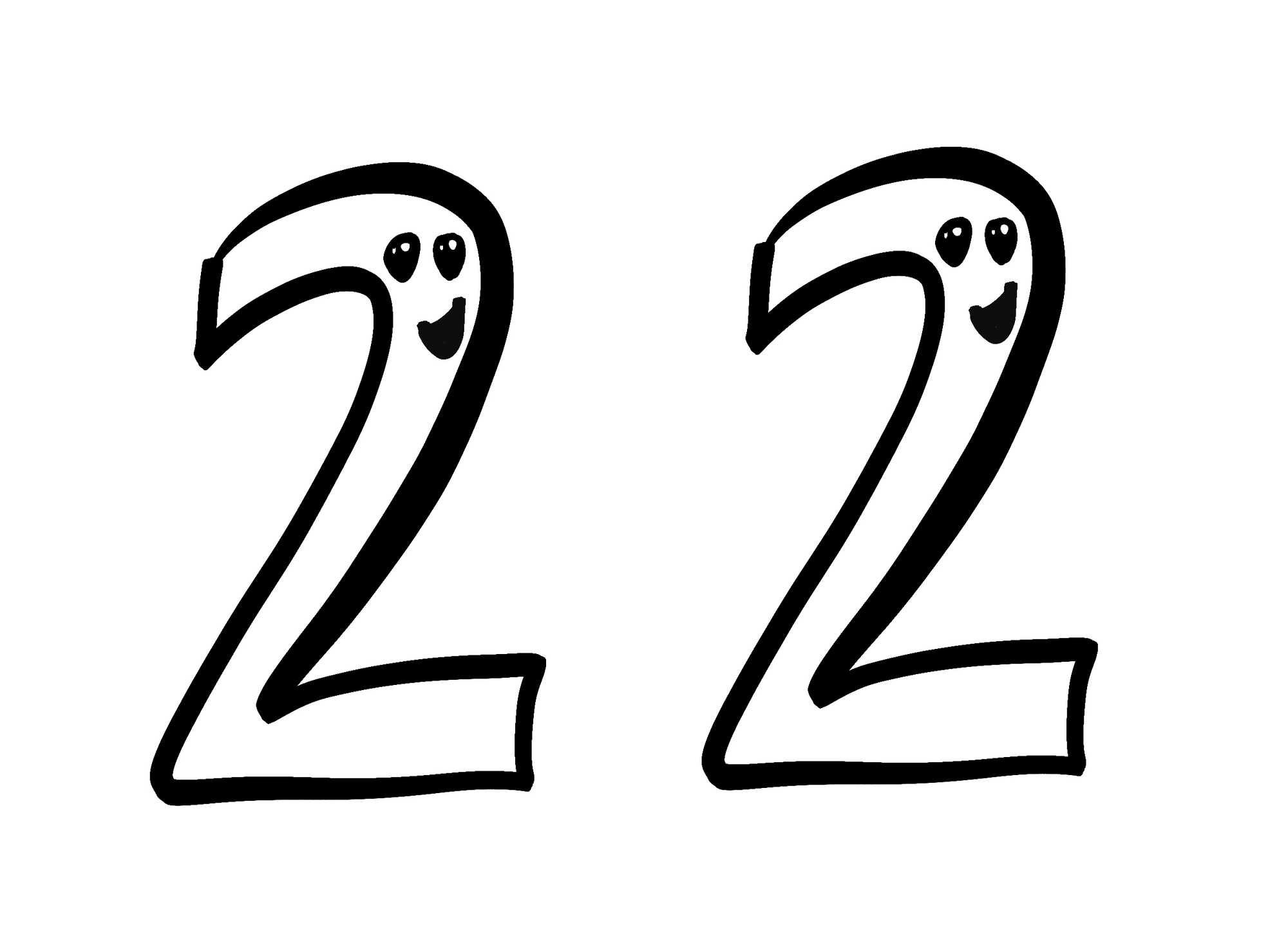
When it's not a two, it's a one
Here comes the second rule of our sequence. When it's not a two, it must be a one.
What comes next?
To start, our sequence says there are two of one thing and then two of another thing.
2 2
We know the first two are 2's, so the next two must be 1's:
2 2 1 1
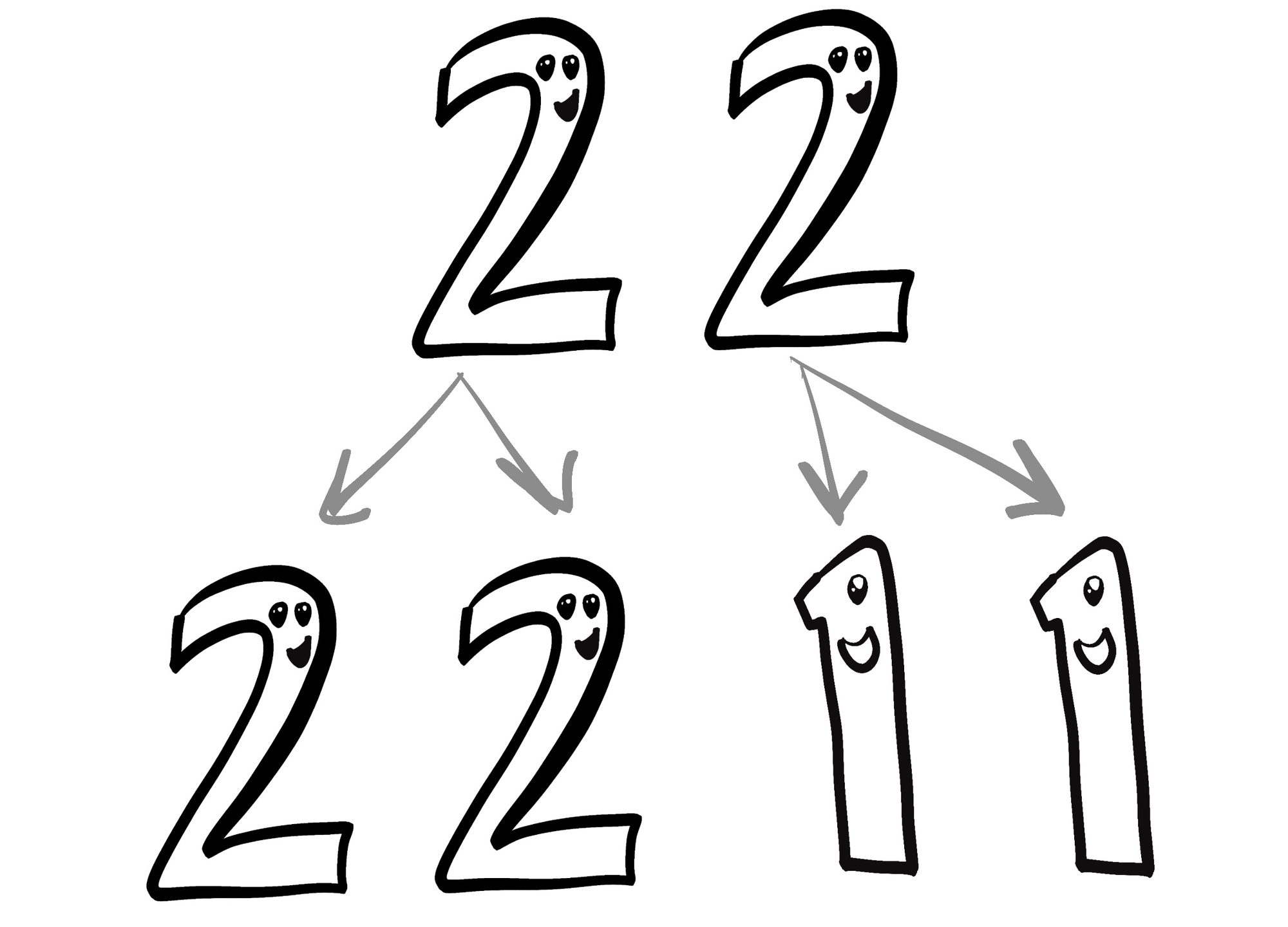
We couldn't use twos, because then there would have been four twos, and the sequence wouldn't describe itself.
Continue to Build the Sequence
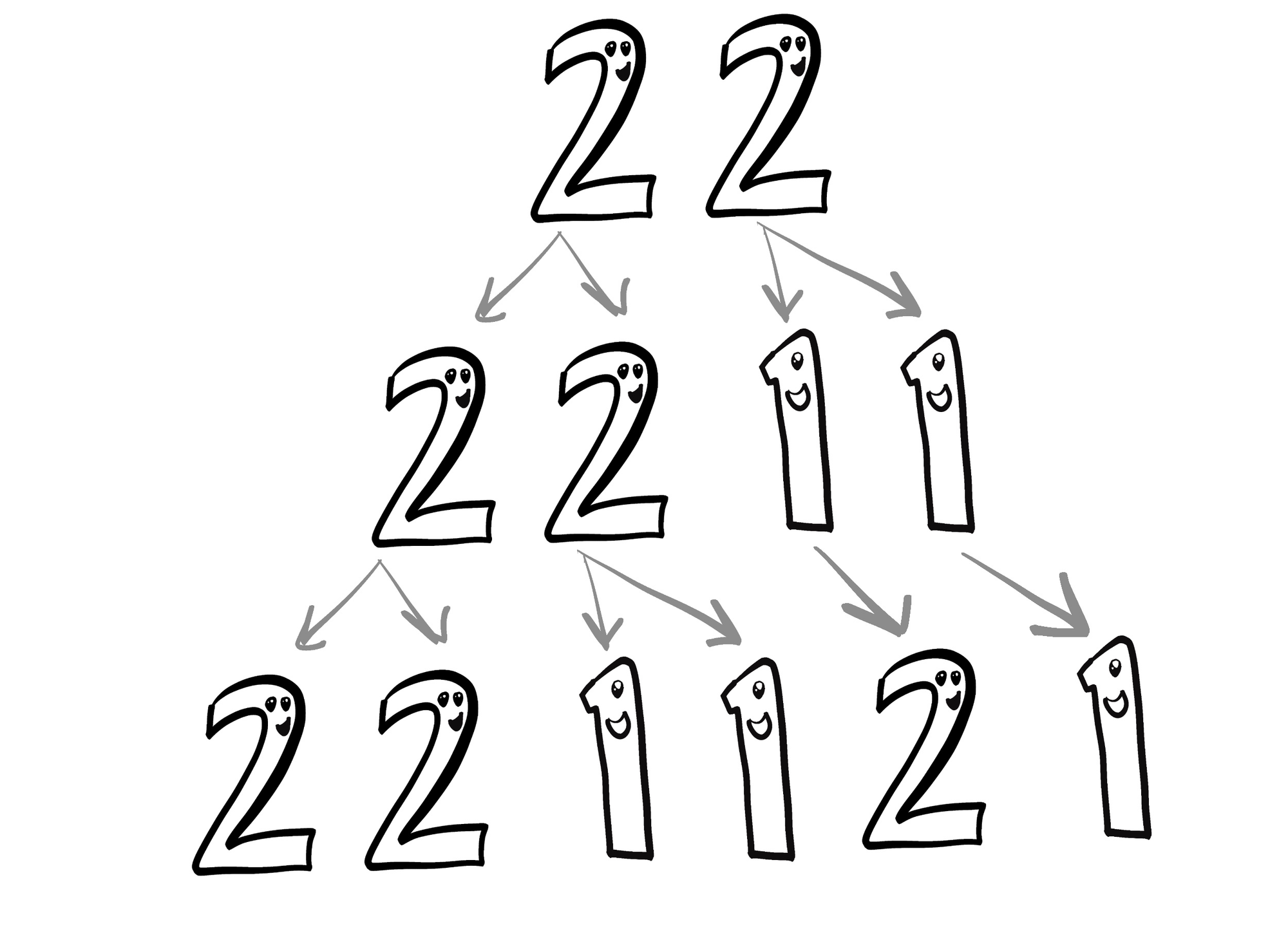
So far we have:
2
What are the next two numbers in the sequence after the 1 1? We know there is two 2's, then 1's, then one of something, then one something.
And what about the next three numbers?
Activity - Be Creative
Build out more of the sequence and then dive in.
- What do you notice?
- Do you have any conjectures about the sequence?
- Do you think it repeats?
- How many 1's versus 2's are there?
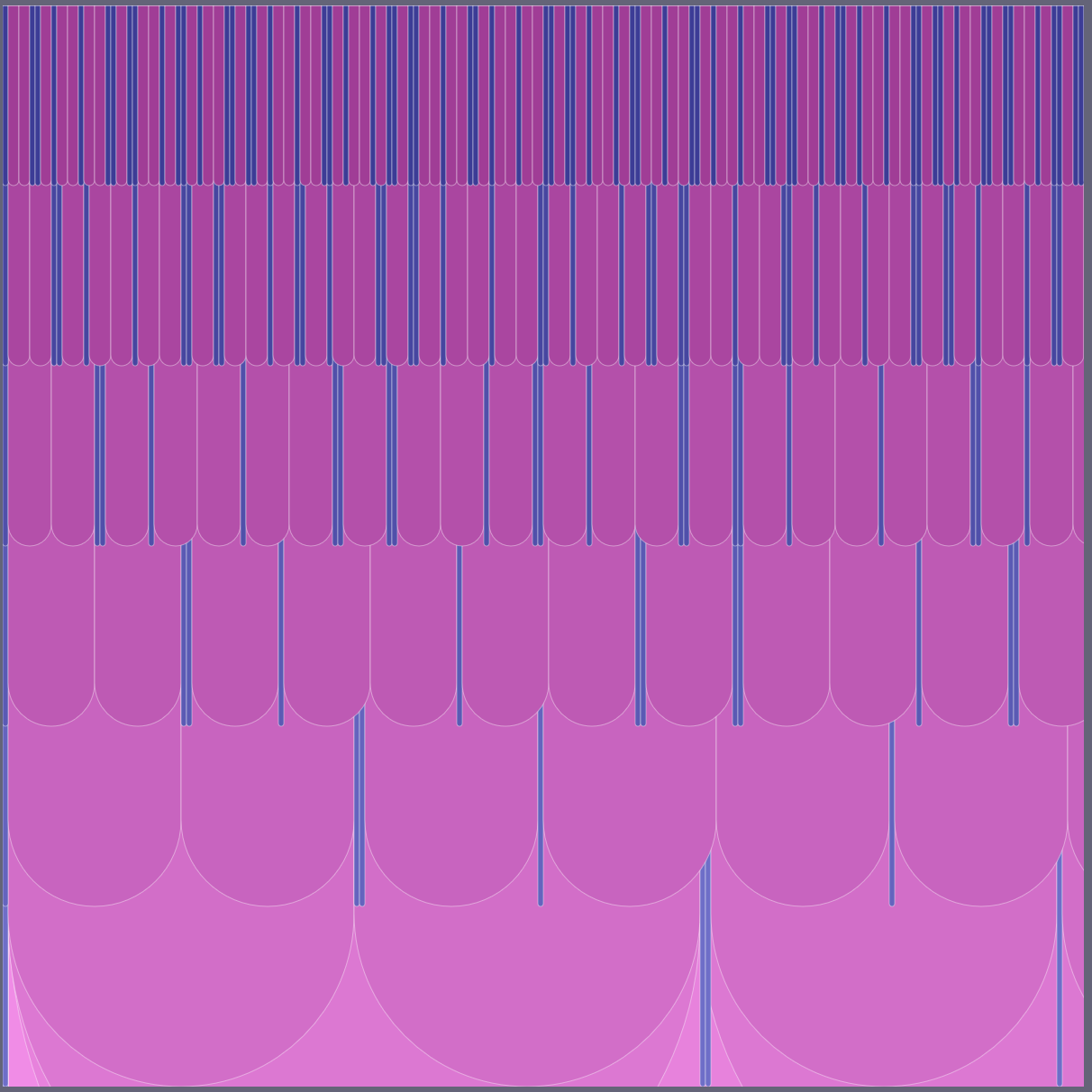
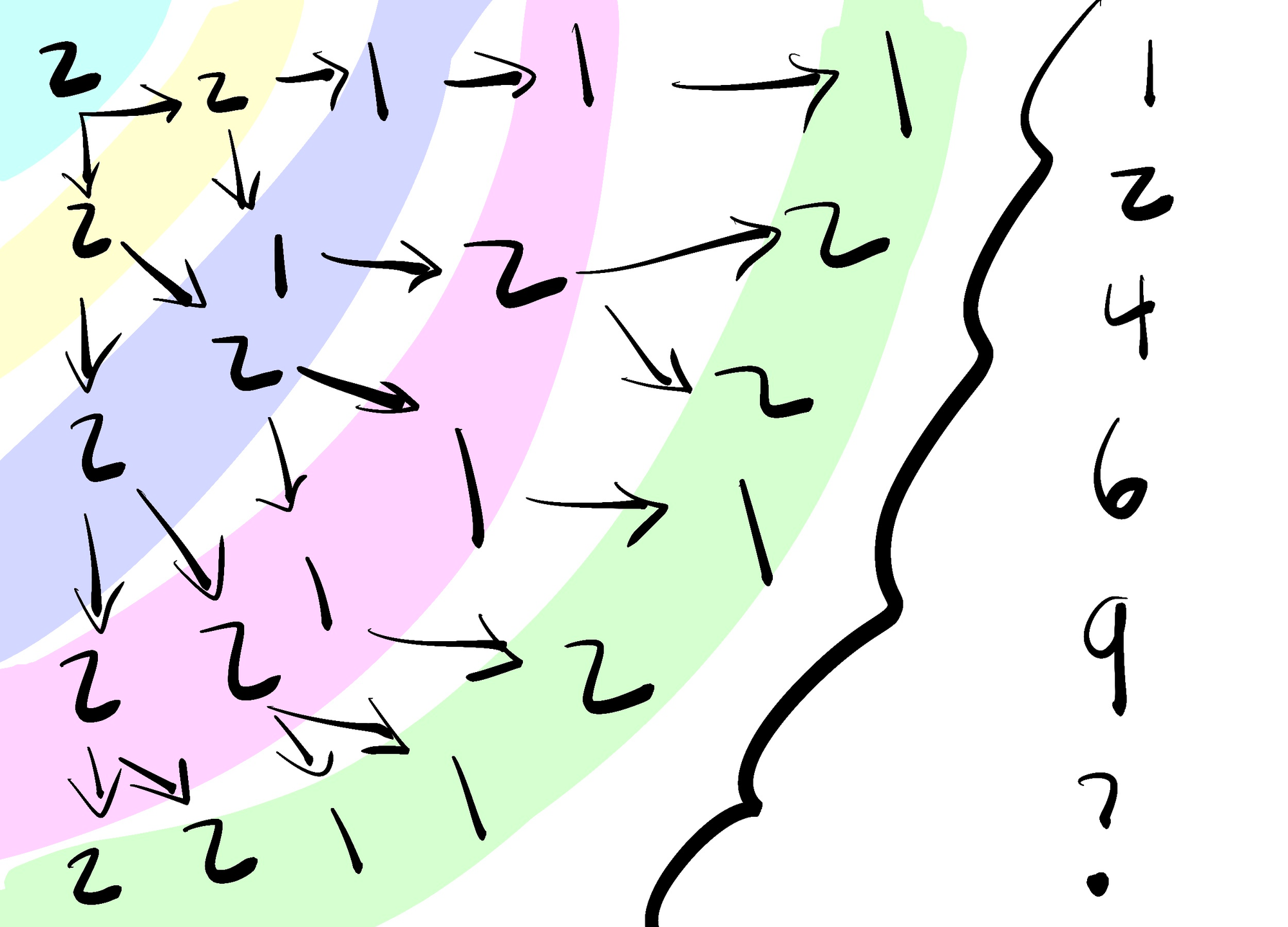
- Can you draw this as a tree? A spiral? A cake with layers?
- Can you construct a sequence like this? What rules would you give it?
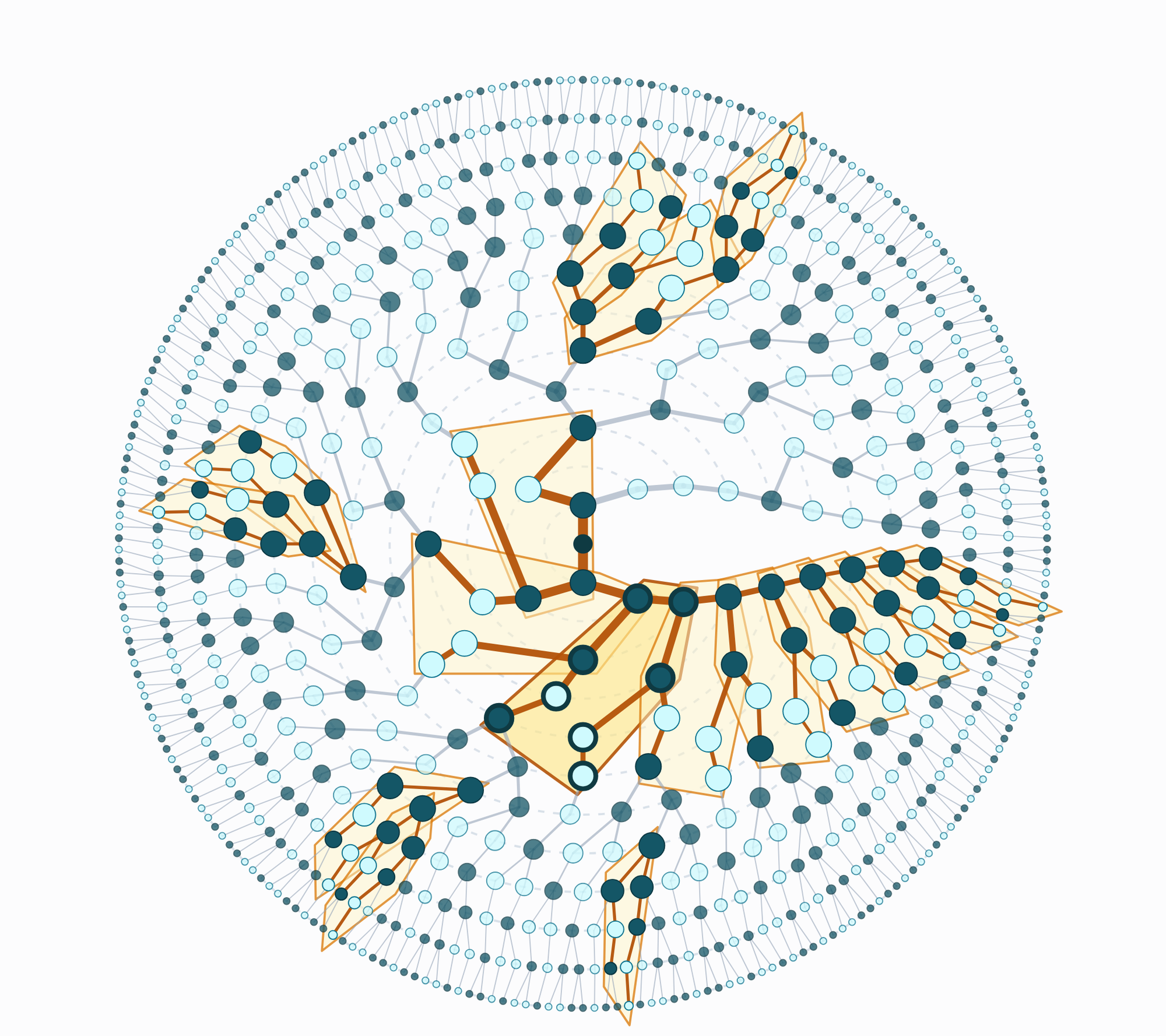
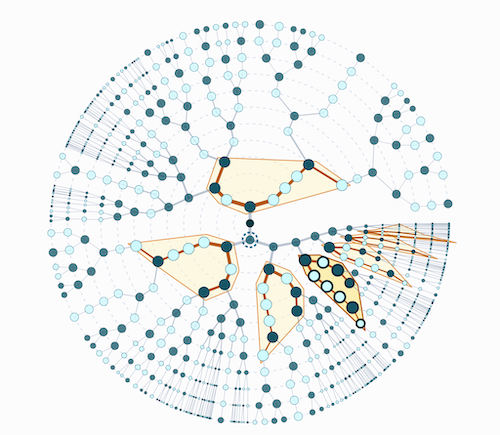
After playing, you might want to investigate this sequence as a tree here:
Inquiries
Interactive math exploration tools
 Inquiries
Activity Structure
This is a 30-60 minute activity exploring a self-descriptive sequence.
Exploration (10–15 minutes)
Option 1
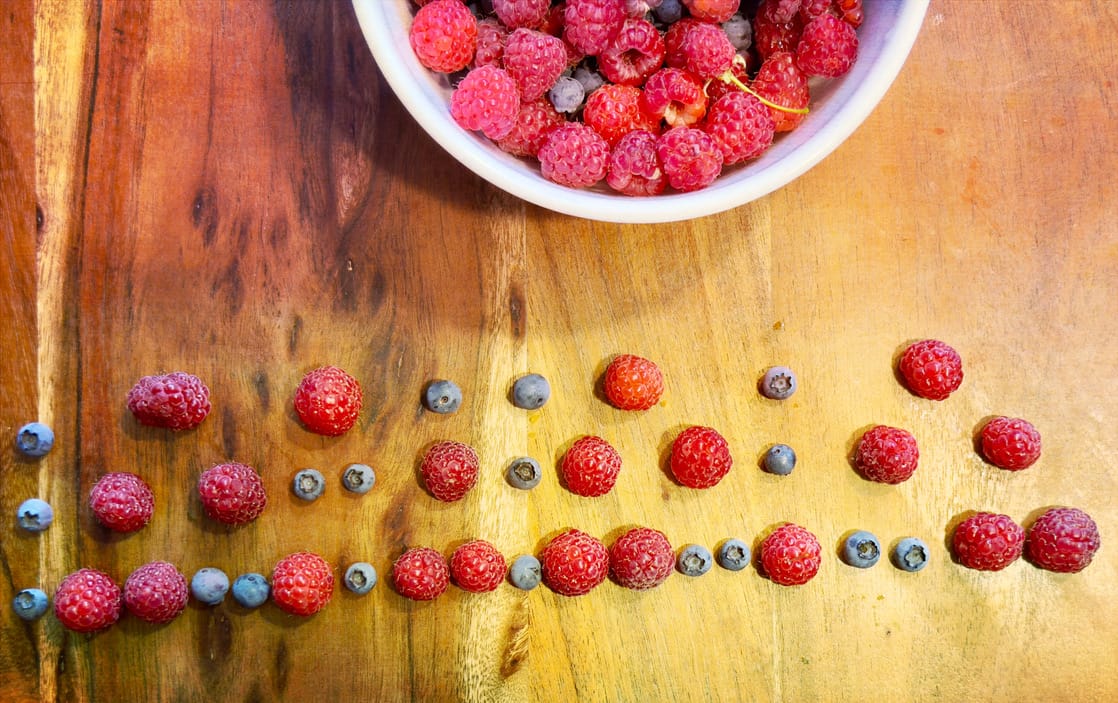
Build the sequence as described previously by starting with a 2 and letting it unfold. Work together to find what comes next.
- How can you keep track of what comes next?
- Is there an algorithm we can use?
- Does it repeat?
You can do this with numbers, toys, or symbolic representation. It can be inline, or in other forms that learners come up with.
Option 2
Start with the sequence:
2 2 1 1 2 1 2 2 1 2 2 1 1 2 ... ?
- How is this sequence built?
- What comes next?
Check your conjectures to see if they are right:
2, 2, 1, 1, 2, 1, 2, 2, 1, 2, 2, 1, 1, 2, 1, 1, 2, 2, 1, 2, 1, 1, 2, 1, 2, 2, 1, 1, 2, 1, 1,
- Is there an algorithm we can use?
- Does it repeat?
- What happens if you put a 1 on the front of it?
Diagramming and Conjectures (15–20 minutes)
Continue to conjecture, share, and test.
What are some different ways to show this sequence? (You can use a toy here to see an example, but only if it doesn't interfere with discovery.)
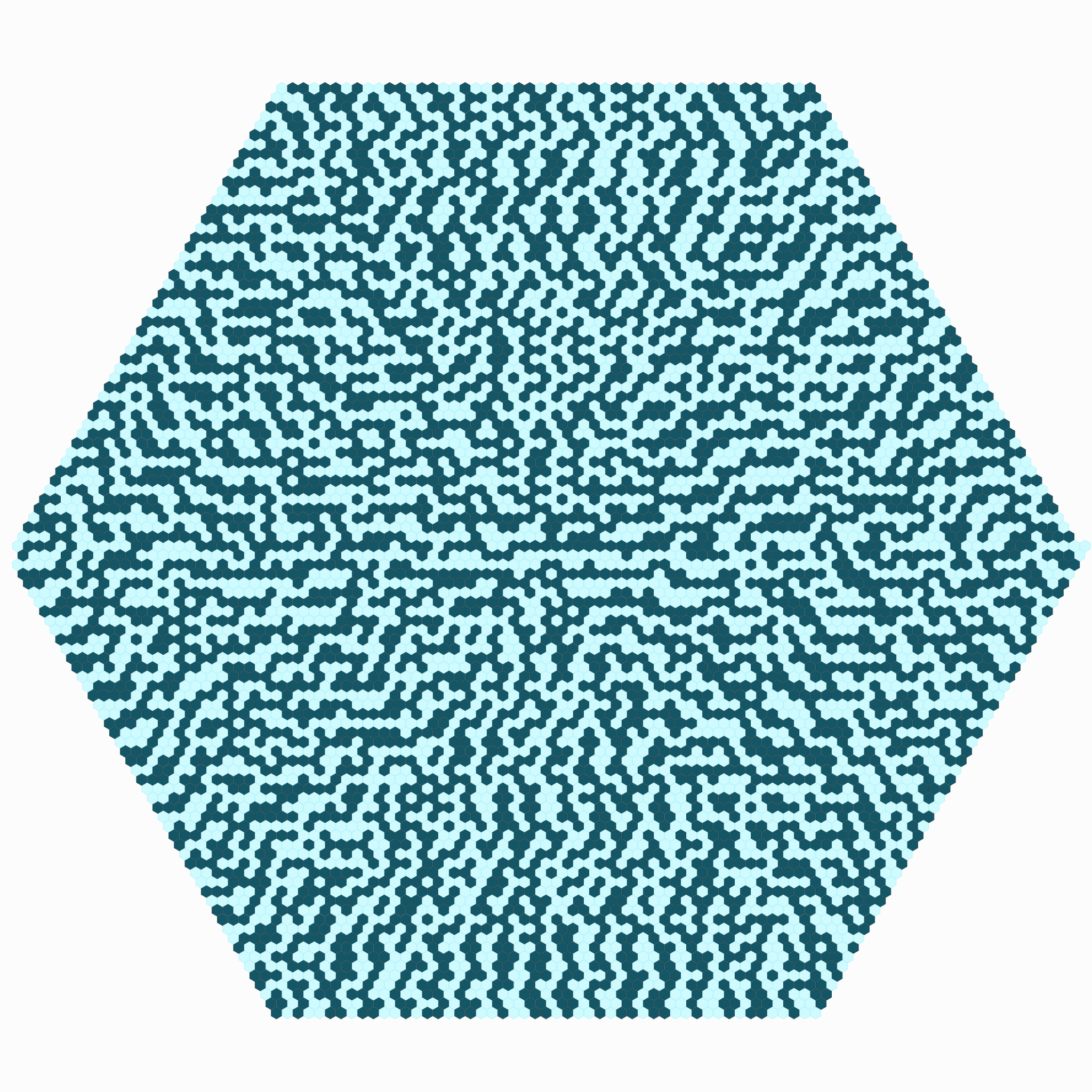
- Hexagons?
- Trees?
- Spirals?
- Can you define a vocabulary of hierarchy and/or connectivity? (parent/child, up/down, levels, etc.)
Play with finding different ways and see if anything interesting is revealed.
Does anything repeat? If so – how?
Example Conjectures:
Example: "As the sequence goes on and on, the number of 1's will be about 50%."
Example: "There are patterns of connected numbers that spiral"
Example: "This sequence doesn't ever repeat."
Example: "This sequence repeats eventually."
Example: "This sequence is a fractal."
Optional Tree Toy + Discussion (10–15 minutes)
Play with the tree toy here. Look for interesting patterns.
- Share thoughts.
- Share conjectures.
- What does it mean to be self-descriptive?
- If you start with a 3 and always go in the order of 3,2,1 - can you make a self-descriptive sequence?
Can you play the sequence with a drum beat? Does it sound like it repeats?
Going Deeper (optional)
Whether there are 50% 1's and 2's remains open at the time of this post. OEIS has references to dig in more.
Some other questions:
- Is there a formula for the nth term? Is it a closed-form?
- For any sequence within, does it repeat?
- Is there a way to predict the frequency of any repeating patterns?
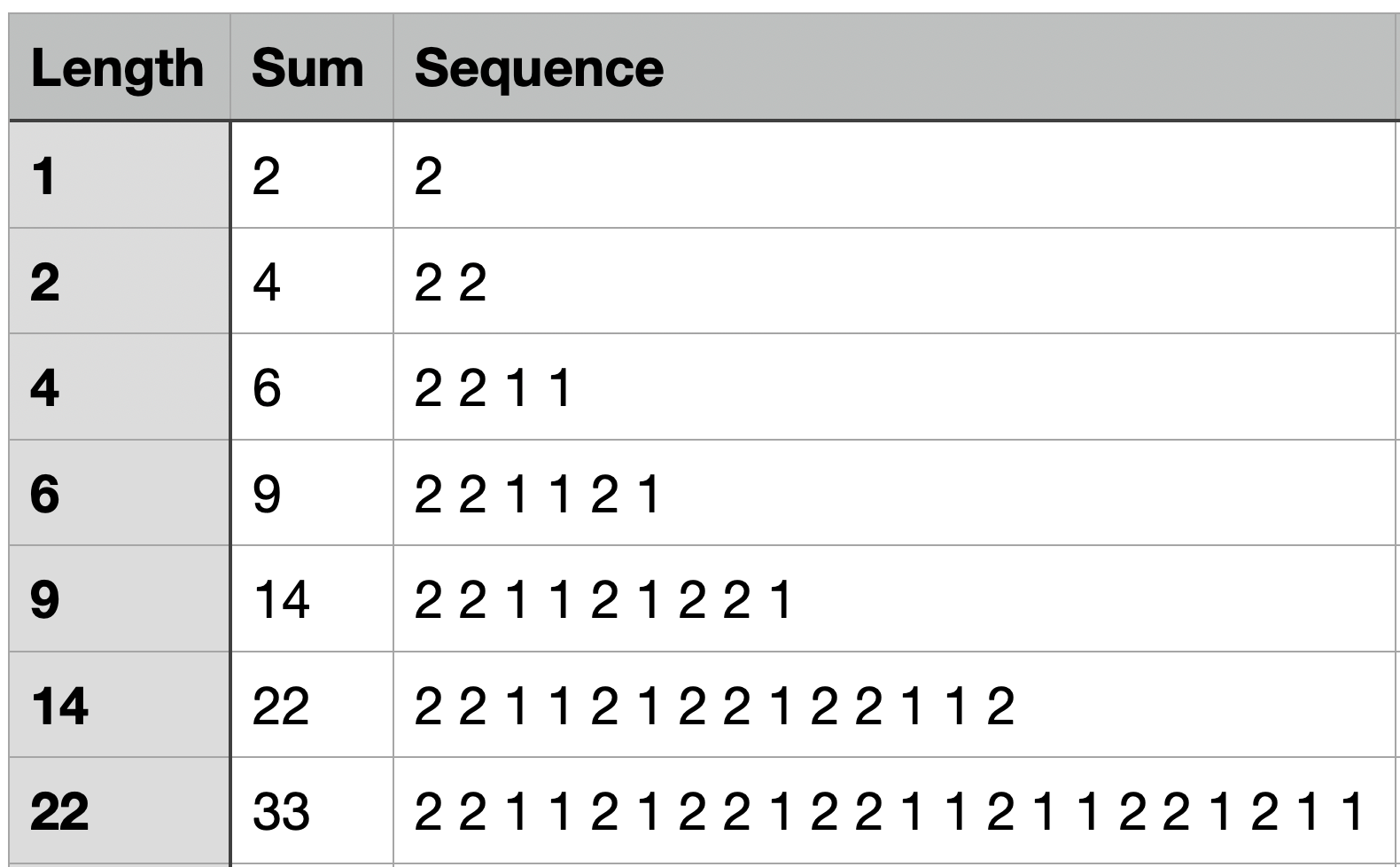
- Investigate lengths of each iteration in the sequence (See OEIS 042942) (in Desmos): 1, 2, 4, 6, 9, 14, 22, 33, 49, 74, 112, 169, 254, 381, 573, 862,...
Tools and Supplies
- Paper and pencil or whiteboard.
- Manipulatives or other toys to build a physical representation.
- Tree toy (optional).
Vocabulary
- Term – a single number in the sequence.
- Run/run-length – a block of equal neighbors, and how long it is.
- Run-length encoding (RLE) – describing a sequence by its run-lengths.
- Self-describing – it carries the instructions that build it.
- Prefix – the first n terms.
- Parent/child – number and the numbers it produces.
- Density – the long-run fraction of a symbol.
- Conjecture – A statement believed to be true but not yet proven.
- Fractal – echoing itself across scales.
Extensions, What-Ifs, and Resources
- Integer sequence on OEIS (Kolakoski).
- What if you start with {1 3} with only 1's and 3's – is there different behavior (see OEIS)?
- Related sequences.
- Numberphile video.
- Start with a 1 instead of a 2 – what changes?
- Make music – drum the 1s and 2s. Do you hear a repeat?
- Invent your own self-describing rule. What's the smallest one that works?
- Program this sequence, make it art. Here is mine.
I was introduced to this sequence during a pairing session at the Recurse Center, and then proceeded to go down the rabbit hole for a week. I am grateful to have partners in learning.
Behind the scenes – I tried hexagon spirals, paint pouring, and other visuals: