Introduction
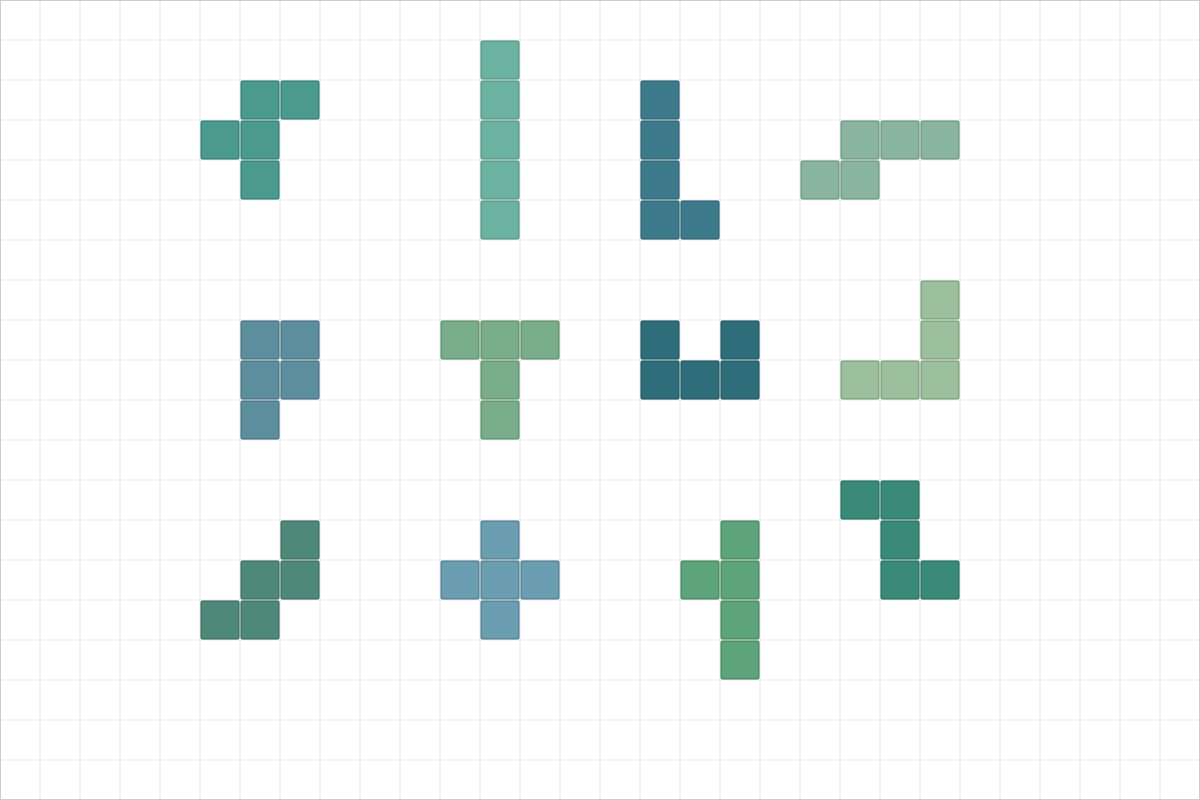
Pentominoes are shapes made from 5 squares joined edge-to-edge. There are 12 of them:
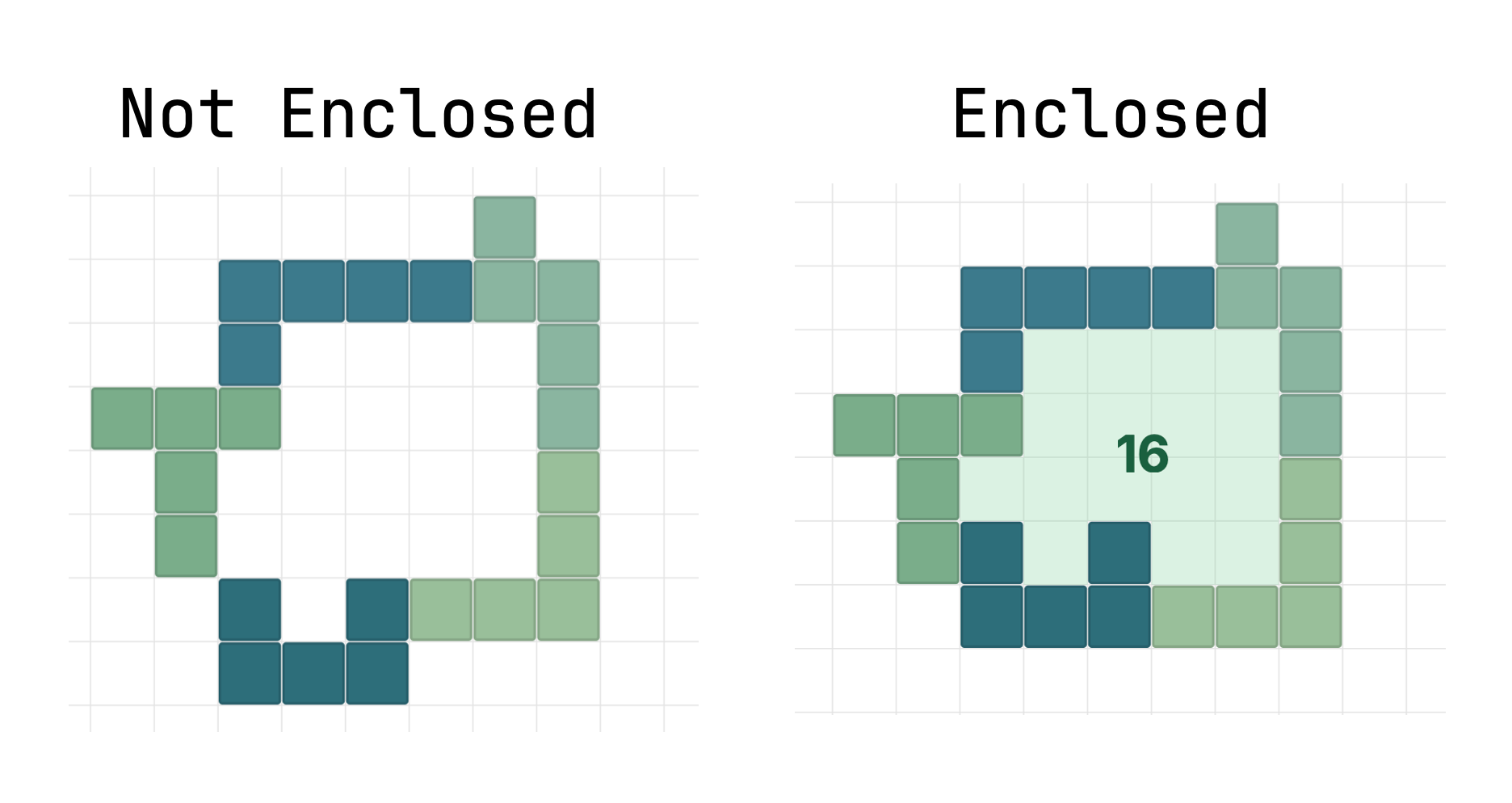
Next, let's define what an enclosed area is with these shapes. The pentominoes must create a fence where they touch edge-to-edge with no overlaps. Note that corners touching is not closed because it is not edge to edge:
Activity
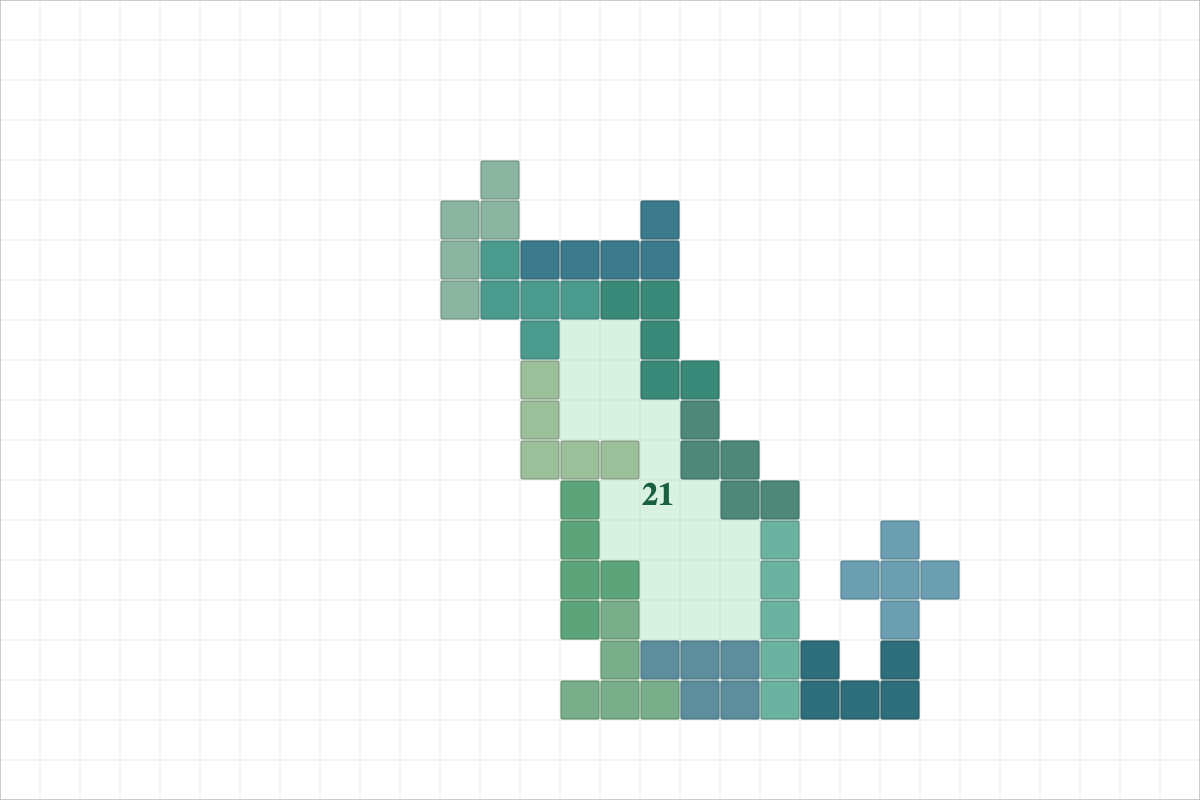
Build a fence with all 12 pentominoes, edge-to-edge, no overlaps. If you have manipulatives, Polypad or toys that can make them you can use those, or use the tool below (full page version).
Now that you've made an area here are some challenges:
- Maximize the amount of area
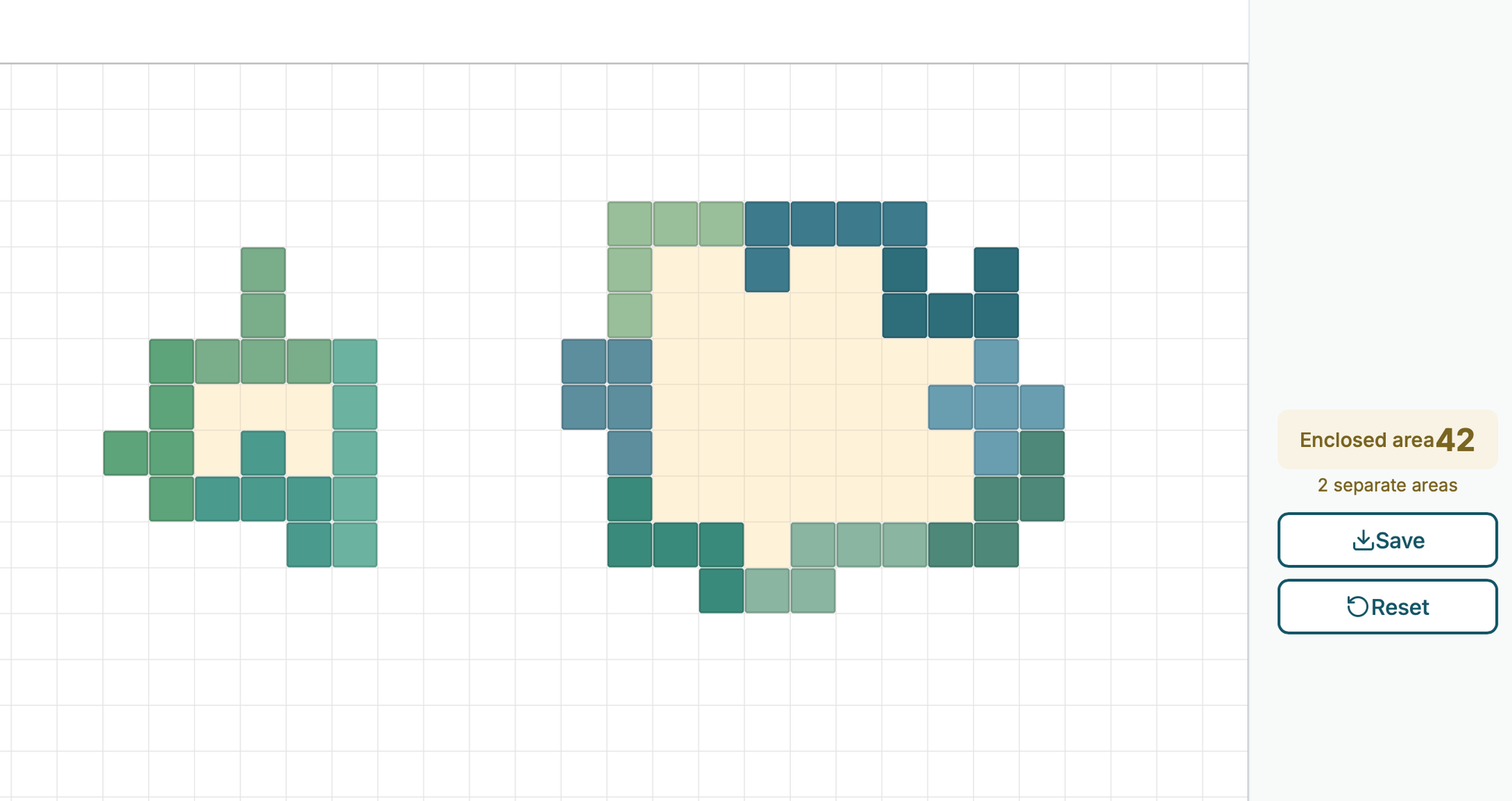
- Maximize the number of separate areas you can get
- Make the area inside a rectangle
- Make the shape on the outside a rectangle
- Make the shape on the inside and outside a rectangle
A quick note: These challenges have a rich history. Pentomino fences have been explored in Martin Gardner's 1960s columns, and by Solomon Golomb, Sivy Farhi, Michael Keller, Rodolfo Kurchan, and many others. Any variation I add has almost certainly been thought about before.
Activity Structure
This is a 30–60 minute activity. If you haven't derived the pentominoes prior to this you might want to ask how many shapes are possible first to find the 12 shapes. Here is a toy to explore.
Make an initial garden (5-10 minutes)
This can be done with manipulatives, Polypad, or with the tool earlier in the post. The advantage of using something manual is getting to think about how the area is measured first.
Iterate on the gardens - maxing (10-15 minutes)
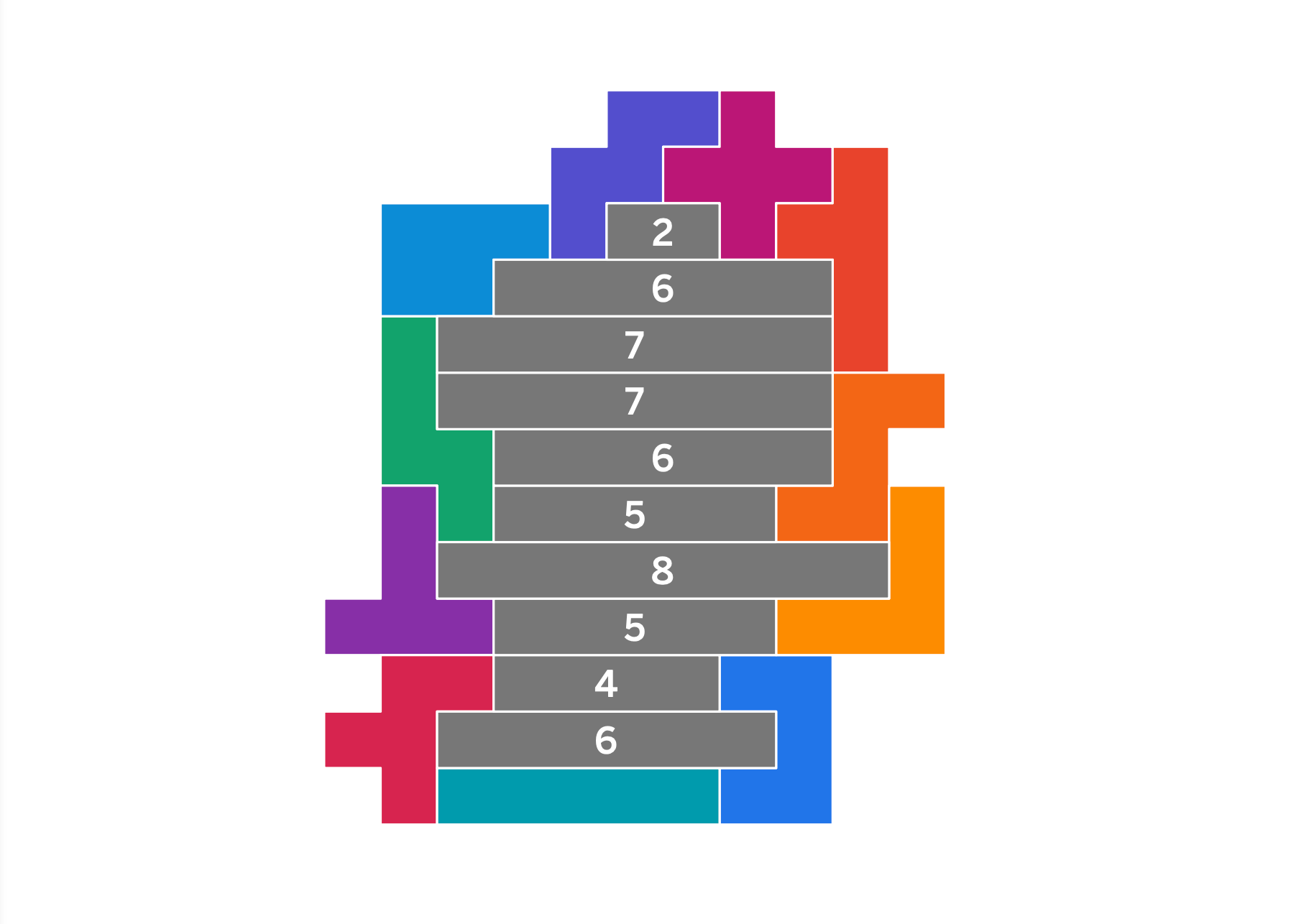
Take the first garden and then tweak it with different ideas to see if more area can be created. This is where having a tool to count for you might help with having immediate feedback on small changes.
- Flip one piece
- Swap a few pieces
- Swap some corners
More to play with (5 min - the rest of your life)
What other ways could you optimize this fence? What other challenges are there?
- Max the number of enclosed regions
- Make the area inside a rectangle
- Make the shape on the outside a rectangle
- Make the shape on the inside and outside a rectangle
- Maximum number of enclosed 1x1 regions
- Maximum of two regions that are completely separate
- Make a game of it
Discussion Questions
- If all 60 squares came unglued, what's the largest garden you could build?
- Which pentomino is the best fencer? Which is the worst?
- When two pentominoes touch along an edge, how much fence is lost?
- Does a rounder garden beat a longer one?
- Did you plan the shape first, or place pieces and see what happened?
- What strategy would you share with a friend for building a fence?
- What's the best garden you can grow without the X?
- Can you grow two separate gardens of the same size? Three? Four?
- What are interesting questions you can pose?
Resources, Extensions, and What Ifs
- CIMT - Enclosure Problem
- Hexomino problems
- Katamino board game
- 3d print pentominoes, make them from Artec or other toys, print them
- There are thousands of extensions with pentominoes
- Knotted Doughnuts and Other Mathematical Entertainments by Martin Gardner
Vocabulary
- Pentomino — A shape made from 5 unit squares joined edge-to-edge. There are 12 of them.
- Polyomino — The general family: 1 square (monomino), 2 (domino), 3 (tromino), 4 (tetromino), 5 (pentomino), and so on.
- Unit square — A single square of side 1.
- Edge-to-edge — Two pieces touching along a full shared edge, not just at a corner.
- Fence — All 12 pentominoes arranged together to surround a region.
- Garden / interior — The empty squares fully enclosed by the fence.
- Enclosed — Trapped inside the fence with no path of empty squares leading to the outside.
- Leak — A gap where empty squares from the interior connect to the outside.
- Area — The number of unit squares in a region.
- Perimeter — The total length of the boundary of a shape.
- Isoperimetric — About the relationship between perimeter and area. For a fixed perimeter, rounder shapes enclose more area.
- Connected — All pieces touch (directly or through other pieces) so the fence is one whole.
- Conjecture — A mathematical statement believed to be true but not yet proven.
- Upper bound — A provable ceiling on how big something can be.