Intro
The DRAM and NAND flash manufacturers at fault for the ongoing RAM, SSD, and GPU price increases have finally figured out how to suppress the market’s previously cyclical pricing nature, and it’s by committing to larger, longer long-term agreements with fewer customers. This article deep dives into what these companies are saying out loud -- like Amazon’s interest in pushing more customers into cloud services from on-premises -- and also SSD and RAM pricing.
Editor's note: This was originally published on September 21, 2026 as a video. This content has been adapted to written format for this article and is unchanged from the original publication.
Credits
Host, Writing
Steve Burke
Video Editing
Vitalii Makhnovets
Writing
Tannen Williams
Writing, Web Editing
Jimmy Thang
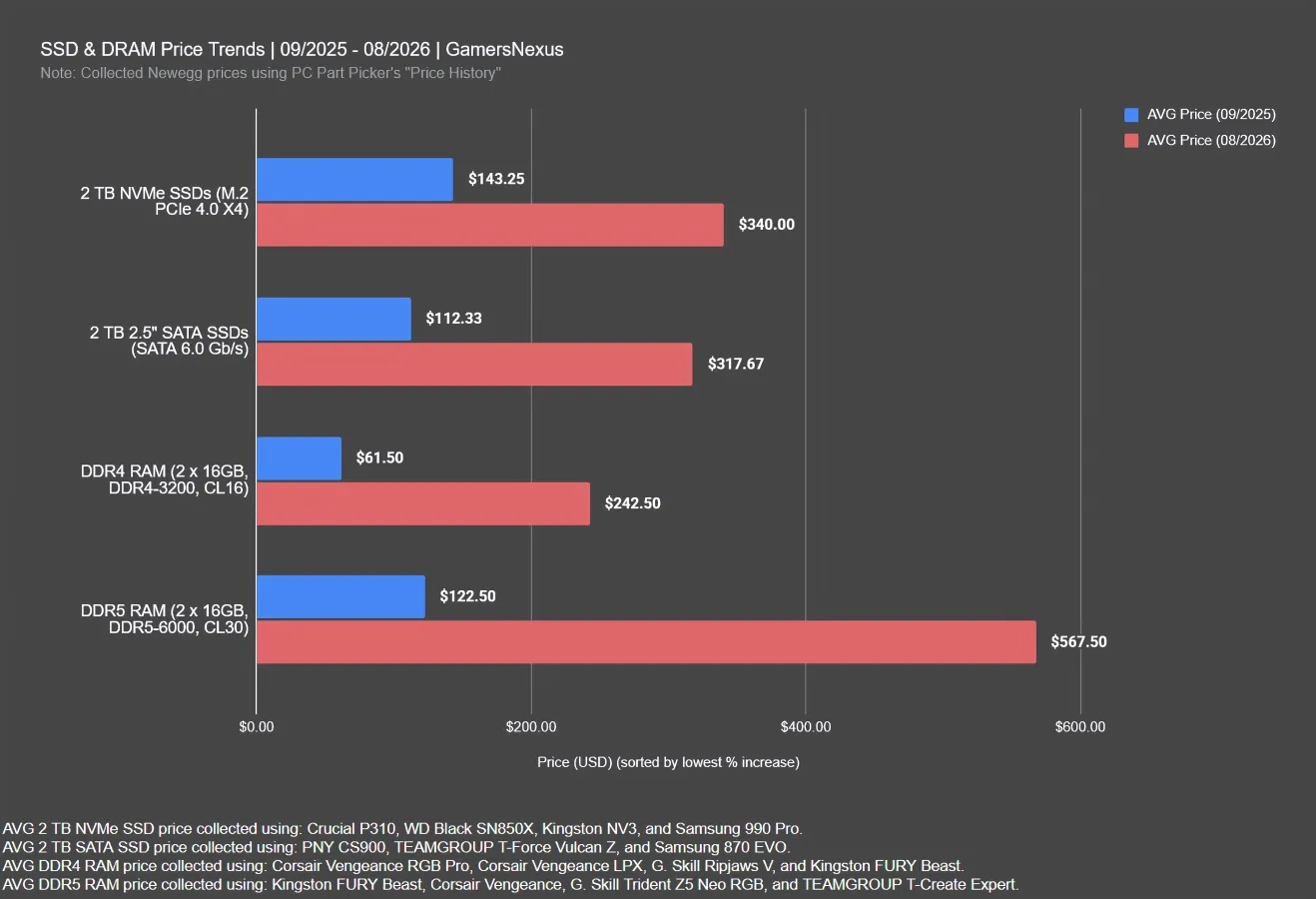
Since last September, the average price of SSDs and RAM have continued to climb: prices have increased by 137% for 2 TB NVMe SSDs on average, 183% for 2 TB SATA SSDs, 363% for 32GB DDR5 kits, and 294% for 32GB DDR4 kits, with AVG prices collected from the samples of product listings specified below the chart.
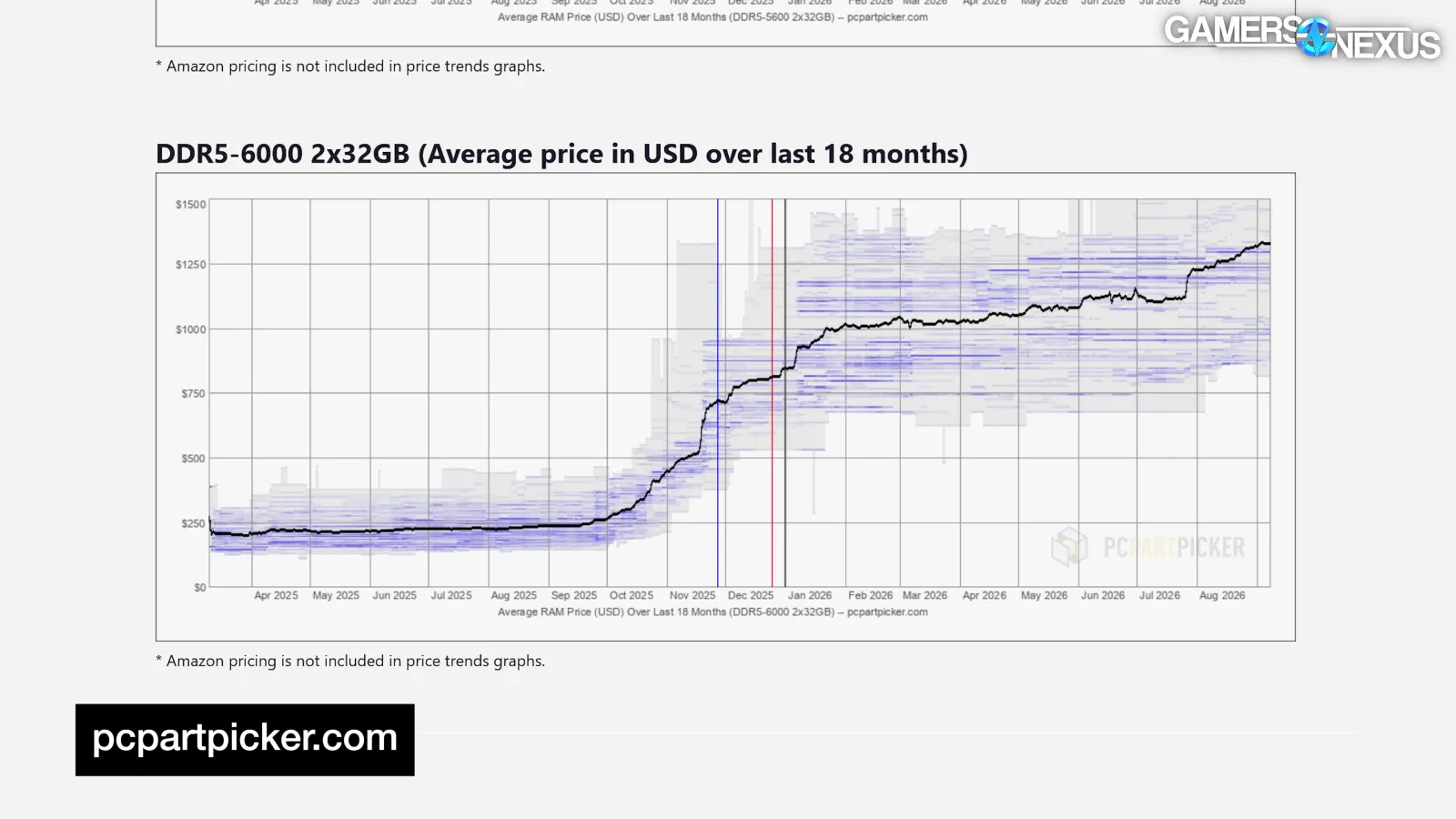
In some situations, it’s worse: DDR5-6000 64GB kits have climbed from $240 to $1,300-$1,400 on average, an increase of around 483%.
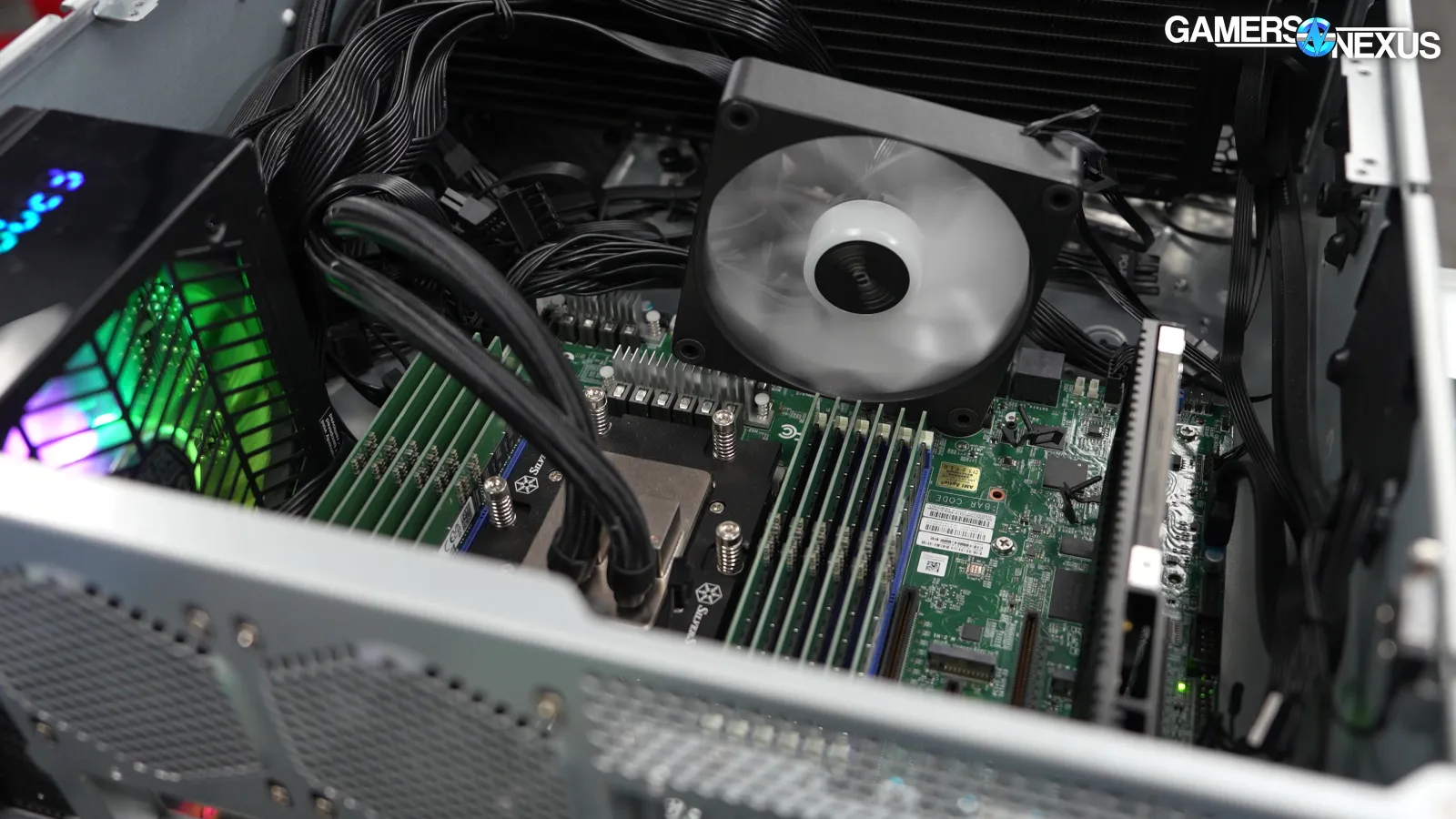
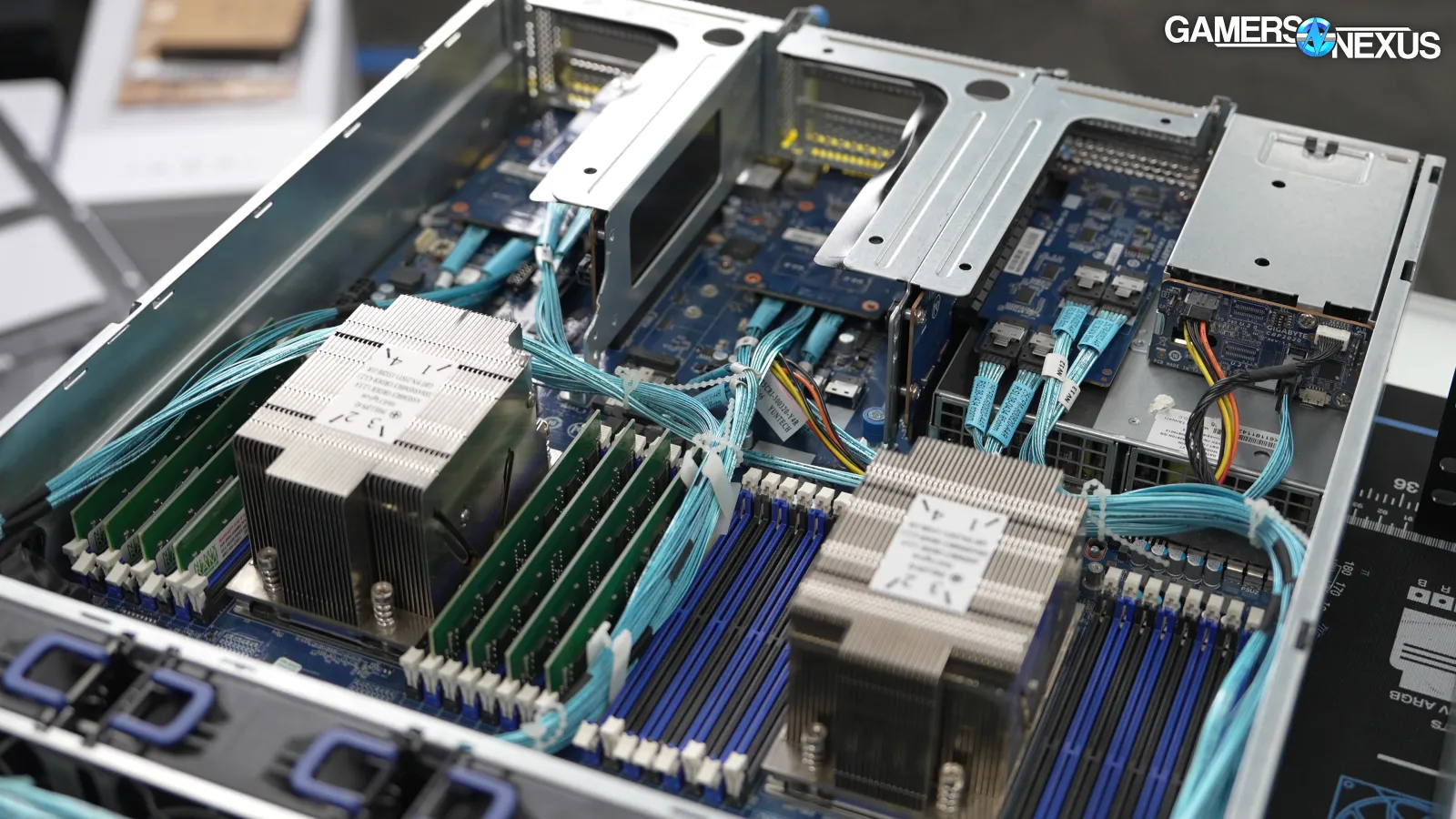
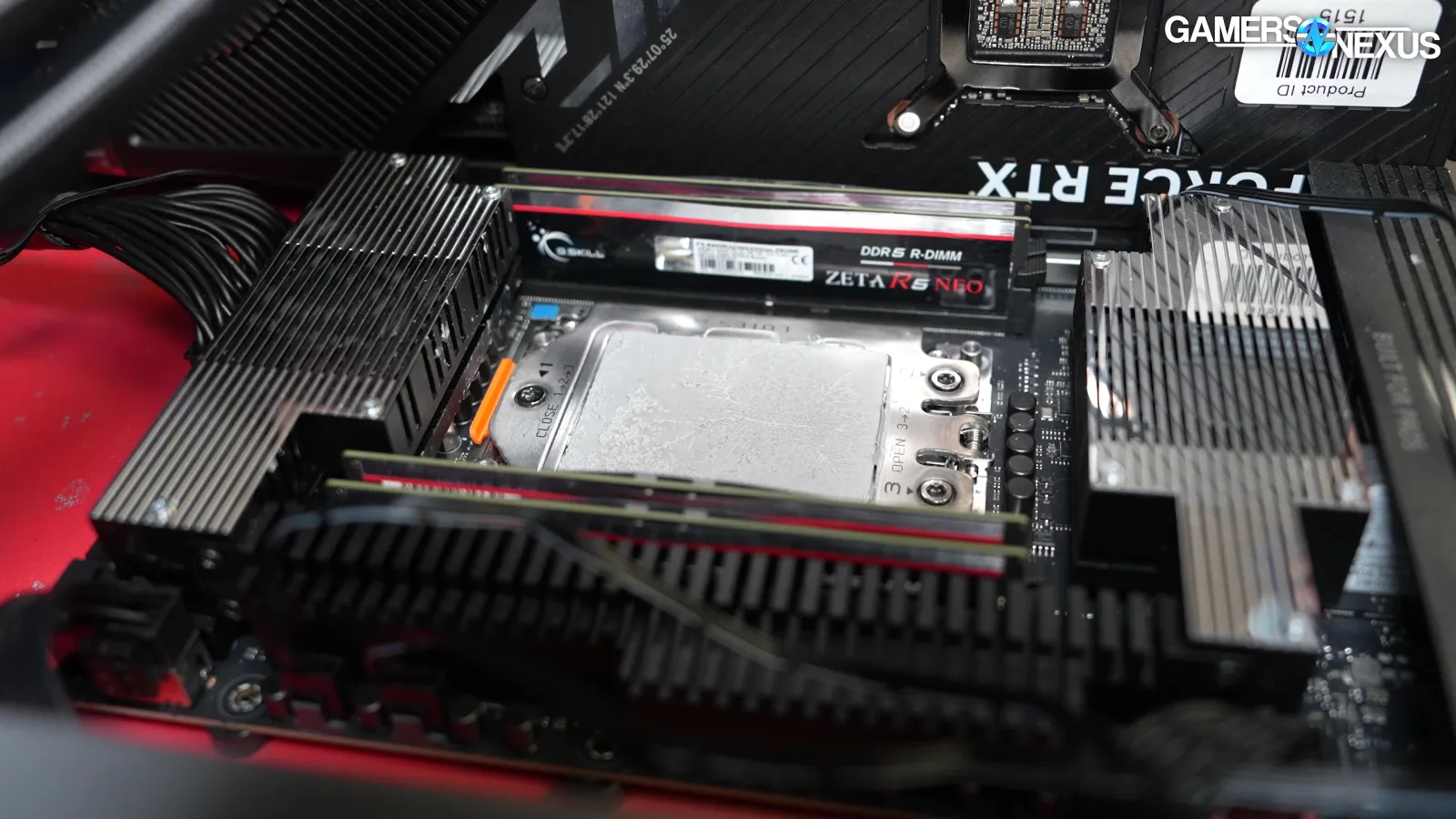
If you had dreams of a home server or a high-end engineering design or editing machine with 128GB of memory, that’s gone up even more.
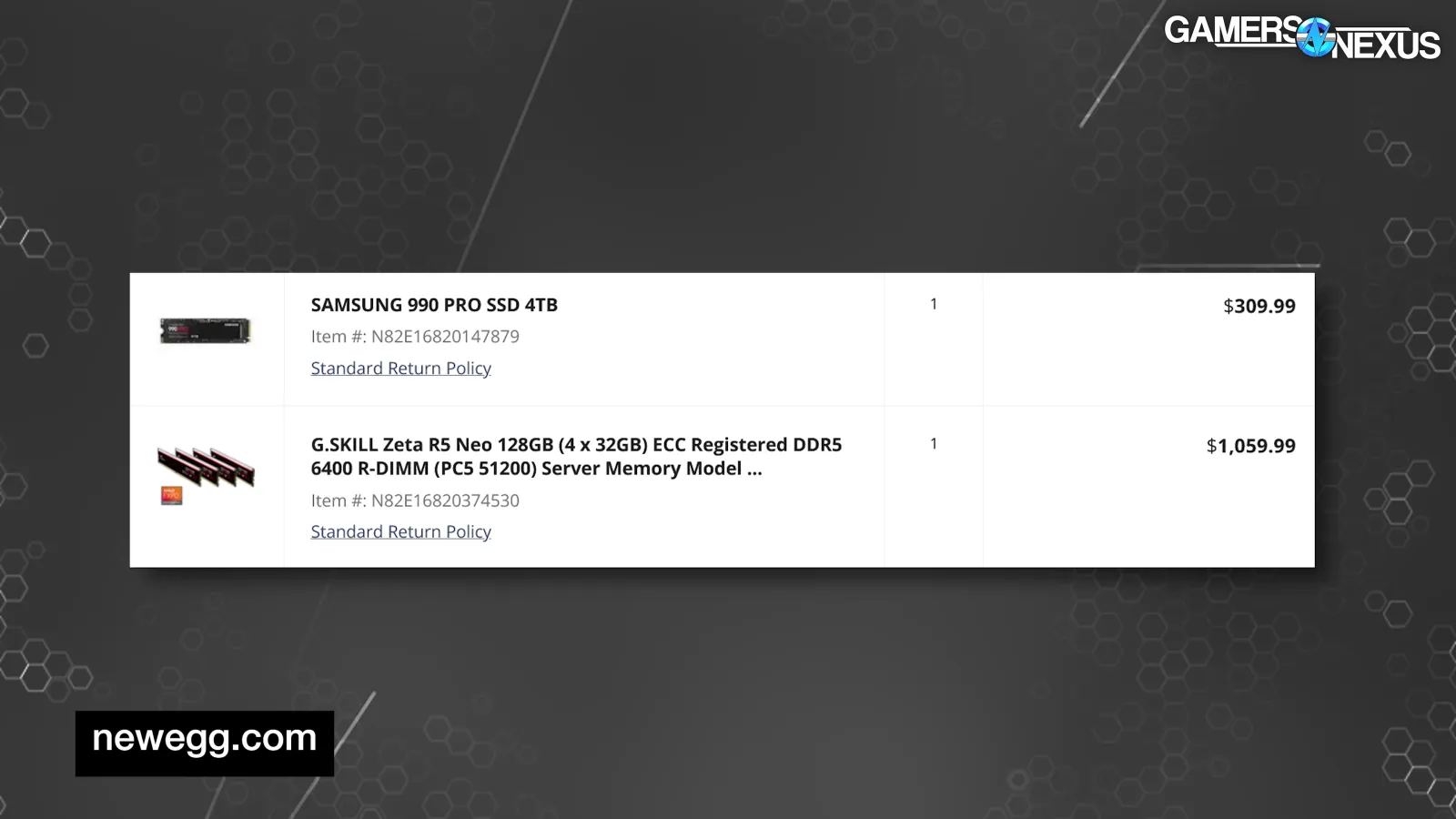
We bought 128 GB of DDR5-6400 GSkill ECC Registered memory in 2024 for $1,060 to use in an editing machine.
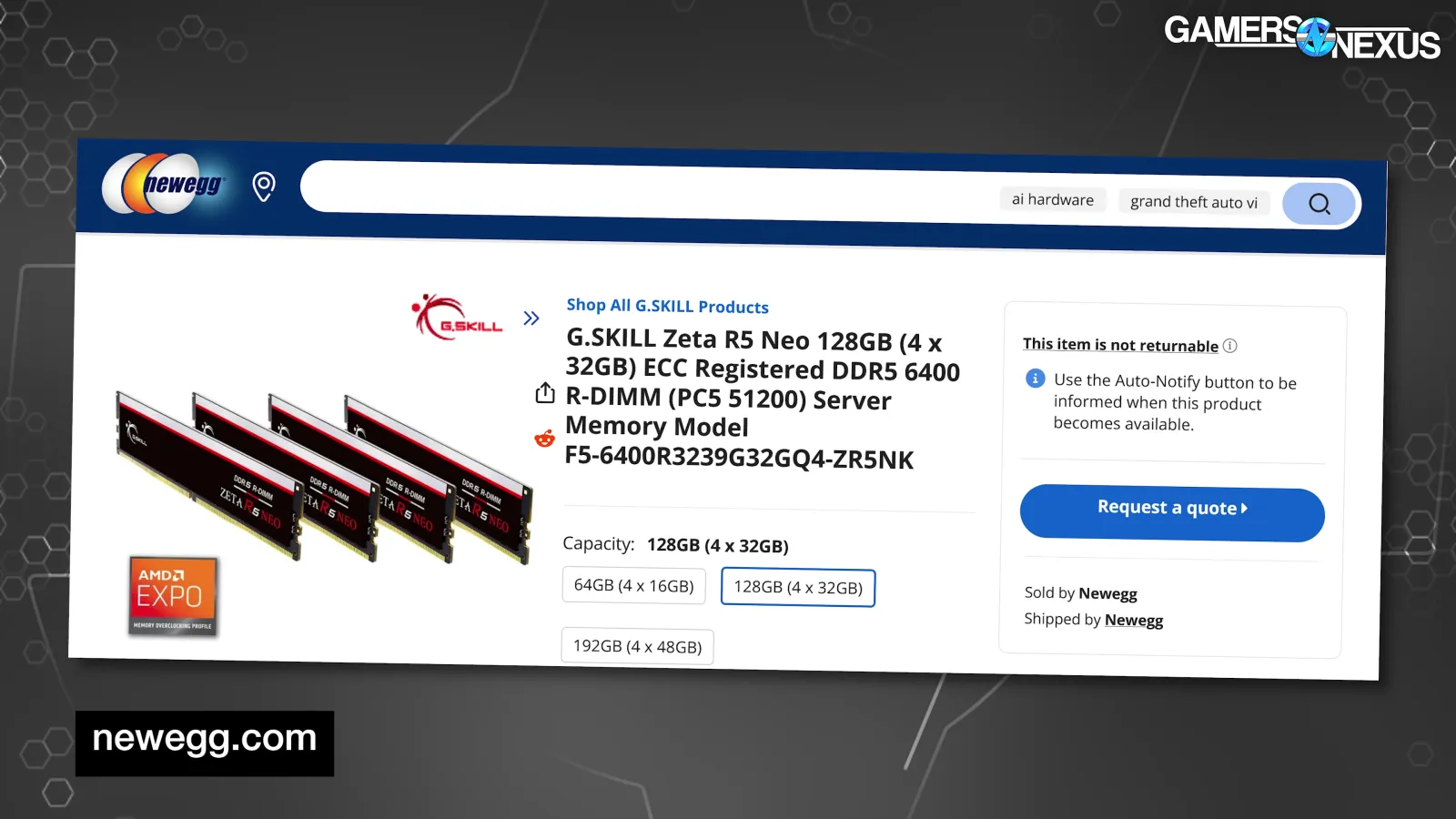
Today, that RAM isn’t even available.
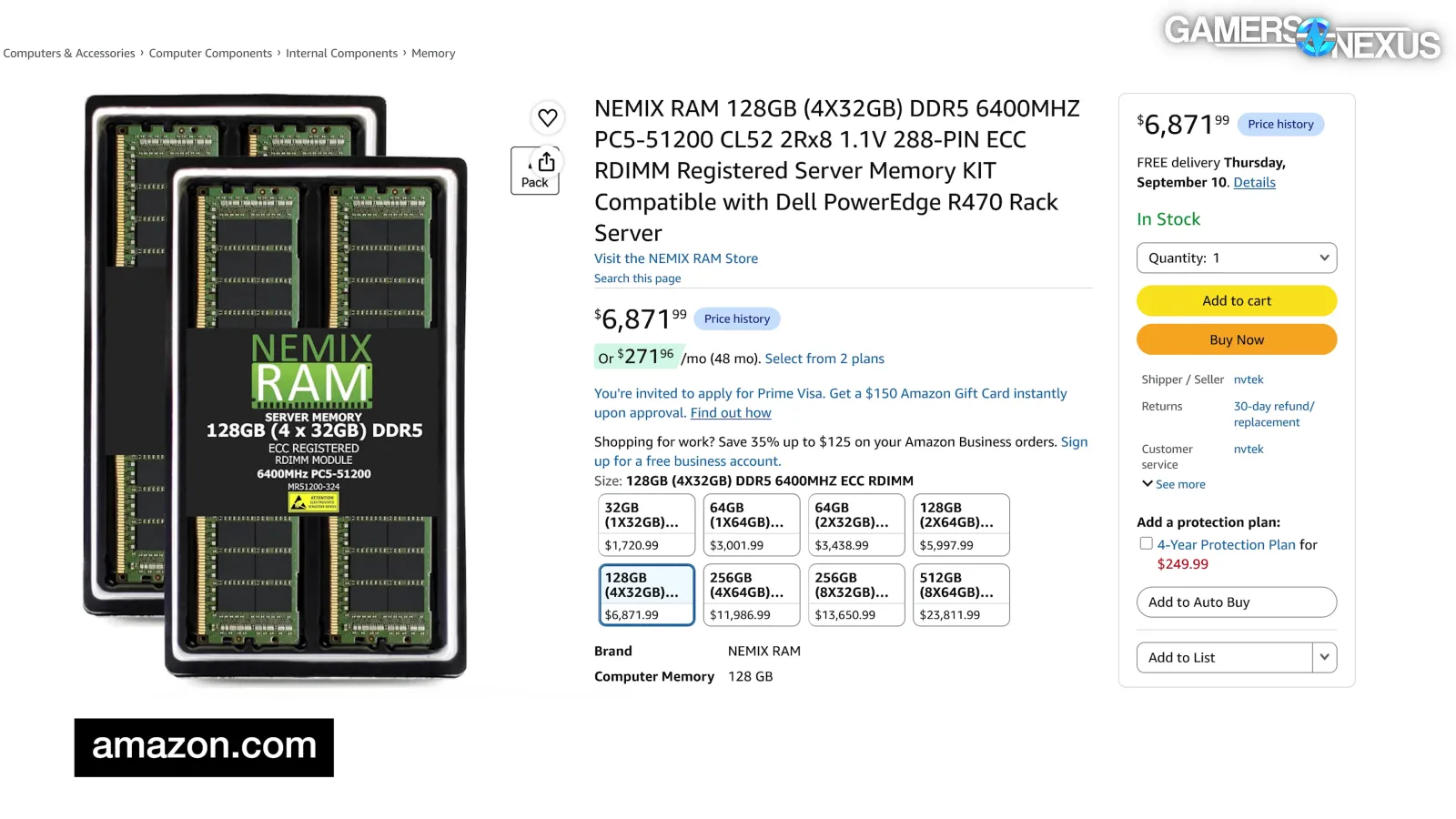
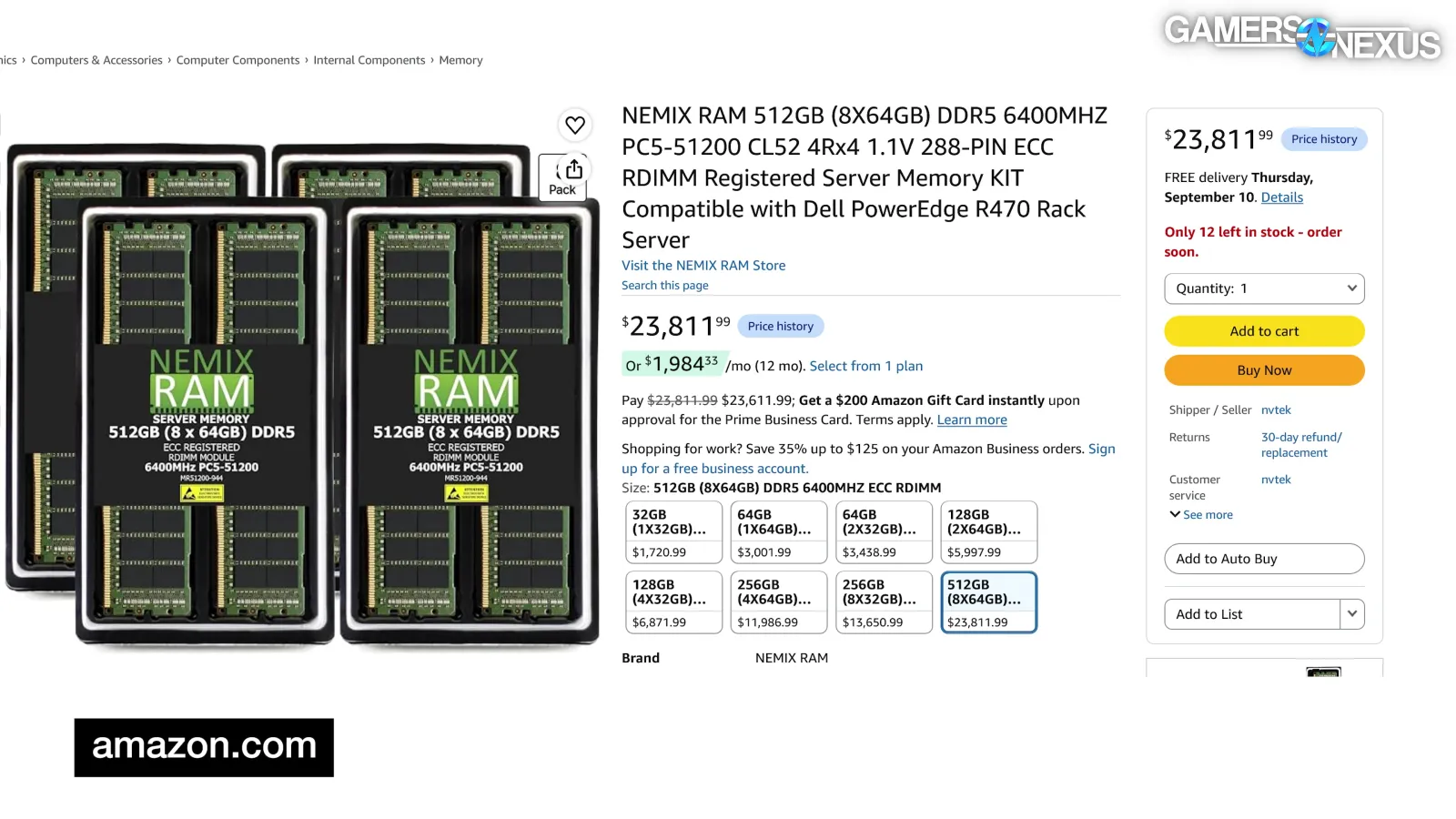
If you bought similar RAM, you could get scalped by a third-party seller for some NEMIX 128GB of a similar spec for $6,800, or maybe you’d prefer 512GB -- something that used to cost $4,200 -- for $23,811.
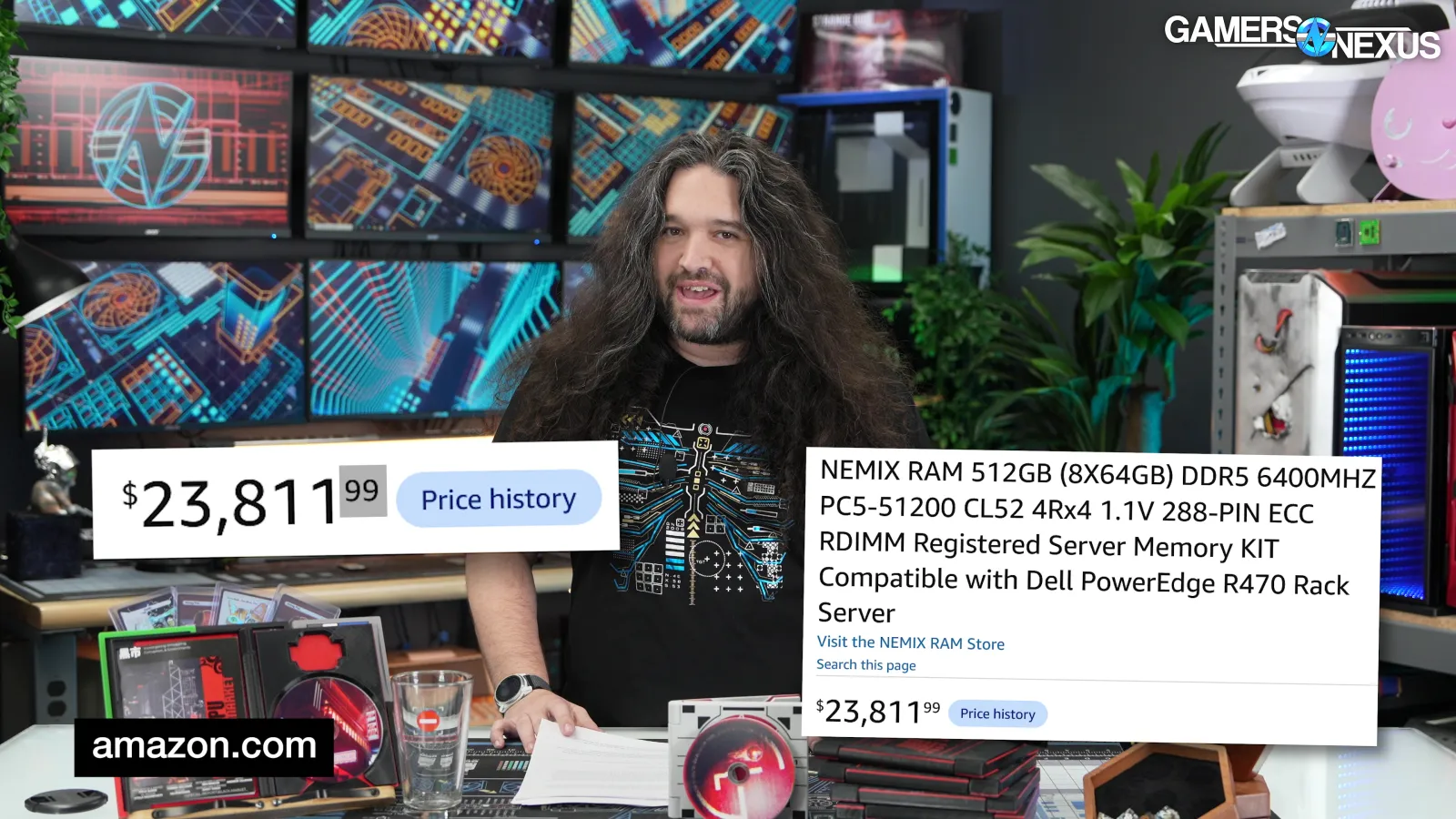
And 99 cents, because fuck you.
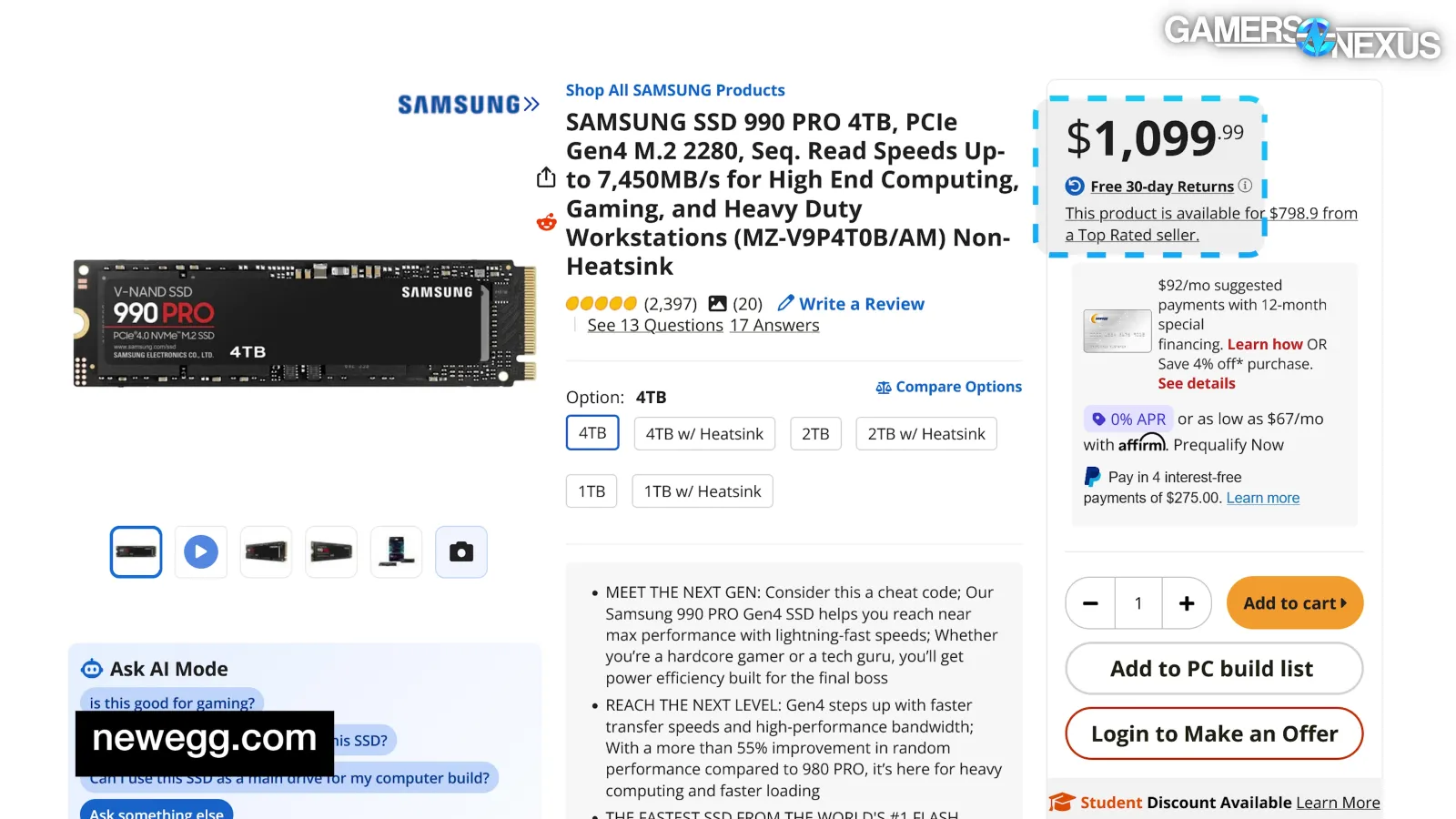
In 2024, we also bought a 4 TB Samsung 990 Pro for $390. Today, that same drive is $1,100, or a 254% increase.
This is the K-shaped economy. From a single stick of 16 GB to a few sticks totaling 128 GB, everyone is getting ripped-off. People who want to play games for a hobby are robbed and people who want to start a business that needs a high-end computer might find it cheaper to rent a system or use cloud computing, which sort of seems like the endgame.
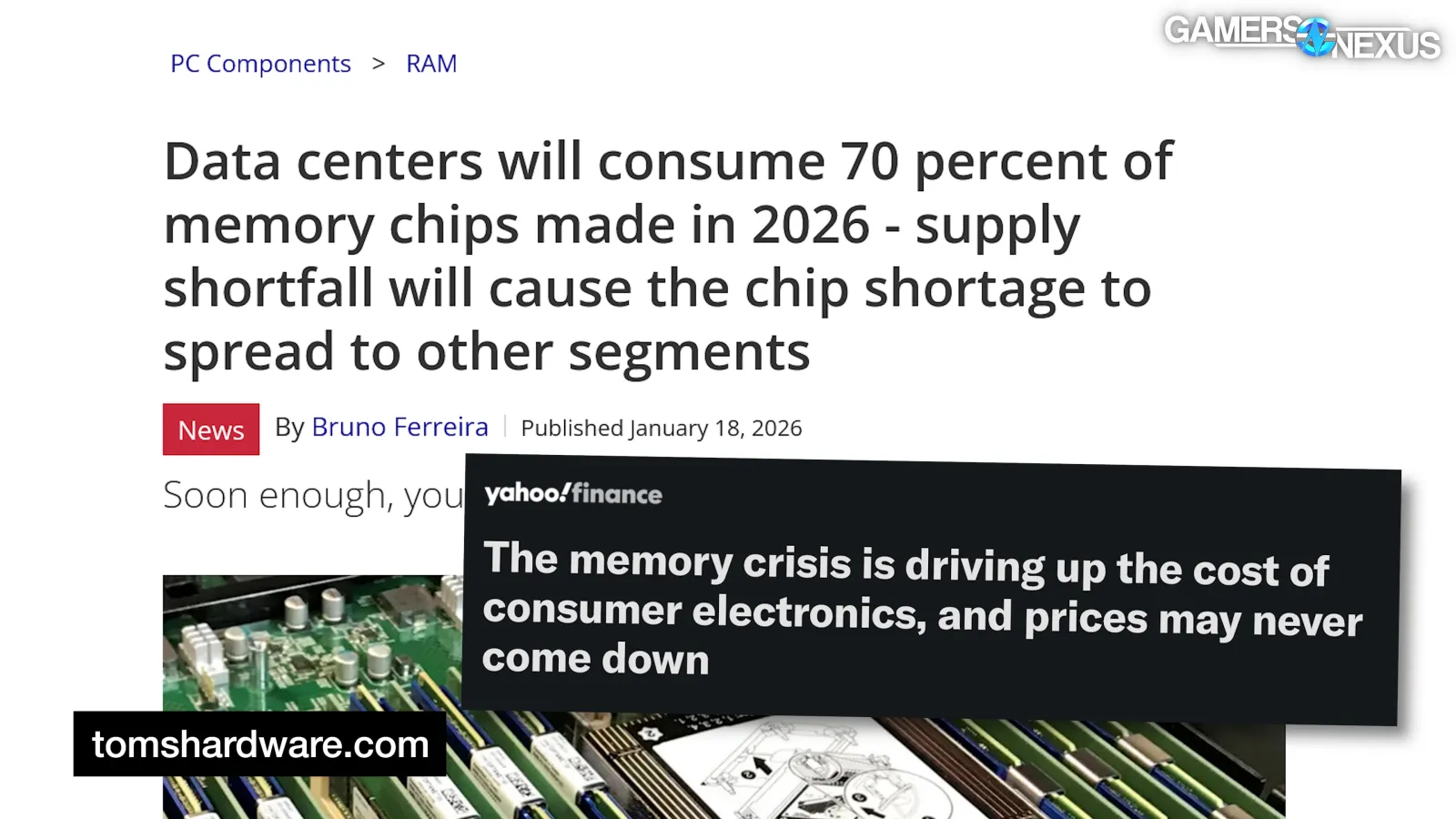
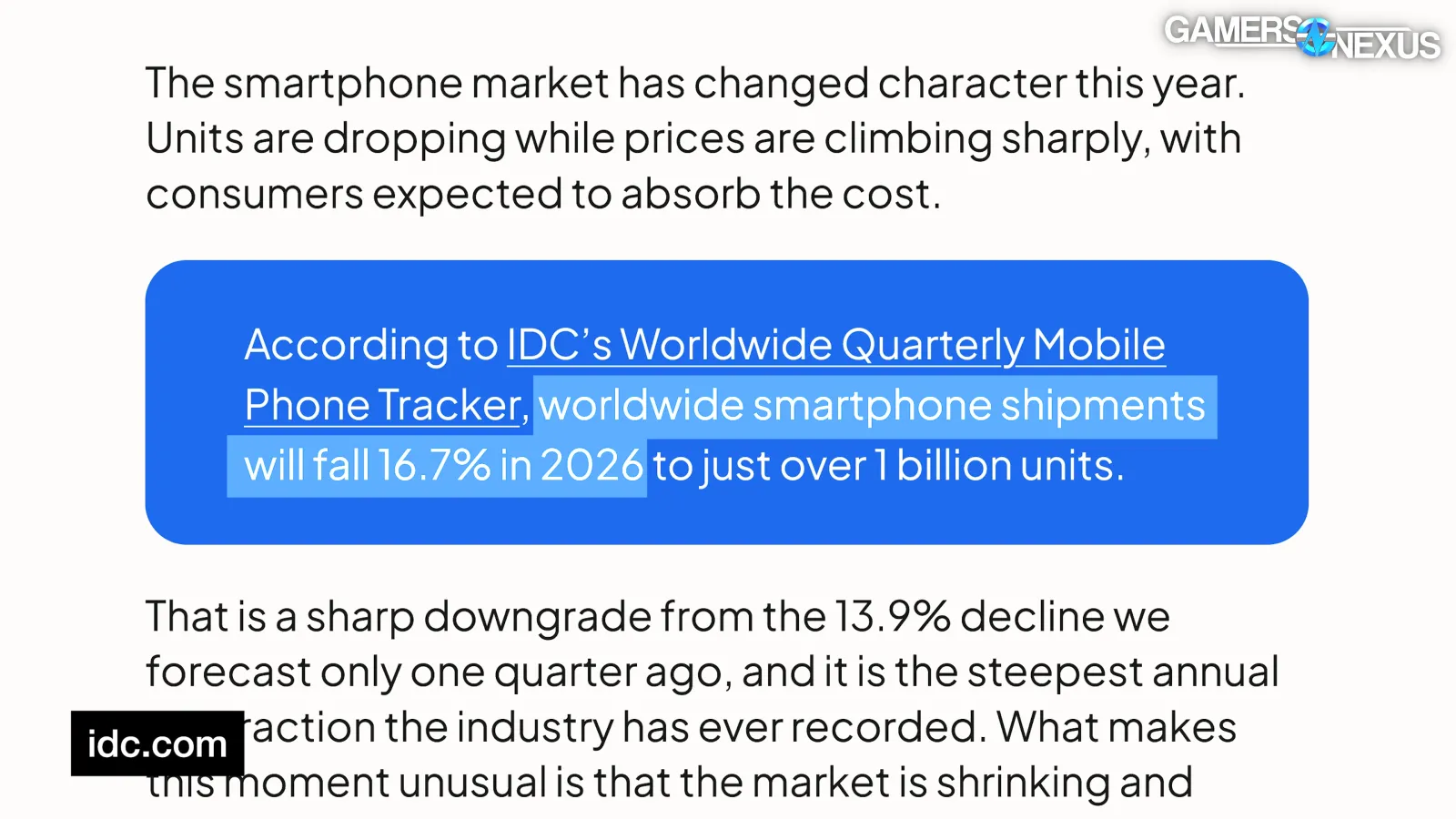
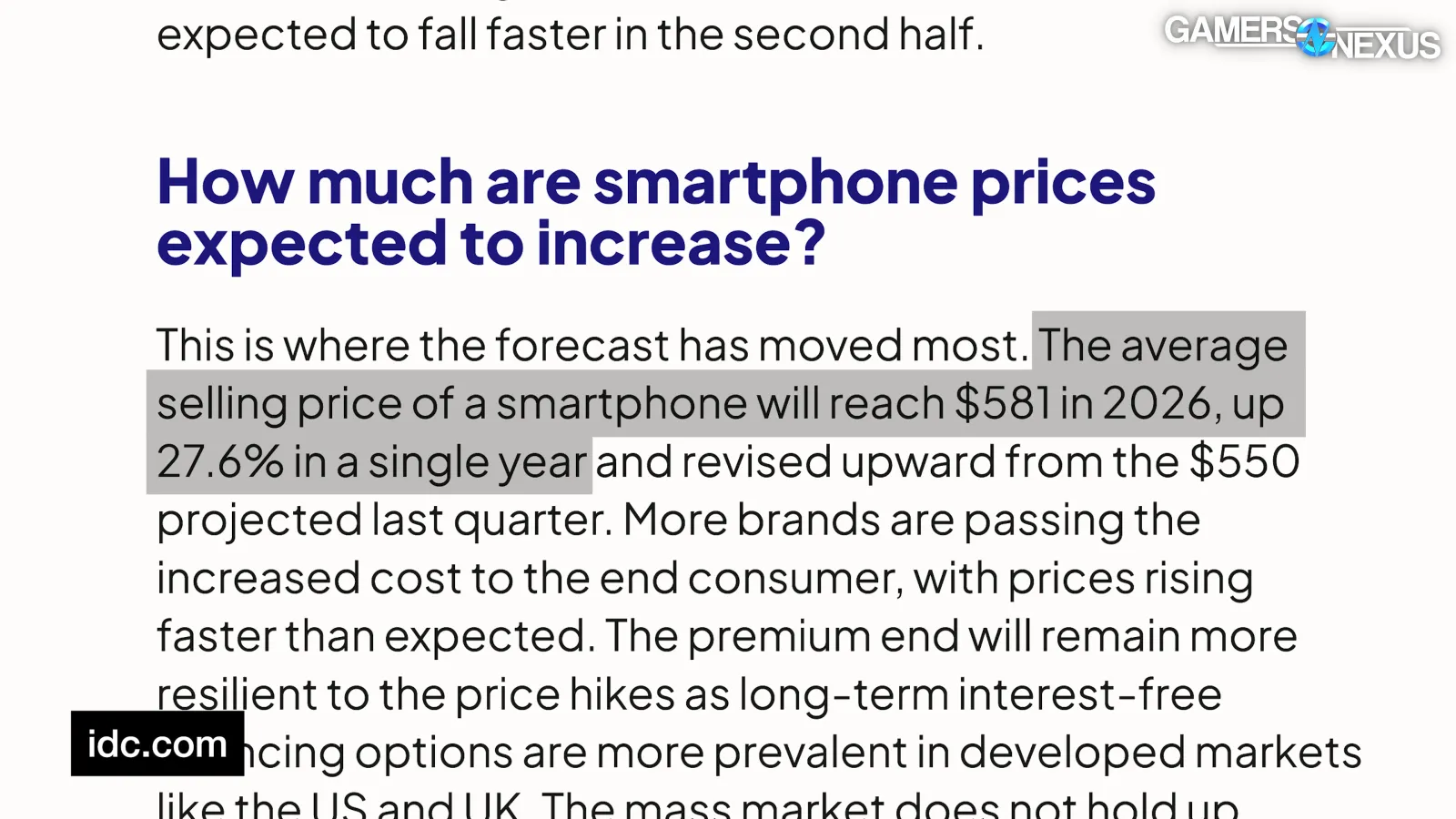
This massive diversion to data centers isn’t just affecting RAM and SSD prices for PC enthusiasts – it’s affecting the prices of all consumer electronics for literally everybody.
According to the IDC:
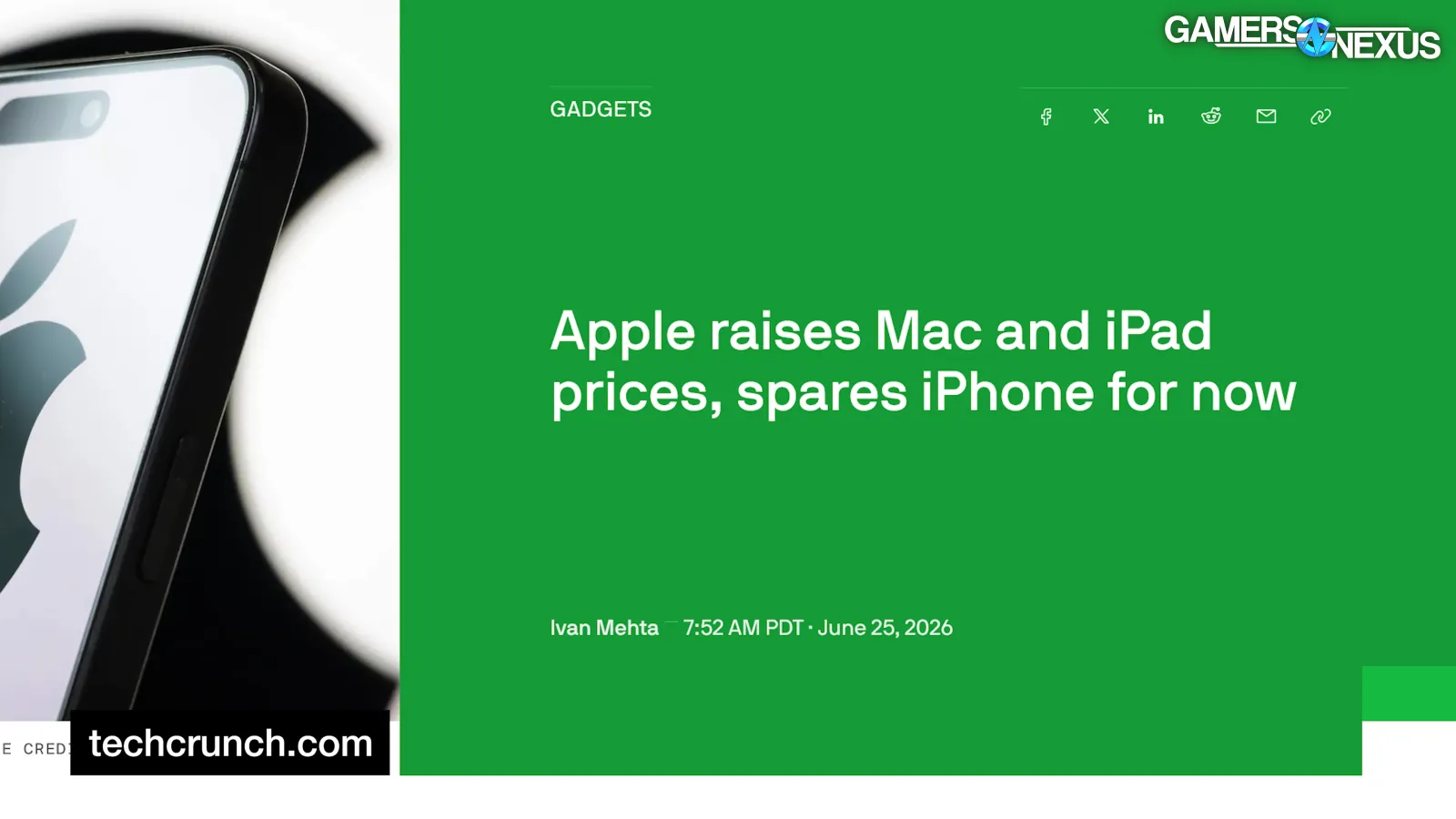
After Apple increased prices on its MacBook Neo, MacBook Air, MacBook Pro, Mac Studio, iPad, iPad Air, iPad Pro, iPad Mini, HomePod, HomePod Mini, Apple TV Box, and Vision Pro headset, Apple’s Tim Apple noted in his final earnings call as CEO, “We reluctantly raised prices I would say and we did it because we’re in what I would characterize as a 100-year flood on the memory pricing with exponential increases in memory prices.”
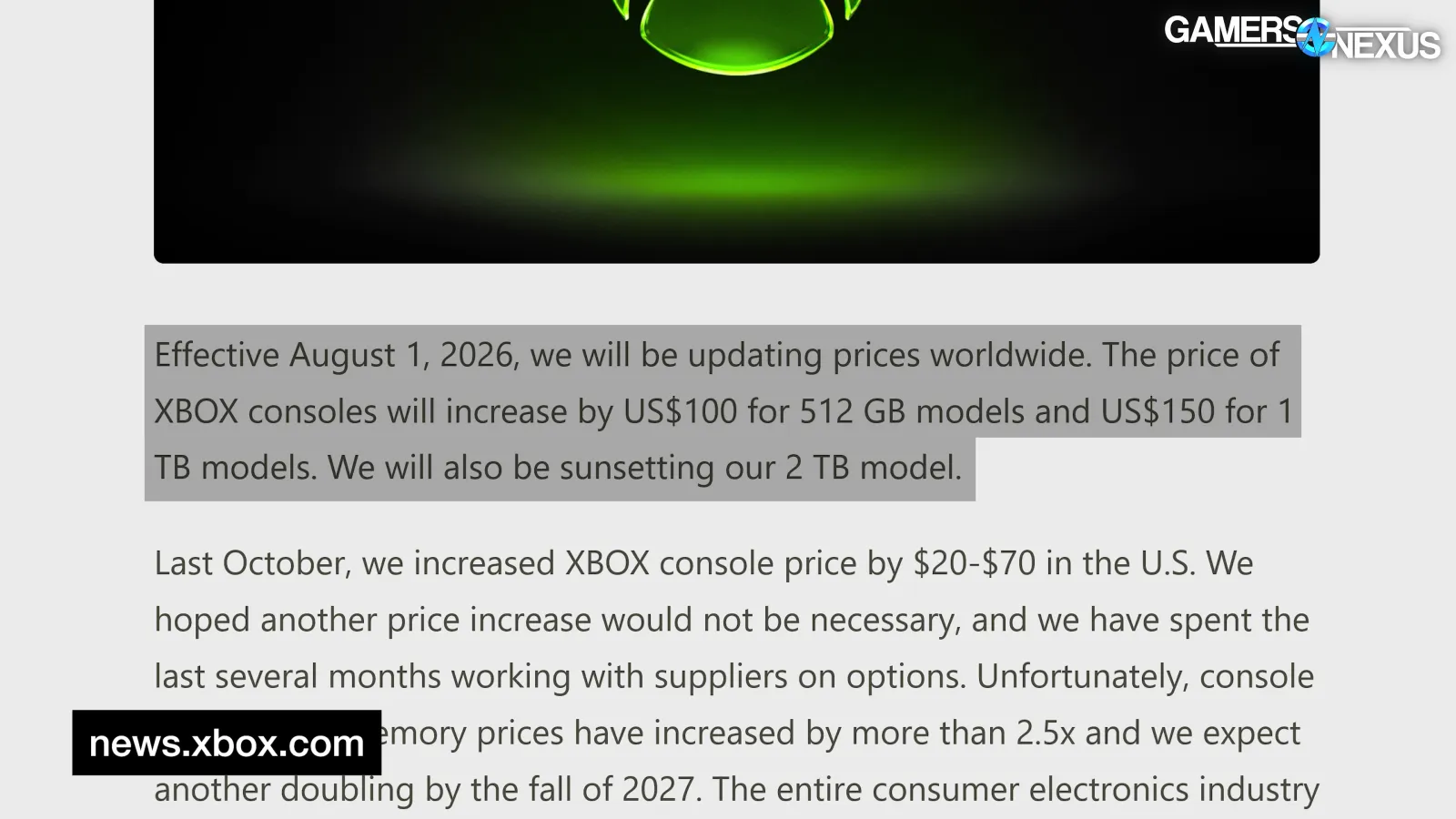
XBOX recently announced its latest round of price increases, stating, “Effective August 1, 2026, we will be updating prices worldwide. The price of XBOX consoles will increase by US$100 for 512 GB models and US$150 for 1 TB models. We will also be sunsetting our 2 TB model.” The company added, “Unfortunately, console storage and memory prices have increased by more than 2.5x and we expect another doubling by the fall of 2027.”
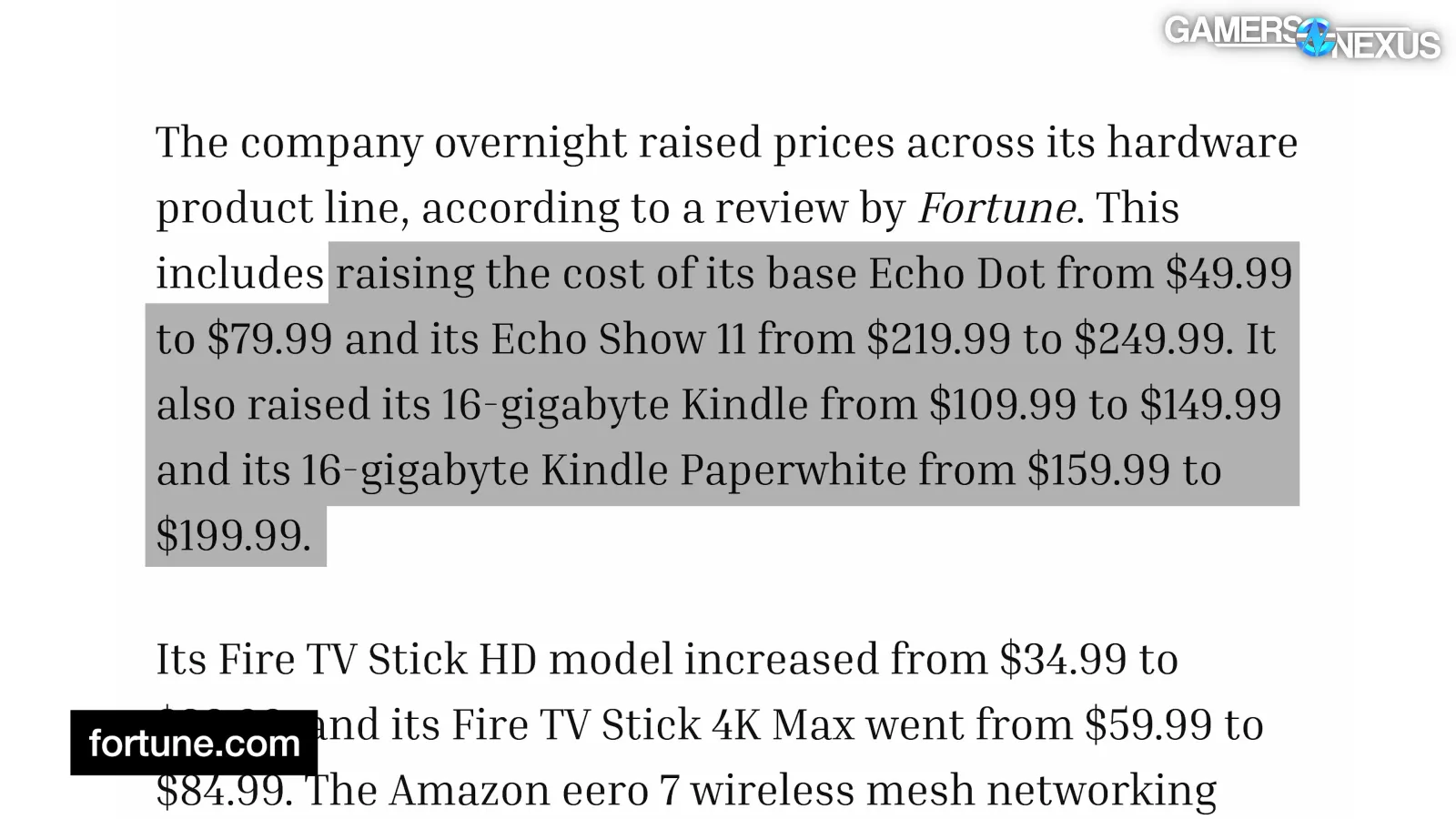
Amazon raised prices on its Echo Dot, Echo Show 11, Kindle, Kindle Paperwhite, Fire TV Stick HD, Fire TV Stick 4K Max, eero 7, and eero Pro 7.
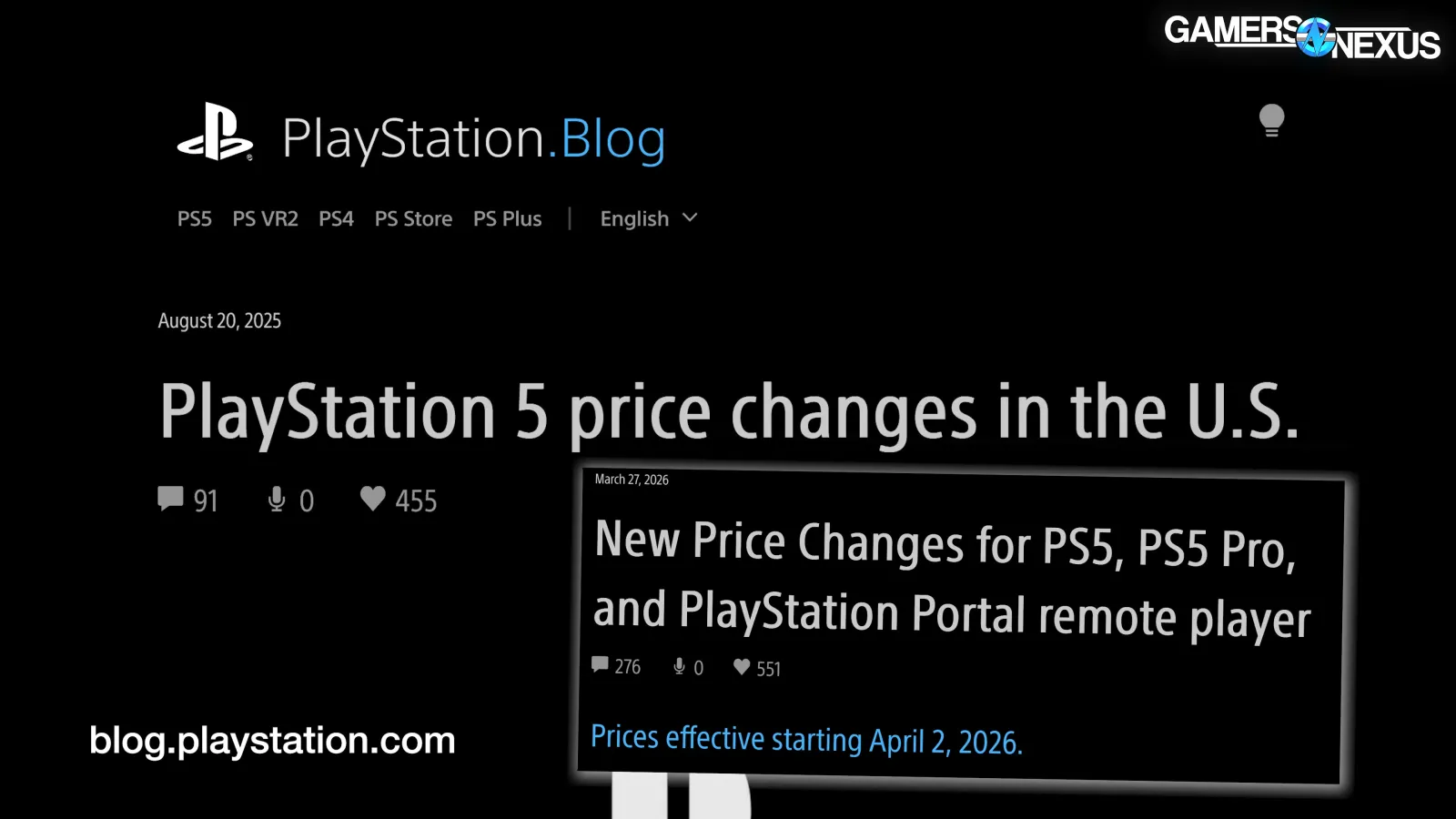
Nintendo inflated its Switch 2 MSRP, and Sony’s already increased its PS5 prices twice within the last year.

TechInsights CSO, reported via the New York Times, added, “Yes, the prices of your iPhone are going up. But it’s also possible the prices of your M.R.I. machines may go up, or worse than that, that M.R.I. machine may not get made.”
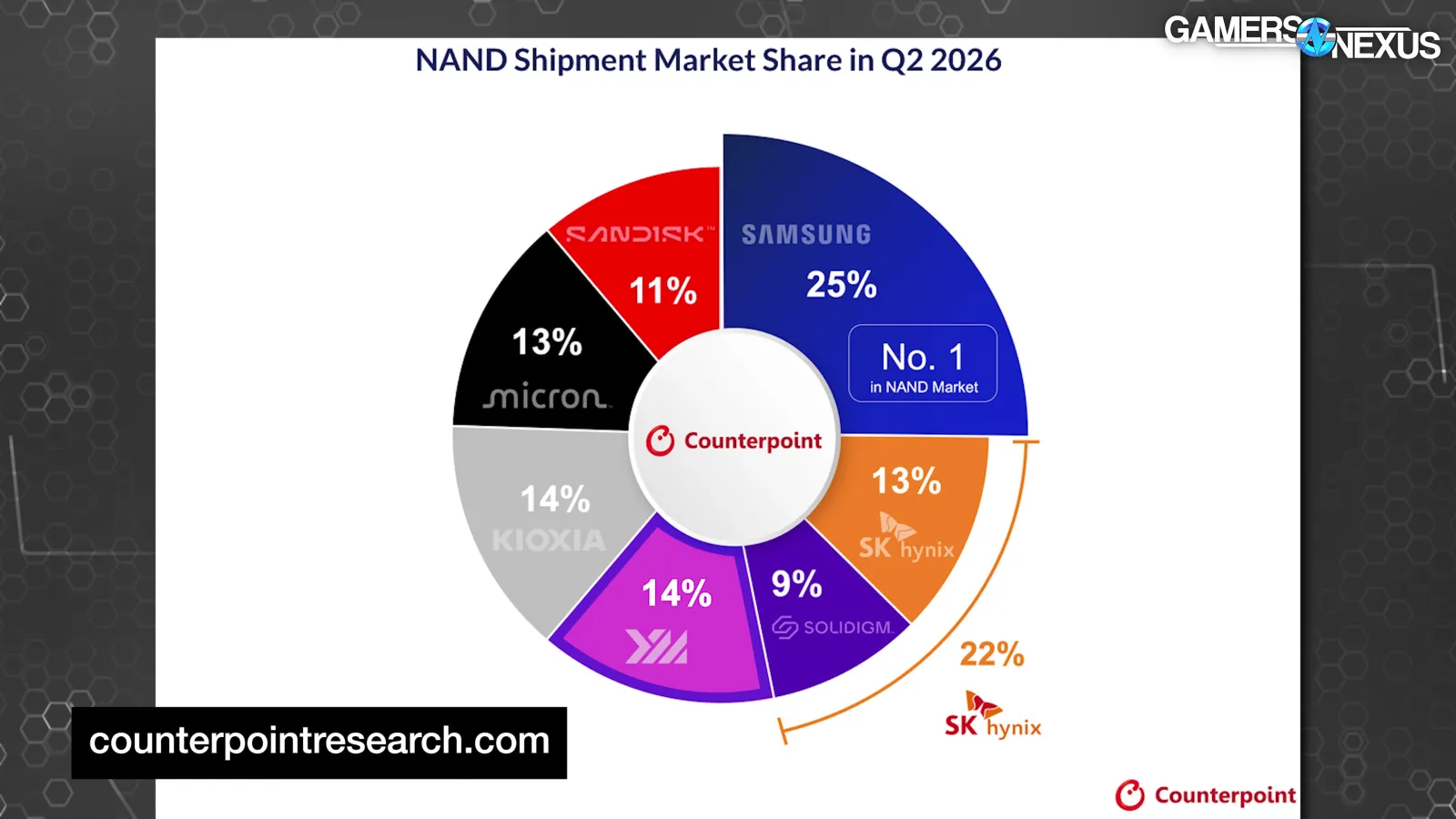
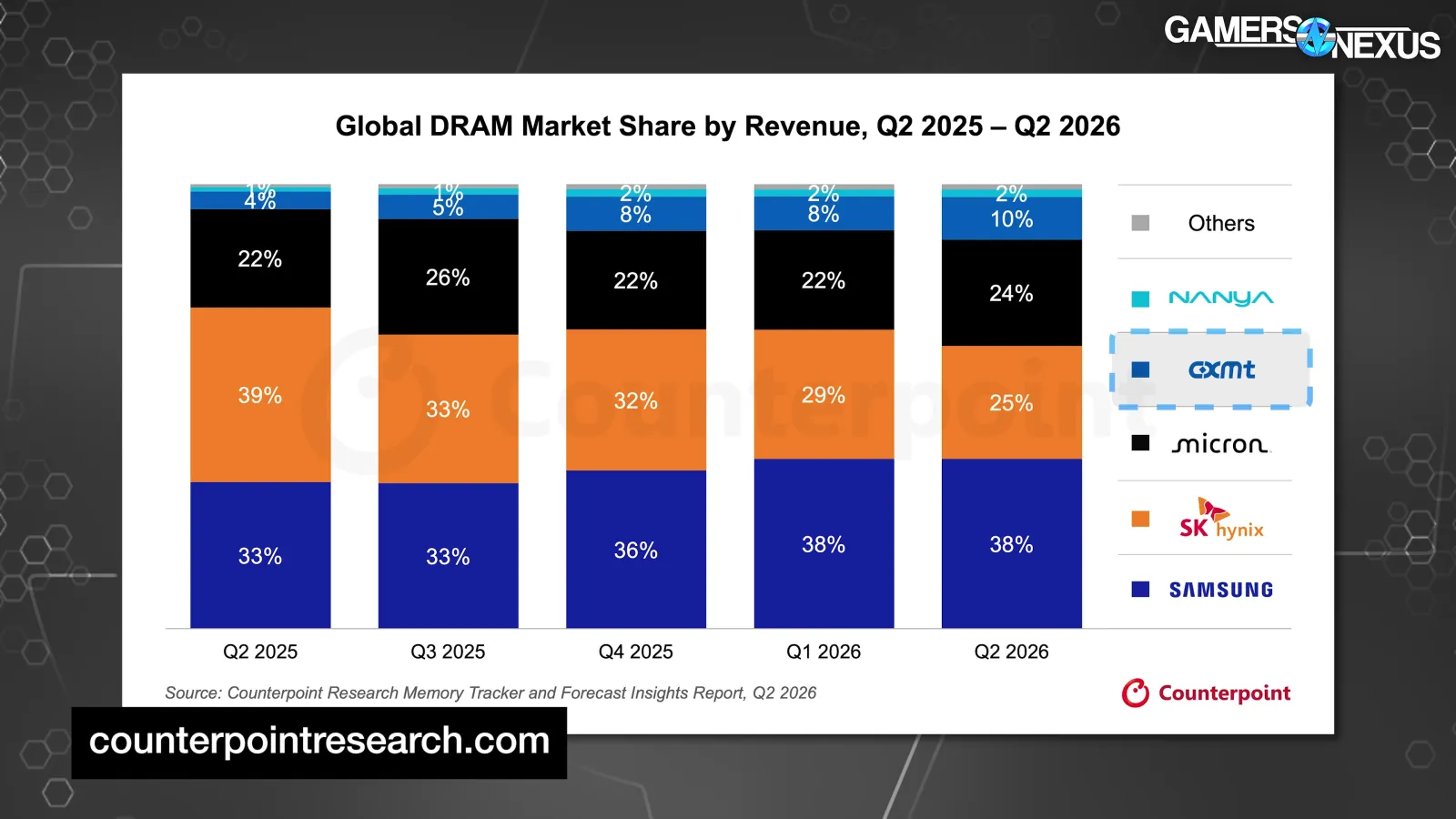
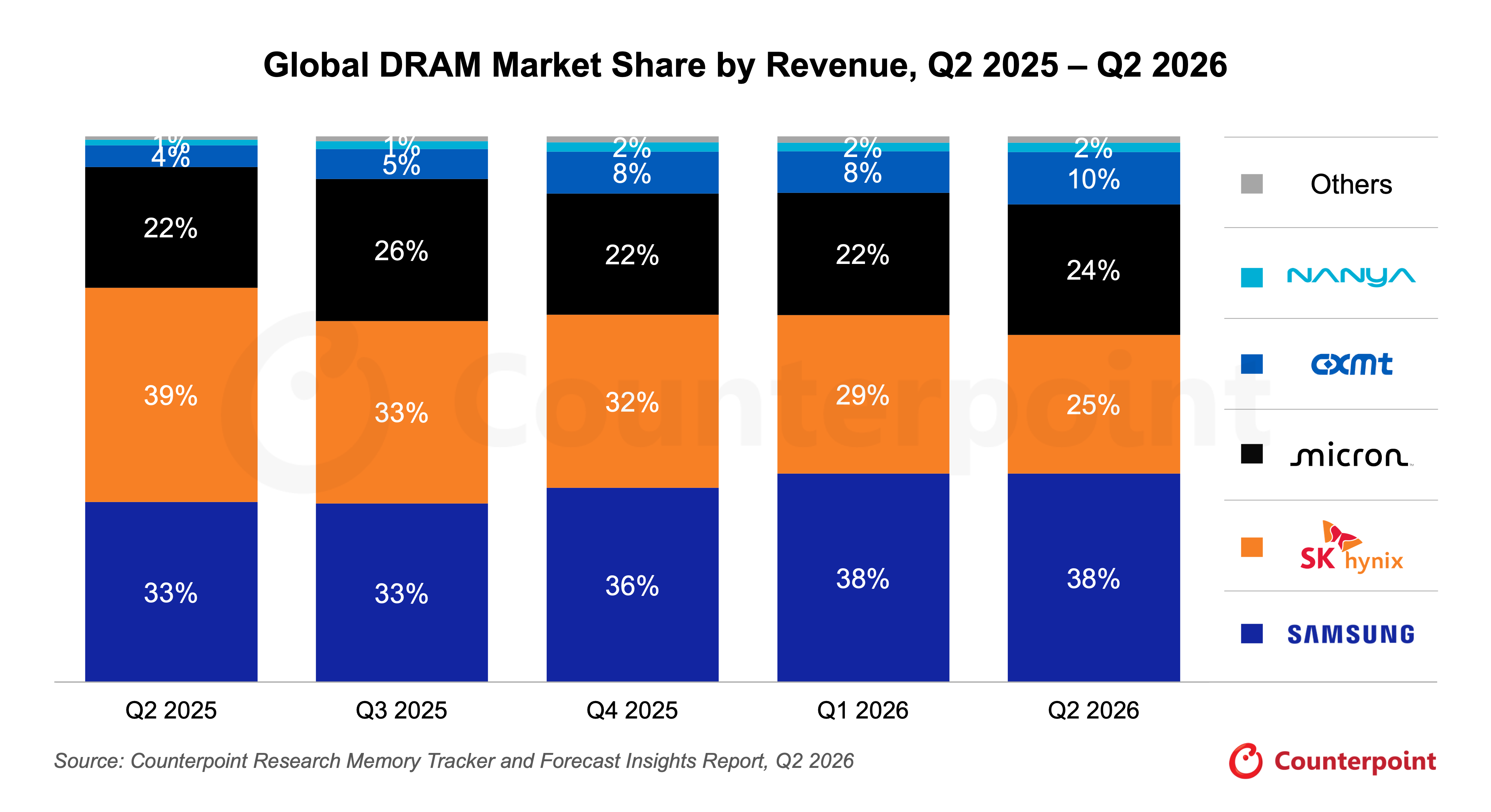
Meanwhile, Chinese newcomers CXMT and YMTC have continued their rapid expansions, with YMTC breaking into the global top 3 NAND manufacturers by shipments, surpassing Kioxia, Micron, and SanDisk, and CXMT now holding 10% of the global DRAM market share by revenue, up 6 percentage points YoY, as reported by Counterpoint Research.
And yet being challenged by the United States Government for entrance, despite selling consumer-grade memory.
To us, the most concerning part of this is that the memory suppliers are trying to finally bust the cyclical nature of memory pricing, which would mean they want to eliminate the future low point for prices, especially for consumers.
Overview
Long-Term Agreements (LTAs) are made between memory manufacturers and large clients, often unnamed. These clients almost certainly include NVIDIA.
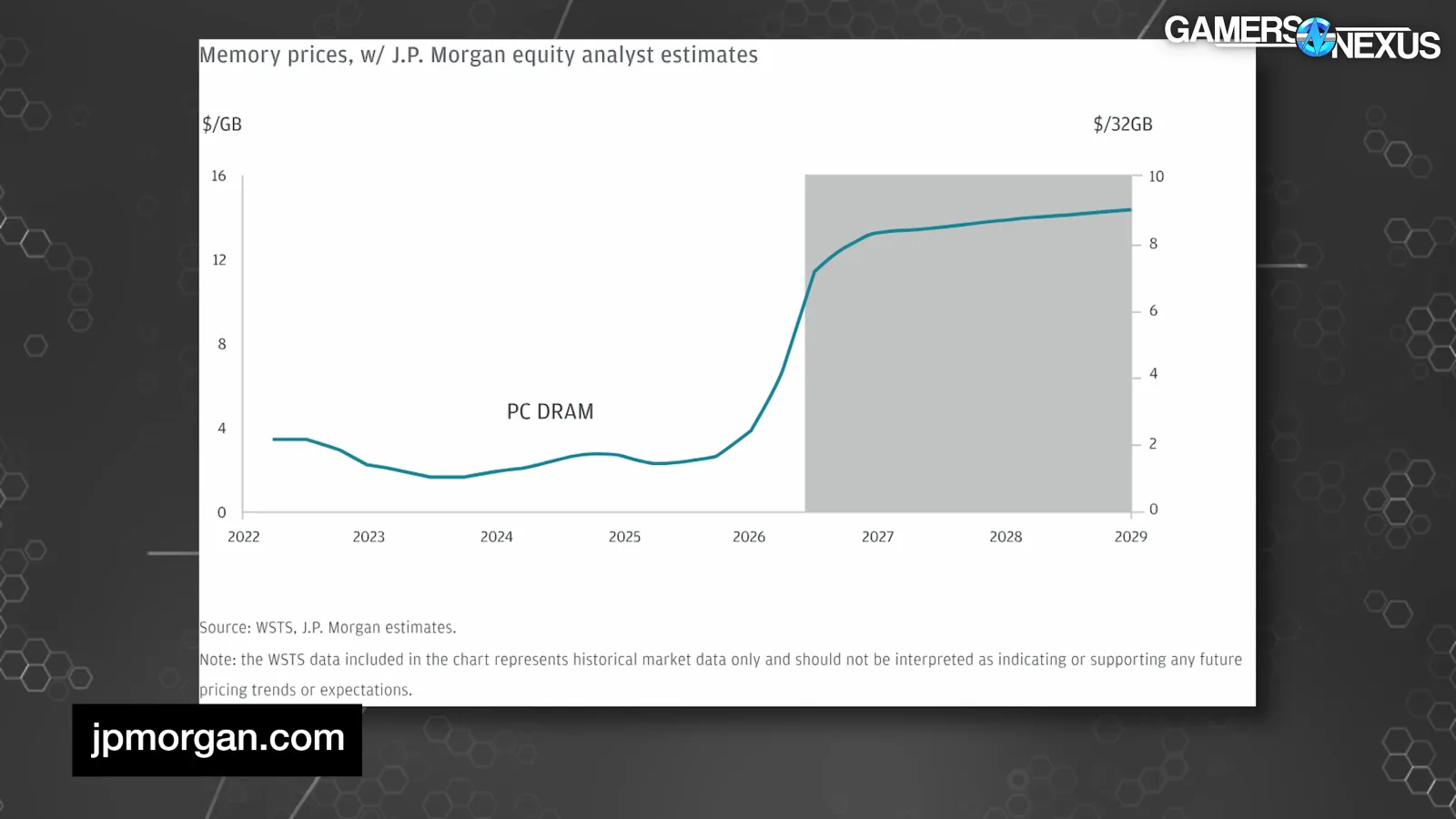
Shortages caused by AI demand could keep supply just tight enough to maintain the currently inflated RAM and SSD prices for years to come.
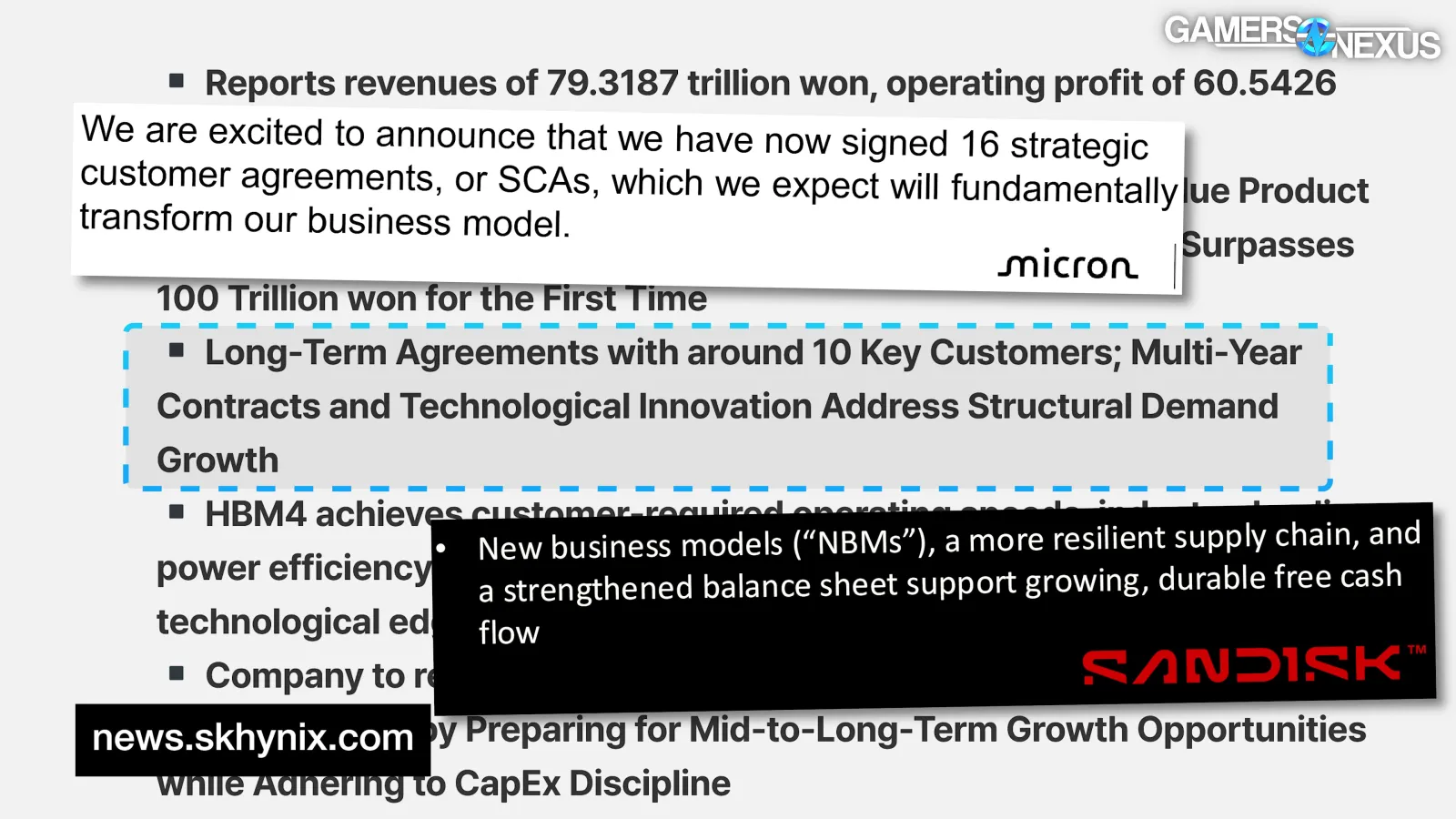
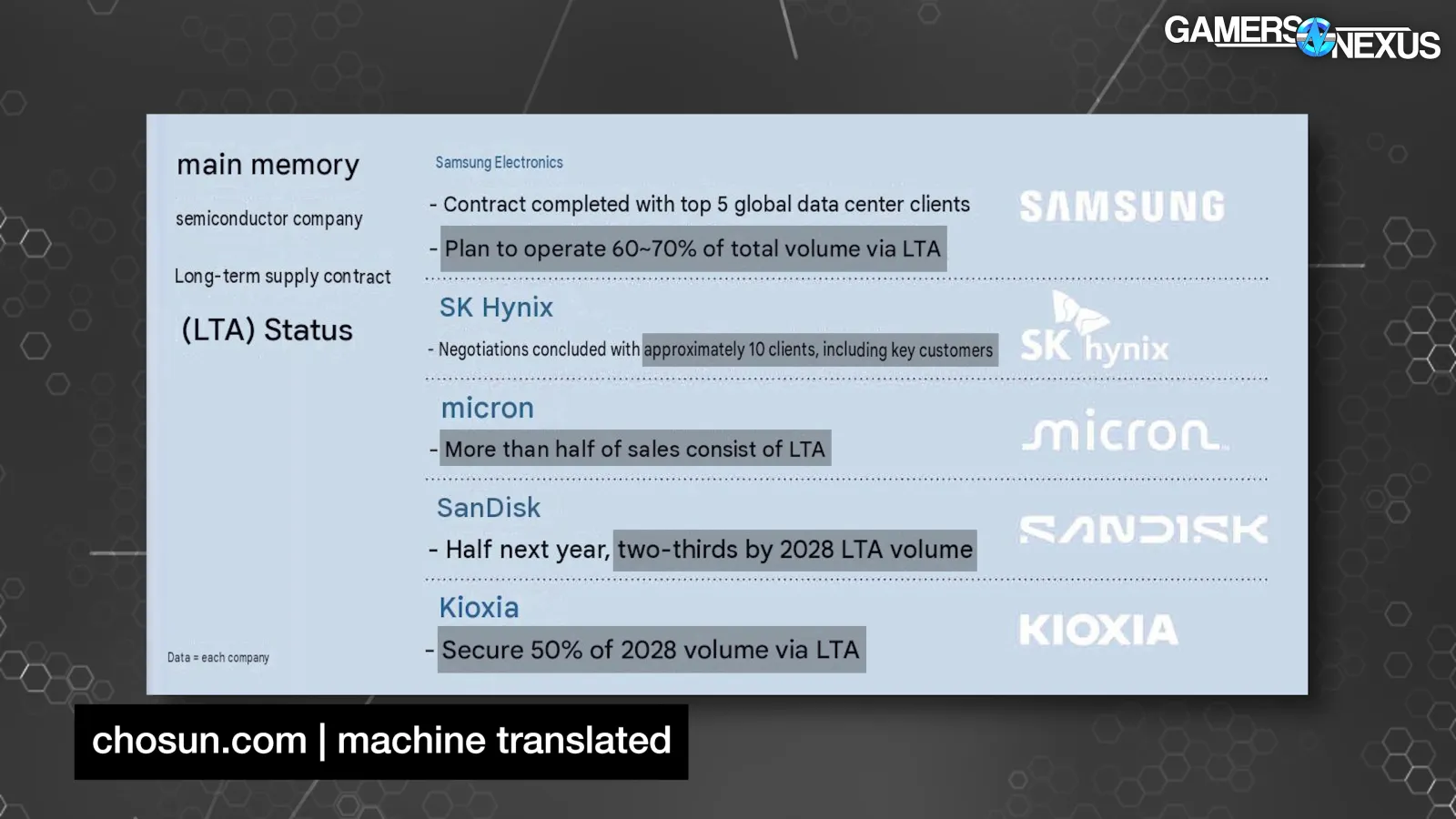
Throughout the past year, all major manufacturers altered their customer relationship strategies, now forming 3-5 year long-term agreements (or LTAs) with, and allocating 50 - 70% of their outputs to only their largest 5-16 customers.
Some form of agreements have been in place with major customers since, basically, the dawn of time -- but the capacity allocated to them and the duration are concerning.
Chosun Daily explains:
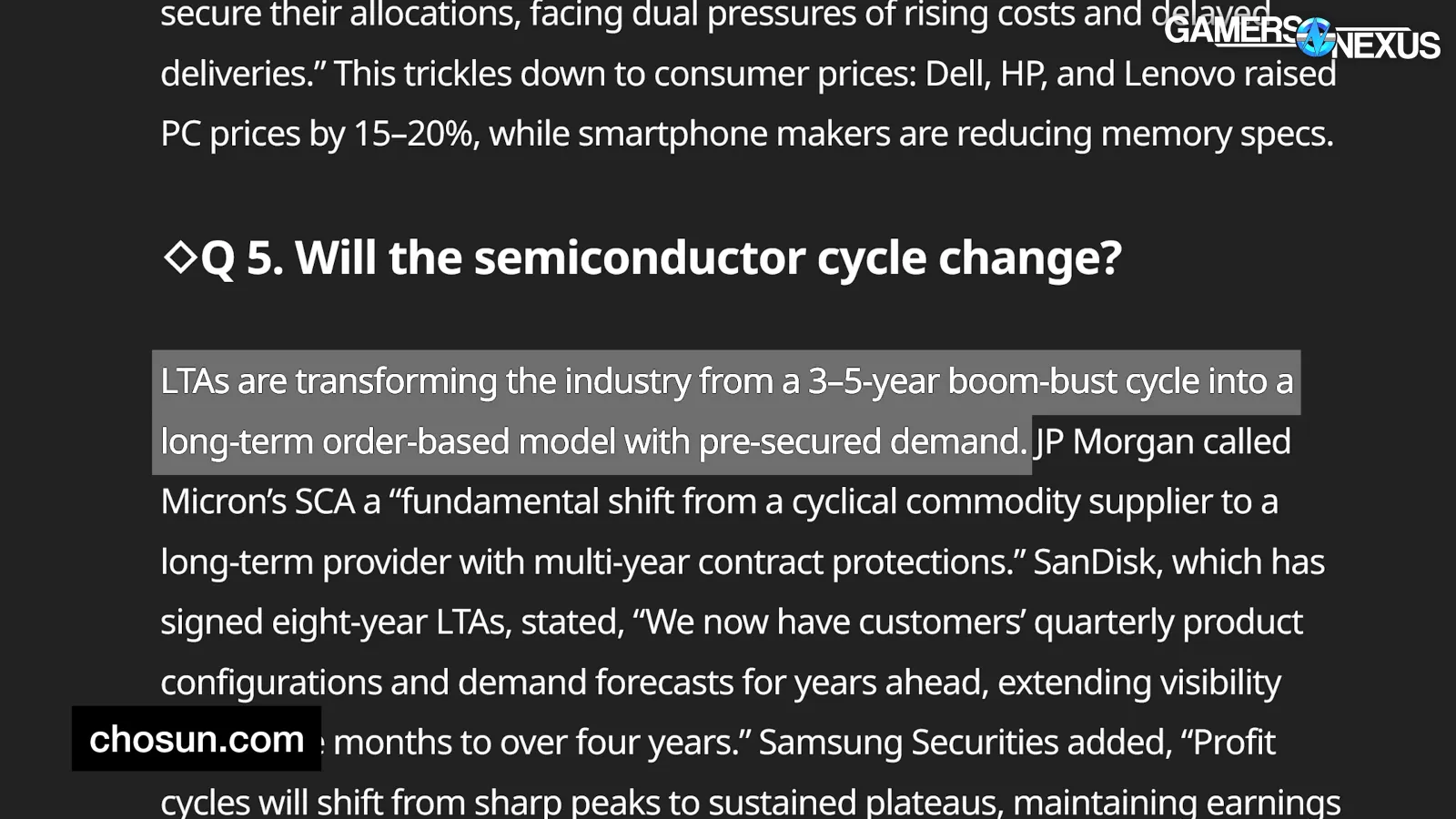
“LTAs are transforming the industry from a 3–5-year boom-bust cycle into a long-term order-based model with pre-secured demand.”
In other words, the manufacturers went from prioritizing enterprises over consumers to now prioritizing their 10 largest companies over everybody.
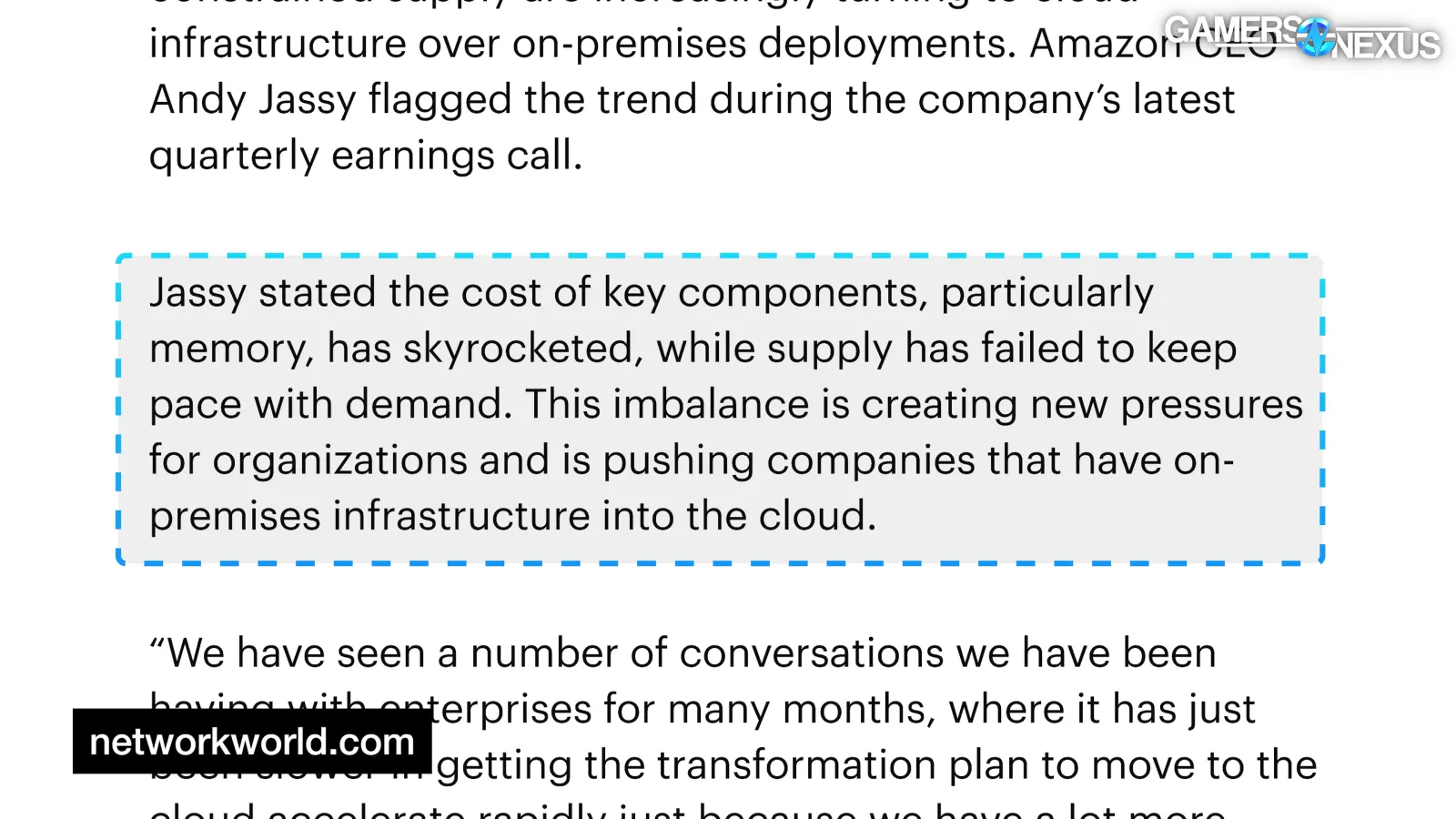
In fact, thanks to all the major cloud service providers and hyperscalers buying up all the supply and sending prices skyrocketing, smaller businesses can no longer afford on-site server upgrades, forcing them to rent cloud infrastructure instead.
Fortunately for the hyperscalers, JP Morgan notes, “While LTAs may help keep costs manageable for hyperscalers, they dramatically decrease the flexibility of memory fabricators to address demand for memory chips in consumer goods.”
LTAs Restructuring Market Dynamics
Starting with the long-term agreements, we can look to each of the manufacturers’ latest earnings reports:
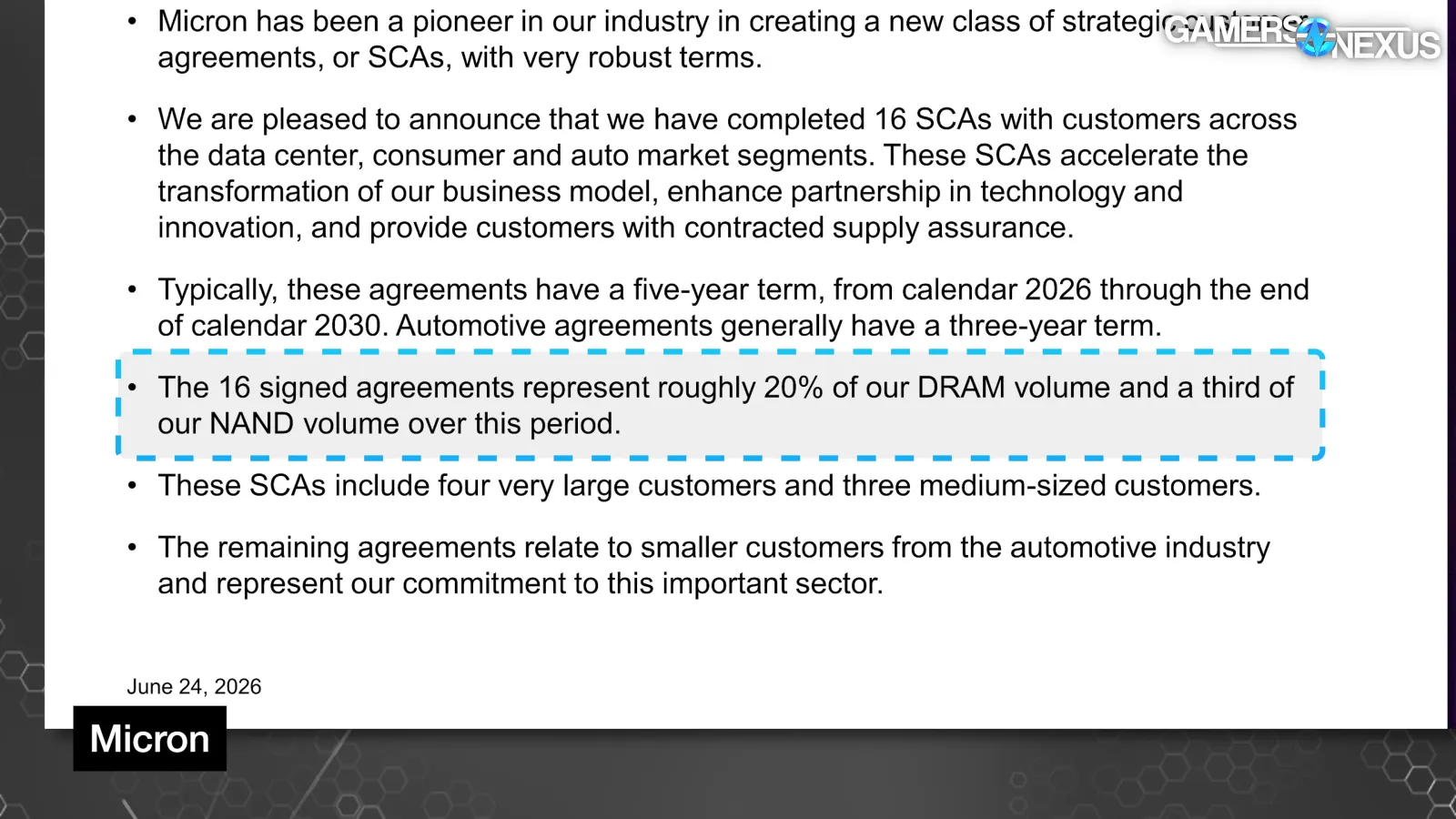
Micron reported that its 16 LTAs currently represent 20% of its DRAM and a third of its NAND supply, noting, “When completed, we expect approximately half or more of our company revenue to be under these SCAs with customers across end markets.”
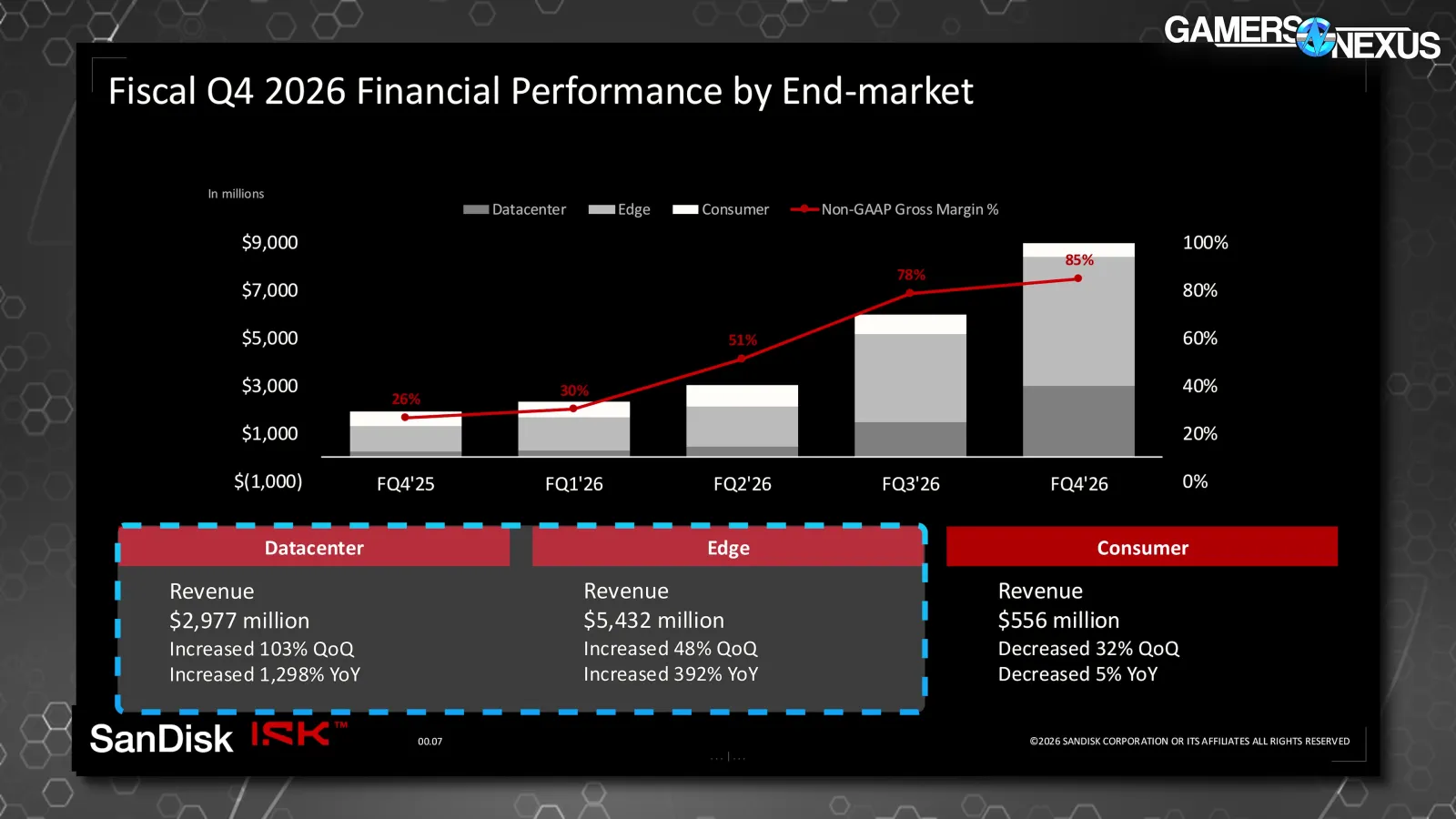
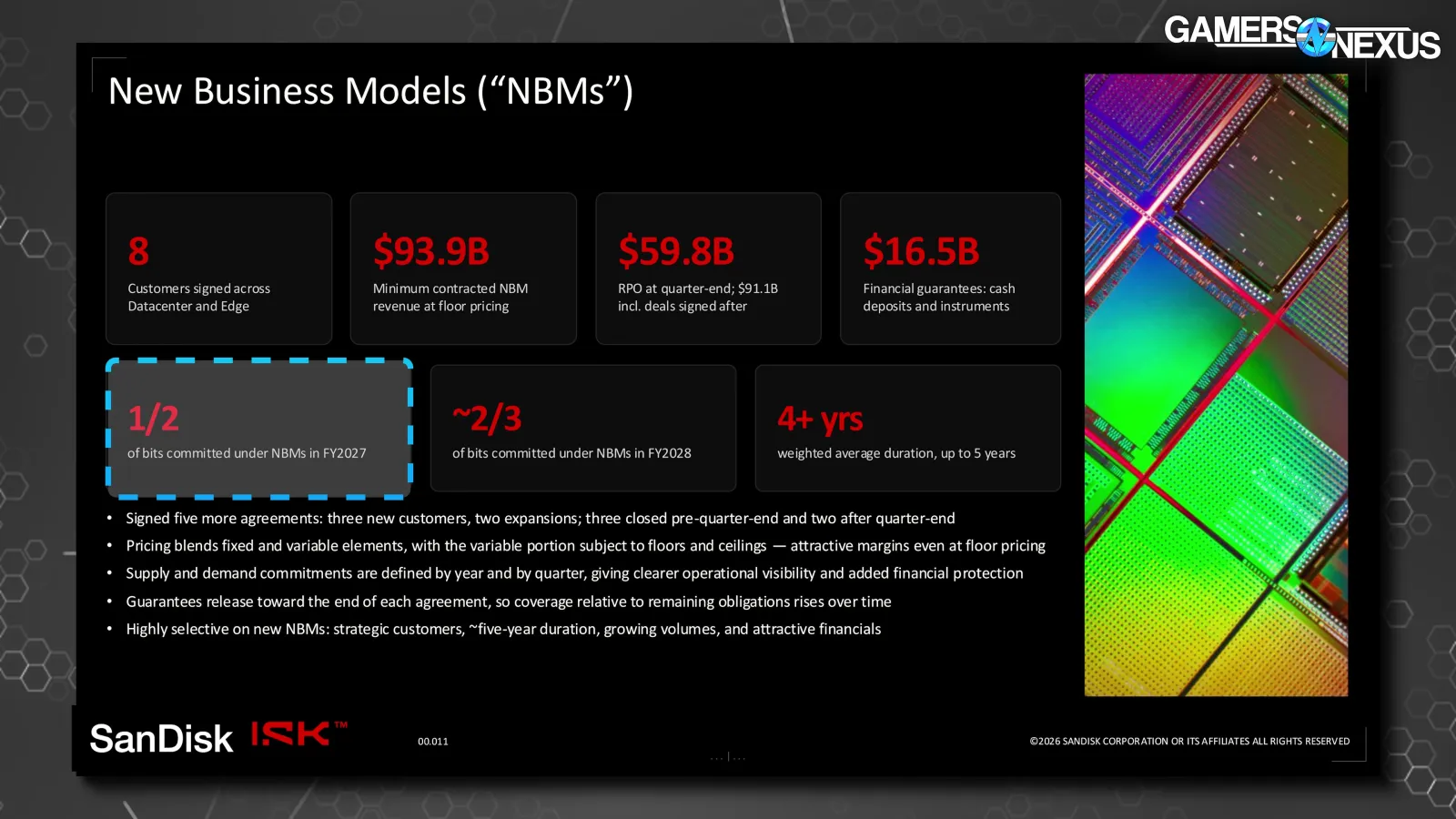
SanDisk, whose Datacenter and Edge revenue increased by 1,298% and 392% YoY while revenue for its consumer segment decreased by 5% YoY, reported that it’s allocating 50% of its bit output in 2027 and 67% of its bit output in 2028 to LTAs.
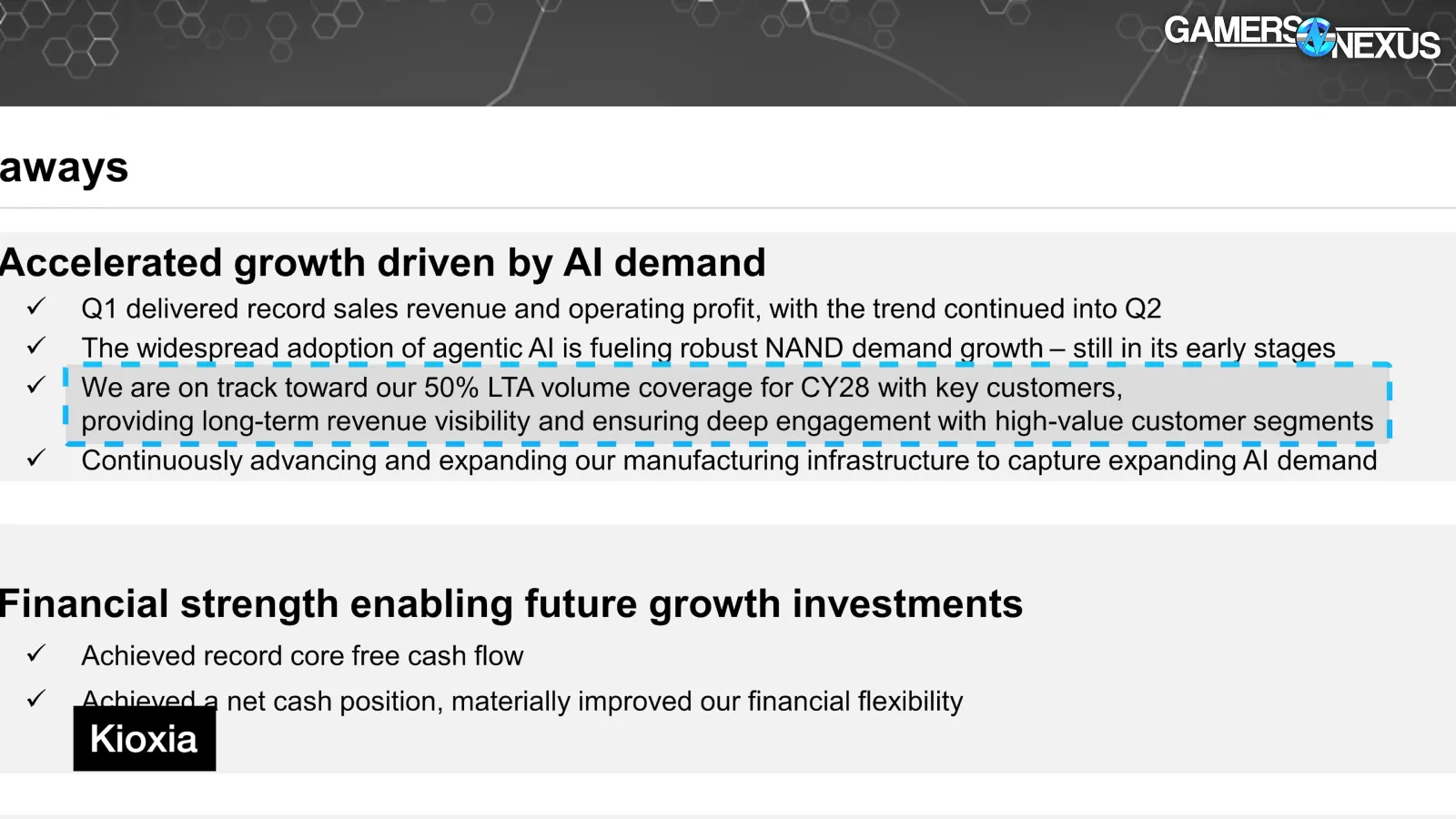
“We are on track toward our 50% LTA volume coverage for calendar year 28 with key customers.”
In an earnings call, Samsung stated, “We have already finalized agreements with the top five global data center customers, [and] are also in the final stages of talks with five additional major accounts to support their AI-related demand.” The company added, “We intend to maintain flexibility in supply allocation and plan to allocate approximately 60% to 70% of our total capacity to long-term supply contracts while preserving sufficient capacity to support customers without multi-year contracts.”
And Western Digital’s CEO affirmed, stating, “The last time we reported on LTAs, we talked about having one LTA of a large customer all the way up to calendar year '29. But we're very much in the throes of discussions with customers to establish LTAs for calendar '29, '30 and '31 as well. So visibility remains very strong, customer-driven demand for LTAs extending all the way out to '31 remains very strong.”
As for the effects: our understanding is that these long-term agreements will fundamentally alter the way the memory market works for consumers and everyone else. The Korea Herald explains this:
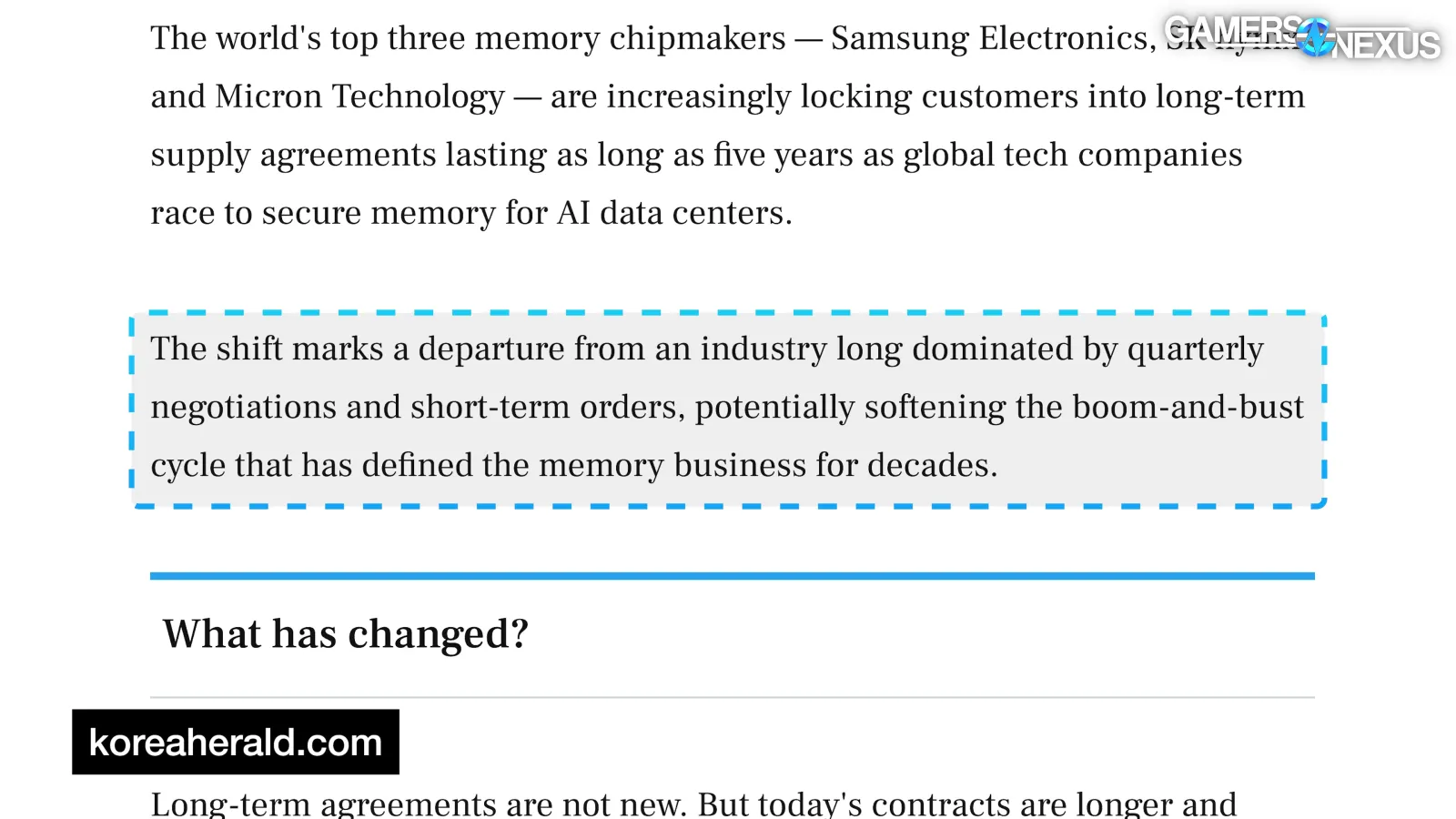
“The shift marks a departure from an industry long dominated by quarterly negotiations and short-term orders, potentially softening the boom-and-bust cycle that has defined the memory business for decades.”
Samsung reiterated this in its latest earnings call, stating, “Historically, the memory industry has experienced recurring cycles of upturns and downturns driven by demand fluctuations in consumer-oriented applications. However, by increasing the share of longer-term backlog-driven business, we hope to significantly enhance the stability and visibility of our business.”
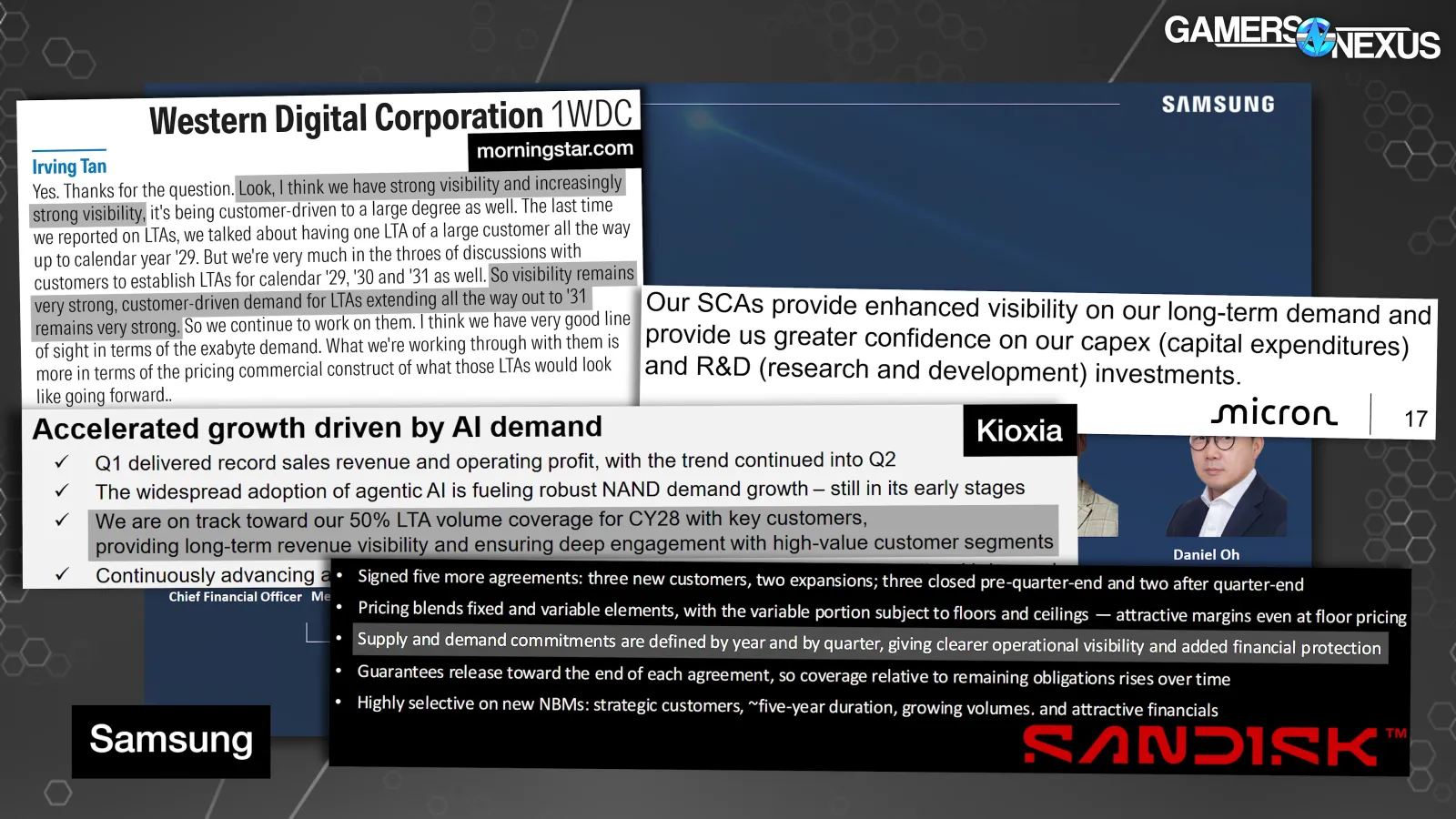
And Samsung’s not alone – all manufacturers are echoing the same “enhanced visibility” phrase in some manner or another.
One industry analyst, reported via The Korea Herald, asserted:
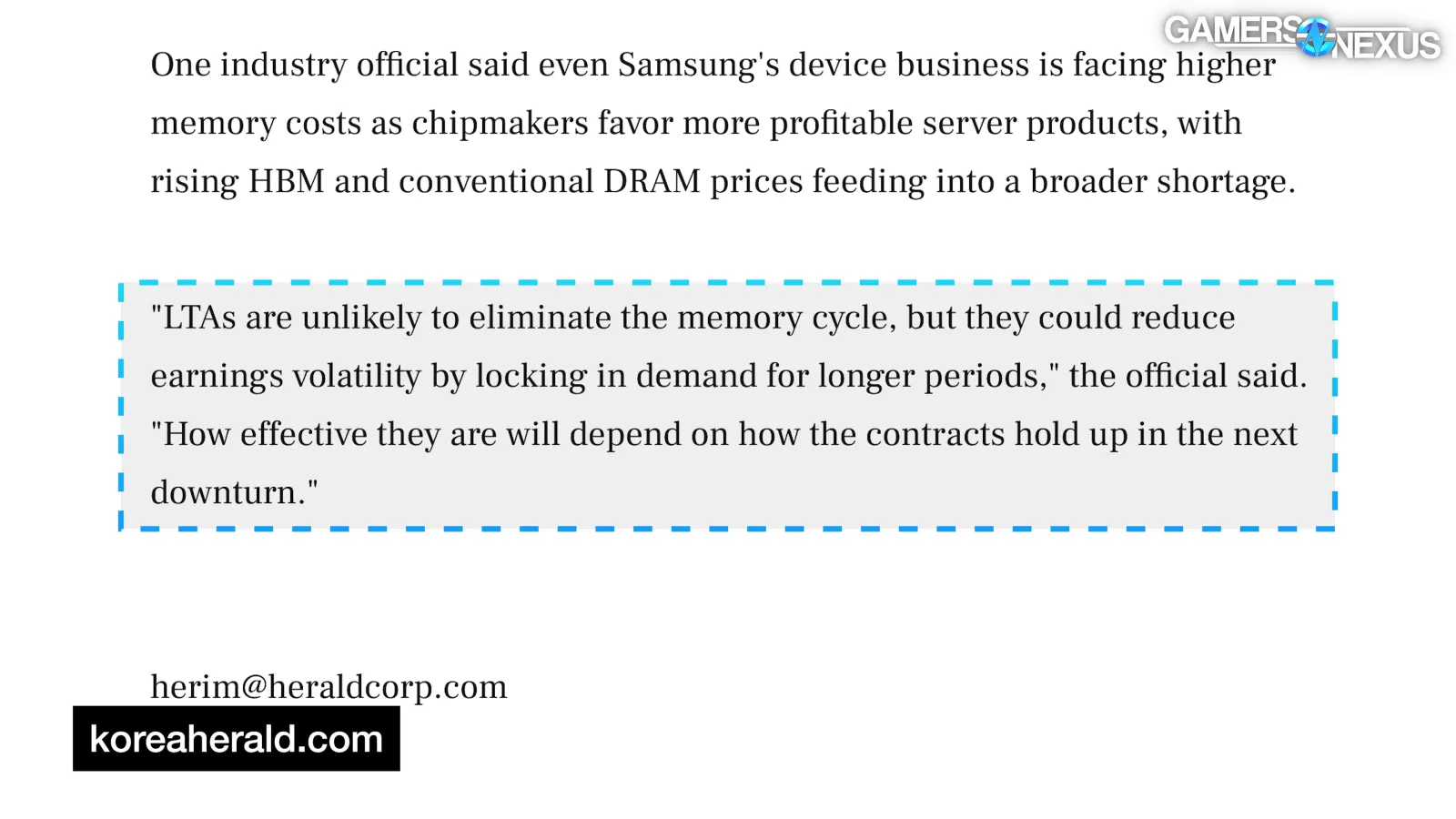
"LTAs are unlikely to eliminate the memory cycle, but they could reduce earnings volatility by locking in demand for longer periods. How effective they are will depend on how the contracts hold up in the next downturn.”
LTA Customers

Amidst the height of the shortage, demand from cloud providers continued to increase:
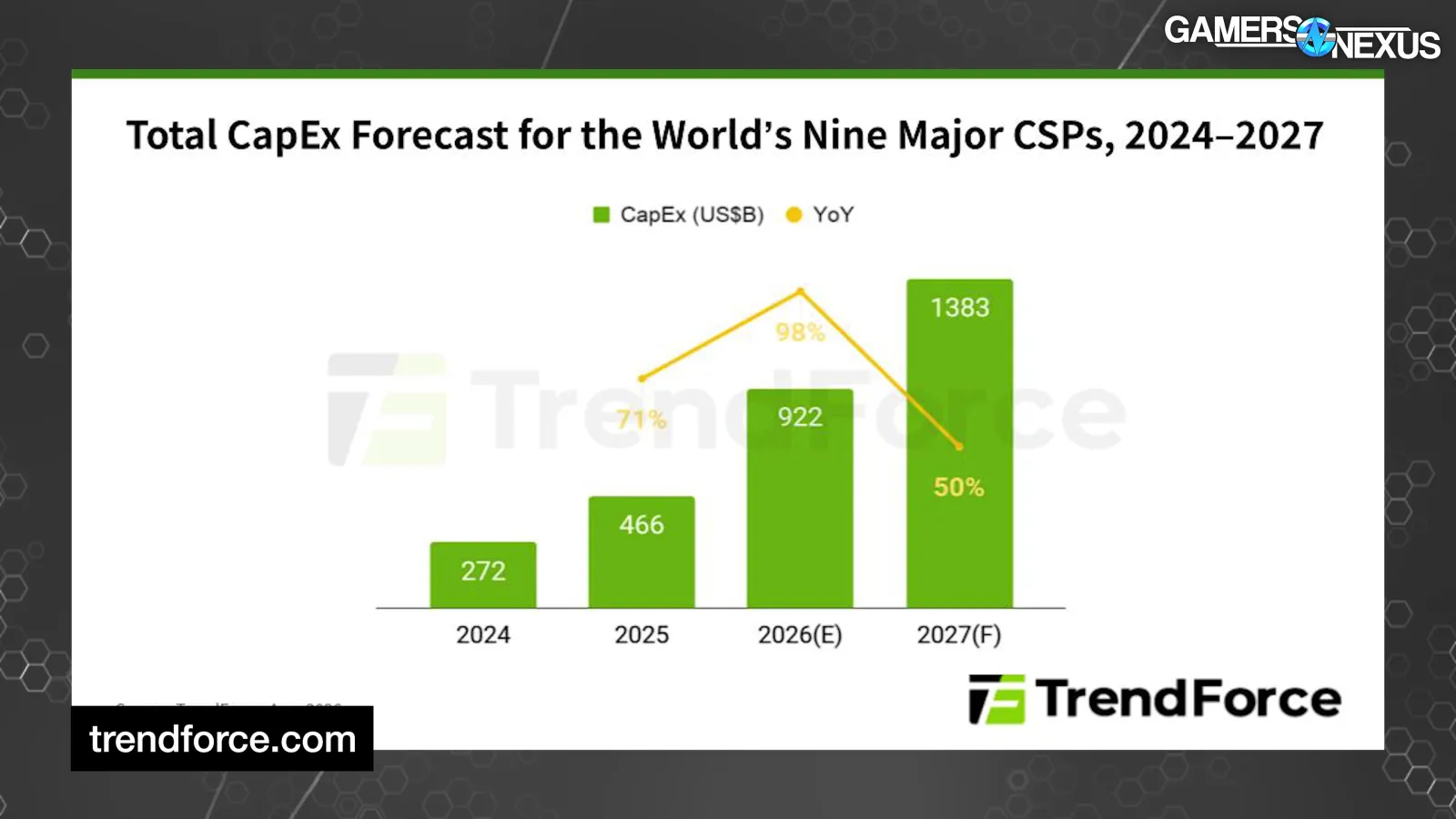
TrendForce anticipates CapEx for the world’s nine major CSPs to increase from $922 billion in 2026 to $1.383 trillion in 2027, explaining:
“The rapid increase will be driven in part by soaring memory contract prices and robust procurement demand. TrendForce estimates that DRAM and NAND Flash combined will account for 47% of CSPs’ total CapEx in 2026, with their share rising further to 68% in 2027.”
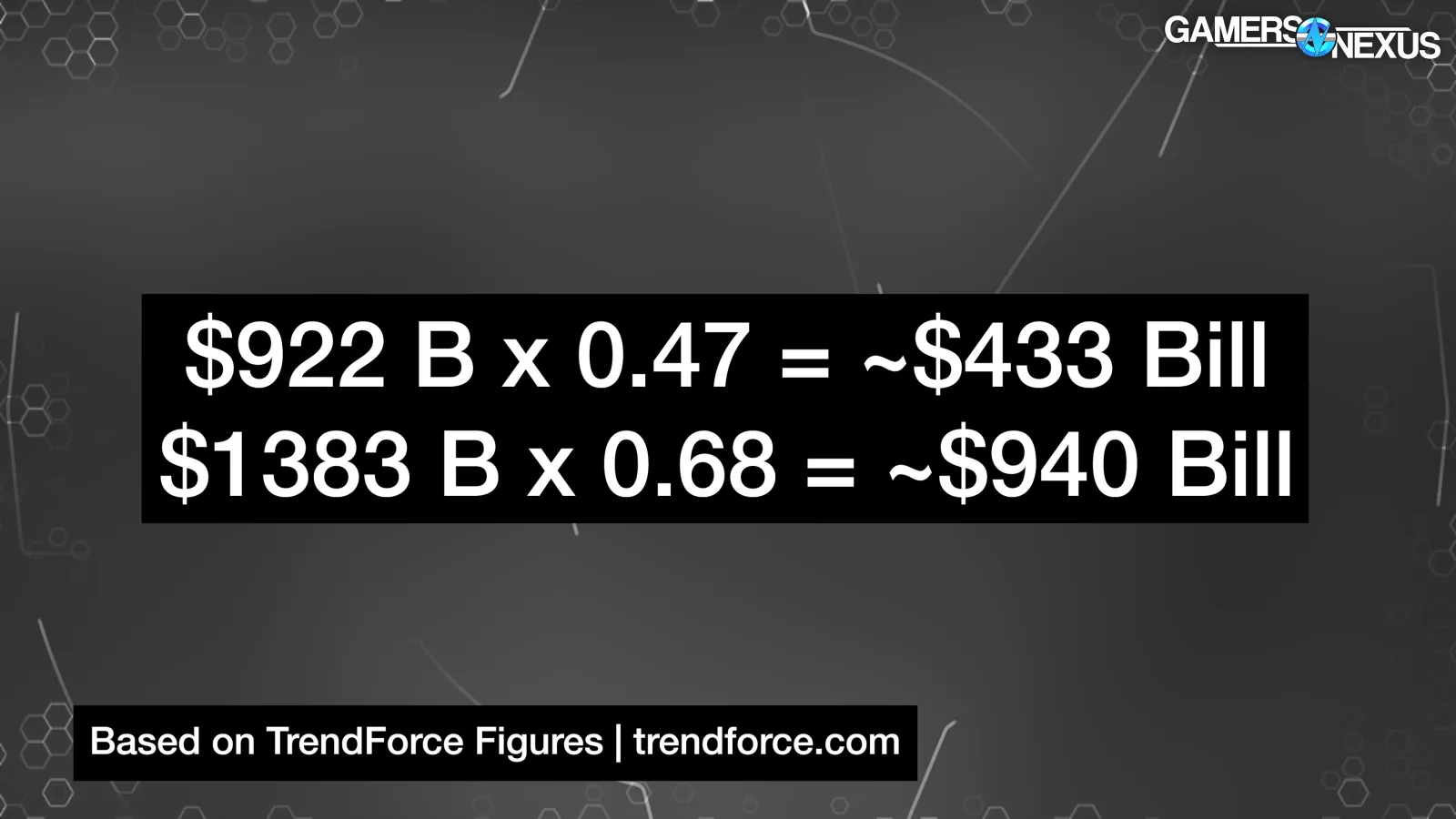
Based on TrendForce’s figures, that’d put the nine largest CSPs’ CapEx spending on only DRAM and NAND at an estimated $433 billion in 2026 and an estimated $940 billion in 2027.
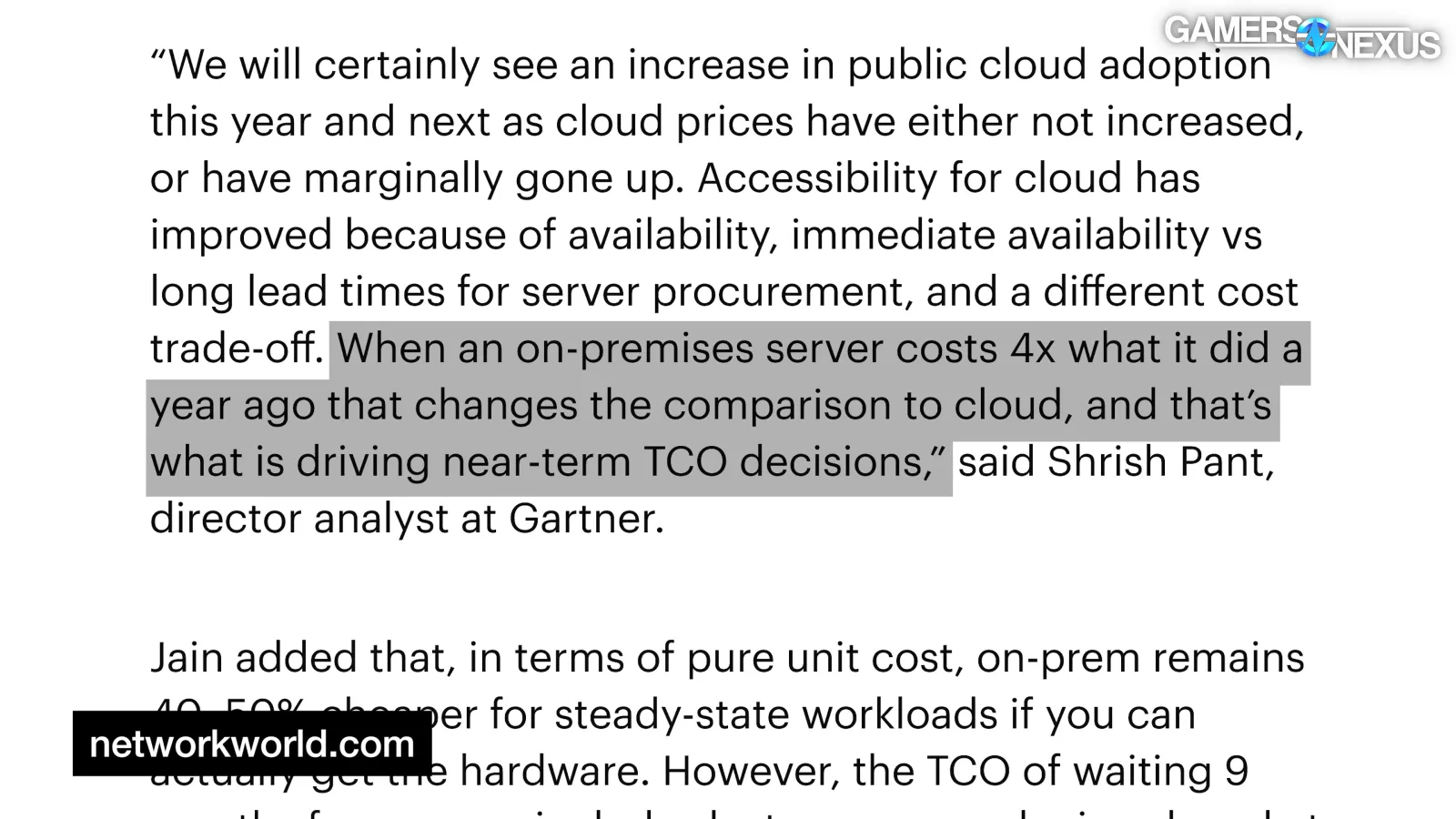
Luckily for the CSPs, after driving up RAM and SSD prices, smaller businesses couldn’t afford on-site server upgrades, forcing them to rent cloud infrastructure from the CSPs instead.
Amazon’s CEO described the new dynamic in its 1Q ‘26 earnings report, explaining, "One of the interesting things that we see right now with the change in price and supply on things like memory is that it is a further impetus pushing companies who have on-premises infrastructure into the cloud.” He added, “We have seen a number of conversations we have been having with enterprises for many months [...] accelerate rapidly just because we have a lot more supply than what others have. It will be interesting to see how that evolves over time.”
That’s it. That’s the quiet part out loud, and the part we’ve all been saying: Amazon, the owners of one of the world’s cloud infrastructure providers via AWS, is saying that this is pushing companies into the cloud. That’s not going to stop at companies.
And the CSPs are already seeing the results. In their latest filings:
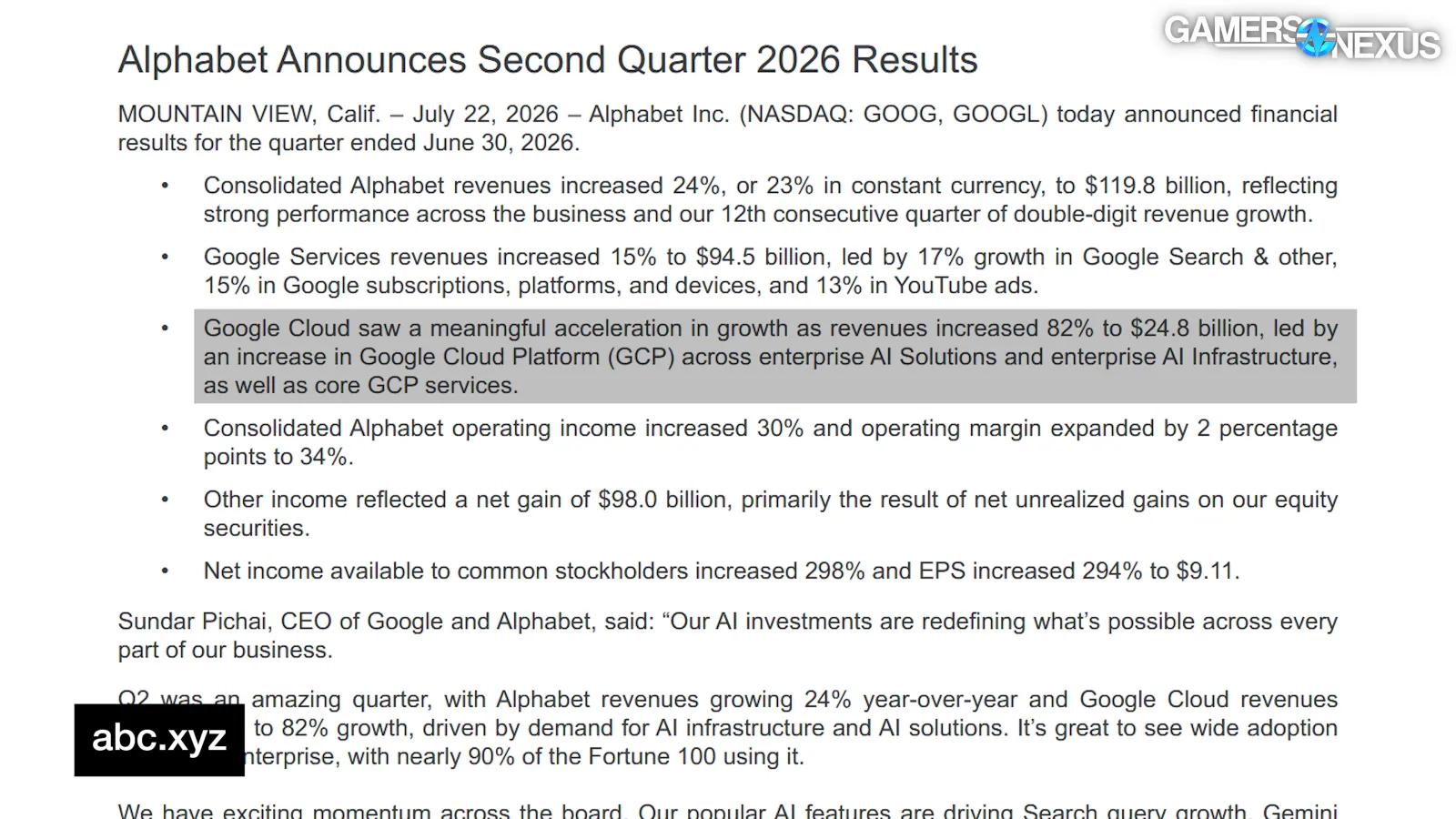
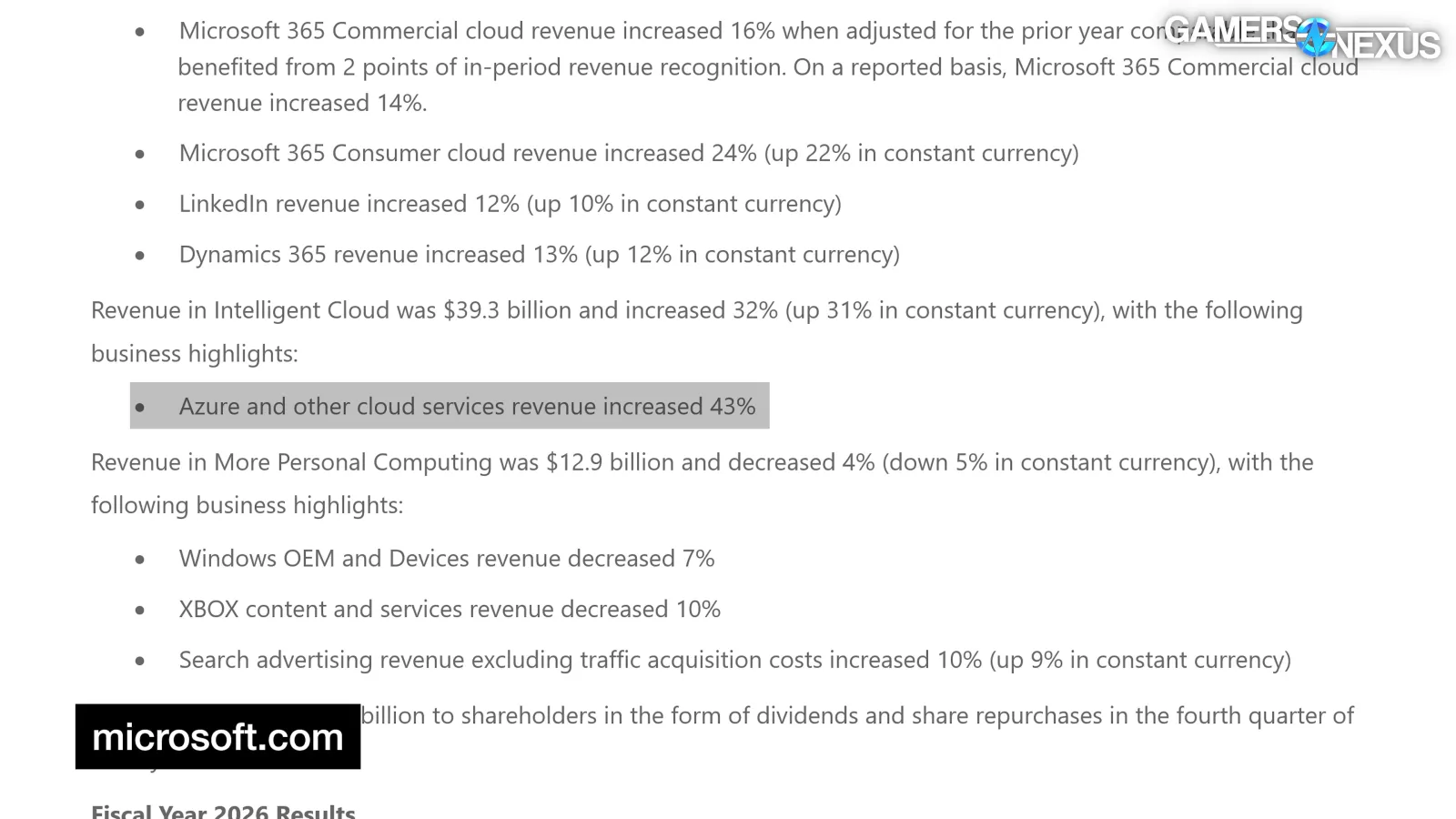
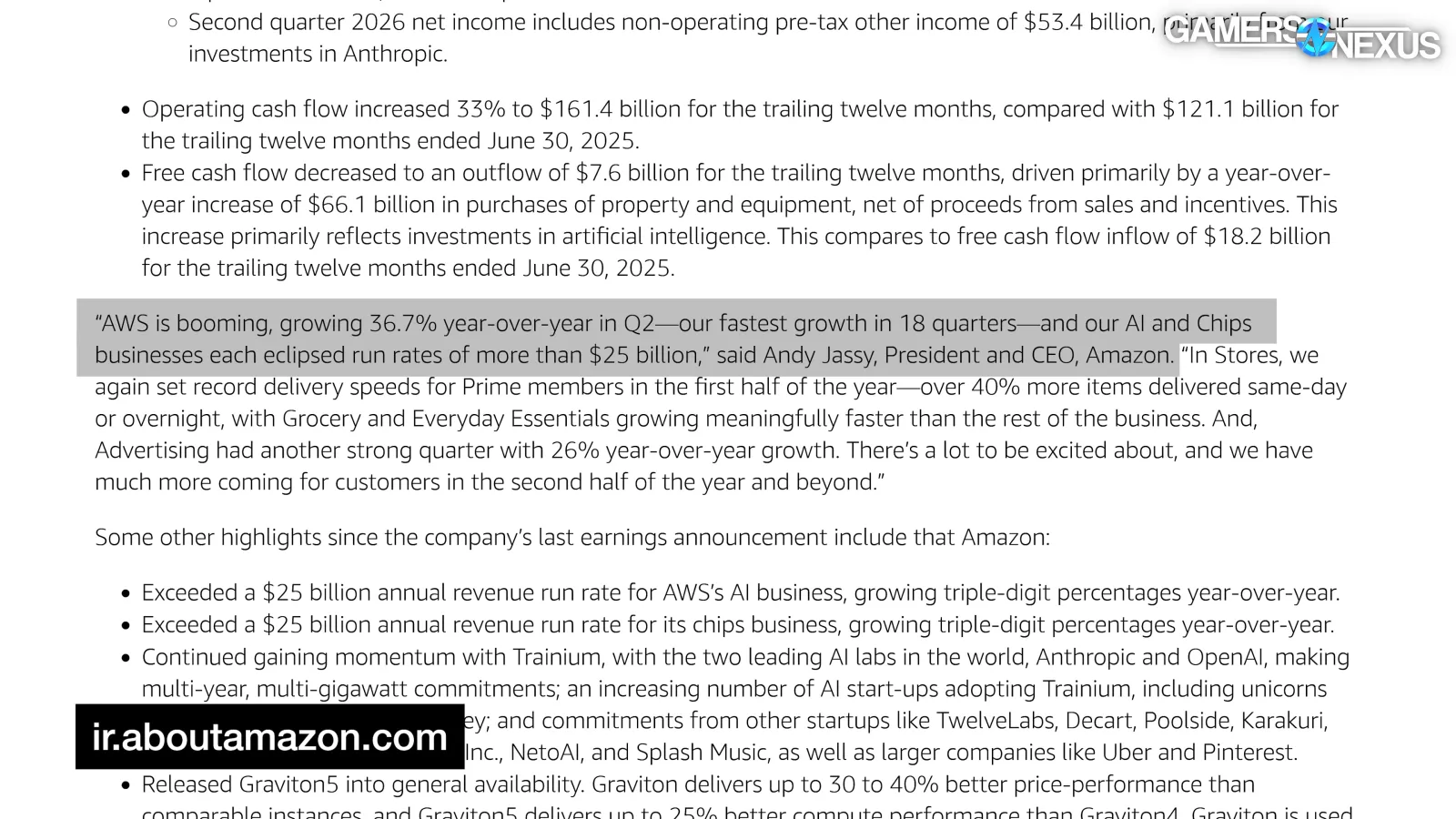
Google Cloud’s revenue increased 82% YoY, Microsoft’s “Azure and other cloud services revenue” increased 43% YoY, and AWS sales increased 36.7% YoY, which Amazon notes is its “fastest growth in 18 quarters.”
Breakdown by End Application
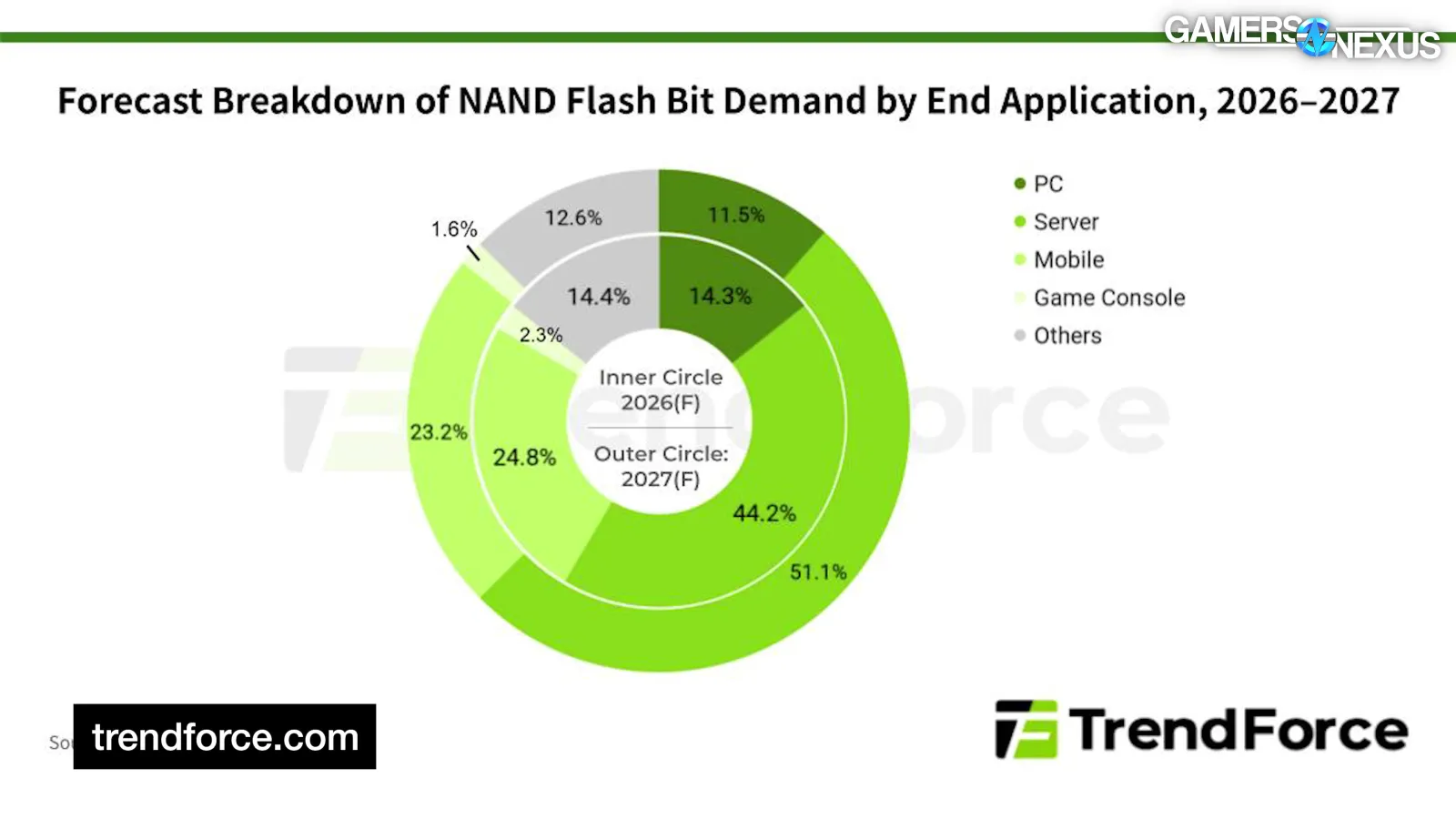
For further reference: In TrendForce’s “Forecast Breakdown of NAND Flash Bit Demand by End Application, 2026-2027” chart, the firm projects NAND bit demand for server applications to increase from 44.2% in 2026 to 51.1% in 2027 while % of total bit demand for PC, mobile, game console, and other applications will each moderately decrease.
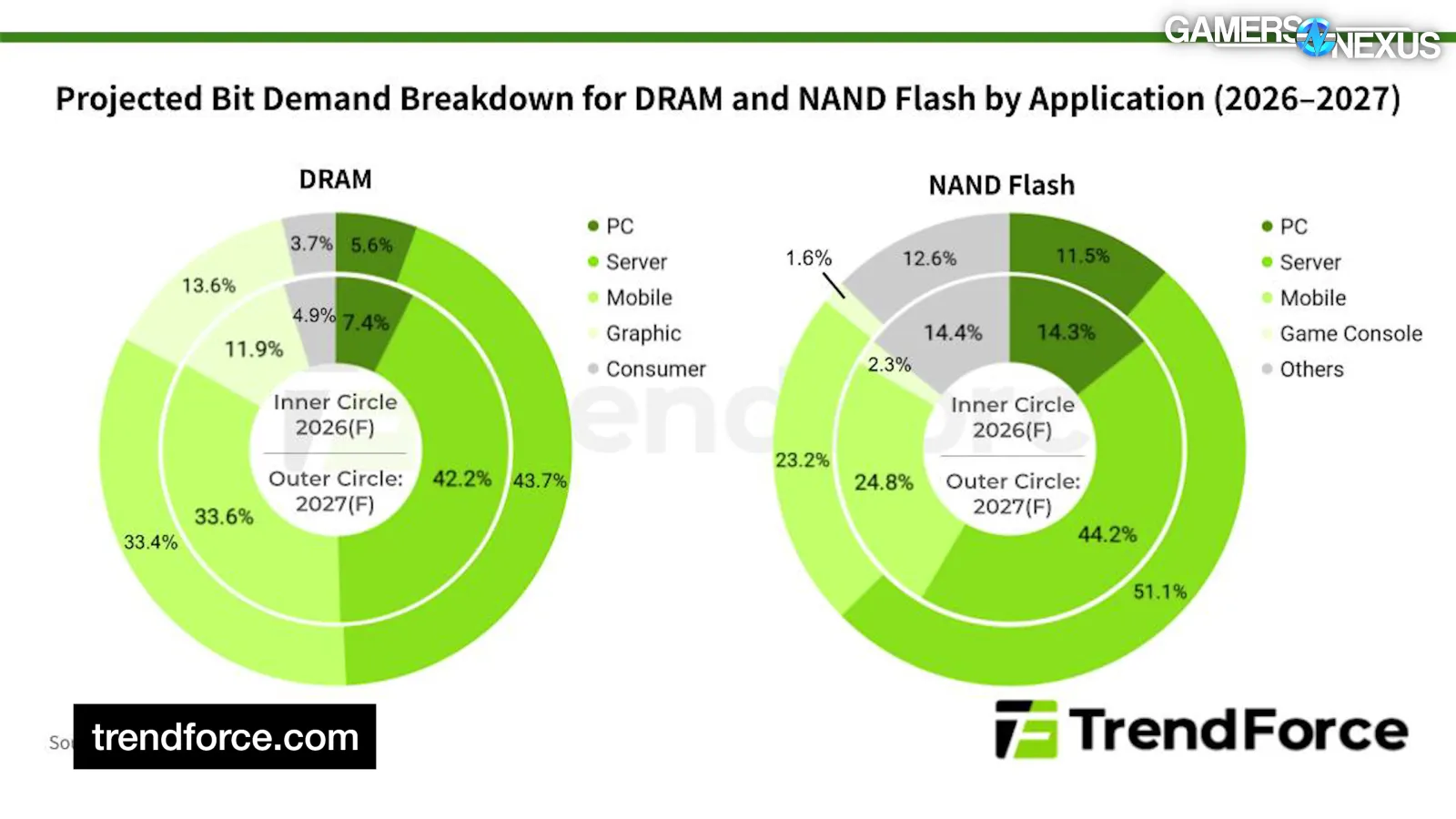
In comparison, TrendForce expects DRAM’s bit demand from graphic and server applications to increase by 1.7 and 1.5 percentage points, reallocating % of total bit demand away from PC, mobile, and consumer applications.
While NAND is primarily only affected by increased server consumption, DRAM is heavily affected by increased graphic consumption in addition to increased server consumption, as manufacturers prioritize HBM.
Based on TrendForce’s projections, PC applications will account for 5.6% of DRAM bit demand and 11.5% of NAND bit demand in 2027.
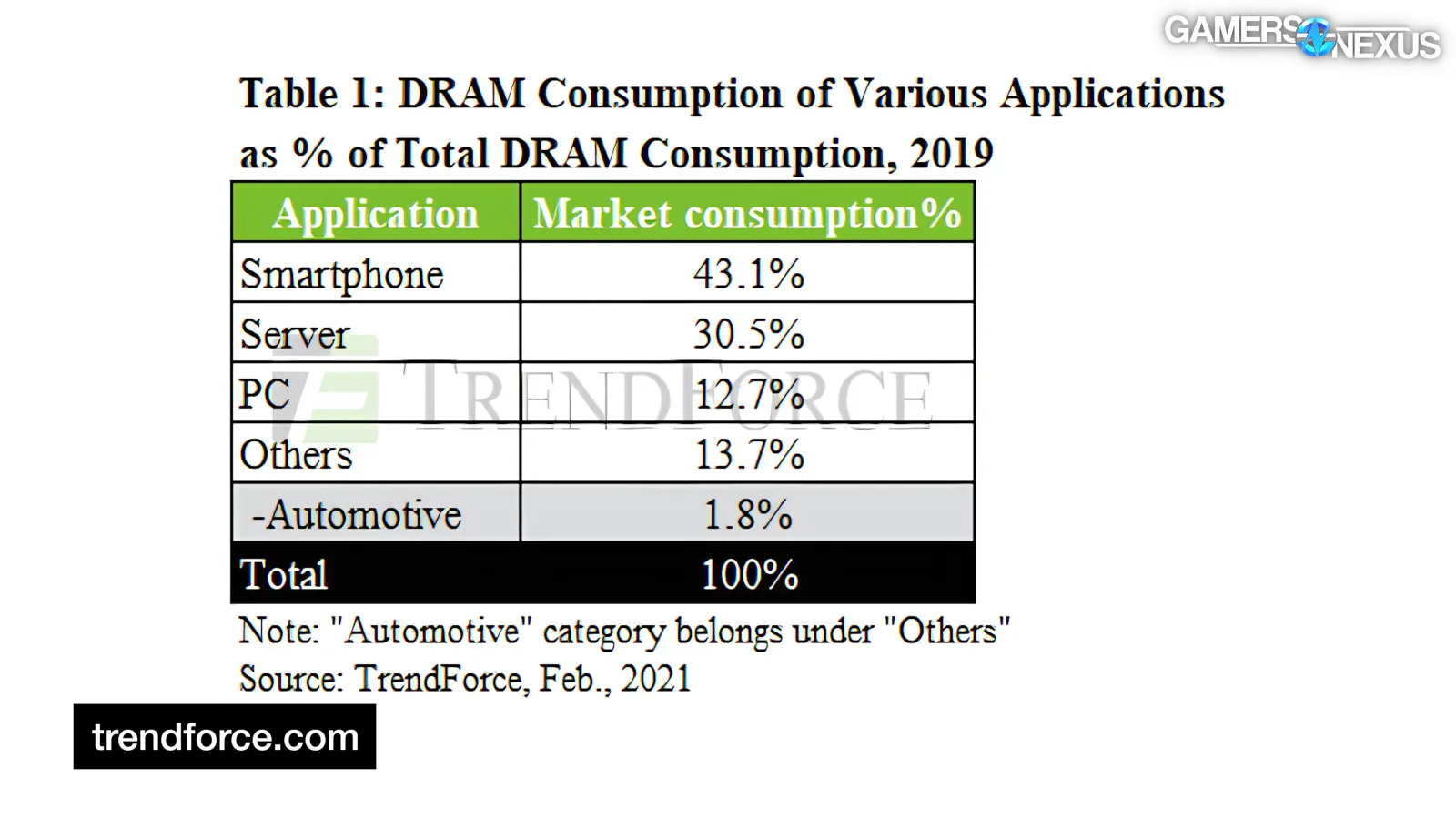
Compared to TrendForce’s 2019 numbers, the % of total DRAM consumption for server applications is projected to increase by 13.2 percentage points, and projected to decrease by 7.1 percentage points for PC applications.
As for how this all affects the consumer market: I think we all know...
SSD & DRAM Price Trends | 09/2025 - 08/2026 | GamersNexus
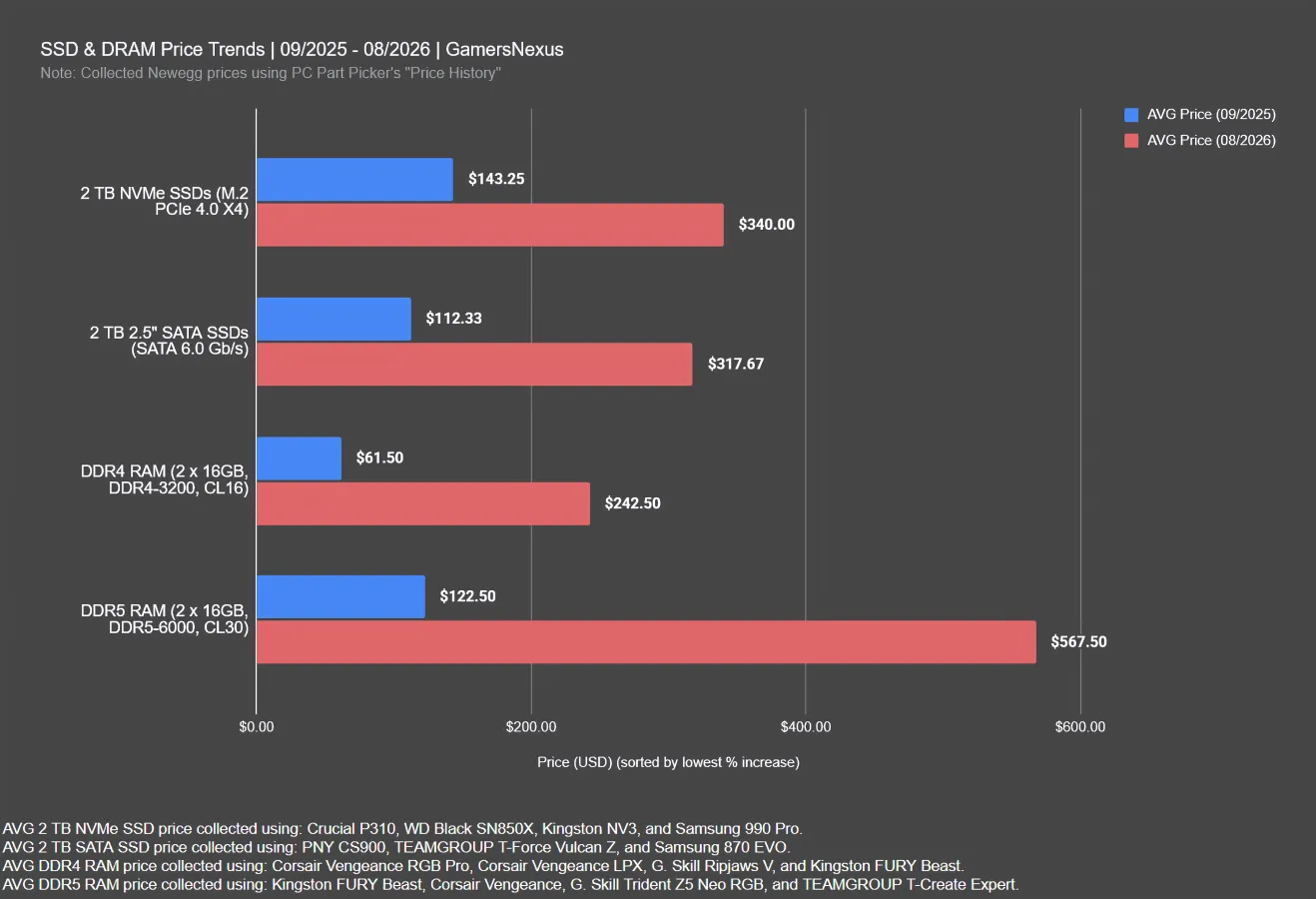
This chart compares AVG prices from September 2025 to AVG prices currently. We collected each entry’s AVG prices from a sample of individual product listings that we found complete price histories for on PC Part Picker, as specified below the chart.
Based on our samples and since last September:
AVG prices for 2 TB NVMe SSDs increased by nearly $200, from $143.25 to $340.
AVG prices for 2 TB SATA SSDs shot up 183%, from $112.33 to $317.67. This is likely aided in some capacity by less production of SATA SSDs.
AVG prices for 32GB DDR5-6000 CL30 kits skyrocketed by an insane $445, or 363%, increasing from $122.50 to $567.50.
Finally, AVG prices for 32GB DDR4 kits surged from $61.50 to $242.50 currently, or by 294%.
While all prices increased significantly within the last year, RAM appears to have undergone steeper % increases. Part of this, we’d assume, is because, unlike NAND supply which is primarily reallocated to server applications, DRAM supply is getting hit on both ends, reallocating supply to both server applications and HBM for graphics cards and accelerators.
HDD Price Comparison
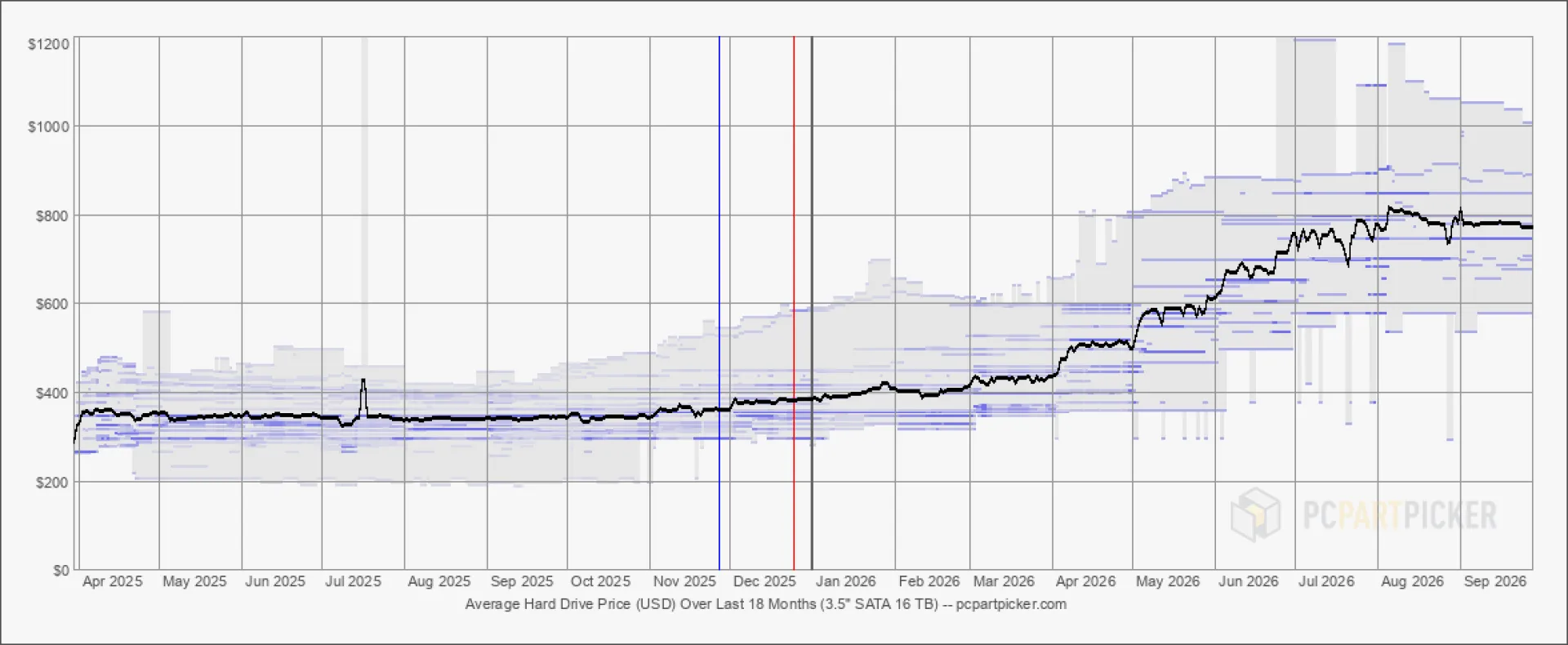
For additional comparison, PC Part Picker’s price trends chart for a 16TB hard drive illustrates how its AVG price increased by nearly 129% in the same period, from roughly $350 in September 2025 to around $800 currently, with price increases really beginning to accelerate in April 2026.
Spot Price History | Session Averages | GamersNexus
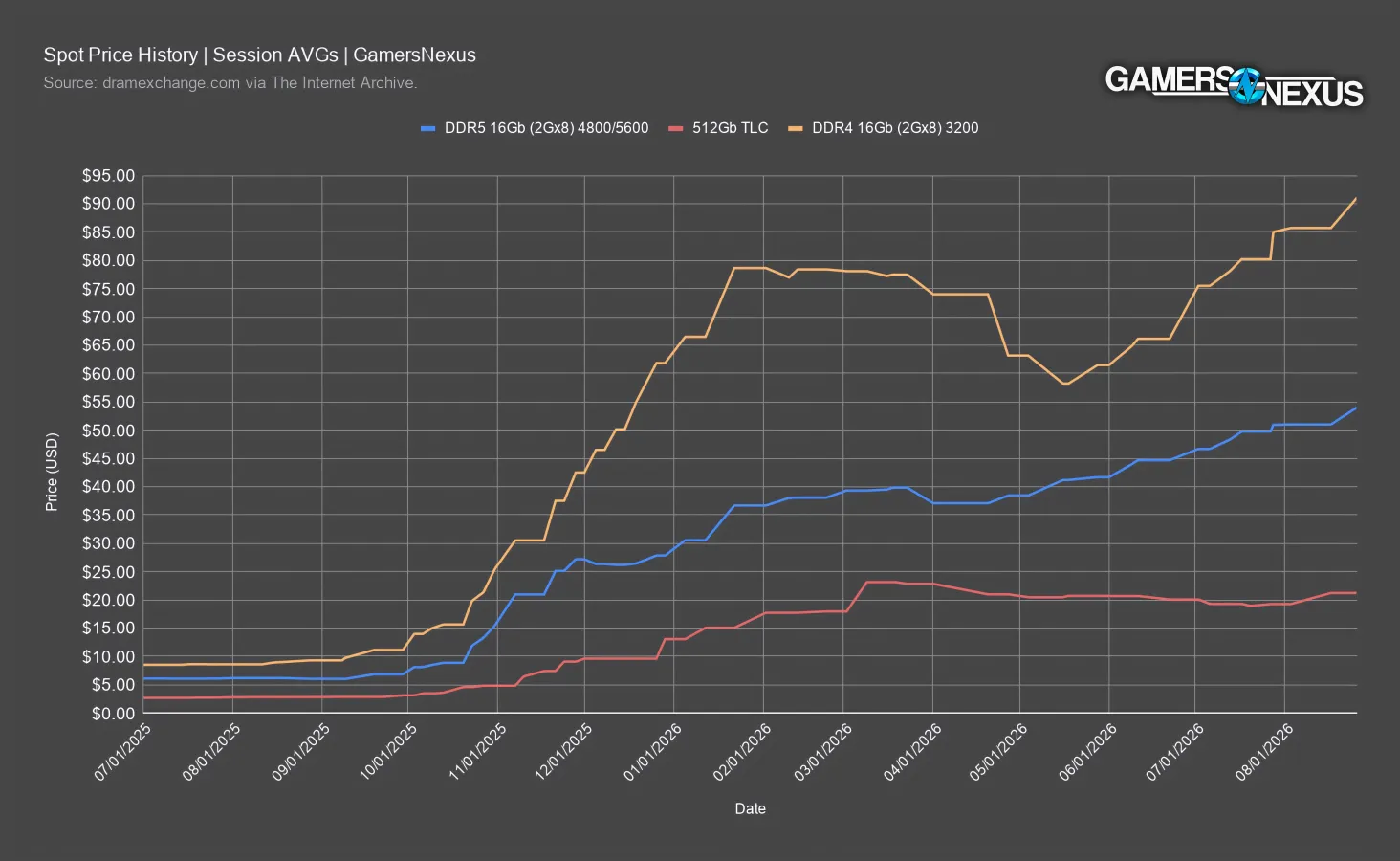
Here, we’ll take a look at spot prices. While spot prices aren’t representative of the contract prices most major OEMs actually pay, they are indicative of demand.
This chart plots the spot price session AVGs for 16Gb DDR5, 512Gb TLC wafer, and 16Gb DDR4, which we collected from saved dramexchange webpages accessed via archive.org’s Wayback Machine.
The 16Gb DDR5 session AVG started around $6 between July and mid September, jumped by about $20 between October and December, and has gradually increased to its current $54 session AVG since January.
The 512Gb TLC wafer session AVG held around $2.70 between July and September, surged from $3 to $23 between October and March, and has plateaued to around $21 since.
The 16Gb DDR4 session AVG began at around $8.60 in July, skyrocketed to $78 between September and January, dropped to $58 in May, and has continued a steady climb since, sitting around $91 currently.
It's basically behaving like the crypto market. If DDR4 spot pricing were an altcoin, it'd fit right in with 2018.
Compared to each entry’s session AVG in July, current spot prices have increased by roughly: 800% for 16Gb DDR5, 678% for 512Gb TLC, and 958% for 16Gb DDR4, with greatest increases occurring between October and March.
YMTC Gains
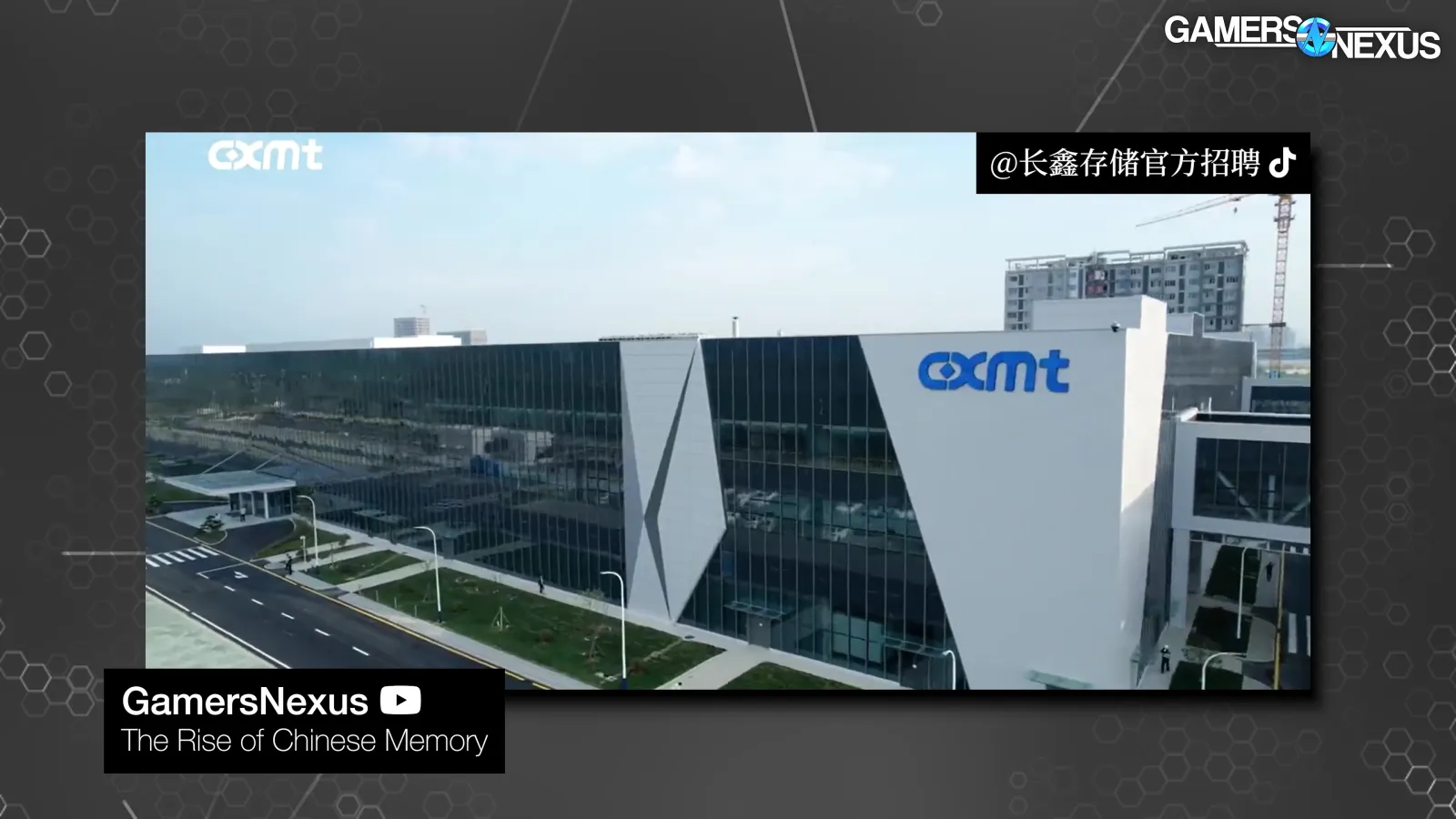
Meanwhile, emerging Chinese manufacturers CXMT and YMTC are gaining on the incumbents.
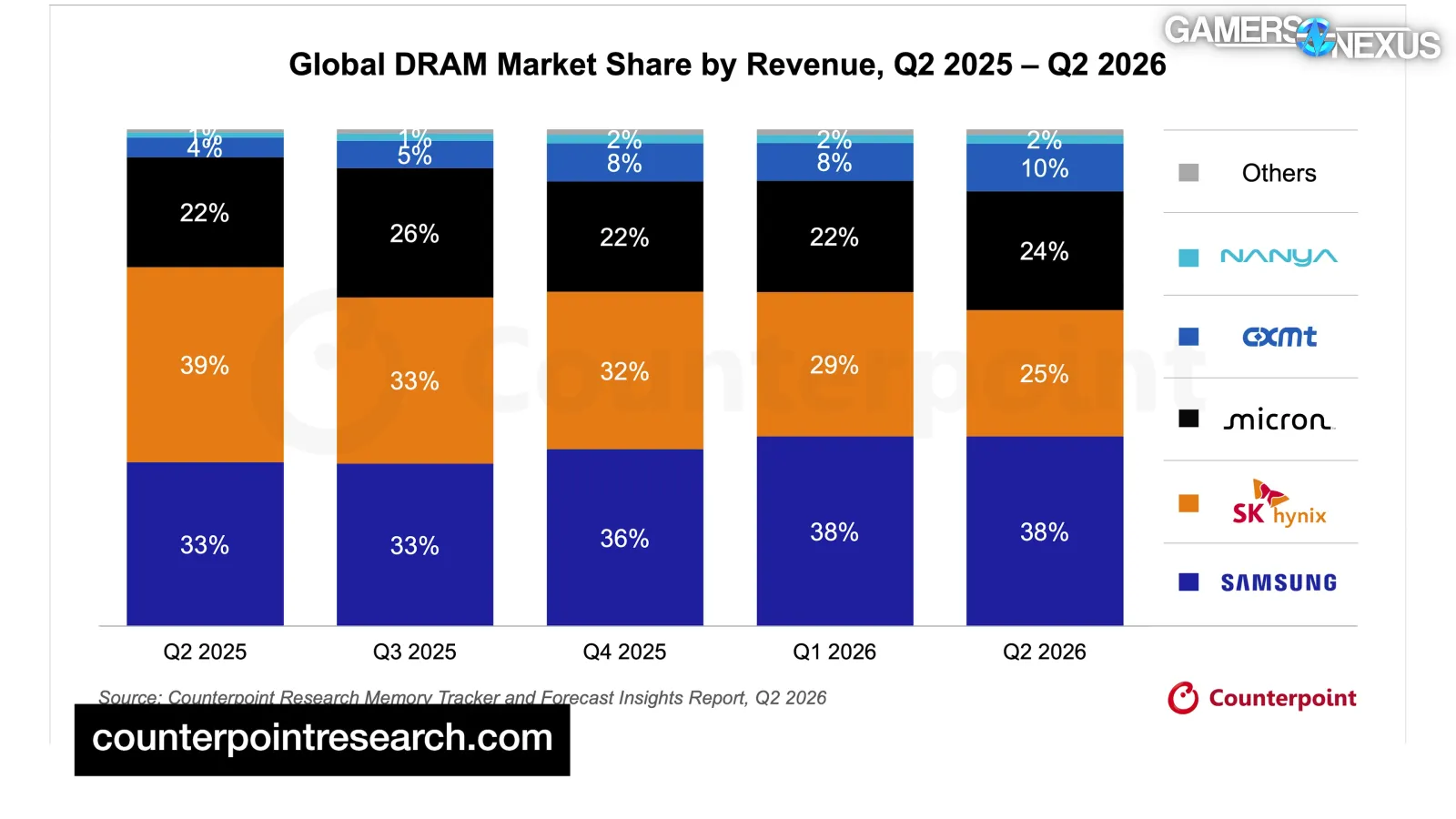
According to Counterpoint Research, CXMT’s global DRAM market share by revenue has increased from 4% in 2Q 2025 to 10% in 2Q 2026.
This should be terrifying for the incumbents, and maybe explains why the US is so eager to ban CXMT while US-based Micron scoops up more business. If you’re curious about these companies, we ran a deep-dive documentary called “The Rise of Chinese Memory” that delves into the history of both.
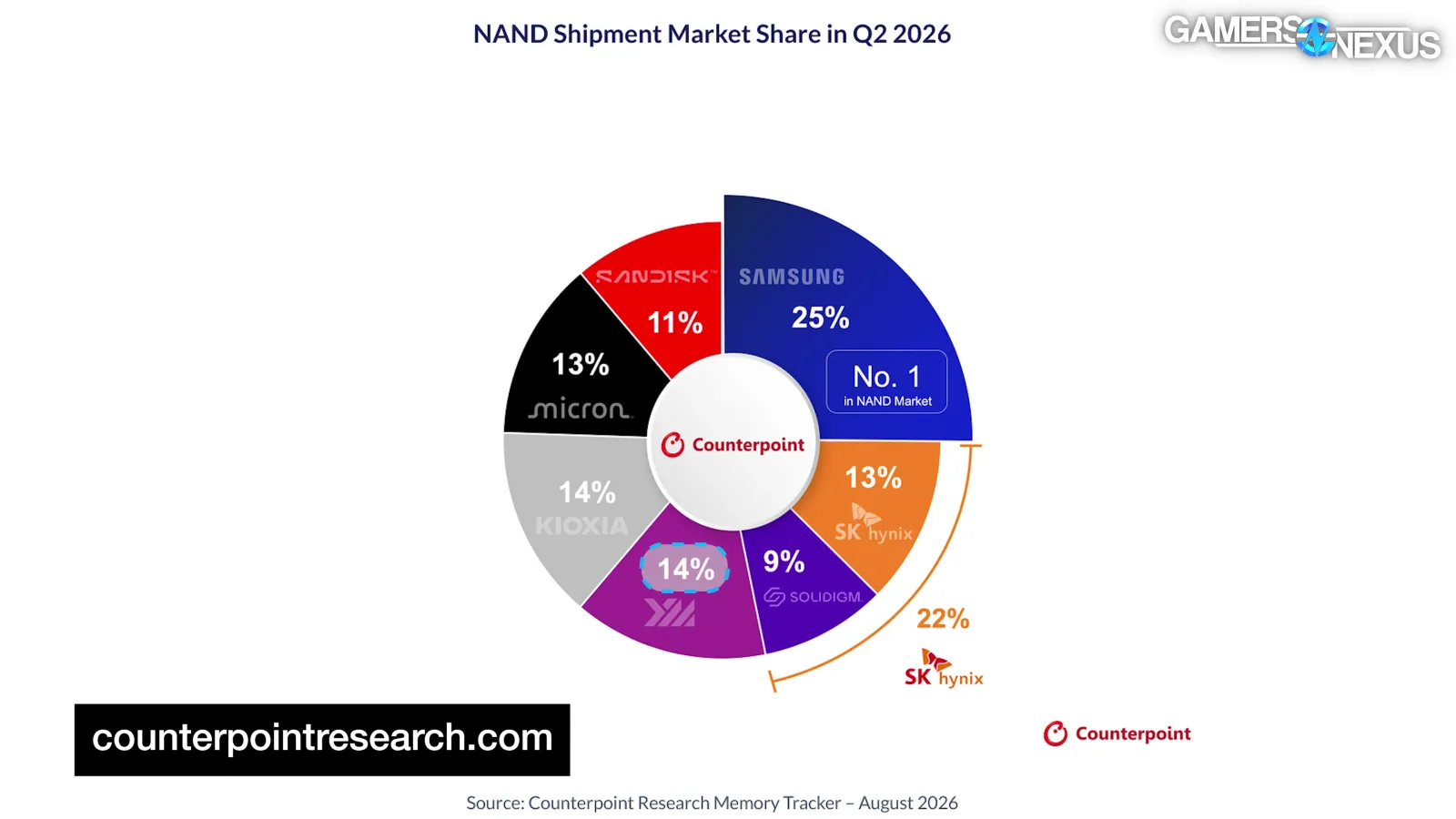
Counterpoint also claimed that YMTC recently broke into the top 3 largest NAND manufacturers by shipment share, now surpassing Kioxia, Micron, and SanDisk.
In fact, the Chinese manufacturers are now reportedly looking to expand their market shares outside of China. Jukan, citing DigiTimes, reports:
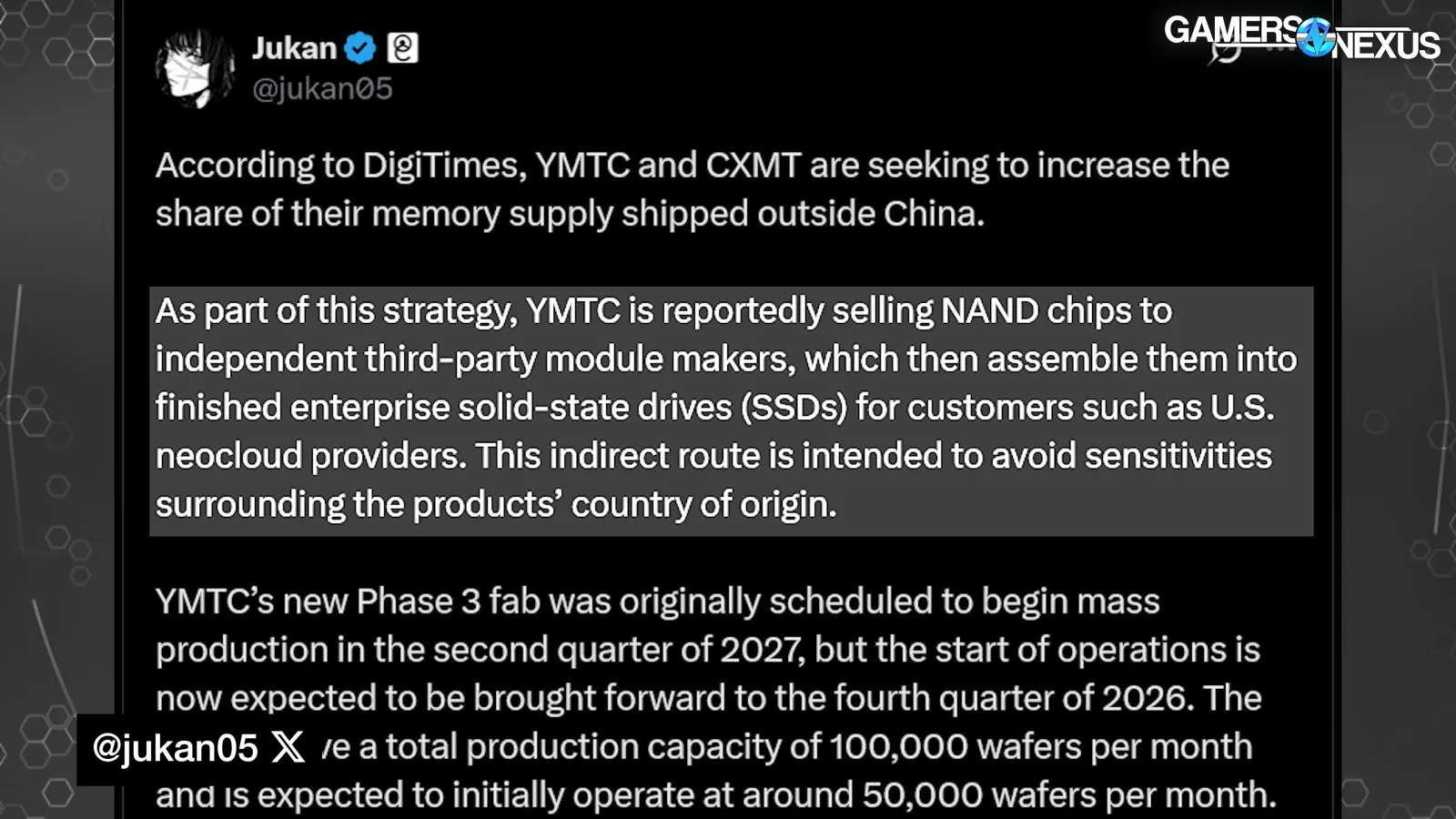
“As part of this strategy, YMTC is reportedly selling NAND chips to independent third-party module makers, which then assemble them into finished enterprise solid-state drives (SSDs) for customers such as U.S. neocloud providers. This indirect route is intended to avoid sensitivities surrounding the products’ country of origin. [...] With DDR5 and LPDDR5 supplies becoming increasingly tight, CXMT has reportedly begun product qualification with small and midsized cloud service providers in markets including the U.S. and Canada. The company appears to be seeking to secure customers early by locking in capacity commitments ahead of time.”
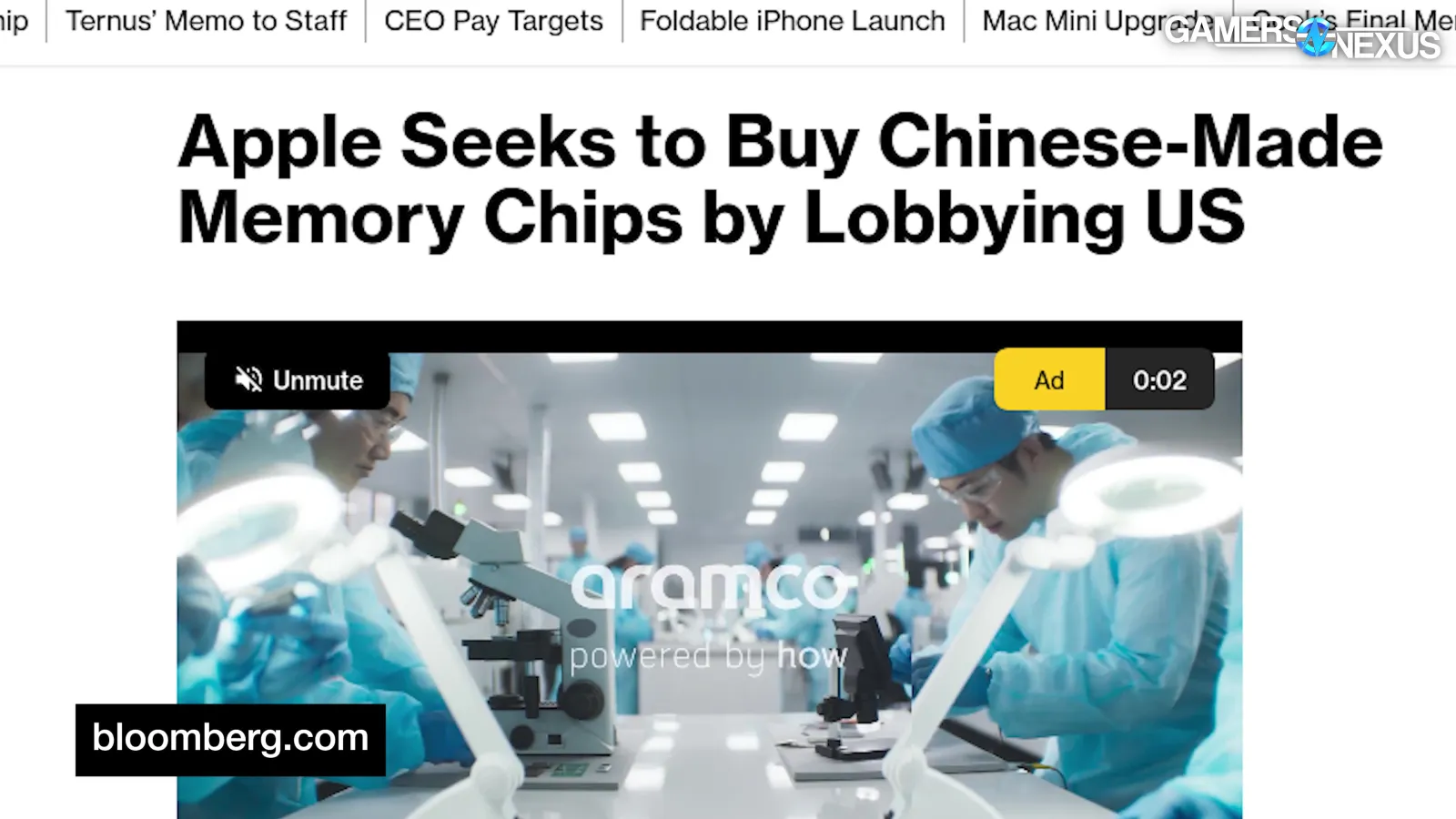
That said, after Bloomberg reported that Apple was attempting to purchase chips from CXMT and YMTC, Chuck Schumer did what he does best and put his glasses in attack position to write a strongly-worded letter, urging Apple:
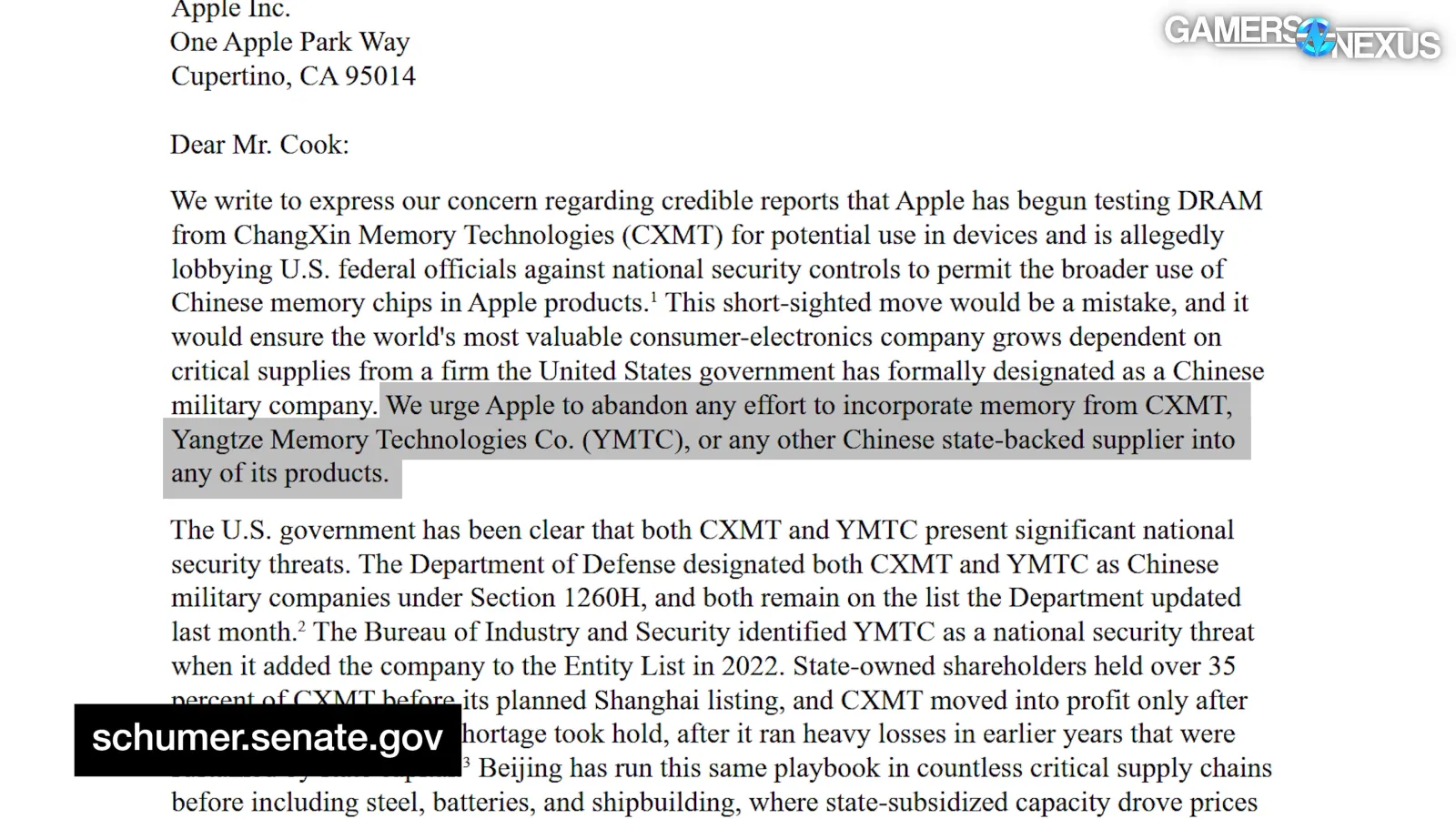
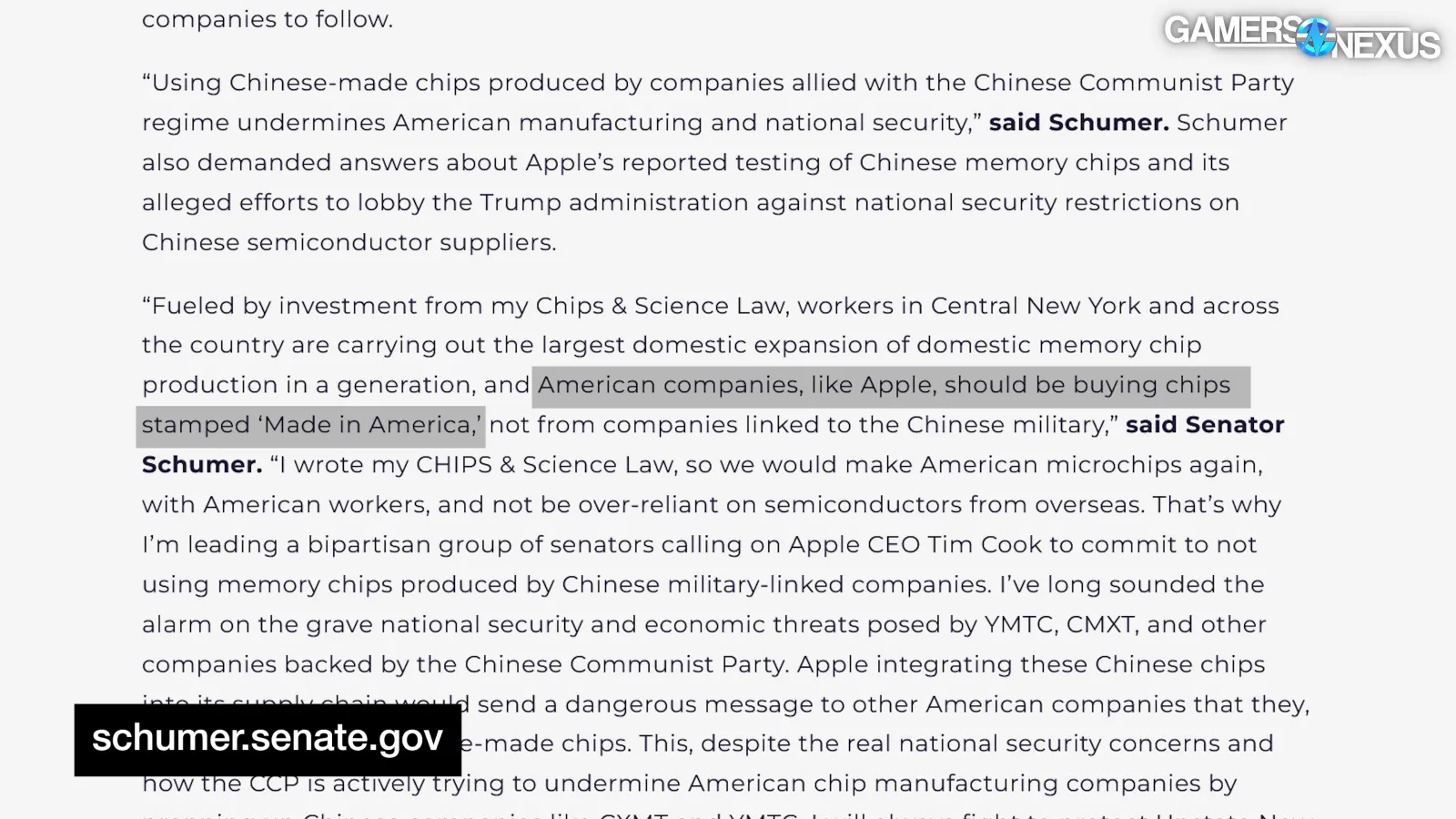
“to abandon any effort to incorporate memory from CXMT, Yangtze Memory Technologies Co. (YMTC), or any other Chinese state-backed supplier into any of its products,” and claiming “American companies, like Apple, should be buying chips stamped ‘Made in America.’”
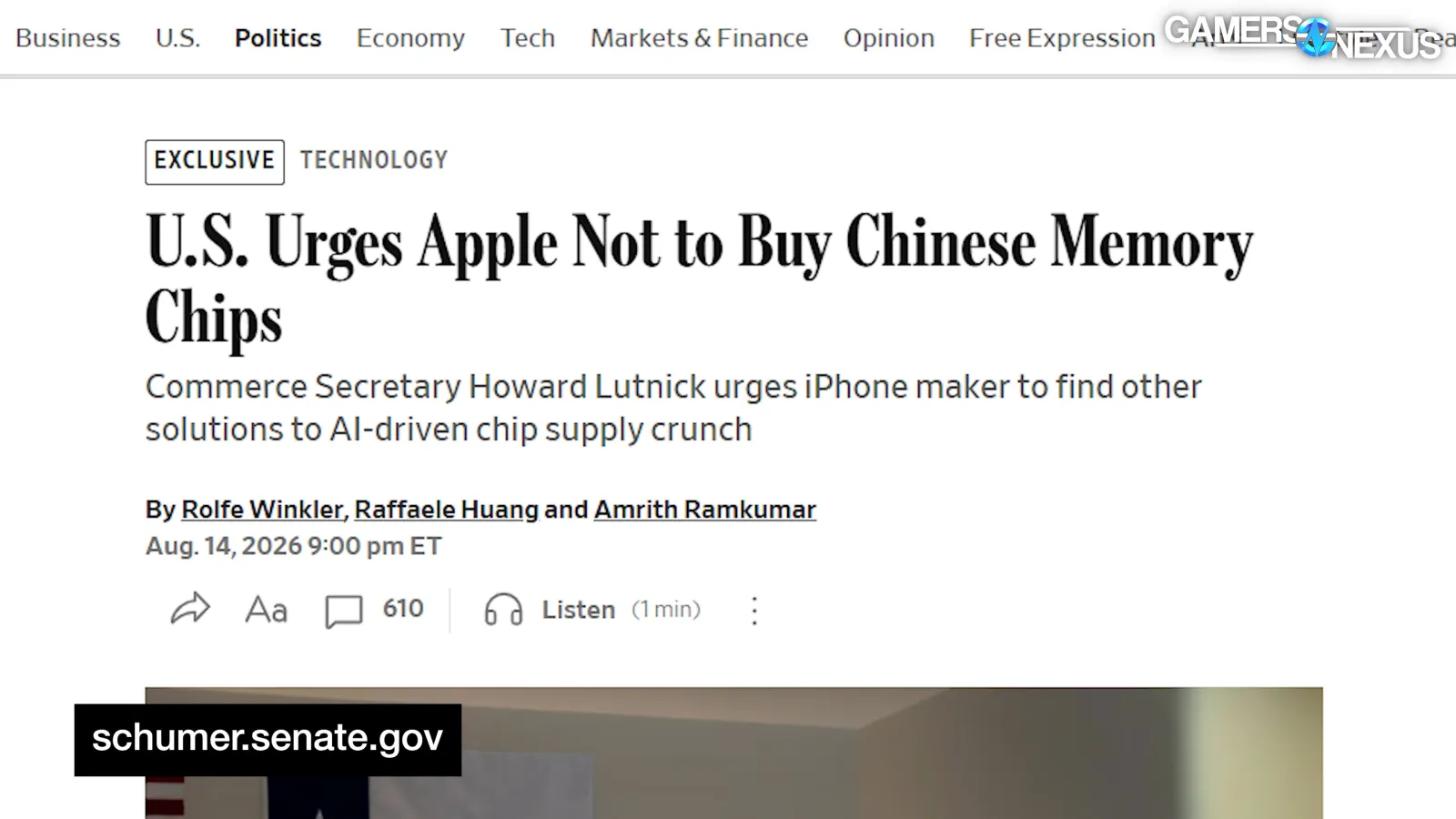
The WSJ also quoted Commerce Secretary Lutnick as saying, “There have to be ‘other solutions to the memory issue, but it’s not great American companies using Chinese memory.’”
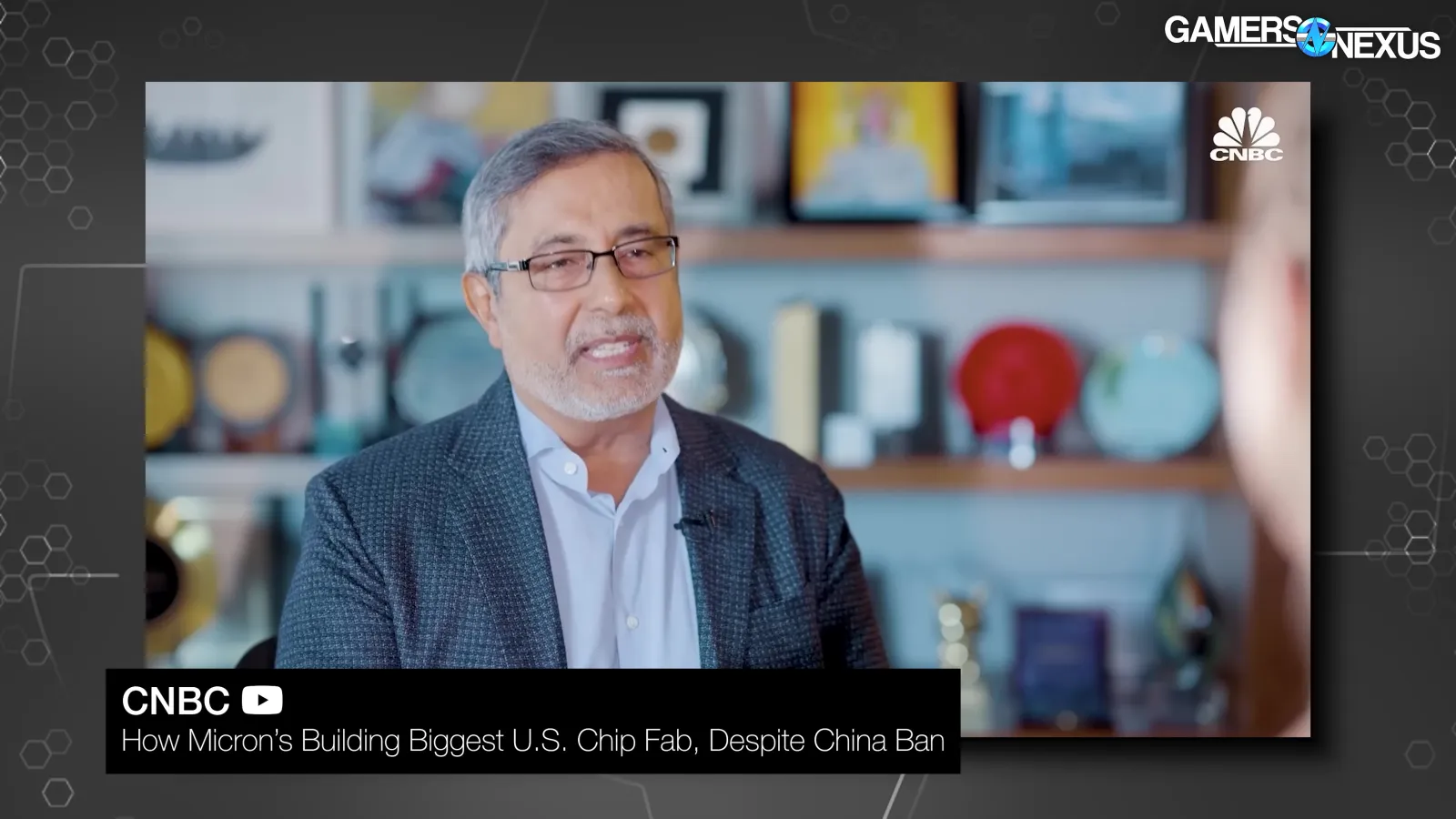
For context, in late 2023 Micron’s CEO stated, “Today, only 2% of the world’s total memory production, DRAM production, is coming from the U.S.”
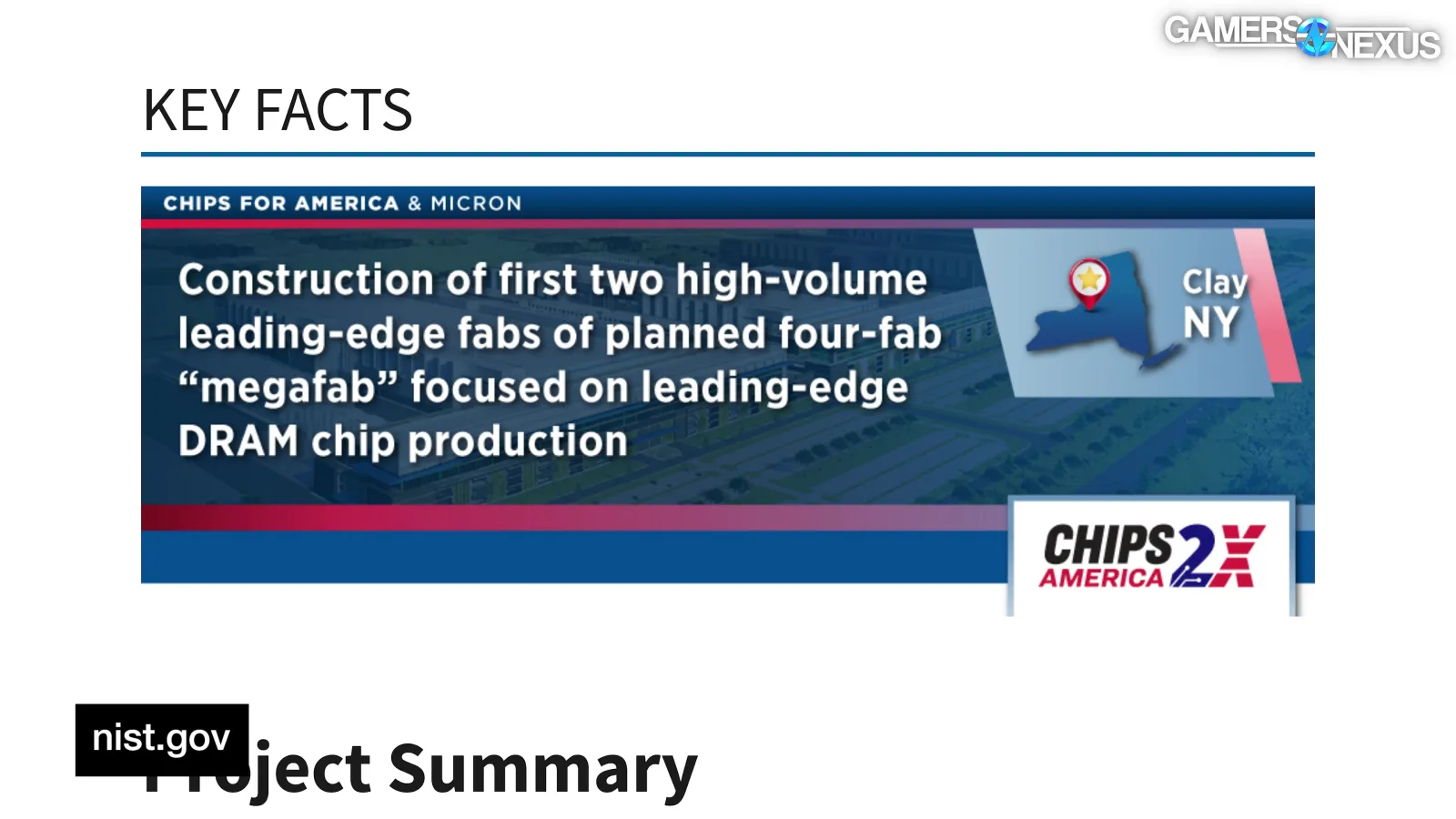
Additionally, the National Institute of Standards and Technology notes that Micron’s New York and Idaho fabs currently in construction “will help the U.S. grow its share of advanced memory manufacturing from less than 2% today to approximately 10% by calendar year 2035.”
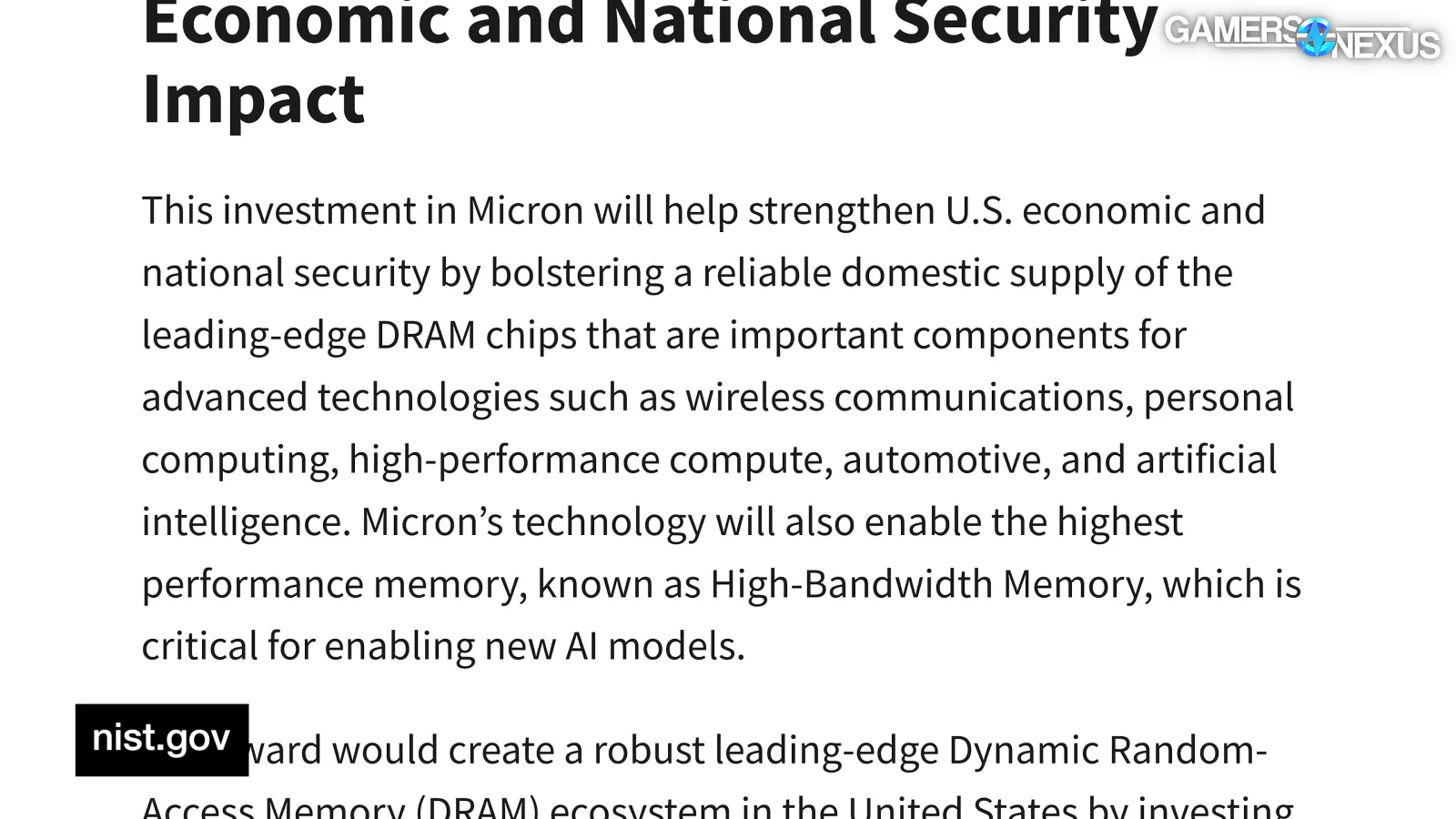
We’d expect that a significant portion of the chips Micron eventually manufactures in the U.S. will be allocated to HBM, making the % of DRAM available to consumers likely even less.
In other words, Micron, the only U.S.-based manufacturer, doesn’t produce enough DRAM in America to support American companies today, nor will it produce enough DRAM in America to support American companies in 10 years, so we aren’t entirely sure what ‘other solution’ Secretary Lutnick is referring to unless he wants to open a fab on his allegedly dead friend’s island... Restricting imports now will only harm American consumers and people. Memory is also an unlikely candidate for vulnerabilities, as we discussed in our Rise of Chinese Memory documentary.
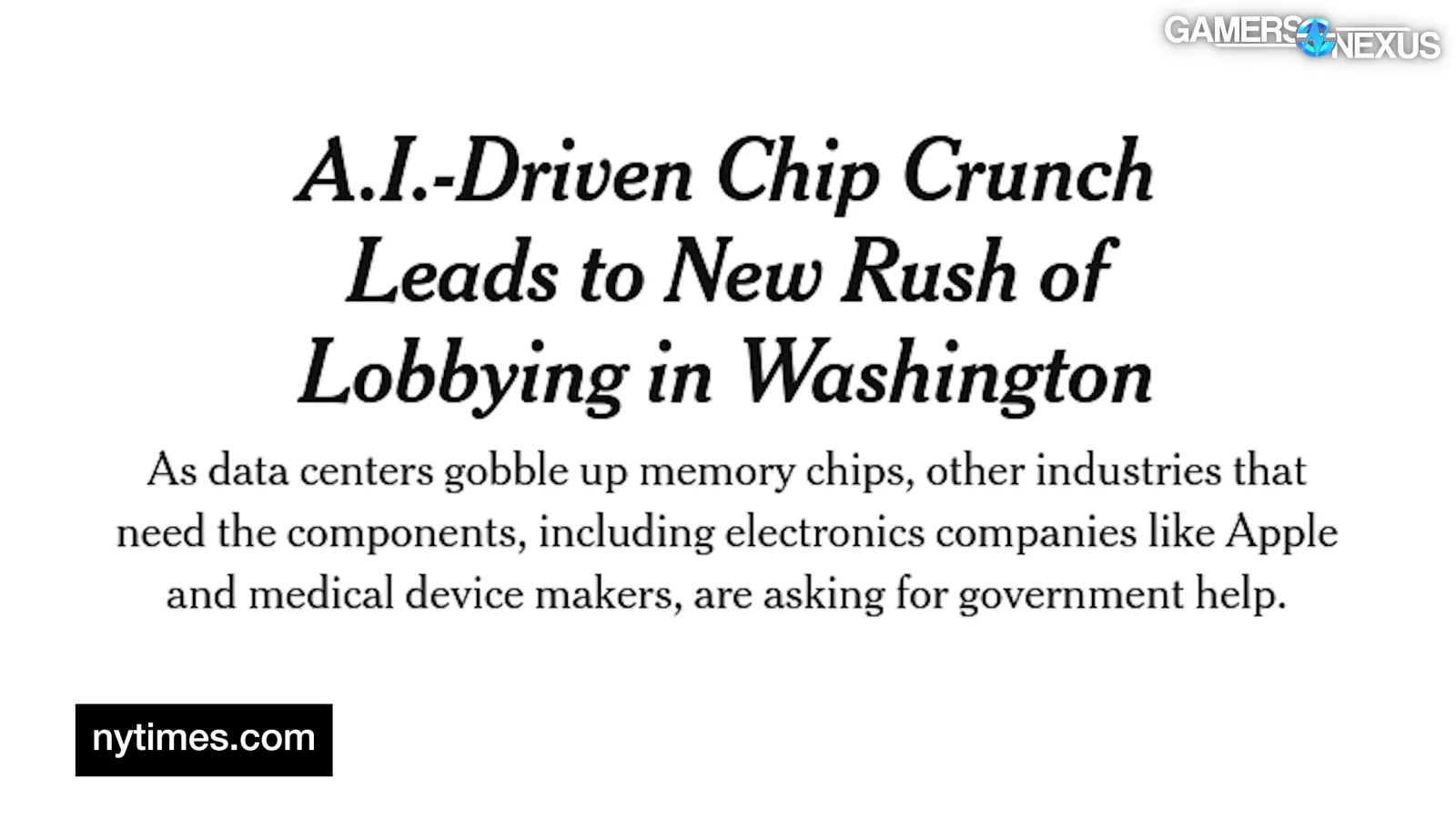
The New York Times, speaking with lobbyists asking for government intervention, reported, “Some have suggested that selling chips to a broader set of customers should be a condition for receiving money from the 2022 CHIPS and Science Act, a program to fund semiconductor research and manufacturing in the United States, three of those people said. Others have asked the Trump administration to use a Korean War-era law called the Defense Production Act to require allocation to industries outside of A.I., five people said.”
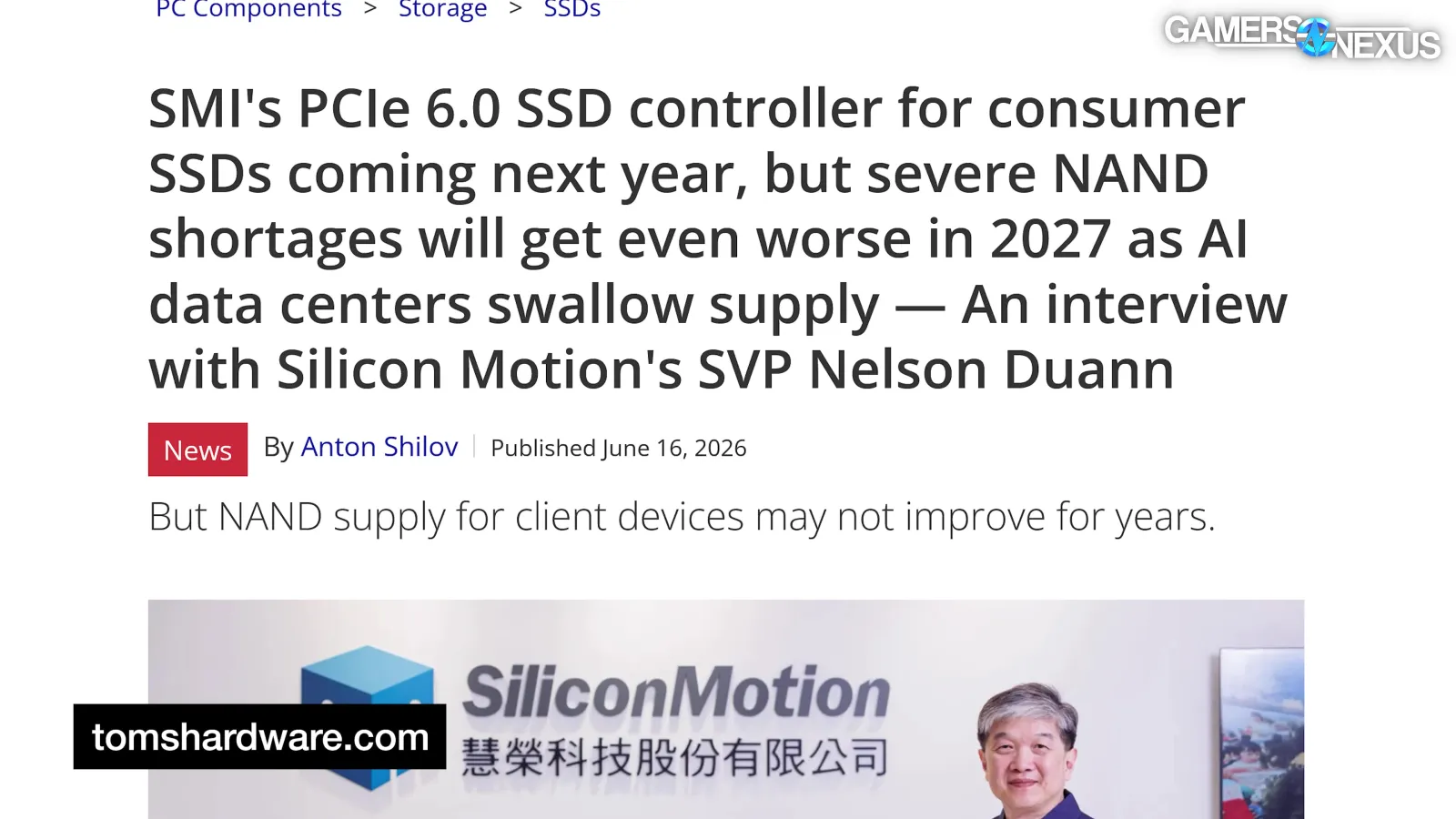
In an interview with Tom’s Hardware, Silicon Motion SVP Nelson Duann noted about the Chinese manufacturers, “Because they receive government support, they also have a responsibility to help maintain the health of the local market. Foreign suppliers generally follow the highest-return opportunities and can allocate most of their supply to data centers. Chinese suppliers cannot do that in the same way because the government can provide guidance and encourage them to support certain local industries.”

We think it’s ironic that, despite receiving nearly $6.5 billion in government support from the CHIPS act, Micron has no responsibilities to support our domestic market or industries. And Micron, too, is part of the US military’s memory supply, so this accusation of CXMT’s China-backing continues to fall flat.
Supply Forecast
As for the forecasted supply/demand going forward:
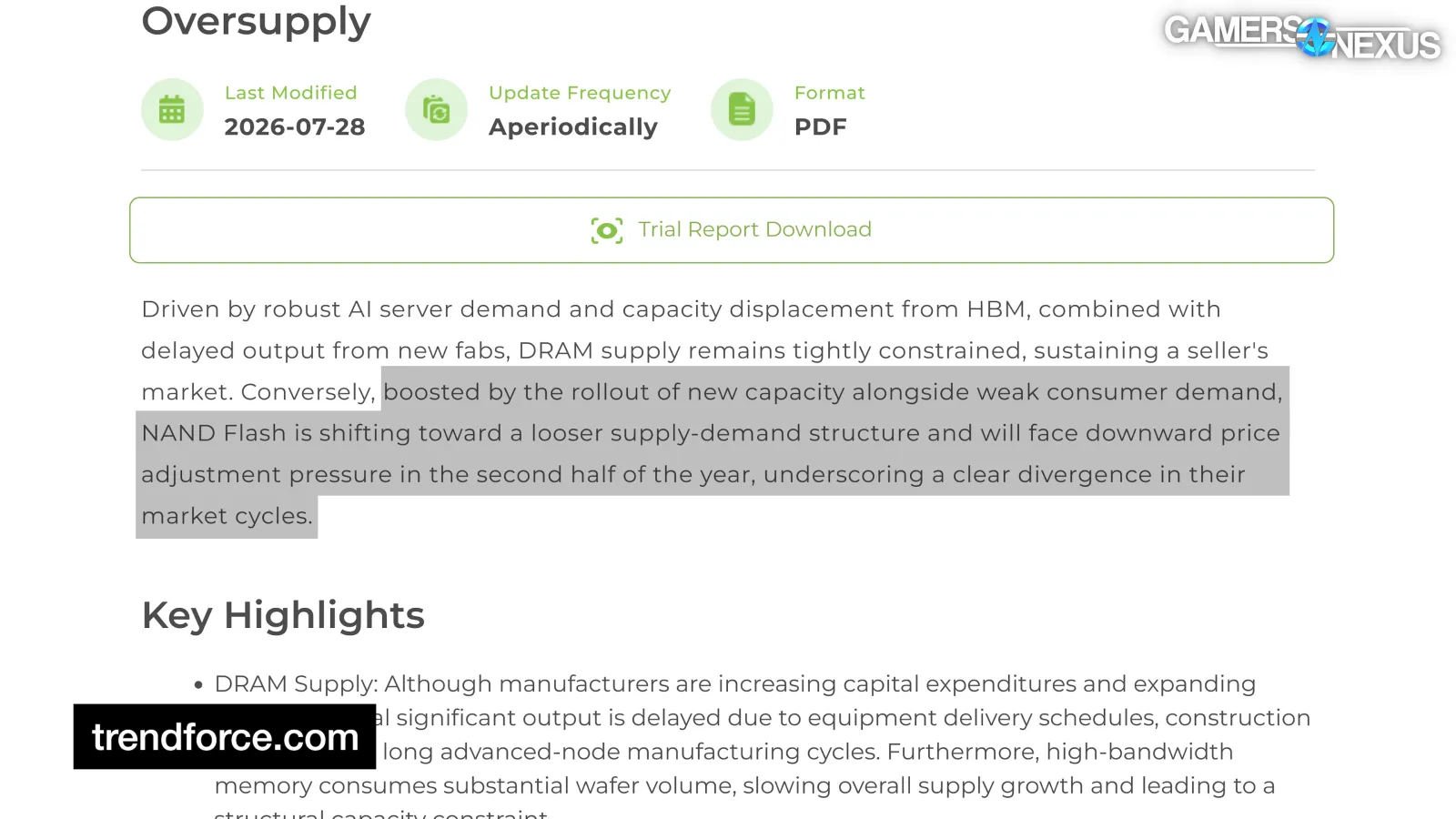
TrendForce predicts we may see a light at the end of the tunnel for NAND sooner than DRAM, citing a greater output due to denser-layer NAND technology, stating, “Boosted by the rollout of new capacity alongside weak consumer demand, NAND Flash is shifting toward a looser supply-demand structure and will face downward price adjustment pressure in the second half of the year, underscoring a clear divergence in their market cycles.”
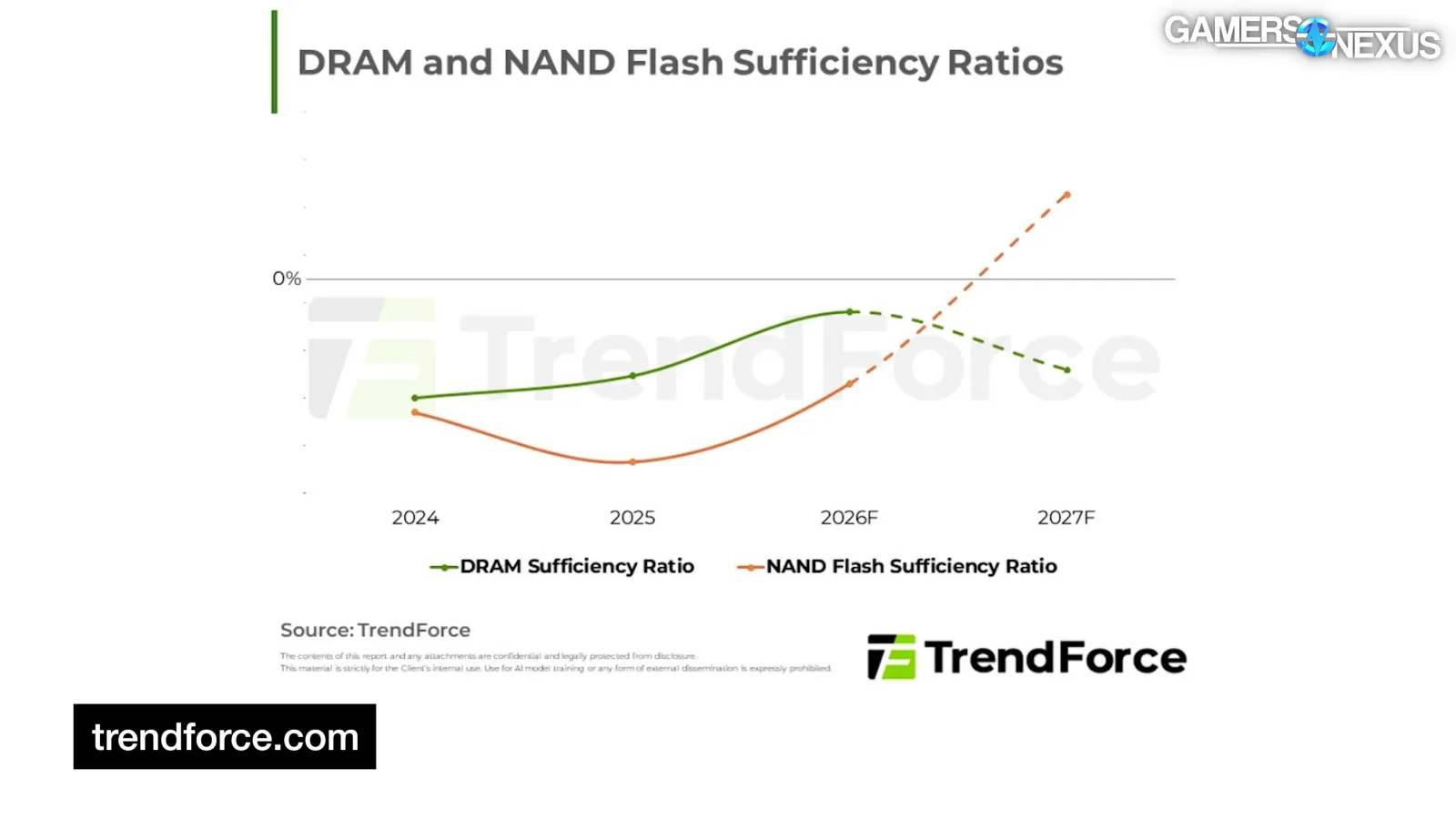
In its “DRAM and NAND Flash Sufficiency Ratios” chart, TrendForce anticipates NAND Flash reaching a positive sufficiency ratio, where supply exceeds demand, sometime in 2027, while DRAM’s sufficiency ratio is only expected to worsen.
That said, not all industry leaders share the same optimism.
In an interview with Tom’s Hardware, a Silicon Motion SVP asserted, “The retail SSD market has almost disappeared.”
“Suppliers can get some bit growth by moving to newer NAND generations, but demand is growing faster. As a result, the shortage will not improve next year. It will get worse.”
Conclusion

We obviously can’t know exactly how this is all going to play out since it’s getting deep into the future of geopolitics, including the November election. Politics has become deeply intertwined with the computer hardware and chip industry, and those political decisions to ban, unban, or dole-out money and for what purpose will drive pricing.
We do think that the move to higher capacity and duration long-term agreements will fundamentally alter the market’s traditionally cyclical pricing nature, likely reducing overall pricing volatility, and not in a good way. For consumers, that means higher floor pricing. Even if it comes down, it may not be to prior lows. Our best hope might be a bubble pop, but that might also destroy the economy...
We try not to make predictions in these situations, as we really have no unique insight here; however, if manufacturers are allocating up to 70% of their capacities up to 5 years in advance, we’d assume that supply will remain constrained until the manufacturers are able to meaningfully increase supply through fab expansion, which takes several years at a minimum.
Going forward, we’ll continue to keep an eye on pricing and we’ll be sure to update upon any meaningful market changes.