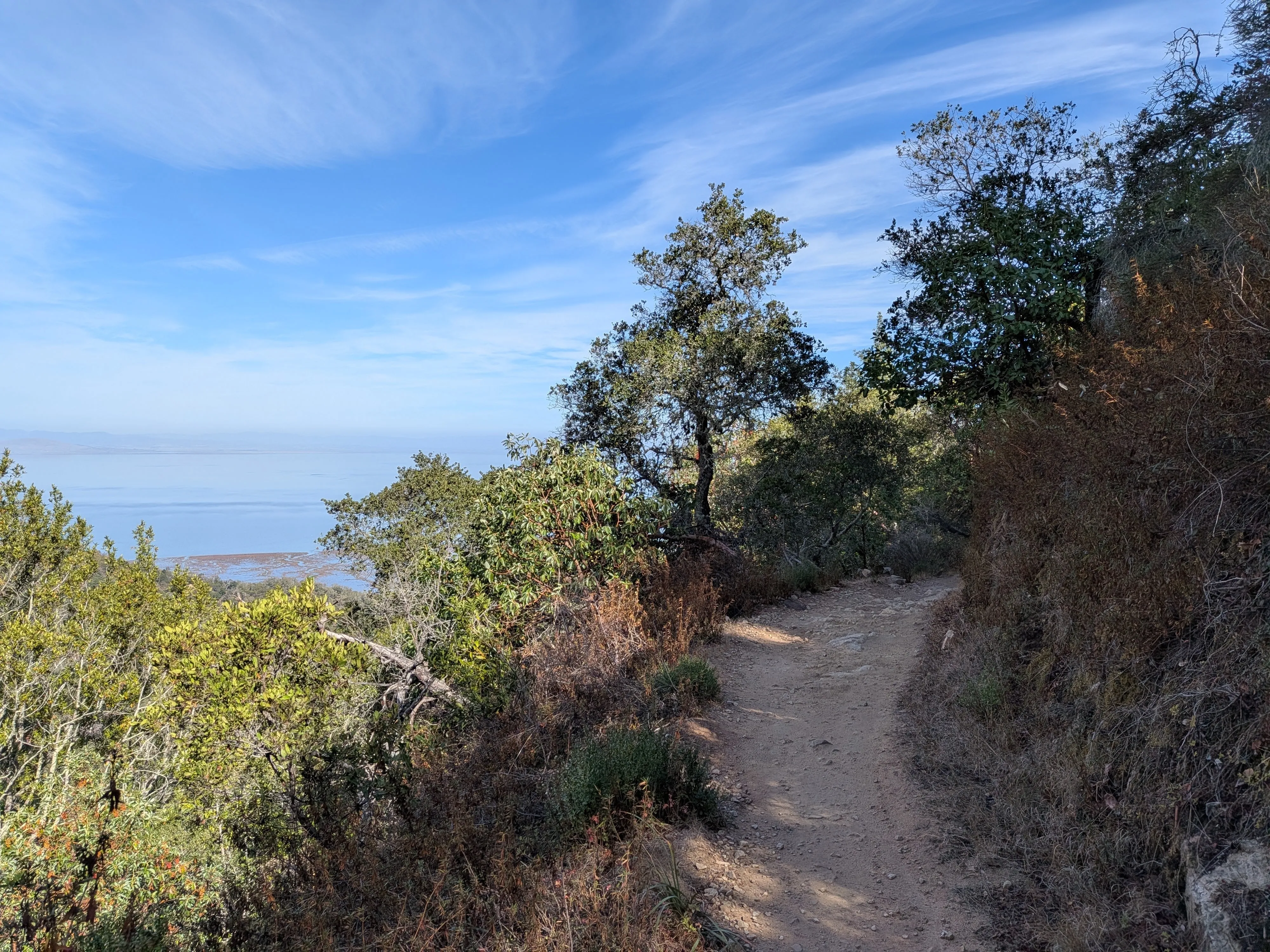
My friend Michael Morango (his pen name) has been mountain biking for at least 4 years. It’s his favorite activity. When I came to visit him in California, he invited me to go mountain biking for the first time ever. Michael and his wife are about to have a baby, so we had time.
He picked an easy trail, rated green (the easiest rating), at China Camp State Park in California. I didn’t exactly know what I was getting into.
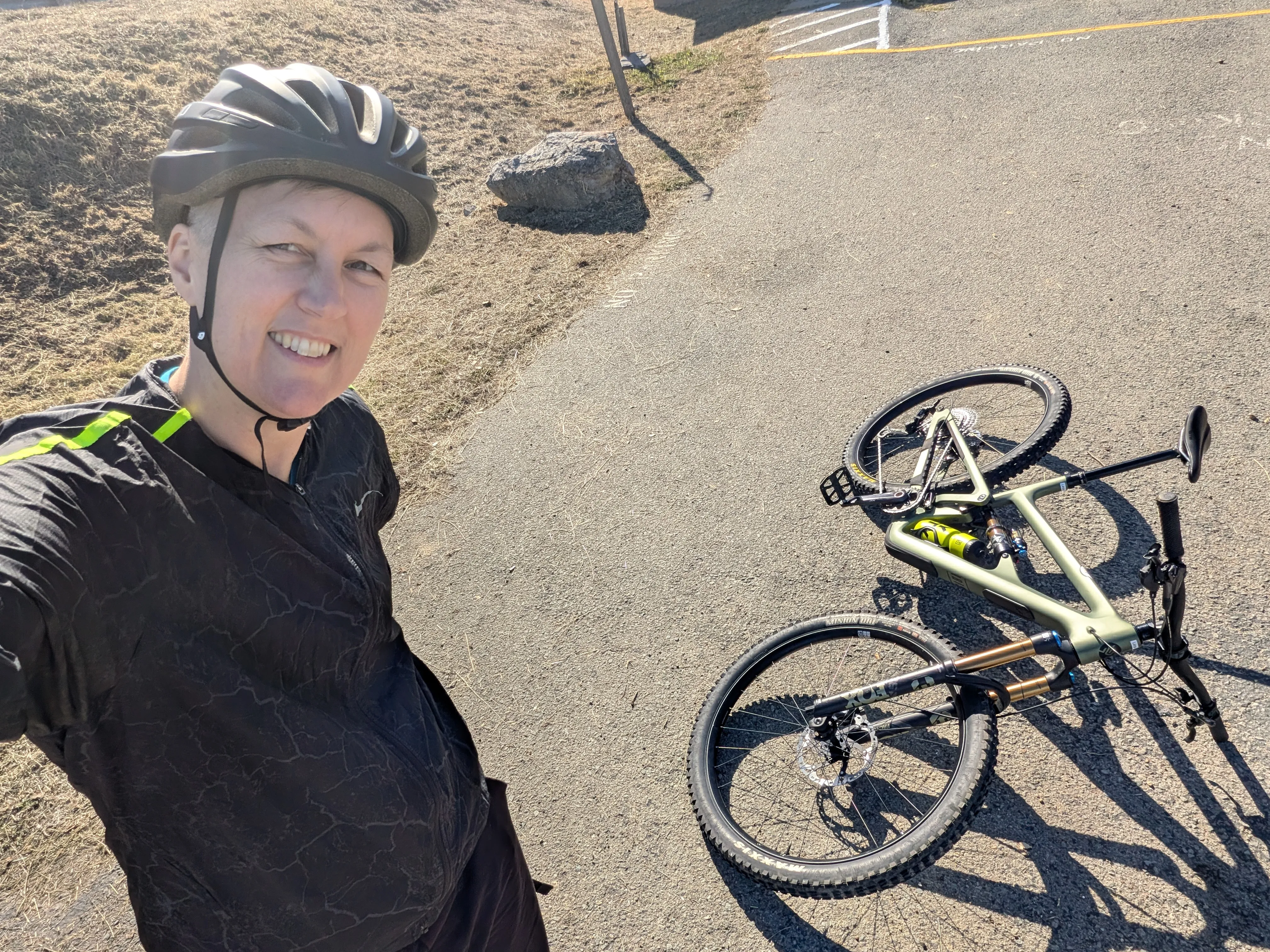
I had been biking a lot recently, so I was excited and enthusiastic about this endeavor.
Birthplace of Mountain Biking
First, we went to Fairfax. Michael mentioned it’s considered the birthplace of mountain biking, thanks to nearby Mount Tamalpais. He had his own bike. I rented mine from Sunshine Bicycle Center: an Ibis Ripmo V3 in size large, with flat pedals.
Michael and I both noted the town felt awkwardly homogeneous. Neither of us would feel comfortable living there, even though the grocery store, Good Earth Natural Foods, was incredible. Michael really liked that while he was waiting for me outside of the grocery store, a few people asked him about his bike.
We put everything on the bike rack on his car and drove to China Camp.
The Ripmo has front and rear suspension. The seat also goes up and down (this is called a dropper post), using a lever on the handlebar. I pushed the lever to drop the seat before getting on, and again before going downhill. So right away I was doing three things at once: the brakes, the gears and the seat lever. The seat was the coolest part.
When we got there, I rode a little loop to try it out. I thought, this is fine, this is interesting. I was super psyched and ready to bike for 4 hours.
Brake lessons
I’d already learned one hard lesson about brakes on my Hudson ride, but mountain biking added a few more. I’ve never been a very technical biker. A few things I learned right away:
- Modulate the brakes. That means don’t squeeze them 100% and don’t pump them. Squeeze maybe 10% to 30%.
- Modulate the front and back brakes at the same time. If you only use the front, you can flip over the bike. If you only use the back, the back wheel might spin out.
- Keep your hands on the brakes the whole time, so you can brake as fast as possible if something happens.
I got the last one wrong. When I encountered a straight section, I’d take my hands off the brakes, which is how I normally ride a bike.
Going up
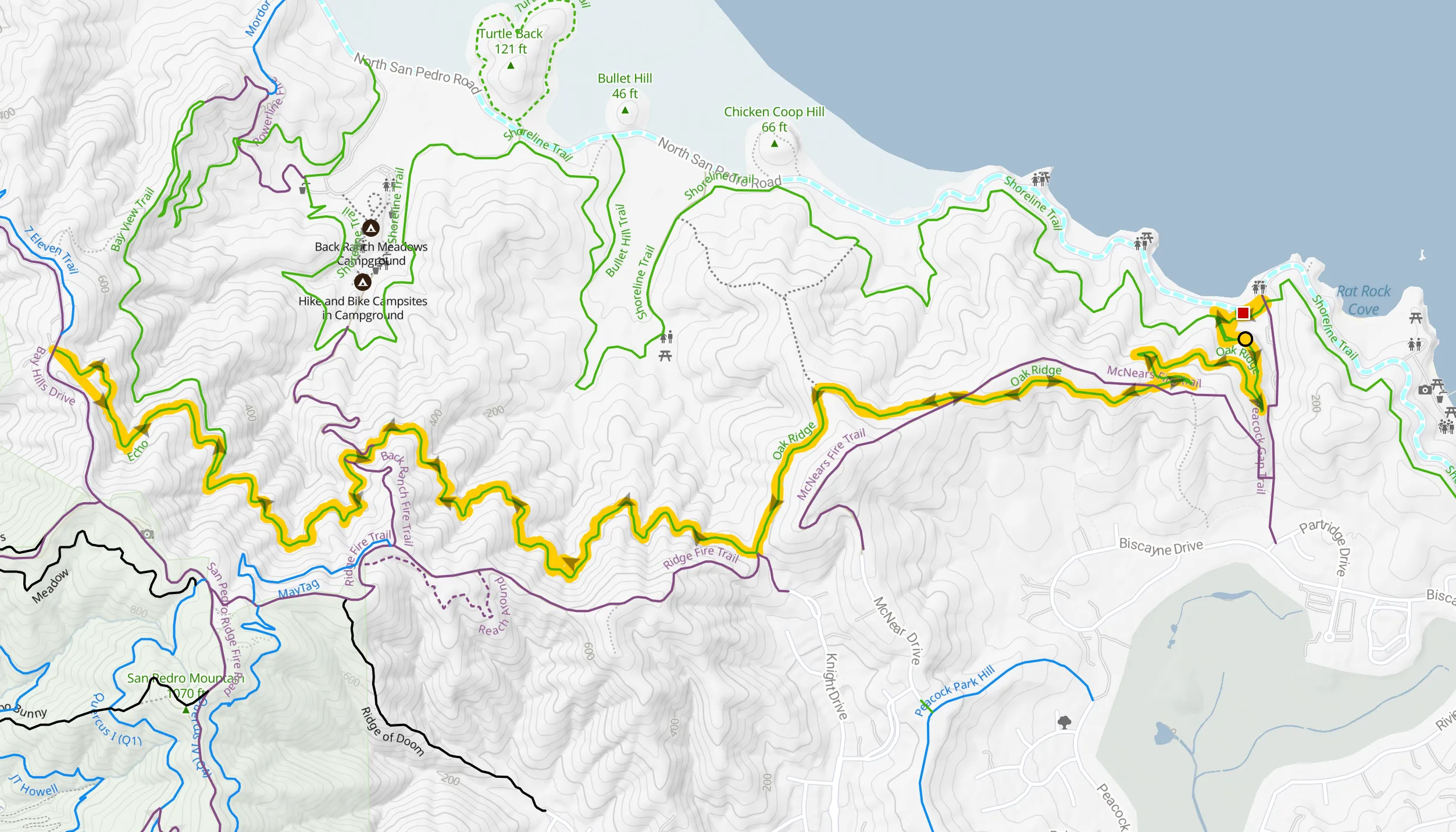
Going uphill was fun. The hardest part was the turns, which were very quick. The switchbacks were challenging both going up and coming down, and a bit intimidating, but the views were incredible. Our route included Oak Ridge, then Echo, then Oak Ridge again.
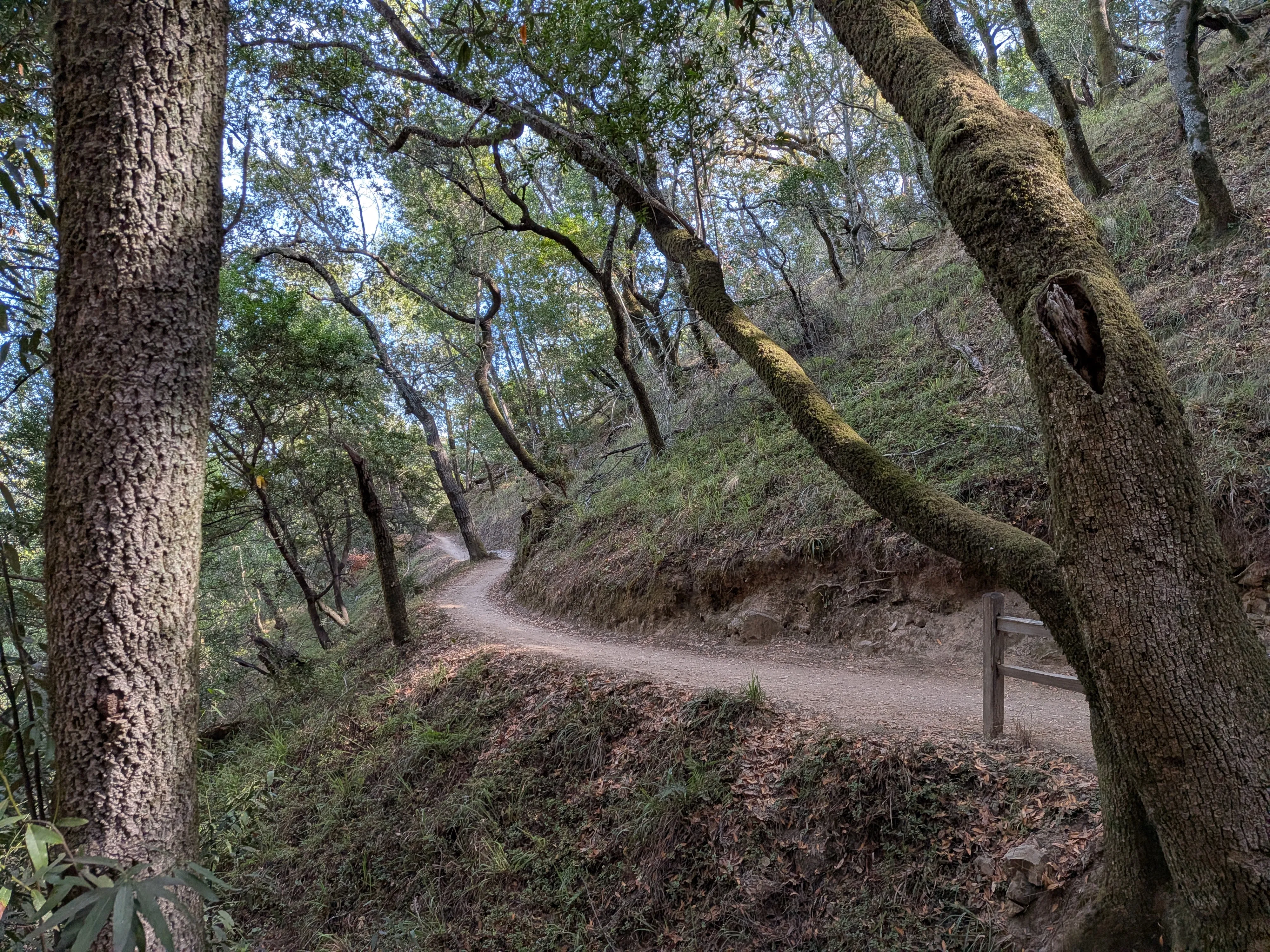
Mountain biking felt like a bit of an extreme sport. On road bike trips I’ve done before, like the one from Schenectady to Hudson, you can chill out and listen to a podcast. Mountain biking needs your full attention, because otherwise you could fall off a cliff or go over the handlebars.
Going down
There’s a specific position for going downhill. You put your seat all the way down and crouch, with your head a little over the handlebars. Then you use your knees and legs to absorb some of the shock. Staying low makes it much easier to turn.
It’s tempting to leave the seat up and sit back on it going downhill. That’s not what you’re supposed to do.
The thing that surprised me most was the rocks. On the Ripmo you go over rocks like it’s nothing. Coming from road biking, this felt almost magical. The suspension deals with it, and the tires are really good. Downhill was still a little scary for me.
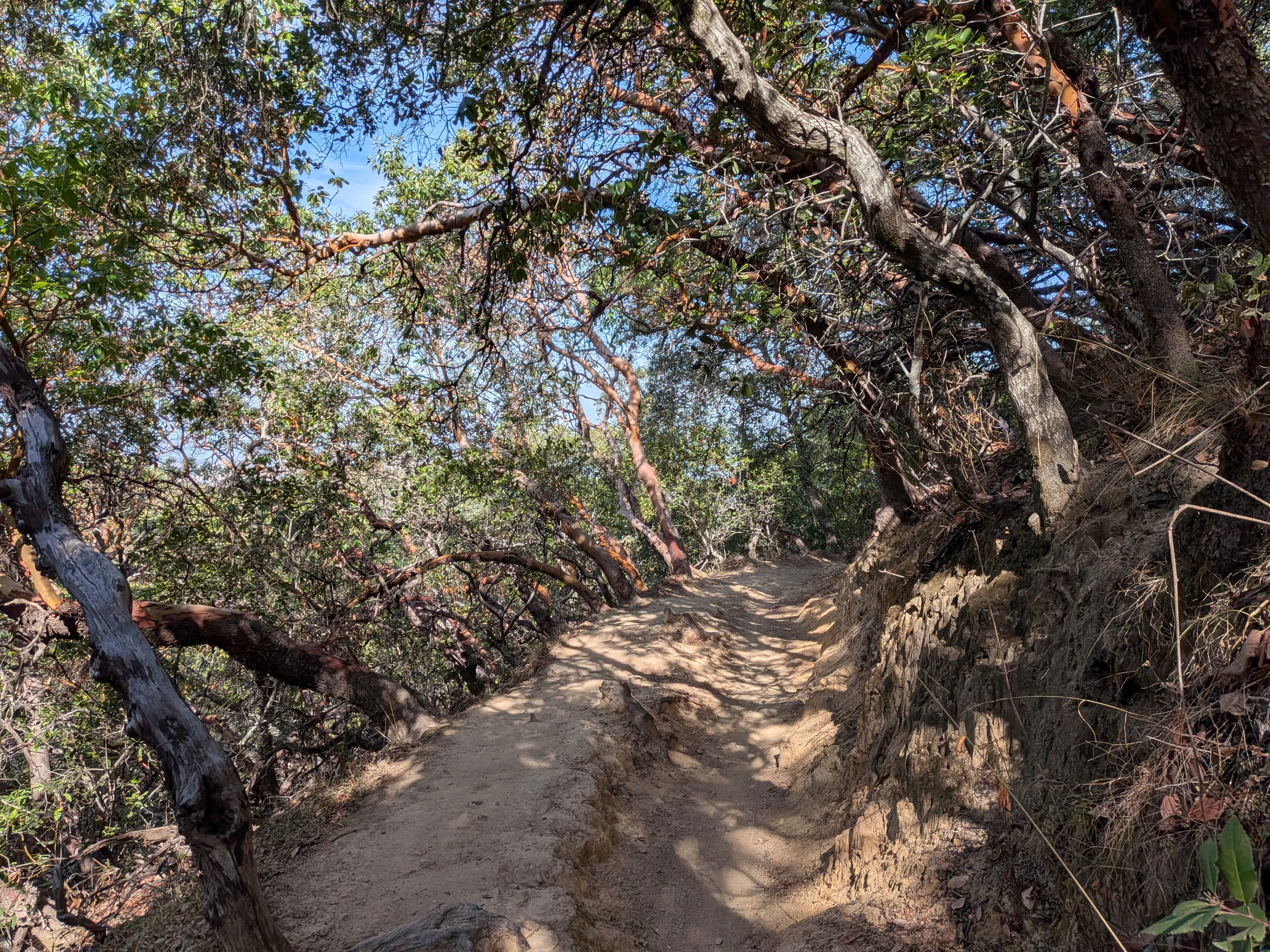
Here’s a video of biking back down an easy part of the trail.
Nothing super dramatic happened, but there was one moment that got my heart going. We were at the top of a ridge, and Michael stopped in front of me. I said, “oh, we’re stopping,” and grabbed my left brake lever hard. I think I grabbed the left brake because I was thinking about lowering my seat (the seat lever is on the left side), but I could feel the back tire lifting off the ground. I told Michael what almost happened, and he said that’s called OTB — mountain biker shorthand for “over the bars”. I told him I was going to slow down to be careful, and he said I was under no pressure to go fast.
Trail etiquette
When it comes to mountain trails, I’ve mostly been a hiker (and a skier), and I didn’t realize there were trails where mountain bikers outnumber hikers. There were a lot of bikers and not many hikers.
There’s also a whole etiquette. If you’re in a group of 3 passing someone, each person calls out as they go by. The first rider says, “There’s three of us.” The next one says, “One more behind me.” And the last one says, “I’m the last one.”
That way the people you’re passing know when they can keep going. Some people even wear bells that jingle as they are riding so people will hear them as they are coming around the corner.
The numbers
We rode 9.3 miles in 2 hours and 24 minutes (just under 2 hours of that was moving), so not quite the 4 hours I thought I was ready for. About half of it was uphill (4.2 miles) and about half was downhill (4.32 miles).
According to my Strava, we averaged 4.4 mph, topped out at 17.7 mph, and climbed to a max elevation of 747 feet, with 771 feet of elevation gain.
Michael’s Trailforks told a different story: an average moving speed of 5 mph, a max speed of 19 mph, a max elevation of 738 feet, and a climb of 2,197 feet. It also said 48% of the ride was singletrack (a trail about one bike wide).
Somehow, Trailforks says we climbed almost 3 times as much as Strava does. I’m not sure why they don’t agree. I think the Trailforks climb might be more accurate because the trail was a lot of up and down.
What I’d do differently
- Put the seat down whenever it should be down. Somehow I got a lot of bruises on my thighs from the seat. This would also make it less likely that I pull the front brake hard while going downhill, because the seat (whose lever is also on the left) would already be down.
- Keep my hands on the brakes.
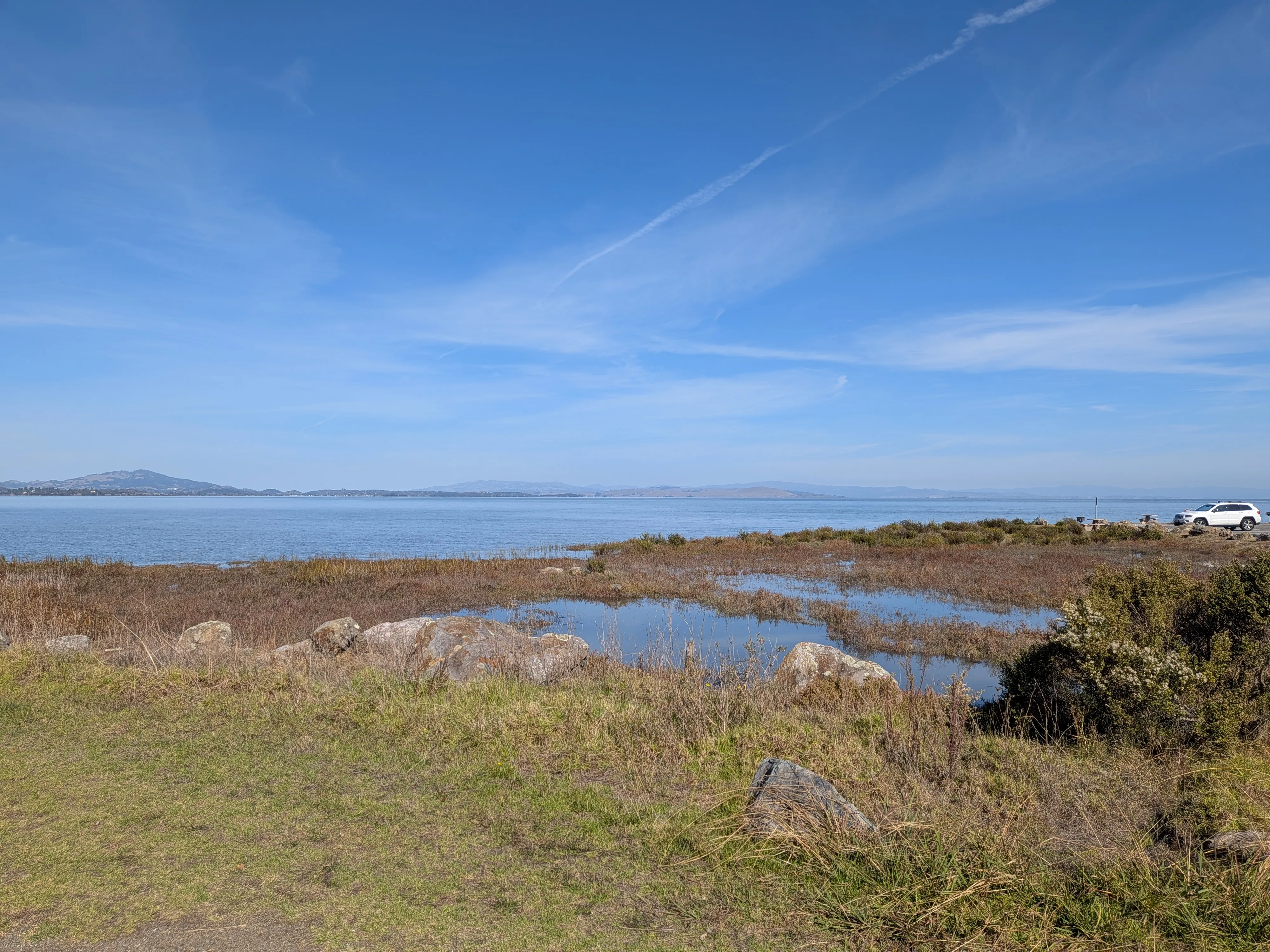
On the drive back, just after leaving the trailhead during high tide, we drove through a section of flooded road.
Thank you
I really enjoyed the experience, and I feel lucky that a friend showed me this. Thanks Michael, if you’re reading this!