(being weekly post 8 of 52 in the year 2026)
This week’s post is squarely in the “musings” category, focusing on time, presence, and communal practices - a sharp contrast to last week’s technical deep dive. It goes without saying, but I encourage my readers to pick and choose which posts you read and engage with. Not every post will be for everyone, but hopefully, each will be for someone. For my part, I’ll try to write clear titles and subtitles so that you know what you’re getting into.
If you do read and enjoy a post, I’m always happy to receive a “like” and/or a comment with your thoughts. Or you can reach me directly by replying to these emails. And an untracked KPI of this blog is conversations started, so please, converse away!
Without further ado, this week’s post…
An offer - Active Reading mode: if you’d like, follow the instruction on each of the green screenshots in this post as you reach them, to experience your own moments of presence.
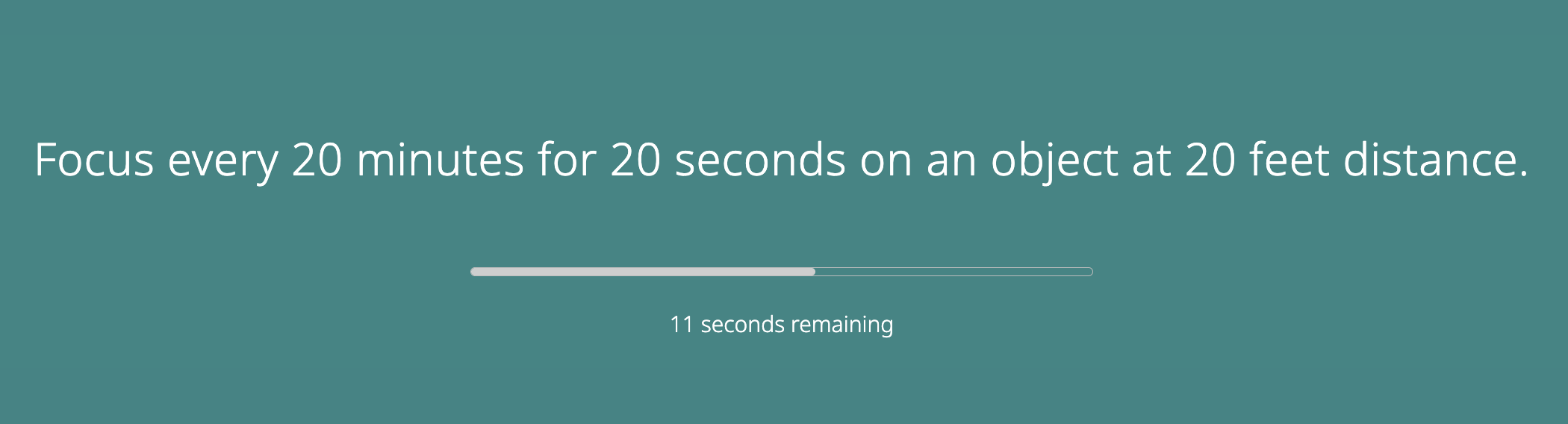
In Deep Knowledge, and Three Ways to Get There, I mentioned my housemate’s fascinating computational biology “TED talk.” What I didn’t mention: every ten minutes, his slides would be interrupted by a full-screen instruction…
After a few instances, I caught a notification in the top right corner of his screen:
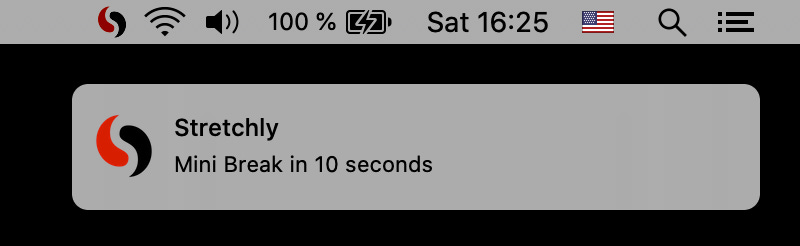
I was intrigued. As an unmitigated self-instructor, I had to investigate, and found out that Stretchly is free and open source! So I gave it a spin, and proceeded to have an unexpectedly great time.
The way it works: whenever your computer is open, every ten minutes your screen is blocked by a timer and an instruction. The first two times are “short breaks” (20 seconds); every third is a “long break” (5 minutes) (like the pomodoro technique if you’re familiar).
Here’s what I saw during a recent long break:
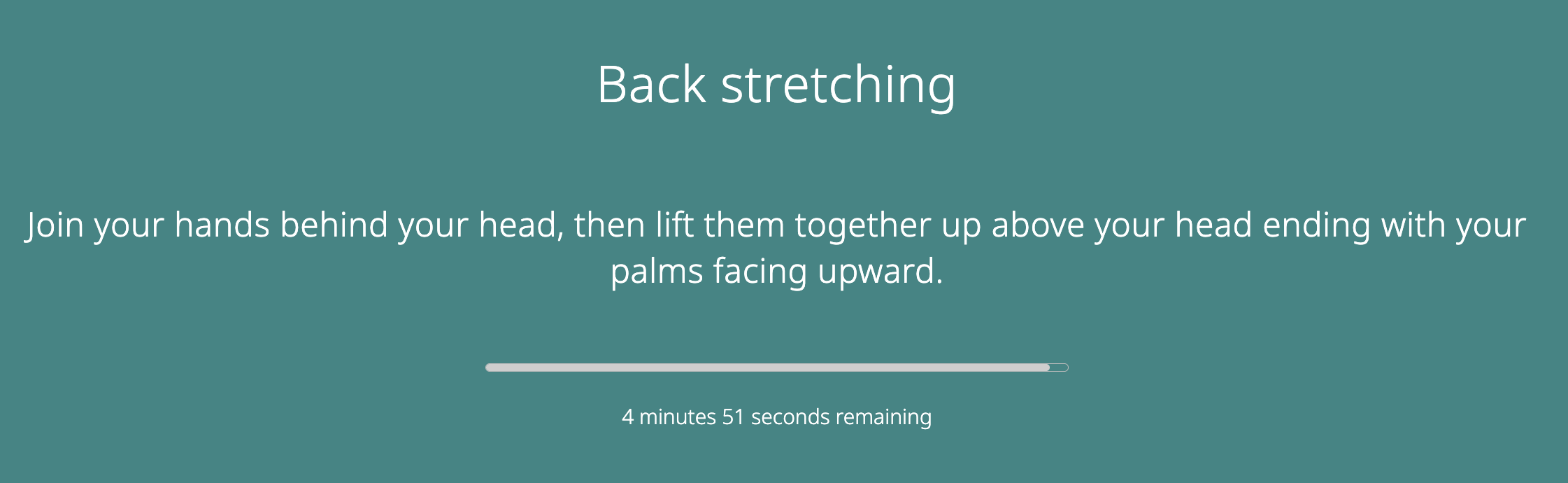
I was surprised at how much I enjoyed receiving these cues! Especially the short breaks - sometimes it’s a moment of mindfulness, sometimes a stretch… always an opportunity to step out of my projects and just enjoy life and my body and the world around me.
So, I recommend Stretchly. And perhaps this post could end there. But, I decided to go abstract and write about how my experience with Stretchly ties into time-management, psychology, and the sabbath.
I came across Rowan Williams’ concept of “undifferentiated time” in an interview of Oliver Burkeman on Sam Harris’s Waking Up app1. Undifferentiated time is the tendency in secular society for all the time in one’s life to blend together into a uniform streak. Williams, a former Archbishop of Canterbury, presents this in contrast to the daily, weekly, and yearly schedules of the religious adherent.
Burkeman offered his own areligious characterization of the well-differentiated schedule in Four Thousand Weeks: Time Management for Mortals. I haven’t read the book, but resonated with this quote from it (ht Elizabeth Oldfield):
“freedom . . . is to be found not in achieving greater sovereignty over your own schedule but in allowing yourself to be constrained by the rhythms of community—participating in forms of social life where you don’t get to decide exactly what you do or when you do it.”
This freedom that Burkeman describes is far from my current life. While I engage in many different activities, many of which are social, I still make my own schedule and ultimately lack the kind of community-drive constraints espoused above. I’m especially aware of this fact because I grew up in a culture which imposes a strict, differentiated schedule: that of Judaism, or specifically modern orthodoxy. And the most notable division of time in Judaism is the sabbath.
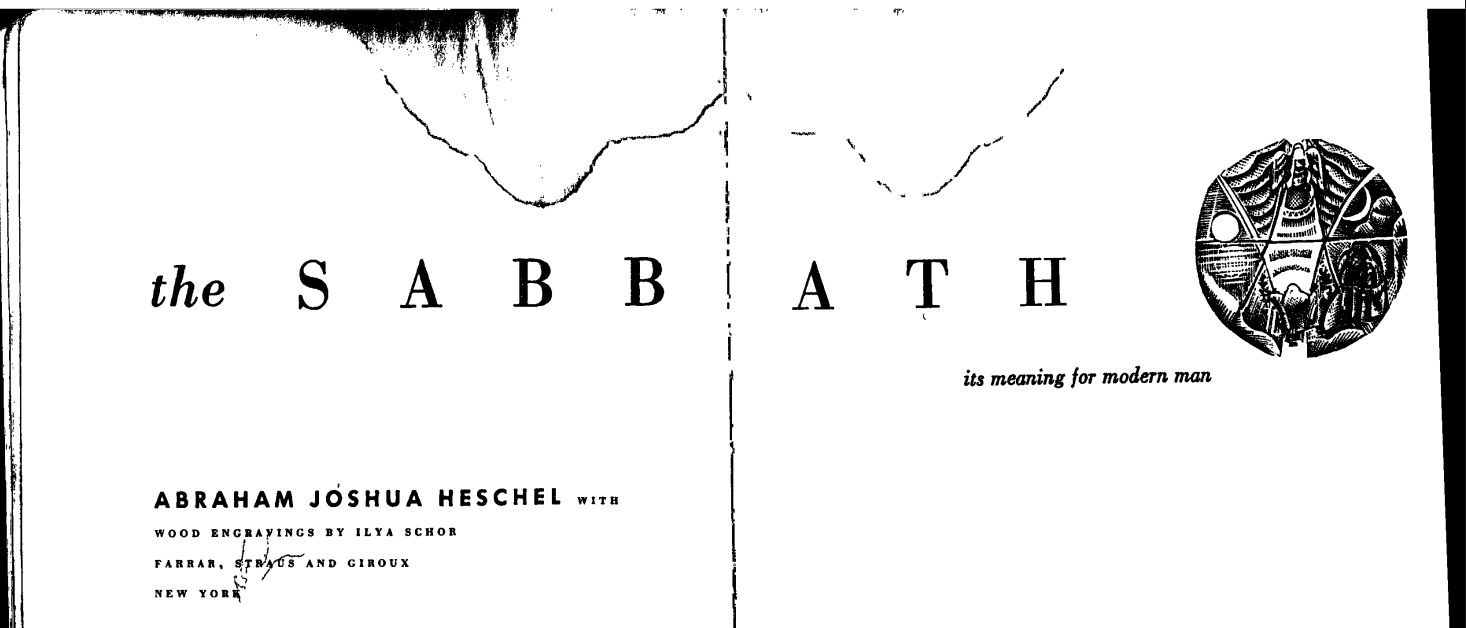
The Shabbat experience is profoundly different from that of the rest of the week. To a large extent it’s defined by what you don’t do - no work, no electronics, no driving, no writing, no cooking even, and crucially, no planning for the week ahead. What’s left to do? Walk around to various locations of gathering (the synagogue, people’s houses), pray/sing, eat/drink, hang out.
I came across a quote I like in Heschel’s The Sabbath, which pitches Shabbat in opposition to the frantic utility-maximization of the work week:
He who wants to enter the holiness of the day must first lay down the profanity of clattering commerce, of being yoked to toil. He must go away from the screech of dissonant days, from the nervousness and fury of acquisitiveness and the betrayal in embezzling his own life. He must say farewell to manual work and learn to understand that the world has already been created and will survive without the help of man. Six days a week we wrestle with the world, wringing profit from the earth; on the Sabbath we especially care for the seed of eternity planted in the soul.
“The betrayal in embezzling [one’s] own life” - this resonates with me, but not because I’m constantly wringing profit from the earth. Instead, I find myself to be wringing my own specific variety of things - profit sometimes, but also board games, piano albums, plans, personal systems, health recoveries, and blog posts! The overarching category for me would be projects. In a way, my whole life feels like a project, and vast amounts of my experience are through the lens of project mind - that mental state in which I’m thinking of which actions might move my endeavors forward.
Project mind has its benefits, but it’s not quite conducive to caring for the seeds of eternity planted in the soul. Doing so requires present mind - being present with the people and world around. Present mind (or the encouragement of it) is part of what Shabbat offers, and part of what any time-constraining communal practice can offer as well.
I don’t have a Shabbat practice right now, but I do have Stretchly breaks, which, as scheduled pauses in productivity, are (sorta?) like micro-Shabbats2. When I get an instruction…
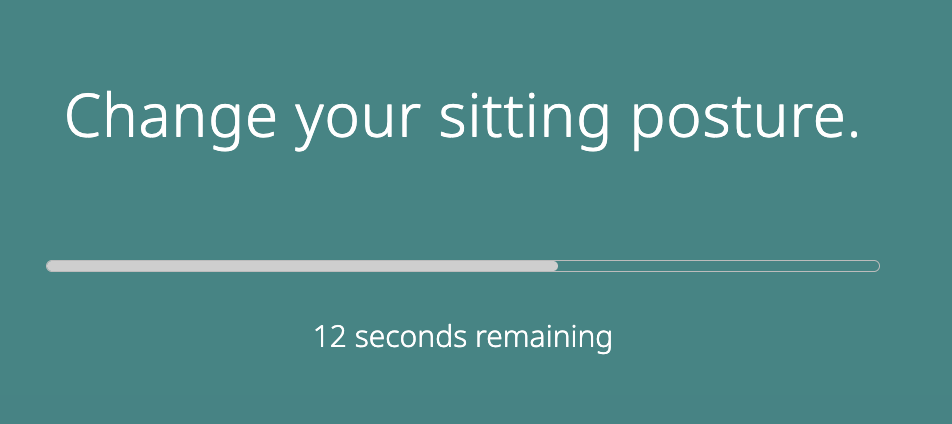
… I take it as an opportunity to enjoy the moment I’m occupying.
Is Stretchly just another tool in my project-mind’s acquisitive arsenal? Well, it could be, but it could also be a tool for presence. Connecting back to Heschel:
The Sabbath is not for the sake of the weekdays; the weekdays are for the sake of Sabbath. It is not an interlude but the climax of living.
Likewise, my computer breaks need not be productivity-serving interruptions, they can be earned moments of enjoyment - micro-climaxes of the workday, providing punctuations of pleasant differentiation.
Of course, the great benefits espoused by Williams, Burkeman, and Heschel are not to be found in software-mediated micro-pauses, and, at risk of being project-minded, I hope to introduce more macro-Shabbats (perhaps even the macro-Shabbat - Shabbat itself) into my life. But the path there may be long. In the meantime, I will be changing my sitting posture slightly more than usual. And hopefully continuing to enjoy it.
…
Want to try Stretchly yourself? click here on your computer. And if you’ve been following the instructions, here’s one more…