Since the end of 2022, AI has been disrupting the world of software engineering. Looking at how 2023, 2024 and 2025 went - there is a lot of discussion about the future of software engineers. Not all of that discussion is hopeful.
Being a serial optimist, I wanted to write down my predictions for software engineering in the age of AI. Here it goes.
Software products will grow up faster
The gold standard of the industry is that it takes 10 years for ‘good’ software. It should not take that long any more. AI tools have changed the way software is designed and developed. Many more steps in the process can be parallelized now. Many iterative steps can be automated and hence made to go faster. The next operating system or the next internet platform should take much less time to mature.
The ecosystem might become simpler
New abstractions are introduced every few years so that bigger software systems can be built with less effort. This was necessary because humans were creating all of the software - typing every line by hand. Now since that is no longer the case, it might be possible to create the next gigantic web application directly using JavaScript (or TypeScript) instead of falling back to React. Similarly for massive desktop and server applications, C might be sufficient. Yes, in both cases we’ll have way more code than what human beings would like to handle. Would humans have to handle it regularly? Maybe not.
Formally verified software might become more common
I stole this from Martin Kleppmann’s blog, I will encourage the reader to read it. In the same line as Martin’s points, I feel that languages like Rust will become way more commonplace now. I give the example of Rust because it is a language that can be used to write programs which are ‘correct by construction’ - only if someone learns and uses the language properly. Popular AI coding tools are already doing decently well in handling Rust programming - I write this from personal experience in 2025.
Big audacious goals might be achievable
A few months ago, I wrote that complete rewrites of software systems might be possible using AI coding tools. Recently, Microsoft has announced its plans of rewriting all C and C++ code by 2030. Unofficially I have heard of people attempting similar projects, which would have been unthinkable a few years ago. If these attempts succeed, then we might create a software ‘remodeling’ industry - similar to how old houses are changed dramatically without needing to tear them down.
Here’s another example. In 2002 Amazon made the legendary decision to enforce API-based communication for all teams. Steve Yegge’s description is probably the way most people know about this event. What followed was history - and possibly helped AWS’ rise to world domination. What if other organizations want to change drastically like this? Converting every software project to be API-based is a humongous effort for a company. This was only possible for tech giants like Amazon. Until AI tools came in. In fact, if these tools existed in 2002 then Jeff Bezos’ ask would have been much simpler - all the code was going to be upgraded automatically, just sit tight as AI does the migration.
User experience might become much more important
I like to think of UX as the ‘soft skills layer’ of software. It is like saying - yes, we know you are doing the job well, but are you interacting appropriately with a human being? AI has made functional software much easier to build. I speak from my personal experience building web applications in 2025 - something I have never done before. I wouldn’t have succeeded without AI given my background. However, there’s a lot more possible on the UX front which never occurred to me. Here’s a small example - an email I got from a cloud GPU provider
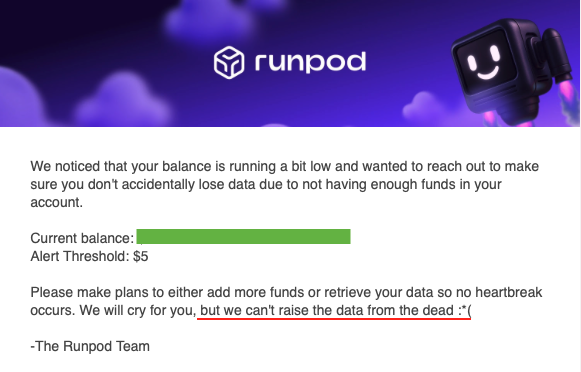
Earlier it was acceptable to send the right email to the right user. Now the bar has been raised. We should expect better human-friendly behaviour from software - by the addition of human elements like this.
To be continued …
I don’t like reading or writing long blog posts, so there will be a second part to this post.