BACKGROUND
For the next six months, I intend to fulfil a long-standing objective of mine to visit each of the properties on the London Monopoly board. This will encompass 22 streets and 4 train stations.
This is Number 1 in my Monopoly Series. No 0 is the Introduction and I will link each of any future posts. Each post will follow the same format.
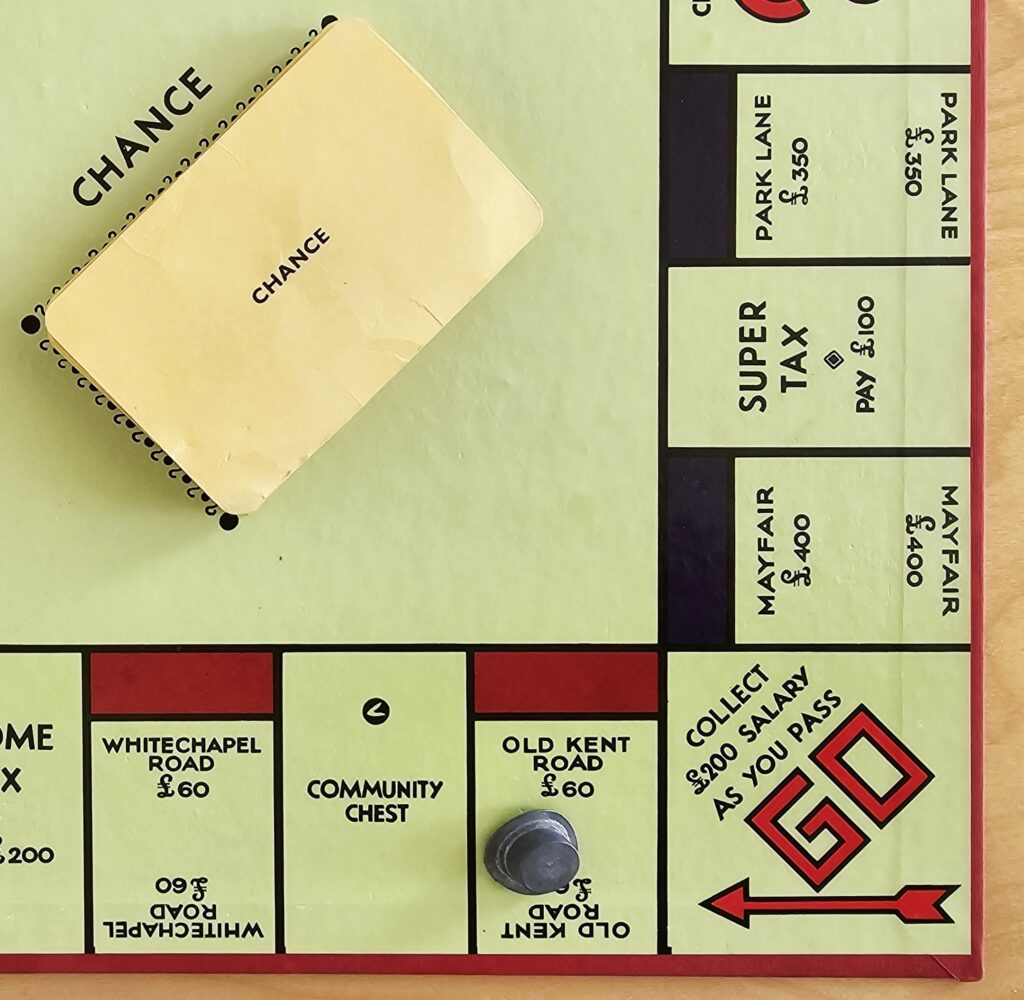
One idea I had was to throw the dice and visit the property where my playing piece landed. This would jumble things up and potentially make things a bit more interesting. However I like order and decided to follow the properties in a clockwise direction as laid down on the board after you pass GO.
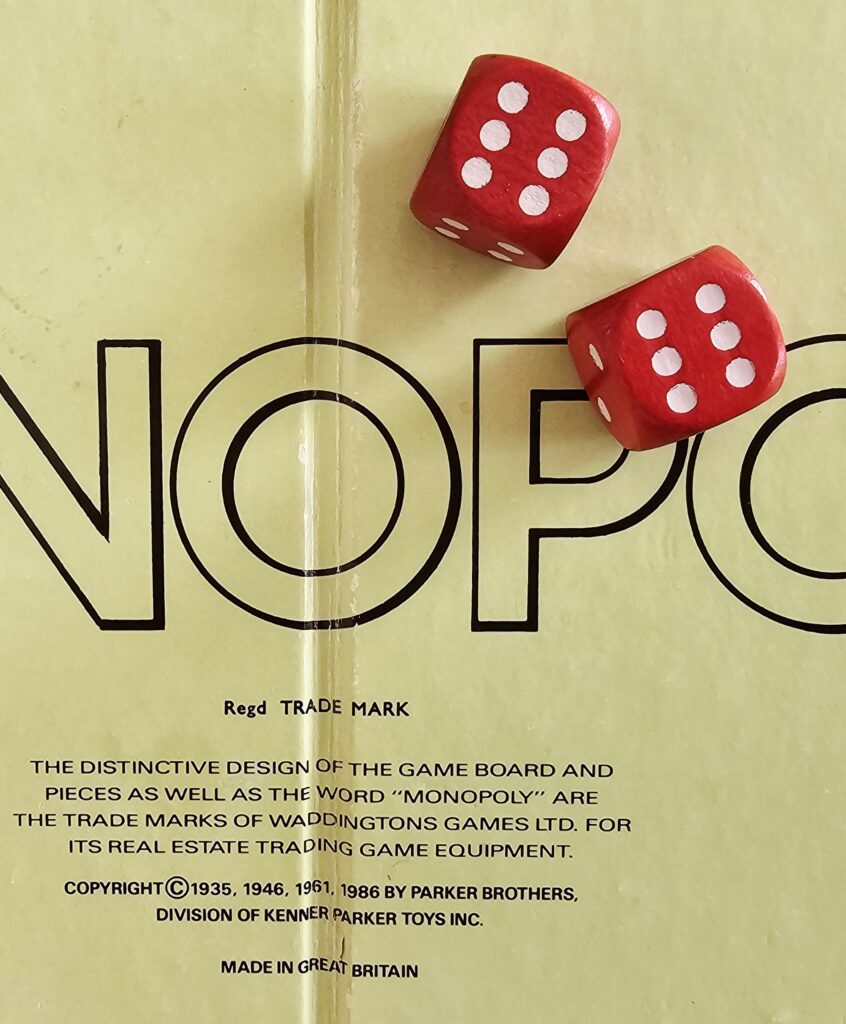
I am starting at cheap-as-chips Old Kent Road and hope to end at Wagyu-fillet-mignon Mayfair by December. I wondered about awarding myself a pot of money at the beginning of this venture. In the game, launched in 1935 by Waddingtons, each player was given £1,500 divided into the following notes: 2 x £500, 4 x £100, 1 x £50, 1 x £20, 2 x £10 and 1 x £5. Currently there are four denominations of Bank of England notes in circulation: £5, £10, £20 and £50.
According to the Bank of England’s Inflation Calculator, goods and services costing £1,500 in 1935 would cost £94,890.54 in May 2026. This is clearly not enough to put down as a deposit, let alone purchase even one property in 2026 Central London. According to the rules of the game, the idea is for the player to buy and rent or sell properties so profitably that they increase their wealth, with the wealthiest becoming the winner.
So, buying property is out of the question. Unless I am doing some serious jewellery shopping (not a good idea) when I land in Bond Street, £95,000 is way too much to use on any one project. So I am ignoring any budgetary considerations and will just pay for what I need (and mostly eat) as I travel along the board.
MONOPOLY BOARD PROPERTY NUMBER 1: OLD KENT ROAD
For background reading I recommend the following two books.
No Free Parking: The Curious History of London’s Monopoly Streets by Nicholas Boys Smith, published by John Blake Publishing, ISBN 978-1789465389. See chapter 1 (OLD KENT ROAD – Ancient route to the Thames).
Quote from book:
This road has been known by many names during its more than 2,000-year history: Casingc Stræt, Key Street, Watling Street, the Pilgrims’ Way. The Old Kent Road is probably older than London. It is the route along which invaders have come and the defeated fled. It is the route that invading Germans would have taken in 1940. The surviving plans for Operation Sealion show that the 16th German Army under General von Rundstedt would probably have approached London on or near Watling Street. But the Old Kent Road was also the road of pilgrims, travellers and tourists.
Do Not Pass Go: From the Old Kent Road to Mayfair by Tim Moore, published by Vintage, ISBN 978-0099433866. See chapter 17 (The Browns).
Quote from book:
The Old Kent Road is in every literal fashion streets apart from its brethren on the board. All the other Monopoly addresses are contained either within the Circle line that girdles London’s central area, or lie a single Tube stop beyond its perimeter, but if the Circle line is a bottle on its side – and in Harry Beck’s map it kind of is – then the Old Kent Road is the straw that dropped out of its neck and got washed off right across the Thames and miles down some south London gutter.
HOW TO GET HERE
For transport options, Citymapper is invaluable as a tool to get from A to B. The Old Kent Road is 2.9 km/ 1.8 miles long and there is no tube station to it. I had intended to take a southbound bus 453 from Piccadilly Circus, alighting at the top end of Old Kent Road. I would walk for awhile, get on a bus at the next stop then hop off at a stop further along. I can do this as I recently turned 60 and am in happy possession of a 60+ London Oystercard.
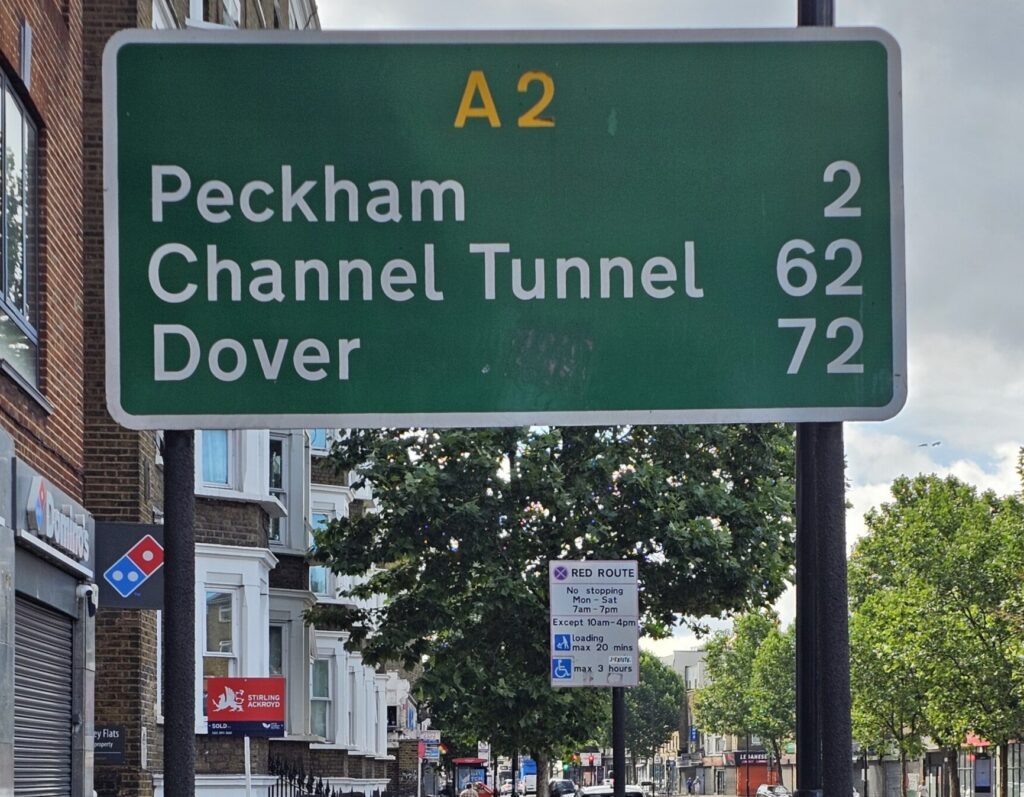
The heat wave made me rethink my strategy as London buses are not air-cooled. This is a road I have never walked along and as far as I know, there is no cake shop I definitely have to visit here. The Old Kent Road is part of the A2, a major 72-mile route connecting Central London to the port of Dover in Kent. The only times we have come this way were on our trips to and from France when the children were young.
In the end I persuaded the very genial Mr Gochugaru to drive down here in his air-conditioned vehicle, a very different kind of horse-power to the days when medieval travellers would ride on real horses.
ASPECTS OF MY VISIT
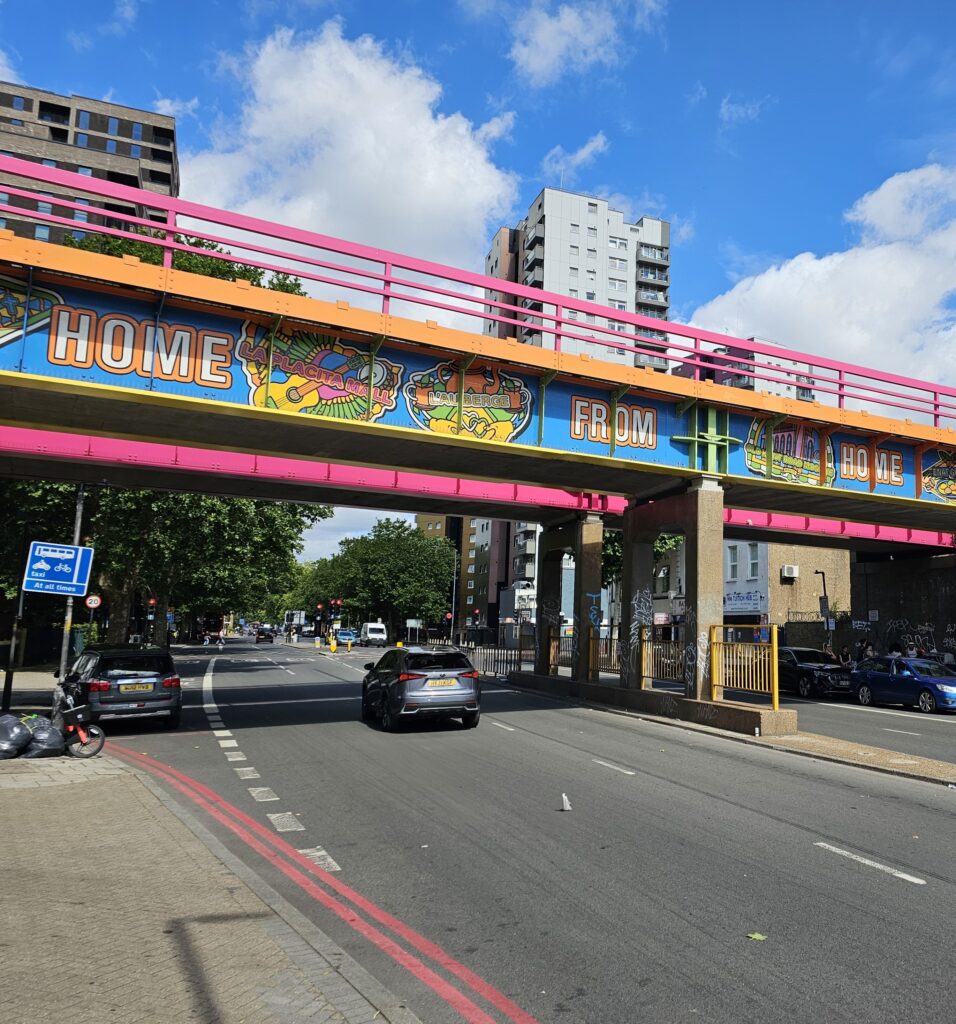
The Old Kent Road is lined with small shops selling all manner of goods and services, and you can find all sorts of ethnic food shops here from Afro-Caribbean to Vietnamese. It is a melting pot of all cultures, and as the mural on the Old Kent Road railway bridge says, this is not any old road but a ‘Home From Home’.
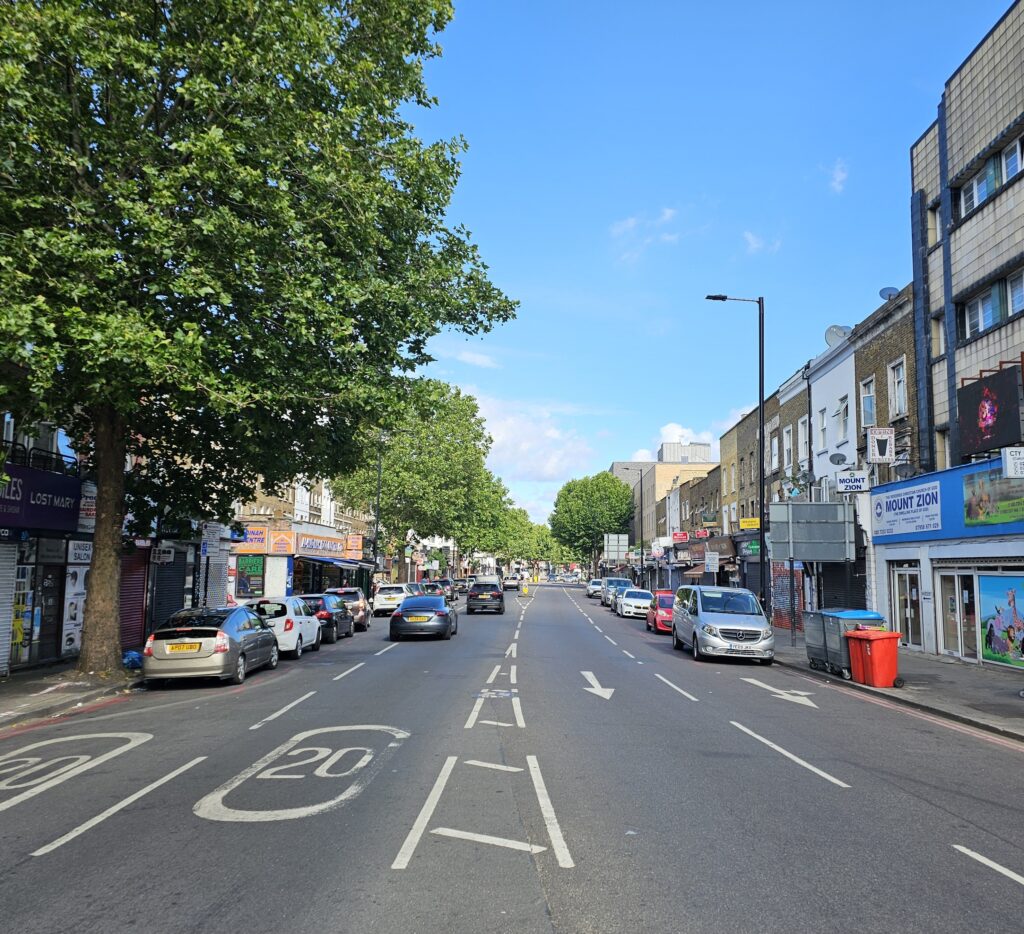
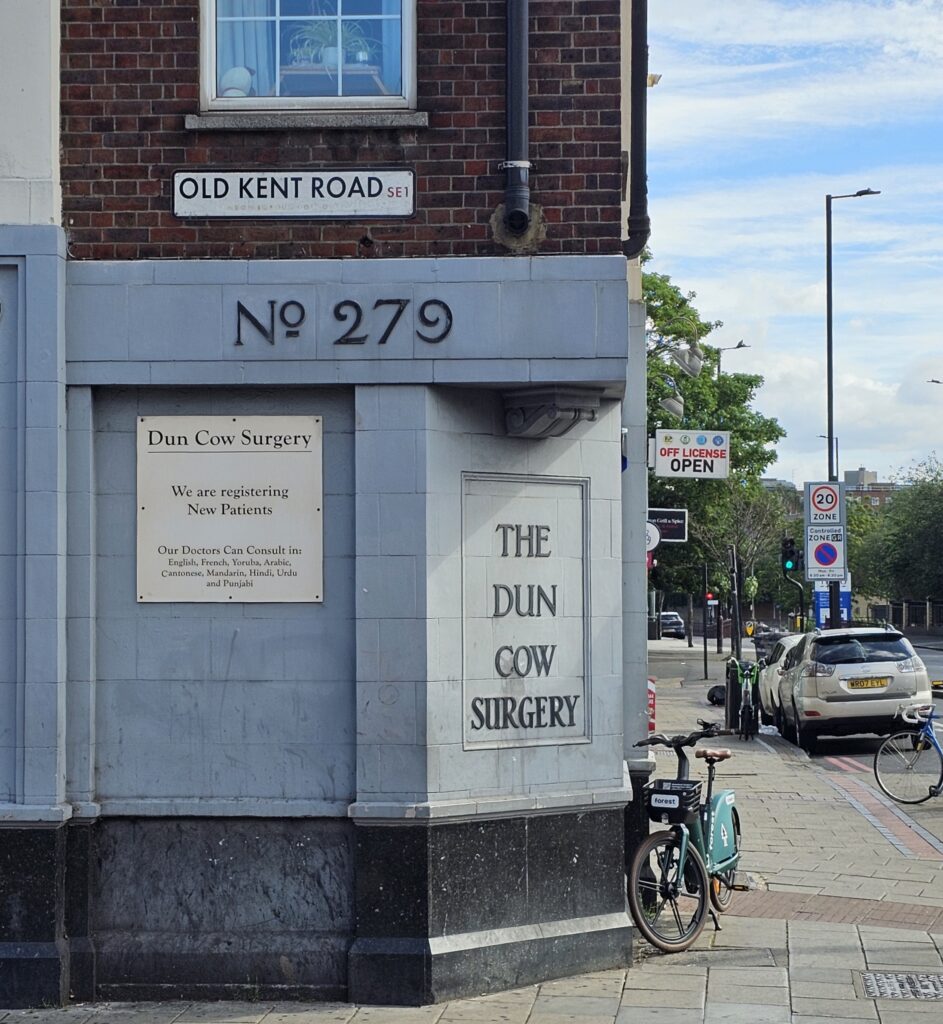
Although Old Kent Road is 2.9 km/ 1.8 miles long, I had to look hard to find a road sign. Here is one above a GP Surgery. The notice on the wall mentions the languages spoken by the staff, reflecting the diverse cultures of this community.
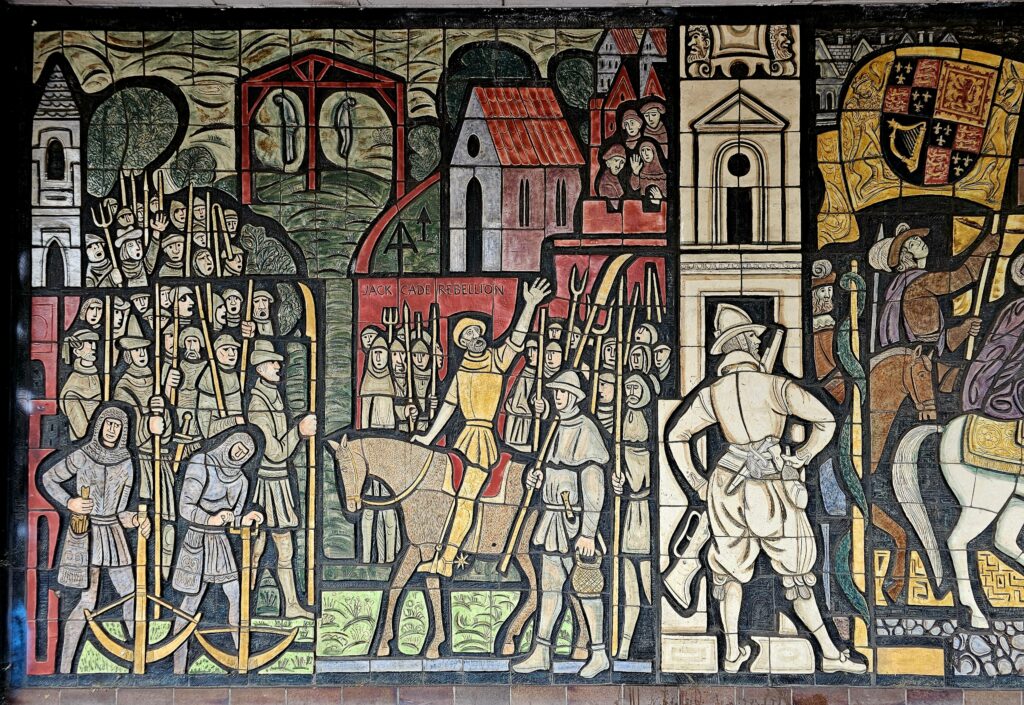
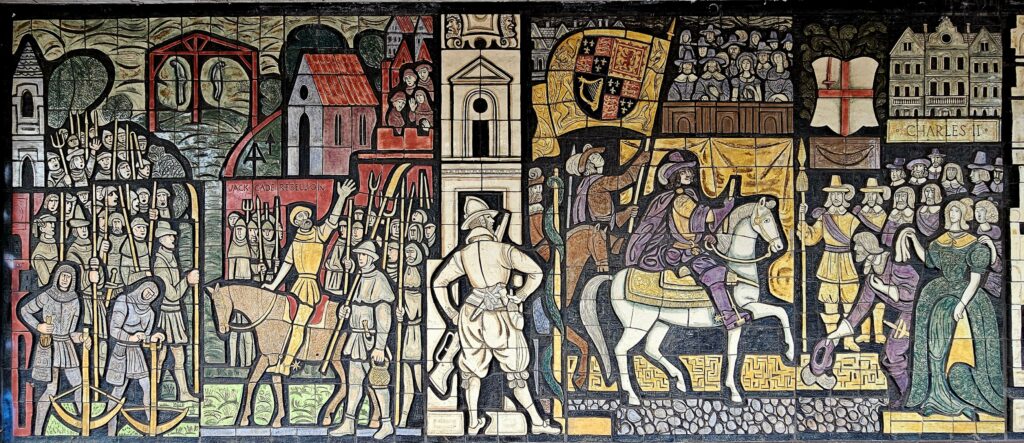
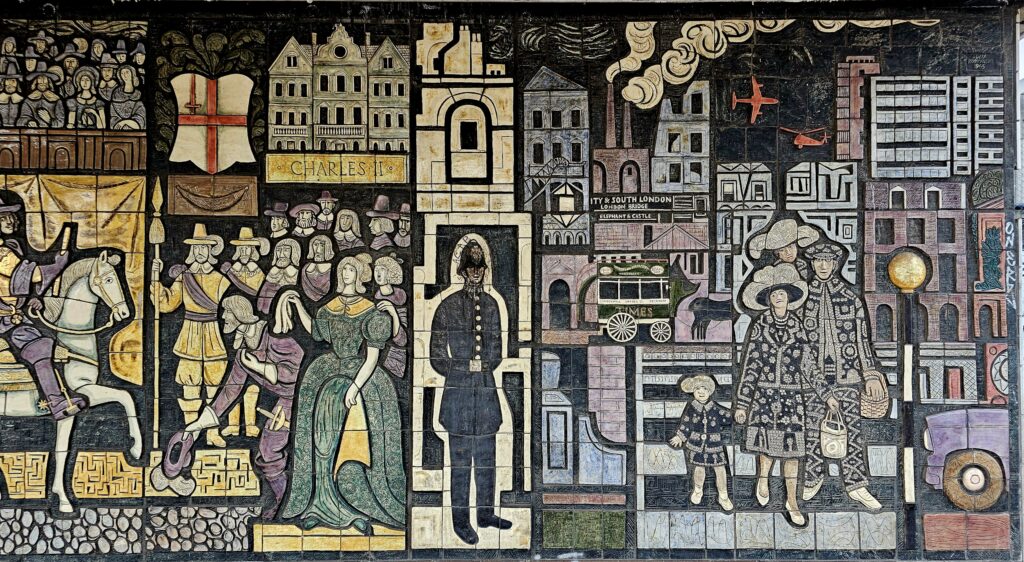
Located at 600-608 Old Kent Road, History of the Old Kent Road is a magnificent mural by the Polish artist Adam Kossowski. This 1,000-square-foot artwork is made from around 2,000 individually glazed ceramic tiles and was completed in 1965. Instantly I found a connection as it is as old as me.
The murals tells of the road’s history from the Roman era and Chaucer’s pilgrims through to modern times. Although it is Grade II listed, unfortunately the building housing it has fallen into serious disrepair. As a person who loves ceramics, I was very disheartened to see such beautiful tilework so blatantly neglected. I could not bring myself to take any close ups of the mural. Photos below so you can see for yourself.
The first mural on Peckham Park Road
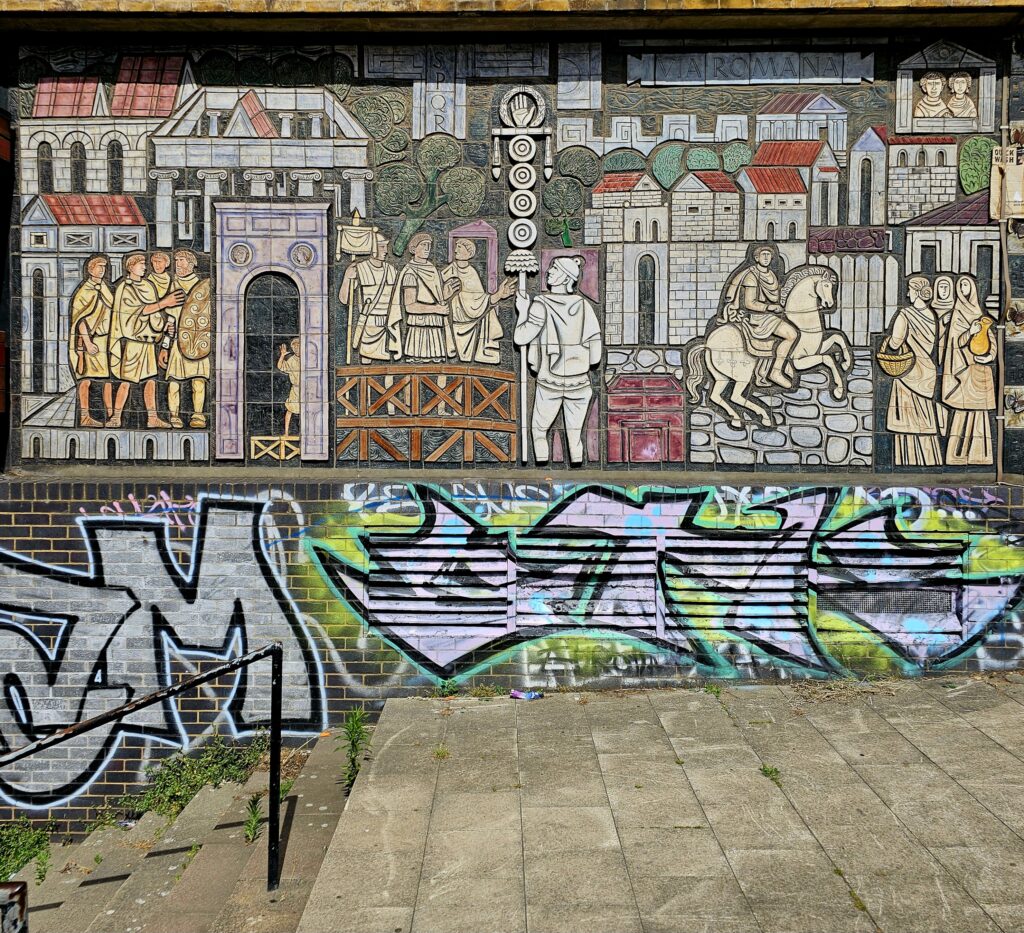
The second mural on the front of the building on Old Kent Road
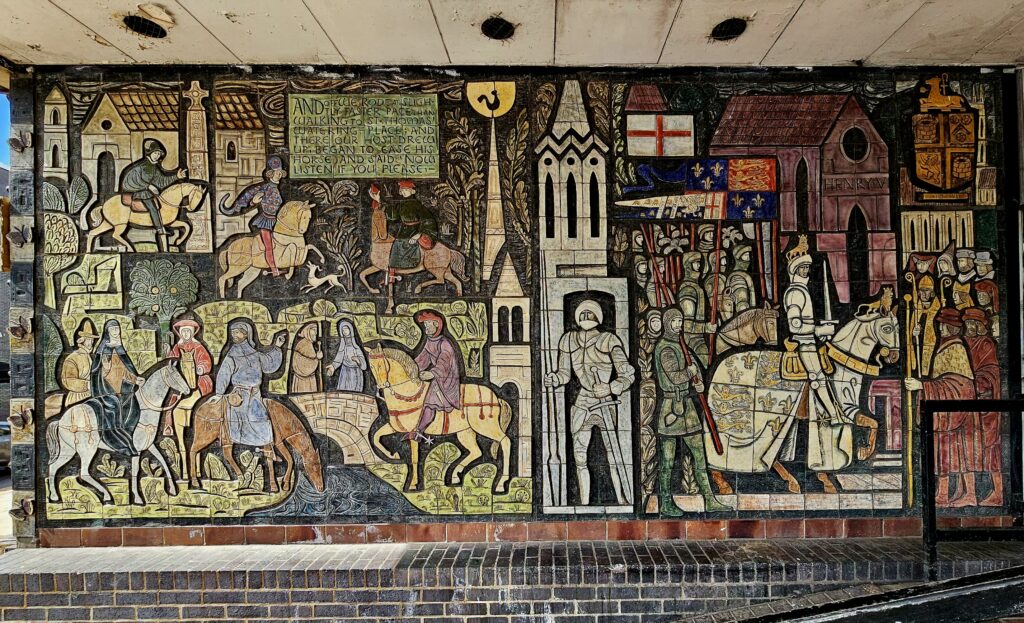
The final mural which ends in the 1960s (bottom photo), where you can spot a British bobby (policeman), a Pearly king and queen and a Belisha beacon
NEXT STOP
The next street on the Monopoly Board is Whitechapel Road. I intend to get there on the Elizabeth Line, which has Wi-Fi and air-conditioning.