In my 2023 article on the evolution of the calculator, I griped about the way we teach the history of computers. I felt that we’re giving far too much credit to Charles Babbage. We have known how to make mechanical calculators at least since the 17th century; the concept of programmable machinery predated the English polymath’s writings by a wide margin, too. The remaining bottleneck was mostly technological: past a very modest scale, sprockets and cams made it too cumbersome to shuffle data back and forth inside a sufficiently complex computing machine.
The breakthrough was an electronically-controlled data register. These circuits allowed computation results to be locked in place and then effortlessly routed where needed, no matter how complex and sprawling the overall design. In contrast to the musings of Mr. Babbage, the history of this “working memory” has gotten less attention than it deserves. We conflate it with the evolution of bulk data storage and computer I/O and keep forgetting that RAM constraints were the most significant drag on personal computing until the final years of the 20th century.
The first practical form of electronic memory was a relay. A relay is essentially a mechanical switch actuated by an electromagnet. Its switching action can be momentary — lasting only as long as the electromagnet is powered — or it can be sustained, latching in the “on” state until a separate “reset” coil is energized.
Latching relays can be used to store bits in a fairly obvious way; a momentary relay can also be wired to latch by having the relay supply its own power once the contacts are closed. A simple illustration of this principle is shown below:
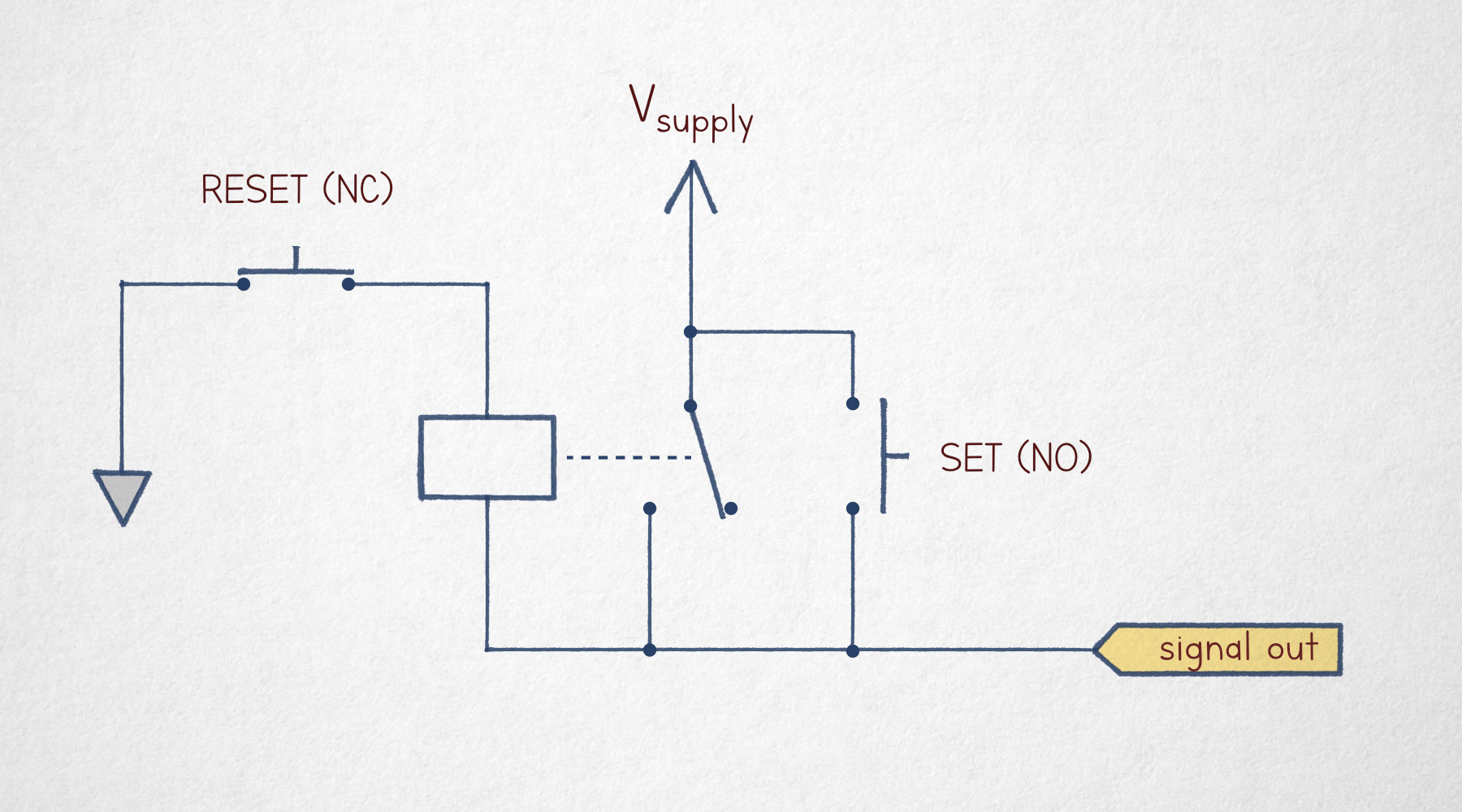
In this circuit, pressing the “set” button will energize the relay, therefore also closing the parallel relay-actuated switch. The current will continue flowing through this path even after the “set” button is released. To unlatch the circuit, the normally-closed (NC) “reset” button must be pressed to interrupt the flow of electricity.
Relay-based main memory featured prominently in what was probably the first true electronic computer, Konrad Zuse’s Z3:
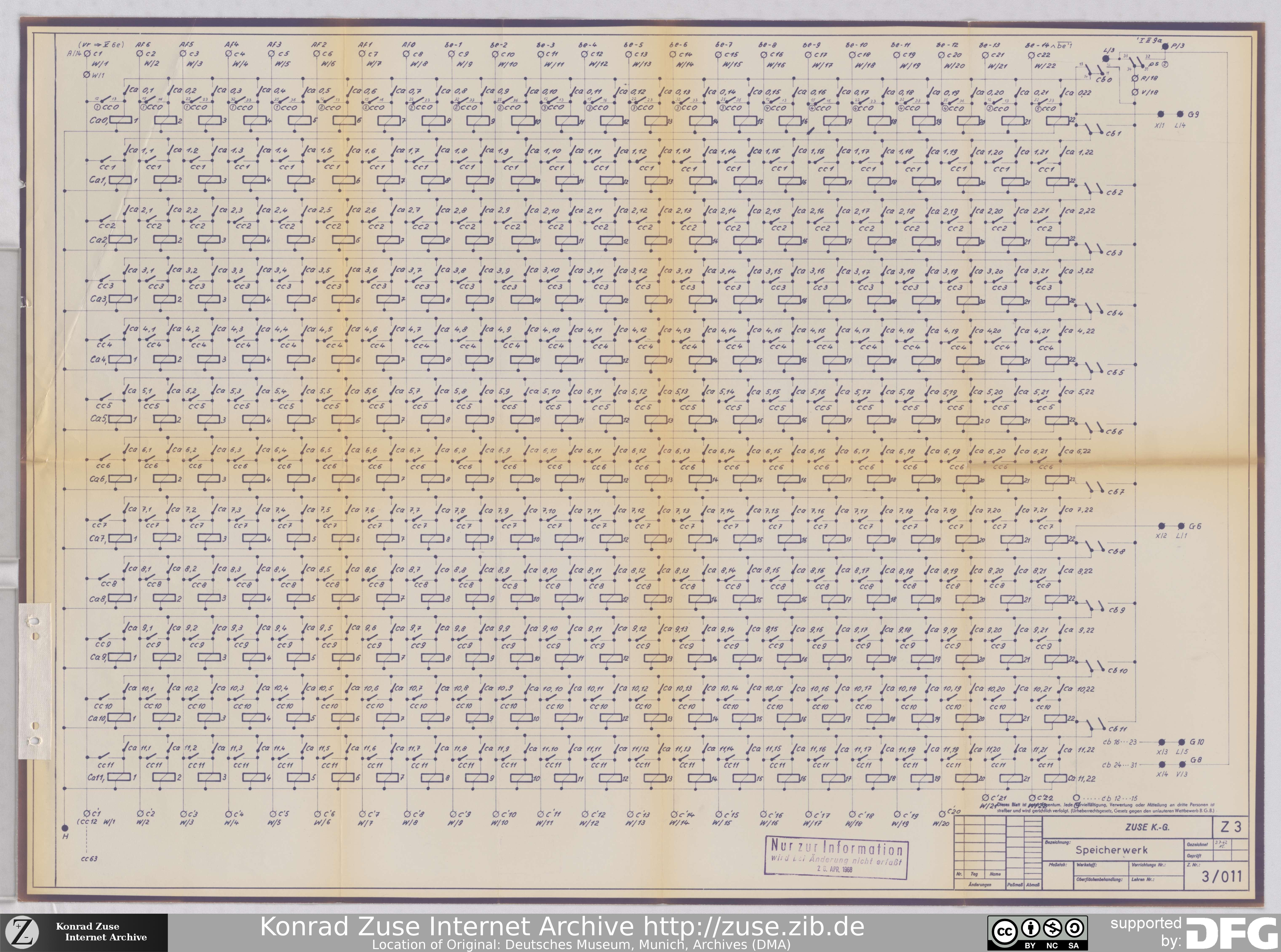
Electromechanical relays have switching speeds measured in tens of hertz; Mr. Zuse understood from the get go that the technology is a dead end. He took the expedient path in hopes of securing longer-term funding from the Nazi regime. Unfortunately for him — and fortunately for much of Europe — the officials were unimpressed and the funding never came through.
Zuse’s counterparts on the Allied side had more luck: early successes in codebreaking allowed them to pursue more costly and complicated vacuum tube designs. The blueprint for a tube-based memory cell came from William Eccles and Frank Wilfred Jordan — a largely-forgotten duo of British inventors who proposed the following bistable circuit as a replacement for an electromechanical relay:
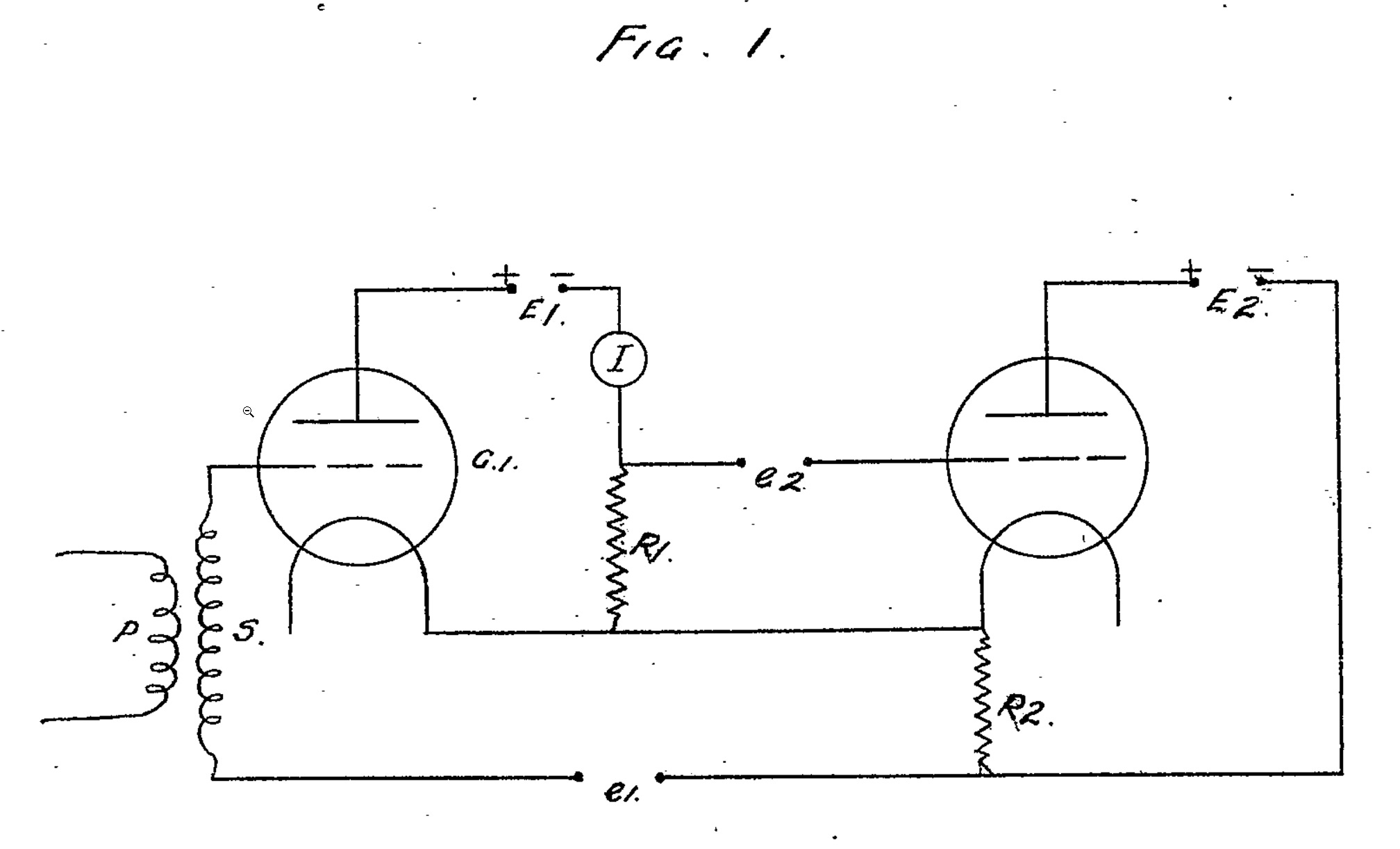
The circuit latches when an input current flows through the transformer winding on the left. This momentarily makes the G1 grid voltage more positive, upsetting the current balance between the tubes in a self-reinforcing feedback loop.
In modern terms, both of these circuits would be described as set-reset (SR) latches. Their fundamental operation is shared with the cells that make up high-speed, low-power SRAM memories found on the dies of most microcontrollers and microprocessors today. A contemporary textbook example of an SR architecture could be this:
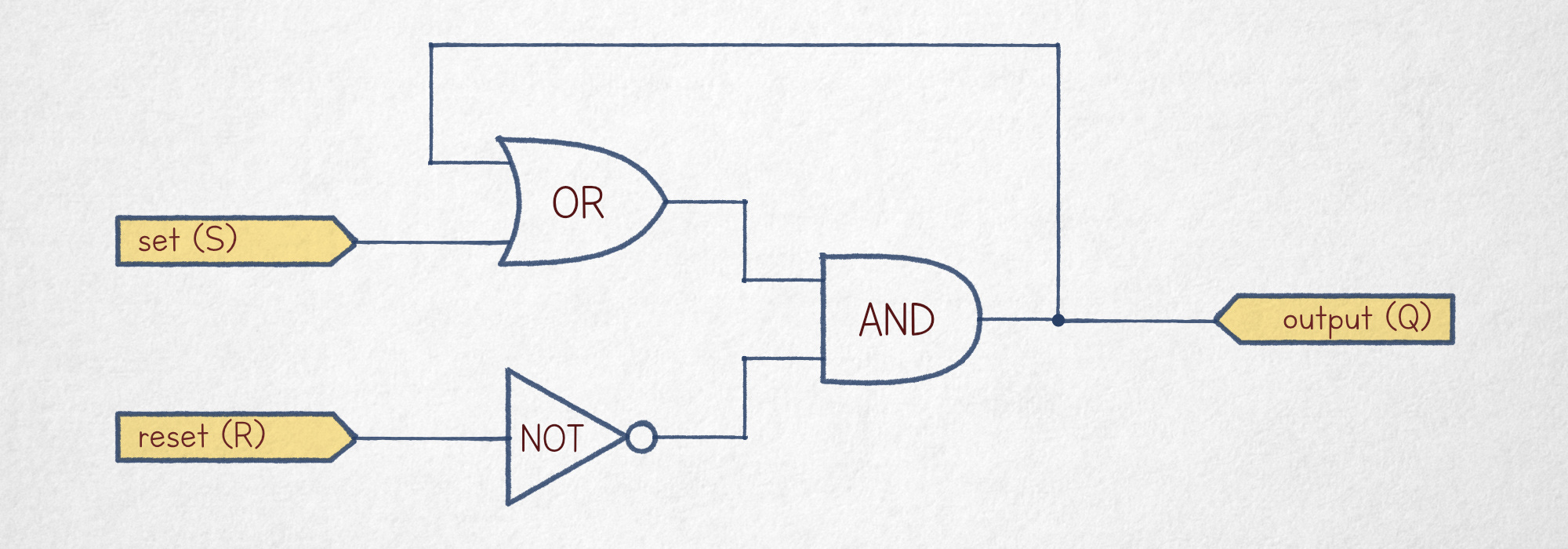
To analyze the circuit, let’s consider what happens if the “reset” line is high. In this scenario, one input of the AND gate is always zero, so the circuit outputs “0” no matter what’s happening on the OR side.
Conversely, if “reset” is low, the AND gate works as a pass-through for the OR. As for the OR itself, if “set” is high, it unconditionally outputs “1”. But if “set” is not asserted, the OR passes through the circuit’s previous output value via the feedback loop on top of the schematic. In effect, at S = R = 0, the device is latched and stores a single bit of data representing what previously appeared on the S and R input lines.
We could wrap up here, except for one tiny detail: most vacuum tube computers did not use vacuum tube memory for the bulk of their needs. The reason is clear if we consider that the memory unit in Zuse’s Z3 required about 2,000 relays, compared to 600 for the rest of the machine. The math for the relatively costly tubes was even worse, and that’s before we consider that each tube needed substantial, constant power for the heater filament. In short, until the advent of large-scale integration (LSI) chips in the mid-1970s, main memory usually had to be done some other way.
The solution to this problem were “dynamic” memories that relied on relatively short-lived physical phenomena — say, static electricity or acoustics — to store information in an inexpensive medium. Because the underlying physical process lasted only a brief while, the data had to be regularly retrieved and refreshed (or retransmitted) again.
One of the earliest examples of this was the Atanasoff-Berry “computer” (ABC) — in reality, a sophisticated but non-programmable calculator that used a spinning drum with an array of mechanically-switched capacitors:
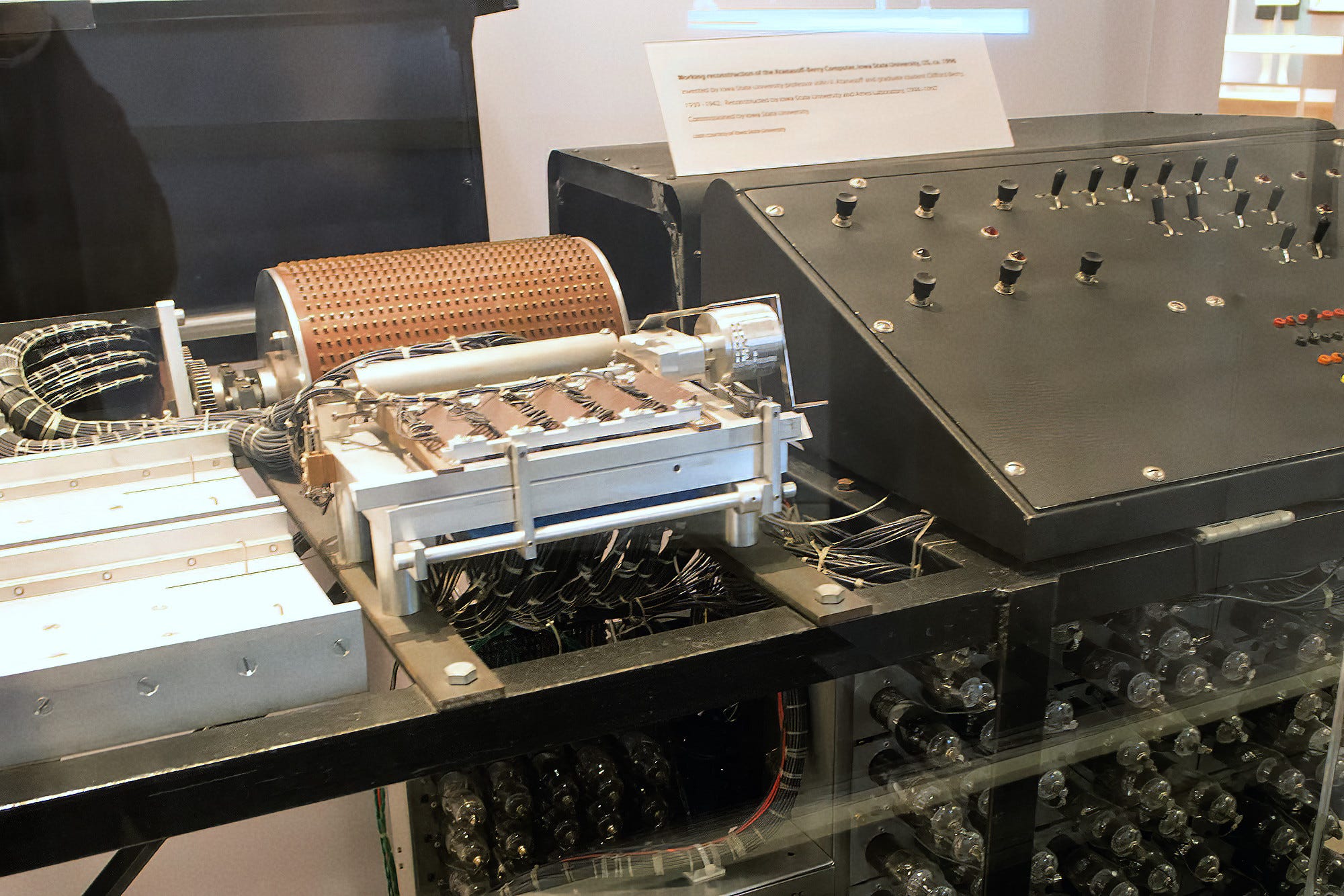
The charge state of each capacitor conveyed digital information; the gradual self-discharge of the cells necessitated regular refresh. This was, in many respects, the precursor to modern-day DRAM. The DRAM chips in our desktop computers and smartphones still use capacitors; we just make them in bulk on a silicon die and have a way to address them electronically. Although this type of memory is slower and more power-hungry than SRAM, the enduring advantage of DRAM is that it requires far fewer components — and thus, less die space — per every bit stored.
But back to early computing: another fascinating incarnation of the idea were delay-line memories. These devices encoded data as sound waves pumped into a length of material and then sensed on the other side. Because sound takes time to propagate, some number of bits could be “stored” in flight in an electro-acoustic loop. The main advantage was that sound waves propagate pretty briskly, so the latency of this system was far better than that of a spinning capacitor drum.
The wackiest example of this genre is the mercury delay line. As the name implies, these devices relied on the toxic metal as the medium for sound waves:
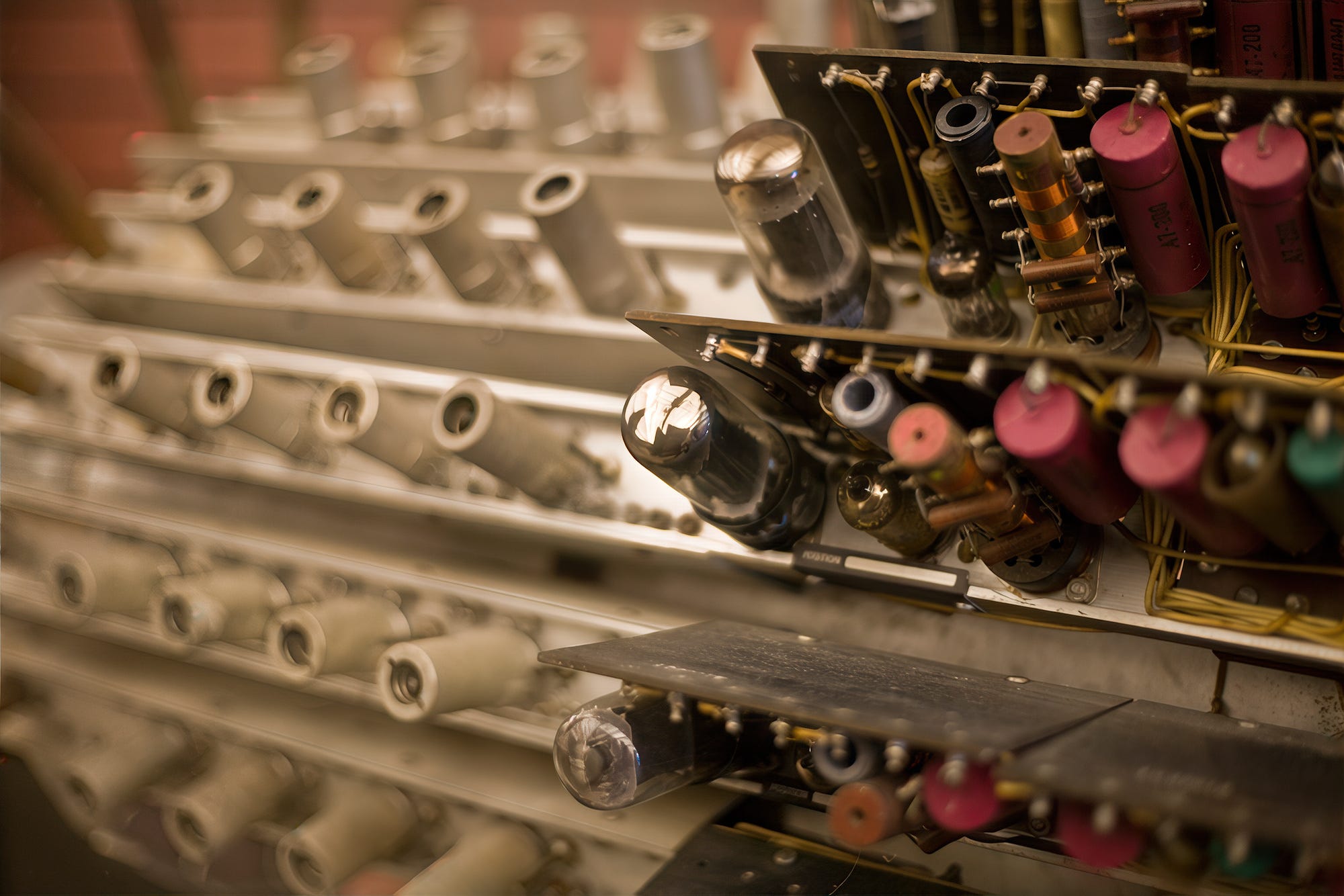
Wikipedia will tell you that mercury was chosen because it uniquely matched the acoustic impedance of piezoelectric transducers, but I think that’s a misreading of the original patent (US2629827A). The problem with solid metal was presumably just that the longitudinal speed of sound was much higher than in liquids — so at a given clock speed and column length, you couldn’t store as many bits. Conversely, the issue with less dense and more compressible liquids might have been that they attenuated high frequencies, reducing the maximum transmit rate. All in all, I suspect that mercury simply offered the optimal storage capacity for the era — as long as you didn’t care about safety or weight.
Thankfully, this “mad scientist” period ended the moment someone thought of coiling the metal to accommodate more data in flight. Meet torsion memory:
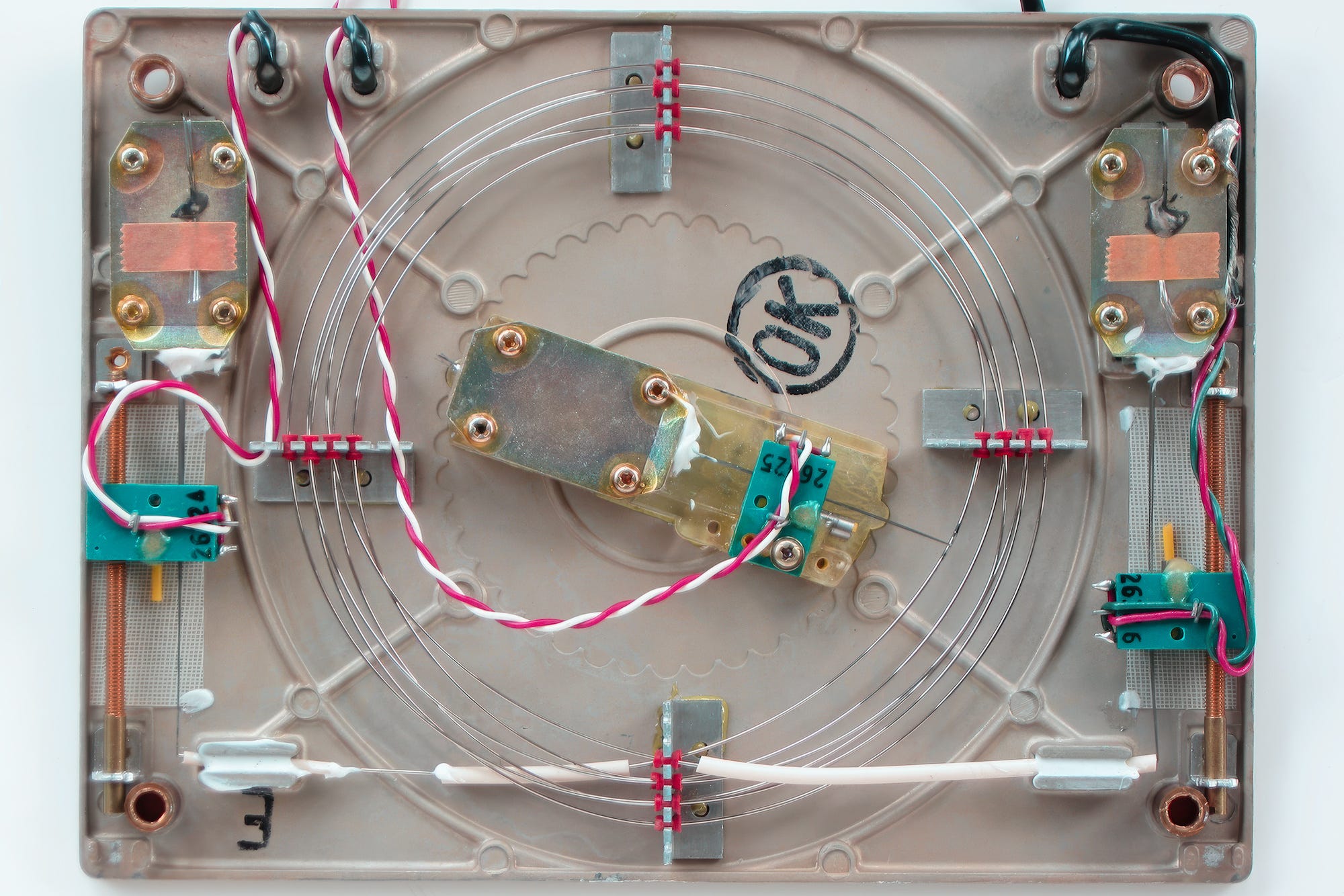
The approach relied on acoustic waves traveling through spring wire, but this time, it used torsion (twisting) instead of longitudinal (push-pull) motion. This allowed the wire to be loosely coiled and held in place with rubber spacers; with longitudinal waves, much of the acoustic energy would be lost at every turn.
Yet another fascinating class of early dynamic memories included the Williams tube and the RCA Selectron tube. Both had no moving parts; the latter device is pictured below:
These memories operated somewhat like a CRT, selectively firing electrons at a phosphor substrate and storing several hundred bits as a pattern of illuminated dots. Although the stored data was visible to the naked eye, the readout relied on sensing changes to electrostatic fields instead. In essence, electrons were getting knocked around in the phosphor layer, creating a net charge which could be picked up for a while by a nearby electrode.
Today, even among computer history buffs, magnetic media is typically associated with bulk, at-rest data storage: hard disks, floppies, and LTO tapes. But for about two decades — roughly between 1950 and 1970 — magnetic main memories were quite common too.
The earliest incarnation of this is the magnetic drum memory, a sort of an in-between stage between the capacitor-based memory of the Atanasoff-Berry computer and the modern hard drive:
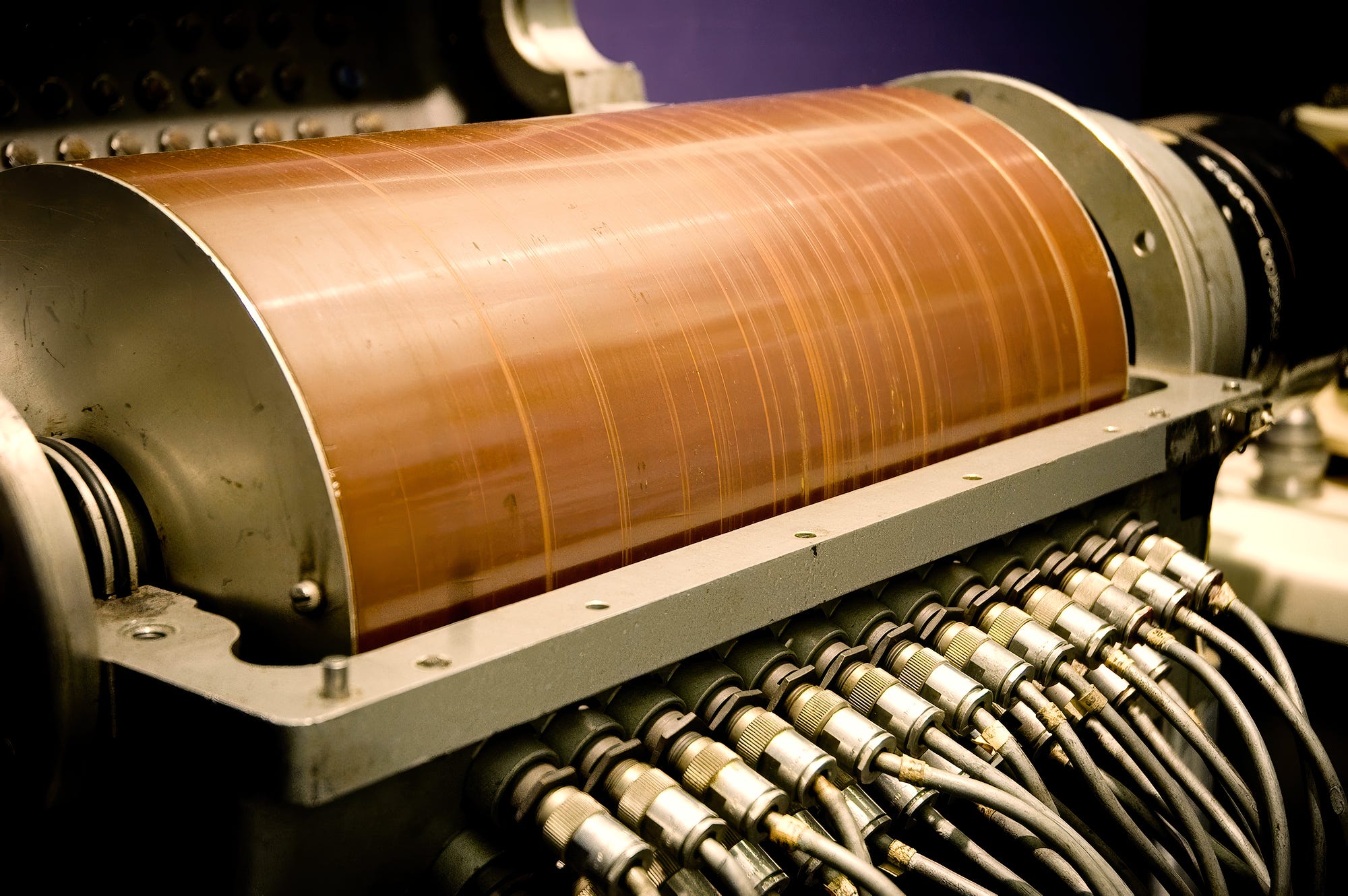
In this design, read and write heads hovered above a fast-spinning ferromagnetic cylinder. The relatively small diameter of the cylinder, along with the high number of parallel heads that didn’t need to make contact with the surface, kept the read times reasonably short. But still not short enough: the computers of that era were already running at multi-megahertz speeds. We needed a better approach.
The best we came up with in pre-IC era was solid-state magnetic core memory. These devices consisted of an array of microscopic ferrite beads (“cores”) with a pattern of insulated copper wires woven through:
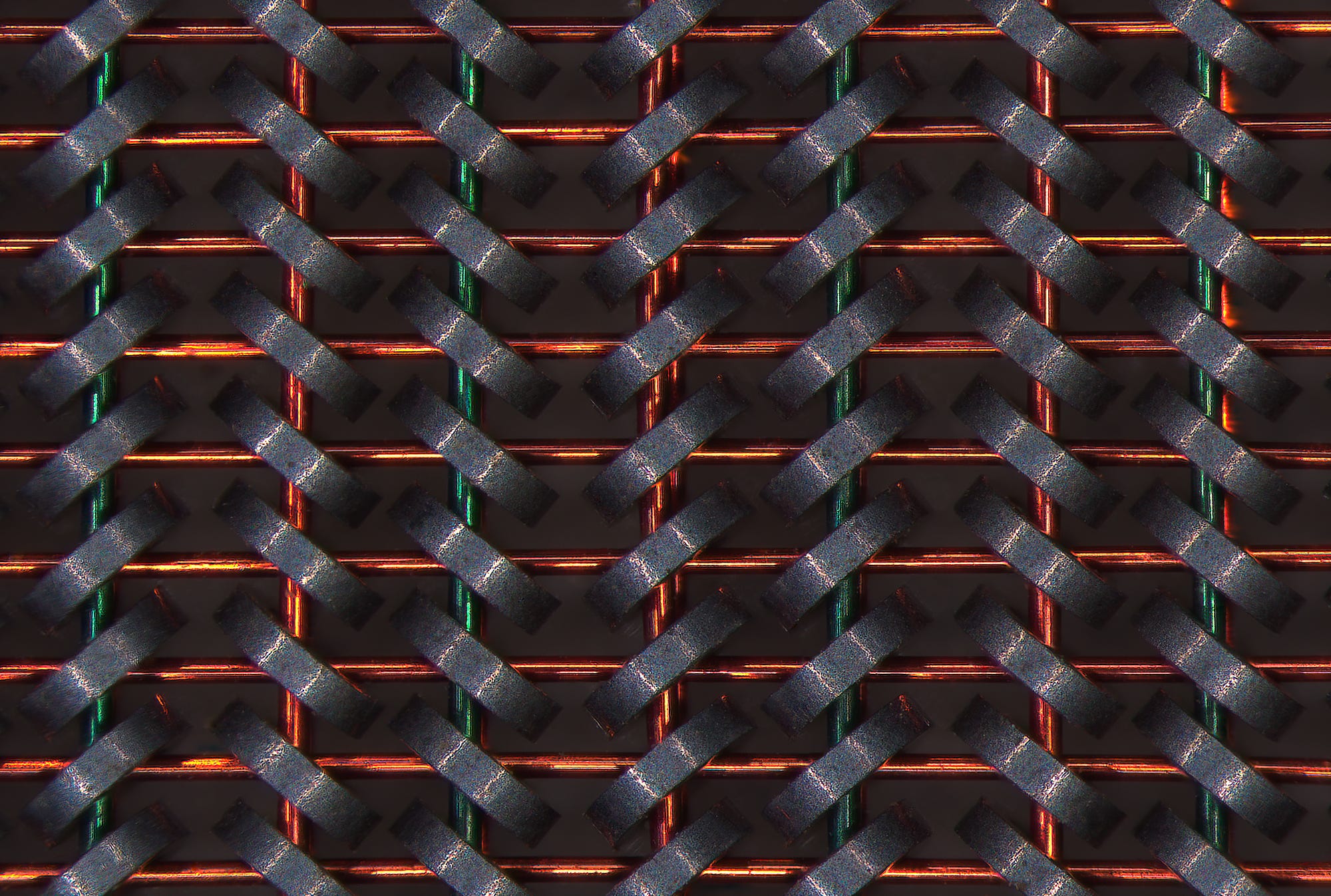
The key property of the cores is that they could be magnetized by an external field, but their magnetic polarity flipped only if the magnetizing field exceeded a certain threshold. Below that threshold, they retained their previous state.
To write to a specific cell, a sub-threshold magnetic field would be induced around a specific horizontal wire by supplying a calibrated current through its length. Another sub-threshold field would be created along a vertical wire. At the intersection of the two wires, the intensity of the combined fields would exceed the magnetization threshold and “flip” the selected core.
The readout process was a bit more involved: it relied on overwriting a cell and then sensing the induced current that’s expected if the polarity flips. If no such current pulse was detected, it meant that the written value must have been the same as what was stored in the cell before.
Magnetic memories were fast and quite tiny; the microscope photo above shows about 63 bits of a 32 kB module that measured 8x8” overall.
Interestingly, the legacy of magnetic RAM lives on: a company called Everspin Technologies sells magnetoresistive (MRAM) chips for embedded applications in sizes up to 16 MB. The chips behave just like SRAM, except they retain data with no power. At the moment, the tech doesn’t seem to be particularly competitive; I think it might have some uses in aerospace and defense applications because it is more resistant to radiation and EMP. That said, given the meandering path we’ve taken with memory technology, so knows what the future holds?

Other history-related articles you might like:


I write well-researched, original articles about geek culture, computing history, and more. If you like the content, please subscribe.