May 31st, 2026 @ justine's web page
![[Picture of Tux the Linux penguin mascot enthusiastically flapping looking down at a black circle loop with an arrowhead pointing over an egg, with arm64 assembly instructions inside]](https://justine.lol/rseq/rseq.png)
The best kept secret at the frontier of system programming right now is the Linux 4.18+ (c. 2018) concept of restartable sequences or rseq for short. They allow you to create thread-safe data structures without locks or atomics which scale to microprocessors with many cores.
It's currently only possible to use rseq on Linux using handwritten
assembly code. However I believe in the future, all operating systems
will be updated to support rseq(), all system programming
languages will be redesigned to be able to express restartable
sequences, and all data structure libraries will be rewritten to use
them.
So far the only software I've seen using rseq is tcmalloc, jemalloc, glibc, and cosmopolitan. That's destined to change now that microprocessors with 128 or even 192 cores are becoming inexpensive. For example,
-
On my $160 Raspberry Pi 5 (which
has 4 cores), rseq makes my
malloc()implementation 3x faster versus having a dlmalloc mspace assigned to each thread. For most developers, that's a take it or leave it kind of improvement. However, -
On my $4,834 System76 Thelio Astra
with Ampere's 128 core 3GHz Altra CPU, rseq makes cosmopolitan
malloc()go 34x faster (compared to sharding ops over an array of mspaces usingsched_getcpu()%32) -
On my $17,628.55 AMD Threadripper Pro
7995WX with 96 cores, rseq makes
my
malloc()43x faster (versus using that samesched_getcpu()mutex sharding technique)
System programmers who don't have a workstation like the ones above are going to be left behind like a dinosaur, with no opportunity to pluck the low hanging fruit of 10x performance optimizations. For example, I wouldn't have been able to pull off the speedups I made to matrix multiplication last year if I hadn't splurged on a 96 core CPU. It put me in the poor house for a few months (since the cheaper Ampere workstations weren't available it the time) but was so worth it, since my work received press coverage, it made me famous in the AI community, it helped my project get adopted by 32% of organizations, and even earned me a job offer from Google to work in their Gradient Canopy improving TPU performance for Gemini.
If you do have one of these microprocessors, then restartable sequences are going to be one of the most important tricks you'll use to exploit its capabilities. This tutorial will show you how they work, and provide you with a concrete example for pushing and popping which can be immediately useful.
What Problems Do Restartable Sequences Solve?
Whenever the Cosmopolitan C runtime creates a thread on a Linux system,
it issues an rseq() system call which gives the kernel 32
bytes of TLS memory. Then, for the remainder of that thread's life, the
kernel will update the TLS memory with the CPU number whenever the
thread is rescheduled. I found that to be immediately helpful for
improving my sched_getcpu() implementation. Since now it
just needs a 1 nanosecond relaxed mov instruction to get
the CPU number, whereas before I needed to wait an entire microsecond
for the getcpu() system call.
However it gets better. There's a second field in the rseq TLS memory
that allows the thread to send information back to the kernel. Normally
the rseq_cs field is NULL, but it can be
updated with a pointer specifying a sequence of assembly instructions in
your program. Now, whenever the kernel preempts your thread and tries to
move it to a different CPU, it'll notice your rseq_cs is
non-null, and will check the program counter (a.k.a. %rip on x86) to see
if it's currently within the specified interval. If that's the case,
then the kernel will force the thread to jump to an abort handler you
also specify, which can do things like jump back to the beginning of the
function to retry the operation.
Here's why we need that. Let's say you have a GIL like this:
static pthread_mutex_t lock;
static struct List *list;
If you're using that to protect your data structures, then it's going to go slow on systems with dozens of cores, since only a single thread can hold the lock at any given moment. So you might think, let's create a lockless list using atomics. That's pretty simple if we're only pushing, but if we want to also be able to pop, then we'd need to account for the ABA problem with something like the following:
#define MASQUE 0x00fffffffffffff0  // supports pml5t w/ malloc'd memory
#define PTR(x) ((uintptr_t)(x) & MASQUE)
#define TAG(x) ROL((uintptr_t)(x) & ~MASQUE, 8)
#define ABA(p, t) ((uintptr_t)(p) | (ROR((uintptr_t)(t), 8) & ~MASQUE))
#define ROL(x, n) (((x) << (n)) | ((x) >> (64 - (n))))
#define ROR(x, n) (((x) >> (n)) | ((x) << (64 - (n))))

struct List {
  struct List *next;
  // ...
};

_Atomic(struct List *) list;

void push(struct List *elem) {
  struct List *tip;
  for (tip = atomic_load_explicit(&list, memory_order_relaxed);;) {
    elem->next = (struct List *)PTR(tip);
    if (atomic_compare_exchange_weak_explicit(
            &list, &tip, (struct List *)ABA(elem, TAG(tip) + 1),
            memory_order_release, memory_order_relaxed))
      break;
    pthread_yield_np();
  }
}

struct List *pop(void) {
  struct List *tip, *elem;
  tip = atomic_load_explicit(&list, memory_order_relaxed);
  while ((elem = (struct List *)PTR(tip))) {
    if (atomic_compare_exchange_weak_explicit(
            &list, &tip, (struct List *)ABA(elem->next, TAG(tip) + 1),
            memory_order_acquire, memory_order_relaxed))
      break;
    pthread_yield_np();
  }
  return elem;
}
The issue is this will likely go just as slow if not slower. The mere act of sharing the same 64-byte region of memory (a.k.a. cacheline) between multiple cores, causes the CPU internally to basically use a mutex, and chances are the CPU's internal mutexes aren't as good as the ones you've implemented in userspace.
So one potentially smarter approach is to shard the data structure, so each CPU gets its own area.
static struct {
  alignas(64) struct List *list;
} lists[CPU_SETSIZE];
Then all you have to do is index the lists array
using sched_getcpu(). The issue is that doesn't work. We
still need a mutex, due to how the operating system might preempt and
relocate your thread twixt the cpu number load and any mutations you've
made.
static struct {
  alignas(64) pthread_mutex_t lock;
  struct List *list;
} gil[CPU_SETSIZE];
So now that we've fixed things, it looks like we ended up back where we
started, except now we have to manage 1024 copies. However, despite
appearances, this code actually is much more optimal. By having a
separate mutex for each cpu, we've ensured they'll only be contended
when we hit corner cases. It matters because the difference between a
contended versus uncontended lock is like the night and the day. With
a great mutex library like nsync a contended
lock operation will cost you at least 200 nanoseconds. However
an uncontended lock/unlock operation only costs about 15 nanoseconds. We
further use alignas(64) to ensure that the pointer is
placed on a separate cacheline for each CPU, thereby reducing any
hardware internal contention to a very low order of probability.
However if all we're doing is pushing and popping, then that 15 nanoseconds is still an enormous cost compared to a thread local linked list push or pop which only costs about a nanosecond. So we really want to get rid of the mutex. The only thing standing in our way is a fringe rarely-occurring corner case where the operating system interrupts our tiny sequence of a few assembly instructions during which we mutate the list.
So how do we get rid of the mutex? At this point, you might be thinking
you need an RTOS which guarantees your thread won't be preempted, or
perhaps your existing OS might have a sched_setscheduler()
policy that gives you back some semblance of control. For specialized
deployments, that might work. There's also
sched_setaffinity() which is supported on Linux, FreeBSD,
and Windows. That will work for a given application, if you feel
comfortable pinning your threads to particular CPUs. But all these
approaches folks have invented in the past for controlling the OS
scheduler can be potentially disastrous if your program's execution
doesn't go the way you planned.
This is why Linux now provides
rseq() which is a much more enlightened solution. With
restartable sequences, you actually can get rid of both the mutex and
atomics, while the OS continues to fully abstract scheduling. The way it
works is you advise the kernel whenever your program enters a critical
section of code that you don't want interrupted. It's probably going to
be maybe 10 assembly instructions tops. The first assembly opcode should
be a move instruction that sets the rseq_cs field. The last
instruction needs to be the thing that makes the modification to your
global data structure. Think of it sort of like a really tiny database
transaction. What makes it go fast, is that the bidirectional
communication with the kernel happens via shared memory.
Example No. 1: Building the Fastest Hit Counter
Here's your gentle introduction to restartable sequences. We're going to build a program that just increments a number. Since that's probably the simplest thing imaginable. Imagine you have a blog that gets billions of visitors per second, which is hosted on a multi-threaded webserver you wrote from scratch and you need to track visits. In that case, I can think of five ways you could build your hit counter (using cosmocc to build the example code).
![[photo of AMD Ryzen 4 ThreadRipper Pro box]](https://justine.lol/rseq/threadripper-pro-800x800.jpg) 96 core AMD Ryzen Threadripper Pro 7995WX (x86-64) | |||||
|---|---|---|---|---|---|
| wall | wall | user | system | cpu | implementation |
| 62,461 | 30,739k | 118,631 | 11,744,462 | 161k | hitcounter-mutex.c (glibc) |
| 29,389 | 65,331k | 34,094 | 13,259 | 40,547k | hitcounter-mutex.c (cosmo) |
| 23,412 | 82,009k | 4,366,203 | 0 | 440k | hitcounter-atomic.c |
| 543 | 3,535,912k | 93,274 | 0 | 20,585k | hitcounter-shard.c |
| 20 | 96,000,000k | 1,150 | 12 | 1,652,324k | hitcounter-rseq.c |
| 7 | 274,285,714k | 0 | 11 | 174,545,455k | hitcounter-affinity.c |
Earlier when I said rseq made my code go 34x or 43x faster, it's
important to note that I was comparing it to the portable
version of my malloc() implementation, which is already
heavily optimized for multicore systems. If we compare rseq to a truly
naïve solution, such as using a glibc mutex to guard an increment
operation, then we see that rseq can actually make things go
a million times faster judging by CPU time consumption.
It sounds like I'm joking, except I'm not, since half the friends I
asked told me that using the mutex was their first instinct here.
Now in terms of exploring the five approaches listed above, we can see that only three are worth considering.
-
Sharding is the best when you need portability to all operating systems.
We use the
cosmo_shard()function pointer to accomplish this. This will use__get_rseq()->cpu_idon modern Linux, falling back to alternatives likelsl'ing the global descriptor table,rdpid,rdtscp, orsched_getcpu()when available, and if all else fails it'll usemurmur3(gettid())%32as a last resort. -
Affinity was the absolute fastest, but it requires micromanaging all
threads. That rules it out for library authors. It's probably a bad idea
for app authors too. I'd be terrified of shooting myself in the foot if
I tried that. However, I could potentially imagine some situations where
it might be appropriate. However it's important to note that GCC
cheated. By annihilating all volatile operations, we were able to
leverage the compiler's knowledge of mathematics to find a closed form
solution to increment, which is addition. So that's not cheating at all.
If I use
alignas(64) volatile long xin the hitcounter-affinity.c example, then it ends up going exactly the same speed as the rseq example. - Restartable sequences make superior tradeoffs. They only currently work on modern Linux, so if you're building a library or something that's open source, you're going to need to support other strategies too. It requires writing code at a higher difficulty setting. I'm afraid LLMs are not yet smart enough to help you build restartable sequences. However in the future I believe programming languages will change so we can elegantly express restartable sequences, similar to how C11 introduced compiler APIs for atomics.
Now let's move on to my ARM workstation.
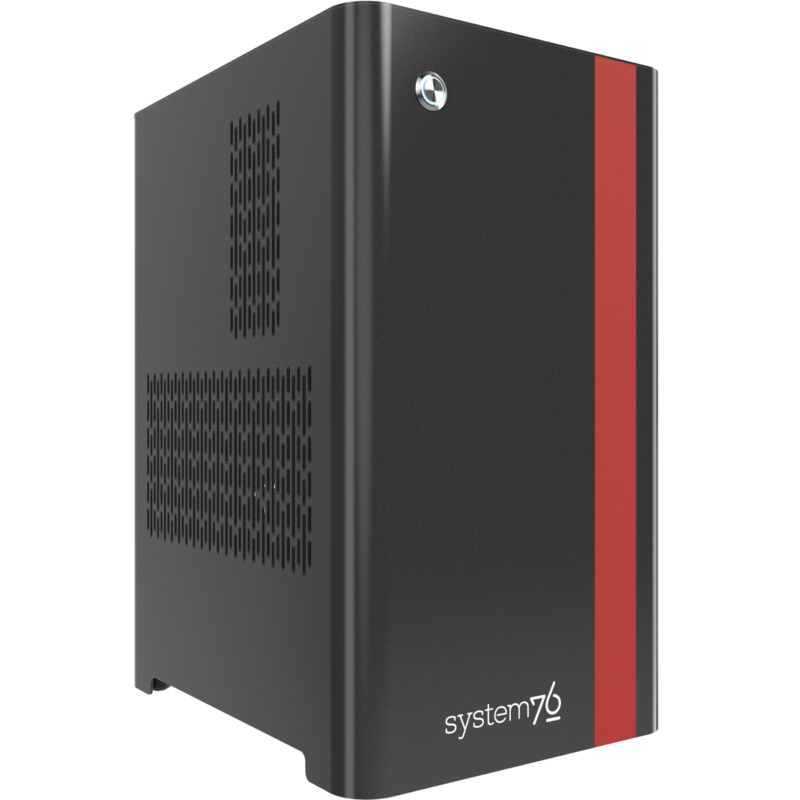 System76 Thelio Astra w/ Ampere's 128 core 3GHz Altra CPU (ARM64) | |||||
|---|---|---|---|---|---|
| wall | wall | user | system | cpu | implementation |
| 219,484 | 5,832k | 322,259 | 15,790,712 | 79k | hitcounter-mutex.c (glibc) |
| 212,005 | 6,038k | 144,163 | 67,841 | 6,038k | hitcounter-mutex.c (cosmo) |
| 17,924 | 71,413k | 2,162,867 | 0 | 592k | hitcounter-atomic.c |
| 417 | 3,069,544k | 42,972 | 0 | 29,787k | hitcounter-shard.c |
| 39 | 32,820,513k | 2,966 | 61 | 422,861k | hitcounter-rseq.c |
| 12 | 106,666,667k | 15 | 1 | 80,000,000k | hitcounter-affinity.c |
In the table above, the ops/sec columns are most directly comparable with the Threadripper results, since they're scaled with respect to the workload. More ops/sec is better. Looking at these numbers, a few things stand out:
-
Ampere's ARM Altra CPU has really fast atomics. One benefit of ARM is
that it has a fancier memory model,
which hitcounter-atomic.c
exploits using
atomic_fetch_add_explicit(&counter, 1,
memory_order_relaxed)
. Thanks to relaxed ordering, we get anldaddinstruction, which doesn't need to manage memory barriers. You can't do that on x86, sincexaddis always strongly ordered. What's more interesting is that, even if I specifymemory_order_seq_cst(forldaddal) my Altra CPU still goes noticeably faster than my Threadripper. I suspect it might be hyperthreading that got it into trouble, because my Threadripper claims to have 192 CPUs. - Cosmopolitan's implementation of POSIX mutexes is very complicated. It does a better job than glibc, but I think we could improve our implementation to have better latency on ARM microprocessors.
- The rest of the differences in numbers are mostly commensurate with the difference in price.
- Using restartable sequences turned my 3GHz CPU into a 33GHz CPU.
- Using mutexes turned my 3GHz CPU into a 219MHz CPU.
Here's what I think is cool about Ampere's ARM CPUs. I'm actually huge fan of x86-64. I always have been. For years, I've been reading people on forums like Hacker News talk about how x86 is bad because it has things like a complicated instruction decoder. RISC fans have always claimed that ARM, due to its intelligent design (like how all instructions are 4 bytes long) you can have more cores at a lower price. To that, my response has always been, "then show me where I can buy one" and no one has really given me an answer until now. Ampere made the dream of RISC finally come true. Now the CPU I own with the most cores is an ARM chip, and I was pleasantly surprised to discover that benchmarks exist where it's able to outperform a significantly more expensive x86 chip.
Example No. 2: Linked List Push Pop
Let's say you want to track object instances globally. Using rseq, it's
relatively easy to implement the push()
and pop() operations for a sharded linked list. Here's a
working example that you can compile with
cosmocc:
#include <assert.h>
#include <cosmo.h>
#include <linux/rseq.h>
#include <pthread.h>
#include <stdio.h>
#include <stdlib.h>

#define ITERATIONS 10000000l

struct List {
  struct List *next;
};

struct {
  alignas(64) struct List *freelist;
} heaps[CPU_SETSIZE];
Here we see that we finally got rid of the locks and atomics. We're
using alignas(64) to ensure each CPU's memory is on a
separate cacheline, which means there'll be no synchronization
bloodbaths happening inside the hardware. Since Linux
defines CPU_SETSIZE as 1024, we have to burn quite a bit of
BSS memory, however most of it isn't going to be used. For single
threaded programs, the Linux Kernel does a remarkably good job picking 1
or 2 cores and sticking with it. We put a lot of faith in the kernel to
not fragment our objects needlessly, since this design doesn't easily
allow for a rebalancing of elements. It should not be needed.
static inline void push(struct List *chunk) {
#ifdef __x86_64__
  asm volatile(".pushsection .rodata.rseq,\"a\",@progbits\n"
               "	.balign	32\n"
               "300:	.long	0\n"                  // rseq_cs::version
               "	.long	0\n"                  // rseq_cs::flags
               "	.quad	301f\n"               // rseq_cs::start_ip
               "	.quad	302f-301f\n"          // rseq_cs::post_commit_offset
               "	.quad	303f\n"               // rseq_cs::abort_ip
               "	.popsection\n"                //
               "301:	lea	300b(%%rip),%%rcx\n"  //
               "	mov	%%rcx,8(%1)\n"        // rseq->rseq_cs
               "	mov	(%1),%%ecx\n"         // rseq->cpu_id_start
               "	shl	$6,%%ecx\n"           //
               "	mov	(%2,%%rcx),%%rdx\n"   // rdx = freelist
               "	mov	%%rdx,(%0)\n"         // chunk->next = rdx
               "	mov	%0,(%2,%%rcx)\n"      // freelist = chunk
               "302:	.pushsection .text.unlikely,\"ax\",@progbits\n"
               "	.byte	0x0f,0xb9,0x4d\n"
               "	.long	0x53053053\n"
               "303:	jmp	301b\n"               // restart on abort
               "	.popsection"
               : /* no outputs */
               : "r"(chunk), "r"(__get_rseq()), "r"(heaps)
               : "rcx", "rdx", "memory");
#elifdef __aarch64__
  asm volatile(".pushsection .rodata.rseq,\"a\",@progbits\n"
               "	.balign	32\n"
               "300:	.long	0\n"                  // rseq_cs::version
               "	.long	0\n"                  // rseq_cs::flags
               "	.quad	301f\n"               // rseq_cs::start_ip
               "	.quad	302f-301f\n"          // rseq_cs::post_commit_offset
               "	.quad	303f\n"               // rseq_cs::abort_ip
               "	.popsection\n"                //
               "301:	adrp	x4, 300b\n"           // load address of rseq_cs
               "	add	x4, x4, :lo12:300b\n" //
               "	str	x4, [%1, #8]\n"       // rseq->rseq_cs
               "	ldr	w4, [%1]\n"           // rseq->cpu_id_start
               "	lsl	w4, w4, #6\n"         //
               "	ldr	x5, [%2, x4]\n"       // x5 = freelist
               "	str	x5, [%0]\n"           // chunk->next = x5
               "	str	%0, [%2, x4]\n"       // freelist = chunk
               "302:	.pushsection .text.unlikely,\"ax\",@progbits\n"
               "	.long	0xd428bc00\n"
               "303:	adrp	x5, 301b\n"           // load page address of 301b
               "	add	x5, x5, :lo12:301b\n" // add low 12 bits
               "	br	x5\n"                 // branch to 301b via register
               "	.popsection"
               : /* no outputs */
               : "r"(chunk), "r"(__get_rseq()), "r"(heaps)
               : "x4", "x5", "memory");
#endif
}

static inline struct List *pop(void) {
  struct List *chunk;
#ifdef __x86_64__
  asm volatile(".pushsection .rodata.rseq,\"a\",@progbits\n"
               "	.balign	32\n"
               "300:	.long	0\n"                  // rseq_cs::version
               "	.long	0\n"                  // rseq_cs::flags
               "	.quad	301f\n"               // rseq_cs::start_ip
               "	.quad	302f-301f\n"          // rseq_cs::post_commit_offset
               "	.quad	303f\n"               // rseq_cs::abort_ip
               "	.popsection\n"                //
               "301:	lea	300b(%%rip),%%rcx\n"  //
               "	mov	%%rcx,8(%1)\n"        // rseq->rseq_cs
               "	mov	(%1),%%ecx\n"         // rseq->cpu_id_start
               "	shl	$6,%%ecx\n"           //
               "	mov	(%2,%%rcx),%0\n"      // chunk = chunks[cpu].freelist
               "	test	%0,%0\n"              //
               "	jz	302f\n"               //
               "	mov	(%0),%%rdx\n"         // rdx = chunk->next
               "	mov	%%rdx,(%2,%%rcx)\n"   // freelist = rdx
               "302:	.pushsection .text.unlikely,\"ax\",@progbits\n"
               "	.byte	0x0f,0xb9,0x4d\n"
               "	.long	0x53053053\n"
               "303:	jmp	301b\n"               // restart on abort
               "	.popsection"
               : "=&r"(chunk)
               : "r"(__get_rseq()), "r"(heaps)
               : "rcx", "rdx", "memory");
#elifdef __aarch64__
  asm volatile(".pushsection .rodata.rseq,\"a\",@progbits\n"
               "	.balign	32\n"
               "300:	.long	0\n"                  // rseq_cs::version
               "	.long	0\n"                  // rseq_cs::flags
               "	.quad	301f\n"               // rseq_cs::start_ip
               "	.quad	302f-301f\n"          // rseq_cs::post_commit_offset
               "	.quad	303f\n"               // rseq_cs::abort_ip
               "	.popsection\n"                //
               "301:	adrp	x4, 300b\n"           // load address of rseq_cs
               "	add	x4, x4, :lo12:300b\n" //
               "	str	x4, [%1, #8]\n"       // rseq->rseq_cs
               "	ldr	w4, [%1]\n"           // rseq->cpu_id_start
               "	lsl	w4, w4, #6\n"         //
               "	ldr	%0, [%2, x4]\n"       // chunk = chunks[cpu].freelist
               "	cbz	%0, 302f\n"           //
               "	ldr	x5, [%0]\n"           // x5 = chunk->next
               "	str	x5, [%2, x4]\n"       // freelist = x5
               "302:	.pushsection .text.unlikely,\"ax\",@progbits\n"
               "	.long	0xd428bc00\n"
               "303:	adrp	x5, 301b\n"           // load page address of 301b
               "	add	x5, x5, :lo12:301b\n" // add low 12 bits
               "	br	x5\n"                 // branch to 301b via register
               "	.popsection"
               : "=&r"(chunk)
               : "r"(__get_rseq()), "r"(heaps)
               : "x4", "x5", "memory");
#endif
  return chunk;
}
Now let's go over the assembly code, in the hopes of demystifying it. For starters, we're using Richard Stallman's Math 55 assembly notation, which I documented for personal reference on x86 many years ago in that text file. The GNU assembler mixed with the C/C++ constraints system is the most powerful thing there is. For starters,
	.pushsection .rodata.rseq,"a",@progbits
	// ...
	.popsection
lets us teleport content to a totally different area of the executable
file. In this case, we're using the section
name .rodata.rseq because the standard GNU linker scripts
(e.g. /usr/lib/x86_64-linux-gnu/ldscripts/elf_x86_64.x) are
hard-coded to recognize sections named .rodata
or .rodata.* and then puts them into an ELF program header
segment that'll be marked PROT_READ on process startup. The
code within the pushpop:
300:	.long	0                  // rseq_cs::version
	.long	0                  // rseq_cs::flags
	.quad	301f               // rseq_cs::start_ip
	.quad	302f-301f          // rseq_cs::post_commit_offset
	.quad	303f               // rseq_cs::abort_ip
lays out the static const struct rseq_cs content (see
definition below) which describes the restartable sequence. It's
important to use System V style numeric labels here with the forwards
(f) and backwards (b) references. That's because they can be repeated in
the assembly multiple times, which means the assembler won't break if
our function is inlined multiple times by the compiler. Alternatively,
it's also possible to create labels like .Ldescription.%=
since that'll generate a unique ID for each asm() block.
301:	lea	300b(%%rip),%%rcx
	mov	%%rcx,8(%1)
We use the
301 label for the actual restartable sequence.
These first two opcodes in our sequence is basically saying
__get_rseq()->rseq_cs = &300b (note: the %1 is
used to reference the asm block arguments by index, which in this case
is "r"(__get_rseq()), further noting that
the r causes the rseq address to be stored in an arbitrary
register). That's basically modifying a piece of TLS memory we shared with the kernel. The
lea instruction is needed to
support PIC, but
the above could be shortened to movq $300b,8(%1) if you're
using Cosmopolitan.
When the kernel decides to preempt our thread, it'll check
the rseq_cs field and read the rodata structure we created
earlier, to determine whether or not the program counter (%rip) is
currently located inside 300 label. If it is, then kernel
changes the program counter to the abort_ip which we
specified as pointing to label 303.
	mov	(%1),%%ecx         // rseq->cpu_id_start
	shl	$6,%%ecx           //
Next up, we load the __get_rseq()->cpu_id_start field
documented below. This tells us the index of the CPU on which our thread
is currently running. Then we shift it left by 6 places, which is a fast
way to multiply by 64. It's important that this happen inside the
sequence. Since you'll notice our abort handler simply jumps back to the
start of the sequence. At that point, after being preempted and
relocated, the CPU index is obviously going to change, so the memory
index needs to be recomputed.
	mov	(%2,%%rcx),%%rdx   // rdx = heaps[rcx].freelist
	mov	%%rdx,(%0)         // chunk->next = rdx
	mov	%0,(%2,%%rcx)      // heaps[rcx].freelist = chunk
302:
Finally, we perform the actual push operation. Note that we don't actually mutate global memory until the last instruction. The whole sequence works like a transaction. The last instruction is special, since it's what commits the change.
	.pushsection .text.unlikely,"ax",@progbits
	.byte	0x0f,0xb9,0x4d
	.long	0x53053053
303:	jmp	301b               // restart on abort
	.popsection
Our abort handler is simple enough. All it does is jump back to the
start of our restartable sequence. The only thing surprising about this
code is that the kernel requires it to be prefixed by an arbitrary
32-bit word that was passed to the rseq() system call
earlier. Since that Cosmopolitan C runtime is responsible for issuing
that system call, cosmo defines that magic number as
RSEQ_SIG in the <linux/rseq.h> header
file documented below. Another thing we do is we teleport the abort
handler code to the .text.unlikely section of our binary,
since that's another GNU standard section name explicitly defined by
stock linker scripts.
All you see here is basically the technique I used in
my malloc() implementation for Cosmopolitan Libc. When a
small allocation (fewer than 512 bytes) is requested, it tries to pop a
piece of memory from a global sharded list like the above. If one isn't
there, then it asks mmap() for a new page of memory,
divides it into chunks, pushes them all, and then the allocation
operation tries again. It's a fast, simple, and elegant design. But the
tradeoff is that it's difficult to release memory back to the system,
since here we're basically assuming List memory is
permanent.
Now let's write some code for testing our push and pop functions.
void *worker(void *arg) {
  struct List *elem;
  for (long i = 0; i < ITERATIONS; ++i) {
    switch (i % (ITERATIONS / 10000)) {
      case 0:
        push(malloc(sizeof(struct List)));
        break;
      default:
        if ((elem = pop()))
          push(elem);
        break;
    }
  }
  return 0;
}

void cleanup(void) {
  for (int i = 0; i < CPU_SETSIZE; ++i) {
    struct List *chunk;
    while ((chunk = heaps[i].freelist)) {
      heaps[i].freelist = chunk->next;
      free(chunk);
    }
  }
}

int main(void) {
  if (__get_rseq()->cpu_id < 0) {
    fprintf(stderr, "rseq is not supported on this system\n");
    return 1;
  }
  int threads = cosmo_cpu_count();
  pthread_t th[threads];
  for (long i = 0; i < threads; ++i)
    pthread_create(&th[i], 0, worker, 0);
  for (long i = 0; i < threads; ++i)
    pthread_join(th[i], 0);
  cleanup();
}
So there you have it. A gentle introduction to restartable sequences, by way of a concrete example offering decent code you can use today, to make your global linked lists more scalable on CPUs with many cores.
#define RSEQ_CPU_ID_UNINITIALIZED       -1
#define RSEQ_CPU_ID_REGISTRATION_FAILED -2

#define RSEQ_FLAG_UNREGISTER 1

#define RSEQ_CS_FLAG_NO_RESTART_ON_PREEMPT 1  /* deprecated */
#define RSEQ_CS_FLAG_NO_RESTART_ON_SIGNAL  2  /* deprecated */
#define RSEQ_CS_FLAG_NO_RESTART_ON_MIGRATE 4  /* deprecated */

#ifdef __x86_64__
#define RSEQ_SIG 0x53053053 /* ud1 0x53053053(%rip),%edi */
#elif defined(__aarch64__)
#define RSEQ_SIG 0xd428bc00 /* brk #0x45e0 */
#endif

/* consider putting this in the .rodata.rseq section of your binary */
struct rseq_cs {
  uint32_t version;
  uint32_t flags;
  uint64_t start_ip;
  uint64_t post_commit_offset;
  uint64_t abort_ip;
} forcealign(32);

/* this memory should go in thread local storage */
struct rseq {

  /* The difference between the two is that `cpu_id_start` is always in
     range, whereas `cpu_id` may contain error values. The kernel
     provides both in order to support computation of values derived
     from the CPU ID that happens before entering the critical section.
     We could do this with one CPU ID, but it would require an extra
     branch to distinguish "not initialized" from "CPU ID changed after
     fetching it". On the other hand if (like tcmalloc) you only fetch
     the CPU Id within a critical section, then you need only one field
     because you have only one branch: am I initialized. There is no
     such thing as a CPU mismatch because instead you are just restarted
     when the CPU ID changes. —Quoth tcmalloc (rseq.md) */
  uint32_t cpu_id_start;

  /* this should be initialized to RSEQ_CPU_ID_UNINITIALIZED when this
     data structure is registered with the kernel. you'll then be able
     to test if the host OS is Linux 4.18+ by simply checking cpu_id≥0 */
  volatile int cpu_id;

  /* when this points to `struct rseq_cs` the kernel will be advised on
     how to handle the interrupting of this thread */
  uint64_t rseq_cs;

  uint32_t flags;
  uint32_t node_id;
  uint32_t mm_cid;
  char end[];
} forcealign(32);

#define __get_rseq() ((struct rseq *)__get_tls()->tib_rseq)
Methodology
Cosmopolitan creates portable binaries, which means the code I
compiled by default targets K8 on x86-64 and ARMv8.0-a on
Ampere. Now, obviously, cosmocc still uses tricks to exploit modern
capabilities at runtime. For example, atomic instructions on ARM are
compiled to emit a function call that dispatches to the modern LSE
opcodes when HWCAP_ATOMICS is advertised by the kernel. But
it's worth mentioning that, if you don't care about portable binaries,
you can squeeze another 10% performance from these programs if you build
your ARM code just for Altra using aarch64-unknown-cosmo-cc
-mcpu=neoverse-n1 -fpermitted-flt-eval-methods=c11.
In the first section of this blog post, I threw out a bunch of numbers like "malloc() goes 34x faster". I measured that using the following code, which simply spawns a thread for each CPU and repeatedly allocates and frees small pieces of memory.
#include <cosmo.h>
#include <pthread.h>
#include <stdio.h>
#include <stdlib.h>

#define NUM_THREADS    cosmo_cpu_count()
#define NUM_ITERATIONS 10000000

void *identity(void *arg) {
  return arg;
}

void *(*pIdentity)(void *) = identity;

void *thread_func(void *arg) {
  for (unsigned long i = 0; i < NUM_ITERATIONS; i++)
    free(pIdentity(malloc(i % 256)));
  return NULL;
}

int main() {
  pthread_t threads[NUM_THREADS];
  for (int i = 0; i < NUM_THREADS; i++)
    if (pthread_create(&threads[i], NULL, thread_func, NULL))
      return 1;
  for (int i = 0; i < NUM_THREADS; i++)
    if (pthread_join(threads[i], NULL))
      return 1;
}
When I build this program with cosmocc, it's possible for me to disable malloc's use of rseq by setting an environment variable, which specifies the maximum number of rseq memory pages allowed.
cosmocc -O -o bench bench.c
time ./bench
export COSMOPOLITAN_M_RSEQ_MAX=0
time ./bench
That environment variable is super useful, since it gives you a clear picture on your Linux workstation of what your malloc performance is going to look like when you run your actually portable executables on every other OS. I'm also using it as a bulwark against pathological cases I could envision with memory consumption.
Advanced Reading
- The tcmalloc documentation explains how they used rseq in their malloc implementation. For example, the trick they use to have multiple global memory writes is they use an array (instead of linked lists) and they have an integer indicating how much of that array has been committed so far. That way they can write whatever they want to the uncommitted area, and then roll forward the integer when they're done.
-
The
MEMBARRIER_CMD_PRIVATE_EXPEDITED_RSEQcommand was introduced to themembarrier()system call in Linux v5.10. This is what tcmalloc uses to facilitate cross-CPU modifications to rseq data structures.
Credits
The graphic of the Genthree Linux penguin above was drawn in collaboration with ChatGPT.
The code font on this page is PragmataPro Variable (€299) which was designed by Fabrizio Schiavi in Italy.
The rseq() system call was developed
by Paul
Turner and Andrew Hunter at Google
and Mathieu Desnoyers at
EfficiOS who
introduced
it into the Linux Kernel in 2018.
You're invited to join my redbean discord server, where you can hang out with me and cosmo developers.
Funding
![[United States of Lemuria - two dollar bill - all debts public and primate]](https://justine.lol/lemuria.png)
System76 and Ampere were kind enough to let me purchase their workstation at a discounted rate, to help my open source work on projects like llamafile. My GitHub sponsors, and Patreon subscribers have done much to help make my blogging and open source work possible these last five years. This article has Amazon Associate hyperlinks, so purchasing the recommended products is another way you can support me. Lastly Google and Mozilla are the two companies you can thank most for helping enable me to do what I do.