Building and operating software today spans local machines, remote hosts, sandboxes, services, and production systems. It has many modes of operation: interactively with a human developer, automatically through CI and background processes, and increasingly through agents working in parallel.
This work is all related, yet today's tools divide it into separate systems. Interactive tools assume a person at an interface. Automatic work disappears into jobs and logs. And as the work moves to production it lives behind separate systems and controls.
AI makes this fragmentation more visible and costly, but it did not create it. System administration, continuous integration, remote development and collaboration have strained the same boundaries for decades.
We believe the missing layer is a durable session around the work itself: one that can span applications and environments, provide relevant context by default, expose structured data and actions, preserve history, and be driven by software while remaining visible and controllable by people.
What we're building
This is our plan to build a multiplexer for all work:
- 1 Build an incredible multiplexer.
- 2 Make everything in it composable.
- 3 Make it safe and operable in production.
A multiplexer brings multiple independent streams together through a common interface. For us, that means interactive work, automatic work, and production work would share one well-crafted underlying system instead of living in separate tools.
We'll begin with a terminal multiplexer. It keeps multiple terminal blocks organized inside a long-lived session, so you can close the application, reconnect from another device, and pick up exactly where you left off.
If you're already familiar with terminal multiplexers, you'll feel right at home, but we're bringing a more modern touch. Sessions can be accessed through the web and native macOS/iOS applications, and sharing a live session with other people is built in from the start. We're also addressing the most common papercuts of existing tools, such as making scrollback, selection, and scrolling all work natively.
A terminal multiplexer may sound like a narrow place to start a company. Our vision is much larger, but terminals connect developers, agents, tools, and infrastructure so it is the right foundation for everything that follows. We will build a high-quality terminal multiplexer that remains excellent at that job, even as it grows to support the second and third parts of the plan. We'll have more to say about those later.
Who we are
We're a team that has spent our entire careers building some of the most widely used developer tooling, infrastructure software, and AI systems. We care deeply about well-crafted software that is beautiful to use, reliable in practice, and designed for others to build on.
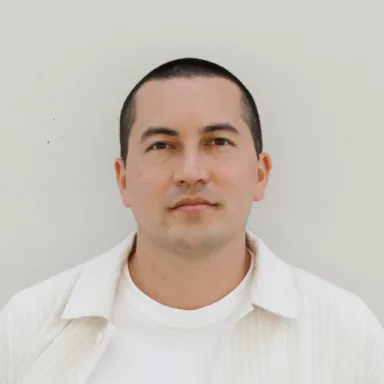
Mitchell Hashimoto
Creator of Ghostty. Co-founded HashiCorp and created Vagrant, Terraform, Vault, and more. Spent more than a decade as CEO and CTO from its earliest days through its IPO.
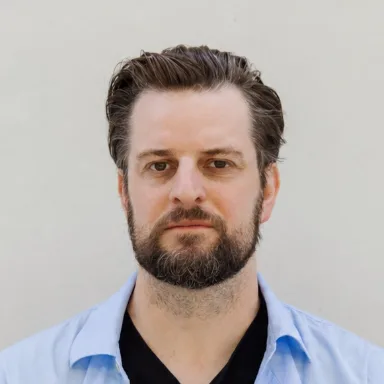
Jack Pearkes
VP of Engineering and VP of R&D at HashiCorp, and its very first employee. Helped to create HashiCorp's first products and hired and led the original engineering team.
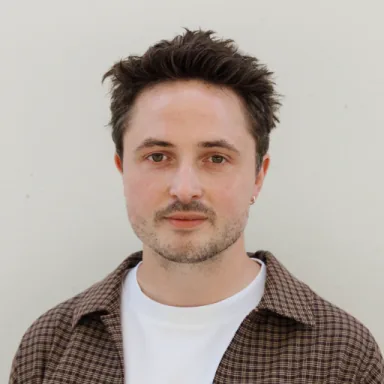
Alasdair Monk
Head of Experience at Poolside, VP of Design at Vercel, and a senior design leader at HashiCorp and Heroku. Two decades spent designing and building interfaces for developers.
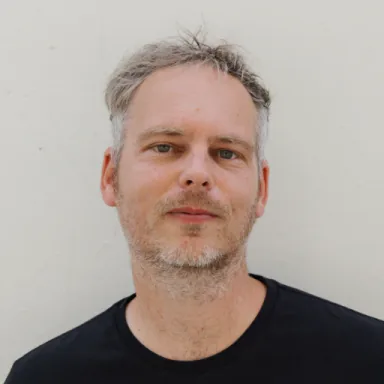
Hector Simpson
Designed apps, services, and agentic experiences at Poolside. An interface designer and builder who has shipped developer-first products at Heroku, HashiCorp, Clearbit, and Vercel.
Superlogical is funded by:
Get on the list for our first release
We'll let you know when our beta for the terminal multiplexer is available, and any OSS releases along the way.