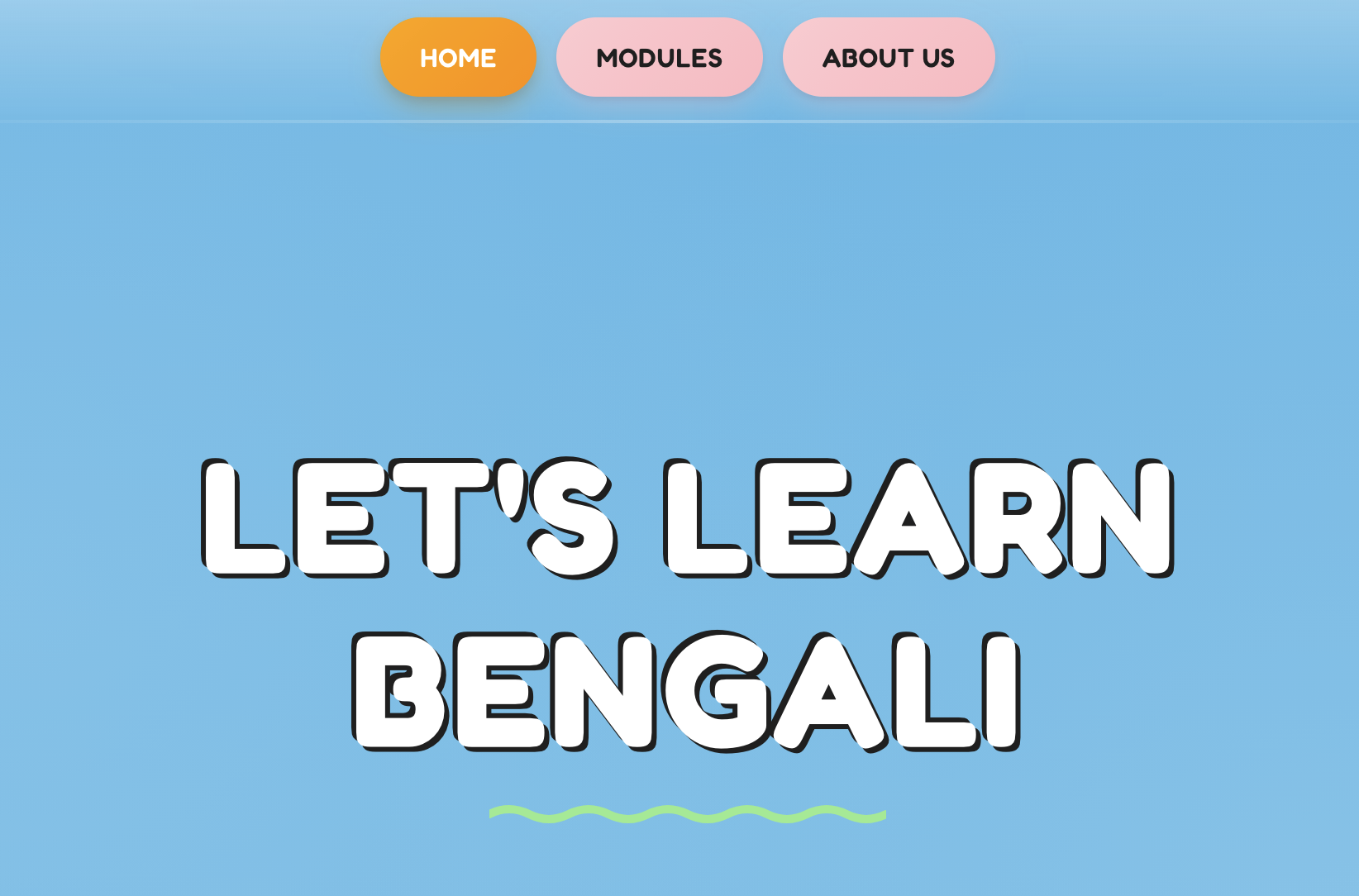
We are living in an exciting time! Building software has never been this easy or this fast. I built a web app for learning Bengali while I was on maternity leave using end-to-end vibe coding.
How I got started?
What I did next?
Since I was on the lowest-tier Claude plan, I exhausted my usage limits pretty quickly at first with the latest model, which I think was Opus at the time. I moved to a lower-tier model, Sonnet, and was still burning through my usage and getting rate-limited every day, though at a slower pace. To be honest, I didn’t notice a tremendous drop in the quality of the output.
I didn’t like the initial UI Claude had implemented, so I created a UI mockup in Canva and gave the PNG to Claude to recreate. Claude Design hadn’t launched at that time, and I haven’t tried it since it launched in April 2026. The result I got in January was good enough for a personal project, so I didn’t go down the rabbit hole of perfecting it.
It took me January to build the app, add course content, and experiment with building a 3D game for learning. In terms of actual effort, I probably spent 1–2 hours a day, a couple of days a week, for around three weeks and got the app to its current state.
How did I get completely hands off?
I gave the agent access to push changes to my personal GitHub repository, and I had already configured the app to deploy to Vercel on every git push. With OpenClaw, I could talk to the agent running on my virtual server through Telegram and ask it to make changes. I would then check the app in my phone browser and test the changes.
What choices did I make for the app?
I implemented this approach to save costs. However, since there aren’t many assets yet, the savings haven’t been particularly significant. I remember getting all the assets generated under $2.
I didn’t build the app for scale, nor did I build it with multiple users in mind. As a result, the app doesn’t have user authentication or store any user data. Course progress is stored in the browser’s local storage and can therefore be lost if the browser clears it.
Key takeaways for you
1. This is the best time to turn ideas into reality
If you are someone who has a lot of ideas but has been held back because you lacked the technical know-how, this is your moment. If you’re still on the fence, get a subscription, whether that’s Claude Code, Cursor, or whatever people in your network are using and start building.
The models have become significantly more capable now, and there’s a good chance you’ll be able to create a good-enough solution even with one-shot prompting. If your first attempt isn’t good enough, don’t give up. The more you use these tools, the better you’ll become at getting the output you want.
2. Software engineers need to get hands-on with coding agents
It’s hard for me to imagine a software engineer who still hasn’t used coding agents. But if that’s you, you need to do something about it now. If your workplace doesn’t support these tools and you still want to stay relevant as a programmer, get your own subscription and work on personal projects.
3. Most people are still only scratching the surface
If you’re using coding agents only to vibe-code a few tasks here and there, you’re still scratching the surface. With the latest features in Claude Code, you should be able to offload a significant portion of your work to an agent.
I might write a future blog post on how software engineers can make better use of these agents, although there are already plenty of good articles on the topic. Go read them, get inspired, and then take action.