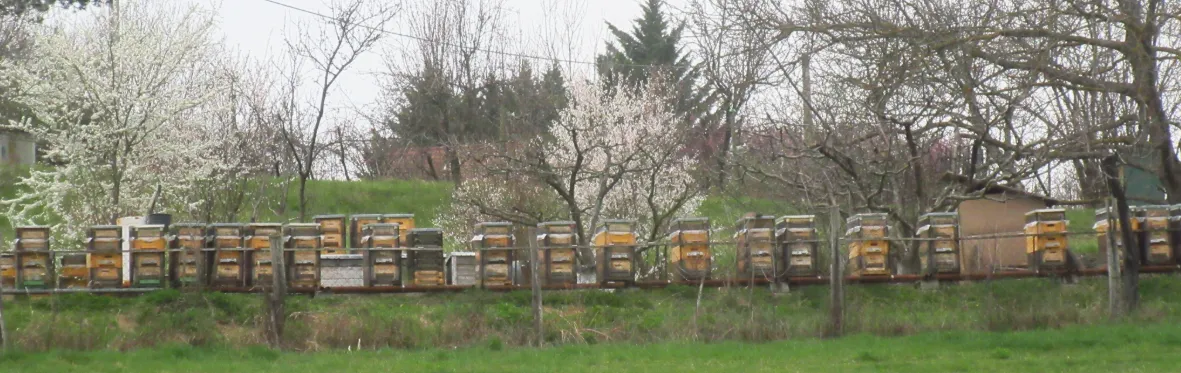
My neighbour keeps bees.
A beekeeper a little further down the road has another thirty hives. At a conservative estimate of fifty thousand bees per hive, that's four million honeybees within flying distance of this garden on a warm spring day! Yes, you read that right.
Four million individuals of a single species, none of which would be here without human intervention.
To put that in perspective: a healthy population of mining bees might have a few hundred nesting females in a good aggregation. A bumblebee queen starts a colony that will reach a few hundred individuals by midsummer at most. The numbers are not comparable.
And yet the honeybee is the one we worry about.
Livestock
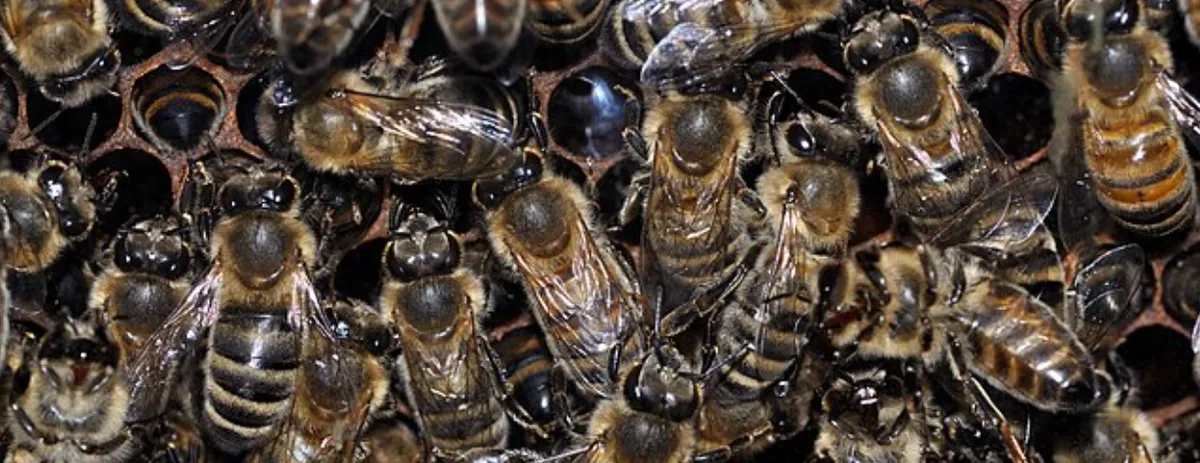
Apis mellifera, the Western Honeybee, is not a wild animal in any meaningful sense of the word. It has been kept, managed, moved, and selectively bred by people for at least six thousand years. It has been transported to every continent except Antarctica, introduced into ecosystems far outside its original range across Africa and the Middle East, and kept in densities that would never occur naturally anywhere on Earth.
By any reasonable definition, the honeybee is livestock.
It belongs in the same category as the sheep in my meadow. Domesticated, managed, dependent on human intervention to maintain population numbers and health, and kept in artificial concentrations for human benefit.
This is not a criticism. Beekeeping is a legitimate and often valuable practice. My neighbour's hives produce honey, and those bees do pollinate the fruit trees we both rely on.
The problem is not the bees.
Save the Bees
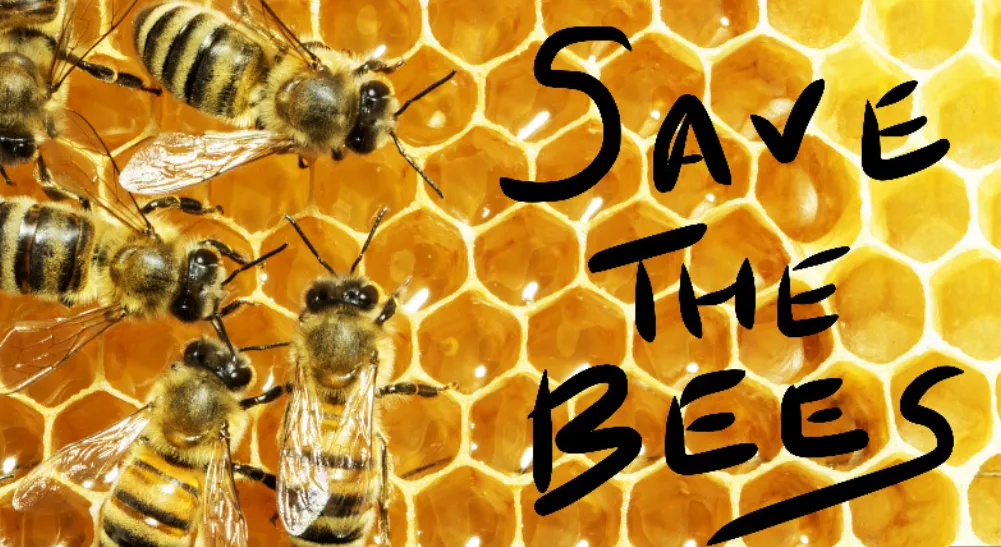
At some point in the last decade, the honeybee became the symbol of pollinator conservation.
Campaigns to save the bees almost always feature a honeybee. Urban beekeeping exploded in cities across Europe and North America, marketed as an environmental act, a way to help struggling pollinators. Rooftop hives appeared on office buildings. Companies installed hives as proof of their ecological credentials.
Meanwhile, the bees that actually need saving received very little attention.
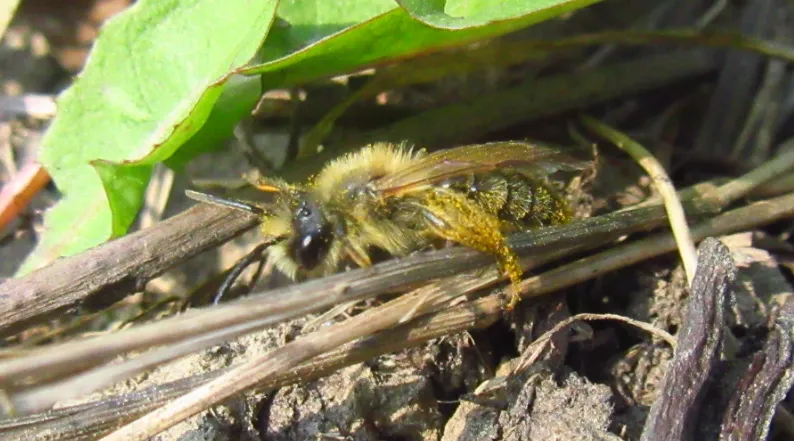
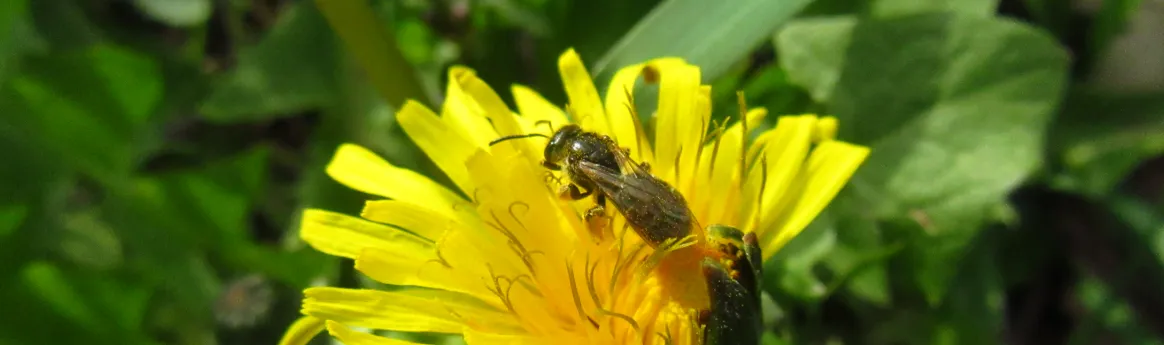
The Andrena mining bees nesting in the bare path between my sheep meadow and the vegetable garden. The Bombus queens starting colonies alone in early spring. The Halictus sweat bees working low flowers in the grass. The Violet Carpenter Bees looking for old wood to drill into.
None of these appear in campaigns. None of them produce honey. None of them can be kept in a box and managed.
Promoting honeybee hives to save pollinators is roughly the equivalent to building more chicken farms to save bird biodiversity. The honeybee is not endangered. It never was. The number of managed hives in Europe has been stable or increasing for decades. What is declining, quietly and with much less public attention, is everything else.
The Competition Problem
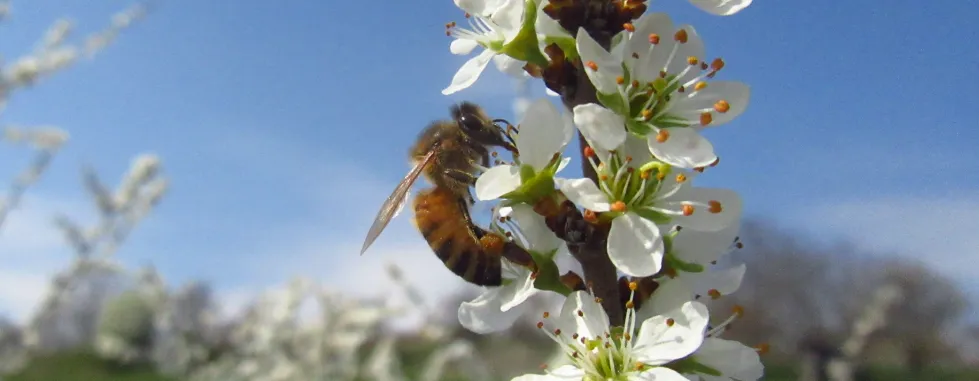
Four million honeybees don't just appear in a landscape without consequences.
Each colony sends out tens of thousands of foragers simultaneously, all working the same flowers as the wild bees trying to provision their nests. Research has shown that as honeybee abundance increases, nectar and pollen availability decreases and wild bee diets change as a result. A three-year field experiment found that high hive densities reduce the diversity of wild pollinators and disrupt pollination networks, with wild bees providing fewer pollination services overall in areas with heavy honeybee presence.
More recent work found that honeybee competition can reduce not just the quantity but the nutritional quality of wild bee diets, meaning that even the pollen wild bees do manage to collect may be less useful to them when honeybees have already taken the best of it.
The effect is not uniform. In a landscape with abundant and varied flowering plants, competition is less severe. In a landscape already simplified by agriculture or development, where flowering resources are already limited, adding eighty hives is a significant additional pressure on every wild bee trying to nest and raise offspring in the same area.
I look at the four million bees within flying distance of this garden, and then I look at the few hundred mining bee nest entrances in the path, and the numbers tell their own story.
What Honeybees Cannot Do
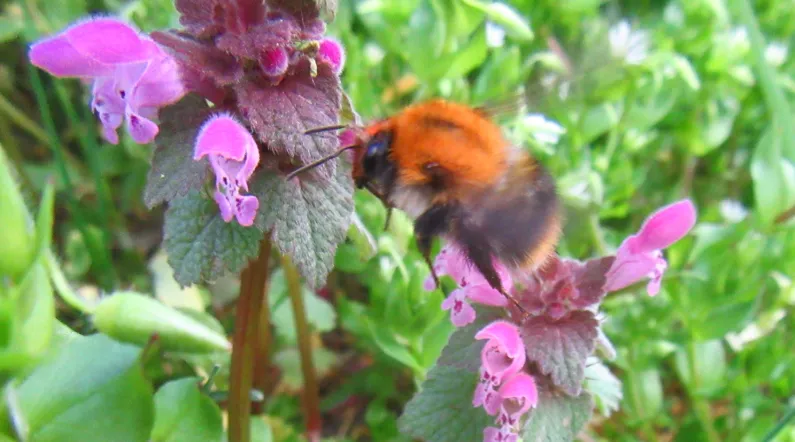
There is another part of the story that gets less attention: honeybees are not actually the best pollinators for most plants.
They are generalists. They will visit almost any flower that offers a reward, which makes them useful across a wide range of crops. But many plants have evolved with specific pollinators in mind; particular body shapes, particular foraging behaviours, particular flight times and temperature tolerances.
Bumblebees are capable of buzz pollination, vibrating their flight muscles at a specific frequency to shake pollen loose from flowers that don't release it any other way. Tomatoes, potatoes, and many other crops require this. A honeybee cannot do it. No matter how many hives you put in a field of tomatoes, you still need bumblebees.
Species like the Andrena mining bees nesting in my path are important early pollinators of fruit trees precisely because they fly at lower temperatures than honeybees. On a cold March morning when the honeybees stay home, the Andrena queens are already working.
Recent research found that losing wild pollinators is more damaging to plant reproduction than losing honeybees. The diversity of the pollinator communities matters more than the sheer number of any single species.
The Honest Position
None of this means my neighbour is doing something wrong. Beekeeping at a reasonable scale in a landscape with sufficient floral diversity is a legitimate practice with genuine value. My neighbour clearly loves his bees and tends them carefully. And I'll admit that watching four million bees work the blossoms on a sunny March morning is not an unpleasant thing.
But if you want to help pollinators, the most useful thing you can do is not install a hive. It is to grow more flowers, stop using pesticides, leave patches of bare ground and dead wood, and stop pulling out the dandelions. Let the mining bees keep their path. Let the carpenter bee keep her old vine post. Let the bumblebee queen find a mouse hole in the unmown grass.
The honeybee will be fine. It has been fine for six thousand years of human management.
It is everything else that needs the help.
Sources
Valido et al. (2019), Scientific Reports — Honeybees disrupt the structure and functionality of plant-pollinator networks
Page et al. (2023), Journal of Animal Ecology — Evidence of exploitative competition between honey bees and native bees in two California landscapes
Magrach et al. (2017), Nature Ecology & Evolution — Honeybee spillover reshuffles pollinator diets and affects plant reproductive success
Garibaldi et al. (2013), Science — Wild Pollinators Enhance Fruit Set of Crops Regardless of Honey Bee Abundance
European Commission (2022) — Large-scale study indicates wild bees are just as effective as honey bees for commercial apple pollination