In my last blog post, I talked about how to get promoted by building trust, which often happens by advancing company needs. Let’s talk about balancing your desire for both personal and career growth.
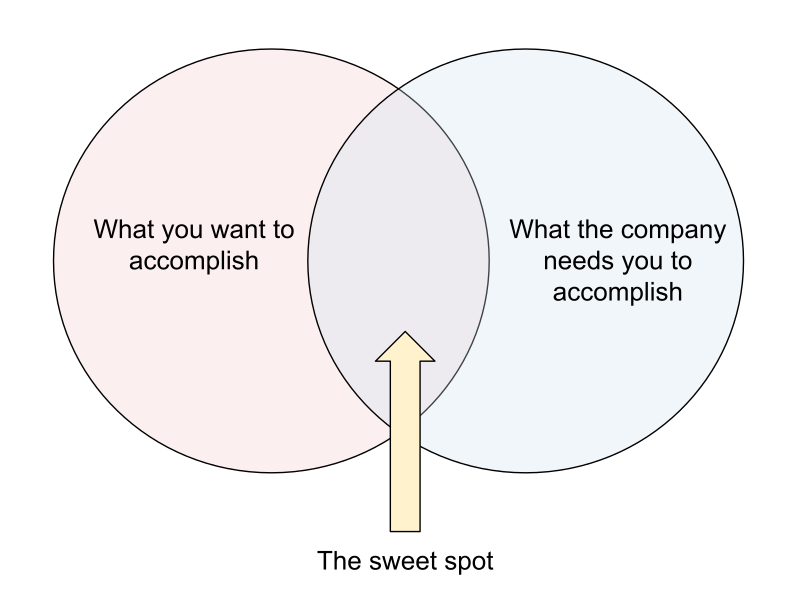
There are things that you want to do to make yourself happy and grow as an individual, and there are things the company needs you to do. The sweet spot is where those overlap, so you can develop personally and professionally. However, overlap doesn’t always exist – sometimes what you want or the company needs is too narrow.
You usually don’t have much control over what the company needs, but you can control personal development goals. The broader and the more flexible you are about your personal goals, the more likely you are to find overlap with company needs.
Let’s say you enjoy programming in Python and want to get better at it. If your goal is to be more satisfied in your work and enjoy the process of putting a new programming language to use, then getting better at Python might be a worthy thing to focus on. If the company needs more Python expertise or it helps you tackle bigger projects in some way, improving your Python skills may even help your career.
But what if your company doesn’t even use Python, or doesn’t need deeper expertise? Should you bother with developing your Python skills? That depends on what makes you happier: maybe Python is just something you are too excited about to not spend some time learning. I’ve been there: sometimes a technology is so compelling, I don’t particularly care what it does for me professionally. But if pushing your career forward is an important goal to you, think about other projects.
Some engineers have very narrow interests which don’t overlap much with the company needs. That can be okay, too, as long as they are thoughtful about it, and recognize that they may not be able to kill two birds with one stone. I’ve seen engineers contentedly sacrifice high-paced career growth so they can kick around side projects.
I’ve seen other engineers, though, who convince themselves that some personal interest has outsized value to the company, when really it’s just something they think is cool. It’s hard for some managers to set the record straight – who wants to dampen someone else’s enthusiasm? – but if they aren’t honest with their report from the get-go, the report can go down a path that wastes company time, and ends up very disappointed when no one else appreciates the really cool thing they did.
Early in my own career, I had very narrow interests in scientific computing and digital audio, so instead of getting a job at a company where I’d be asked to do things that I didn’t want to do, I worked as a contractor and only took on audio projects. As time went on, my interests grew much more flexible and my ambition increased, so I switched to fulltime work where I focused more on the things that would get me promoted. Still, whenever I see an opportunity to do something that will satisfy something personal and professional, I go for it, and I’ve been known to make room for things that don’t help my career at all – it’s good to give your personal interests a little attention, too.