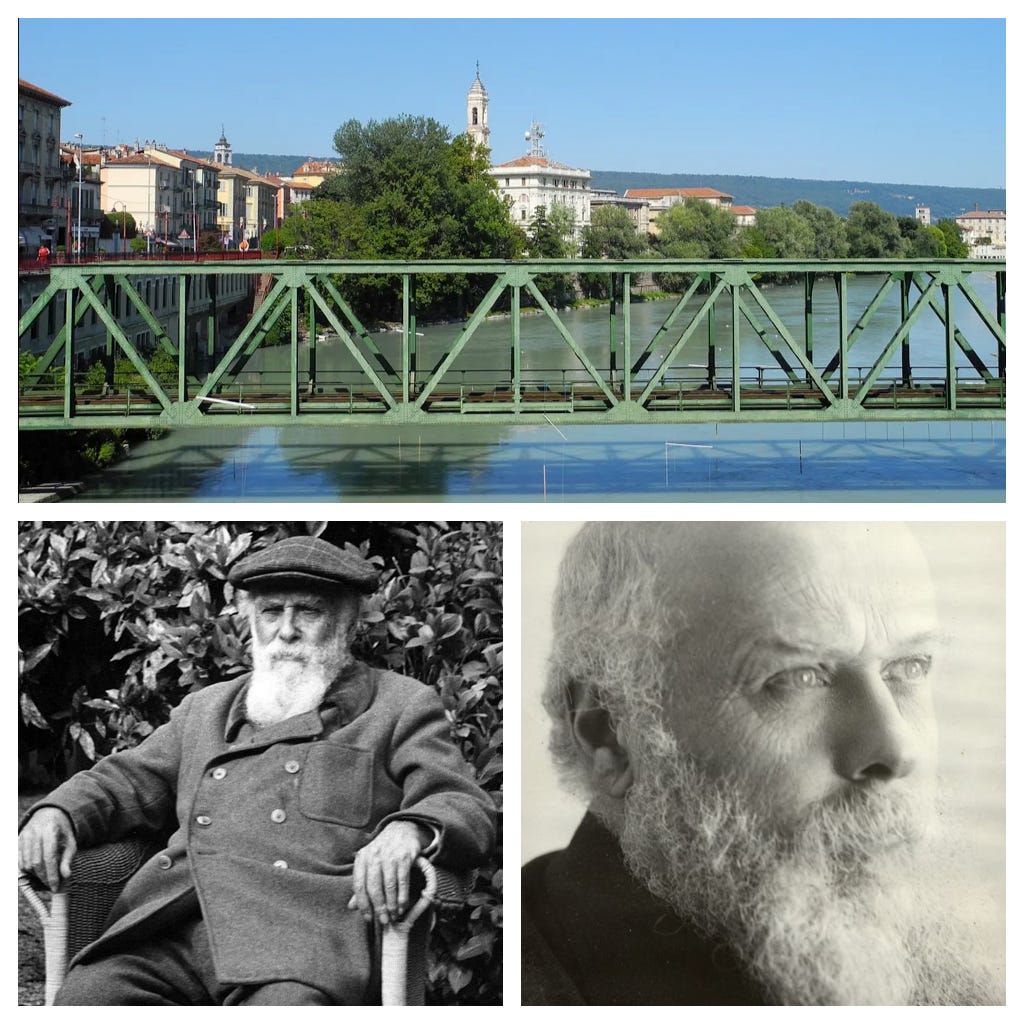
The town of Ivrea is quite old and has a rich history, but today, its population has shrunk from around 90,000 in 1970 to just over 20,000 in the 2020s. In the 1400s, Ivrea gained small Jewish community. By the mid 1800s, Salvador Benedetto Olivetti was a successful textile merchant in that community, and he married Elvira Sacerdoti, a banking heiress from Modena. Salvador and Elvira had Samuel David Camillo Olivetti on the 13th of August in 1868. Tragically, Salvador passed away when Camillo was just a year old. Camillo, whether the result of his father’s death or just his wiring, had a rather solitary nature. He was impetuous, rebellious, nonconformist, and prone to rather sudden outbursts. By all accounts, Elvira did well by her children, Camillo and Emma. They were taught multiple languages, versed in culture and politics, and they were taught to be open-minded. Camillo attended Calchi-Taeggi College in Milan (a boarding school) and then went on to the Royal Industrial Museum (Polytechnic University of Turin today).
Royal Industrial was the first school of its kind in Italy, a school of electrical engineering. Among the prominent minds there was Galileo Ferraris who’d independently developed AC power, invented the induction motor, and taught Olivetti. Olivetti graduated in 1891, and he went to work at a manufacturing firm in London that produced tools for electrical measurement. This was a short lived endeavor, and Olivetti returned to Turin to work for Ferraris. In 1893, Olivetti accompanied Ferraris to the Chicago Electricity Congress and the World’s Columbian Exposition. The two then made their way to West Orange Laboratories in Llewellyn Park, New Jersey to visit Tomas Edison. Olivetti had a positive view of Edison, but he noted that Edison and Ferraris had a difficult time conversing. Ferraris didn’t speak much English, and Edison was hard of hearing. Due to these barriers, Olivetti had to translate for Ferraris… rather loudly.
Ferraris left the United States to return to Italy, but Olivetti chose to continue his adventure. He visited Pittsburgh, Albany, Boston, New York, Salt Lake, and San Francisco. It was the Bay Area that occupied the majority of his time in the USA from what I can tell. He served as an assistant electrical engineer at Stanford from November of 1893 to April of 1894, and he was able to conduct various experiments into the usage and application of electricity.
Olivetti viewed both the British and the American industrial and economic environments favorably, and when he returned to Italy, he sought to build. His first enterprise was to represent the Victor bicycle and Williams typewriter companies in Italy. This didn’t last long. Then with his classmates Dino Gatta and Michele Ferrero, he opened a factory that produced electric metering equipment This company and factory relocated to Milan in 1904. While this had some success, it wasn’t fulfilling for Olivetti.
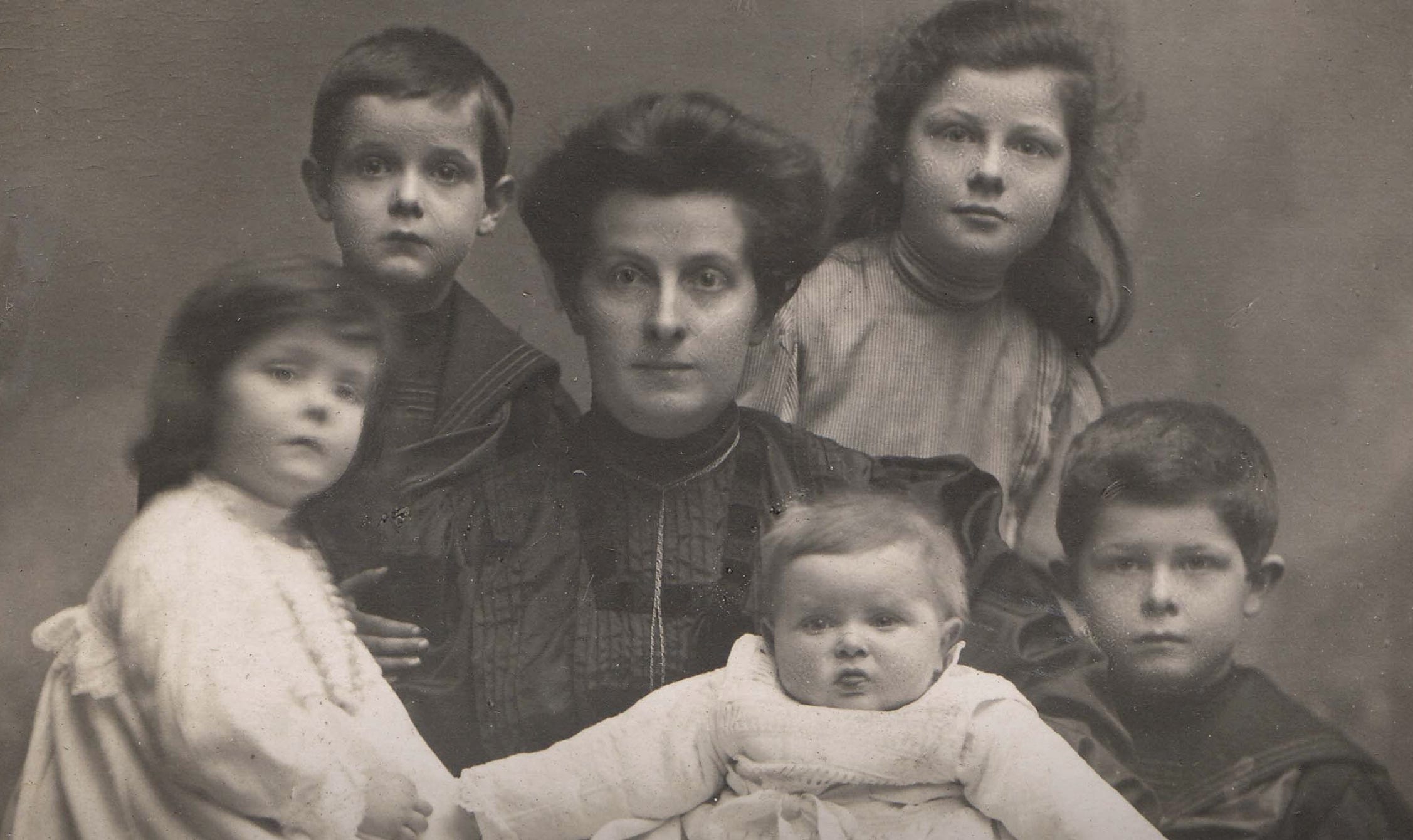
In 1899, Camillo Olivetti met Luisa Revel. Revel was the daughter of a pastor, and she was rather shy. The two were as opposite as one could imagine, but they fell in love and married. They had six children: Elena (1900), Adriano (1901), Massimo (1902), Silvia (1904), Lalla (1907), and Dino (1912). The children were home schooled for much of their primary educations, and Olivetti wanted them to play and enjoy the sun in their youths as much as possible.
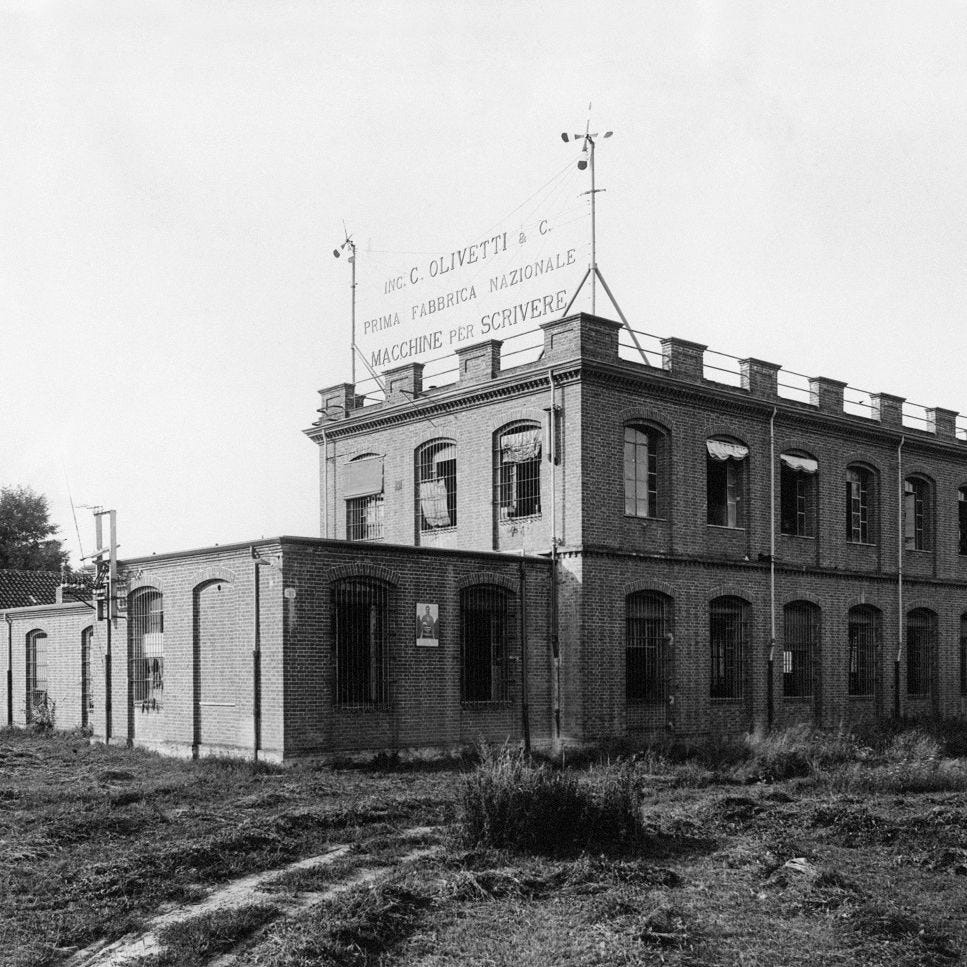
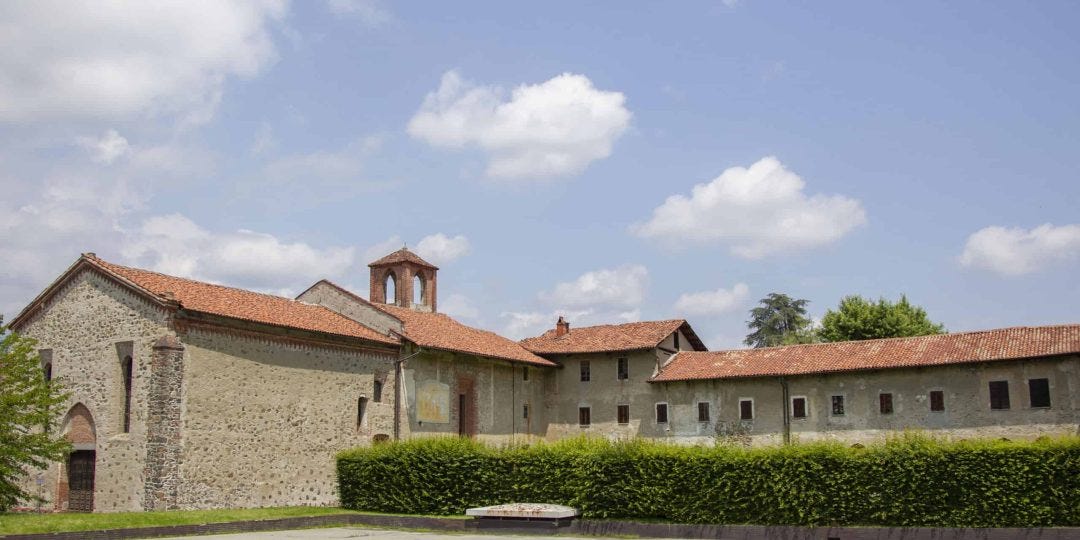
On the 29th of October in 1908, Camillo Olivetti registered Ingegneria Camillo Olivetti & Compagnia with the Notary. The initial funding was 350,000 lire (about 2.9 million USD in 2025 dollars) with Olivetti holding a majority of the company and 13 partners having smaller stakes. With the first factory for his new typewriter company being built, Olivetti wanted a home nearby. He purchased the Convento di San Bernardino which then became Casa Olivetti. The setting of a former convent is fitting. Whether a result of his personal and political beliefs, his wife’s influence, divine revelation, or some combination of these elements, Olivetti converted to Unitarianism. I imagine that in particular, the Unitarian faith’s strict monotheism would have been familiar to him having been raised in Judaism, and the Unitarian emphasis on reason, science, and philosophy would have been attractive to him as an engineer.
Over the course of six months in what was formerly the chapel and now his private study, Olivetti developed the prototype of his first typewriter. Of course, Olivetti didn’t intend to be second-rate. He took another trip to the USA to familiarize himself with the best practices for typewriter production (particularly at Remington, after acquisition that company became Remington Rand), and he returned to Ivrea in late 1909 or early 1910 with Brown and Sharpe automatic lathes and milling machines. His first four employees were Valentino Prelle, Giuseppe Trompetto, Pietro Bronzini and Stefano Pretti. At the World’s Fair in 1911 (April through November) in Turin, the M1 was displayed to the public for the first time. Also on display were the machine tools used in the production of the typewriters, and it was somewhat clear that Olivetti was as proud (if not more so) of his production methods as he was his products. The fair’s catalogue stated that Olivetti was the first and only typewriter factory in Italy, and of the M1 it mentioned that the product was first class, patented in several countries, of an original design, producing legible characters with a standard keyboard, a two-color ribbon, a decimal tabulator, back-space, and margin adjustment.
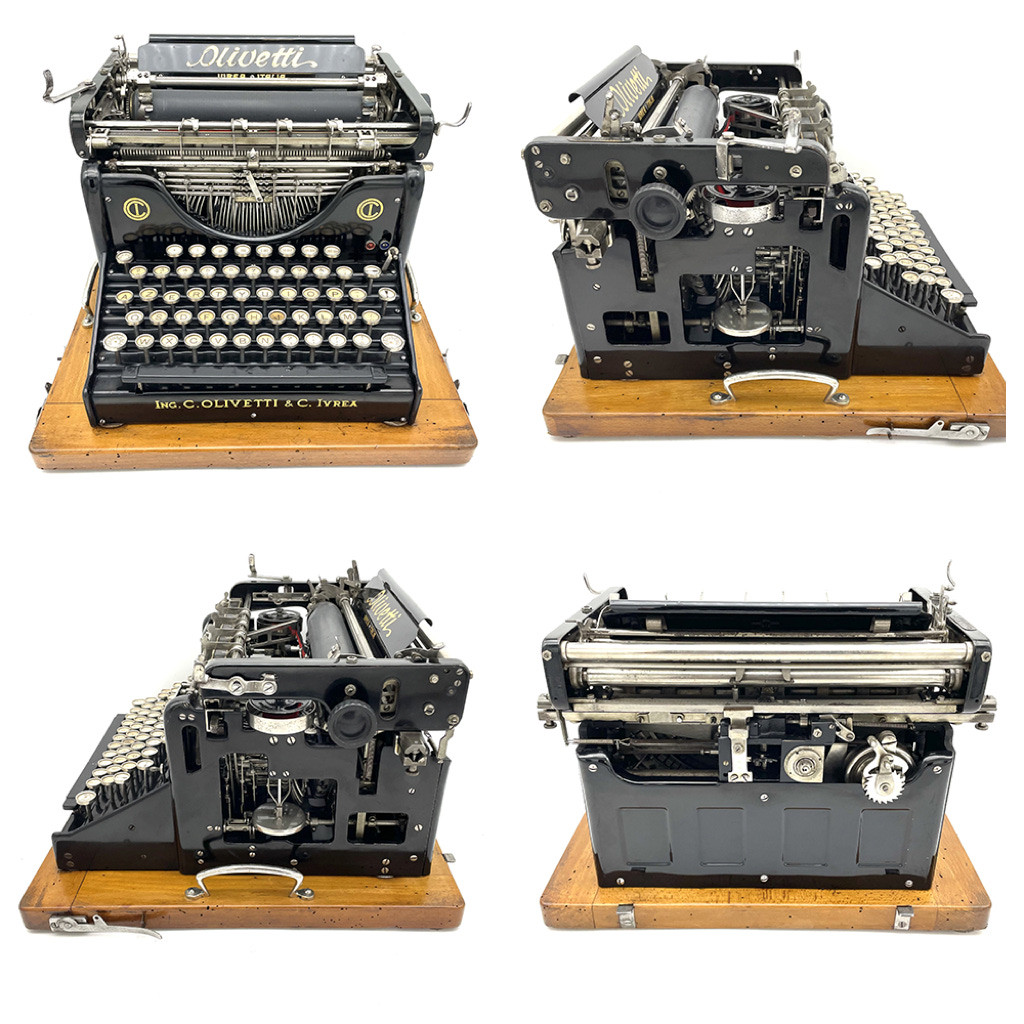
The first large order for Olivetti machines came shortly after the Fair with the Italian Navy ordering 100. This was followed by another sizable order in 1912 from the Italian postal service. The M1 was usually sold for 550 lire and around 6000 were produced. It was a complicated machine with around 3000 parts, all of which were handmade. The completed typewriter weighed around 37 pounds, had 42 keys, 84 signs. Every description of this machine notes that the M1 was exceptional with rapid operation, high quality construction, and great reliability.
As I have been unable to find the exact date on which that price was set, ascertaining the relative price of the M1 today is difficult. If I assume that this price was set in 1911, the total price in 2025 dollars would be something like $3885.32. I cannot imagine many orders at such a price. Yet, this same price of 550 lire would equate to something around $1200 in 1918. One interesting anecdote was that the M1 was about 100 lire more than a Remington. So, this would place the price of the M1 around $1670 in 1912 adjusted to 2025 dollars.
In running his company, Camillo Olivetti was a generous and familiar man. He implemented a shortened work week, humane factory conditions, high wages, nine and a half months of paid maternity leave, child care, family welfare, worker’s housing, recreation facilities, educational services, and profit sharing. He didn’t separate himself from the workers in his factories, and he maintained friendships with many of them. This camaraderie led to many decisions being made as a group rather than being made top-down. As for his view of the company’s production, he embraced a policy of vertical integration. Product design, research, manufacturing, and sales were done in-house. The parts for every product were likewise produced by the company itself. With a demand for extremely high quality and superior engineering, workers would be educated and trained at Olivetti if they lacked adequate experience. All of this made Olivetti an attractive place to work, and the company grew from 20 employees in 1911 to 110 employees by 1913. Those 110 employees could produce 23 to 28 typewriters each week.
The years 1915 through 1918 were rough on the company with Europe at war. The work week was reduced to 30 hours, workers often had to defer wages to keep the company running, and the factory was converted for wartime needs. At the end of the Great War, the Olivetti company took advantage of some of its recent factory modifications to expand into the office supplies business becoming an Italian equivalent of Remington, a major distinction being that Olivetti’s products were intended to be not only of high quality, but things of beauty. From the minds of designer Marcello Nizzoli, calligrapher Giovanni Mardersteig, and artists Luigi Munari, Ettore Sottsass, Luigi Veronesi, and Gianni Pintori came products that were every bit as visually stunning as they were mechanically sound.
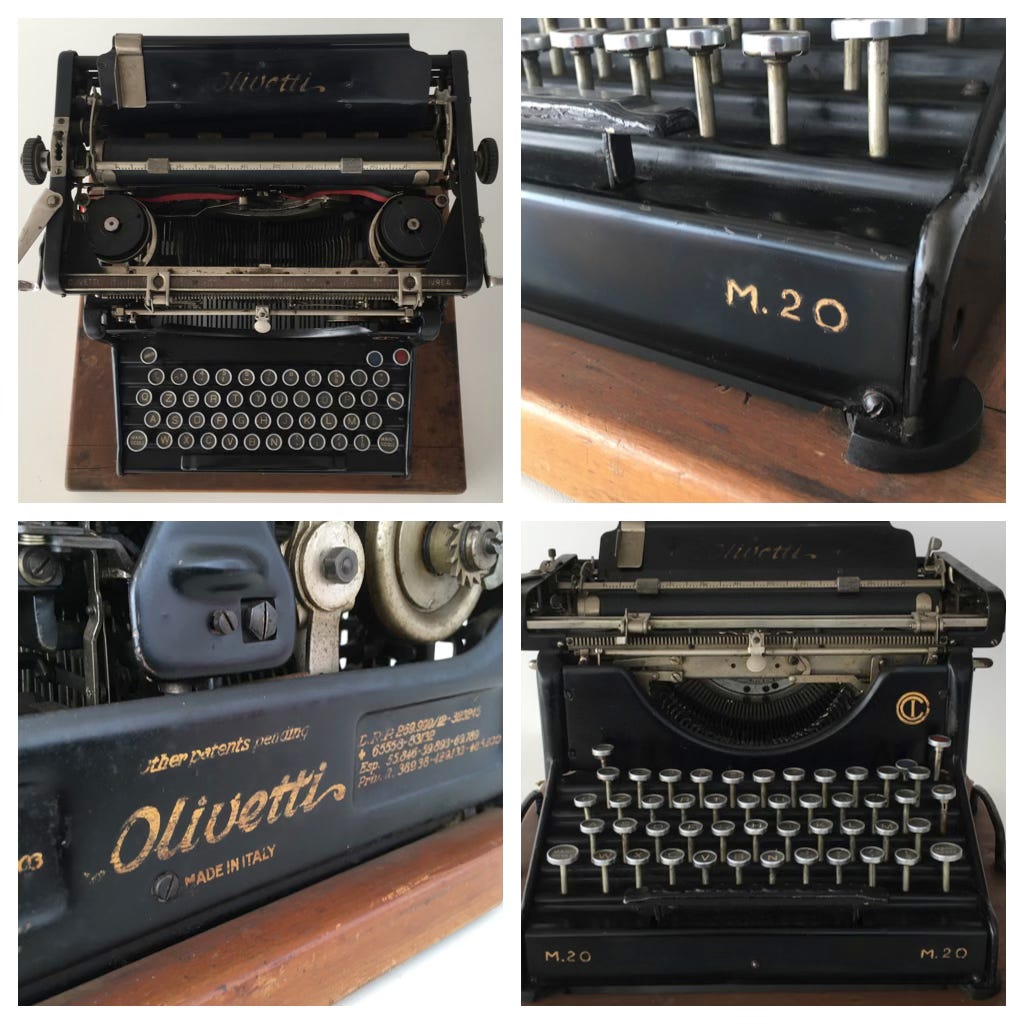
The M20 was unveiled at the Brussels Exhibition of 1920. Compared to its predecessor, the M20 was physically smaller, lighter, and had a fixed carriage. It was also incredibly successful. Four years after introduction, the company’s Ivrea factory had 400 workers producing 4000 units per annum. By 1926, this increased to 500 workers and 8000 units per annum, then to 13,000 per annum by the end of 1929. The design of the M20 wasn’t completely static, and it received updates throughout the 1920s.
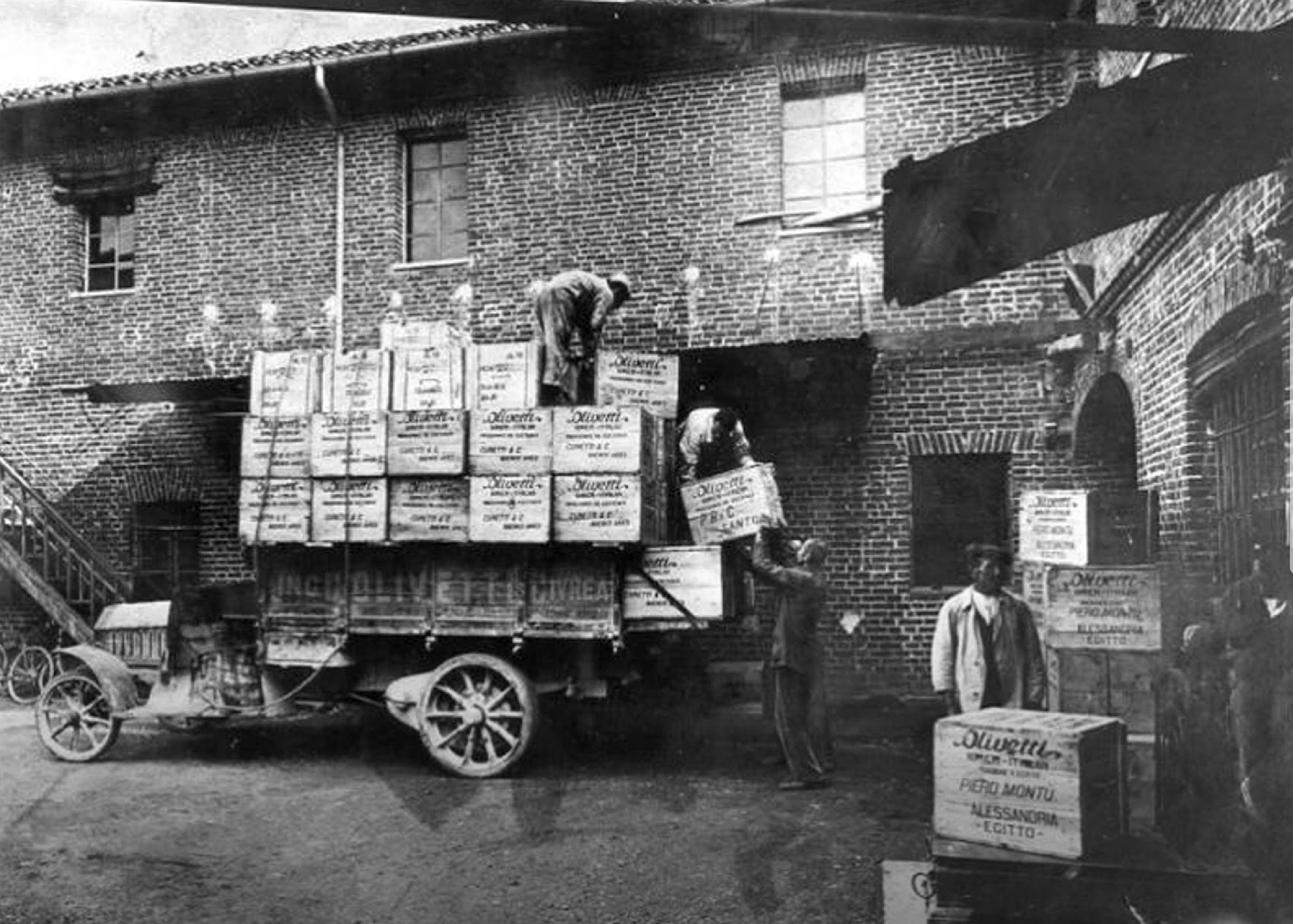
On the 22nd of January in 1929, Olivetti’s first international expansion was established with the Hispano Olivetti Company.
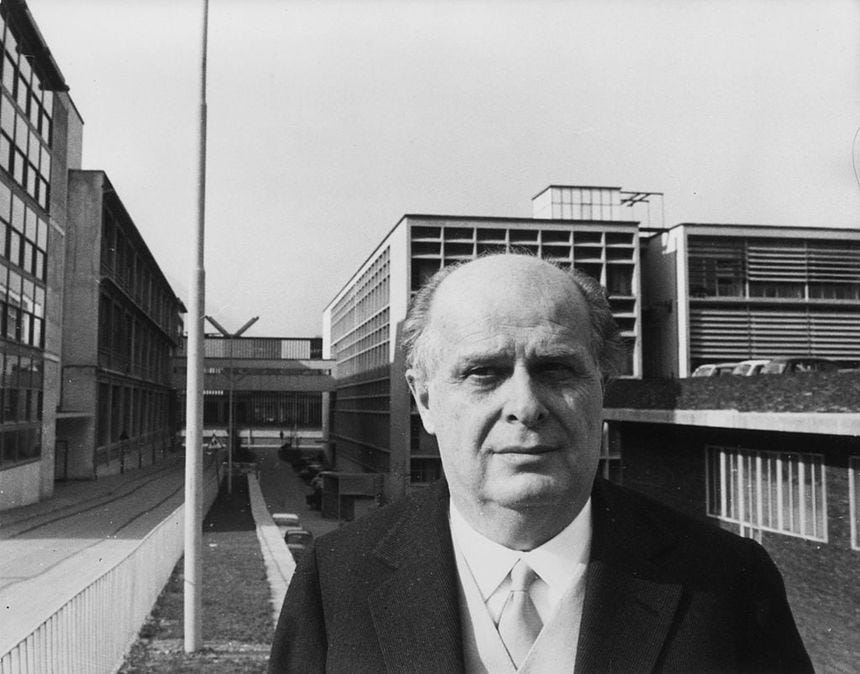
The Olivetti family were mildly socialist in their political attitudes, and while Camillo may have converted to Unitarianism, his wife and children remained Waldensian Christians in keeping with their upbringing. In 1922, the National Fascist Party had gained control of the Kingdom of Italy. Camillo Olivetti’s son, Adriano, graduated from Polytechnic University of Turin in 1924. Adriano was opposed to fascism, and he aided in the escape of several political prisoners including Filippo Turati, Ferruccio Parri, and Carlo Rosselli during his first year following university while working as a technical assistant in the engineering group at Olivetti. Like his father before him, he went to the USA, but unlike his father, his trip served to get him away from the authorities. That isn’t to say he didn’t study industry while there, because he most certainly did. For the younger Olivetti, the visit was dominated by Henry Ford’s production lines, and Remington’s organizational systems. Returning to Italy and to the company, Adriano was promoted to the head of mechanical design where he was in charge of the product development processes. In early 1929, he was promoted to the position of technical director. In this position, he was the leader of all engineering and production operations. That same year, the Concordat of 1929 made Roman Catholicism the sole religion of Italy. Unsurprisingly, Adriano suddenly became a member of the party, but we know that this was merely a matter of appearances as the factory in Ivrea offered food, false identities, and shelter for fugitives of the regime; activities which continued until May of 1945.
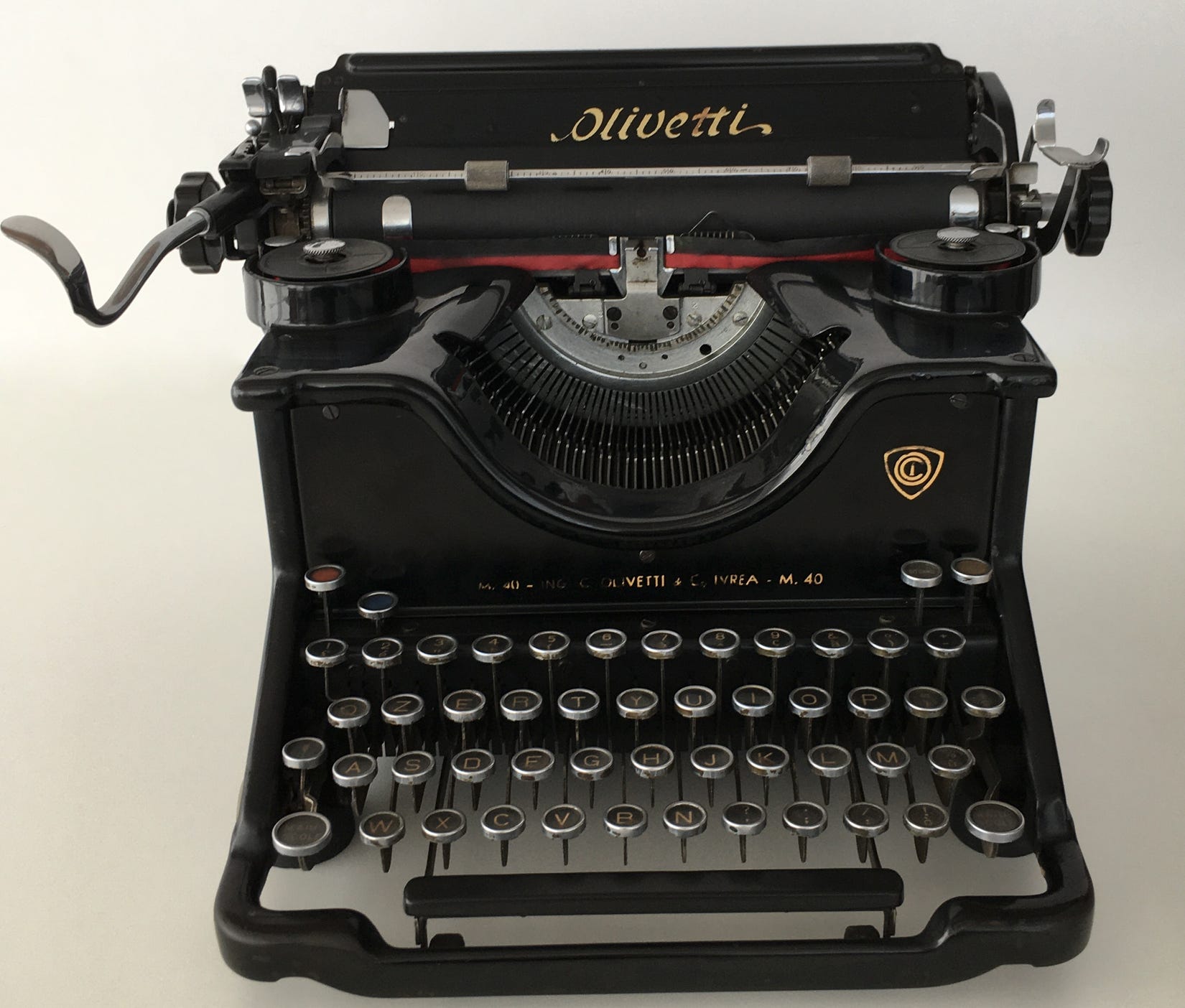
The Olivetti M40 was released in 1930 replacing the M20. The M40 had keys requiring less force to operate and thus allowed a higher typing speed. It maintained the Olivetti reputation for quality, had a QZERTY layout complete with spacebar, two shift keys, one capital lock key, backspace, and two keys allowing for the changing of the ribbon color. The M40 was in production until 1948, saw numerous updates and revisions, and sold quite well. The M40 was engineered by Camillo, and production was managed by Adriano.
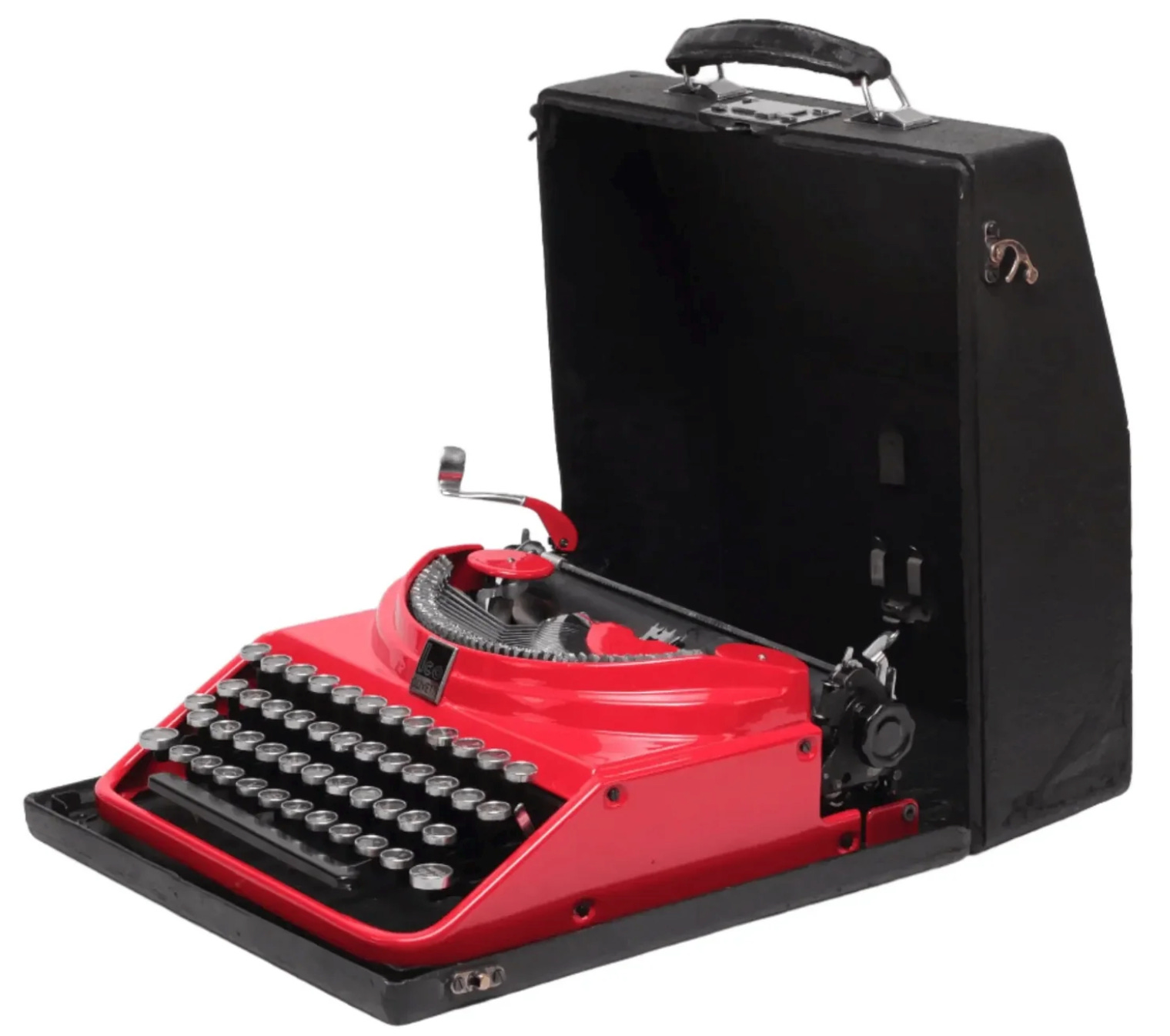
Following the success of the M40, Adriano was promoted to the position of general manager in which he handled the management of all day to day activities of the company. That same year, the company released the Modello Portatile 1, or MP1, create by Gino Martinoli, Adriano Olivetti, Riccardo Levi, Aldo Magnelli, and Adriano Magnelli. This was the company’s first portable typewriter, and it weighed 11.46 pounds. While the M1 and M20 were offered in any color you wanted as long as that color was black, the MP1 was far more lively with red, blue, brown, and green as options.
With the company now competing in office products, typewriters, and mobile equipment, Olivetti continued their international expansion with offices across much of Europe and Latin America. Production tripled from 1933 to 1937, and in 1938, Adriano became the president of the company. Naturally, this production increase required more workers, and those workers needed housing. Adriano then undertook urban planning and infrastructure development in Ivrea creating neighborhoods of three and four story flats with green spaces. These were designed by prominent and well-known architects. From the 1930s through the 1960s, the Olivetti family would invest roughly 3 billion lire in worker welfare in the form of housing, child care, schools, professional training centers, and more. With Olivetti’s presence in the town, Ivrea grew from around 15,000 to more than 30,000 by the late 1950s. That number would triple by the mid-1970s.
During World War II, Adriano’s resistance to fascism grew. On a trip to Switzerland in 1942, he met Allen Dulles who was then the Swiss Director of the US Office of Strategic Services. Adriano became agent 660 of the OSS on the 15th of June in 1943. Mussolini was removed from power on the 25th of July in 1943 through the efforts of Dino Grandi with support from King Victor Emmanuel III. Marshal Pietro Badoglio then became the Prime Minister. Adriano was arrested and imprisoned at Regina Coeli in Rome for conspiring with the enemy, but Italy was in chaos. This chaos allowed him to escape, but he was a fugitive from the law who was variously hiding and running for around six months. Camillo passed away in December, and it is unclear if Adriano was able to be present with his family. Finally in February of 1944, Adriano reached the safety of Switzerland where he once again made contact with Dulles, and he operated his counter-regime efforts from there. Olivetti in Ivrea continued to offer assistance to those fleeing persecution and Adriano supplied the allies with intelligence. In the fighting in Italy, resistance to the regime cost the lives of 24 workers at Olivetti’s Ivrea location, but in the end, the regime was defeated. As peace arrived, Olivetti returned to Italy in May of 1945.
Through all of this, Adriano’s views had solidified to be completely against fascism, oligarchic capitalism, and marxism. He sought something different, and this he formulated as the Community Movement. He believed in a federalism comprised of territorial units that were both culturally homogeneous and economically autonomous. He believed this to be the only path toward uniting industrialization, humanitarianism, and participatory democracy. Outside of politics, his spirit had also moved, and Adriano converted to Catholicism in 1949. These changes in his thinking led him to become the mayor of Ivrea and later to hold a seat in the Italian parliament.
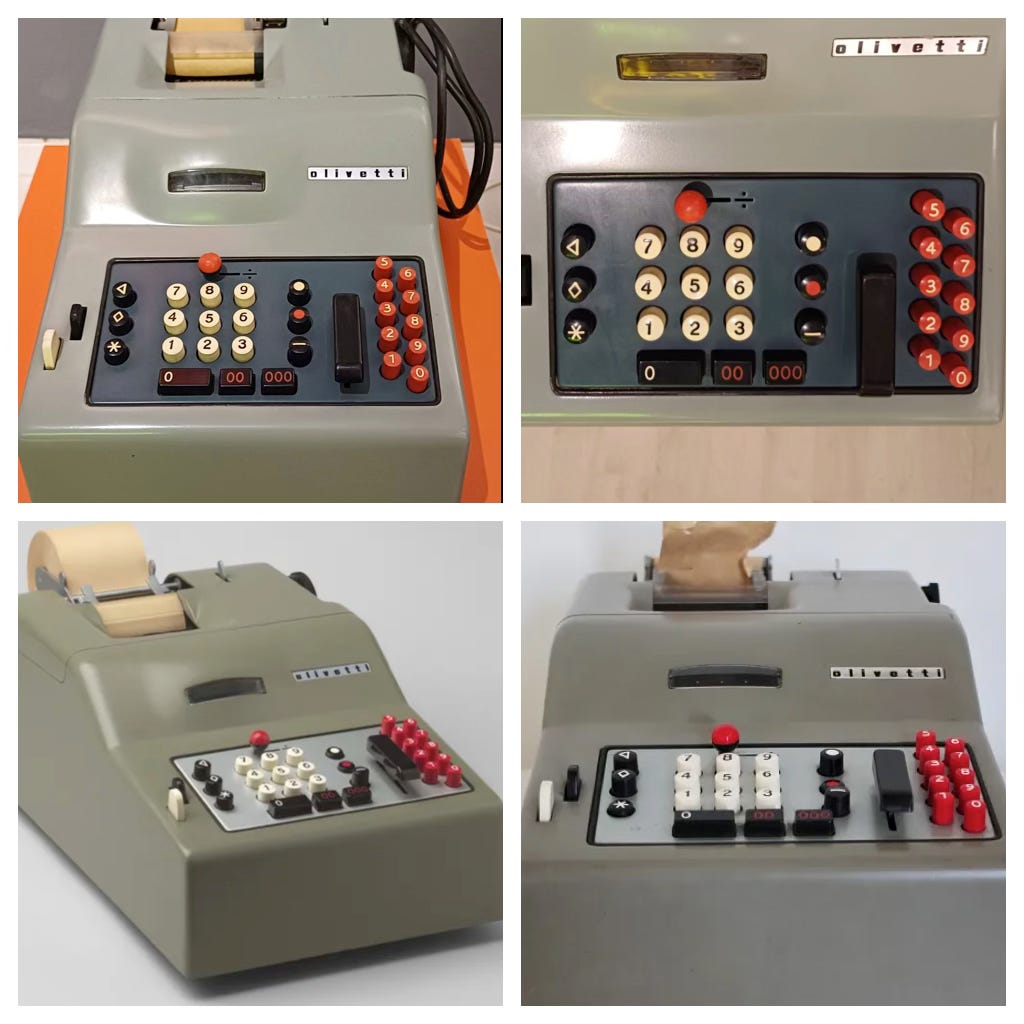
After the war, Olivetti expanded into the calculator market with Divisumma 14 in 1947. The desktop electro-mechanical calculator could perform addition, subtraction, multiplication, and division and print the results. It was the first printing electric calculator to be capable of all four functions and the first to include a negative balance function. The Divisumma 14 also offered a few convenience features. The user could input data merely for reference in print and not calculation, a calculate without print option to avoid polluting the print with unnecessary data, and a stop for avoiding infinite loops such as when attempting to divide by zero. It was offered in beige and blue. The industrial design came from Marcello Nizzoli while the mechanical and electrical design came from autodidact Natale Capellaro. Various iterations on this design were then produced with fewer features at lower price points. Other variations were created specifically for currencies. Later revisions on the design would also add a joystick rather than the two sliders for cursor placement. This design was later refined with Divisumma models 22, 24, and 26.
While Adriano had fled to Switzerland, things hadn’t been quite as easy for Enrico Fermi. Having become a professor in 1926 at the age of just 24, he lacked the claims of vital economic importance that had aided the Olivetti family. In 1938, the Italian racial laws made things difficult and dangerous for his wife, Laura, and several of members of his research team. This pushed Fermi to the USA where he arrived on the 2nd of January in 1939 in New York City. As a well known man, he had offers from five universities, and he chose Columbia. Fermi’s first lecture to the US military about nuclear energy was given on the 18th of March in 1939, and by August of 1941, he was working with six tons of uranium and thirty tons of graphite. Ultimately, Fermi ended up at Los Alamos as associate director.
In 1949, Enrico Fermi was visiting Italy, and that visit included a trip to Olivetti’s factory in Ivrea. Adriano and Fermi discussed several topics, but the most important conversation was one in which Fermi urged Adriano to consider building computers as Fermi felt that the machines would be vital to the future.
In 1952, Olivetti opened a research center in New Canaan, Connecticut to observe US developments in computing (the company’s offices in the USA were in New York City). In 1954, Adriano met Mario Tchou Wang Li in New York. Tchou was born in Rome, spoke Italian, Mandarin, and English fluently, and earned his bachelor’s degree in engineering from the Catholic University of America in Washington, and then earned his master’s in nuclear physics from the Polytechnic School of Brooklyn in 1949. At the time of their meeting, Tchou was working as an associate professor at Columbia. To Adriano, Tchou was precisely the kind of man Olivetti needed. Adriano offered him a job, Tchou accepted. In December of 1954, he arrived in Pisa.
With Tchou as the head of the Laboratorio di Ricerche Elettroniche at Olivetti, the site of the company’s efforts had to be selected. The first location was the Physics Department of the University of Pisa in cooperation with the school’s Centro Studi Calcolatrici Elettroniche. The Olivetti team helped the school complete the Calcolatrice Elettronica Pisana in 1957, remarkable as the first entirely Italian electronic computer.
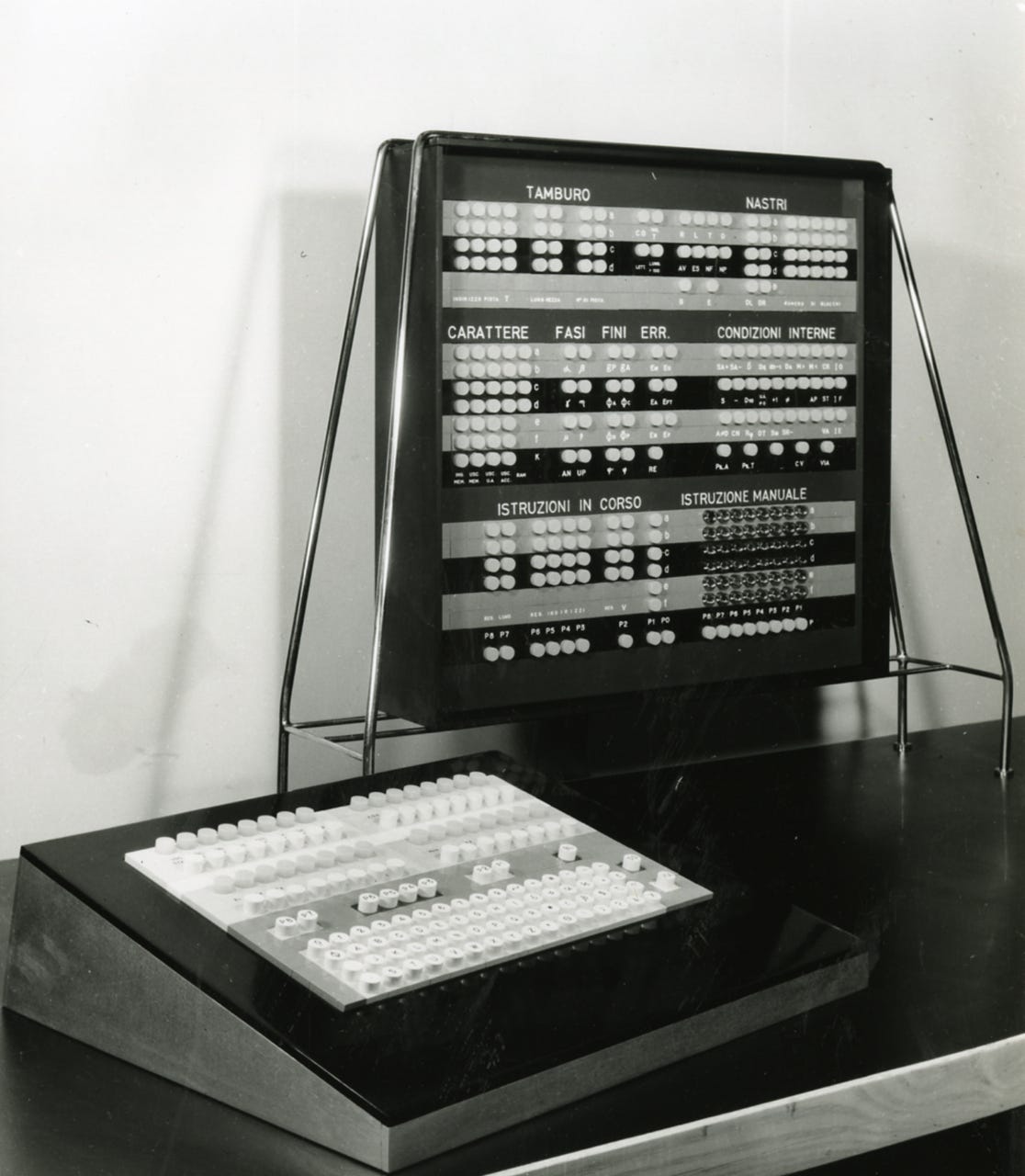
During the building of the university’s computer, the Olivetti team moved to a nearby villa, and Tchou began recruiting the twelve best young minds he could from the school and surrounding area, and one veteran of the industry, the Canadian Martin Friedman who’d worked on magnetic memory for the Ferranti Mark I. By the end of 1955, the research group numbered about 25. This group immediately set out to build the prototype of a commercial machine, the Macchina Zero also known as the Elaboratore Elettronico Aritmetico 9001, or ELEA 9001. This first machine was a vacuum tube computer, and it was only used internally by Olivetti. Similarly, the 9002 came after this aiming to reduce costs and increase reliability.
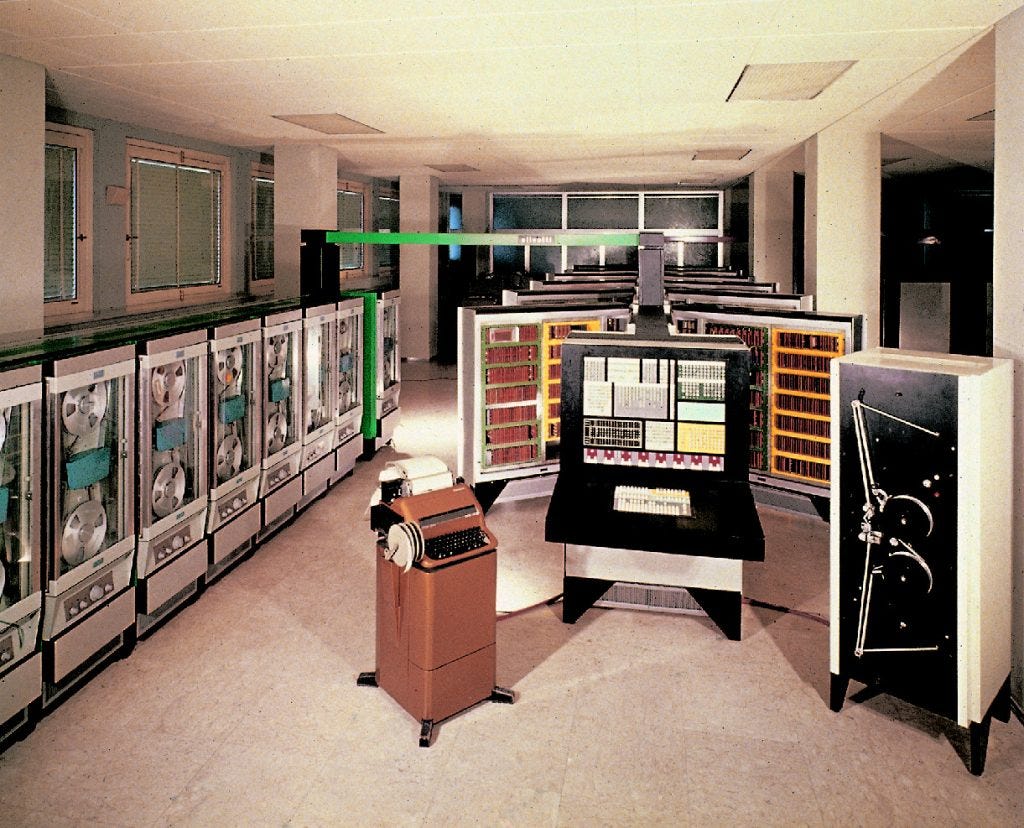
Upon completion of the 9002, Tchou gathered his senior researchers and told them that this machine simply wouldn’t do. Olivetti would launch a fully transistorized mainframe computer. For this, the company allied itself with Fairchild, and launched its own transistor company, Società Generale Semiconduttori, in 1957. The two companies then codeveloped the planar process for integrated circuit manufacturing. The prototype transistorized ELEA was completed in late 1958. This became the ELEA 9003 which was presented to the President of the Republic Giovanni Gronchi on the 8th of November in 1959. This machine weighed in at about five tons, and it could run 8000 to 10,000 instructions per second. It was built with transistor-diode logic and core memory. The ELEA 9003 wasn’t built with the concept of words (not really anyway). Each memory location could hold a single alphanumeric character with an instruction being eight characters long. The base memory was thus 20,000 memory locations and could be extended to 160,000 or 20K 8bit instructions or about 26,666 6bit characters. With a cycle time of about 10 microseconds, the computer’s speed was approximately 100KHz. Uptime wasn’t great, just shy of 50% per day, typically being available only between the latter part of each morning to the early part of the evening. This improved over time. The 9003 was capable of limited multitasking with three processes being able to be run simultaneously. At the time of introduction, those programs could be written only in machine language. The machine had no dynamic memory allocation so each program was loaded contiguously and always at the same memory location. By convention, the first 3,000 characters were left available for testing programs. Over time, Olivetti made an assembler, Psico, available along with testing software, a monitor program, and tape handling software. For I/O, the 9003 offered card reader/punch, tape, printer, and of course, an Olivetti typewriter.
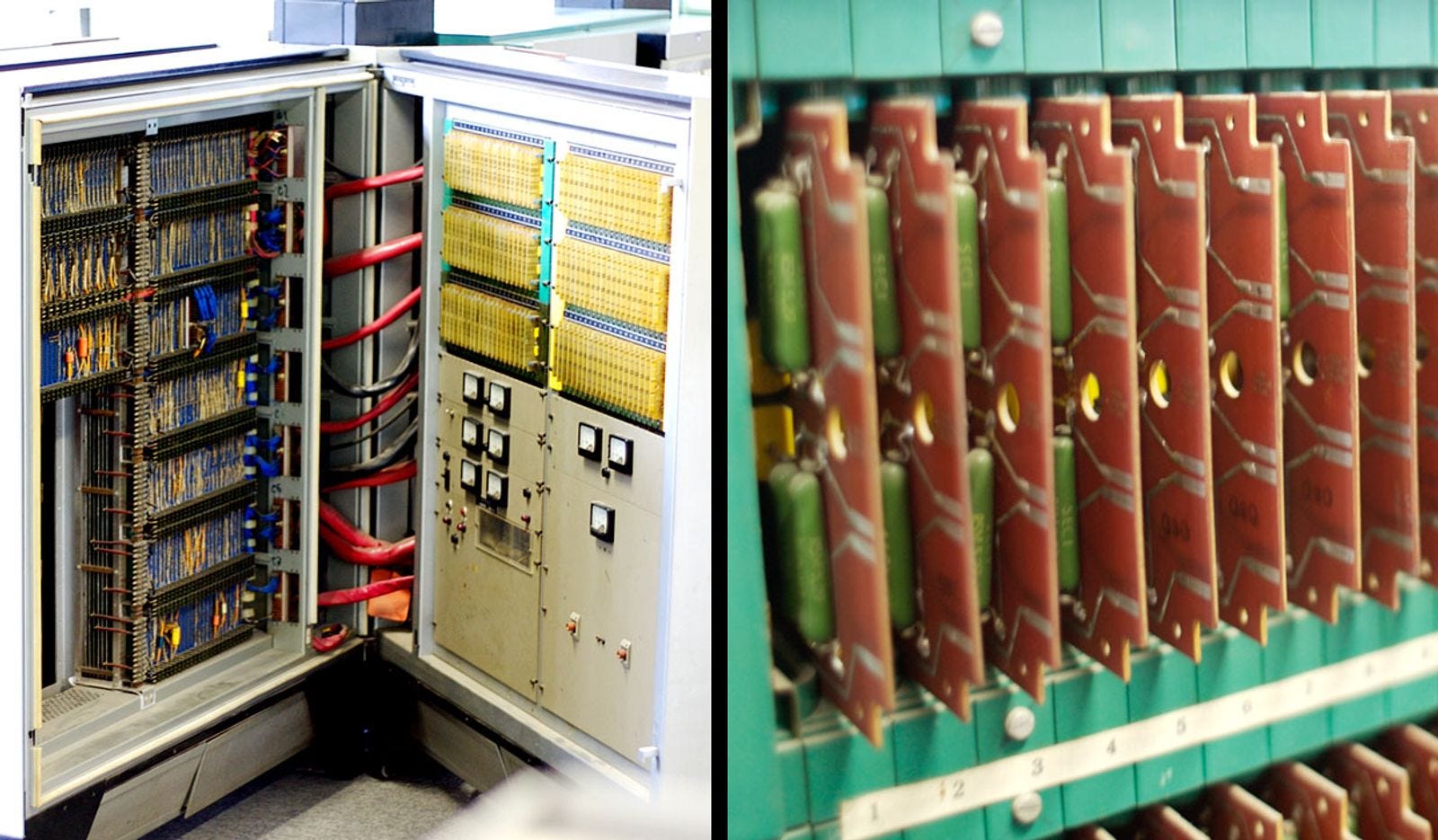
The cabinets of the 9003 were made to be fully accessible by a human without the need for ladders standing just shy of five feet high, and the wiring was in overhead conduits rather than under the floor. The contents of each cabinet were color coded with strips that indicated power, memory, ALU, control unit, and the like, and each was arranged in three parts, opening like a book.
Forty 9003s were installed, offered via lease between 1959 and 1964. The first 9003 was installed at Marzotto in Valdagno, and the second was installed at Banca Monte dei Paschi di Siena. This second example is the only currently known to be complete and functional, and it was donated to the Enrico Fermi Technical Institute in Bibbiena by the bank.
The ELEA 6001 was released in 1961 as a smaller and more affordable computer though it was still a mainframe of several cabinets. This computer shipped in two different versions, one for the sciences and one for commercial use, designated by the suffix of S or C to the numeric designation. Characters were four bits which led to some complexities when using machine code (various signifier bits preceding or following a character), and the memory configurations available ranged from 10,000 to 100,000 4bit characters of core with 40,000 being the most common. With little memory on hand and with various schemes aimed at efficient use, the 6001 was shipped with FORTRAN for scientific uses, and with Palgo (Algol dialect) for commercial uses. This machine sold between 140 and 170 units depending upon which source one prefers to trust.
Sadly, Adriano passed away rather suddenly in February of 1960 from a cerebral thrombosis while on a train to Switzerland. Tchou died in a car accident on the 9th of November in 1961 on his way from Milan to Ivrea to discuss a new line of computers built from ICs with management. The two had planned to launch their computers in the United States following Olivetti’s 1959 acquisition of the Underwood typewriter company, but after their deaths, this expansion plan was cancelled. Some workers, documentarians, and Adriano’s personal guard alleged that their deaths were perpetrated by CIA (successor to OSS), but this was countered by the Tchou family who stated there wasn’t any evidence of foul play.
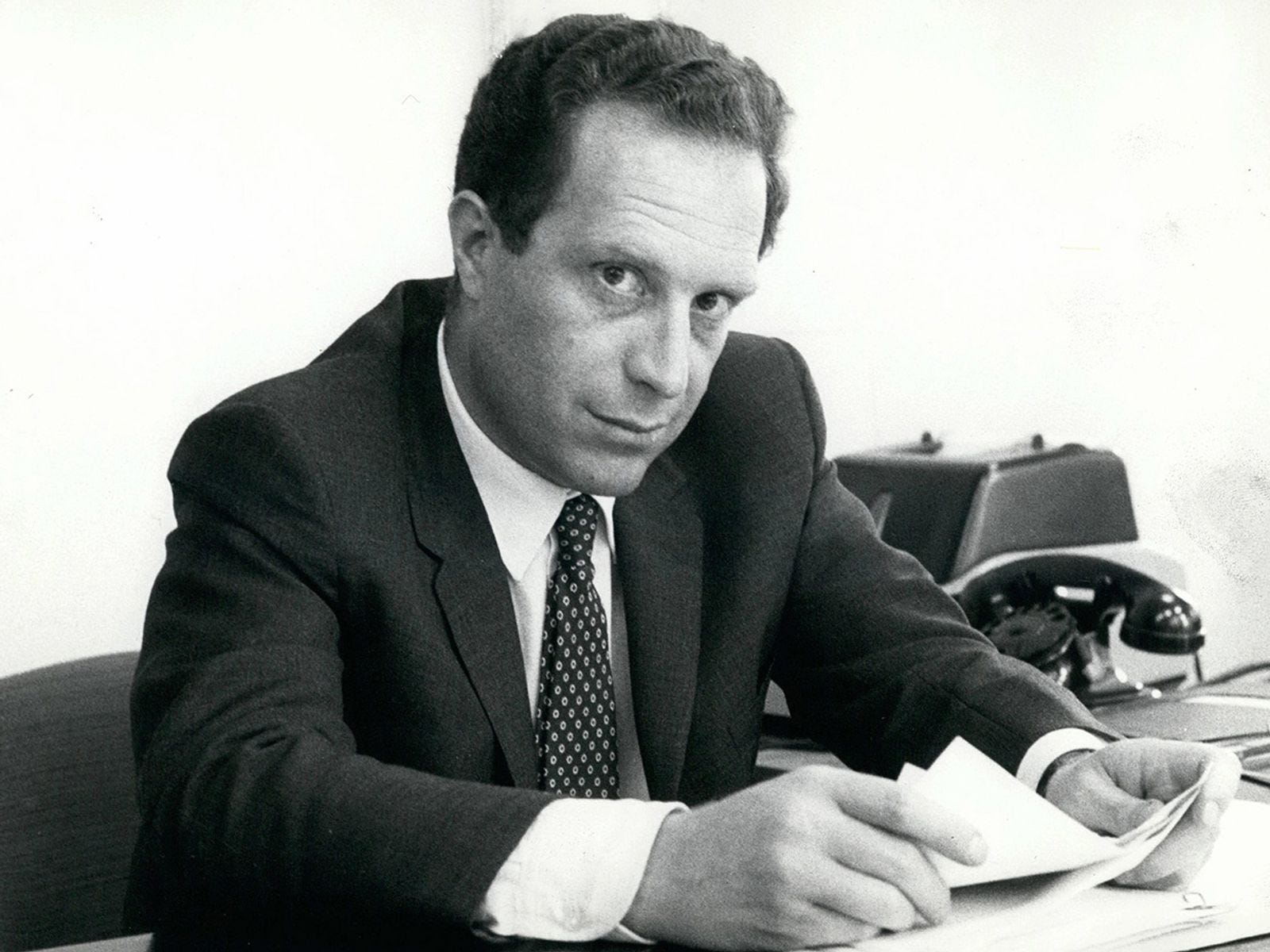
Robert Olivetti was the eldest son of Adriano and was born in Turin on the 18th of March in 1928. He was educated in business administration at Bocconi in Milan, and then at Harvard. He joined the company in 1955, and became the director of the electronics division in 1959. He became CEO in 1962.
By 1960, the research group had moved to Milan, and Federico Faggin joined the company in autumn of that year. He was tasked with designing a small, inexpensive, personal computer. This machine used 1000 logic gates made out of germanium transistors, and it used 200 PCBs. I/O was done with a teletype. The computer was completed in 1961.
From 1962 to 1964, Roberto was trying to keep the computer business running. The purchase of Underwood was a financial burden, and the passing of both Adriano and Tchou had left development idle. With pressure from the US government via ambassador Clare Boothe Luce to sell Olivetti’s electric division to GE, Roberto turned to the Italian government for assistance. The Italian government didn’t view computers as being of any national importance, and thus a bail out was rejected. New board members came in with cash and saved the company, but they favored a sale. Aurelio Peccei became CEO in 1964, and the Olivetti electronics division was sold to General Electric. This sale did not include the typewriter or calculator divisions, and Olivetti retained Underwood which became Olivetti-Underwood. Over the next few years, this would transform from liability to asset as it provided Olivetti access to the US market with established distribution networks.
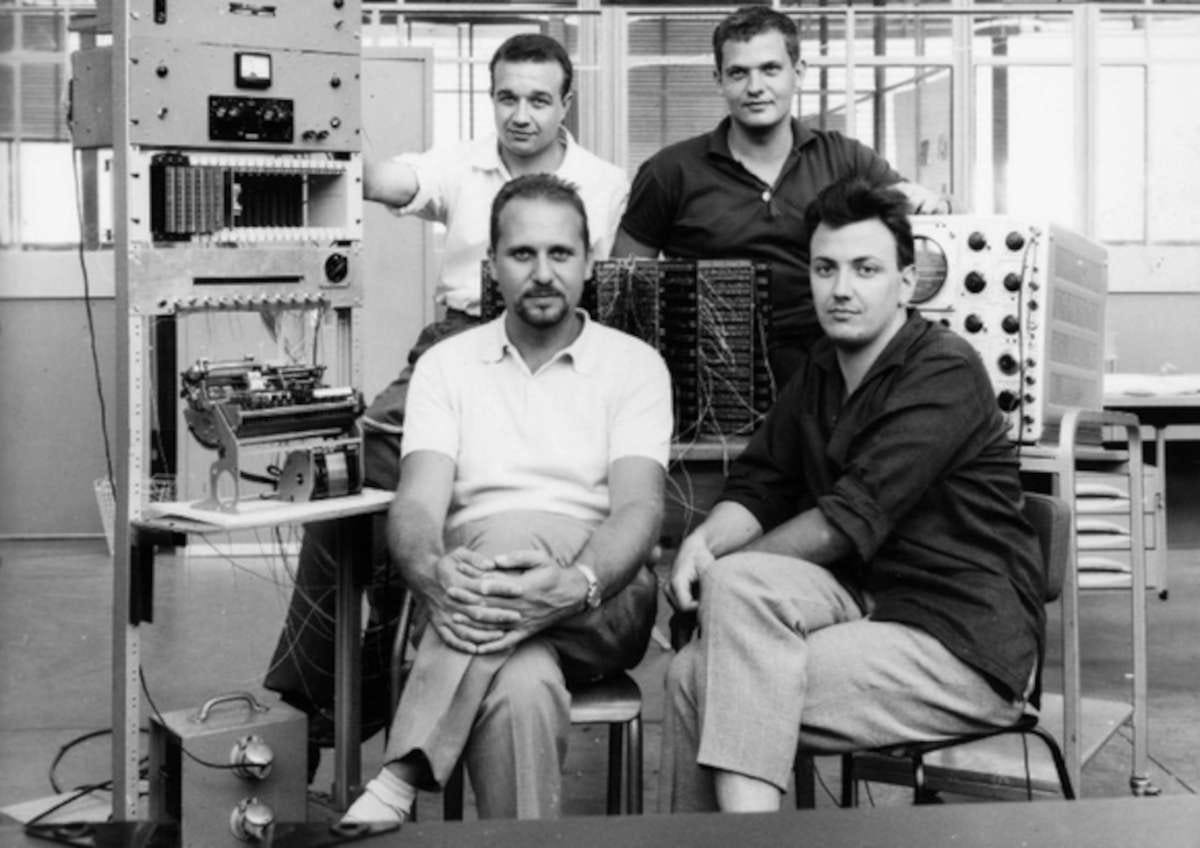
Faggin’s small computer was refined and adapted by Pier Perotto, Giovanni De Sandre, Gastone Garziera, and Giancarlo Toppi. It became a diminutive, simple, programmable, personal, desktop computer. Given the time, the entire system was built of discrete components: transistors, diodes, resistors, capacitors. For memory, the machine utilized 240 bytes of magnetostrictive, metal-wire, acoustic delay lines with a cycle time of 2.2 milliseconds. All of these components were then mounted on phenolic resin (commonly known as Bakelite) cards. Phenolic resin a was cheap, heat-resistant, nonconductive, synthetic plastic first patented in 1907. It was easy to mold and could be produced quite quickly. The major downsides were swelling under extreme humidity, difficulty in recycling, and toxicity. The material ceased being used with arrival of ABS and PVC.
The only issue that remained for the small team was that this was a computer. Computers were strictly going to be the domain of GE and not of Olivetti. Given that this machine barely qualified as a computer, Garziera spent several nights going through all documentation and references to this product changing the description from computer to calculator. Olivetti was therefore able to keep it. Still, GE now owned the building and everything in that building except for the office in use by this team. The result of this close and uncomfortable proximity was that the four painted the windows on their office so that GE staff weren’t able to see their activity.
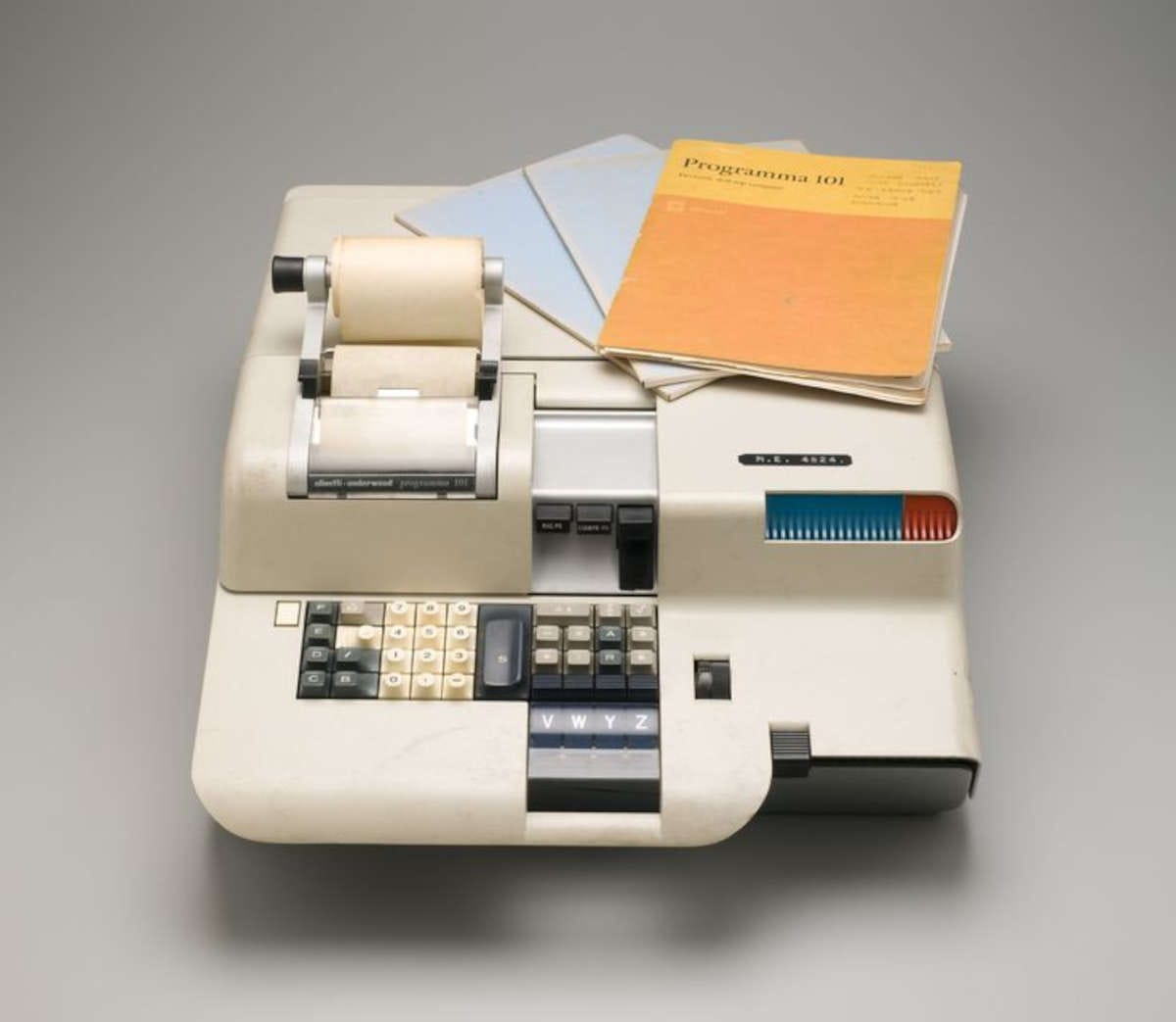
Depending entirely on how loosely the definition of computer is used, the Programma 101 was either a programmable calculator or the first personal computer upon its release in 1965. Of course, just viewing the keyboard, the device appears to be a calculator rather than a computer, but this was also true of the KIM-1. The real limitation was in memory where a program of any complexity was nearly impossible.
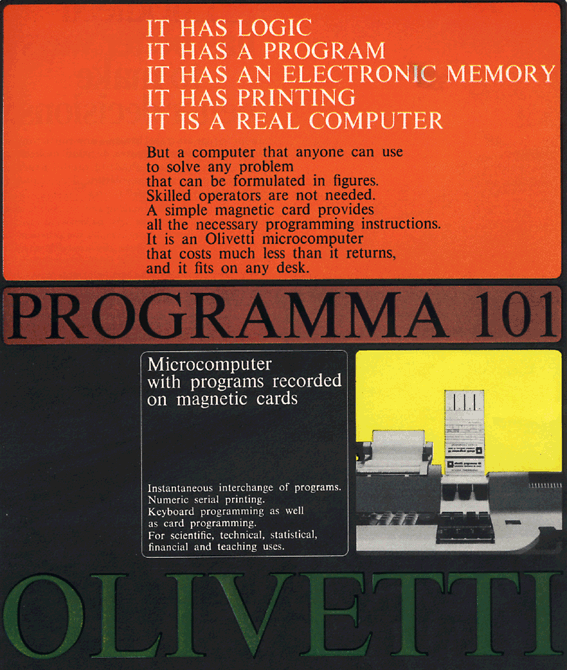
The keyboard of the P101 was 37 keys, a decimal selector wheel of 0 to 15, and three switches for Program Record, Print Program, and Keyboard release. Input was achieved either through the keyboard or through magnetic cards, and output was achieved primarily through the printer. The “display” such as it was consisted only of two lamps. Solid blue indicated that the machine was ready for input, flashing blue indicated that a program was running, and a red lamp indicated an error. The printer was capable of 30 characters per second.
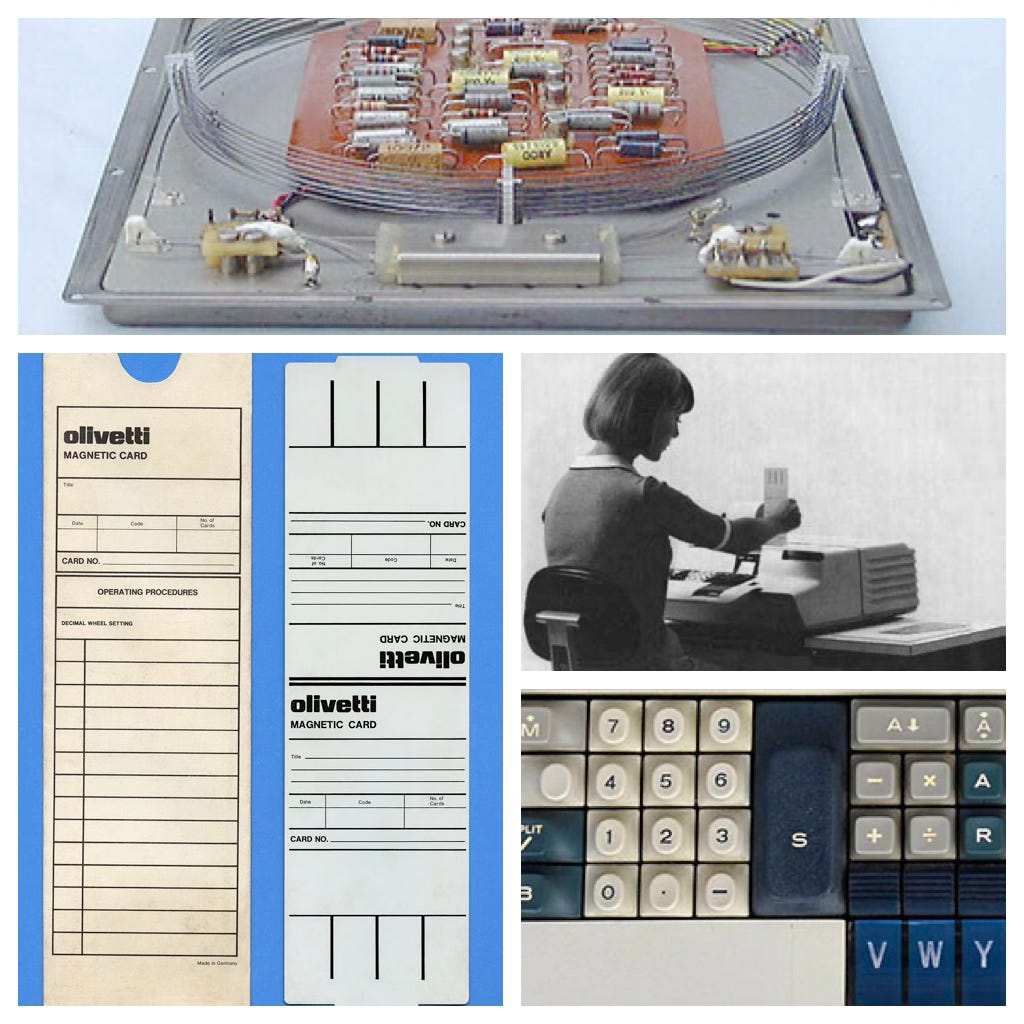
For all this talk of the machine being a computer, I did say that programs of any complexity were nearly impossible. Well, nearly impossible means that a thing actually is possible. A clever programmer could split a program across multiple magnetic cards and feed them sequentially as each part of a program was run. While this would have been slow, it was possible. Given that this sixty pound, typewriter-sized computer cost $3200 in 1965 which would be around $38,211 in 2025 dollars, someone needing a computer without requisite funds for a larger machine would find this inconvenience acceptable. We know this, of course, from sales.
The total initial production run of the Programma 101 was 44,000 units. The public unveiling of this “calculator” was at the World’s Fair in New York City during the Fair’s second season in 1965. The intended star of Olivetti’s showing was the Logos 27, another of their mechanical calculators. The P101 was in a small backroom, and Olivetti’s management hadn’t really thought it’d receive much attention. The presenter of the P101 informed the audience that he’d be calculating the orbit of a satellite, put the card in the machine, and after a few seconds the computer began printing the result. There was quite a bit of excitement. The P101 was moved to the front of the booth. Fair attendees assumed that there must be hidden wires connecting it to a mainframe offsite, and thus the Olivetti representatives began allowing people a closer look. Following the fair, Olivetti sold 40,000 units in the USA alone. Some of these went to NASA where the humble little machines were used for Apollo 11, as David W. Whittle recalls:
By Apollo 11, we had a desktop computer, sort of, kind of, called an Olivetti Programma 101. It was kind of a supercalculator. It was probably a foot and a half square, and about maybe eight inches tall. It would add, subtract, multiply, and divide, but it would remember a sequence of these things, and it would record that sequence on a magnetic card, a magnetic strip that was about a foot long and two inches wide. So you could write a sequence, a programming sequence, and load it in there, and then if you would—the Lunar Module high-gain antenna was not very smart. It didn’t know where Earth was. So you would have to call up and give the astronauts some—we had two knobs, a pitch and yaw knob, but you have to give him some angles to put it at. Then once the antenna found the Earth’s signal, it would track it, and then you didn’t have to worry. But it had to get within a certain range before it would grab it and track it.
We would have to run four separate programs on this Programma 101, and then in between those programs, we’d have to get out our manuals. I don’t know if you know what a CRC [Standard Mathematical Tables and Formulae] Manual is, but we’d have to look up trigonometric functions and input the data, which today your calculator does that. So what was taking us ten or fifteen minutes to do, today I could do on my hand calculator in ten seconds. Then we would read out the angles that we came up with to the crew, and they would dial them in, look at the signal strength, the signal strength there. They’d go to auto track, and then they could track it. It was a lot of detail stuff like that. I don’t remember any, not just in my systems but other systems, anything that was significant.
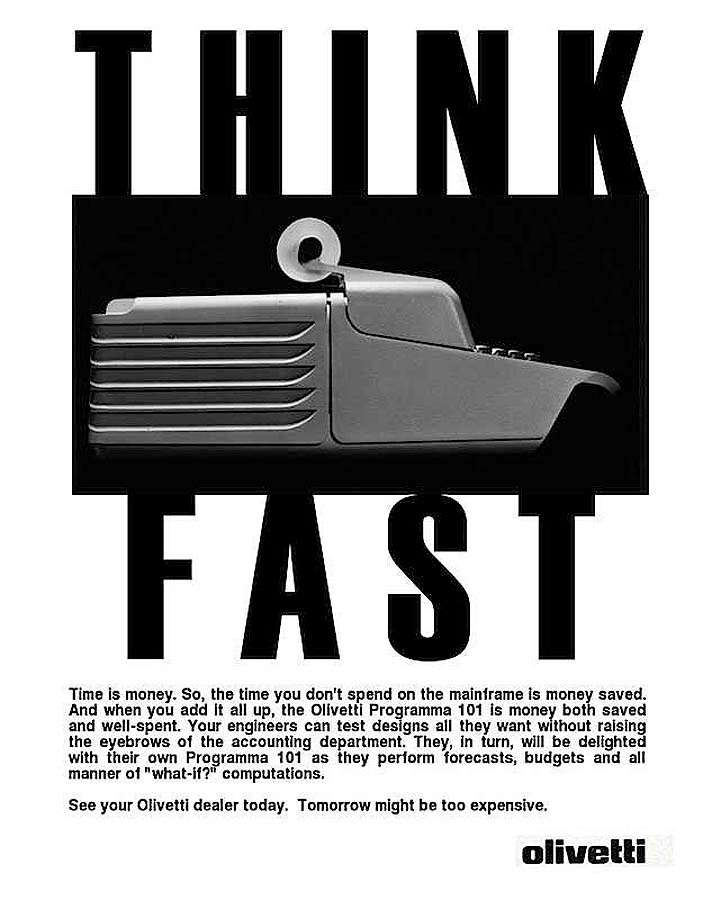
The company’s fortunes improved, and Peccei left the company in 1967. Roberto Olivetti then returned as CEO until 1971. After 1971, he remained as the VP and chairman. Between 1965 and 1971, the Programma 101 represented around 24% of Olivetti’s global revenues with that single product bringing in at least $140,800,000. Perotto and his team, with the support of Roberto, likely saved Olivetti.
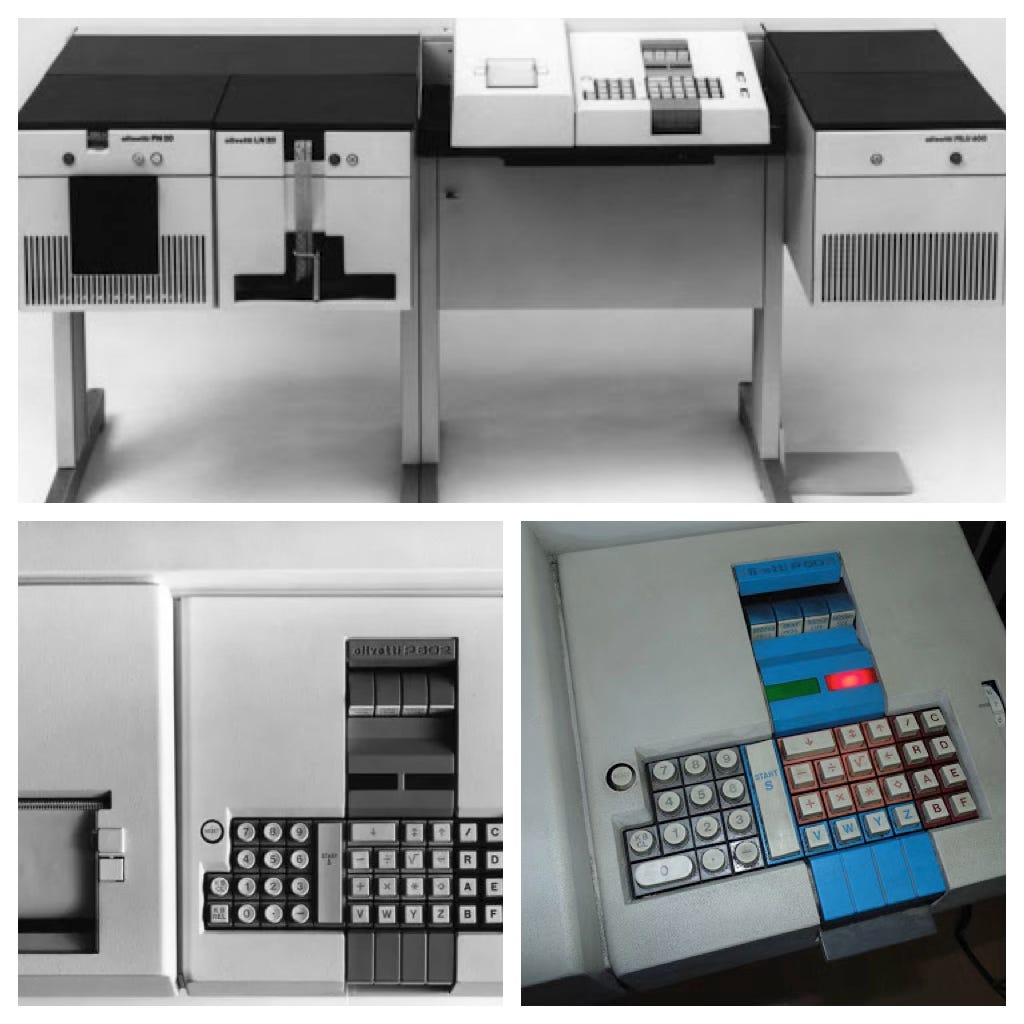
The P101 was followed by the P602 in 1971, and it was the first Olivetti computer to be marketed as a microcomputer. It used the same architecture as the P101, but used DTL ICs instead of discrete components. It retained the use of delay line memory but doubled the size. One major addition was the system ROM which added trigonometric, logarithmic, and exponential functions. A second addition was an interface for magnetic ribbon memory cartridges holding 56, 112, or 224 blocks where a block was equivalent to four lines of a magnetic card. Finally, the P602 added the IPSO interface (Olivetti Standard Peripheral Interface) allowing the connection of tape readers, punches, plotters, typewriters, hard disks, and other peripherals. This was followed by the P652 which increased memory to 4K and could be expanded to 32K. It also included an integrated magnetic card that could store 192K.
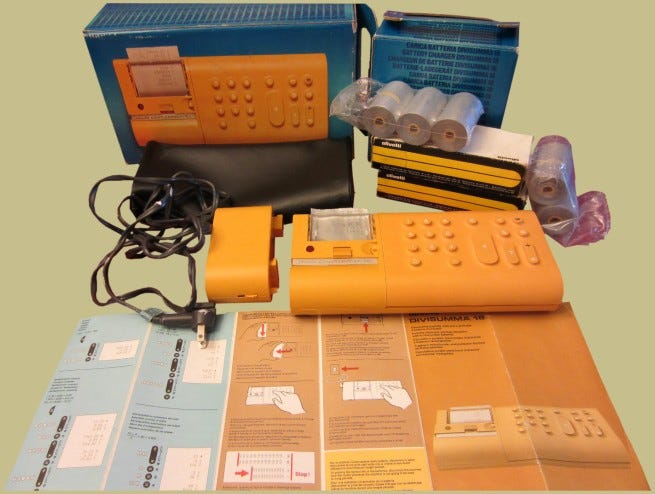
The Divisumma 18 was released in 1972 and was the design of Mario Bellini. This calculator lacked a display and printed all results. The main calculator and printer body was 9.75 inches by 4.75 inches by 2 inches, and after attaching the battery pack, that length was increased to 12.1 inches. While this product didn’t bring in tons of revenue, and it wasn’t all too important in the history of computing, its design is so wild that I had to mention it.


Olivetti released the TC 800 terminal in 1974. This used a two-card Olivetti designed processor and ran the Cosmos operating system. It was followed by the TC 1800 in 1977. Perotto didn’t really seem to want to make terminals, so the same CPU and other internals made their way into the P6060 in 1975. The first and most obvious difference is the keyboard, which is finally a full QWERTY keyboard with a 10-key and some extra keys for specific functions. RAM is 48K with 16K available to the user and an access time of 700ns. The ROM loader is made of bipolar LSI circuits and once loaded into RAM occupies the other 32K. Total RAM could be expanded to allow up to 48K of user-available RAM. The printer is now larger, and the system included a plasma display capable of displaying a single line of 32 characters (upper and lower case characters as well as symbols). That line on the screen could be “scrolled” up and down over a buffer of 80 characters. IPSO peripheral compatibility was maintained, but the P6060 included two eight inch floppy disk drives of 256K, and RS242 and IEEE-488 connectors. One additional accessory was a VDU for use with CRT displays. Software was significantly different as this machine shipped with BASIC, and the printer supported all characters and graphics supported by the system itself as well as framing, scaling, offsetting, axis drawing, and labeling. With these two advantages, the P6060 would have been of great use to anyone needing to create reports or other office documents.
In the later part of the 1970s, Olivetti had around 62,000 employees, around $1.8 billion in revenue (around $9 billion in 2025 dollars), but even more debt with the company losing around $10 million each month. This debt was large enough and expensive enough that the brothers Carlo and Franco De Benedetti were able to purchase 14% of the company for just $17 million. This gave Olivetti, at this time, a valuation of just $121.42 million. It is rather difficult for me to imagine the ire that Olivetti’s prior investors must have felt, but yet, the company could continue.
Carlo De Benedetti was born on the 14th of November in 1934 in Turin. He’s of Jewish descent, and like Adriano, fled Italy for Switzerland during the Second World War. After the war, he returned to Italy, earned his bachelor's degree in electrical engineering from the Polytechnic University of Turin, and then went to work in his father’s business. He did well there, grew the company profits, and led the acquisition of another company. He was then CEO of the combined company until 1976 when he became the CEO of CIR Group, a position he held until 1978 when he became the CEO of Olivetti. Throughout his life, when political turmoil struck Italy, he went to Switzerland. Later in his life, he attained Swiss citizenship. Just prior to the Olivetti acquisition, he was living there with his wife and three sons.
De Benedetti sought to completely reorganize the company and change its focus from typewriters to microcomputers. Nearly all of the company’s senior management and nearly all of the company’s board members threatened to leave. De Benedetti then met with each person individually and thoroughly explained his reasoning. He was successful in persuading them, and the mass resignations never occurred. Much of his plan centered on ending the generous employee benefit programs, cutting mechanical typewriters, renegotiating union contracts, and layoffs totaling a little over 22,000 personnel. De Benedetti’s Olivetti also purchased small stakes in various other companies providing access to more markets, lower parts costs, and access to research.
The company’s office supply business was still going strong with electronic typewriters and calculators bringing in revenue. To this, Olivetti added copiers, and the company expanded into cash registers and ATM machines.
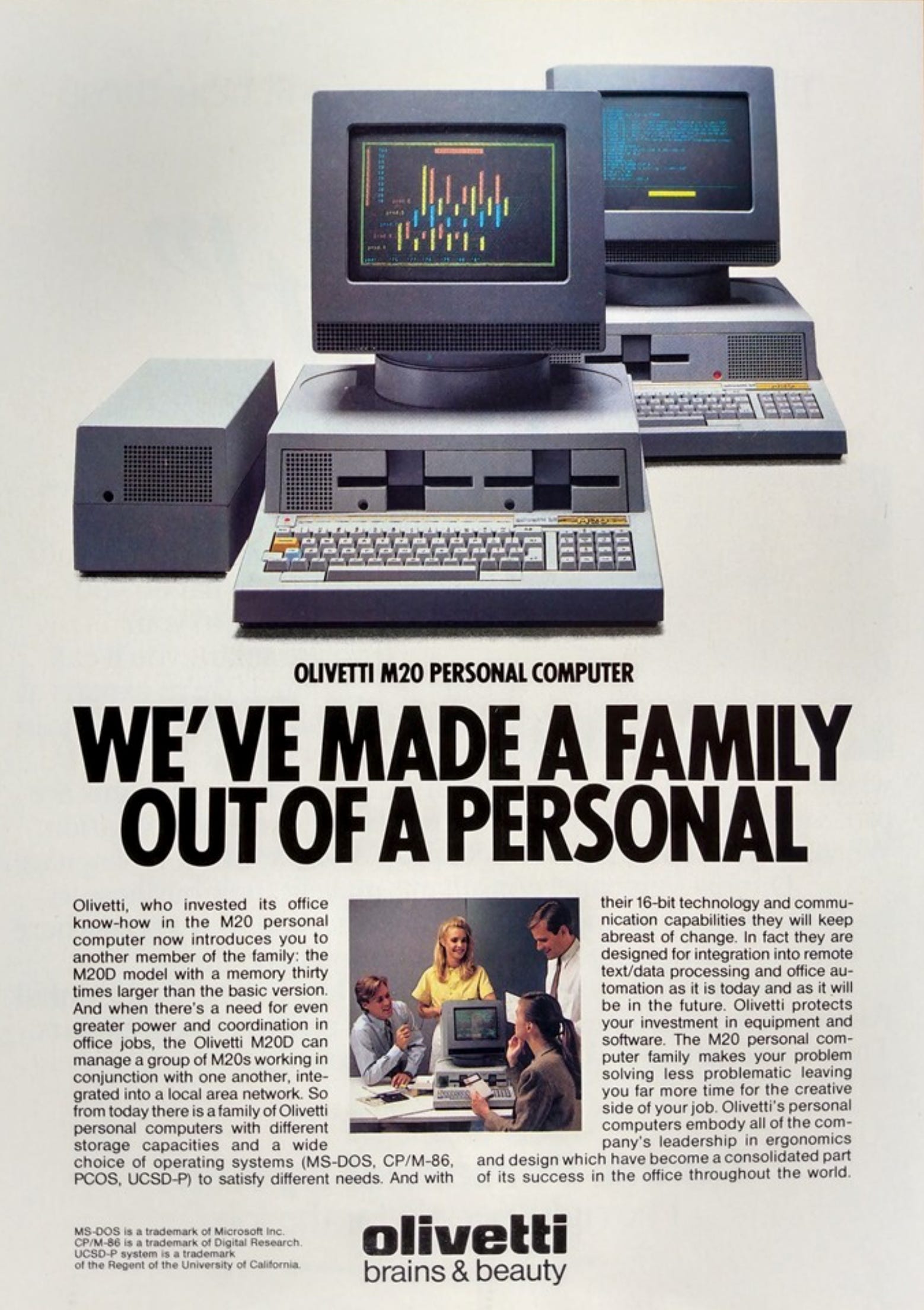
In 1979, the work on a new computer began at the Olivetti Advanced Technology Center in Cupertino. This machine was built around the Zilog Z8001 at 4MHz, 128K base RAM expandable to 512K, two 5.25 inch floppy disk drives supporting 320K floppies, and the Hitachi HD46505 CRTC. For expansion, the M20 offered IEEE-488, RS232-C, and two internal expansion slots. The computer was offered with various upgrades: higher capacity FDDs, memory, a 9.2MB HDD (and accompanying controller card), Corvus Omninet LAN, and a while after release an 8086 CPU card. The choice of the 46505 meant that this machine was vaguely compatible with IBM’s MDA, but that was the only piece of this machine to offer any such compatibility until the release of the Alternate Processor Board (APB, the 8086 card mentioned previously). The M20’s display output was 512 by 256 pixels, and all display modes were graphical. The computer was capable of producing eight colors when using two 32K video memory boards, but this dropped to just four colors from a palette of eight when using a single video memory board. The key advantage for Olivetti in this display setup was that it could support text at 80 by 25 or 64 by 16, and it could more easily support the various languages of Europe.
Given that this machine was initially designed around the Z8001, it lacked a native operating system at the time of design. This was solved with the Professional Computer Operating System or PCOS-8000. This was a single-user, single-tasking, command driven operating system not too dissimilar from CP/M or MS-DOS. Its commands, however, were quite different. For example, vf 1: would format the disk in the left-most disk drive while fl would list the contents of a file. The lack of software for PCOS was well understood, and thus, a CP/M emulator was made available and it was often bundled with dBase II, SuperCalc, and other common software products. The M20 was released in 1982, and it sold well. The turn around had started and Olivetti reported positive net income for 1982 with positive earnings per share around 22¢.
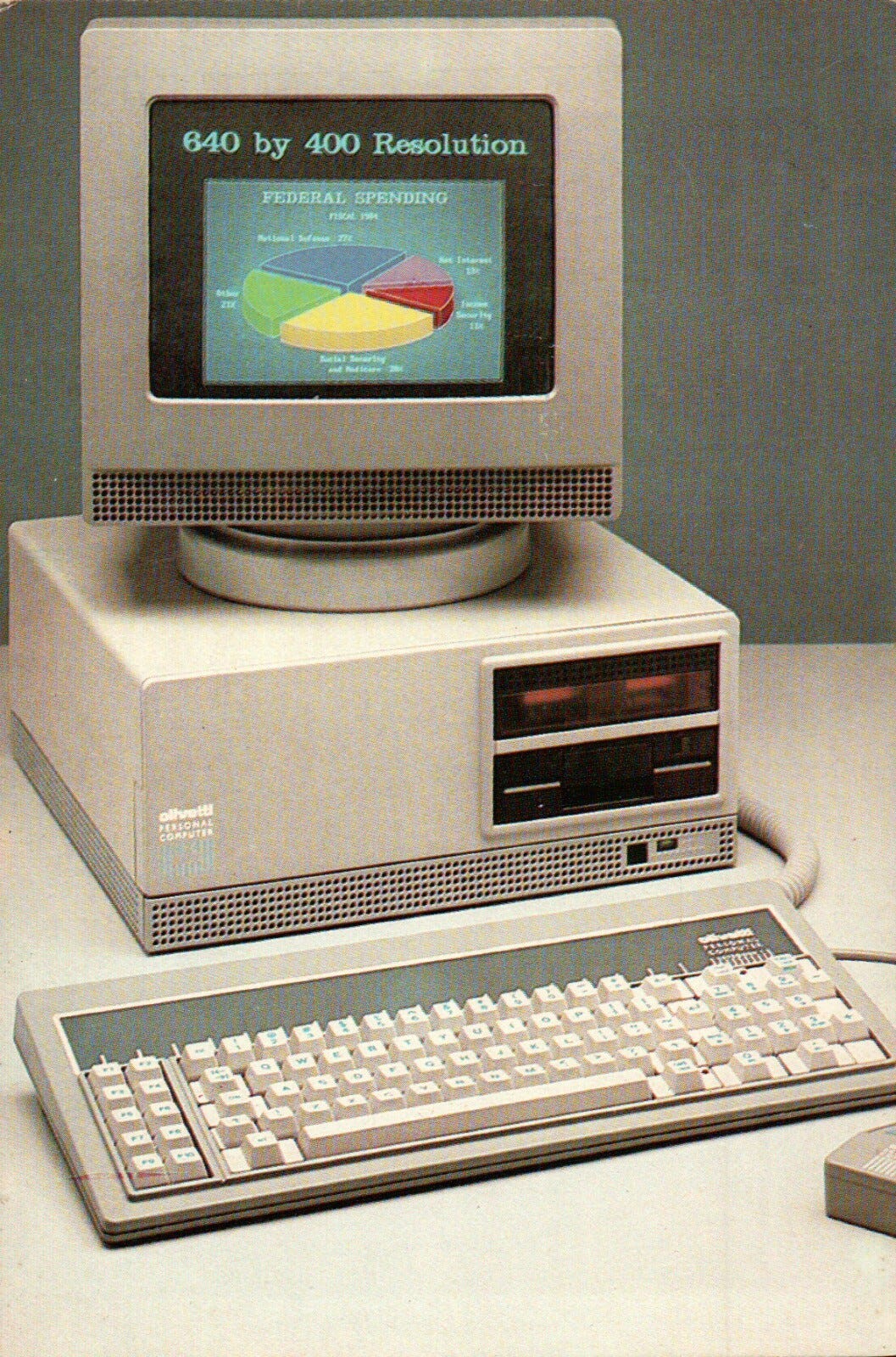
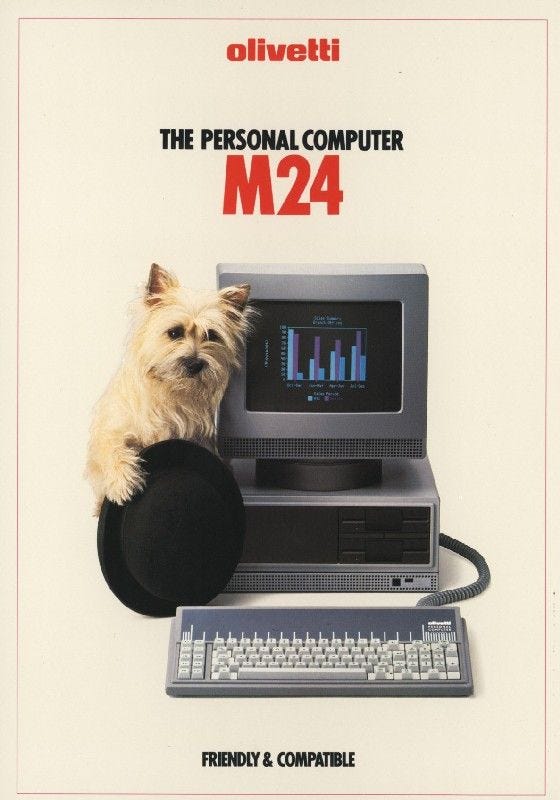
De Benedetti wanted Olivetti computers to have much wider distribution than the company could achieve on its own. In particular, he wanted the company to have broad access to the American market. The first step to this was a truly IBM compatible machine; the company created the M24. The machine was built around an 8MHz 8086 with an optional 8087, 128K RAM expandable to 640K, and a CGA compatible video card that was actually better than plain old CGA. The video card supported 320 by 200, 640 by 200, and 640 by 400 with up to sixteen colors, and it supported an additional mode of 512 by 256 with eight colors. That last mode could be paired with a Z8001 card giving the M24 compatibility with the M20. For ports, the machine had RGB out (25pin), parallel, RS232 (25pin), and a proprietary 9pin DSUB keyboard connector. Later models added another 9pin connector on the keyboard for the attachment of a mouse, and added support in BIOS for 3.5 inch FDDs.
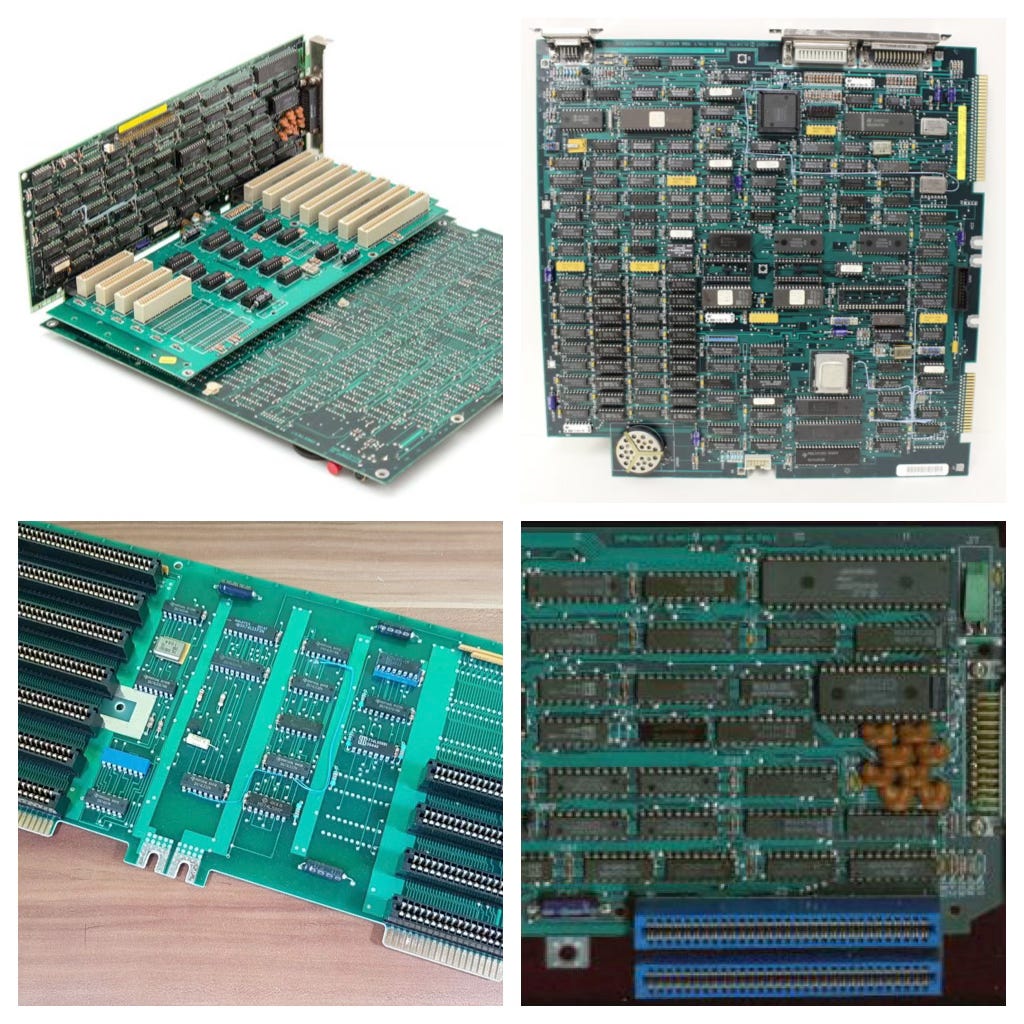
The M24 had seven 8bit ISA slots for internal expansion, but four of these came populated with a second adapter allowing for 16bit cards to be added. The expansions were on a separate board from both the video card and motherboard, and this is where things get… weird. The motherboard was underneath the expansion board and video card, physically separated from them, and mounted upside-down. The motherboard and expansion board then had edge connectors that slotted into the video card which was mounted vertically. Various configurations of this machine were launched in 1983. All of them featured a twelve inch monitor and 5.25 inch 360K floppy disk drive, but that monitor could be green or amber monochrome, or it could be color. Each monitor combination could then be paired with an optional 20MB HDD. The highest end configuration with HDD and color monitor would feature a video card capable of sixteen colors at 640 by 400, while the lower end variants all included a video card capable of just two colors at the same resolution. From what I can tell, the 8087 was available for all models. Pricing on the base model from Docutel/Olivetti in Texas started at $2745 while a more well equipped machine started at $3395.
On the software side of things, the M24 initially shipped with MS-DOS 2.1, a diagnostic program, keyboard drivers, utilities, OLIMENU (TSR GUI similar to TopView), and GW BASIC. Versions of Windows 1 and Windows 2 were available for the M24, and it was supported by Windows 3.0. Given the machine’s compatibility prowess, it could also run CP/M-86, UCSD-P, COHERENT, and XENIX.
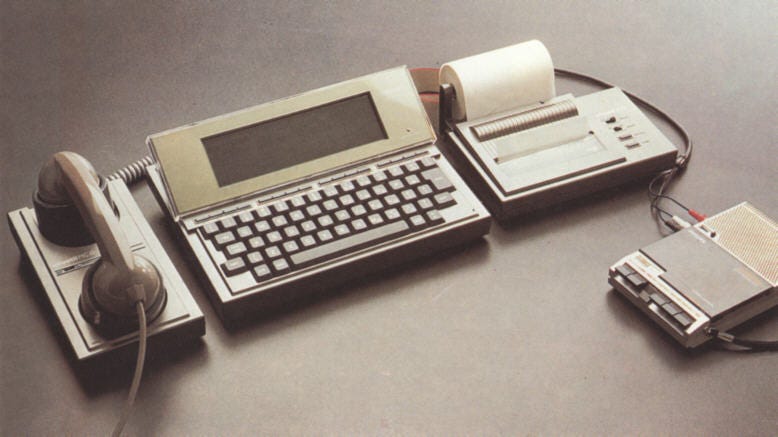
In 1983, Olivetti released their first laptop. This was largely the same machine as the TRS-80 Model 100, but it had a physical redesign with a tilting screen. Base RAM was 8K and expandable to 32K. While the Model 100 was a success, the M10 was not. The machine was discontinued after two years.
The US Department of Justice and the American Telephone and Telegraph company (AT&T) agreed on a plan to breakup AT&T on the 8th of January in 1982. That plan would be executed on the 1st of January in 1984. Seeing the loss of revenue from phone rentals on the horizon, AT&T needed new revenue sources, and they needed them as quickly as possible. The attitude within AT&T was quite clear with signs in the company’s offices in 1983 reading with variations on:
There are two giant entities at work in our country, and they both have an amazing influence on our daily lives… one has given us radar, sonar, stereo, teletype, the transistor, hearing aids, artificial larynxes, talking movies, and the telephone. The other has given us the Civil War, the Spanish-American War, the First World War, the Second World War, the Korean War, the Vietnam War, double-digit inflation, double-digit unemployment, the Great Depression, the gasoline crisis, and the Watergate fiasco. Guess which one is now trying to tell the other one how to run its business?
AT&T knew that the products built upon the company’s many innovations in technology were generating large sums of money, and now freed of its legal prohibition from entering the computer market, it wanted to capitalize on those innovations. The company simply didn’t have the time to do this on its own. The M24 was quickly successful in Europe, was a great product, and it beat the IBM PC and XT, competing well with the Compaq Deskpro. Olivetti, meanwhile, needed cash and more market access. On the 21st of December in 1983, AT&T announced the purchase of 100 million shares of Olivetti for $4.26 million. This made AT&T the single largest shareholder at 25% while De Benedetti maintained 15%. Olivetti was now able to market AT&T products in Europe, and AT&T could market Olivetti products in the USA.
Because of this deal, most people in the USA wouldn’t know the M24 as an Olivetti. Had an American used an M24, it would likely have been the AT&T PC 6300 (or less commonly the Xerox 6060, or in France as the Persona 1600 by LogAbax). The 6300 saw a revision in October of 1985 as the 6300 Plus featuring a 6MHz 80286, and this machine could run MS-DOS and UNIX System V concurrently via Simultask. The M24 saw a revision in November 1985 as the M24 SP with a 10MHz 8086. By 1986, Olivetti was the market leader in Europe and the third largest PC manufacturer on Earth. Unfortunately for AT&T the 6300 Plus was a market failure. In late 1986, AT&T ceded all production and development of its PC products to Olivetti.
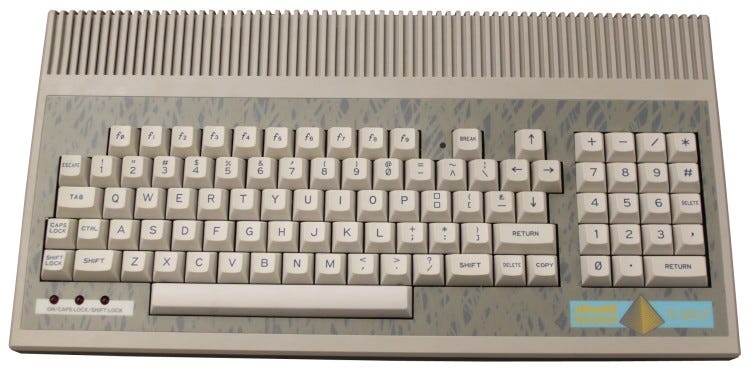
The British computer market had been somewhat impenetrable for outsiders, but one prominent maker was struggling, Acorn. On the 20th of February in 1985, Olivetti purchased nearly half of Acorn Computers giving the company immediate access to the UK and an astounding amount of technology. One of the first fruits of this acquisition was the Prodest PC 128S which was an Italian localized BBC Master Compact.
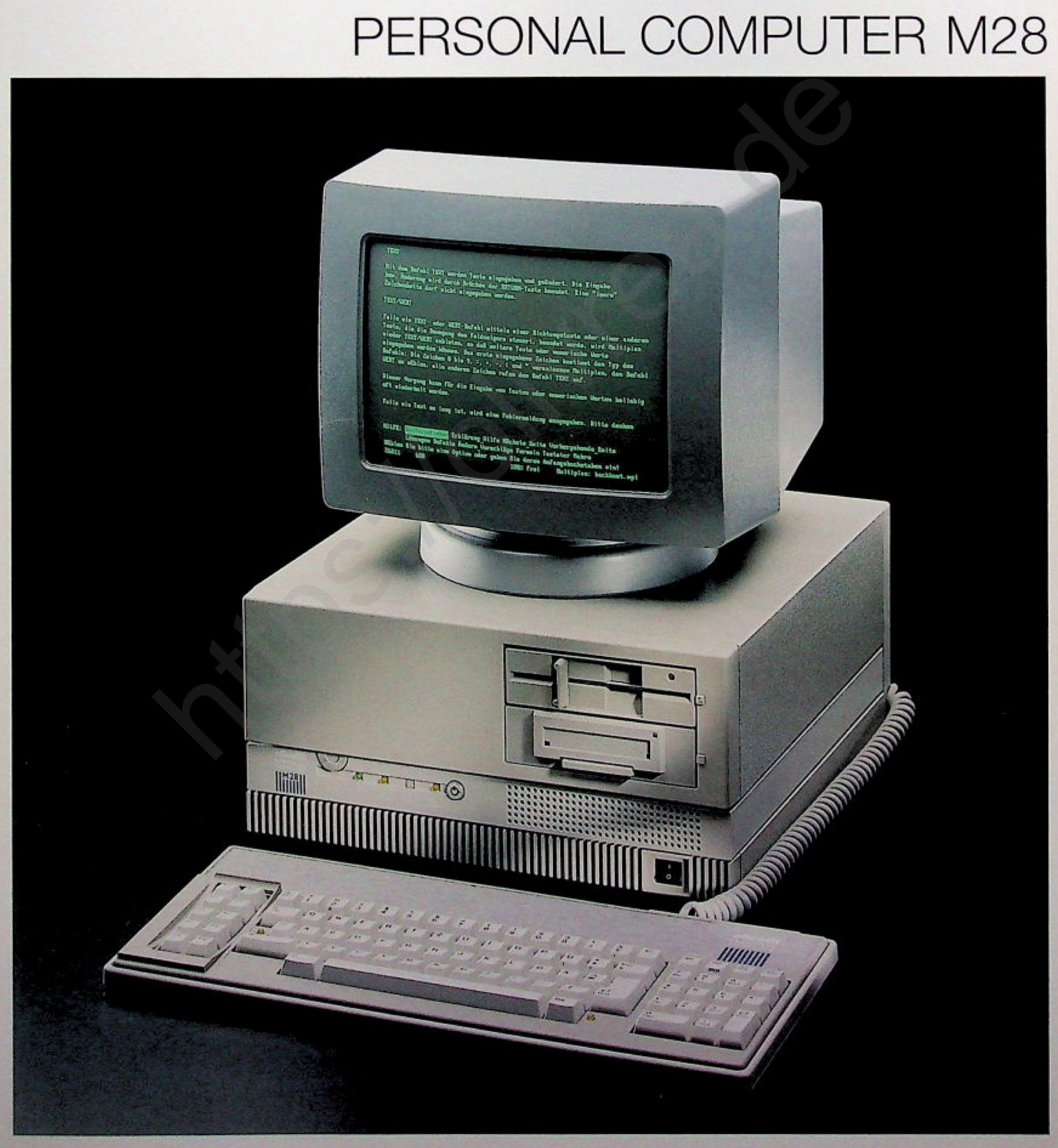
The Olivetti M28 was introduced in late 1986 as an AT competitor. It shipped with an Intel 80286 clocked at 8MHz, up to 1MB of RAM (expandable to 7MB), a 5.25 inch floppy disk drive supporting 1.2MB disks, a 20MB to 70MB HDD, and MS-DOS 3.2 or XENIX. The M28 continued to use Olivetti’s enhanced CGA card, and it allowed more expansion options than its predecessor. Pricing started at around $3000, and it was offered in North America as the AT&T PC 6310 and in France as the Persona 1800.
One of Olivetti’s largest competitors in Europe was Triumph-Adler (owner of Pertec, MITS, Omnidata). On the 22nd of April in 1986, Olivetti purchased 98.4% of Triumph-Adler and became the largest office supply company in Europe and held more than 50% of the typewriter market.
From 1987 to 1994, Olivetti produced five distinct lines of workstation machines. The 3000 series (1987) utilized the Motorola 68000 (likely through Thomson or SGS-Thomson with whom Olivetti still maintained various partnerships) and later the Edge Computer variants of the 68000, the 4000 series (1992) utilized the Intel i860 or Motorola depending upon the specific model, the 5000 series (1990) utilized the Intel 486 and later the Pentium, the 6000 series (1991) utilized MIPS, and the 7000 series (1994) utilized DEC Alpha. The early systems shipped with X/OS which was, mostly, 4.2BSD. Later models shipped with Xenix, NT, or VMS depending upon the CPU in use.
Iterations of Acorn machines, rebadged Thomson machines, and Olivetti’s own M28 followed until roughly 1994.
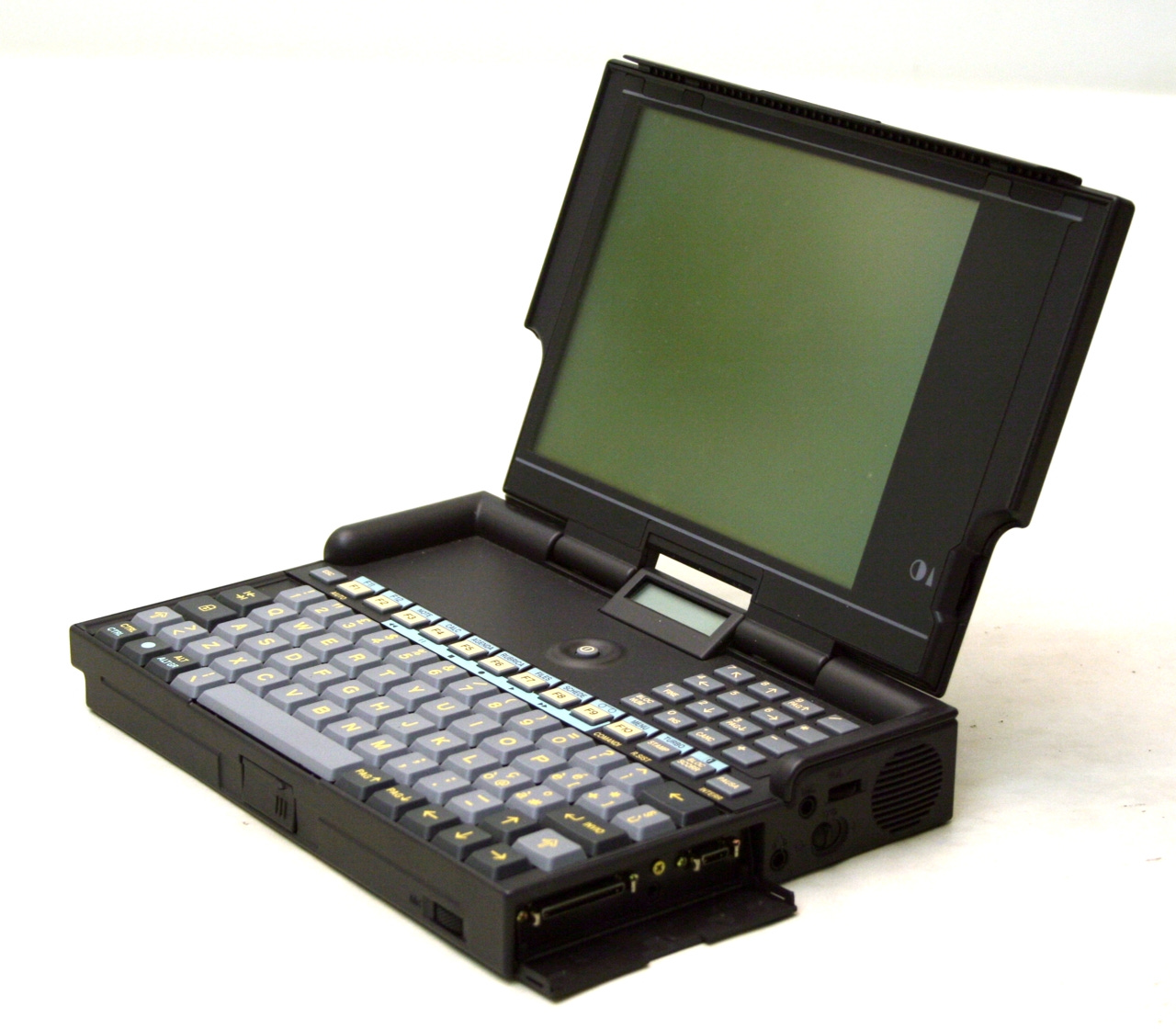
The Olivetti Quaderno (PT-XT-20) was released in 1992 with an NEC V30 running at 16MHz, 1MB of RAM, a 20MB 2.5 inch HDD, PCMCIA, and MS-DOS 5. The display was an LCD with four levels of gray and a resolution of 640 by 400. It ran on six AA batteries. While visually awesome, the most incredible aspect was the machine’s size: 8.27 inches by 5.83 inches by 1.26 inches. Despite having diminutive dimensions the machine contained a sound controller with both input and output and had a built in microphone, a fax modem, serial, parallel, video out, PS/2 keyboard/mouse, and some bundled productivity software. Interestingly, Olivetti made this Quaderno capable of acting as an answering machine. The machine won awards for design but was ridiculed for having very little computing power.
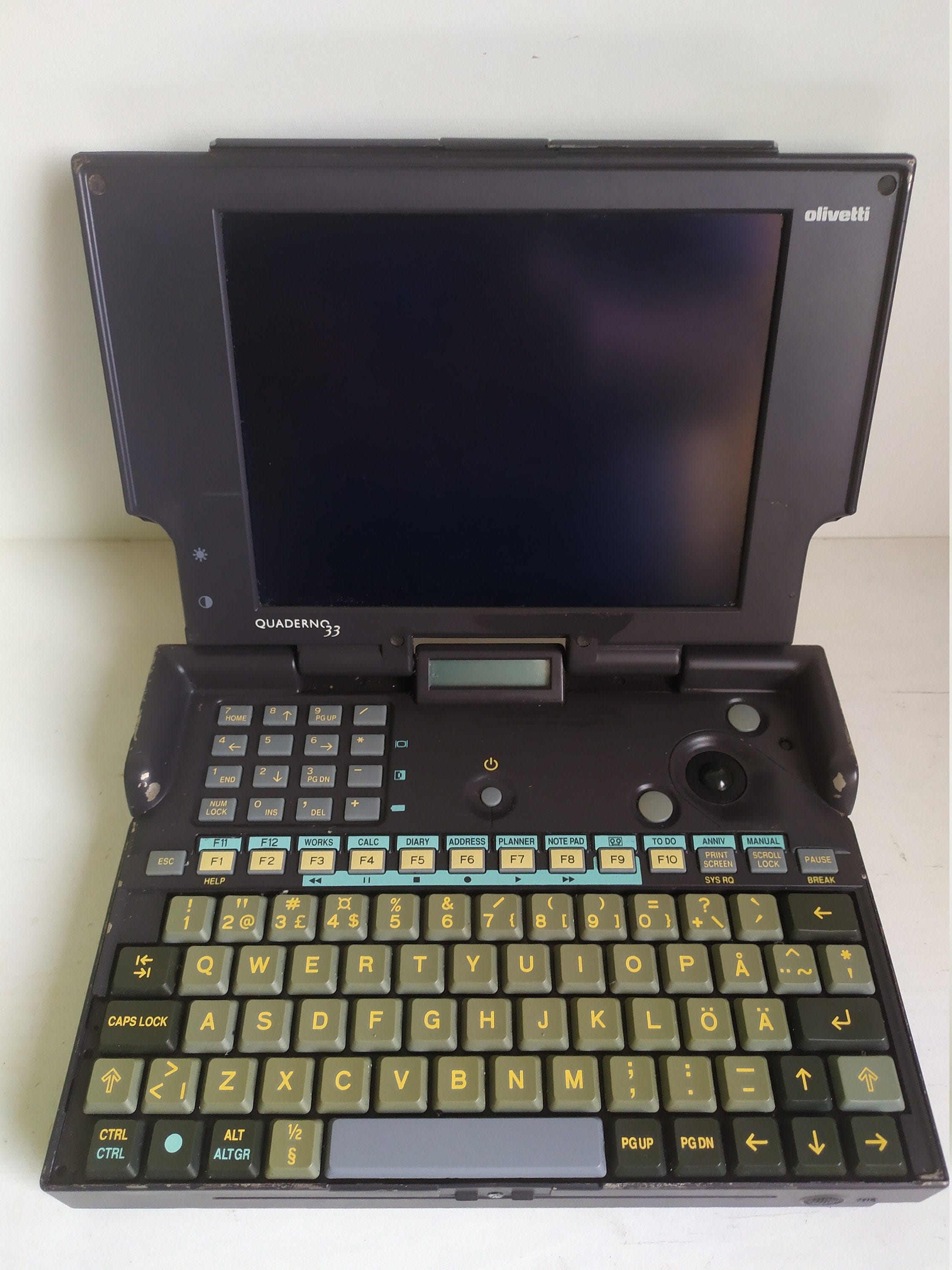
To overcome the deficiencies of the prior model, Olivetti quickly released the Quaderno 33 (PT-AT-60). This machine utilized a 20MHz AMD 386SXLV, 4MB of RAM, a 60MB HDD, and a backlit, seven inch LCD capable of sixteen gray levels at 640 by 480. This model further featured Windows 3.1, Microsoft Works, and Lotus Organizer. The AAs were gone and power came from nickel-cadmium cells. Combined with power management features, this little laptop could manage six hours of operation per charge.
In September of 1994, Olivetti launched Olivetti Telemedia chaired by Elserino Piol. This company then formed a joint venture with Bell Atlantic called Omnitel Pronto Italia with Francesco Caio as CEO. They went on to form Italy’s second GSM mobile network, first privately held, launched in December of 1995. The company had 300,000 subscribers within its first six months of operation.
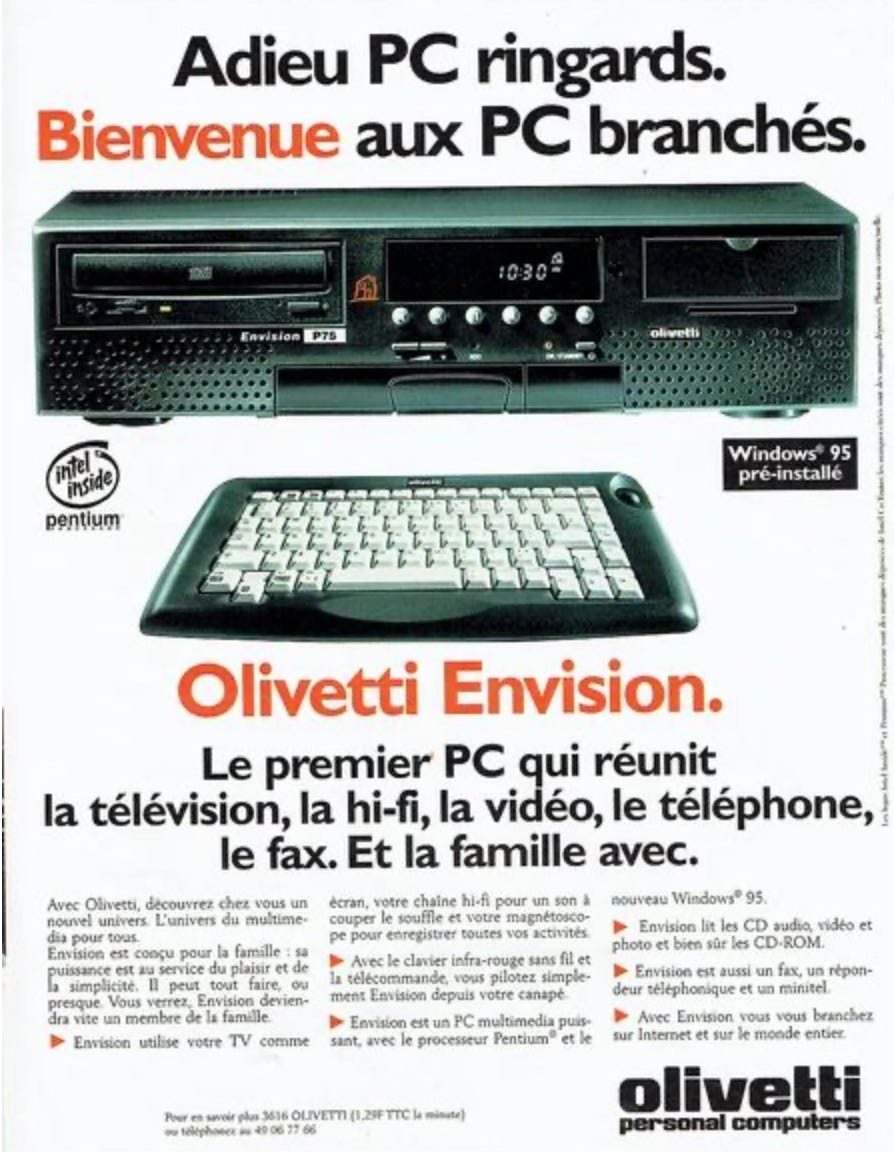
With the arrival of the CD-ROM, the Pentium, great sound, and high resolution displays, the PC was becoming a multimedia powerhouse. Olivetti saw an opportunity to conquer the living room as they’d once conquered the office. The company sought to create a computing appliance that would deliver audio, video, fax, and a telephone answering machine to the buyer. The product was the Olivetti Envision released in 1995. There were two models with either a 486DX4 at 100MHz or a Pentium at 75MHz. Both were equipped with 8MB of RAM, a Trident TGV9470 with 1MB of video RAM capable of 1024 by 768 with 256 colors, a Crystal CS4231 audio controller paired and an Oak Mozart OTI 605 (Adlib compatible but with an IDE CD-ROM controller), a 1.4MB 3.5 inch FDD, 635MB HDD, CD-ROM, an infrared remote, and an 83key keyboard with an integrated trackball operating over infrared. For external connectors, the Envision featured two SCART ports, audio out, MIDI, VGA out, serial, parallel, and RJ11. Internally, the machine had three expansion slots, and a satellite TV decoder card was available. The Envision could operate in three distinct modes. The first was as a true entertainment device with the remote where a user could control volume, play audio or video CDs, and view photos stored on CDs. The second was with the keyboard where the user navigated the Olipilot shell over Windows 95. The third mode was as a standard Windows PC. The Envision was largely a failure. It was expensive (especially with a Pentium), and it had quite a few bugs.
Olivetti had some rather serious issues during the early 1990s. Competition in the PC market, printer market, and copier market were leading to high R&D costs and forcing the company to accumulate debt. In 1991, the Italian economy went into an inflationary recession, and the government announced austerity measures. Olivetti had been profitable for thirteen consecutive years, but posted a pretax loss of $59 million for the first half of the year on the 11th of November in 1991 following four years of declining revenues. De Benedetti stated to the New York Times that he’d “reassume the direct and complete management” of the company. By 1996, the company had laid off roughly 28,000 people, more than half of their 1989 headcount.
In June of 1996, De Benedetti resigned as CEO and Corrado Passera briefly filled the role. He was then replaced by Francesco Caio on the 4th of July. De Benedetti resigned as chairman on the 3rd of September (though he retained 14% of the company through his company CIR). On the 18th of September, Olivetti held an emergency board meeting and fired Caio. The board appointed Roberto Colaninno as replacement. Several former executives, including De Benedetti, were under investigation by Italian authorities for having understated the losses of Olivetti after Renzo Francesconi who’d only been CFO for six weeks resigned in late August and promptly accused the company of financial impropriety. When the dust settled and investigations ended, no one was ever formally charged with any crime.
On the 12th of March in 2003, Marco Tronchetti Provera, who was chairman of both Telecom Italia and Olivetti, announced his intention to merge the two companies, a move apparently engineered by Colaninno. Olivetti took 51% of Telecom Italia’s shares, and the combined entity became the TIM group.
I’ve omitted many computers and the stories of many people. Partially this is due to length, and partially due to sources, language barriers, and the fact that many weren’t too interesting. I apologize to those whose stories were left out, and I’m sorry if I didn’t cover your favorite machine.
Olivetti’s history can be divided into three distinct parts. First, there were typewriters. As the crisis of this first era mounted, the company moved into microcomputers for its second era. With the IBM PC dominating the world, the company moved into its PC era. When this era came into crisis, the company ultimately ended in a merger, and that entity became a telco. Olivetti was an impressive company that achieved greatness. It was cut down by the same forces that affected so many others. The race to the bottom in PC pricing meant that only the most efficient manufacturers remained standing.
My dear readers, many of you worked at, ran, or even founded the companies I cover here on ARF, and some of you were present at those companies for the time periods I cover. A few of you have been mentioned by name. All corrections to the record are sincerely welcome, and I would love any additional insights, corrections, or feedback (especially for this article as I suck at Italian). Please feel free to leave a comment.