Back Original

The Sicilian Citrus Family Tree

The Citrus Kingdom · Epilogue

Every citrus fruit in Sicily descends from four wild fruits of Asia. Fruit sketches hand-drawn by the author.

By Erik Gauger · · Updated

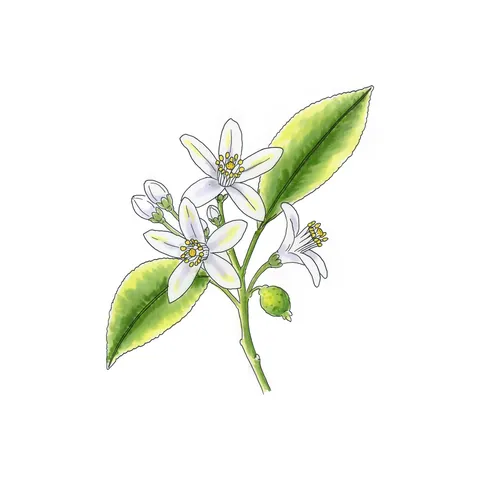
Watercolor sketch of zagara, a sprig of citrus blossom, by Erik Gauger.

This chart is the epilogue to The Citrus Kingdom, an eight-part series on how citrus, carried west from Asia, shaped Sicily’s politics, culture and cuisine for a thousand years. This is how its fruits are related.

IPalermo · IICefalù · IIILipari · IVTaormina · VVendicari · VIOrtigia · VIIModica · VIIIConca d’Oro

The citrus family treeFour wild ancestors from Asia (papeda, citron, pomelo and mandarin), the crosses that made the sour orange, sweet orange, lemon, lime, grapefruit, clementine, bergamot and the other hybrids, the sweet oranges, blood oranges and lemons that Sicily grows from them, and the late mandarin of Ciaculli, a sport of the Mediterranean mandarin. Roman numerals mark the Citrus Kingdom chapter for each fruit. Small-flowered papeda (Citrus micrantha), a wild ancestor from Southeast Asia. Part V: Vendicari and the Citrus Before Time. (Placeholder sketch.)Papedawild, PhilippinesCitron (Citrus medica), a wild ancestor. Part I: Palermo and the Citrus Kingdom.ICitronwild, IndiaPomelo (Citrus maxima), a wild ancestor. Part V: Vendicari and the Citrus Before Time.VPomelowild, Southeast AsiaMandarin (Citrus reticulata), a wild ancestor.Mandarinwild, ChinaKey (Mexican) lime: papeda × citron, from Southeast Asia.Key limepapeda ×citronLumia: an old citron hybrid; most lumias are citron × pomelo.Lumiacitron ×pomeloSour orange: pomelo × mandarin, an ancient cross made in Asia. Part II: Cefalù and the Sour Orange.IISour orangepomelo ×mandarinSweet orange: pomelo × mandarin, crossed back to mandarin, in Asia. Part IV: Taormina and the Volcano Oranges.IVSweet orangepomelo ×mandarinMandarino, the Mediterranean mandarin (Citrus deliciosa), called Avana in Sicily. Part VIII: Conca d’Oro and the Last Mandarin.MandarinoMediterraneanmandarinLemon: sour orange × citron, a hybrid of a hybrid. Where it first arose is uncertain. (Shown here with a Monachello lemon.)Lemonsour orange× citronPompia, from Sardinia: sour orange × citron.Pompiasour orange× citronChinotto (Citrus myrtifolia): a mutation of the sour orange.Chinottoa sour orangesportGrapefruit: sweet orange × pomelo, from Barbados in the 18th century. (Pomelo sketch standing in for now.)Grapefruitsweet orange× pomeloClementine: mandarin × sweet orange, from Algeria, around 1900.Clementinemandarin ×sweet orangeInterdonato: a lemon–citron hybrid bred in Sicily by Colonel Giovanni Interdonato. Part III: Lipari and the Colonel’s Lemon.IIIInterdonatolemon ×citronBergamot: sour orange × lemon. Grown in Calabria; its origin is disputed.Bergamotsour orange× lemonTardivo di Ciaculli: the late mandarin, a sport of an Avana mandarin tree in Ciaculli, near Palermo, that ripens from January into March. Part VIII: Conca d’Oro and the Last Mandarin.VIIITardivolate mandarinof CiaculliCedrino: a smaller, historically recognized form of the cedro, the citron (Citrus medica).Cedrinoa small formof the citronBiondo Comune: a sweet orange grown in Sicily. Part IV: Taormina and the Volcano Oranges.Biondo Comunethe old blondOvale: a sweet orange grown in Sicily. Part IV: Taormina and the Volcano Oranges.Ovalelate blondValencia: a sweet orange grown in Sicily. Part IV: Taormina and the Volcano Oranges.Valenciasummer orangeNavelina: a sweet orange grown in Sicily. Part IV: Taormina and the Volcano Oranges.Navelinaearly navelRibera: a sweet orange grown in Sicily. Part IV: Taormina and the Volcano Oranges.Riberanavel orangeTarocco: one of the three blood oranges of Etna, a red mutation of the sweet orange. Part IV: Taormina and the Volcano Oranges.Taroccoblood orangeMoro: one of the three blood oranges of Etna, a red mutation of the sweet orange. Part IV: Taormina and the Volcano Oranges.Moroblood orangeSanguinello: one of the three blood oranges of Etna, a red mutation of the sweet orange. Part IV: Taormina and the Volcano Oranges.Sanguinelloblood orangeFemminello: Sicily’s main lemon. Part VII: Modica and the Femminello Night Bandits.VIIFemminellothe main lemonMonachello: a Sicilian lemon.MonachellolemonLunario, the four-seasons lemon, which flowers through the year.Lunarioflowers all yearLimone dell’Etna: Femminello and Monachello lemons grown on the slopes of Etna.Limone dell’EtnaEtna IGP lemonVerdello: not a new variety but a Femminello lemon forced into a summer crop by drought, then flood. Part VI: Ortigia and the Summer Lemon.VIVerdelloa forced FemminelloPersian (Tahiti) lime: Key lime × lemon. Its place of origin is unknown.Persian limeKey lime ×lemonWild ancestors, all from AsiaFirst crossesCrosses of crossesA third generation, and a late sportSweet oranges of SicilyThe three blood oranges of EtnaSicily’s lemons

Papeda lineCitron linePomelo lineMandarin lineHybrid parentSport (a mutation)

Roman numerals mark each fruit’s chapter in The Citrus Kingdom. Tap a fruit to read it. A dotted line is a sport: one branch of one tree that mutated, the way the late mandarin of Ciaculli began. The bottom three rows are not new crosses either: they are selections and mutations of the sweet orange and the lemon. The full hand-drawn Citrus of Sicily plate is below.

  1. Citron, pomelo and papeda are wild ancestors, all from Asia. Part I, Palermo · Part V, Vendicari
  2. Sour orange: pomelo × mandarin, an ancient cross made in Asia. Part II, Cefalù
  3. Interdonato: a lemon–citron hybrid, bred in Sicily. Part III, Lipari
  4. Sweet orange: pomelo × mandarin, crossed back to mandarin, in Asia. Tarocco, Moro and Sanguinello, the three blood oranges of Etna, are red mutations of it; Tarocco and Moro arose from Sanguinello in Syracuse province, in eastern Sicily. Part IV, Taormina
  5. Verdello: a Femminello lemon forced into a summer crop. Part VI, Ortigia
  6. Femminello: Sicily’s main lemon. Monachello and Lunario are its neighbors; Limone dell’Etna is Femminello and Monachello grown on the volcano. Part VII, Modica
  7. Tardivo di Ciaculli: the late mandarin, a sport of an Avana mandarin tree in Ciaculli, near Palermo, in the 1940s, ripening from January into March. Part VIII, Conca d’Oro
  8. Mandarino: the Mediterranean mandarin, called Avana in Sicily, grown in Italy since the early 1800s. Part VIII, Conca d’Oro Clementine: mandarin × sweet orange, from Algeria, around 1900.
  9. Lemon: sour orange × citron, a hybrid of a hybrid. Where it first arose is uncertain.
  10. Biondo Comune, Ovale, Valencia, Navelina and Ribera: the blond sweet oranges grown in Sicily. Part IV, Taormina
  11. Bergamot: sour orange × lemon, grown in Calabria; its origin is disputed. Chinotto: a mutation of the sour orange.
  12. Cedrino: a smaller, historically recognized form of the cedro, the citron.
  13. Pompia: sour orange × citron, from Sardinia. Lumia: an old citron hybrid, most often citron × pomelo.
  14. Key lime: papeda × citron, from Southeast Asia. Persian lime: Key lime × lemon; its place of origin is unknown. Grapefruit: sweet orange × pomelo, from Barbados in the 18th century.

Sources: Wu et al., Nature (2018); Curk et al., Annals of Botany (2016); Luro et al., Phytochemistry (2019).

Hand-drawn plate of the citrus fruits of Sicily, twenty-four varieties shown with their branches and leaves
My Copic, liner pen and pencil drawing of the key citrus players in Sicily’s history—some are Sicilian icons, others the ancestral species that made them possible.
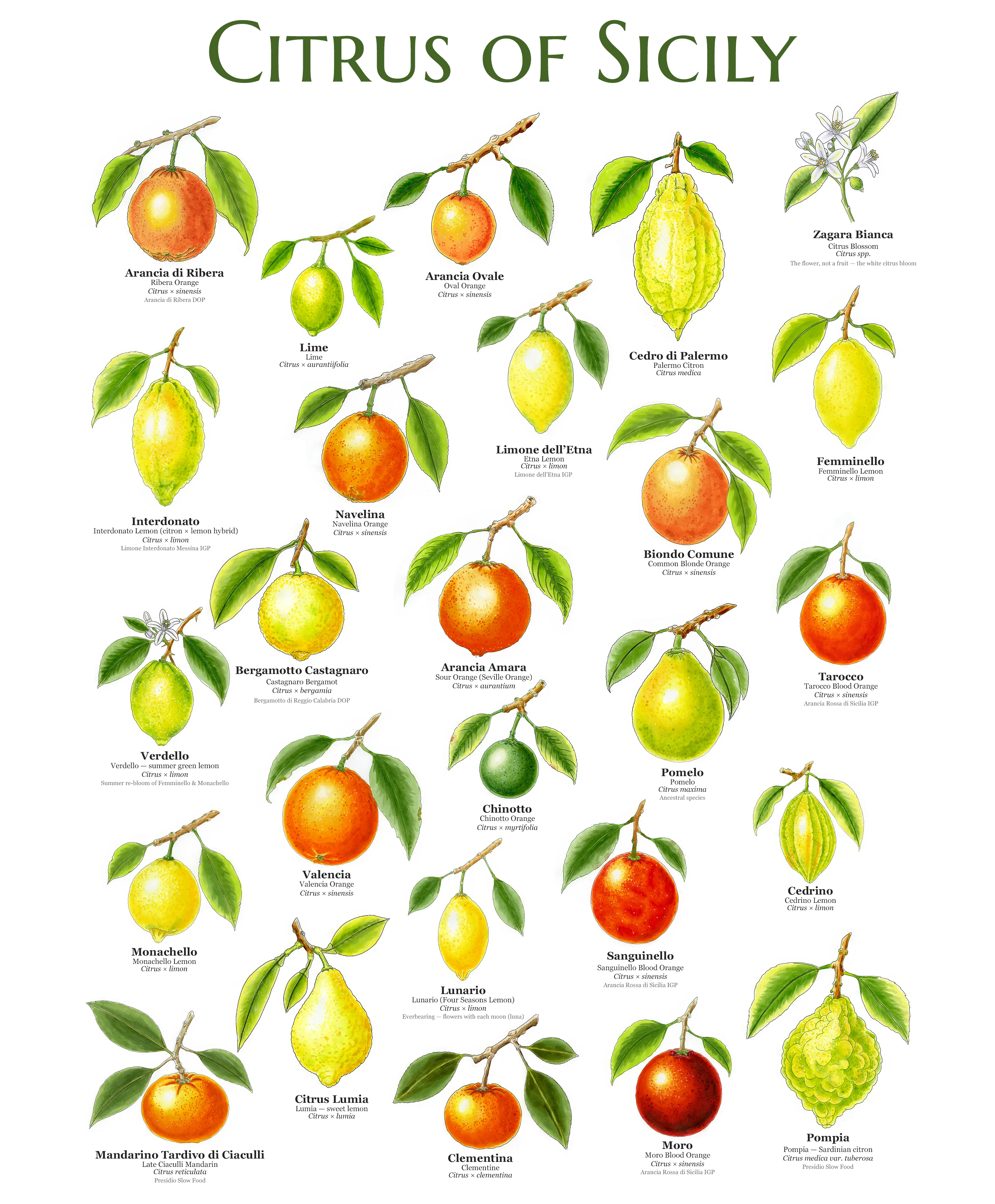
The Citrus of Sicily poster