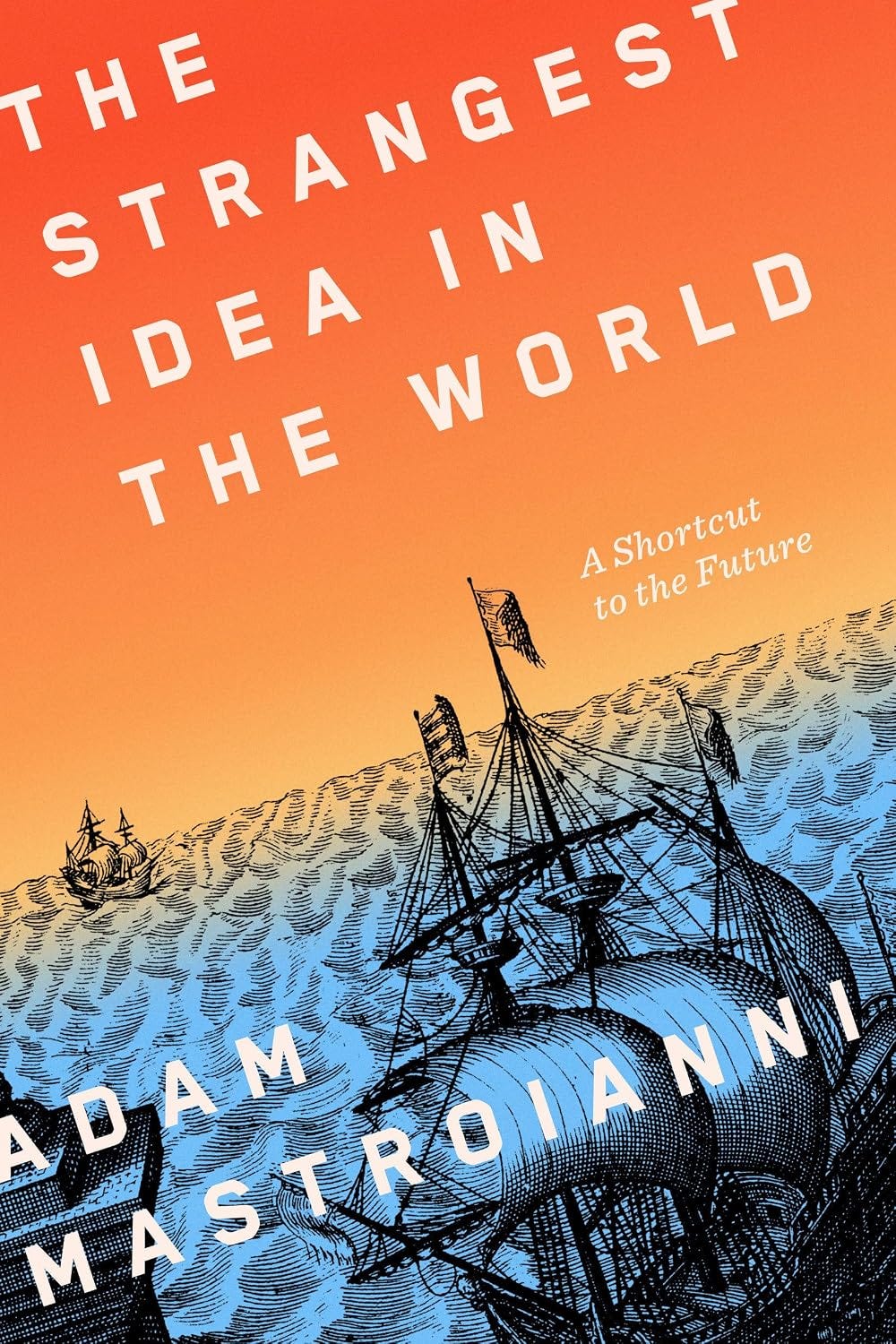
I wrote a book! It’s called The Strangest Idea in the World and you can get it here and looks like this:
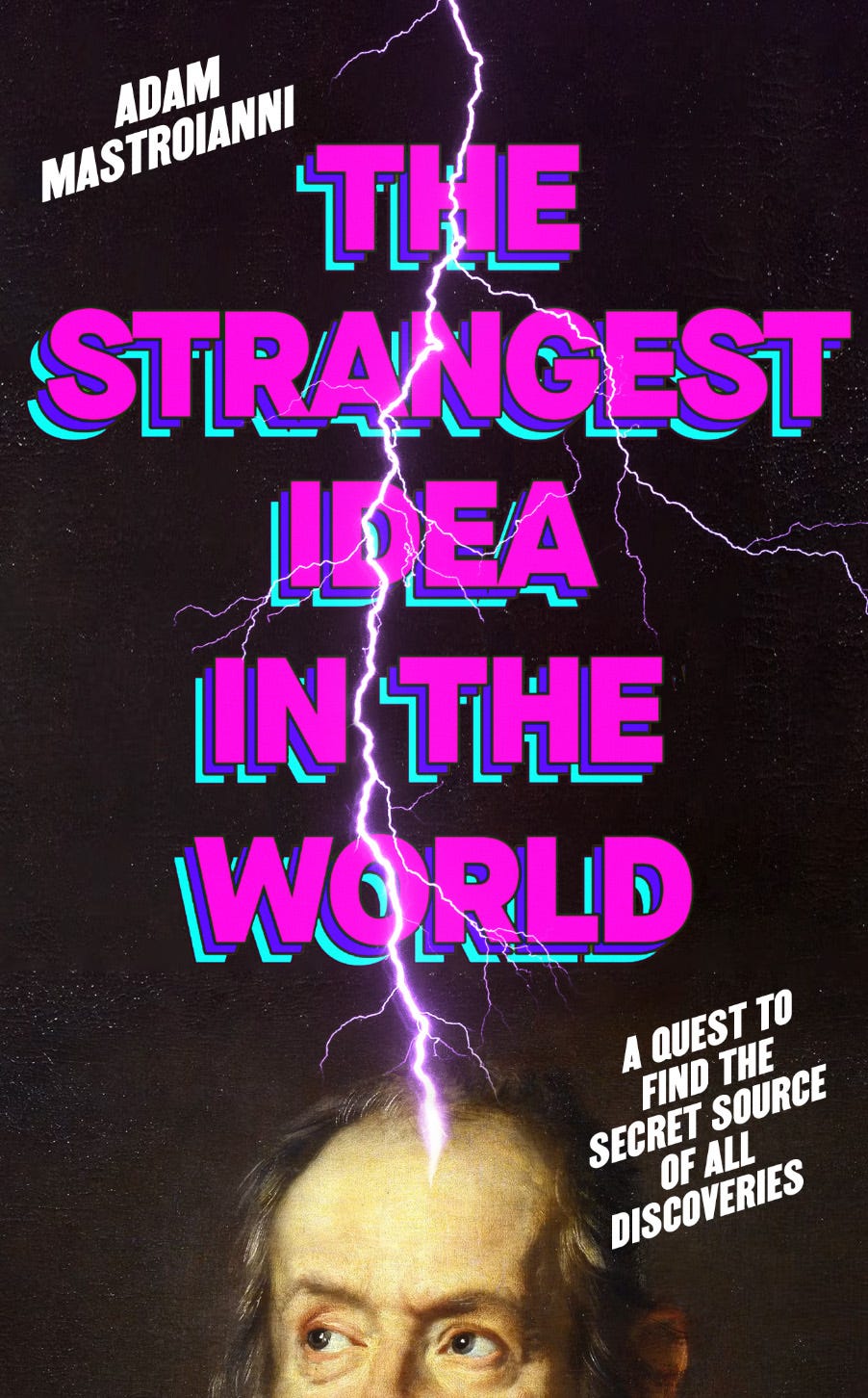
If you’re in the UK, you can get it here and it looks like this1:
A few years ago, I got obsessed with a question: why did it take humans 300,000 years to invent the toilet?
By which I mean, why did it take so long to discover and invent everything that we’ve discovered and invented? How does low-hanging fruit go unpicked for centuries? (For example, the first randomized-controlled trial wasn’t run until 1948. That idea is younger than my grandparents.) Come to think of it, how does anyone discover anything? And why does the data suggest that we’re getting worse at discovering things today—that more time, money, and people go in, but fewer breakthroughs come out? What the heck is going on here, and is there anything we can do about it?
I have gone slightly insane trying to answer these questions. But I’ve come to think that you must go slightly insane, because the answers are strange. Humans did not evolve to do science, it’s a miracle that we can at all, and it’s unsurprising that we aren’t better. But we can be, if we’re willing to get ~~~weird~~~.
In the book, I lay out the five steps that ultimately lead to discovery, why those steps don’t come to us naturally, and how they could. Making breakthroughs requires using the mind to do something it was never meant to do, and if you do it right, it’ll drive you nuts. The future depends on us going nuts in just the right way.
A book that argues for a weird way of thinking should itself be weird. And so it is: The Strangest Idea in the World is, as far as I can tell, the world’s first choose-your-own adventure nonfiction book.2 There are secret pages, multiple endings, and a bunch of other special features that I won’t spoil. Here’s a peek inside:
(This is a prototype paperback; the real thing will be in hardcover)
There’s another reason why this isn’t just a regular book. From the moment I started writing it, I’ve been conscious of a rather inconvenient fact: many nonfiction books should have been blog posts. And that’s fine—I love blog posts! But if someone can get the gist of your book from its intro or an interview, why not just stick it on Substack and save yourself some trees?
So I wanted to write a book that had to be a book. I wanted to do things with paper and ink that I can’t do with pixels on a screen.3 We’ll see whether this experiment ultimately works, but I’ve poured my soul into this thing, and I can’t wait to show it to you.
Plus, I’m extremely pleased with how the look of the book turned out. Take a look at some of these pages4:
If any of this sounds cool to you, consider preordering it! Preorders are everything in the book world, because booksellers decide what to stock based on what’s already selling. Plus, all preorders count as first-week sales, and that’s a book’s best shot at making onto the bestseller lists. And if this book really pops off, it means I might get to come to a bookstore near you.
One last thing. If you’ve supported this blog in any way over the past four years—if you’ve subscribed or left a comment or hit that little heart button or forwarded a post to your grandpa—thank you. Publishing a book like this is a risky proposition, and I only got the chance to do it because you guys took a chance on me. I feel really, really fortunate and grateful. That’s why I’ve worked my brain into a little nub trying to write something worth reading.
So if you do preorder the book, hang on to your receipt. If you’re an Experimental History subscriber and you order in advance, I’ve got a few surprises coming for you between now and the publication date, with some extra stuff for paid subscribers in particular. Stay tuned, and stay strange.
PS: A few people have emailed me to ask whether it matters where you preorder from, and it doesn’t! They’re all good, so support your favorite bookseller.
There will also be versions in Dutch, Portuguese, Spanish, German, Hungarian, and Korean, but I don’t have those covers yet.
Okay technically some of the official Choose-Your-Own-Adventure books cover nonfiction topics (including, uh, the life of Neil Patrick Harris), but I’ll go out on a limb and say we’re working in different genres.
Some of these features will also show up in the audiobook and the e-book, and some won’t—those formats will have their own twists.
Many of these images come from alchemical manuscripts from the 1600s, in particular those by Robert Fludd.