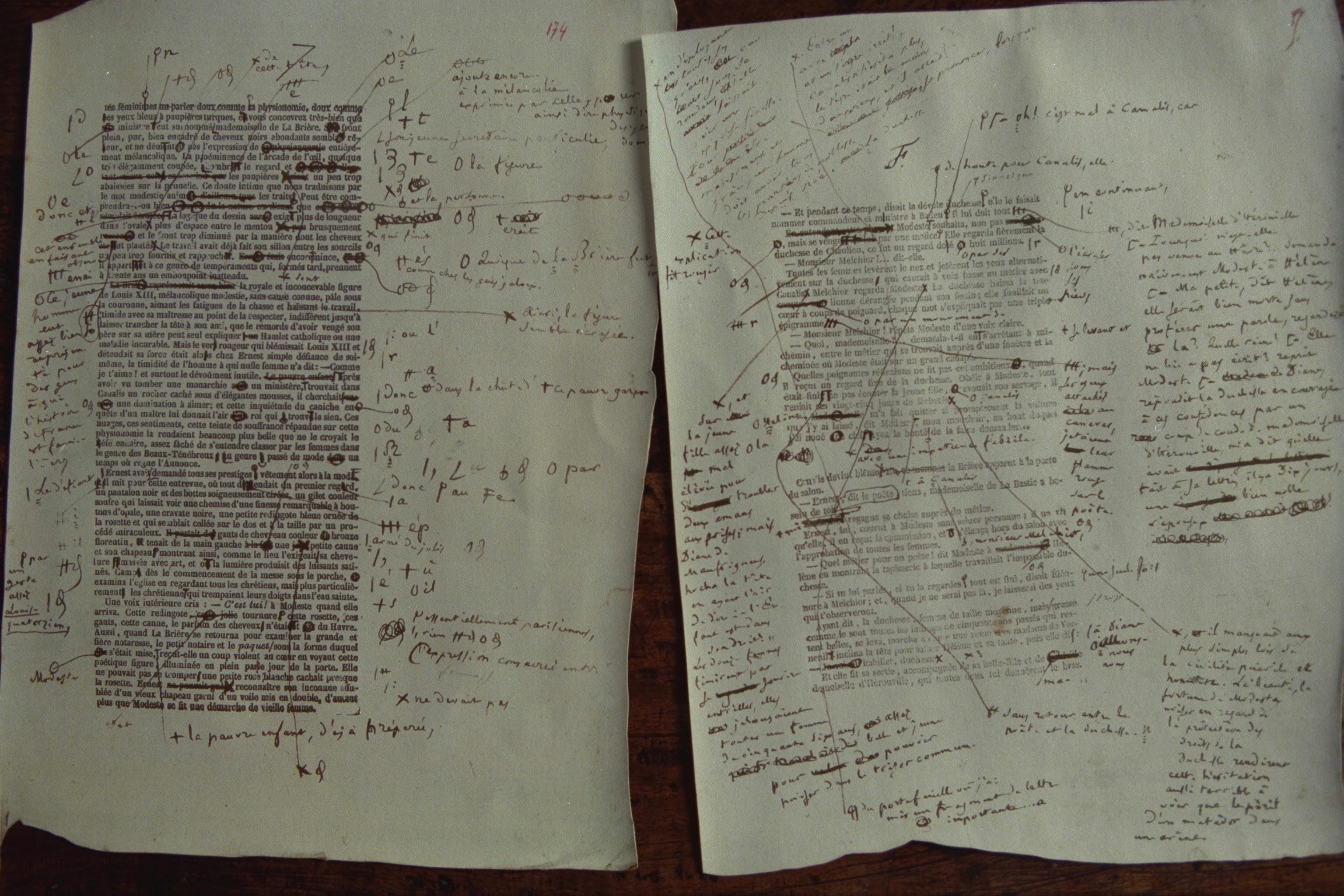
Very little is certain in our tumultuous times, but one thing I can always rely on is being let down by a popular or acclaimed piece of contemporary art. There are various reasons behind these disappointments, but a common blotch they all bear is a flagrant, disciplined indifference from their artists — young and old, established and underground — toward reflection and refinement. However, my reaction to reading Percival Everett’s The Trees, yet another instance where I seemed to have hallucinated and experienced a different artwork to the vast majority of people, particularly stung. When I first discovered Percival Everett last year via the literary zones of the internet, he seemed destined to become one of my favorite writers. The descriptors attached to his prodigious oeuvre were so, so promising: formally adventurous, socially conscious, generically subversive, sharply satirical and effortlessly funny, unafraid to hold the audience complicit and unearth presumptions and prejudices, both self-reflexive and reflective. And, admittedly, The Trees is sometimes a few of these things, but it is also many, many other things . . .
There is no gentle way of putting it: my edition, worryingly a second edition boasting of the novel’s shortlisted status for the Booker Prize and thus one that had the opportunity to address any mistakes, was littered with typos and marred further by a major inaccuracy in a flashback sequence. Referring back to this laurel on the front cover whenever I encountered an error — around 20, based off my count — made my reading remarkably jarring and baffling. These basic mistakes, which I’ll argue demote the book to an objectively flawed status, only form one layer of the messy midden, however. The Trees makes some extremely questionable decisions that I see as “macro typos” — thematic and stylistic mistakes made in haste that alter the appearance and feel of the entire text — which deflate its satirical power and social utility. And, after attempting to conduct this textual autopsy or pruning, I want this essay to move beyond the author and book itself.
I wish to ultimately interrogate the real problem in this scenario and argue that The Trees is, accidentally, a shining specimen of something that I’ll refer to as the Typo Generation, an emerging, unconscious literary movement and ethos that should concern us all.
Reader beware, this won’t be short; I always strive for concision, but The Trees’ faults are untold, and they are untold in the second sense of the word.
Evaluating art can, of course, never be an entirely objective undertaking. It is also far from the subjective free-for-all many people paint it as being today, and no element is more objective than the typographical integrity and editing standard of a novel. In this regard, The Trees is a failure, notably brazen with just how lax the editing can be. For your reading displeasure, here is a sequential sampling of various typos that I tripped over during my reading:
“Fondle took long pull on his beer.”
“‘I want to know how that guy . . . I want to if Muldoon knew him, was dating him, was screwing his girlfriend, was doing his taxes.”
“‘What the fuck?’ Moon sad.”
“She turned the squelch up get rid of the static.”
“‘She seemed proud of it. Proud is not right word.” Many of the characters’ speech is deliberately characterized by elisions or very loose grammar, but this is Jim, one of the protagonists whose dialogue is defined by its clarity.
“‘They’s ones that killed my pappy, fo sho. The was gloatin over it.’” “The” is clearly a typo here as an apostrophe is used in the same line to mark contractions and “they” is used everywhere else for this speaker.
“Hind, Jim, and Ed we’re out and walking the trees that lined the drive.”
“. . . Jim grabbed Ed’s arm. ‘Did you did find anybody here?’” Perhaps this could reflect the effects of the cold as the speaker has just been freed from a freezer, but this is unlikely as the technique is never used again, even when this character and another are trapped in said freezer.
“Damon snatched a page from the typewriter laid it on a thick stack to the right, rolled in a blank sheet from a pile on the left, and continued to type.” The missing comma before “laid” is comparatively minor and seems innocuous enough, but in the context of it marring the second page of a two-page chapter, which also happens to be The Trees’ final page, it interrupts the rhythm and decisiveness of this conclusion.
And along with some far more minor missteps, like an entire highway of speed bumps that are superfluous dialogue tags (e.g., “Jim asked” after a line ending in a question mark), there is a basic formatting error on page 180 where two different speakers occupy the same line following an inquiry:
“‘Is your mother here? Seems everybody talks about her.’
‘Yeah, they do. She’s asleep. Mavis Dill.’ He said her name and let it hang in the air. ‘Why is she so well known?’
‘I guess because she seems to know everybody’s business. . . .’”
Now, perhaps you might think I’m being pedantic, as none of these typos, with the exception of the jammed-together dialogue, prohibit access to meaning. That’s certainly true as they can be patched by the reader. However, they do prohibit immersion in the text and disrupt any potential mood or motion the prose or dialogue might be attempting to conjure. And let’s remember that this is a novel, not a review, article, or academic essay, where the text’s fundamental aim is not to be an experiential artwork but instead the transmission of a viewpoint and thus can afford a few rough edges, particularly if it is responding to a highly time-sensitive development. If you were watching a movie and a boom mic continually swung into the actors during a scene, or if you were listening to a song verse and the performer continually fell over their words and then backtracked to repeat them, wouldn’t this bother you? Wouldn’t these artworks lack the same involving power, or wouldn’t you become confused over and eventually unable to determine which elements were intentional and which were accidental, especially if they were to be experimental in nature? And while the prose is extremely straightforward (often to The Trees’ detriment), the novel does become increasingly experimental structurally. My research into reactions to the novel led me to a humorous Reddit thread where the original poster asked why (presumably referencing either a first copy or my edition) chapters 74 and 104 are missing. It was funny to read a response from another user who opined that Everett is always playing games with the reader and that these omissions must simply further this play. Though the idea of missing chapters is highly relevant to the themes — reflecting lacunae in history, lost events and individuals, ghosts of ghosts — the other aforementioned or forthcoming errors in the rickety scaffolding of the novel lead me to conclude it is merely another oversight. Evidently, these mistakes do, on a broader scale, lead to meaning being obfuscated. They jeopardize discussion, debate; all evidence, apart from the most obvious and broadest points, becomes very flimsy, compromised.
But even if that counterpoint has failed to persuade you, concerningly there are other glaring flaws I’d like to submit to the court.
In chapter 56, we witness a flashback to the aftermath (or lack thereof, as racist authorities suppress or fail to launch any investigatory efforts) of a lynching in 1913 where a deputy is described as using a radio in his squad car to contact the local sheriff. If this sounds immediately anachronistic, then your suspicion is well-founded: a quick Google search will reveal police vehicles didn’t employ radios for communication until circa 1921. At least this historical error admirably tries to cement a core theme: what we tell ourselves existed in the distant past, to find some ersatz comfort, is actually close by, if not right in front of us, and essentially unaltered. However, this specific case of lynching seems to be entirely fictional; I couldn’t find the name Julius Randolph Lynch when checking it against a few databases of lynching victims in the United States. For a novel whose telos is to hurl real, horrific history and injustice into the reader’s eyes, and when there are thousands of real lynchings to spotlight, all of which would have been met with a similar stonewalling or aggressive indifference from white authorities, isn’t this a somewhat bizarre, counterproductive authorial decision? Moreover, it saps some of the profound power from chapter 64, which is almost exclusively comprised of a monolithic list of lynching victims spanning pages and pages.
The last of the flaws that I feel can be fairly placed into the “objective” category is less noticeable than the above, but it further evidences a pattern of authorial negligence. Chapter 103 takes the form of a news broadcast transcript of a conference by Donald Trump. By this point in the novel, ghostly “mobs” (Everett’s word, not mine) of predominantly Black individuals are spreading across the U.S. and targeting white individuals in near-identical killings. Trump addresses the nation and, predictably, fails to reassure and unify its populace, only again outing himself as a xenophobic, fascist man-baby-cum-con-artist (although, in my view, Everett does overplay the satire and perfunctorily imitates his juvenile speech patterns). The broadcast is interrupted by breaking news of the Senate Majority Leader becoming the latest body dropped by this targeted violence. Naturally, Trump, even when delivering a disastrous “speech,” is incensed by having attention shifted away from him and, thinking the broadcast is now focusing on this bulletin, is captured admitting to and then immediately denying being racist. But, wait a second, the mechanics of this joke make no sense. Are we supposed to believe that this major address is only broadcast on a single news network, or that every single news network covering it cut to the same story (with an identically worded bulletin) simultaneously? Humor is something that is highly, highly subjective, but can you truly laugh at a joke that makes no sense — a nonsensical joke not constructed as a non-sequitur or anti-joke?
Compounding the flagrant nature of the above flaws is the fact that the novel is broken into brisk chapters of direct and traditional prose. Thus, these failures, including typos that should really have been caught after one or two read-throughs, cannot be pinned on density or length. Not that such issues are excusable, but they are at least more understandable in works like the postmodern / Eastern-European-stream-of-consciousness doorstopper.
The greatest mystery in The Trees may be the case of the missing words, commas, and chapters, but there are others afoot. And this is where I depart the objective realm to foreground what I feel are dubious and even occasionally pernicious elements of the text. Mainly, for a book that desires to resurrect and viscerally reify historical trauma and suppressed or terminated lives, the novel takes a very detached and contrived path. This is a path composed of tropes, coincidences, and archetypes, riddled with hypocritical, inhuman moments of othering (all of the journeys along it overseen by unempathetic prose, which only grows animated when deriding characters). And stuck onto these issues is an almost pathological fixation on humor and entertainment value that possesses Everett. Admittedly, he is funny at a few points, but too many of the jokes are overemphasized. Some are outright problematic. More of a damaging issue, however, is that the humor completely overpowers the horror — the horrific murders and events never affect the barrage of wisecracks and ludicrous details — and sometimes trivializes the extremely serious subject matter. Of course, these criticisms are rather subjective, but having read a number of phosphorescent reviews, I am also yet to find a convincing counterargument to them based on a purely formalist reading of the text (the object we have before us in isolation).
The most immediately noticeable contrived, inhuman touch is the style of characterization and dialogue. No matter what terror or sublime chaos ambushes the world of The Trees, almost every member of the cast keeps on riffing like they are at an open-mic night or auditioning for the latest Marvel grotesquery.
You are a police officer, one who isn’t cocky. Reality is beginning to shatter, and you are inspecting a house that potentially conceals a dangerous suspect. You might think that you’d be on edge (adrenaline, confusion instilling a laconism and radical sobriety). Well, you’d be wrong. Everett reveals how the situation would actually go (this occurs on page 204, right after we learn that “Moon sad”): “‘MBI!’ Jim shouted as they walked in. ‘That’s some crazy shit to yell out. MBI! Fucking ridiculous.’” (MBI being The Mississippi Bureau of Investigation.)
You and a friend find yourselves locked in a freezer without clear means of escape. You are freezing cold and will soon succumb to hypothermia. How does your conversation unfold? Well, if you were the main characters of Jim and Gertrude, you would say this:
“‘I’m freezing,’ Jim said.
‘It’s a freezer.’”
One more hypothetical: a vortex of violent ghosts, zombies, or ghost-zombies is obliterating your country as well as reality and the laws of science around you. How do you react? Well, this is how our cool-as-a-cucumber-in-Antarctica protagonist of Jim handles the situation on page 258:“‘I think we need a bigger boat.’”
Now, it could potentially be suggested that Everett is not only mocking entrenched racism but genre itself (crime / detective / buddy-cop fictions) with the clichéd, stilted dialogue and inhuman reactions to shocking, life-threatening, and reality-toppling developments. But, again, if we are to undertake a formalist reading of the work, there is no evidence of intentionality within the book; there is the odd citation of news reporters and footage being viewed (CNN is namechecked), the brief mentions of music, and, of course, the core symbol of the lynching victim archive. Otherwise, there is a surprising absence of media, especially social media and right-wing propaganda outlets like Fox News. There is no mention of these aforementioned genre works in film or literature (or film and literature at all), and we are clearly meant to like these wisecracking characters rather than see them as parodic mannequins; they are presented as the few “human” figures in a deeply prejudiced world, are always standing up to racism no matter how rabid, asserting their identities even when greatly outnumbered. Thus, this potential reading is without foundations.
Given the text’s central problem is largely perpetuated today via the force of conservative media (and widespread illiteracy toward it), the omitted exploration of media is yet another puzzling decision. The Trees is a far cry from the masterful act of deconstruction that is Carmen Maria Machado’s scintillating story “Especially Heinous: 272 Views of Law & Order SVU,” a perfect analogue in how it also blends the crime and horror genres. In a far more evocative and transformative maneuver, Machado traces her detectives’ mental decline as they are subject to a conveyor belt of rancid, exploitative crime investigations, while unmasking popular, for-profit media as the true culprit of our fading empathy — one of the later fictional episode synopses details a note left on a body penned by “THE WOLF,” who taunts the series’ leads about his omnipotence, a thinly veiled reference to the show’s creator, Dick Wolf. If there is deliberate pastiche in The Trees, it is empty due to being untethered from any earthbound outcomes (existing to generate laughter, not to highlight how such tropes and rigid generic works influence and distort reality). In fact, the hyperbolic satire (which perhaps could occasionally encompass parody) often rides roughshod over the real elements. Any true subversion is non-existent; Everett, unlike Machado, never permits his lead characters to act, to speak as real people, and outside of one of the more effective (albeit lethally truncated) sections where the two detectives discuss jazz (the freedom it represents and pulses toward) when they find themselves on Beale Street, never to be truly vulnerable. The duo do occasionally talk about their conflict with working for the police, attempting to help and protect people within a largely corrupt, inept, and prejudiced force, but we never viscerally feel their internal struggles. Though this Beale Street intermission approaches poignancy, the prose shirks its duties: “Beale Street was not overly crowded but was littered and dirty as if it was.” Not only is the triumvirate of “was” clunky, particularly when “were” could and technically should be used at the close, but the line, one of the introductory ones of the chapter, is nonsensical. Are being crowded and littered or dirty mutually exclusive qualities for a street? We never see these detectives as people from our own world, despite the claim of them being fellow residents. Rather than someone like the forlorn figure of Indigenous detective Jay Swan in Ivan Sen’s films of Mystery Road and Goldstone — seen as a traitor by Indigenous communities and as untrustworthy or inferior by almost every white character he encounters in rural Australia — whose inner conflicts we painfully experience via the films’ cinematography, blocking, and music, we are instead left with two Horatio Caines.
We are constantly pushed away, left without a human center in a text that is all about human issues. Despite the ghastly and all-too-real roots of the text, overall Everett chooses to render it as an arborescent, plastic tree rather than as an earthbound rhizome, a plastic tree whose many unseen roots are largely left unexamined and whose experimental structure is ultimately conquered by contrivance and a goal of dispensing traditional entertainment.
And, yes, as briefly mentioned, the detached, inhuman gaze extends into questionable humor. One joke that significantly soured my impression of the novel was the gradual introduction of three Asian detectives who are called and eventually introduce themselves as: Ho, Chi, Minh. Aside from the pathetic punchline (the most strained attempt at a pun via a highly artificial setup), isn’t it strange for a book that rightfully decries America’s perpetual racism and historic oppression of anyone who isn’t a wealthy, cishet white man to reduce Asian characters to mere props, or human capital? Moreover, isn’t this joke just ever so slightly racist? It’s connecting Asian characters who were in all likelihood second- or third-generation Americans to a “faraway” country they likely do not share common ancestry with. Is this really much more tasteful than going full Turandot and calling them Ping, Pang, and Pong? And, more simply, isn’t this just a waste of the reader’s time — introducing and following characters with the sole purpose of delivering a lame and problematic punchline, when there is another Asian detective present?
But, wait, there’s more! At the scene of another murder where a brutalized Black body has appeared (inducing flashbacks to images of lynchings), the figure of Detective Wesley Snipes (“no relation and White”) walks in . . .
What exactly do these details achieve? What theme do they advance or deepen? What satirical point are they making? What texture do they add? Do they contribute to or take away from the mood? None of the positive reviews I’ve found touch on these details, so I’m unsure what those reviewers would answer to said questions. To me, this comes off as a writer desperate for laughs or afraid their work is becoming too dark and therefore alienating for readers. One character is named Hickory Spit. Need I say more? Oh, wait, yes, because after reading page after page, where wraiths (or perhaps zombies) of lynching victims carry out attacks on present-day racists (often the ancestors of their killers), Everett chooses to undercut this interesting complication by revealing that the first few murders were perpetrated by (checks notepad, checks it again), um, an underground ninja rebel group who can transport and hide evidence within a blink? This ebb and flow (and eventual flesh tsunami) of supernatural retributions can potentially be read as symbolic of how revolutionary acts, once they unearth suppressed agonies or make inequalities unignorable, can quickly explode into less organized, loudening echoes. But, the book’s potentially unsettling and provocative power (promised by its dissolving or unraveling structure) is precluded by such absurd narrative turns, ones that could have taken far more grounded, believable forms; the reveal of the ninja rebels and other ludicrous elements establish that The Trees’ reality can never dissolve because we were never in any kind of proximate, stable reality. And even when, after so much horror and trauma, its reality becomes unviable, the comedy is never done away with. Not only are we stranded with two Horatio Caines, but we are stranded along a tonal flatland.
Sadly, there are many equally discombobulating and uncomfortable moments throughout. Although I would argue its caricaturist tendencies are in every instance hypocritical, counterproductive, and sharply incongruous, the following “characterizations” seem particularly poisonous to the novel’s urgent aim of restoring and expanding empathy while addressing historical othering. On page 198, Everett seems to unfortunately (and I assume inadvertently) promulgate transphobic tropes by describing the owner of a strange corpse-sorting facility as an “androgynous-looking person,” this ambiguity in sex / gender serving to heighten his eerie aura. Ignoring (but not ignoring) the fact that “androgynous-looking person” is a rather uninspired descriptive effort, and that a corpse-sorting facility is enough to render a character satisfactorily creepy, this turn creakily peddles basic physiognomy, which I’m pretty sure even Shakespeare was starting to question back in the 16th and 17th centuries). Similarly, a rather sexist and stereotypical description is foisted on us when we are met with a female, mohawked singer in a bar: “Then she sang, her voice deep like a man’s. . . .” The lines are again slathered in rigid gender dichotomies: women who sport such hairstyles are somehow “masculine.” Most bafflingly, when describing a group of undead Black individuals, why does Everett choose to dehumanizingly describe them, in another clunker of a line, “Moving like that they resembled an ungainly tangle of octopi,” and then detail how “the mob barked” “Rise”? Is “barked” really the best choice of verb when the novel makes explicit mention of racists openly likening Black people to dogs? In isolation, these lines could perhaps be overlooked. But when viewed within these paragraphic evidence boxes, they document a sustained absence of authorial reflection (particularly around artistic deontology) that fogs the novel’s paper colonnades. They also form a worrying fault line that runs throughout The Trees.
Everett’s inhuman characterizations lead me to my last and admittedly most contentious point: How effective a satire and social and political commentary even is The Trees? By effective, I mean does it hold the potential to transform or positively alter readers (their thinking, their behavior, their conception of empathy or humanity)? This is aside from the question of whether the novel offers new insights for its readers to consider and address. In my view, the extension of The Trees’ flippant and dehumanizing approach to its large cast of poor, uneducated white racists is another damaging misstep.
Throughout the book we are met with the broadest of characterizations for these flesh puppets. Everett pushes a joke about ignorant pride to a point bordering unreality when they display a “Trump for precedent” bumper sticker. Last year’s haunting and largely flawless Eddington offers a more realistic, subtle variant of this joke (because misspellings do crop up on racist, far-right signs). But regardless, the joke feels as old-hat as the saying “old-hat.” Is this really much more than elitist, academic sneering? (I would hope no reader or writer would accept mockery of an illiterate Black person for misspelling a progressive banner.) And we consistently encounter depictions like this literally head-scratching passage: “Delroy Digby and Braden Brady stood looking at the flat tire on Brady’s patrol car, scratching each other’s heads. At first they scratched their own heads, but that told them nothing.” This is another instance of the novel’s diegetic membrane being punctured if not entirely dissolved in its acid humor; you cannot introduce a logic-breaking event like this and still have us accept it as our reality or any kind of non-cartoon one. Importantly, it’s not as though characters start behaving irrationally at this point in the novel because reality begins to irrevocably break; irrational actions drive or underscore the novel. By this point, I wasn’t sure why Everett just didn’t have these cops slip in their own piles of drool — and then on a banana peel, because that’s funny, right? — before phoning Chief Wiggum and Cletus from The Simpsons for backup (which many critics would probably acclaim as “intertextuality”). Junior Junior is one of the few believable and somewhat organically absurd names pinned to these outlines of racists in The Trees. This overly flippant tone is one key reason why I’m deterred from scaling many of Thomas Pynchon’s behemoths; despite the clear genius behind the ideas, Pynchon’s penchant for ridiculous names and scenarios seems to signal the parading of a cold textual machine to marvel and laugh at rather than the conception of a blood- and air-pumping diegetic body with which one can commune.
Beyond further jeopardizing or, really, demolishing the diegetic framework of the novel, this treatment of white racists leads to two even more deleterious outcomes. For one, the continual depictions of such individuals as oafish, slapstick buffoons, despite referring back to the violent actions they are capable of, provide white readers with the easiest of escape routes from an overdue interrogation of their blind spots. They can simply say, internally, deeply, These people aren’t anything like me (phew!), and be on their way. Part of Everett’s point, as both Trump administrations have demonstrated, is that racism is often not a chthonic or even subtle toxin, but it is still very much in our faces (with dog whistles ditched for airhorns). However, the buffoonery defangs his warning, not only by overshadowing the severity of past and present crimes but also by painting white racists as incapable of organizing and executing systemic and covert oppression. While it would be a mistake to overly emphasize their stories and limit the disruptive centrality of the Black protagonists, I feel that greater depth and a humanistic vivisection could have been achieved even in their restricted appearances.
Some critics claim that Everett powerfully inverts the racist depictions that flood historical media by subjecting white Southerners to the same process of dehumanization. However, outside of a few mentions of the white Southerners deploying racist similes like “dogs” toward minorities, evidence for this interpretation is otherwise plucked from the contextual ether. Again, the novel is essentially bereft of discussion around racist literature or film, and its action is incited by the most sobering history, so these depictions cannot be accepted as intentional acts of subversion based on the text. Regardless, in a novel highlighting how dehumanization leads to horrific outcomes, is dehumanizing the other side really all that productive? Didn’t someone somewhere once say that two wrongs don’t make a right? This could be a stretch, but do jokes like this not risk further cementing the falsehoods peddled by right-wing outlets (controlled by the actual elite) that the university-educated view everyone else as inhuman? Yes, education is crucial, at least coordinated education with a focus on critical thinking and literacy in regard to reading and media, but plenty of people who dropped out of high school or never attended university don’t wind up as rabid racists and are capable of complex, empathetic thought.
Everett’s anger is righteous, and it is an anger I, a white person who is privileged on a number of levels, couldn’t begin to comprehend. It is a fury a posteriori in nature. But these depictions seem to trace Everett becoming bogged down in this justified anger — not necessarily a drawback if a piece of art can act as a psychological testimony of despairing rage. However, due to its ubiquitous contrivances, anesthetized, stilted prose, and flippancy, the novel can’t even act as a visceral evocation. Again, it stumbles into an artistic no man’s land.
One might object that I am merely reviewing a novel based on what I want it to be rather than what it is. Though, in my view, for The Trees to meet its own objectives, to be a lasting and transformative text (not one just praised as such in the sometimes-stuffy air occupied by the literati), it needed to accomplish these things.
The book is a far cry from the incisive and productively discomforting critiques leveled by Jordan Peele in Get Out, wherein wealthy white liberals who are performatively left-leaning still see Black people as capital. Or, in what to me is easily the most daring and sophisticated blockbuster of recent years, Nope, with mass media consuming the consumer and people, especially minorities, in the manufacture of spectacle. Or the global examination of microaggressions and hidden racism, often within universities, captured by Claudia Rankine in Citizen: An American Lyric. Or Michael Haneke’s endlessly innovative postcolonial nightmare of Caché, another instance where the white bourgeoisie and academics and media figures (i.e., the primary audience of the film) are targeted. All of these are not only insightful works of social and political critique or satire, but they are also deeply humanistic, visceral mappings of their characters’ mindscapes and the psychological and ontological dents left by their central hazards.
By the end of The Trees, the only characters who ever feel close to human and who, naturally, generate the most interest are Mama Z (the centenarian compiler of the lynching archive and voice of wisdom in Money, Mississippi) and Sheriff Red Jetty (as real as a character with the surname Jetty can feel). It’s a shame that the novel sidelines these two figures, especially as the last major appearance from the prejudiced Sheriff reveals he is biracial and has been passing for his entire life (he is the son of a Black man, reduced by yet perpetuating his country’s hierarchy). Everyone else remains as a police sketch (poorly drawn police sketches at that). Free indirect style is never employed to peek into the characters’ mindscapes. Ironically, many of the stiff and aloof introductory character descriptions read like bios typed up by a very bored FBI agent. Like far too many pieces of modern literature or film, The Trees only examines the epistemology of an issue, and rather superficially at that, not the intersection of ontology and epistemology.
Everett is clearly immensely knowledgeable across disciplines and far better read than a terrible procrastinator such as myself could ever hope to be, so such anomalies and choices can only be explained by him either being self-satisfied or unconcerned with sculpting what Michael Silverblatt (himself citing Donald Barthelme) called “permanent art.” A quote from Everett in a 2017 Paris Review interview suggests that the problems’ cause may be a combination of both pretension and authorial indifference: “What I want to do is write something that seems like it means something and doesn’t. I want to write a novel that even I don’t understand.” Judging from The Trees, Everett seems well on his way to fulfilling this wish.
But it is time to move on from the author and text itself. Everett wrote a novel, an objectively flawed one foundered by some very questionable aesthetic and philosophical decisions. Although I would argue that any truly serious and ethical writer — one who continually steps back from and revisits a text to trace its anatomy out of aesthetic passion or political or social necessity (because why else would someone be a writer?) — largely (not completely) invalidates the role of an editor, where was the editor? Perhaps they were on the world’s longest lunch break. Or maybe, like any aspiring member of the 21st-century lit-crowd, they were spending their days posting about how much they love reading and writing across Twitter, Bluesky, and Instagram, declaring every book “a masterpiece.”
But the failure to fulfill the crucial editorial role, especially for a novel with significant socio-political aims, is one thing. Most importantly, where were the critics? Where were the polyphonic, intersectional replies addressing and debating these glaring problems? I certainly haven’t read every review of The Trees, so this essay will have to resort to a degree of generalization. Nevertheless, a Google search with “The Trees” plus keywords like “errors,” “typos,” “historical inaccuracy,” etc., yielded a dearth of results, none from major reviews (the only critical results being two lonely threads on Reddit and Goodreads), so it seems as if even the most fundamental flaws were ignored.
And, make no mistake, this phenomenon isn’t at all isolated to The Trees. Editorial lapses and a critical disregard for typographical errors seem to be becoming staples of 21st-century (really, 2020s) literature. Another example that immediately springs to mind is Blake Butler. Last year, I decided to read a number of his short stories available online and was dispirited (Butler being another author I felt I was destined to love) to discover typos blemishing all of them. Some were minor, but many others were major: tense changes within sentences and even mixing up the names of two characters in one story. Butler is a bravely experimental writer, but these were clearly errors and not “devices,” as they only appeared once or twice. Even the consistently brilliant and editorially disciplined George Saunders has succumbed to this pandemic: perhaps it has been amended in later editions, but in my copy of the warmly received Fox 8, the titular narrator (a fox speaking in very broken English) abruptly switches from using the deliberate malapropism or typo “are” to the grammatically correct (yet ironically wrong) “our” for two pages before reverting back to the erroneous spelling. Lastly, there is the recent Maggie Nelson book whose central thesis is to present Sylvia Plath and Taylor Swift (yes, that Taylor Swift, the billionaire writer of lyrics like“You smoked, then ate seven bars of chocolate / We declared Charlie Puth should be a bigger artist”) as dual muses for women’s creative and ambitious impulses as well as subjects of oppression in the patriarchy’s efforts to silence intimate female expression. I haven’t read Nelson’s book (as a Plath “super fan,” I hope the reasons go without saying), but a quote from a review I encountered on a Substack, “The Discordia Review,” struck me in its exhausted frankness (which many readers today, conditioned to expect only Q-tip attacks on lauded figures, would see as unacceptable brutality): “In a meritocratic literary world, this would kill Nelson’s career on the spot.” The Trees may be filled with a variety of typos, but Nelson’s book is, in my mind, one gargantuan typo, and any brief moment of serious reflection could have prevented its existence.
Are we really at a point where random Reddit and Goodreads users, or non-professional readers with a Substack, are now doing a better job of actually reading texts than editors, critics, judges, and authors?
Surely, a prize-worthy novel or one that is installed on best-of-the-year lists should either be formally immaculate or innovative, or philosophically insightful and comprehensive as well as existentially transformative, if not, hopefully, all of these things? So, how does The Trees meet any of these criteria? Even if another reader took less issue with the novel’s aesthetic and satirical choices, the objective flaws guarantee that, in a responsible review, it cannot receive anything higher than a mediocre or slightly above-average appraisal. These errors may have been amended in the most recent edition, but the reviews and competitions and awards were based on these first two editions. Moreover, shouldn’t a novel of this status feature evocative prose? And by this, I don’t mean florid or clean. But The Trees’ prose isn’t glacial or carefully jumbled or grittily lean; it is simply mechanical, anesthetized, a mere medium to lecture the audience with a very undercooked satire.
In my view, these shortcomings from critics and panels are far from peccadillos. By elevating a flawed work to the status of a masterpiece, they only discourage authors from reflecting upon and refining their craft. These individuals are failing writers like Everett, writers who clearly hold immense vision and great works within their minds.
But, more importantly, they are harming literature on a much broader scale. They influence readers’ tastes, which then places pressure on writers, helping inform buying patterns and what publishers consider to be commercially viable. More worrying, however, is that the readers they are primarily influencing are those invested in literature, often studying or working in the arts (many being aspiring artists themselves). What messages are being (directly or indirectly) sent to these individuals who will look up to such defective works for inspiration and guidance? The Trees is well on its way to becoming canonized (in a canon thankfully far more diverse than the one devised by academics such as Harold Bloom). Does this raving about the novel not implicitly suggest that readers as well as upcoming writers and critics should now value thematic checklists, borderline sloganeering, and plot above everything else in a medium that would not exist without the written word? It is one thing for casual readers to merely value plot, to only want narrative or data uploaded to their mind, but literary critics and award readers are (theoretically) meant to review a book as it should really be seen: not as a cold conduit for information but as a textural object, an involving experience where form and meaning dance, an artwork where even the slightest misstep can break the spell cast by the prose or puncture the diegetic membrane. And this issue is only exacerbated by the fact that the writers of such novels (where there is a severe disjunction between quality and reception) are considered “maestros” whose views are granted immense authority and gradually rendered beyond reproach. So what if such writers, who don’t overly value reflection, suddenly dismiss other major works with inaccurate or simplistic criticisms? For example, Everett criticized To Kill a Mockingbird for being badly written.
I don’t necessarily expect every book to be as painstakingly written as something like Jean-Dominique Bauby’s The Diving Bell and the Butterfly (where the former Elle editor was forced, after a massive stroke resulted in locked-in syndrome, to agonize over every single word, blinking each time his transcriber of Claude Mendibil recited the desired letter while reading the alphabet aloud). Too much editing or hesitancy can hamper certain texts, ones, mainly in first-person stream-of-consciousness, where the feeling of immediacy and an unfiltered voice are essential (where being over-particular can make a work seem stilted and coldly calculated). However, it would inarguably behoove many a modern writer to zoom in from their macro gaze to consider the effects of each word.
Critical oversights also allow the simplification of debate and discourse to fester. Effective, affecting works on a similar subject matter by lesser-known writers are all too often bypassed for the titles with mounting popularity or from authors with specious reputations as cultural commentators (which sees a wider audience and the general discourse never absorbing important or unique insights). And, in reference to highly political works like The Trees, it foments a horrible self-doubt and hesitation within a reader when they encounter and desire to air such issues; many of the negative reviews of The Trees I found on Goodreads or YouTube were bad-faith rants overtly or covertly scrawled by triggered, “anti-woke” Republicans.
What happens when the transformative qualities of a text (complex, empathetic emotional and psychological portraits, involving prose, etc.) are lost? In an age where AI and shrinking attention spans (nourished with milliseconds-long content) are reducing art to slop, and right-wing figures and big tech are dead set on muddying and “streamlining” language and thought (and ultimately interpersonal as well as inner dialogue), what happens when the critical front, the linguistic and intellectual bulwark, is compromised? What if it were, in fact, right now, gravely ill? Everett’s aforementioned Trump gag reads like many of the outputs of current LLMs: a sketch that may superficially work but whose mechanics should not make any logical sense to a human mind. (I say “should not” since I have failed to find another comment critiquing the preposterousness of this “comedic” set piece.)
Maybe I am investing too much faith in literature and art as a whole. However, at the risk of sounding like a naïve optimist, art has the ability to transform people and, even in the smallest ways, impact society, to revive horizons and reline them with promise and intrigue; I shudder to wonder who I could have been had I not immersed myself in and enjoyed creative expression’s continual stream of ideas and challenges. It has been a sanctuary in my most severe episodes of depression and anxiety.
I understand writers are too often under financial pressure to release a book, and editors, especially those of literary journals, are criminally underpaid and unappreciated, often working other jobs or even sometimes operating as volunteers. However, on a more immediate and less theoretical level, do authors and editors of the 2020s not appreciate that readers are investing both significant amounts of time and money into a novel — far more than a film? Not to reduce literature to a cold product, but shouldn’t any novel, even the pulpiest of pulp, at the very least be presentable and soundly constructed? Regardless, pecuniary or occupational factors don’t really excuse critics, and they certainly don’t exonerate judges.
I won’t pretend for a second to offer definitive answers to this pernicious trend. All I can do is canvass possibilities to encourage reflection and further discussion. Does it come down to simple herd mentality? The result of people being pressured by algorithms and social trends to conform to popular or “official” opinions from respected publications or voices (where only a select group of artworks and artists are cool to dislike) to not “kill the vibe”? It is far easier to hype than critique.
Or is this the result of the agreement (made at some nebulous point) that all art is subjective, to not personally “attack” people’s “personal taste” (conflating any constructive criticism with subjugation)? I’ve noticed how, in everyday conversations, people almost never ask for follow-ups to an affirmative statement about an artwork, but almost immediately request justifications (and sometimes dissertations) when negative reactions are raised.
Or is it that, again thanks to popular media and algorithms, the conscious or unconscious expectations from readers for increasingly condensed criticism and commentary, and art that prioritizes traditional entertainment and spectacle first, have led critics to reduce the amount of detailed textual analysis in their writing, and forced both critics and judges to favor works that are better to talk about than to actually read? The Trees does seem wonderful and even expansive in theory. It’s a book you want to like.
Or is it that, most disquietingly, critics and judges (and even editors and authors) are perhaps infected by such rigid expectations and restricted palates themselves? Far too many reviews in established places simply mention the hodgepodge of genre elements and “craziness” of the book without considering the effects of this zaniness, implying that these are innately positive qualities. Most reviews I read were simply more verbose (and somewhat more eloquent and knowledgeable) versions of the sort of generality and reference-padded analysis you’d find on many a BookTok or BookTube account. Perhaps, in specific reference to reductive satires filled with easy and obvious targets like The Trees, could it be a case of critics, many of whom are university educated and often white and comfortably middle class, finding glee or relief in expunging themselves of any culpability (and therefore any serious self-reflection necessitating they change their own behavior or thinking or lifestyle)?
Or, is this trend caused by many critics being writers themselves, often young writers looking to found their own careers, who see it as commercially unwise to rebut and even potentially offend established figures like Everett? Gone are the days when it was normal for a shameless hipster like Jean-Luc Godard to trash his fellow surfer of the New Wave François Truffaut’s latest and most acclaimed film, or for Truffaut to publish a list of French filmmakers he considered to be of a shining standard who could deliver the country’s cinema from an ailing state (as diagnosed by Dr. Truffaut), or for a writer like Gore Vidal to live as a feudal warlord. This lack of negativity in criticism is so widespread that the New Yorker’s David Remnick recently pondered whether critics have become “too nice” in the past two decades.
One last speculation: perhaps it is nothing more than a reflection of living in the age of super-sensationalism, where clickbait rules and everything must be hyperbolized to even have a hope of being seen? Detailed and nuanced takes aren’t easy to translate into eye-catching headlines.
Whatever the causes of these contemporary, noxious mirages, they need to be urgently addressed. These blights will only worsen (and they will worsen exponentially) as sloppy authorial and editorial standards and criticism become more entrenched and excused or outright celebrated, as all deterrents against laziness are removed (creaky canons being rashly assembled for future generations to access, who then assemble creakier ones or perhaps abandon the design and construction process entirely).
Despite everything above, there are glimmers to The Trees that are worthy of study, which should not be swallowed by my criticisms. (A worrying countertrend seems to be manifesting where pieces of art are entirely dismissed for the sake of vicious spectacle, without any valuable elements being salvaged.) The Trees’ central conceit of appropriating the crime / detective genre to investigate the entirety of the “United” States, the exploitation and oppression and hypocrisy that form its foundations, and to identify millions upon millions of culprits (a process that can be repeated around the world, including in my own country of Australia) is ingenious. The grand scale generated via the exponential structural zoom-out (moving from the local to national, micro to the macro, though subversively offering further uncertainty and instability in our eventual bird’s-eye perspective) only enriches this exploration with a greater sense of weight and potential consequence. Centering said investigation on a series of murders against racist white Americans (many of whom are descendants of Emmett Till’s killers), where a body resembling the brutalized 14-year-old has been located nearby, only to later vanish, is an additional layer of brilliance; readers are forced to see a collapse of temporal distances (that there is no “distance” at all) and how the children of millions of racists are now adults raising a new generation of hate. Foreshadowing this is the epigraph (a subversive deployment of a Ulysses S. Grant quote that suggests violence and mutual distrust are baked into the burnt, molten, carcinogenic apple pie of America).
Another occasional feature that deserves infinite praise is the refreshing experimentation with structure. Two chapters that shine include one comprised only of the dialogue “What the hell is going on?” and another where the paragraph scatters into lineated lines of the verbs of “Slashing / Burning,” which is unfortunately the only instance of the prose becoming involved and lively. Both serve the aesthetic purpose of helping to disorient the reader and better situate them in the new “reality” that confronts the characters, but they are also sophisticated uses of form: the first highlights the significance of each word uttered aloud, even in banal or automatic statements, while the latter demonstrates how geographies and spaces are constructed most (in historical or popular memory and in the memory of their residents) by the actions that betide within them. And it really will be difficult for me to forget the aforementioned chapter 64, which was easily one of the most moving experiences I’ve undergone as a reader; for many pages, we are left with nothing more than names, which, it quickly dawns on us, belong to victims of lynchings and racially motivated killings in America as recorded by Mama Z’s archive. Forcing readers to absorb the scope and scale of these historic crimes and trauma to an unbearable degree, the names also cease to be mere data points and transfigure into a collective of stolen voices. As the reader descends this corpse mountain — a phrase lifted from Donald Revell’s poem “Stilling” — we naturally wonder what lives these people led or could have led, and, in inspiring this sustained reflection and attention, Everett manages to briefly revive and honor these names in a way that invoking the number could not have achieved. It’s the greatest shame that this passage is eventually interrupted by Mama Z asking an inane question to the scholar Damon Thruff, who we already know is reading through the list. (Yet another instance where Everett cannot let the text speak for itself nor permit experimental devices to fully flourish, using this interruption for “clarity” despite the nature of the names being obvious to any attentive reader).
There are littler glimmers, too, like an exchange (a more meaningful one this time) between Damon Thruff and Mama Z on the efficacy of academic criticism versus direct action, or the ending page that complicates this discussion by suggesting that Thruff’s writing of the names is summons their spirits back into the world (which recalls a memorable parallel between the drawers of Mama Z’s filing cabinets to those in a morgue).
It is easy to see why so many people have been beguiled by the book. That The Trees is far from worthless only amplifies my frustration.
This essay may feel all doom and gloom, but, on the contrary, it should be uplifting. Any aspiring writer can be lauded and canonized without worrying about those tiresome processes of reflection, the demands of theme, intense editing, or allowing ideas to gestate and blossom. Standards are seemingly so low that the only barrier to publication is pure chance. Moreover, critics and academics can stop straining to define the aesthetic or ethos of literature today (2010s or, really, 2020s literature) and realize they might have missed the forest for the trees. Forget labels like post-internet or post-postmodernism, forget overthinking everything (many writers evidently aren’t anywhere close to overthinking). The most accurate classification is something like the Typo Generation: writers (of fiction, non-fiction, poetry, criticism, even screenplays) interested not in refinement or reflection or thoughtful experimentation or basic quality control and diegetic integrity, only in immediacy (the simple goal of being “a published author”) and (most importantly) profile, viewing texts consciously or unconsciously as capital to unlock media appearances and speaking engagements, or to fuel posts and comment threads on social media. The Trees seems like an excellent candidate to act as one of the urtexts for our flourishing, sleepwalking typo movement.

Brighton Grace is a 25-year-old queer writer from Sydney, Australia, currently based on Gadigal land. He has been or will be featured in publications including House House, Strange Horizons, Soft Union, the Cordite Poetry Review, Maudlin House, The Bulb Region, Varnish, and Some Words. You can sometimes find him scavenging the wasteland of Twitter or eroding his attention span on the marginally less problematic option of Instagram.