
 Alamy
Alamy
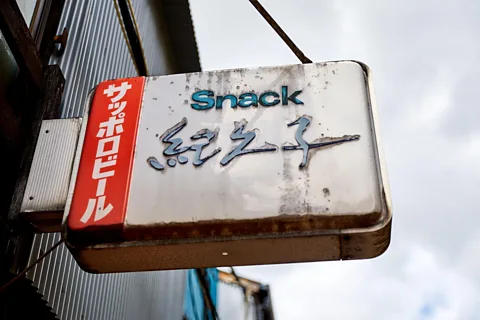
Some 100,000 of these small dives are hidden in plain sight across Japan. Now, travellers are finally discovering these locals-only hangouts – and the beloved "mamas" who run them.
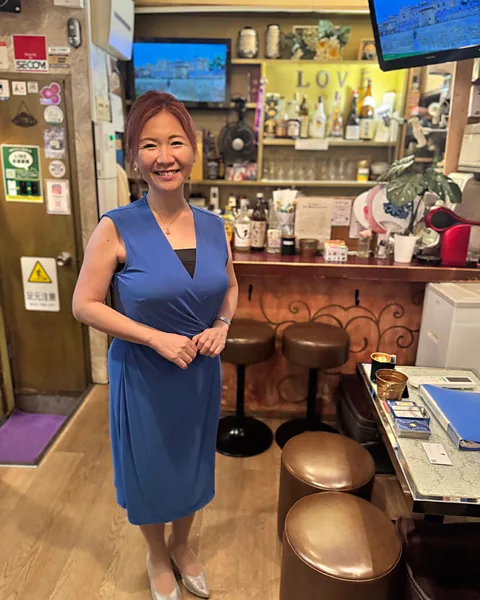
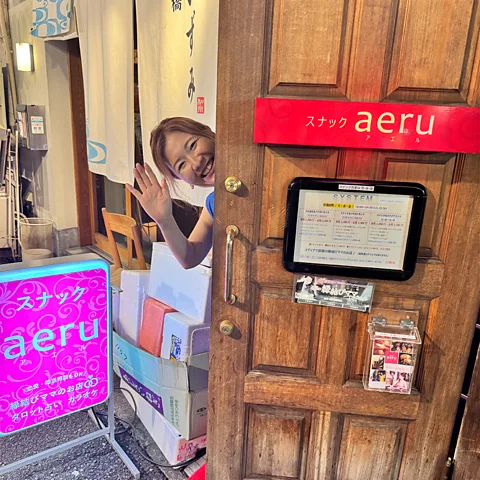
I didn't plan on having my fortune read by a matchmaking "mama" on my most recent visit to Tokyo. But after climbing to the second floor of a cozy sunakku (snack bar) called Aeru in the Shinbashi neighbourhood, the proprietress and owner, Urara, smiled coyly as she pulled a Knight of Wands from her tarot deck.
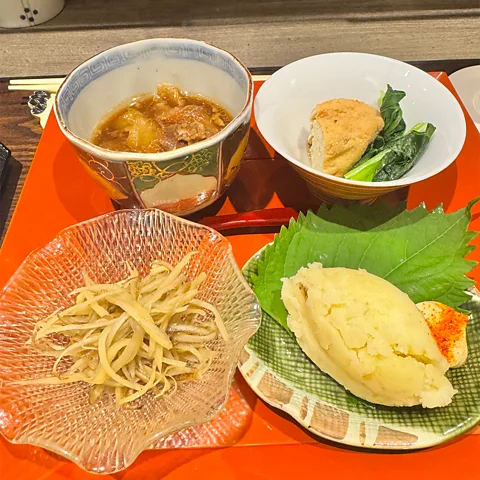
"You're craving passion and protection… in a man," Urara told me, as I nibbled chilli-flavoured rice crackers and deep-fried dough sticks slathered in brown sugar.
"I'll be sure to let my husband know that," I replied with a wry smile.
As she thumbed through a three-ring binder filled with the handwritten profiles of Japanese singles in their 20s and 30s, Urara explained that she has successfully matched more than 90 couples during the 14 years she has worked here. While her tarot readings and modern matchmaking techniques are unique among Japan's tens of thousands of snack bars, Urara embodies what makes these small venues so distinct.
 Michelle Gross
Usually run by an older woman known affectionately as a mama-san, snack bars are nondescript, no-frills bars serving light bites and drinks. But as I soon learned, their main purpose isn't food or booze; it's to create a space where patrons feel comfortable enough to open up, engage in meaningful conversation and genuinely connect with the mama-san who presides over the room.
"Unlike the bars or nightclubs many tourists may imagine, snack bars are warm, home-like places," said Mayuko Igarashi, president and director of Snack Yokocho Culture Inc, which has been offering tours of snack bars across Japan for travellers since 2021. "The 'mama'… welcomes guests with a sense of personal care."
A far cry from the pricey "hostess clubs" found in entertainment districts like Kabukichō in Shinjuku, where young women are paid generously to pour drinks and flirt with customers, snack bars – or simply "snacks", as they're more commonly known – have played an integral role in Japan's nightlife for more than half a century.
Often tucked along alleyways in cities and suburban neighbourhoods, snack bars have long been beloved by locals of all ages. Loyal regulars come to snack on simple bar food – from senbei (rice crackers) and pickles to homemade dishes like karaage (fried chicken) and yakisoba noodles – over a drink, socialising in a non-flirtatious way.
 Michelle Gross
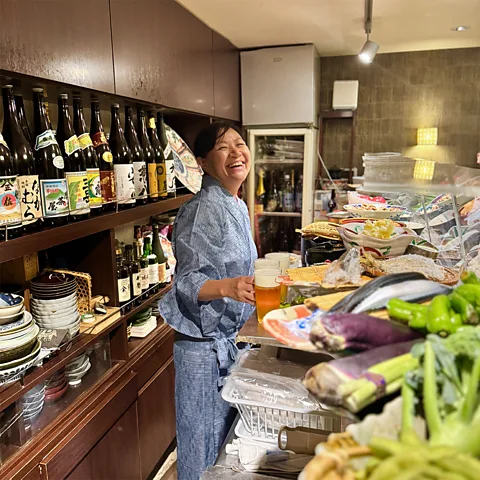
Despite their convivial atmosphere, these neighbourhood haunts have historically operated outside the public eye, relying on word of mouth rather than walk-in trade. That semi-private, almost members-only quality lies at the heart of their appeal. As Igarashi explained, mama-sans cultivate a sense of trust and familiarity, creating spaces where guests feel safe to open up.
"We often describe snack bars as places where you can experience Japan's drinking culture in the most intimate and approachable way," she said. "Even if you visit for the first time, you can feel as if you've been invited into a friend’s home."
Snack bars emerged during Japan's post-World War Two-era recovery. As the nation rapidly rebuilt its cities, encouraged longer working hours and implemented stricter alcohol regulations, bars began cleverly bypassing these rules by serving simple bar food ("snacks") and offering spaces where a new class of businessmen could come and confide in female owners.
Tokyo-area resident and local tour guide Jeffrey Garrish explained that the mama-sans benefitted too. "In the enormous economic challenges of the time, there were few good options for women, whether they be widowers, young ladies or even sometimes men (though very rare), so starting an establishment that served alcohol in small spaces became a decent option," he said.
 Michelle Gross
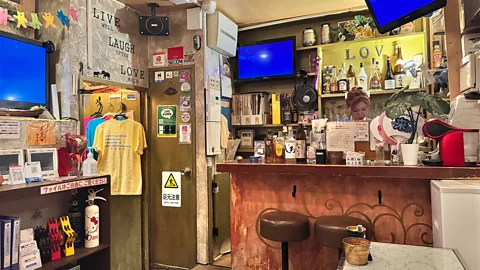
By the late 1960s, women-run snack bars had proliferated nationwide. Originally, these humble neighbourhood fixtures offered little more than a counter with a few stools, a radio and a small kitchen where home-style dishes were served with whisky, beer and highballs (Japanese whisky and soda water). As Western culture increasingly poured into the nation in the 1970s and 1980s, and glitzy nightclubs and discos took over Japan's major entertainment districts, snack bars began to flourish as a quieter, more intimate alternative. They became community hubs, drawing in salarymen and regulars craving conversation, familiarity and a sense of belonging.
Many "snacks" adopted a unique bottle-keep (botoru kiipu) system that still exists, where regulars purchase a bottle of whisky or shōchū (a homegrown Japanese spirit), label it and store it behind the bar for future visits. This custom turned a casual drink at the local snack into a lasting relationship.
More like this:
• The Japanese city for people seeking love
• An insider's guide to the best sushi in Tokyo
• Why you should visit Japan's small but mighty 'little Kyoto'
Today, it's believed that roughly 100,000 snack bars operate across Japan – which, as Igarashi noted, is more than double the number of the nation's ubiquitous konbinis (convenience stores). A self-described "snack enthusiast", she has visited more than 1,200 snacks bars across Japan. In 2021, she started offering tours to snack bars to connect younger Japanese residents and travellers with places they either might be too intimidated to enter – or, in the case of foreigners, never knew existed.
"In many towns, I witnessed travellers and regulars laughing together while the mama treated everyone like a family for the night," Igarashi said. "Because of this, we created the [snack tours] as a gentle guide – [like] someone who opens the cultural door for new visitors."
 Michelle Gross
Part confidant, part counsellor, the charismatic mama-sans behind the bars can always be counted on to solicit everything from life advice to – in the case of Urara-mama – love advice and fortunes. "The mama-san is the founder, operator, manager and everything in between," Garrish told me. "The mama-san curates the experience, from her first greetings to the questions she asks you when you sit down. She is selling her time, attention and affection."
Visit a snack bar
Snack Yokocho offers small, guided snack bar tours in Tokyo, Osaka and other major Japanese cities. Garrish also offers snack bar tours in Tokyo and Atami through Discover Japan. For independent exploring, neighbourhoods such as Shimbashi in Tokyo are home to a number of snack bars, with some listed on Google Maps or Instagram. Look for handwritten signs reading "snack" or "snack bar" in English, or the characters スナック(sunakku) or スナックバ ("snack bar"). Most snack bars charge a small entrance fee ("otoshi") that includes a welcome snack.
In recent years, Garrish says he's noticed more travellers interested in seeking out deeper, more personal connections to Japanese culture. With that has come an uptick in visitors seeking out snack bars that were traditionally locals-only but are now starting to open their doors to curious and respectful outsiders.
Yet, Igarashi explained that snack bars have also faced challenges. In the years leading up to Covid, snack bars' popularity started to wane as karaoke bars and chain izakayas (pubs) proliferated, younger generations drank less alcohol and ageing mama-sans retired without successors. In response, many snack bars have adapted to welcome new customers while preserving what makes these communal spaces so unique.
"Snack bars have continued to evolve over the years. [They have gone] from a place for workers to relax or escape from the hardships after the war to a place to counterbalance the stresses and pressure of Japan during… the country's bubble years between the mid '80s/early '90s," Garrish said. "Now they're reinventing themselves once again in the digital age to embrace what has always made them special: connections to people, spending time together and ultimately the comfort and conversation with the mama-san."
 Michelle Gross
In cities and suburbs, a steady resurgence is underway. Today, you can find anime-themed snacks and others that now use social media to attract newcomers, rather than relying solely on word-of-mouth. Garrish noted that this new openness has brought greater inclusivity, with more snack bars welcoming LGBTQ+ guests and creating safer, more diverse spaces.
As Igarashi put it, they also offer a welcome respite from the pressures of digital life. "Younger generations are drawn to snack bars because they offer real, human connection – something that social media cannot provide," she said.
As Garish explained, it's that connection and the conversations with mama-sans that keeps drawing locals – and increasingly visitors – back.
"I've had many [travellers] tell me that some of their best memories in Japan have been made in snack bars, and these people were paying thousands of dollars for fancy hotels, geisha experiences, craft classes and sushi classes," he said. "So, I would always suggest taking that leap of faith, opening that dark and intimidating door and just walking in to ask for an open seat."