
I’ve had four conversations in the past year where someone said to me, “I have young kids / I have an existing life I’m happy with / I have existing obligations that I enjoy. I don’t know if starting a company is compatible with that.”
Some versions of the conversation then go: “I don’t know if I’m a good fit to lead a high growth company.” Or “I don’t know of many people who started a startup with young kids.”
Invariably, in every single one of those conversations I say something like: “You don’t have to start a startup if you don’t want to. But that doesn’t mean you have to give up on business. You can always find a business configuration that fits you and what you want out of life … if you want it enough.”
There are limitations to this idea, of course, because there are limits to the forms of business that works. But the spectrum of configurations are far larger than what most people tend to believe.
Imagine if I told you that you must go to school, get good grades, go to a university, do a pragmatic, commercially viable degree, find a job once you graduate, find a nice man to settle with (or a nice woman to marry if you are a man), have 2.1 kids (above replacement rate), buy at least one car, and own a house with a mortgage and a lawn.
You might find yourself reacting viscerally to this template. And it would be understandable if you do: this is an old, post-war American, heteronormative vision of life. You might scrunch up your face and go “how old fashioned.” You should know by now that there are many other alternatives to this vision:
Of course, making such decisions are all intertwined. Social policies and housing policies and work policies and childcare policies and the country of your birth and the power of the passport you hold and immigration and where to live and what to study and career choices all somewhat depend on each other. But I think most folks know — once they mature past the grip of trite socialisation — that they may choose a configuration that works for them when it comes to living their lives. This is called ‘agency’. They may choose to live their lives without consideration for the opinions of others.
So why do folks lock into a certain template when it comes to starting a business? If you ask someone what they think about entrepreneurship, they invariably fall back on:
Why do folks lock onto such a template? The answer is the same as with our vision of the heteronormative suburban family: at any age, there are dominant narratives that float in our heads. These narratives tend to constrain our options. Because the vast majority of business narratives today are anchored around the venture-backed, Silicon-Valley startup model, you are likely to believe that the only path to a large, successful business is the startup. Also most people don’t spend that much time thinking about business forms. Which means that unless you are a serious student of business, you may not notice the countless examples that violate the trite templates of business you have in your head.
But it’s easy to see once you have the right frame. There are more configurations of business than you can count, and that should give you hope: you may choose to build a business that fits what you want out of life.
Patagonia is my goto-example in these conversations. I ask folks if they know what Patagonia is. Most of them do. Patagonia makes expensive, very high quality outdoor apparel, and they are famous for their dedication to environmental causes. In 2024, the company made $1.47 billion in annual revenue.
We don’t yet have a case on Patagonia in Commoncog’s Case Library, but the story goes something like this: Yvon Chouinard was a ‘dirtbagger’ in his youth — an outdoorsman who lived on the fringe: sleeping in cars, pitching tents in illegal campsites, eating cat food if necessary to stave off hunger. These folks would do the minimum necessary for money and scrounged together just enough resources to be able to spend their days doing what they loved the most: outdoor activities like rock climbing or alpinism or surfing or fishing. They also dumpster dived and consumed lots of recreational drugs. In the 60s, these dirtbaggers were true pioneers. Chouinard himself was one of the leading climbers of the ‘Golden Age of Yosemite Climbing’. This was what musician Brian Eno would call a ‘scenius’ — an exceptionally productive community of practitioners from which spawned an array of new techniques and new equipment. For a number of years, from the late 50s through to the early 70s, the world’s best climbers would congregate at Yosemite National Park’s Camp 4. They would share ideas and invent new techniques and test them on Yosemite’s Half Dome and El Capitan. It was at this campsite that the modern age of rock climbing was born.
Patagonia itself was born in the parking lot of Camp 4. Chouinard bought an anvil in 1957 to make his own pitons — steel spikes that could be hammered into the rock surface to aid with climbing. He set up Chouinard Equipment, Ltd to sell these pitons and other products that he co-developed — many of them with fellow climbers and collaborators.
In 1970, Chouinard began selling clothes to support the climbing equipment business. He eventually exited the climbing equipment business altogether. Patagonia, the apparel company, grew like a weed. Chouinard and his collaborators were constantly experimenting with new materials and new products to serve outdoors people. The technical clothing business quickly outstripped the climbing equipment business, and kept going — from the 1980s through to 1990, sales grew from $20 million to $100 million.
It is at this point, when reading Chouinard’s autobiography Let My People Go Surfing, that you begin to realise that he was taking the art of business seriously. Chouinard had to deal with cash flow issues early on, when purchasing a large order of clothes from Hong Kong that didn’t sell well. That order nearly tanked the company. One of the nice things about running a business without investors and with little leverage (nobody wanted to lend money to Patagonia in those early years) was that you could learn the nuts and bolts of business from the ground up without dying — assuming expansion didn’t kill you. And so Chouinard and his colleagues learnt about operations and capital and demand as the business grew. They learnt to manage suppliers, to do quality control, to manage inventory and cash flow. They studied the ways of various distribution channels. They expanded across product lines as Chouinard pushed the company to experiment with new products for activities like ice climbing and hiking and sailing and fly fishing and surfing. By the late 80s the business was expanding internationally and growing at a ridiculous rate. Chouinard writes, about the year 1984:
That year we built a new Lost Arrow administration building that had no private offices, even for the executives. This architectural arrangement sometimes created distractions but helped keep communication open. Management worked together in a large open area that employees quickly dubbed the “corral.” We provided a cafeteria that served healthy food where employees could gather throughout the day. And we opened, at Malinda’s insistence, an on-site child-care center, Great Pacific Child Development Center, Inc. At the time it was one of only 120 in the country; today there are more than 8,000. The presence of children playing in the yard or having lunch with their mothers and fathers in the cafeteria helped keep the company atmosphere more familial than corporate. We also offered, mostly for the benefit of new parents but also for other employees, flexible working hours and job sharing.
Chouinard structured the business so that he could take months off, each year to climb mountains, explore new lands, fish in new rivers, and hike virgin forests. The company was growing so well that in many ways, Chouinard didn’t really need to think about growth. They were doing what was expected of them: launch new products, expand to new markets. Chouinard had noticed that they were beginning to tap out in all their technical outdoorsmen markets, and that new growth was increasingly coming from less technical sportswear, sold through wholesale distributors. This bothered him a little.
But prosperity meant that Patagonia could begin to experiment with causes that were close to its founder’s heart. In the 80s, the company began working with more environmentally friendly materials and production — practices that are synonymous with the brand today. They began donating to environmental causes, and began backing environmental activists. For a while, all was good.
Things came to a head in 1991. In 1990 they prepped the company for another year of 40% growth. This meant borrowing money from Security Pacific Bank (then their primary lender), prepping a production plan for 40% more demand, and hiring 100 new people. Patagonia also began renovating an old slaughterhouse on their property, in order to house these new employees.
In 1991 a recession hit most of the Western world. Growth at Patagonia collapsed to 20%, instead of the expected 40%. This brought the company to its knees. Writing years later, Chouinard would marvel at how ridiculous this was:
The country had entered a recession, and the growth we had always planned on, and bought inventory for, stopped. Our sales crunch came not from a decline from the previous year but from a mere 20 percent increase! Nevertheless, the 20 percent shortfall nearly did us in. Dealers canceled orders, and inventory began to build. Neither the mail order nor the international division could meet its forecasts, and both returned inventory as well. We cut back production as much as we could for spring and fall. We froze hiring and nonessential travel. We dropped new products and discontinued marginal sellers.
The crisis soon deepened. Our primary lender, Security Pacific Bank, was itself in financial trouble, and it sharply reduced our credit line—twice within several months. To bring our borrowing within the new limits, we had to reduce spending drastically. We made plans to shut down our offices and sales showrooms in London, Vancouver, and Munich. We let go our CEO and CFO and returned Kris McDivitt as our CEO. We brought in our European manager, Alain Devoldere, to act temporarily as chief operating officer.
We had never laid people off simply to reduce overhead. In fact, we had never laid anyone off for any reason. Not only was the company like an extended family, but for many it was a family, because we had always hired friends, friends of friends, and their relatives. Husbands and wives, mothers and sons, brothers and sisters, and cousins and in-laws worked together or in different departments. Layoffs are not a pleasant prospect for any company, but for us the idea was almost unthinkable, and the tension became, as layoffs became more likely, nearly unbearable. We considered such alternatives as pay cuts and reduced hours, but in the end we decided that only layoffs would solve the problem we had created: in ramping up, we had added too many people to do what was now too little work. On July 31, 1991, Black Wednesday, we let go 120 employees—20 percent of the workforce. That was certainly the single darkest day of the company’s history.
At this point in the story, I remember thinking “… and then Chouinard learnt important lessons about cash flow and expansion, and grew the company more carefully.” What I did not expect was Chouinard running classes and retreats to find the heart of the company. At the end of the process they made a number of big changes, two of which I think redefined the company:
And as a result, Chouinard says they never had major, insurmountable problems again.
I remember putting the book down at this point, astounded. Going into Chouinard’s memoirs, I was sceptical that Patagonia’s kumbaya approach to business would solve their problems. But relaxing the requirement for growth and combining it with a larger, financially costly mission — now that was realistic. I absolutely buy that it would solve most of the thorniest problems in the business. I was just amazed that they pulled it off.
In the decades after 1991 Chouinard continued to run the company as he saw fit. He continued to take time off to explore nature, or to investigate environmental causes. The company grew more slowly. In years of slow growth, they focused on efficiency in order to wring the profits necessary to keep the company healthy (and in order to donate increasing amounts of money to their mission). The more efficient they were, the more they could put towards nature. The challenges Patagonia faced changed from growth problems to ‘save the planet problems’. On the operations side, the challenges they faced became ‘emergencies created by management in order to keep the staff on edge’ — so that they never stopped innovating, and they didn’t lose their sense of urgency.
In September 2022 Chouinard transferred his entire ownership of Patagonia into two non-profits: the Patagonia Purpose Trust, and the Holdfast Collective. The Patagonia Purpose Trust serves as the governance body of the company; it owns all of the voting stock (which has governance rights and economic rights and makes up 2% of the total amount of stock). The Holdfast Collective holds all the non-voting stock — 98% of the total. The Collective receives only economic rights — that is, it receives 98% of the dividends issued by Patagonia. The Collective spends that money on climate activism and nature conservation, in addition to political advocacy.
And so here was a man who figured out a configuration that worked for his goals. A configuration that seems like it might outlast him.
Let’s switch from Chouinard to Warren Buffett now, because Buffett exists on the opposite end of the capitalist spectrum.
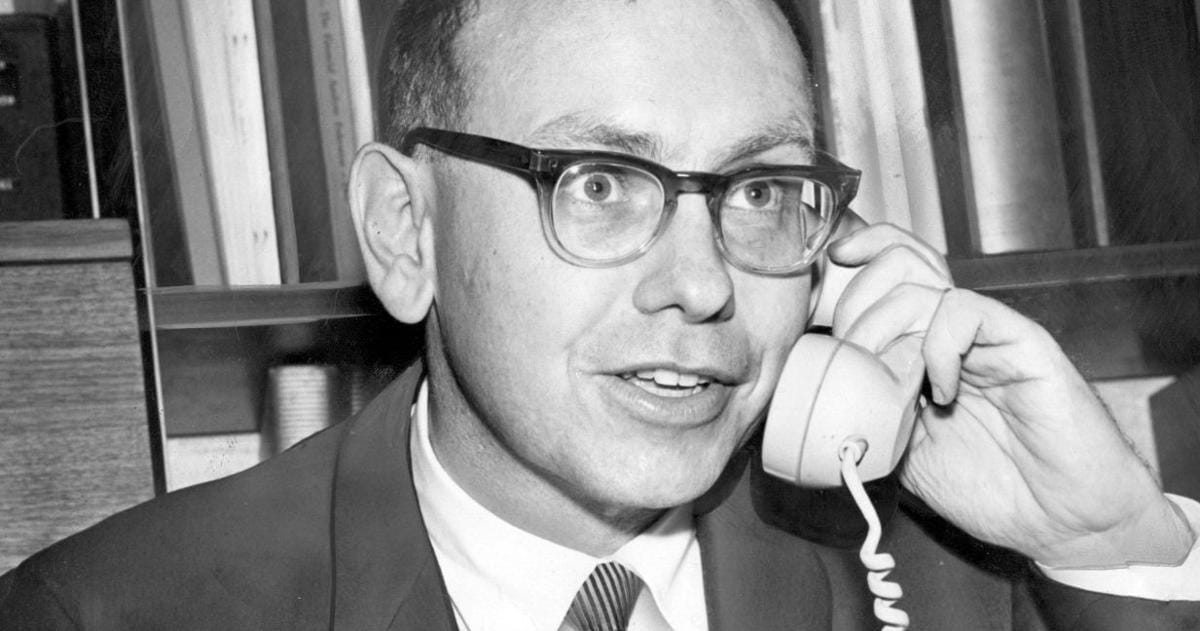
I like using Buffett as an example because he is so famous and yet so misunderstood. (To business folks. With investors he tends to be more legible — and perhaps, some say, overstudied). The typical startup founder thinks that Buffett is an investor. She might notice that Buffett is the chairman of a conglomerate by the name of Berkshire Hathaway — but she likely doesn’t pause to think that this is actually very odd. What is an investor doing in charge of a publicly listed corporation? Why not a hedge fund? What was the series of events that led Buffett to wind down his investment partnership and led him to take control of a minnow of a corporation?
A founder might also notice that Berkshire was, once upon a time, a failing textile mill. She might then notice that it is now one of the largest corporations in America. But — and this is my experience with the vast majority of startup founders — at no point will she stop to ask: “wait, how does a person take control of a failing textile mill, and without equity funding, turn it into one of the largest corporations in America?” Nor is it likely that she will ask: “in what ways does this violate the narrative of business building in my head, and how may I use it to my advantage?”
There are many parts of Buffett’s story that hold interesting lessons for a business operator. I won’t go through them except to say that you should absolutely study him — and study him through the frame of a businessperson. But I want to point out that in 1969, at the age of 39, when he wound down the investment partnership that brought him his early wealth, he had already written a bunch of passages in his partnership letters that were very odd, especially if you hold the typical “the only way to build a big business is to work very hard and raise money from investors” bundle of beliefs we went through earlier.
The first clue is from Buffett’s dealings with a small company called Dempster Mills. Dempster was a terrible business at the time that Buffett bought into it — horribly run, and with effectively worthless inventory sitting on its books. Buffett bought the stock at about $28 per share, eventually gaining control in August 1961 (the partnership owned a 73% stake). At the point of purchase the company’s accounts showed $4.6 million book value. Buffett’s assessment of the company’s book value was $2.1 million (he assumed most of the assets on the balance sheet was worthless) — at about $35.25 a share. So from the very beginning of his involvement, Buffett had bought into the company at a discount. Dempster was a ‘net-net’.
Buffett then brought on Harry Bottle, on Charlie Munger’s recommendation, to convert the company’s assets into cash.
Bottle proceeded to sell or write-down all the useless merchandise, upgraded the company’s marketing processes, stabilised sales, and sold off all the unprofitable facilities. He laid off about 100 employees. He turned the company around enough to eke out a small profit, using up its tax losses. In a possibly apocryphal story, at one point Bottle painted a white line on the wall of Dempster’s warehouse, ten feet off the ground, and told warehouse staff that if inventory ever made it above that line everyone except the shipping department would be fired.
Buffett took that cash, sitting pretty on Dempster’s balance sheet, and bought … stocks. In his 1963 partnership letter he wrote (all bold emphasis mine):
Three facts stand out: (1) Although net worth has been reduced somewhat by the housecleaning and writedowns ($550,000 was written out of inventory; fixed assets overall brought more than book value), we have converted assets to cash at a rate far superior to that implied in our year-earlier valuation. (2) To some extent, we have converted the assets from the manufacturing business (which has been a poor business) to a business which we think is a good business — securities. (3) By buying assets at a bargain price, we don't need to pull any rabbits out of a hat to get extremely good percentage gains. This is the cornerstone of our investment philosophy: “Never count on making a good sale. Have the purchase price be so attractive that even a mediocre sale gives good results. The better sales will be the frosting on the cake.”
On January 2, 1963, Dempster received an unsecured term loan of $1,250,000. These funds, together with the funds all ready “freed-up” will enable us to have a security portfolio of about $35 per share at Dempster, or considerably more than we paid for the whole company. Thus our present valuation will involve a net of about $16 per share in the manufacturing operation and $35 in a security operation comparable to that of Buffett Partnership, Ltd.
For those of you tracking the sums, ‘$16 per share in the manufacturing operation and $35 in the security operation’ adds up to $51 per share. In two years, and with the help of Harry Bottle, Buffett had turned a $28 per share control investment into a $51 per share vehicle.
I’d like to draw your attention to two things.
First, notice the relatively small sums involved. Even if we adjust for inflation, Buffett paid no more than $13.6 million in 2025 dollars to gain control of Dempster Mills. (This was $1.2 million in 1961 money; these were the kinds of deals Buffett was involved in his youth). You can’t say “oh, this only works for large companies”; Dempster was a piece of scrap sitting in the bargain bin of American industry.
Second, notice the line ‘we converted the assets from the manufacturing business (which has been a poor business) to a business which we think is a good business — securities’. “You can do that?” I hear you asking. Of course you can do that. A business has cash on its books. It has a bank account. If you control the company, of course you can take that cash and invest it in whatever you want. Hell, you can borrow money against the manufacturing business and buy even more stocks (which was what Buffett did). So now Dempster had transformed from a shitty manufacturing company into a holding vehicle for a) a marginally less shitty manufacturing business, and b) a container for stocks. Those stocks promptly appreciated, because Buffett was a good stockpicker.
This is not as ridiculous as you might think. The obvious, most notorious example today is Microstrategy — now renamed Strategy — where Michael Saylor took the cash flows from a shitty software company and borrowed a metric ton more money and ploughed it all into Bitcoin. But it’s instructive to look at a venture backed example. Here is Jimmy Soni, from The Founders:
In preparation for a summer 2000 [Paypal] board meeting, [Peter] Thiel had asked [Elon] Musk if he could present a proposal. Musk agreed. “Uh, Peter’s got an agenda item he’d like to talk about,” Musk said, handing the reins to Thiel.
Thiel began. The markets, he said, weren’t done driving into the red. He prophesied just how dire things would get—for both the company and for the world. Many had seen the bust as a mere short-term correction, but Thiel was convinced the optimists were wrong. In his view, the bubble was bigger than anyone had thought and hadn’t even begun to really burst yet.
From X.com’s perspective, the implications of Thiel’s prediction were dire. Its high burn rate meant that it would need to continue fundraising. But if—no, when—the bubble truly burst, the markets would tighten further, and funding would dry up—even for X.com. The company balance sheet could drop to zero with no options left to raise money.
Thiel presented a solution: the company should take the $100 million closed in March and transfer it to his hedge fund, Thiel Capital. He would then use that money to short the public markets. “It was beautiful logic,” board member Tim Hurd of MDP remembered. “One of the elements of PayPal was that they were untethered from how people did stuff in the real world.”
The board was uniformly aghast. Members Moritz, Malloy, and Hurd all pushed back. “Peter, I totally get it,” Hurd replied. “But we raised money from investors on a business plan. And they have that in their files. And it said, ‘use of proceeds would be for general corporate purposes.’ And to grow the business and so forth. It wasn’t to go speculate on indices. History may prove that you’re right, and it will have been brilliant, but if you’re wrong, we’ll all be sued.” Mike Moritz’s reaction proved particularly memorable. With his theatricality on full display, Moritz “just lost his mind,” a board member remembered, berating Thiel: “Peter, this is really simple: If this board approves that idea, I’m resigning!”
“The pure drama of Mike Moritz’s reaction was one of the best moments of the whole thing,” remembered board member Malloy. Thiel was angry with the board’s refusal and skipped its next few meetings in protest. The board, he felt, was being shortsighted in the face of a historic market collapse in the making—one that, if approached properly, could yield a windfall. “The tide was changing and Peter is always pessimistic, but he recognizes it is changing, and he was definitely right,” Malloy said. “We would have made more money [investing] than anything we did at PayPal.”
There’s an old Steve Blank quote that goes “you take on the business model of the money you raise.” Venture capitalists aren’t in the ‘make enterprise value of the company go up by any means necessary’ business. They are in the ‘make enterprise value of the company go up through some small set of prescribed means’ business. So Thiel couldn’t take money off Paypal’s balance sheet and quintuple it in the markets. But Buffett could. He didn’t give a shit. Why? Because Buffett did business in a different configuration.
Buffett eventually sold the assets of Dempster in 1963 at (audited) book value, which — combined with the stock portfolio — brought in a return of around $80 per share. For those who are tracking sums, this was an 186% return.
Our story doesn’t end here. As the 60s wore on, the markets began overheating. Buffett’s annual partnership letters began to sound increasingly depressed. (Buffett’s investing style does not do so well in bull markets, when discounts vanish.) In 1967, after the ten year anniversary of the partnership, Buffett announced lower return goals. He also included the following passage (bold emphasis mine):
Elementary self-analysis tells me that I will not be capable of less than all-out effort to achieve a publicly proclaimed goal to people who have entrusted their capital to me. All-out effort makes progressively less sense. I would like to have an economic goal which allows for considerable non-economic activity. This may mean activity outside the field of investments or it simply may mean pursuing lines within the investment field that do not promise the greatest economic reward. An example of the latter might be the continued investment in a satisfactory (but far from spectacular) controlled business where I liked the people and the nature of the business even though alternative investments offered an expectable higher rate of return. More money would be made buying businesses at attractive prices, then reselling them. However, it may be more enjoyable (particularly when the personal value of incremental capital is less) to continue to own them and hopefully improve their performance, usually in a minor way, through some decisions involving financial strategy.
Basically, Buffett was now rich enough that he didn’t want to pursue horrible businesses in order to eke out a few extra percentage points of investment performance. He was 37 years old. In the 1967 annual letter, sent just three months later, Buffett wrote:
The satisfying nature of our activity in controlled companies is a minor reason for the moderated investment objectives discussed in the October 9th letter. When I am dealing with people I like, in businesses I find stimulating (what business isn’t?), and achieving worthwhile overall returns on capital employed (say, 10-12%), it seems foolish to rush from situation to situation to earn a few more percentage points. It also does not seem sensible to me to trade known pleasant personal relationships with high grade people, at a decent rate of return, for possible irritation, aggravation or worse at potentially higher returns. Hence, we will continue to keep a portion of our capital (but not over 40% because of the possible liquidity requirements arising from the nature of our partnership agreement) invested in controlled operating businesses at an expected rate of return below that inherent in an aggressive stock market operation.
This was a hint of things to come.
In May 1969, Buffett finally threw in the towel. “The investing environment I discussed at that time (and on which I have commented in various other letters) has generally become more negative and frustrating as time has passed.” He then continued — self deprecatingly: “Maybe I am merely suffering from a lack of mental flexibility. (One observer commenting on security analysts over forty stated: ‘They know too many things that are no longer true.’)”
Buffett closed his letter on a melancholic note:
The October 9th, 1967 letter stated that personal considerations were the most important factor among those causing me to modify our objectives. I expressed a desire to be relieved of the (self-imposed) necessity of focusing 100% on BPL (Buffett Partnerships Limited). I have flunked this test completely during the last eighteen months. The letter said: I hope limited objectives will make for more limited effort. It hasn't worked out that way. As long as I am “on stage”, publishing a regular record and assuming responsibility for management of what amounts to virtually 100% of the net worth of many partners, I will never be able to put sustained effort into any non-BPL activity. If I am going to participate publicly. I can't help being competitive. I know I don't want to be totally occupied with out-pacing an investment rabbit all my life. The only way to slow down is to stop.
(…) Some of you are going to ask, "What do you plan to do?" I don't have an answer to that question. I do know that when I am 60, I should be attempting to achieve different personal goals than those which had priority at age 20. Therefore, unless I now divorce myself from the activity that has consumed virtually all of my time and energies during the first eighteen years of my adult life, I am unlikely to develop activities that will be appropriate to new circumstances in subsequent years (emphasis mine).
Buffett was done. By the time of the partnership’s closure, Buffett revealed that a control investment he had done in 1965 by the name of Berkshire Hathaway owned a number of other businesses. Buffett had taken Berkshire’s capital and purchased an insurance operation (National Indemnity) and a bank (the Illinois National Bank and Trust Company). It also owned Sun Newspapers Inc, the Blacker Printing Company, and 70% of Gateway Underwriters, though these last three companies were not significant parts of Berkshire’s enterprise value.
Buffett then wrote:
My personal opinion is that the intrinsic value of DRC (Diversified Retailing Company) and B-H (Berkshire Hathaway) will grow substantially over the years. While no one knows the future, I would be disappointed if such growth wasn't at a rate of approximately 10% per annum. Market prices for stocks fluctuate at great amplitudes around intrinsic value but, over the long term, intrinsic value is virtually always reflected at some point in market price. Thus, I think both securities should be very decent long-term holdings and I am happy to have a substantial portion of my net worth invested in them. You should be unconcerned about short-term price action when you own the securities directly, just as you were unconcerned when you owned them indirectly through BPL. I think about them as businesses, not “stocks”, and if the business does all right over the long term, so will the stock.
I want to stress that I will not be in a managerial or partnership status with you regarding your future holdings of such securities. You will be free to do what you wish with your stock in the future and so, of course, will I. I think that there is a very high probability that I will maintain my investment in DRC and B-H for a very long period, but I want no implied moral commitment to do so nor do so nor do I wish to advise others over an indefinite future period regarding their holdings. The companies, of course, will keep all shareholders advised of their activities and you will receive reports as issued by them, probably on a semi-annual basis. Should I continue to hold the securities, as I fully expect to do, my degree of involvement in their activities may vary depending upon my other interests. The odds are that I will take an important position on matters of policy, but I want no moral obligation to be other than a passive shareholder, should my interests develop elsewhere (emphasis added).
You can see where this is going. At the age of 39, Buffett was distributing the assets of the Buffett Partnership, and falling back to the control of two companies, run by high quality people, because he found this more relaxing.
Think about that for a moment. Would you say that businesses, in general, are relaxing to run? Would you say that growing through acquisition of whole other businesses or through the purchase of securities are an obvious thing to do?
And if you are wondering how Berkshire Hathaway became one of the largest companies in the US, the answer is simple. You already know what he did. He just took what he did at Dempster Mills, and he scaled it up.
I am, of course, being a little glib with that last paragraph. The word ‘just’ is doing a lot of work — in order to execute this playbook you have to be a good investor (if not anywhere as good as Buffett). But there was never any universe in which Buffett would not have gotten very rich, given the configuration he had going with Berkshire.
Unlike the vast majority of startup founders, Buffett did not need to get lucky. His success was inevitable. It was just a matter of time.
The obvious criticism to this essay is to say ‘oh, this is just survivorship bias’ or ‘all of these examples are idiosyncratic and unique.’ But that reaction is a little silly. Of course these stories are idiosyncratic. I’m not saying that you can copy Patagonia, or that you can be Buffett. They are each unique individuals. I’m saying “these folks found a configuration that worked for them, and you find one that works for you.” I am saying “those configurations are counter examples to the typical narrative of business success.” I am also saying “Don’t blindly follow the most dominant template of business. There are more workable configurations than you might think, and you may hunt for these patterns, and you may find a unique setup that fits who you are and what you want.”
This sort of criticism is a bit like saying “just because there’s one couple who have successfully built a life sailing around the world doesn’t mean I can do it. Therefore I should just go for the heteronormative suburban life and hate myself.” But of course you don’t believe that. You understand that you can do trial and error until you find a configuration that fits what you want and what you value. And if you want too many things, you eventually (hopefully) will grow wise enough to know which things you’re willing to give up on.
I don’t want you to think that there are no tradeoffs to these forms. Of course there are tradeoffs. If you choose to live on a boat and sail from country to country, you’re going to have some difficulty ordering stuff from Amazon. (You’re also going to have difficulty interacting with any bureaucracy that assumes you have a permanent residential address). You’ll have to develop workarounds for this facet of your life, in order to get what you desire.
Similarly, the more unusual the form of your business, the more difficult it might be to sell it, or value it, or borrow against the equity of your company. But this shouldn’t surprise you: there are tradeoffs to everything in life. The question is: what do you want? And what are you willing to give up in order to get what you want? The standard template — raise money from investors, build a fast growing business — comes with tradeoffs of its own. It’s unlikely that those tradeoffs perfectly match what you want out of life.
I don’t mean to say that business is easy. In many ways running a business can be like eating glass. But you can’t say that “business is always hard, you must chase high growth and you must maximise profits for shareholders.” Those traits are just the outcomes of a certain business configuration. And in the same way that you might not choose “heteronormative suburban married life with two kids and a car and a house with a lawn”, you might not want to choose “high growth startup.”
Again, this is old hat for long-time Commoncog readers. The Commoncog Case Library is filled with highly successful businesses that were configured to take advantage of very idiosyncratic scenarios. I’m thinking of Transdigm, and HEICO. My mind goes to Koch Industries, who used data in a very particular way to expand. We’ve also covered a dozen companies in the Asian Conglomerate concept sequence, each of them an unusual configuration that worked only in the unique political environment the tycoons found themselves in.
Long term readers would also know that this was the experience of business that I had, myself. I’ve talked a little about the old company I helped built, that got acquired by Ant Financial. The early days of that company was hard: I pulled all-nighters and slept in the office along with most of the team. But near the end, when the company had matured, my old boss would travel for three months each year, just like Chouinard, and take cash out of the business. In this way he was like many of the SME bosses we knew in Singapore. He could do this because first, the business had high margins and was protected by a moat, second, he owned the whole damn thing — he bought back my share of the business a few years after I left, and he reaped the fruits of his labour. And now he never has to work again.
The ideas of this essay are obvious to anyone who is a serious student of business. But perhaps this needs to be said in a simple, unvarnished way, because so few operators seem to grasp the possibilities. Caveat emptor.
Nick DeWilde, a born and bred native of San Francisco, wrote in a recent essay:
Tech exists downstream of venture capital, which is built around outlier outcomes. A few enormous wins pay for everything else. This dynamic shows up in many social interactions. If you’re unknown, people will meet with you. You might be their lottery ticket, and they certainly don’t want to be the one who blew off the next Mark Zuckerberg. But if you’re clearly not shooting for a huge outcome, people won’t grant you the time you may think you deserve.
The tech scene in San Francisco runs on the opposite logic from New York’s. New York has distraction and diversity. It has a hundred industries and a thousand subcultures and a street life that doesn’t care what you do. San Francisco chose focus instead. That’s why OpenAI and Anthropic were founded in SF.
I thought this was pretty good. It explains why folks in certain circles overwhelmingly aim for startup structures. The social environment dictates the status incentives. The status incentives dictate behaviour.
But it’s worth taking a step back to ask: is your goal to start a startup, or is your goal to get rich from business? What do you want out of life? And how do you want to get there? These questions apply to everything — including the businesses you create.