i'm not a confident C++ programmer, and i would like to write as little C++ as possible.
i've been largely successful at this, but i sometimes struggle in embedded environments, especially when writing code for the ESP32.
i've been using the excellent Inkplate Arduino Library with arduino-cli for several projects recently, and i was curious if zig could help!
C++ supports C ABI interop by setting external language linkage to "C", and zig has excellent support for interacting with the C ABI:
Currently it is pragmatically true that C is the most versatile and portable language. Any language that does not have the ability to interact with C code risks obscurity. Zig is attempting to become the new portable language for libraries by simultaneously making it straightforward to conform to the C ABI for external functions, and introducing safety and language design that prevents common bugs within the implementations.
One of the primary use cases for Zig is exporting a library with the C ABI for other programming languages to call into. The export keyword in front of functions, variables, and types causes them to be part of the library API:
export fn add(a: i32, b: i32) i32 {
    return a + b;
}
i would love to spend more time writing zig, and i would strongly prefer to use zig instead of C++ for my inkplate experiments.
my usage of the inkplate API is very simple. while i may not be able to call it directly from zig, i could create a thin wrapper providing a C-ABI interface to the library functions i need.
my hardware target is the inkplate tempera4, which uses an ESP32 microcontroller. this microcontroller uses the xtensa isa, so i'll need to set my build.zig appropriately.
zig has a list of support platforms, and xtensa-linux is currently tier 4:
The compiler can generate assembly or C source code for this target.
that's good enough for me! hovering over the "code gen." column in the support table shows that it requires an LLVM experimental backend.
even though the backend is still experimental, it's been around for a while. it looks like it's under active development by Espressif, with an early proposal in march 2021:
Hi All!
On behalf of Espressif Systems, I would like to propose Xtensa backend to be added as an experimental to LLVM project.
compiling llvm takes a while, but wasn't too tricky. the README.md for zig has a recommended approach that i adapted:
cd ~/Downloads
git clone --depth 1 --branch release/22.x https://github.com/llvm/llvm-project llvm-project-22
cd llvm-project-22
git checkout release/22.x

mkdir build-release
cd build-release
cmake ../llvm \
  -DCMAKE_INSTALL_PREFIX=$HOME/local/llvm22-assert \
  -DCMAKE_BUILD_TYPE=Release \
  -DLLVM_ENABLE_PROJECTS="lld;clang" \
  -DLLVM_ENABLE_LIBXML2=OFF \
  -DLLVM_ENABLE_TERMINFO=OFF \
  -DLLVM_ENABLE_LIBEDIT=OFF \
  -DLLVM_ENABLE_ASSERTIONS=ON \
  -DLLVM_ENABLE_ZSTD=OFF \
  -DLLVM_PARALLEL_LINK_JOBS=1 \
  -G Ninja
ninja install
i added a cmake flag to enable xtensa:
-DLLVM_EXPERIMENTAL_TARGETS_TO_BUILD=Xtensathere's a few different experimental targets for the curious, all defined in llvm/CMakeLists.txt:
set(LLVM_ALL_EXPERIMENTAL_TARGETS
  ARC
  CSKY
  DirectX
  M68k
  Xtensa
)
the build completed without any issues. after that, i compiled zig from a checkout, again following patterns established in README.md:
git checkout 0.17.1
mkdir build && cd build
cmake .. \
  -DCMAKE_BUILD_TYPE=Release \
  -DCMAKE_PREFIX_PATH=$HOME/local/llvm22-xtensa \
  -DZIG_EXTRA_BUILD_ARGS="-Dllvm-has-xtensa"
cmake --build . --parallel
that was all it took to get a zig compiler which could emit xtensa machine code!
~/code/zig-inkplate: ~/code/zig/build/stage3/bin/zig build-lib \
  --show-builtin \
  -target xtensa-freestanding-none \
  -mcpu=esp32
const std = @import("std");
pub const zig_version = std.SemanticVersion.parse(zig_version_string) catch unreachable;
pub const zig_version_string = "0.17.1";
pub const zig_backend = std.lang.CompilerBackend.stage2_llvm;
pub const output_mode: std.lang.OutputMode = .Lib;
pub const link_mode: std.lang.LinkMode = .static;
pub const unwind_tables: std.lang.UnwindTables = .async;
pub const is_test = false;
pub const single_threaded = false;
/// Deprecated; to be removed in 0.18.0. Use `target.abi` instead.
pub const abi: std.Target.Abi = .none;
/// Deprecated; to be removed in 0.18.0. Use `target.cpu` instead.
pub const cpu: std.Target.Cpu = .{
.arch = .xtensa,
.model = &std.Target.xtensa.cpu.esp32,
.features = std.Target.xtensa.featureSet(&.{
// ...
}),
};i was quite mesmerized by the zig build system!
The Zig Build System provides a cross-platform, dependency-free way to declare the logic required to build a project. With this system, the logic to build a project is written in a build.zig file, using the Zig Build System API to declare and configure build artifacts and other tasks.
to start, i needed to represent the arduino/wrapper.h header file that i'll be referring to from demo.zig:
#ifndef INKPLATE_SHIM_H
#define INKPLATE_SHIM_H

#ifdef __cplusplus
extern "C" {
#endif

void display_begin(void);
void display_display(void);
void display_clear(void);
void display_set_cursor(int x, int y);
void display_print(const char *text);
void serial_print(const char *text);

#ifdef __cplusplus
}
#endif

#endif
this header file contains the function signatures for the symbols i'll be calling. the implementation of these functions is in arduino/wrapper.cpp, which the linker will use to resolve relocations in our zig object file at the final compilation stage.
here's how we specify wrapper.h:
const target = b.resolveTargetQuery(.{
    .cpu_arch = .xtensa,
    .os_tag = .freestanding,
    .abi = .none,
    .cpu_model = .{ .explicit = &std.Target.xtensa.cpu.esp32 },
});

const optimize: std.builtin.Optimize = .Debug;

const inkplate = b.addTranslateC(.{
    .root_source_file = b.path("arduino/wrapper.h"),
    .target = target,
    .optimize = optimize,
    .link_libc = false,
});- we use
resolveTargetQueryto specify the architecture, - we set the optimization level to
.Debug, and - we use
addTranslateCto importarduino/wrapper.h
we can use this value, inkplate, to define a module which imports the C header definitions as a translated zig module:
const app_module = b.createModule(.{
    .root_source_file = b.path("zig/demo.zig"),
    .target = target,
    .optimize = optimize,
    .imports = &.{
        .{
            .name = "inkplate",
            .module = inkplate.createModule(),
        },
    },
});
and finally, demo.zig can import inkplate to access the library functions through a structured module interface:
const inkplate = @import("inkplate");

export fn zig_app_setup() void {
    inkplate.serial_print("starting!");
    inkplate.display_begin();
    inkplate.display_clear();
}

export fn zig_app_loop() void {
    inkplate.display_set_cursor(100, 0);
    inkplate.display_print("hello world");
    inkplate.display_display();
}
and once we have our compiled module, we can tell build.zig to generate an object file with addObject:
const app = b.addObject(.{
    .name = "zig_app",
    .root_module = app_module,
});
that's almost all of the code in the whole project! clearly, we're not doing very much, but the goal is to see what's possible before we get ambitious.
i had a persistent and frustrating issue while i was tinkering with build.zig. i was almost always hitting this compiler error:
~/code/zig-inkplate: ~/code/zig/build/stage3/bin/zig build firmware
firmware
└─ run arduino-cli
   └─ compile obj zig_app debug xtensa-freestanding-none failure
error: error: <unknown>:0: fixup value must be 4-byte aligned


error: process exited with code 1
failed command: /Users/jstrickland/code/zig/build/stage3/bin/zig build-obj -target xtensa-freestanding-none -mcpu esp32 -Mroot=zig/demo.zig --cache-dir .zig-cache --global-cache-dir /Users/jstrickland/.cache/zig --build-root . --name zig_app --zig-lib-dir /Users/jstrickland/code/zig/build/stage3/lib/zig/ --listen=-

Build Summary: 0/3 steps succeeded (1 failed)
firmware transitive failure
└─ run arduino-cli transitive failure
   └─ compile obj zig_app debug xtensa-freestanding-none failure
the behavior was strange and intermittent. i tried to isolate to the smallest reproducible case i could find, but failure was inconsistent. sometimes i could compile calling inkplate API functions from my shim with no issues:
cat zig/demo.zig && ~/code/zig/build/stage3/bin/zig build firmwareconst inkplate = @import("inkplate");
export fn zig_app_setup() void {
inkplate.serial_print("hello world");
}
export fn zig_app_loop() void {
inkplate.serial_print("hello world");
}/Users/jstrickland/Library/Arduino15/packages/soldered-inkplate-boards/tools/esp-x32/2511/bin/../lib/gcc/xtensa-esp-elf/14.2.0/../../../../xtensa-esp-elf/bin/ld: warning: _floatdidf.o: missing .note.GNU-stack section implies executable stack
/Users/jstrickland/Library/Arduino15/packages/soldered-inkplate-boards/tools/esp-x32/2511/bin/../lib/gcc/xtensa-esp-elf/14.2.0/../../../../xtensa-esp-elf/bin/ld: NOTE: This behaviour is deprecated and will be removed in a future version of the linker
Sketch uses 957503 bytes (30%) of program storage space. Maximum is 3145728 bytes.
Global variables use 90156 bytes (27%) of dynamic memory, leaving 237524 bytes for local variables. Maximum is 327680 bytes.other times, the same code failed!
i tried experimenting with different callconv expressions, using addTranslateC in build.zig, but nothing seemed to work consistently.
cat zig/demo.zig && ~/code/zig/build/stage3/bin/zig build-obj zig/demo.zig \
    -target xtensa-freestanding-none -mcpu=esp32 \
    -O ReleaseSmall -femit-bin=/tmp/demo-extern-decl.o
echo "exit=$?"
extern fn serial_print(text: [*:0]const u8) callconv(.c) void;
export fn zig_app_setup() void {
serial_print("starting!");
}
export fn zig_app_loop() void {}error: <unknown>:0: fixup value must be 4-byte aligned
exit=1in a sense, i admitted defeat. at the time, i worked through the issue with some LLM assistance: after explaining my predicament, an open weight model was able to isolate the issue in the LLVM source code, identify the problem, and to apply a patch which fixed my compilation issues with little prompting.
this turned out to be a known issue which is fixed upstream, but not in the 22.x release that i was targeting. since i was already compiling my own LLVM, i just included an llvm.patch in my repository:
diff --git a/llvm/lib/Target/Xtensa/MCTargetDesc/XtensaTargetStreamer.cpp b/llvm/lib/Target/Xtensa/MCTargetDesc/XtensaTargetStreamer.cpp
index 0ea70cff4..1dbc36f8a 100644
--- a/llvm/lib/Target/Xtensa/MCTargetDesc/XtensaTargetStreamer.cpp
+++ b/llvm/lib/Target/Xtensa/MCTargetDesc/XtensaTargetStreamer.cpp
@@ -90,6 +90,7 @@ void XtensaTargetELFStreamer::emitLiteral(MCSymbol *LblSym, const MCExpr *Value,

     MCSection *ConstSection = Context.getELFSection(
         SectionName, ELF::SHT_PROGBITS, ELF::SHF_EXECINSTR | ELF::SHF_ALLOC);
+    ConstSection->setAlignment(Align(4));

     OutStreamer.pushSection();
     OutStreamer.switchSection(ConstSection);
@@ -112,6 +113,7 @@ void XtensaTargetELFStreamer::startLiteralSection(MCSection *BaseSection) {
       SectionName, ELF::SHT_PROGBITS, ELF::SHF_EXECINSTR | ELF::SHF_ALLOC);

   ConstSection->setAlignment(Align(4));
+  getStreamer().switchSection(ConstSection);
 }

 MCELFStreamer &XtensaTargetELFStreamer::getStreamer() {
diff --git a/llvm/test/MC/Xtensa/directive-literal.s b/llvm/test/MC/Xtensa/directive-literal.s
index 269cf20ed..1dd9c252d 100644
--- a/llvm/test/MC/Xtensa/directive-literal.s
+++ b/llvm/test/MC/Xtensa/directive-literal.s
@@ -21,6 +21,7 @@ test_literal:

 # CHECK-LITERAL: Section {
 # CHECK-LITERAL:   Name: .literal
+# CHECK-LITERAL:   AddressAlignment: 4
 # CHECK-LITERAL:   SectionData (
 # CHECK-LITERAL:     0000: 78563412 00000000 30750000
 # CHECK-LITERAL:   )
recompiling llvm and zig with this patch resolved my fixup woes :)
i added a small section to build.zig so that we could inspect the object file:
const objectFile = b.step("object-file", "Compile zig object file");
objectFile.dependOn(&b.addInstallFile(
    app.getEmittedBin(),
    "obj/zig_app.o",
).step);
this uses the default installation directory, zig-out:
~/code/zig-inkplate: file zig-out/obj/zig_app.o
zig-out/obj/zig_app.o: ELF 32-bit LSB relocatable, Tensilica Xtensa, version 1 (SYSV), with debug_info, not stripped
that looks correct! with xtensa-esp32-elf-objdump (which came with my soldered-inkplate-boards installation), we can even see the assembly:
zig-out/obj/zig_app.o:     file format elf32-xtensa-le


Disassembly of section .text:

    00000000 <zig_app_loop>:
   0:	004136        	entry	a1, 32
   3:	207110        	or	a7, a1, a1
   6:	ffff81        	l32r	a8, 4 <zig_app_loop+0x4> (ff812071 <Target.xtensa.cpu.esp32+0xff811d11>)
			6: R_XTENSA_SLOT0_OP	.literal
   9:	64a0a2        	movi	a10, 100
   c:	00a0b2        	movi	a11, 0
   f:	0008e0        	callx8	a8
  12:	ffffa1        	l32r	a10, 10 <zig_app_loop+0x10> (ffa10008 <Target.xtensa.cpu.esp32+0xffa0fca8>)
			12: R_XTENSA_SLOT0_OP	.literal+0x4
  15:	ffff81        	l32r	a8, 14 <zig_app_loop+0x14> (ffff81ff <Target.xtensa.cpu.esp32+0xffff7e9f>)
			15: R_XTENSA_SLOT0_OP	.literal+0x8
  18:	0008e0        	callx8	a8
  1b:	ffff81        	l32r	a8, 18 <zig_app_loop+0x18> (810008e0 <Target.xtensa.cpu.esp32+0x81000580>)
			1b: R_XTENSA_SLOT0_OP	.literal+0xc
  1e:	0008e0        	callx8	a8
  21:	f01d      	retw.n
	...

00000024 <zig_app_setup>:
  24:	004136        	entry	a1, 32
  27:	207110        	or	a7, a1, a1
  2a:	ffffa1        	l32r	a10, 28 <zig_app_setup+0x4> (ffa12071 <Target.xtensa.cpu.esp32+0xffa11d11>)
			2a: R_XTENSA_SLOT0_OP	.literal+0x10
  2d:	ffff81        	l32r	a8, 2c <zig_app_setup+0x8> (ffff81ff <Target.xtensa.cpu.esp32+0xffff7e9f>)
			2d: R_XTENSA_SLOT0_OP	.literal+0x14
  30:	0008e0        	callx8	a8
  33:	ffff81        	l32r	a8, 30 <zig_app_setup+0xc> (810008e0 <Target.xtensa.cpu.esp32+0x81000580>)
			33: R_XTENSA_SLOT0_OP	.literal+0x18
  36:	0008e0        	callx8	a8
  39:	ffff81        	l32r	a8, 38 <zig_app_setup+0x14> (ffff8100 <Target.xtensa.cpu.esp32+0xffff7da0>)
			39: R_XTENSA_SLOT0_OP	.literal+0x1c
  3c:	0008e0        	callx8	a8
  3f:	f01d      	retw.n

Disassembly of section .literal:

00000000 <.literal>:
	...
			0: R_XTENSA_32	display_set_cursor
			4: R_XTENSA_32	.rodata.str1.1
			8: R_XTENSA_32	display_print
			c: R_XTENSA_32	display_display
			10: R_XTENSA_32	.rodata.str1.1+0xc
			14: R_XTENSA_32	serial_print
			18: R_XTENSA_32	display_begin
			1c: R_XTENSA_32	display_clear
we also see the relocation records that we expect in our .literal section, with references to the external functions that we're calling:
~/code/zig-inkplate: ~/Library/Arduino15/packages/soldered-inkplate-boards/tools/esp-x32/2511/bin/xtensa-esp32-elf-objdump --reloc -j .literal zig-out/obj/zig_app.o

zig-out/obj/zig_app.o:     file format elf32-xtensa-le

RELOCATION RECORDS FOR [.literal]:
OFFSET   TYPE              VALUE
00000000 R_XTENSA_32       display_set_cursor
00000004 R_XTENSA_32       .rodata.str1.1
00000008 R_XTENSA_32       display_print
0000000c R_XTENSA_32       display_display
00000010 R_XTENSA_32       .rodata.str1.1+0x0000000c
00000014 R_XTENSA_32       serial_print
00000018 R_XTENSA_32       display_begin
0000001c R_XTENSA_32       display_clear
this is great!
i'm still using arduino-cli to compile and upload my code, but i'll be supplying my zig object file to arduino with the build.extra_libs option that my board defines in boards.txt:
Inkplate4TEMPERA.build.f_cpu=240000000L
Inkplate4TEMPERA.build.flash_size=4MB
Inkplate4TEMPERA.build.flash_freq=80m
Inkplate4TEMPERA.build.flash_mode=qio
Inkplate4TEMPERA.build.boot=dio
Inkplate4TEMPERA.build.partitions=huge_app
Inkplate4TEMPERA.build.custom_partitions=huge_app
Inkplate4TEMPERA.build.defines=-DBOARD_HAS_PSRAM -mfix-esp32-psram-cache-strategy=memw
Inkplate4TEMPERA.build.extra_libs=
Inkplate4TEMPERA.build.memory_type=qio_qspi
in build.zig, that's a regular function, which takes our *std.Build.Step.Compile as input, and specifies the compilation step as a dependency in the build DAG with dependOn:
fn arduinoCompile(
    b: *std.Build,
    app: *std.Build.Step.Compile,
    upload: bool,
    port: ?[]const u8,
) *std.Build.Step {
    const cmd = b.addSystemCommand(&.{
        "arduino-cli",
        "compile",
        "--fqbn",
        "soldered-inkplate-boards:esp32:Inkplate4TEMPERA:UploadSpeed=115200",
        "--output-dir",
        "build",
        "arduino",
    });
    if (upload) {
        cmd.addArgs(&.{"--upload"});
        if (port) |p| cmd.addArgs(&.{ "-p", p });
    }
    cmd.addPrefixedFileArg(
        "--build-property=build.extra_libs=",
        app.getEmittedBin(),
    );
    cmd.step.dependOn(&app.step);
    return &cmd.step;
}
this function supports compiling and uploading the firmware (which just means adding the --upload flag to arduino-cli and ensuring that the port is defined).
i'm using addSystemCommand to generate a step which executes arduino-cli, using the same std.Build.Step.Compile.getEmittedBin() function that we called earlier.
with the --verbose flag, we can see every command expanded:
~/code/zig-inkplate: ~/code/zig/build/stage3/bin/zig build --verbose firmware
info(verbose): /Users/jstrickland/code/zig/build/stage3/bin/zig translate-c --cache-dir .zig-cache --global-cache-dir /Users/jstrickland/.cache/zig -target xtensa-freestanding-none arduino/wrapper.h --listen=-
info(verbose): /Users/jstrickland/code/zig/build/stage3/bin/zig build-obj -Odebug -target xtensa-freestanding-none -mcpu esp32 --dep inkplate -Mroot=zig/demo.zig -Odebug -target xtensa-freestanding-none -mcpu esp32 -Minkplate=.zig-cache/o/00e12ac7c5dbf7a53b0c396b9e778995/wrapper.zig --cache-dir .zig-cache --global-cache-dir /Users/jstrickland/.cache/zig --build-root . --name zig_app --zig-lib-dir /Users/jstrickland/code/zig/build/stage3/lib/zig/ --listen=-
info(verbose): install -C .zig-cache/o/ea79841169e767eb0e7e077f49e5da16/zig_app.o zig-out/obj/zig_app.o
info(verbose): arduino-cli compile --fqbn soldered-inkplate-boards:esp32:Inkplate4TEMPERA:UploadSpeed=115200 --output-dir build arduino --build-property=build.extra_libs=./.zig-cache/o/ea79841169e767eb0e7e077f49e5da16/zig_app.o
...
zig translate-cto translatewrapper.h,zig build-objto build the object file,install -Cto copy the object file tozig-out/obj/zig_app.o, andarduino-cli compilewith--build-property=build.extra_libsset!
i'm using the --output-dir build argument with arduino-cli, so there's a lot of build artifacts leftover for us to explore:
~/code/zig-inkplate: file build/arduino.ino.elf
build/arduino.ino.elf: ELF 32-bit LSB executable, Tensilica Xtensa, version 1 (SYSV), statically linked, with debug_info, not stripped
instead of a relocatable, it's an executable!
there are a LOT of functions in this binary, but we can locate our zig functions with xtensa-esp32-elf-objdump -df build/arduino.ino.elf | grep '<zig_app_loop>:' -A 12:
400dcdc0 <zig_app_loop>:
400dcdc0:	004136        	entry	a1, 32
400dcdc3:	207110        	or	a7, a1, a1
400dcdc6:	cede81        	l32r	a8, 400d0940 <_stext+0x920> (400d27d8 <display_set_cursor>)
400dcdc9:	64a0a2        	movi	a10, 100
400dcdcc:	00a0b2        	movi	a11, 0
400dcdcf:	0008e0        	callx8	a8
400dcdd2:	cedca1        	l32r	a10, 400d0944 <_stext+0x924> (3f401bf8 <__anon_1059>)
400dcdd5:	cedc81        	l32r	a8, 400d0948 <_stext+0x928> (400d27e8 <display_print>)
400dcdd8:	0008e0        	callx8	a8
400dcddb:	cedc81        	l32r	a8, 400d094c <_stext+0x92c> (400d27bc <display_display>)
400dcdde:	0008e0        	callx8	a8
400dcde1:	f01d      	retw.n
if you look closely, you can see that the previous l32r instructions have become concrete!
here's what we had before (zig_app.o), with intermediate instructions removed for clarity:
   6:	ffff81        	l32r	a8, 4 <zig_app_loop+0x4> (ff812071 <Target.xtensa.cpu.esp32+0xff811d11>)
			6: R_XTENSA_SLOT0_OP	.literal
  12:	ffffa1        	l32r	a10, 10 <zig_app_loop+0x10> (ffa10008 <Target.xtensa.cpu.esp32+0xffa0fca8>)
			12: R_XTENSA_SLOT0_OP	.literal+0x4
  15:	ffff81        	l32r	a8, 14 <zig_app_loop+0x14> (ffff81ff <Target.xtensa.cpu.esp32+0xffff7e9f>)
			15: R_XTENSA_SLOT0_OP	.literal+0x8
  1b:	ffff81        	l32r	a8, 18 <zig_app_loop+0x18> (810008e0 <Target.xtensa.cpu.esp32+0x81000580>)
			1b: R_XTENSA_SLOT0_OP	.literal+0xc
(in this case, the l32r targets are placeholders, with R_XTENSA_SLOT0_OP being their eventual true binding)
and here's our final firmware (arduino.ino.elf), when the object file zig_app.o has been compiled away:
400dcdc6:	cede81        	l32r	a8, 400d0940 <_stext+0x920> (400d27d8 <display_set_cursor>)
400dcdd2:	cedca1        	l32r	a10, 400d0944 <_stext+0x924> (3f401bf8 <__anon_1059>)
400dcdd5:	cedc81        	l32r	a8, 400d0948 <_stext+0x928> (400d27e8 <display_print>)
400dcddb:	cedc81        	l32r	a8, 400d094c <_stext+0x92c> (400d27bc <display_display>)
we can see the relocations resolve their references:
R_XTENSA_SLOT0_OP .literal+0x0refers to<display_set_cursor>R_XTENSA_SLOT0_OP .literal+0x4refers to<__anon_1059>R_XTENSA_SLOT0_OP .literal+0x8refers to<display_print>R_XTENSA_SLOT0_OP .literal+0xCrefers to<display_display>
this matches the offsets in our relocation record from zig_app.o exactly:
RELOCATION RECORDS FOR [.literal]:
OFFSET   TYPE              VALUE
00000000 R_XTENSA_32       display_set_cursor
00000004 R_XTENSA_32       .rodata.str1.1
00000008 R_XTENSA_32       display_print
0000000c R_XTENSA_32       display_display
00000010 R_XTENSA_32       .rodata.str1.1+0x0000000c
00000014 R_XTENSA_32       serial_print
00000018 R_XTENSA_32       display_begin
0000001c R_XTENSA_32       display_clear
i suppose i haven't shown you the implementation of the C++ wrapper, wrapper.cpp! it's very simple:
#include "wrapper.h"
#include <Arduino.h>
#include <Inkplate.h>

static Inkplate display(INKPLATE_1BIT);

extern "C" {
void display_begin() {
  display.begin();
  display.frontlight.setState(true);
  display.frontlight.setBrightness(5);
  display.setTextSize(2);
  display.setTextColor(BLACK);
}
void display_display() { display.display(); }
void display_clear() { display.clearDisplay(); }
void display_set_cursor(int x, int y) { display.setCursor(x, y); }
void display_print(const char *text) { display.print(text); }
void serial_print(const char *text) { Serial.print(text); }
}
our arduino.ino is even smaller, and just calls zig_app_setup and zig_app_loop, which are using the wrapper.cpp implementation in our compiled firmware:
#include <Arduino.h>
#include <Inkplate.h>

extern "C" void zig_app_setup();
extern "C" void zig_app_loop();

void setup() {
  Serial.begin(115200);
  zig_app_setup();
}

void loop() { zig_app_loop(); }
i feel comfortable writing this amount of C++.
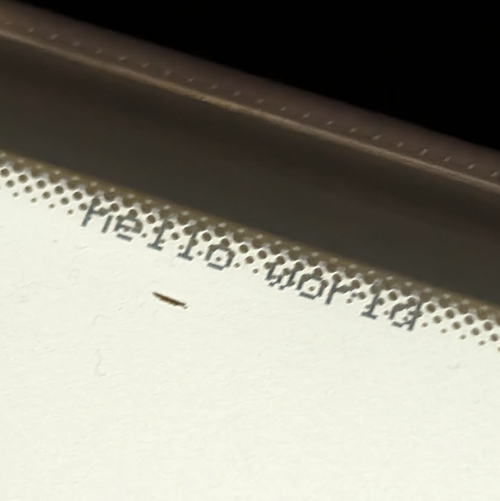
thank you for reading so far! while it's not the most exciting, here is a picture of "hello world" from zig running on the e-ink hardware:
the code discussed is available on github:
i haven't ported anything to zig just yet, but knowing that i can fills me with a deep sense of satisfaction, power, and ambition.
i'm only at the start of my journey with zig!