Photography by Scott McIntyre
Deep in desiccated Southern groves, the powerhouse of American citrus is suffering a brutal, unrelenting decline. No one wants to face what that means.
By
Quiet fell over the room, which was neither full nor very loud to begin with, and the 2026 Florida Citrus Show began.
“It should be a great day,” began the event’s first speaker. “Rain should hold off today, even though we definitely need more rain.” No one laughed.
There was no need to say that things were bad. Everyone knew it. The mood wasn’t sour—citrus farmers could handle sour. It was something else. Postapocalyptic. Florida is in the midst of its worst drought in 25 years, but the dry spell actually ranked far down on the list of challenges these bedraggled growers were facing.
In 2003, the mighty Florida orange industry produced 242 million boxes of fruit, with 90 pounds of oranges per box, most of which went on to become orange juice. Now, not even 25 years later, the United States Department of Agriculture was forecasting a pitiful 12 million boxes of oranges, the least in more than 100 years, the worst year since last. A decline of more than 95 percent.
And everyone knew, more or less, that even that figure was not happening. “Twelve million? I would doubt it,” Matt Joyner, CEO of Florida Citrus Mutual, the state’s largest trade group, told me. There was chatter that even 11 million might be out of reach. Could the total end up being less than that, just seven figures? In Florida, the citrus capital of the world, you are today more likely to see the oranges printed on the state’s 18 million license plates than a box of actual fruit.
Rick Dantzler, chief operating officer of the Citrus Research and Development Foundation, took the podium. He was blunt. “It’s been a dumpster fire of a year,” he said.
On the list of immediate problems: the implementation of tariffs and retaliatory tariffs, then the government shutdown, then a stunning, historic freeze, days long, at the end of January and early February, that besieged the fragile orange trees.
And yet those, too, were just footnotes to the even larger problem. Already, Florida had lost about three-quarters of its citrus growers. The last of them, these spent survivors, these hangers-on, had trudged to the Citrus Show to talk about the real problem, which was the disease.
In 2005, Florida first got signs of a new affliction in its groves called citrus greening disease. It also has a Chinese name, Huanglongbing, or HLB, because it came from China, where oranges also came from in the first place.
Citrus greening disease is caused by a bacterial infection that is delivered by the gnawing of the Asian citrus psyllid. (It’s now believed the psyllid first turned up near the Port of Miami in 1998.) The flea-sized psyllid bites the leaves and transmits the disease, which slowly chokes out the tree’s vascular system from the inside, taking years to finally show itself. By the time a tree is displaying symptoms—three to five years, in most cases—it’s too late.
Floridian farmers are no strangers to disease. When HLB first began to spread, there was no indication it would be any worse than any other bug that had appeared over the years. The farmers did what they always did: They sprayed and sprayed, chemicals and pesticides, stuff so powerful that the Centers for Disease Control and Prevention and the U.S. Food and Drug Administration freaked out about potential risks to human health.
But greening spread anyway. Industry groups and the state poured money, millions, into finding a cure, and every time they thought they’d figured it out, it didn’t work, and the greening accelerated. Hurricanes turned out to be a vector for spreading the little winged bug. The wind carried the psyllid all over the state, dropping it off in hundreds of thousands of acres of groves.
Soon enough, trees everywhere were showing blotchy, mottled, yellowed leaves and suffering from twig dieback and sparse foliage. Under duress, the trees would drop all their fruit on the ground prematurely. What rare fruit survived to maturity on these little, addled trees was misshapen, acrid, and stubbornly green on one end; in short, it tasted terrible. Even after being squeezed and processed and pasteurized, the juice was gross.
Now, according to the University of Florida website, the disease is “incurable.” It warns: “There is currently no treatment for citrus greening. Once a tree is infected, it will eventually become unproductive and may even die.”
I asked numerous people—farmers and industry leaders and researchers—to estimate how many trees in Florida now have greening. The answer was resounding: 100 percent. Every single tree.
The Citrus Show was meant to rally those weary troops, to assure them that help was on the way, that this was the bottom. That there was reason to hold on.
And there was: There had been some progress, with oxytetracycline, OTC for short, a powerful antibiotic that is used to treat chlamydia and sometimes syphilis in humans. It wasn’t a cure, exactly, but ceaselessly applied, it was keeping the effects of greening at bay for a few months at a time. Growers were boring holes in the bases of their infected trees and injecting it. It was expensive, and it had only been in use for two or three years, and it would only be a temporary fix at best. But it seemed to be working. There were greener leaves, and oranger fruit, and a palatable juice product.
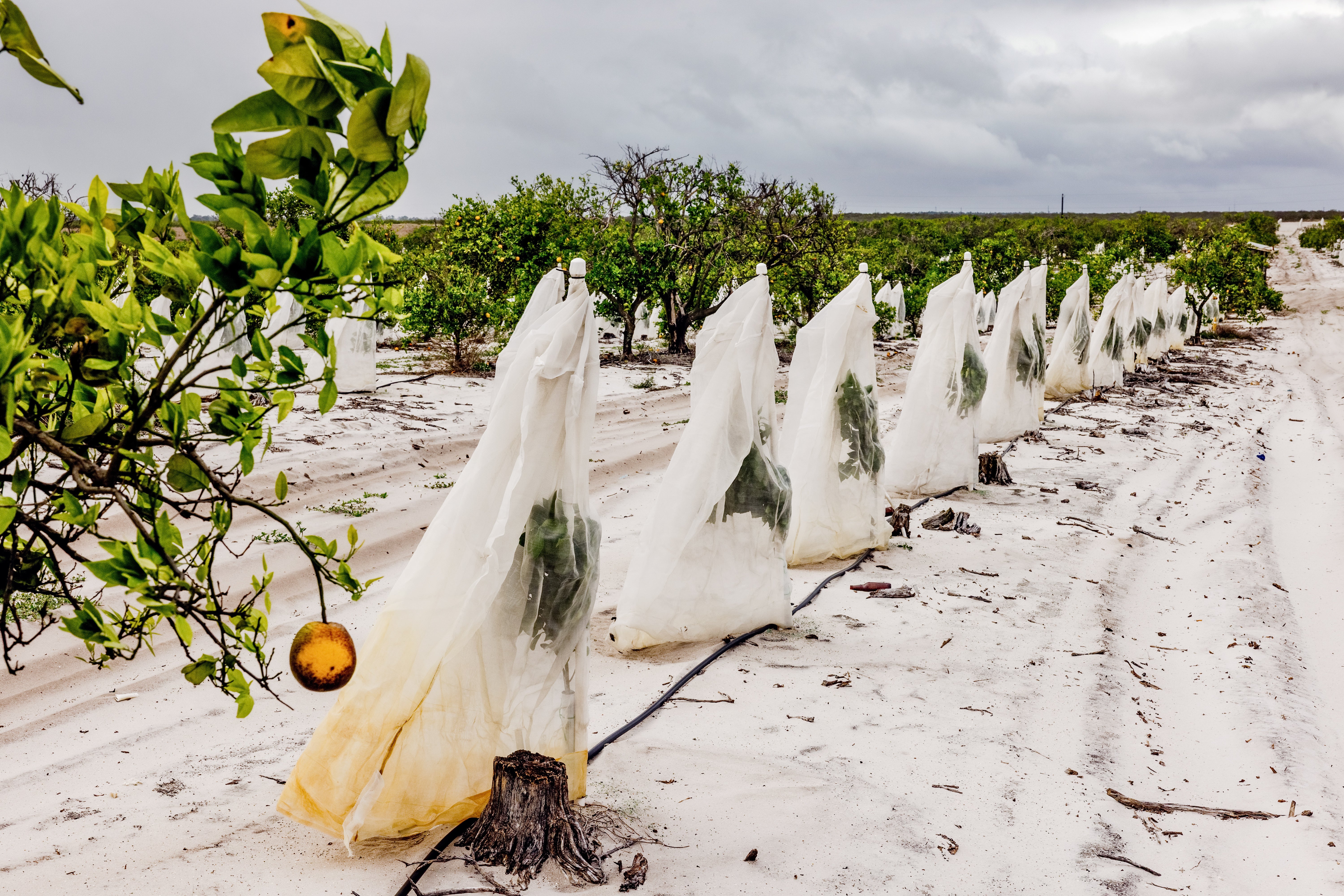
They had been wrong before, yes—who could forget the tree-steaming solution, which once looked so promising, tenting each tree with a makeshift steam room cranked to 130 degrees, but which ended up failing when it became clear the bacteria were in the roots. But this one seemed, the researchers tried to assure their charges, for real.
A panel of multigeneration growers took the stage to weigh in on their experiences with OTC. It wasn’t altogether triumphant. “Injection just crushes the older trees,” said Tommy Thayer, a fourth-generation grower.
“Most groves are not producing as well post-Ian as pre-Ian,” said Daniel Hunt, of the legendary Hunt Bros. citrus family, referring to the 2022 hurricane. But he had done double injections on some trees, and had seen successes. “Our Valencias were beautiful,” he said. “They had color.”
“Unfortunately, they’re all on the ground right now,” said Thayer, because of the freeze.
Their panel closed with a request that everyone say something positive about their experience in the citrus industry. “The long history,” offered Hunt. “Good for character-building.”
Scientists took the stage, one after another, supplying encouragement. The OTC trials were positive; they were fast at work on a genetically modified tree. “The tree of the future,” they said, again and again. And it was in the lab, and it was on the way. The OTC might tide them over until that GMO creation was ready for widespread planting.
But the timeline, they conceded, was difficult. “We don’t have time because of how the industry is,” said Manjul Dutt, a researcher with the University of Florida Institute of Food and Agricultural Sciences. The realistic run from discovery to commercial production of the GMO tree? “Typically, it’s five years before a tree produces flowers and fruit,” so … “10 to 14 years.” A second researcher presented a slightly different timeline: 12 to 18 years.
“Hopefully you can stay in business,” commented a third.
“Someday, there’s gonna be a talk where ‘HLB’ and ‘solved’ are in the title,” said Randy Niedz of the USDA. “This is not that talk.”
The afternoon wore on. At lunch, I spoke to Jillian Rooney of the Crop Disaster Recovery group, which had a tent set up in the parking lot. I told her I was writing about the state of the citrus industry in Florida. “Oh. Sad,” she said.
A sign at another booth seemingly encouraged the growers to try growing anything else. “Why grow passion fruit?” read one, with a list of its potential upsides. “Sugar apple,” suggested another.
After lunch, the bad news kept coming. It wasn’t just greening that had to be worried about. There were root nematodes, launching a subterranean attack. There was citrus canker, caused by a bacterium that had plagued citrus for years prior to the arrival of greening.* (It, too, came from China.) Then came a seminar on citrus black spot, another recent arrival.
“It is not known how it arrived,” said Clive Bock of the USDA. “But it could spread to the whole Gulf Coast.”
Things had deteriorated quickly. “Three, four years ago, the juice was 80 percent from Florida,” said Weston Johnson, of the Coca-Cola Company, which owns Minute Maid. “Now we’re 20 percent Florida.” A quintessential crop and national icon of the 20th century in America was dying before our eyes, and outside this room, most of the country—even Florida itself—had barely noticed.
Juice shots were being given out, in tiny 1.5-ounce bottles. “Made with orange-like hybrids with tolerance to HLB. This juice is an innovation that represents the future of citrus,” a sign next to the cooler said. “100 percent American juice,” boasted the label.
I drank it. It didn’t taste very good.
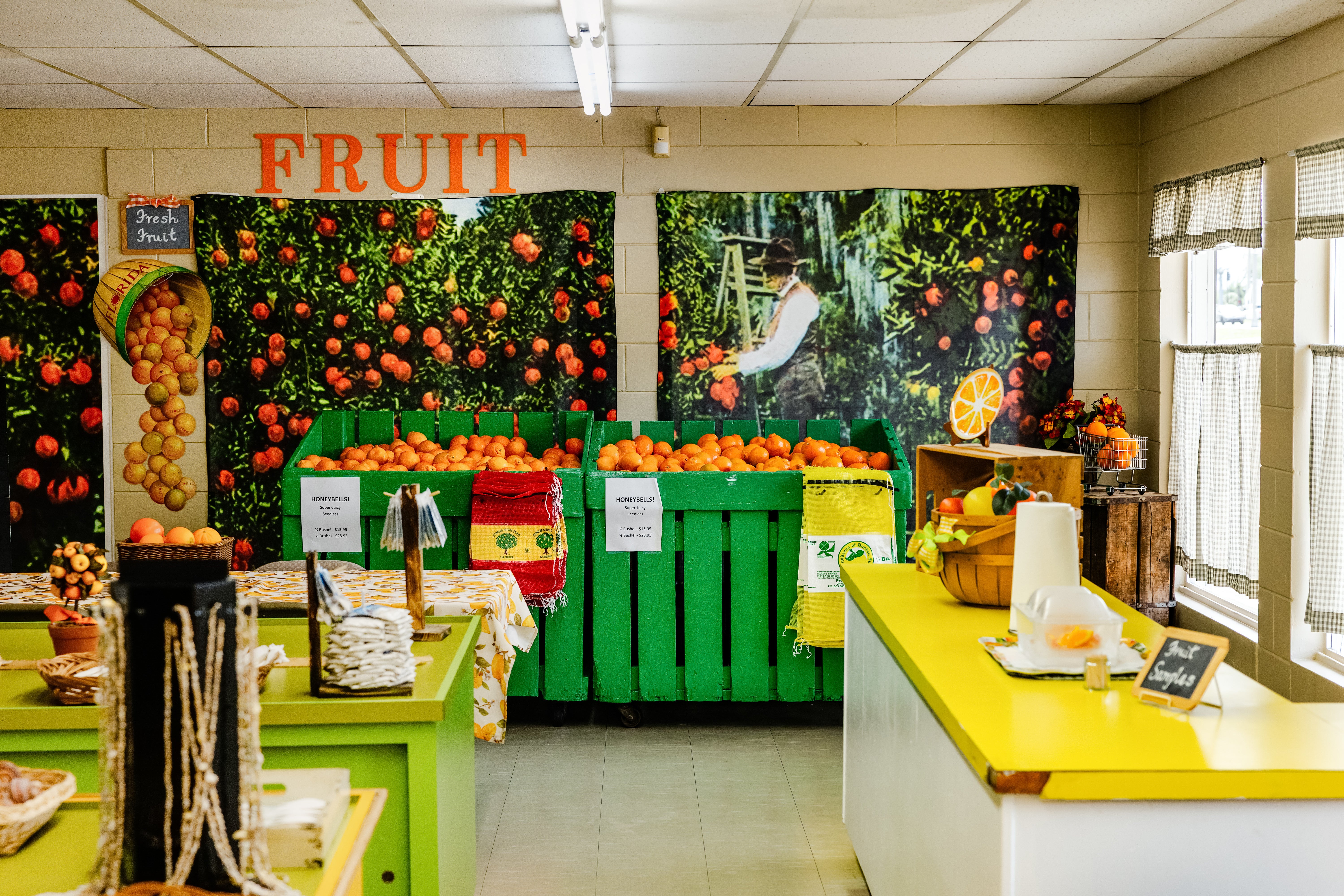
“The custom of drinking orange juice with breakfast is not very widespread, taking the world as a whole, and it is thought by many peoples to be a distinctly American habit,” begins writer John McPhee in a famous two-part 1966 essay in the New Yorker that ran to 40,000 words, an indulgence that met the grandeur of the industry.
Maybe attention spans were too long back then. Here’s the condensed version: The Spanish conquistadors rocked up to northern Florida in the 1500s, amid all that marauding, and planted the orange tree, taken from (yes!) China. It was small-time stuff until after the Civil War, when the railroads reached south and the fruit sold north. Historic freezes in 1894 and 1895 nearly eradicated the industry, its first and last real brush with old-world calamity. Instead, it drove things south. Planters started anew in central Florida, in Polk County and its surroundings, what’s known as the Ridge, the highest part of Florida, and the only part that was never below sea level, historically.
The frost problem having been dealt with, the arrow was pointing straight up. Then came the technology that changed it all. It was World War II, and the American military wanted vitamin C to keep its front-line boys in fighting trim. It paid for the research for what would become frozen juice concentrate. As with cigarettes, those boys came home hooked. By 1950, the state was doing more than 100 million boxes a year. The orange blossom had already become the state flower in 1909, and, by 1967, a year after McPhee’s opus, the orange was the state fruit.
Florida sold some whole fruit, but the biggest money was in “crushing fruit”: making and selling juice. The citrus families became royal in the Sunshine State. Incredible intergenerational empires were amassed, with land holdings the size of small states. The Jack Berrys, the Bob Pauls, the Hunt brothers, the Lykes brothers, all of them with juniors or thirds or fourths. And the biggest, by far, was Ben Hill Griffin Jr. Even Peter Pulitzer, grandson of publishing tycoon Joseph Pulitzer, amassed a citrus empire.
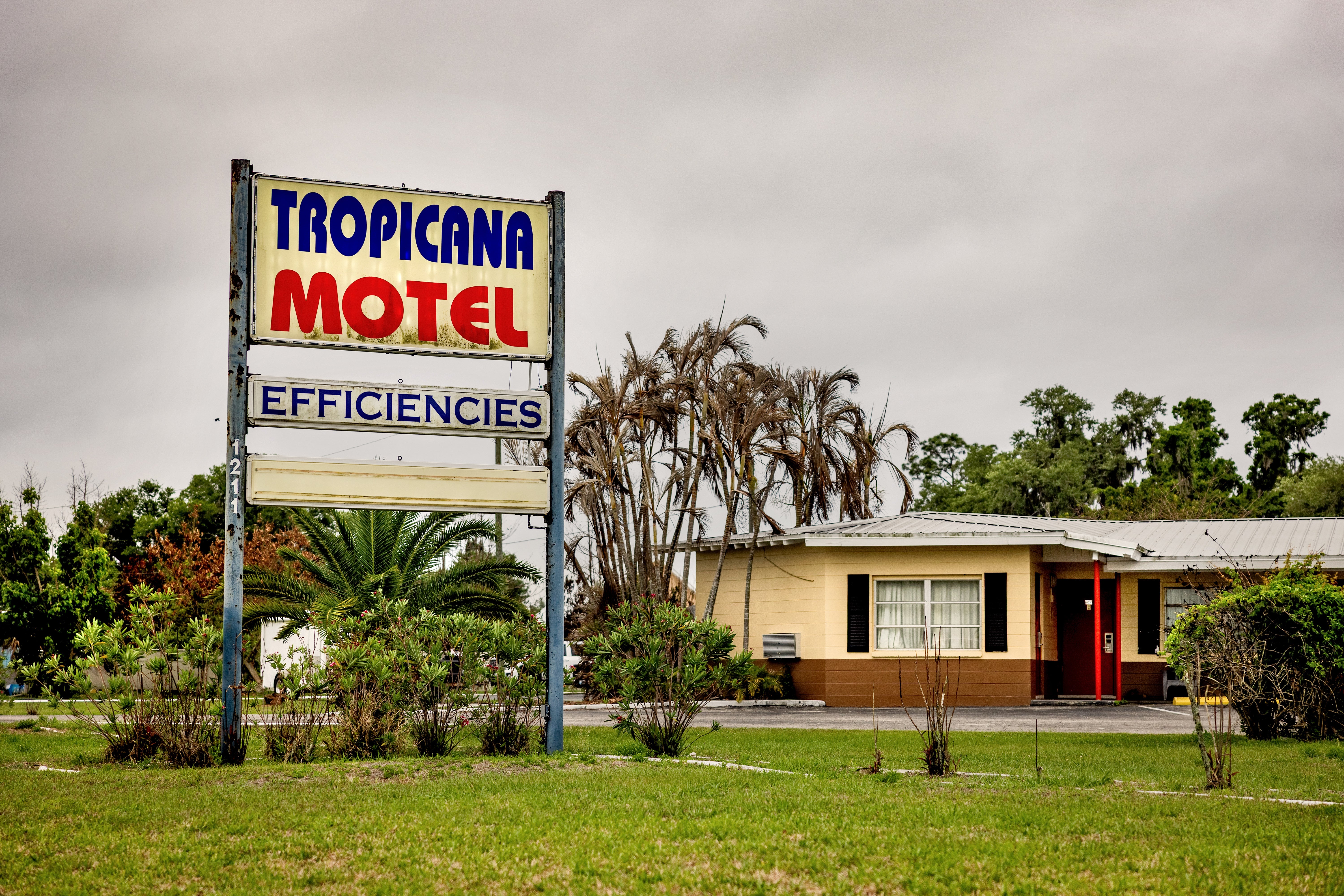
Behind them came the corporate class: Tropicana, which ended up with PepsiCo, and Minute Maid, which went to Coca-Cola.
The citrus barons’ names went up on everything in Florida. Street signs and golf courses and the university. The ranks of the Bull Gators—that’s the list of top boosters of the University of Florida’s athletic programs—were overrun with citrus families.
The citrus world got whole stadiums. Ben Hill Griffin still has his name on the University of Florida’s 90,000-person football palace, better known now as the Swamp. Tropicana got the MLB stadium in St. Petersburg, where the Tampa Bay Rays played until Hurricane Milton blew the roof off in 2024.
Griffin even made for himself an industry town called Frostproof—a canny, if defiant, advertising play, named years prior, after the town had survived the mythic 1895 freeze without much issue. Frostproof became a cipher for just how untouchable the industry had become. Citrus baron Latt Maxcy incorporated there, too.
McPhee marveled: “The industry is self-regulating and pays its own way.”
Then came the 1970s, and a new technology arrived: the herbicide glyphosate, created by Monsanto. The citrus industry adopted it early and zealously, taking to it like water, spraying it all over the ground until not one sign of non-citrus life remained. When new complications came, they sprayed more. Acreage grew to 832,000, with record yields, and Florida was king, producing 78 percent of all United States citrus.
Up and up it went, and why not? The process got more mechanized through the back half of the American Century—out with the cover cropping, in with the monocrop, packed tight as can be. One innovation followed the next. Frozen concentrate fell behind the novel idea of “not from concentrate”—no longer did they squeeze it and freeze it. And they were unaware, or unconcerned, that that chemical was wreaking havoc on the soil, weakening the trees’ defenses, leaving them extremely vulnerable to disease.
Why would they be? Times were good. In 2000, the agricultural trade agreement with China opened the Chinese market to fresh Florida citrus. Commissioner Bob Crawford hand-delivered a 10-carton shipment to commemorate the event. They were loving China then.
And then it all came down so fast. There were the fad diets of the 2000s: no sugar, low-carb. The American Academy of Pediatrics began crusading against juice for kids. Orange-industry groups hired medical professionals as spokespeople in public relations, and kicked off an emergency ad campaign addressing what they branded “juice confusion.” That didn’t work. The citrus estates began to get carved up in tawdry divorce settlements, battles of wills that captivated the tabloids. Invasive species came in all guises: foreign pestilence, foreign capital, and the developers. It was the perfect storm. And then, of course, there were the actual perfect storms, the high-caliber hurricanes that, before climate change, didn’t come to the Ridge: Irma, Ian, Milton, massive cells, all direct hits on the groves.
The orange barons lost breakfast, and lost Florida, too. Who killed the Florida orange? Were outside invaders to blame? Or was the culprit right at home?
As with his beloved Florida citrus, Rick Dantzler’s on the way out—age 70, retiring from the Citrus Research and Development Foundation, which, after losing its state funding, was getting absorbed by another group anyway. He met me in Lake Alfred, at the site of its University of Florida satellite campus. I asked him to drive me through the best groves in the heart of citrus country. “It’s gonna be a lot of houses,” he warned me. “It breaks my heart.”
Dantzler is a Florida man through and through. He is third-generation in Winter Haven, in Polk County, and has the locution to prove it. When talkin’ oranges, he pronounces Valencia “Vuh-LEN-chuh.” His wife is fourth-generation. His father at one point had 160 acres of citrus. Now the family has none.
The collapse of Florida’s citrus industry, he told me, took everyone by surprise. “It happened so fast,” he said. “What’s remarkable is how many people here in Florida are not aware of it.”
The first stop on our tour was a brand-new grocery store with a sprawling parking lot out front. “That was a fantastic grove. It’s now turning into a Publix,” he said matter-of-factly. Opposite that was a giant dirt lot, graded flat. “These were fantastic groves on both sides of the road. I remember one time as a kid I saw a great big corn snake crossing the road—when there was not much of a road—and the corn snake climbed up into an orange tree. I acted like I couldn’t quite get to it, I was actually scared—” He cut himself off. “These were just fantastic groves. Not anything left.”
The next stop on our tour was a gas station. “This used to be a really great grove right here where this Circle K is going in,” said Dantzler, on cue.
“You’d drive down here in the spring and it’d smell so good you’d think you were in a perfume shop,” said Dantzler, as we passed through Polk County. It was March, and if you rolled down the window, the only scent was exhaust.
Dantzler knew citrus greening as well as anyone. He’d lived with it every day for years. He was sanguine about the effects of OTC, even though it was temporary, and expensive, and even though the treated trees got reinfected every four months. He was sure there were better days in oranges to come—oranges were growing well beneath pricey protective screens, for instance—so long as there was anyone left to plant them.
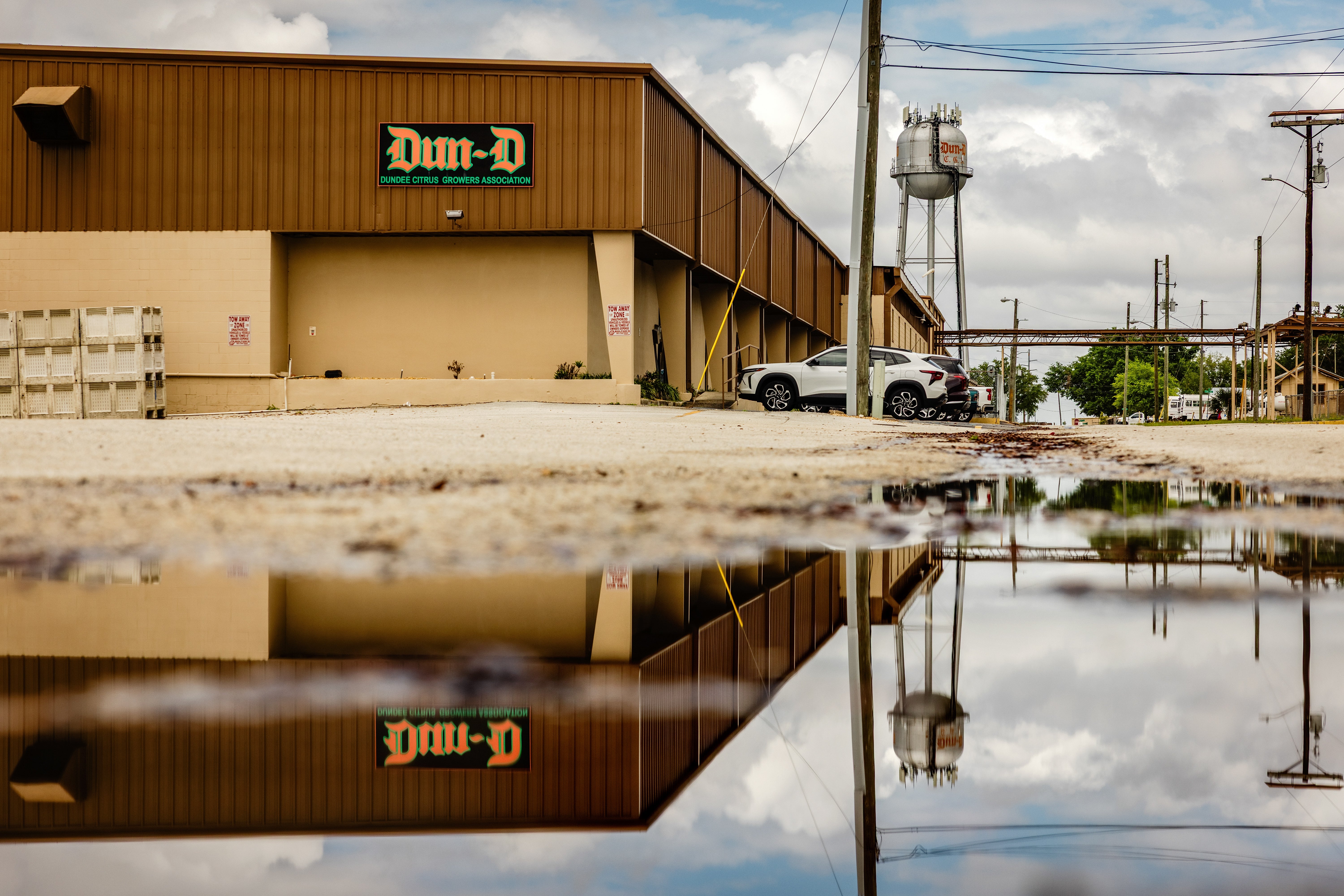
We crossed into Dundee. “Now, this was citrus country; this was the heart of the industry. The best groves in Florida were right here. All the varieties in Florida were located right there. It was almost like a seed bank, so if catastrophe happened, the industry could always replant,” said Dantzler.
“Catastrophe’s kinda happened,” he added—but the seed bank grove was no longer there.
He also knew hurricanes. The storms were also part of old Florida culture. But rarely did they make landfall near the oranges. Many of the groves had gone decades without any real hurricane exposure. Then the climate got warmer, and along came Hurricane Irma in 2017, which hammered the Ridge. Its winds, which reached 142 mph, shook the trees violently on their shallow roots. It was the first of many. The trees made it through that year, without evincing the scale of the damage. The next year, or the year after, or three past, when the fruit wasn’t coming, it became clear that the stress of the high winds on already weakened root systems had traumatized the trees, often permanently.
After that, Hurricanes Ian, Idalia, Helene, and Milton all made landfall on the peninsula. “In 2021, we fell off a cliff,” he said. Five major storms went right over grove land.
We drove past more empty lots, more abandoned groves, desiccated trees, signs announcing public hearings for land-use changes. We passed mountains of trunks and branches, piled high. In the local parlance, they’d been “pushed”; soon, they would be burned. We passed a road sign for Tucker Paving as another plot was getting razed. “Mr. Tucker’s father and my father were best friends,” Dantzler said. “I know all these guys, they’re my friends. But look at what’s happening.”
Dantzler told me that he didn’t see 2005, when greening symptoms first became clear, or 2017, even with Irma, as the turning point. He pegged it to 2007, when another invasive species took off, the one that now dominated the landscape on our drive: suburban sprawl.
The stress placed on the groves by wind and water turned out to be little compared to the stress put on them by development. There were the solar farms, which targeted large tracts of land for panels, and those tended to be former groves. There were the data centers, too. In nearby St. Lucie County, a $13.5 billion hyperscale data center was proposed, one of the largest in the world, to be built atop 1,400 acres of old groves. That was on the corner of Orange Avenue and Minute Maid Road.
But the sprawl was really the crux of it.
It was not inevitable. In the mid-1970s, Florida began a period of environmental enlightenment. In the course of three decades, the state passed all sorts of legislation, from wetlands protection to local government growth-management initiatives. The state government established what was called a “concurrency doctrine,” instituting strict requirements for infrastructure development—water, sewer, schooling—that had to be established before construction permits were granted.
Then came the heady days of 2007, when, as you might remember, Florida’s housing developers overbuilt so dramatically, and financed so dubiously, that they helped bring the whole global economy down with them: the Great Recession. The state government, desperate to stimulate the economy and its moribund real-estate sector, began eroding the growth-management plan that had restrained development. The Department of Community Affairs, the state agency that oversaw all the local government growth planning and limited development, was just abolished outright.
From then on, it became a political story. Soon, the developers had bounced back, deep-pocketed and powerful in Tallahassee, and they weren’t done yet. They bet big on the ascendant Florida Republican Party, backing Rick Scott all the way to the governor’s mansion. In 2011, Scott gutted concurrency, a critical regulatory standard that kept developers in check. Then the developers went all in for a Yale man named Ron DeSantis. The citrus industry still had political power, too. But the deregulation they won did little to stanch the bleeding. Reeling from a depressed economy, then an explosive greening problem, then hurricanes, they were soon going to the statehouse, desperate for bailout money. “I think the development community saw an opportunity to get rid of most of those regulations. And they’ve gotten rid of most of it,” Dantzler said.
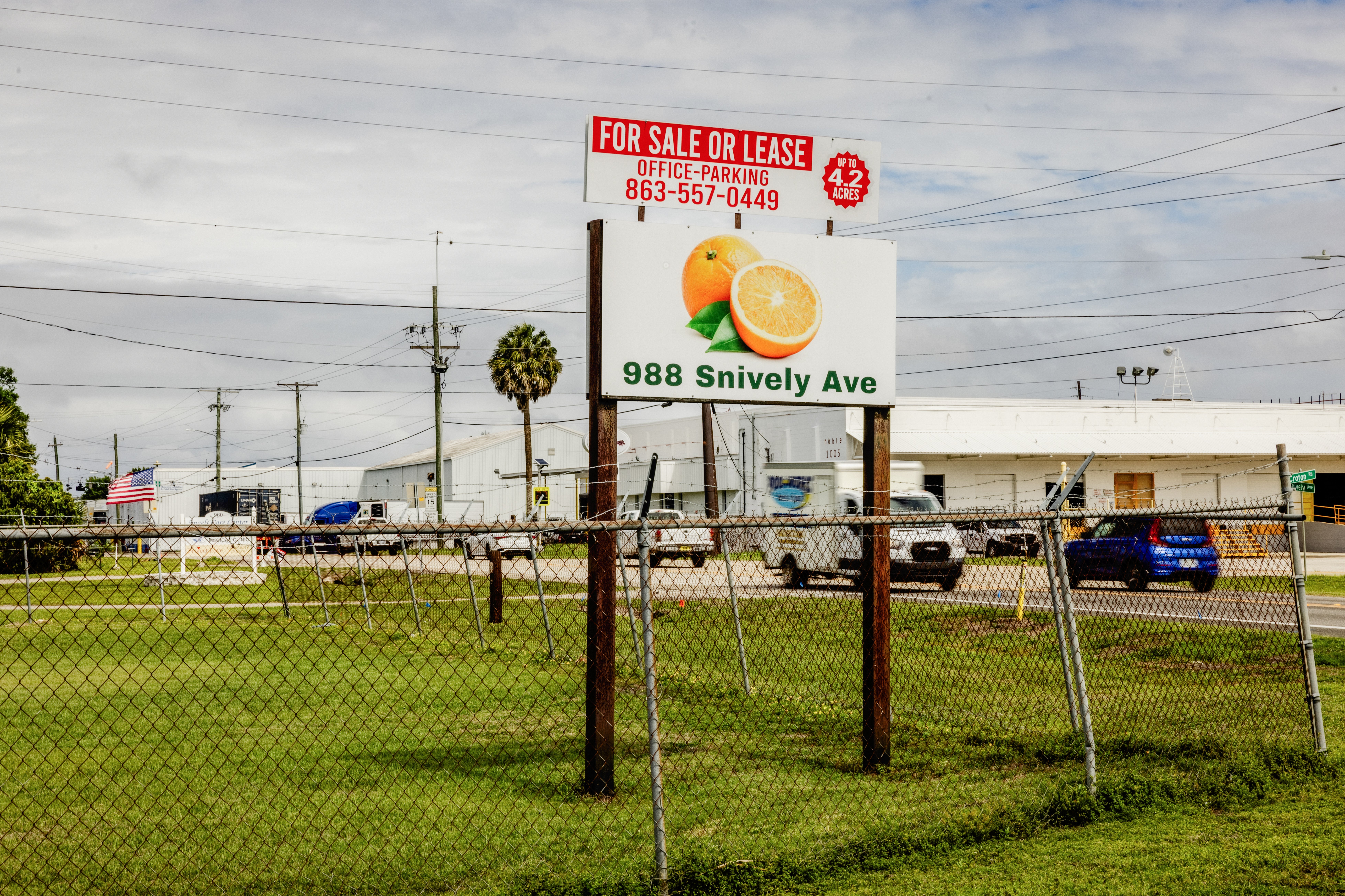
By certain estimates, Polk County, where we were driving, has been the fastest-growing area in America, and the developers have been cashing in. A citrus grove must be planted in sand, which occurs naturally, by some geological miracle, in central Florida. (The miracle, specifically, was the Appalachian Mountains, which eroded and deposited sand there over millions of years.) The trees won’t take in wetlands, in mucky soils. But that sand itself is also in high demand for cement, for construction, for building shoulders for highways, for filling in wetlands for development. Up here, Dantzler pointed, was a sand mine, which had torn out groves and gotten to mining beneath them. “There’s a crazy market for sand,” he said.
Sandy land itself is the easiest property to develop. Wetlands are still often protected from a development standpoint, and so, in addition to infill, require pricey, lengthy permitting. Sandy uplands, hiding beneath every citrus tree, are low-regulation and ready to build on.
So, while the growers were losing money hand over fist, housing developers were coming through with godfather offers to buy them out, convert them to row housing, and sell, sell, sell. Flags of every homebuilding giant flew on vanquished ground: DR Horton, Lennar. At nearly every intersection there were signs for cheap housing—no money down, homes in the low $200,000s, yes, for real, in 2026. Bunting and grand openings and exclusive offers abounded.
We drove past another former grove, which Dantzler again called “phenomenal,” which was now selling 10-acre lots. “This is all post-’07 stuff,” he sighed.
And so real estate was on the march, and even the citrus industry legends had become deserters. After the Gulf Citrus Growers Association shut down in 2024, its president, Wayne Simmons, a fifth-generation citrus grower, became a realtor. He wasn’t the only one.
We drove down new roads graded for housing, named after the citrus families who had once planted there, not a tree in sight. “Cable and Internet Included,” offered one sign.
“My gosh, we’re getting into the Ben Hill Griffin stuff. It’s just phenomenal,” said Dantzler. But there were no trees there anymore. There was just compact sand, a model home, and a barely-there development project. “We offer zero down payment!” the developer pledged. “Enjoy limited-time incentives like paid closing costs and exceptional financing options!”
The sign out front was complete, bearing the development’s name: Citrus Place.
“Citrus Place?!” Dantzler asked, incredulous. “That offends me.”
We drove on, and Dantzler told stories of dove hunts in the grove, of outsize characters of the old citrus elite. He insisted that in the midst of all of this housing, the citrus of the future remained. He put the car into low gear, and we drove into a test grove he had just recently been involved in planting. The trees were shorter than they used to be, with less canopy, packed tighter than ever, but they were showing promise. “In the pre-greening days, you could spot a grove car by all the scratches on both sides,” he told me.
Orange trees used to live 50 to 100 years; these little upstarts might make it 12 to 15. And so we set off down the aisle, and the branches hit the side mirrors and, on occasion, scratched the door.
And there, in the adjacent grove, had sprung up a house. “Now, that house is new,” said Dantzler. “What in the world’s that all about?”
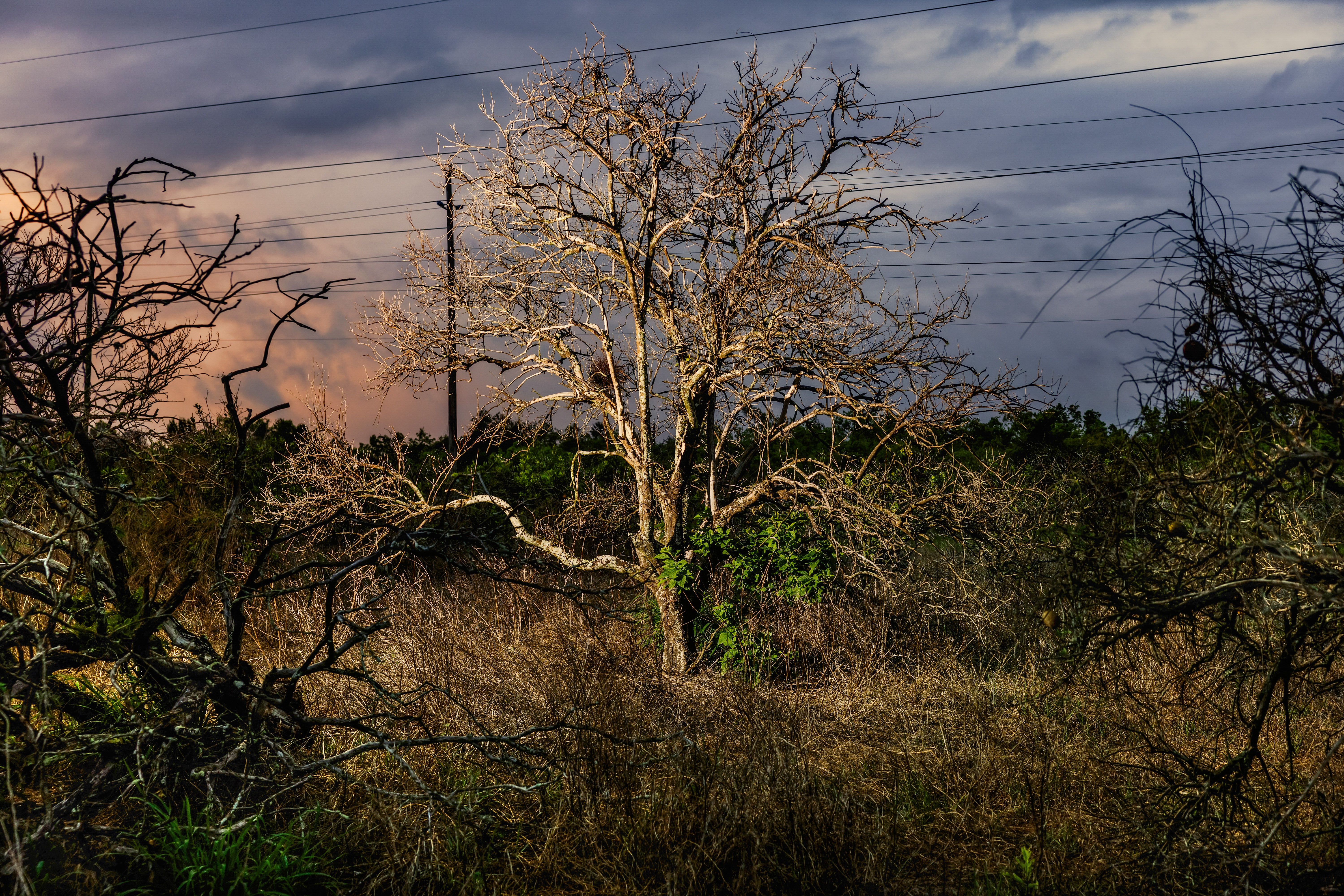
The famed Frostproof, Florida, was once the seat of the Ben Hill Griffin empire. It wouldn’t be fair to call it a ghost town now, exactly. According to census data, 3,000 people call it home. There is a stoplight. But the name does loom over it, haunting what remains.
There are three parts to a citrus operation: groves, packinghouses, and processing facilities, where the juice is made. Griffin—Frostproof—once had it all. The firm operated a major packinghouse in Frostproof, where fresh fruit was boxed for sale for roughly 70 years. It closed for good in April 2017.
The Ben Hill Griffin packinghouse wasn’t the only one. According to Peter Chaires, executive vice president of Florida Citrus Packers, in less than 40 years Florida had gone from 88 packinghouses to, now, just eight. Even one closure could be devastating to a community. Chaires told me that in Haines City, they lost a packinghouse that had been the primary employer since 1909.
Chaires was even more alarmed by the collapse of the processing facilities, which make juice. Florida was a juice state, after all. Building a new packinghouse was light work compared to building new juicing facilities. “It’s extraordinarily important that we try to hold on to our processing capacity that we have now,” he said.
In fact, in 1977, Florida boasted 53 different processing plants for crushing fruit, pasteurizing, or making fresh juice or frozen concentrate. Now, said Robin Bryant, executive director of the Florida Citrus Processors, there are just four: Cutrale (a Brazilian firm supplying Minute Maid), Peace River Citrus, Florida’s Natural, and Paracone, a boutique operation.
At their peak, those processing facilities would run three shifts, billowing steam morning, noon, and night. Now they’d cut back to one shift. Even still, Bryant told me, “all but one of those plants could process everything we produce in Florida on their own.” This year, Tropicana announced that for the first time it would not be processing fruit in Florida at all. Minute Maid killed frozen juice concentrate.
Griffin once had a processing plant in Frostproof, too. And that, too, was gone.
But it wasn’t greening that had caused this collapse. The decline had taken off in the 1990s, when the industry opened itself up to Wall Street and to foreign capital. According to the Florida Department of Citrus, in 1996, foreign buyers bought two plants in Auburndale, which kicked off a trend: From then on, the “majority of plant acquisitions that followed would have owners headquartered outside of the United States.” In 1998, privately owned Seagram’s sold Tropicana to publicly traded Wall Street darling PepsiCo, and things quickly began to change.
Griffin, meanwhile, had sold off its Frostproof processing facility to Procter & Gamble, which in turn had sold it to Cargill, based in Minnesota. But Google Maps, itself seemingly haunted, insisted that the boxy plant off Highway 17 was Griffin’s. When I drove up, the gate was open, though there were no other cars; from its dull roar, I could tell the plant was not totally idle.
Out came Mike, one of two employees I saw on-site. Mike had grown up in the area, he told me; worked there for years.
“The orange is gone. It’s dead,” he told me. “All the spots that they’re building houses, they’re the orange groves.”
The plant where he worked, he said, was now owned by Peace River. But they weren’t processing anymore. They were simply cold storage. Now orange juice came from Costa Rica, Argentina, and, mostly, Brazil. Grapefruit juice sometimes came from Hungary. It was shipped in tankers to the nearby Port of Manatee and then trucked to facilities like the one behind him, for safekeeping.
“Today, it’s a lost empire,” said Mike; the plant where he worked best described as “a mausoleum.”
In fact, Florida, everywhere, has become a storage locker for juice from Brazil, where the land is cheaper, the regulations are laxer, and the chemicals are cheaper, too.
“The labor is pretty much slave labor, I guess,” shrugged one local farmer I spoke with.
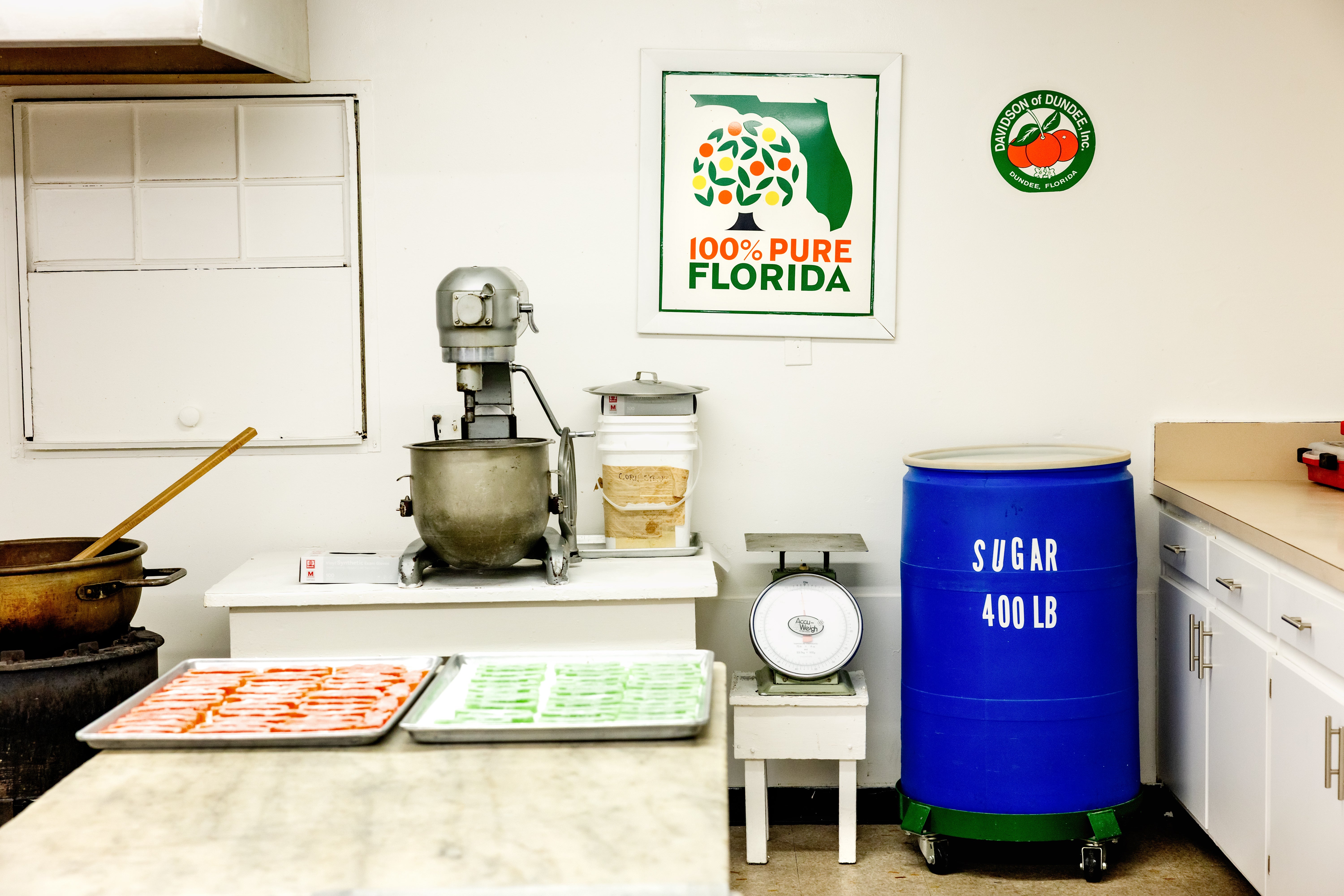
At the Citrosuco plant in Polk County—which flew the Brazilian flag alongside the red, white, and blue—and at the Cutrale sites and even at Florida-based Peace River, it was basically Florida in name only. “Seventy-five percent of juice packaged in Florida comes from Mexico or Brazil,” Bryant said. One had to be honest: Florida juice was “just not at the quality it used to be.”
But not all is well in the citrus kingdom of Brazil, either. The greening is “beginning to catch up to them,” Bryant said. In 2025, greening affected a record 47.63 percent of orange trees in the Brazilian Citrus Belt, according to Fundecitrus; 100 million trees, of 209 million, are now infected. Brazil followed Florida’s lead in what researchers now call “excessive glyphosate usage,” and has been, suddenly, reaping similar outcomes. (Citrus greening has been around for 120 years, and exists worldwide, and has, so far, caused an extinction-level event only in Florida.)
Behind the Peace River plant, sprawled out across a massive lawn, and behind a chain-link fence, were the ruins of a processing infrastructure. Giant, stainless-steel mixing tanks and vats, on their sides, tanning in the Florida sun.
And then, finally, came another modern pestilence. In 2021, after years of losing money on Tropicana, PepsiCo decided to get the company off the books. They put their majority share up for auction. In January 2022, they announced the buyer: a French private-equity fund called PAI Partners. (PepsiCo maintains a minority position.)
“European,” noted Tim Hynes, global head of credit research at Debtwire, a leveraged finance consultancy. “It was actually somewhat surprising to me that they had won this asset.”
PAI had a food and consumer portfolio: They owned European Pizza Group, a leader in the frozen-pizza business in Europe. They owned Alphia, a pet-food co-manufacturer in North America.
Maybe they thought that what ailed the Florida citrus could be cured with a little private-equity magic. The firm renamed it Tropicana Brands Group, balling up other beleaguered beverage properties too, and packed it full of debt. And then they raised prices and shrank the packaging. “Everyone does that,” Bryant said. But the move was calamitous. In 2024, Tropicana became the face of the shrinkflation epidemic. People raged online, in Reddit forums, on Facebook.
“That just didn’t go as planned,” Hynes told me. “They have a bunch of debt. They were going to run out of money.” By 2025, PAI was talking about bankruptcy for Tropicana, though a $30 million emergency loan had steadied things for a time. PAI is “not confident any value remains from their initial investment,” Hynes told CNN.
I drove all around Frostproof, at Mike’s encouragement, looking for oranges, which I hadn’t seen many of. “Valencia Acres,” read one housing development. “Price cuts!”
What I saw, primarily, were mobile-home parks, next to Ben Hill Griffin Elementary.
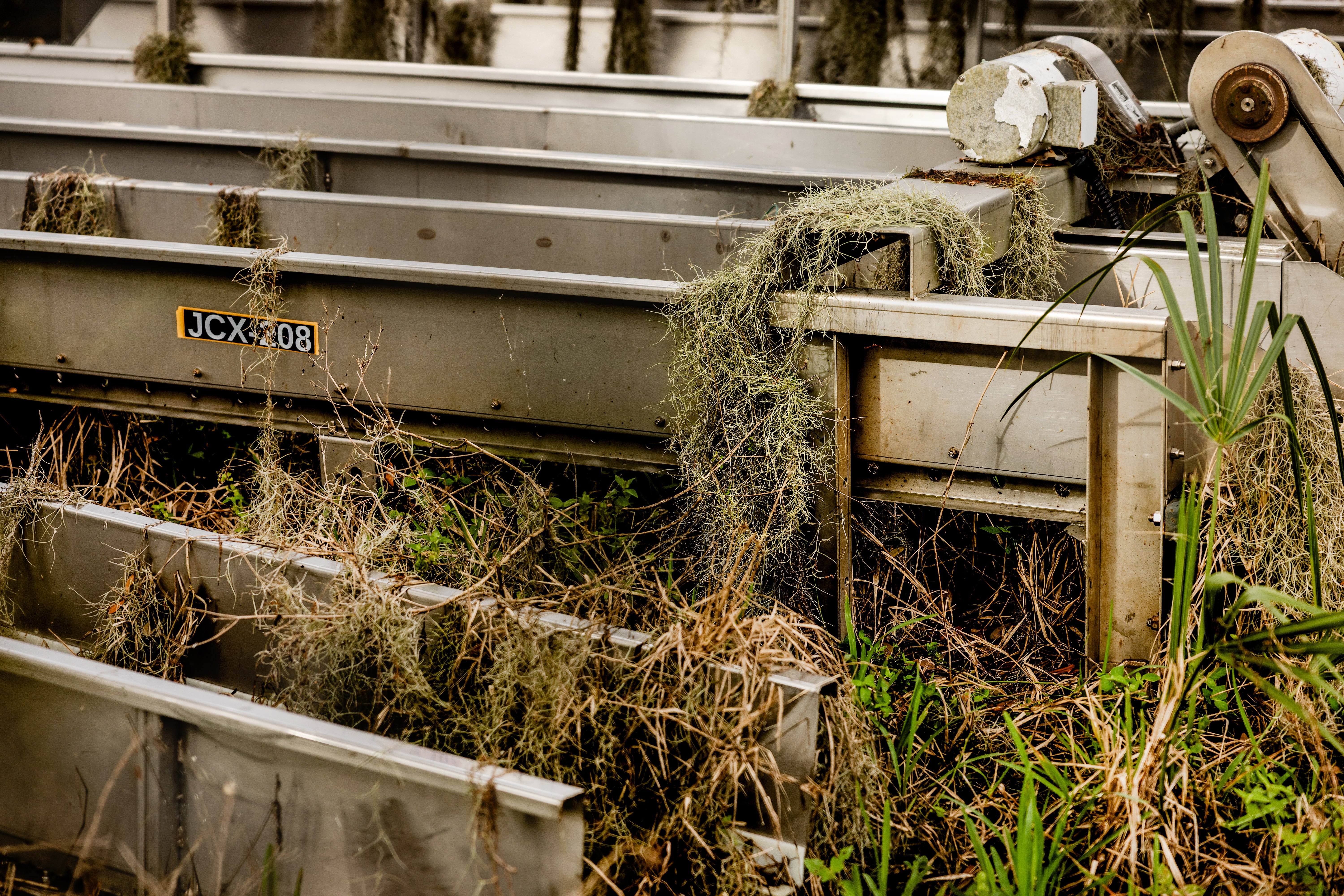
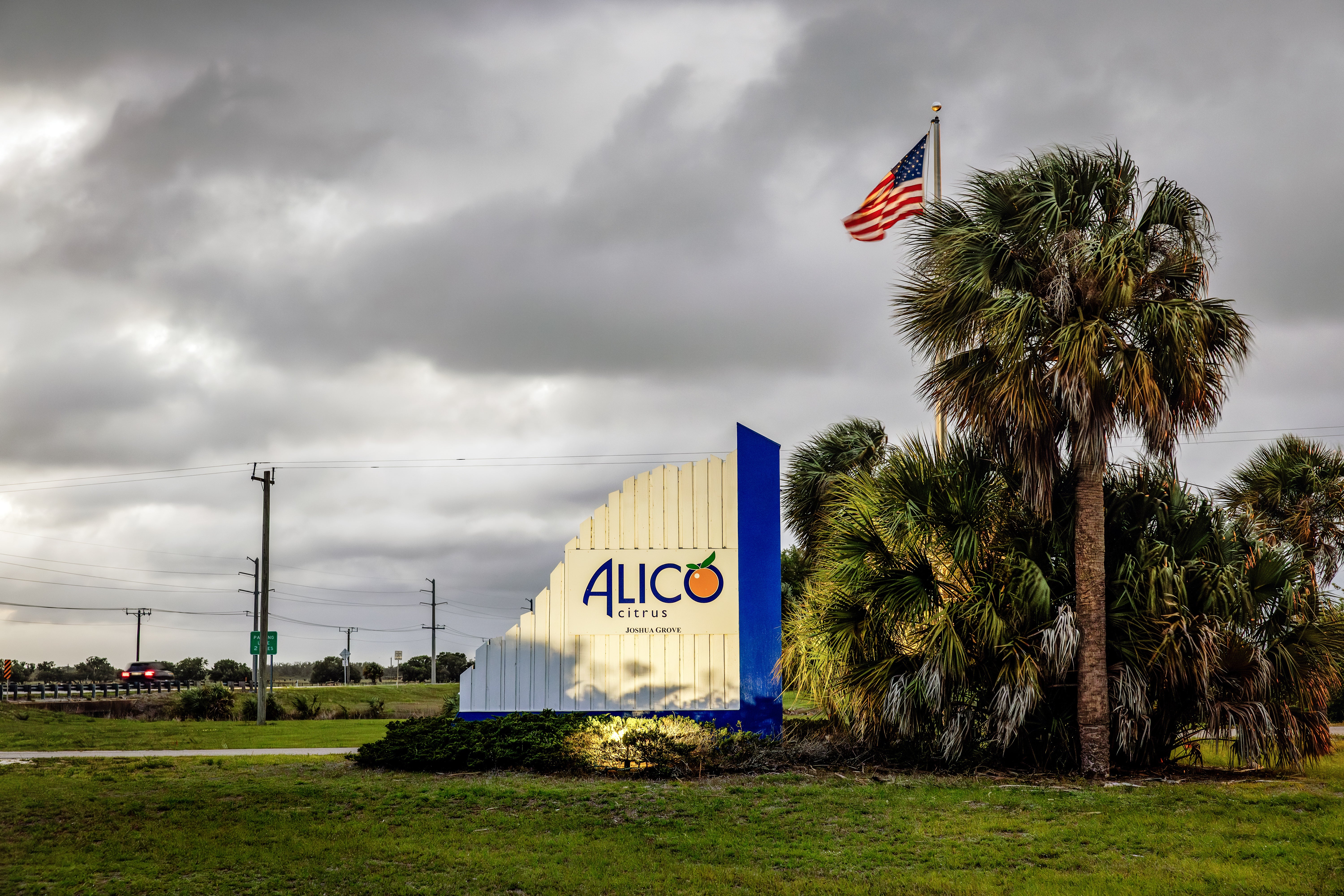
Alico’s Joshua Grove was the largest citrus grove in Florida, likely the largest contiguous grove in the country. Except that in January 2025, Alico—the largest citrus grower in Florida, the largest citrus producer in America—announced in a release that it was done. Their orange era was over. So the Joshua Grove is now actually Florida’s largest citrus graveyard.
In all, Alico began gutting 53,000 citrus acres at the end of the 2025 harvest: 35 percent of Florida’s citrus production, condemned in one press release. Which meant that every tree under Alico management in the Joshua Grove was dead, dying, or already gone.
“For over a century, Alico has been proud to be one of Florida’s leading citrus producers,” Alico’s president and CEO John Kiernan said in the statement. “But we must now reluctantly adapt to changing environmental and economic realities.”
Because of outstanding leases, third-party caretakers were getting one final season to manage 3,500-odd acres, “through 2026,” added Kiernan, in the announcement. The harvest ends in early April now—it used to stretch into June—so the oranges here now would be the very last to ever come off the property.
Mitch Hutchcraft, Alico’s executive vice president of real estate, agreed to give me a personal tour of this citrus necropolis. The grove was more remote than anything I’d seen: south of the Ridge, in DeSoto County, without a house in sight. It was also enormous: seven miles on one side, nearly seven miles on the other, all planted in tight rows, stretching beyond the horizon, which, in flat Florida, is really saying something. A gate guard lifted the arm, and we drove in.
To the right, he pointed, was an old grass runway where pesticide planes once landed and took off.
We began to roll past dead and dying trees in various stages of decay. Some were blackened, shriveled, barren of leaves. Others had fruit sitting on the ground beneath, most of it not quite orange, rotting. “They go pretty quickly,” Hutchcraft said.
Alico, as part of its plan to “become a diversified land company,” was turning 25 percent of its land into—what else—commercial and residential development. Already, it was underway with the construction of two “villages.” A year prior, the company unveiled Corkscrew Grove East Village, and Corkscrew Grove West Village, a 9,000-home development. They had similar plans for Bonnet Lake in Highlands County, Saddlebag Grove in Polk County, and Plant World in Hendry County.
The remaining 75 percent, like the Joshua Grove, which remained too remote for housing development, would be put to other agricultural uses. That meant row crops; that meant cattle grazing. The company would also be pursuing mineral extraction and oil. Already, it had tens of thousands of acres of oil production.
Alico had done everything it could, Hutchcraft told me, right up until the end. It had replanted, and injected trees with OTC, and everything else. But it was still losing money, and lots of money, fast.
Soon enough, they would begin to turn this land over. A front-end loader would roll down the seemingly endless aisles and pop the trees out one by one. With their shallow root systems, addled by disease, the trees wouldn’t put up much resistance. Then, they’d push the carcasses into piles and burn them. There weren’t any loaders working yet, though, and the weather wasn’t cooperating for a burn. “You do it when you’re getting rain—April, May. You don’t want it to be really dry, that can get out of control,” he said. “We’ve had cold spells, and it’s windy.” Plus the drought.
We pulled up to a harvest wagon, a large flatbed. It was empty. Picture, said Hutchcraft, laborers going up and down the rows with bags on their shoulders, picking orange fruit and filling them, and then lugging the bags to tubs at the ends of rows. There, they’d empty the bags into the tubs. Then trucks would go up and down the rows picking up the tubs. Finally, the trucks would disgorge their citrus into a harvest wagon, the giant flatbed, which would be driven by semitruck to the processing center. Historically, these groves would throw off 500 boxes per acre. At the end, the company was lucky to get 90. “There would have been harvest crews all up and down. You’d have seen trailers parked, filled with fruit,” he said.
Now the harvest wagon was empty, and there were no trucks, and no tubs, and no shoulder bags, and no guys.
“SLOW—CONGESTED AREA” warned various road signs stationed throughout the rows. But we didn’t see a single other person.
Up until the moment Alico announced it would be producing zero oranges, it had been the single largest provider of oranges for Tropicana. When they informed Tropicana of their decision, Hutchcraft told me, the company didn’t push back.
Down the rows we went. “Hamlin,” read a sign, and for miles in both directions were furrows and beds with only dirt or scrub brush or dead trees. “Valencia,” read another, and the same.
It was hard not to be nostalgic.
But time had run out, and times had changed. Citrus was “the profession that drove the state, was the iconic state industry,” Hutchcraft said. No longer. Now Florida Southern College, the fabled Frank Lloyd Wright–designed campus that citrus money made, didn’t even offer a citrus management program. Orange juice had even lost the battle for shelf space to seltzers and energy drinks and kombucha and more.
“Florida’s always been a boom-and-bust state,” said Hutchcraft. In the distance, a plume of smoke rose, likely dead trees burning, though it was hard to see from so far. We shook hands and parted ways, the tour complete.
I returned to the guard booth, which housed the only other person I’d seen at Joshua Grove. The guard, Jack Gunther, cracked the door. He had false teeth and an American flag baseball cap. The smell of cigarettes billowed from the booth; the walls were stained with nicotine.
Thirteen years was how long Gunther had worked directing traffic at this grove, he told me. He’d lived in the county all his life. Here he was, the last orange man left.
What did he think of all this, I asked him. What happened to the Florida orange?
“I think they killed it themselves, with chemicals. That’s a fact,” Gunther said. In my time in Florida, I’d found a more complicated story, but down here, everyone had their theories, their longing for citrus nirvana, and their anger at the loss.
“They sprayed so much chemicals, the damn grass don’t even grow here anymore—you can quote me,” Gunther said. “I knew it back in 1990. I said, ‘They’re sprayin’ so much chemicals it’s gonna be the end.’ And it’s the end.”
And then he asked: “You wanna come in and watch TV?”
Correction, April 22, 2026: This piece originally misstated that citrus canker is a viral infection.